How John Newton Found God

“It took John Newton to write the hymn Amazing Grace. ‘Let me not fail to praise that grace that could pardon,’ he said, ‘such sins as mine.’

“Newton had gone to sea at age 11, apprenticed on his father’s ship. He spent his teen years learning to be profane, irreligious, and indulgent. Female slaves being transported from Africa were at Newton’s disposal, and even seasoned sailors were alarmed at his corruption. Newton’s life angered his father and disgusted his friends, and he was finally pressed into service for the British Navy. He deserted, but was arrested, stripped, and flogged. He became the property of a slave trader in Sierra Leone, who gave him to his sadistic mistress. John became a loathsome toy she tormented for over a year. He finally boarded ship for Britain.

“On March 9, as he carelessly read a Christian book to pass the time, the thought came to him, ‘What if these things are true?’ He snapped the book closed and shook off the question. ‘I went to bed in my usual indifference, but was awakened by a violent sea which broke on us. Much of it came down below and filled the cabin where I lay. This alarm was followed by a cry that the ship was going down. We had immediate recourse to the pumps, but the water increased against all our efforts. Almost every passing wave broke over my head. I expected that every time the vessel descended into the sea, she would rise no more. I dreaded death now, and my heart foreboded the worst, if the Scriptures, which I had long since opposed, were true.’

“The vessel survived the March 10, 1748, storm, and Newton began earnestly studying the Bible. He embraced Christ and eventually entered the ministry, becoming one of England’s best-loved preachers and a leader in the fight against slavery. He once recalled, ‘That tenth of March is a day much remembered by me; and I have never suffered it to pass unnoticed since the year 1748—the Lord came from on high and delivered me out of deep waters.’” —from On This Day

10 Quotes From “Cherish”

As I said in my book review of Gary Thomas’s Cherish, this is a must-read for married couples, those about to be married, and those who counsel married couples. Please check out my review, and then enjoy a few quotes from this book.

“Learning to truly cherish each other turns marriage from an obligation into a delight. It lifts marriage above a commitment to a precious priority.”

“In one sense, love is the nurturing aspect of marriage, while cherish is the ‘tasting’ aspect of marriage. Love meets the need; cherish tickles the tongue.”

“If you want to be fully satisfied in your marriage, if you want your wife to feel cherished, then mentally treat your wife like Eve. Let her be, in your mind, in that way, the only woman in the world. Say with King Solomon, ‘My dove, my perfect one, is the only one’ (Song of Songs 6:9 ESV).” 

“You’ve already made your choice. In your ideal world, you have no intention of ever starting over with someone else, so why not put your energy into and your focus on guarding that choice, building on the strengths of that choice, and making yourself ever more grateful that you made that choice?”

“At some point, if you want marital happiness, if you want to learn how to cherish a real man instead of longing for an imaginary composite, some ‘Frankenstein’ husband who somehow has it all, then you have to own your choice and even learn to cherish your choice. ‘My vineyard, my very own, is for myself’ (Song of Songs 8:12 NRSV).”

“The call to cherish isn’t to appreciate being pleasured by your spouse but to take pleasure in the pleasure of your spouse.”

“If we want to cherish our spouses, we must learn to take an active interest in what interests them.”

“Cherishing is expressed, or it’s not. Intimacy is built, or it is assaulted, even in the most mundane marital conversations.”

“The act of consistently noticing and honoring our spouses cultivates and maintains a certain kind of relationship, and it shapes our hearts. Noticing and honoring sustain the force and power of cherishing. When we stop noticing and stop honoring our spouses in the little things, the relationship starves.”

“Active cherishing—noticing and then expressing the excellence you see—is a way to shape our attitudes and to generate feelings of closeness and well-being. When we do what the Bible tells us to do, we will be doubly blessed—our spouses will be happier, increasing the joy in our marriages, and we’ll become happier psychologically as well. Cherishing our spouses literally makes us feel better. So cherishing means waging war on contempt and going on the offense with gratitude.”

I will be sharing more quotes from Cherish soon. If you’d like to be notified when these quotes are posted, simply enter your email address in the field in the right column and click “Sign me up!” You may also want to follow me on Twitter and Tumblr for other quality quotes I post every day.

“Like” A Lion

“The Bible says the devil prowls around like a roaring lion. The keyword is like. He is a poser, and his bark is worse than his bite. Refuse to believe his lies or to cower to his intimidation. When he reminds you of your past, remind him of his future! Fight back with the words of faith. Fight back with songs of praise. …

“A lion’s roar is meant to communicate dominance—to assert its authority in a territory. And the only thing that will silence a lion’s roar is the roar of a more powerful lion. … satan may roar at you, but he cannot touch you. He is the one in a cage. You are the one that’s free.” —Mark Batterson, in Chase The Lion

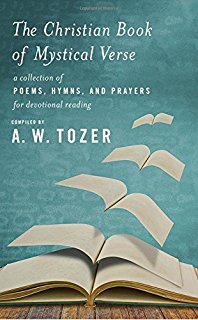
7 Passages From “The Christian Book Of Mystical Verse”

A.W. Tozer had a great ear for poetry that would help Christians better glimpse the heart of God. In his collection called The Christian Book Of Mystical Verse he shares dozens of these poems. Check out my review of this collection by clicking here, and then enjoy these short passages I have highlighted.

If you enjoy poetry, I post a new poem every Saturday. Enter your email address in the box to the right, and click “Sign me up!” to be notified whenever a new poem is posted.

We from Thy oneness come,
Beyond it cannot roam,
And in Thy oneness find our one eternal home. —Frederick William Faber

Break off your tears, ye saints, and tell
How high your great Deliverer reigns;
Sing how He spoiled the hosts of hell,
And led the monster death in chains:
Say, Live forever, wondrous King!
Born to redeem, and strong to save;
Then ask the monster, Where’s thy sting?
And, Where’s thy victory, boasting grave? —Isaac Watts

Thus doth Thy grandeur make us grand ourselves;
’Tis goodness bids us fear;
Thy greatness makes as brave as children are,
When those they love are near. —Frederick William Faber

My sins, my sins, my Savior!
They take such hold on me,
I am not able to look up,
Save only Christ to Thee;
In Thee is all forgiveness,
In Thee is abundant grace,
My shadow and my sunshine
The brightness of Thy face. —John S.B. Monsell

Then, my soul, in every strait,
To thy Father come, and wait;
He will answer every prayer:
God is present everywhere. —Oliver Holden

O Love Divine! that stoop’st to share
Our sharpest pang, our bitterest tear,
On Thee we cast each earth-born care,
We smile at pain while Thou art near. —Oliver Wendell Holmes

My heart is at the secret source
Of every precious thing.
Now the frail vessel Thou hast made
No hand but Thine shall fill;
For the waters of the earth have failed,
And I am thirsty still. —Anna Laetitia Waring

False Peace

“A false peace is sweeping through many churches today, a peace that will fail in the troubled days ahead. Moses called stubborn Israel ‘self-blessed,’ meaning self-deceived. He warned Israel that a curse would come upon all wicked, disobedient children of God who walked in idolatry. They would plaster over their sinful ways with a false sense of peace: ‘When he hears the words of this curse, that he bless himself in his heart, saying, I shall have peace, though I walk in the imagination of mine heart’ (Deuteronomy 29:19).

Moses is describing the child of God who decides to satisfy his lust for evil by finding a cozy doctrine that tells him he’s still saved, heaven bound—while still sinning. He says to himself, ‘I will do as I please and still not lose the peace in my heart.’ False peace!” —David Wilkerson (emphasis added)

God Prepares Us For Battle

“See you not, then, that God may take away your comforts and your privileges, to make you the better Christians? Why, the Lord always trains His soldiers, not by letting them lie on feather-beds, but by turning them out, and using them to forced marches and hard service. He makes them ford through streams, and swim through rivers, and climb mountains, and walk many a long march with heavy knapsacks of sorrow on their backs. This is the way in which He makes them soldiers—not by dressing them up in fine uniforms, to swagger at the barrack gates, and to be fine gentlemen in the eyes of the loungers in the park. God knows that soldiers are only to be made in battle; they are not to be grown in peaceful times. We may grow the stuff of which soldiers are made; but warriors are really educated by the smell of powder, in the midst of whizzing bullets and roaring cannonades, not in soft and peaceful times.

“Well, Christian, may not this account for it all? Is not thy Lord bringing out thy graces and making them grow? Is He not developing in you the qualities of the soldier by throwing you into the heat of battle, and should you not use every appliance to come off conqueror?” —Charles Spurgeon (emphasis added)

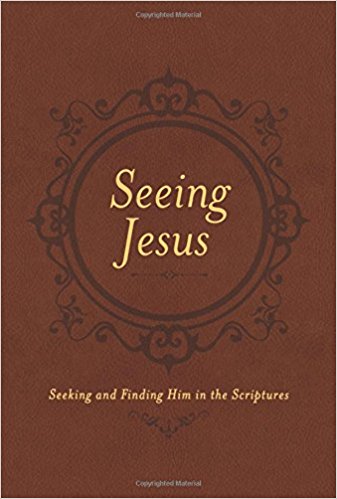
9 Quotes From “Seeing Jesus”

Nancy Guthrie marvelously shows us how Jesus links the Old Testament prophesies with His New Testament activities. This book makes the Old Testament come alive! Check out my full book review by clicking here, and then enjoy a few quotes from this book.

“satan’s power is wielded in the world in the form of death. What gives him that power is sin and the estrangement from God it brings. But on the Cross, Jesus did what was necessary for sinners to be reconciled with God. The devil thought he was defeating Christ, but in reality Christ was reconciling us to God, defeating the devil, and delivering us out of his clutches.”

“It has always been God’s way to use the weak, the foolish, the imperfect—even the shamefully sinful but ultimately repentant—in His redemptive plan. It is His glory to do so, and will be into eternity.”

“God has always wanted His people to know Him—not in a generic or shallow way, but personally, as He truly is. So He revealed Himself in a progressive way, not only through His name, but also through His glorious presence that dwelt in the Temple, through the Law, and through His mighty deeds on behalf of His people. But these revelations all led up to a definitive revelation in the Person of Jesus.”

“Our security in Christ frees us to enjoy His Sabbath rest. Christ fills our hearts with the same love He has for His Father so that we can honor our parents. Christ fills us with His very own faithfulness so that we can live in sexual purity. He convinces us of all that is ours in Him eternally so that we can stop coveting the things other people have that will not last beyond this life. As we refuse to allow anything else to be a god to us; we honor His name, His day, and our parents; as we value life; as we live in sexual purity and fidelity; as we nurture contentment and integrity, we’re not being merely legalistic. The grace of God is at work in our lives, making us holy and happy in God.”

“Jesus was less interested in explaining Himself to Nicodemus than in offering Himself to Nicodemus. … Jesus wanted Nicodemus to understand that we, too, have been bitten—not by a poisonous snake, but by the poison of sin. We, too, need a cure or we face certain death. And just as God provided the cure to His people in the desert, so has He provided a cure to us. But to experience healing requires something of us. We have to look to Jesus.”

“Jesus came into the world to make God knowable so that we can truly love Him with all our hearts, souls, and minds.”

“Jesus came the first time to offer forgiveness rather than bring down fire. He came down the first time to experience the fiery judgment of God in the place of guilty sinners. But the day is coming when Jesus will ‘come with His mighty angels, in flaming fire, bringing judgment on those who don’t know God and those who refuse to obey the Good News of our Lord Jesus’ (2 Thessalonians 1:7-8).”

“Whereas Proverbs describes a way of wisdom that leads to life and to God, Jesus defined that way in much more personal terms. He said, ‘I am the way, the truth, and the life. No one can come to the Father except through Me’ (John 14:6). The decision, as Jesus made clear, is not merely a matter of behavior or companions, but a choice about how we respond to Him, whether or not we will choose Him as our path, our life.”

“The people of Israel had the law; they knew what God wanted from them and for them. But they didn’t have the power or strength to obey. They knew what to do, but they didn’t have the ‘want-to’ to live as God commanded and to love Him as He desired. God’s commands in the covenant of the law were just a list of external rules. …

“In the new covenant, God’s law would be written on the hearts of His people rather than on stone tablets. He would put His Spirit inside His people. In this way, He would give them a love for His will and His ways, and a hatred of sin. His people would finally be able to love His will and walk in His ways because they would want to.”

Thinking Christianly

“If you read history you will find that the Christians who did most for the present world were just those who thought most of the next. The Apostles themselves, who set on foot the conversion of the Roman Empire, the great men who built up the Middle Ages, the English Evangelicals who abolished the Slave Trade, all left their mark on Earth, precisely because their minds were occupied with heaven. It is since Christians have largely ceased to think of the other world that they have become so ineffective in this.” —C.S. Lewis

“To think secularly is to think within a frame of reference bounded by the limits of our life on earth: it is to keep one’s calculations within this-worldly criteria. To think christianly is to accept all things with the mind as related, directly or indirectly, to man’s eternal destiny as the redeemed and chosen child of God…. There is nothing in our experience, however trivial, worldly, or even evil, which cannot be thought about christianly.” —Harry Blamires

Most of us do not think; we live healthy ordinary lives and don’t bother about thinking at all; but when an upheaval comes from underneath proving that the basis of things is not rational, we find the value of the Bible attitude, which is that the basis of things is tragic and not rational…. We have to live based on our relationship to God in the actual condition of things as they are.” —Oswald Chambers

God wants a child’s heart, but a grownup’s head. He wants us to be simple, single-minded, affectionate, and teachable, as a good children are; but He also wants every bit of intelligence we have to be alert at its job, and in first-class fighting trim.” —C.S. Lewis

“Don’t let anyone capture you with empty philosophies and high-sounding nonsense that come from human thinking and from the spiritual powers of this world, rather than from Christ.” —Apostle Paul (Colossians 2:8)

“We do not think on the basis of Christianity at all. We are taught to think like pagans for six days a week and to reverse the order for one day, consequently in critical moments we think as pagans and our religion is left in the limbo of the inarticulate.” —Oswald Chambers

[Emphasis in these quotes added by me]

To read thought-provoking quotes like this every day, please follow me on Twitter and Tumblr.

Jesus—100% God And 100% Human

Listen to the podcast of this post by clicking on the player below, and you can also subscribe on AppleSpotify, or Audible.

On paper, it seems so simple: “We believe in the Deity of the Lord Jesus Christ. As God’s Son, Jesus was both human and divine.” But trying to wrap our finite human minds around the concept of the full humanity and the full deity of Jesus is challenging!

First off, Jesus was fully human. Both Matthew and Luke record details about Christ’s physical birth, and the writer of Hebrews says that Jesus was made every bit as human as us (Hebrews 2:17).

But Jesus was also fully God. John records how God became flesh in the Person of Jesus (John 1:1-2, 14), and Paul tells us how Jesus chose not to use His deity when He came to earth as a human (Philippians 2:6-8).

I know that anytime we say, “God is like…” we’ve already sold ourselves short, but I’d like to try one analogy that’s been helpful for me.

Imagine a coin that has two distinct sides. While we are looking at one side (heads), we cannot see the other side (tails) but that doesn’t mean the other side has ceased to exist. In fact, if we were able to split that coin in half, so that there was only a heads and a tails, we haven’t cut the value of the coin in half, but we’ve made the coin of no value at all! 

In the Greek language of the New Testament, there are a couple of words for “knowing”: one is gnosis and the other oido. Together these words combine head knowledge and heart knowledge, or knowledge by study and knowledge by experience.

C.S. Lewis captures the idea this way: “It is Christ Himself, not the Bible, who is the true Word of God. The Bible, read in the right spirit and with the guidance of good teachers, will bring us to Him.”

Just as Jesus was both God and Man, we are to use both our mind and our heart to know Him.

To focus on the “heads” side—the deity of Jesus—is to pervert gnosis into gnosticism, and deny the humanity of Jesus. To focus on the “tails” side—the humanity of Jesus—is to pervert gnosis into agnosticism, and deny the deity of Jesus. True gnosis keeps both sides in mind: Deity and humanity.

To truly know THE Word of God (Jesus) in all His humanity and in all His deity, we need to study the Word of God. We also need the help of the Holy Spirit. I like the Old English wording of this verse—Ye have an unction [charisma] from the Holy One, and ye know [gnosis] all things (1 John 2:20).

So read your Bible, but not just to read your Bible. Ask the Holy Spirit to make THE Word known to you. Live in the balance of gnosis as you get to know Jesus more deeply and personally.

(When Jesus proclaimed His “I Am” statements in the New Testament, He was tying Himself to all of the “Jehovah” titles of the Old Testament. Check out I Am Jehovah.)

This post is a part of our series studying our foundational beliefs. If you would like to read more about the first foundational beliefs we have discussed, check out this post on the inspiration of Scripture, and this post on the Trinity.

►► Would you please prayerfully consider supporting this ministry? My Patreon supporters get behind-the-scenes access to exclusive materials. ◀︎◀︎

Real Faith Is Dangerous

the-bad-habits-of-jesus“We all need to learn the relationship between real faith that could put us into dangerous situations and the real danger of misinterpreting the Scriptures to our own advantage. Wrong interpretations can yield pharisaical commitments to practices and rituals rather than to the Person of Jesus. But true faith that walks the talk and toes the line of true discipleship can be downright dangerous. This is the line the Jesus regularly walked, and it is the same line that He still calls His followers to find and walk today.

“Faith is not a synonym for fail-safe.” —Leonard Sweet, in The Bad Habits Of Jesus