Listen to the podcast of this post by clicking on the player below, and you can also subscribe on Apple or Spotify.
Psalm 93 opens with these powerful words: The LORD reigns.
Consider this: When we see the word LORD in all capital letters in our English translations of the Bible, we are reading God’s covenant name—Yahweh or Jehovah. This Limitless Power allows us to call Him by His personal name!
How can our finite minds even begin to fathom this? Listen to the psalmist’s words—
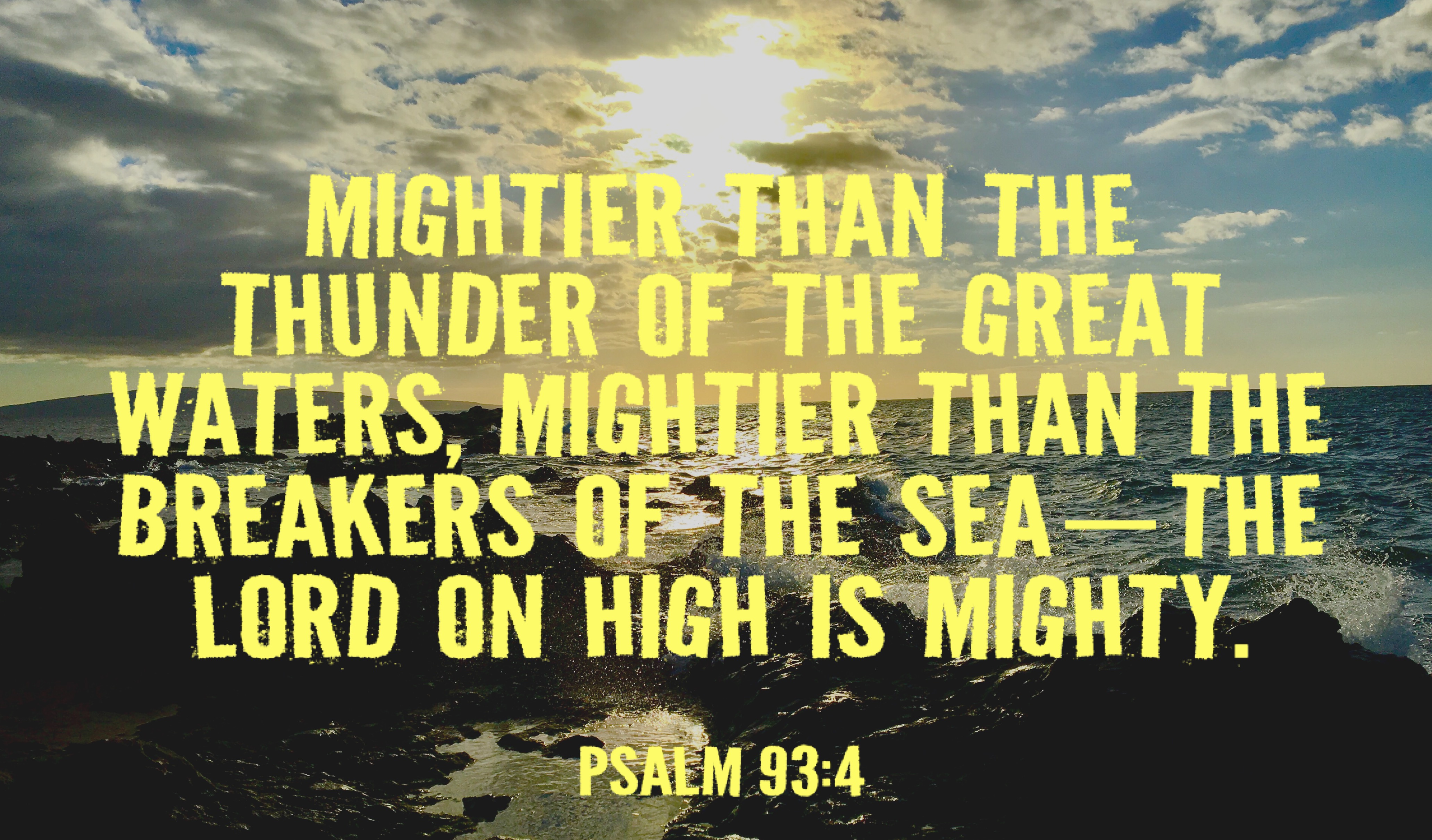
The LORD reigns, He is robed in majesty; the LORD is robed in majesty and is armed with strength. The world is firmly established; it cannot be moved. Your throne was established long ago; You are from all eternity. The seas have lifted up, O LORD, the seas have lifted up their voice; the seas have lifted up their pounding waves. Mightier than the thunder of the great waters, mightier than the breakers of the sea—the LORD on high is mighty. Your statutes stand firm; holiness adorns Your house for endless days, O LORD.
You can almost hear this psalmist struggling to help us comprehend the majesty of God. But how does a molecule comprehend the vastness of a planet? Creation sometimes roars and sometimes thunders, but even that only shows us a small glimpse of the Creator.
Do you see how established, orderly, firm, and secure this universe is? Even it had a starting point. Its Creator, however, has existed for all of eternity!
Have you ever been to the ocean and felt the pounding of the waves and heard the deafening roar of the breakers? That’s barely a toe-tapping of the might of Yahweh.
In the closing verse of this psalm, we read these words: “Your statutes stand firm.” Jehovah has given us a way to begin to comprehend Him. He has given us His statutes. This God who is unlimited in power has given us words we can live by. We can rely on them because they are backed by this limitless God! His promises stand firm forever. Nothing can shake God or His Word, so that means nothing can shake me when I stand on Him.
Standing on God’s Word means we are standing on Limitless Love and Limitless Strength.
When we first meet Boaz, he is described as “a man of standing.” Some Bible translations say “a man of wealth,” which is an acceptable definition. In fact, the word can mean strength, wealth, valor, or prominence, but the root word means something brought forth out of travail and pain. That tells us that Boaz wasn’t born a man of standing, he became a man of standing by going through difficult times, not giving in to the downward slide of culture, and remaining true to God.
Boaz had a steel-forged integrity!
Believe me, it would have been easy for Boaz to compromise! This was a dark time of selfishness in Israel’s history. A time where just doing the bare minimum was acceptable because most of the Israelites were selfishly doing whatever would benefit them (Judges 21:25).
The other description we read about Boaz is that he is a “kinsman-redeemer.” This same word is used in this verse: “Plead my cause and redeem me; revive me and give me life according to Your word” (Psalm 119:154). A redeemer is one who is close by to help, has the strength or resources to help, and is willing to help. Of course, the perfect example of a Kinsman-Redeemer is Jesus, who became our human kinsman so that He could rescue us (see Hebrews 2:14; Philippians 2:7-8).
Boaz was given the opportunity to do this for Naomi and Ruth, and he seized the opportunity with gusto. Far from being a “bare minimum” man, Boaz always went the second mile to bless Ruth and Naomi:
he practiced the “hospitality clause” plus he protected Ruth and gave her more than was required
he provided food for his workers plus he provided food for Ruth and Naomi
he blessed his workers plus he blessed Ruth in the name of the Lord
Ultimately, Boaz did indeed become the kinsman-redeemer for Naomi (by paying off all the debts of her deceased husband) and for Ruth (by marrying this non-Israelite woman and bringing her into the family line of Jesus).
Boaz was King Solomon’s great-great-grandfather. When Solomon was completing the temple in Jerusalem, he erected two pillars at the entrance: one was named Boaz, and the other was Jakim (with means “God will establish”). Taken together these pillars proclaim the message: By His integrity and faithfulness, God establishes and makes firm.
Boaz exhibited integrity at every opportunity, which is what forged his character and made him “a man of standing.” Boaz demonstrated that integrity is really faith in God plus faith-filled, second-mile, others-focused actions.
“Faith without works is just wishful dreaming.
Works without faith is just religious posturing.
Works with faith is God-glorifying!” —Craig T. Owens
Men of God, please remember this:
Every Word of God that you read or hear is a test—will you obey Him or will you compromise?
Every setback you go through is a test—will you learn and grow or will you sulk and shrink back?
Every success you experience is a test—will you bless others or will you hoard your blessings?
Every decision you make in a dark culture is a test—will you just have faith, just have bare-minimum works, or will you exhibit the steel-forged integrity that comes from putting your faith to work?
God’s blessing on your life of integrity will show others a picture of Jesus. God’s blessing on your life of going the second mile will show others that it is God who establishes and makes firm.
Don’t rob your family, don’t rob us, don’t rob future generations of the outpouring of God’s blessing because you are selfish or compromising. Stand strong, trust God, go the second mile, be the kinsman-redeemer for those in need, and then watch for God’s blessings!
Listen to the podcast of this post by clicking on the player below, and you can also subscribe on Apple or Spotify.
…God has done marvelous things; His right hand and His holy arm have wrought salvation for Him (Psalm 98:1 AMP).
I like The Message paraphrase of this verse too: “Sing to God a brand-new song. He’s made a world of wonders! He rolled up His sleeves, He set things right!”
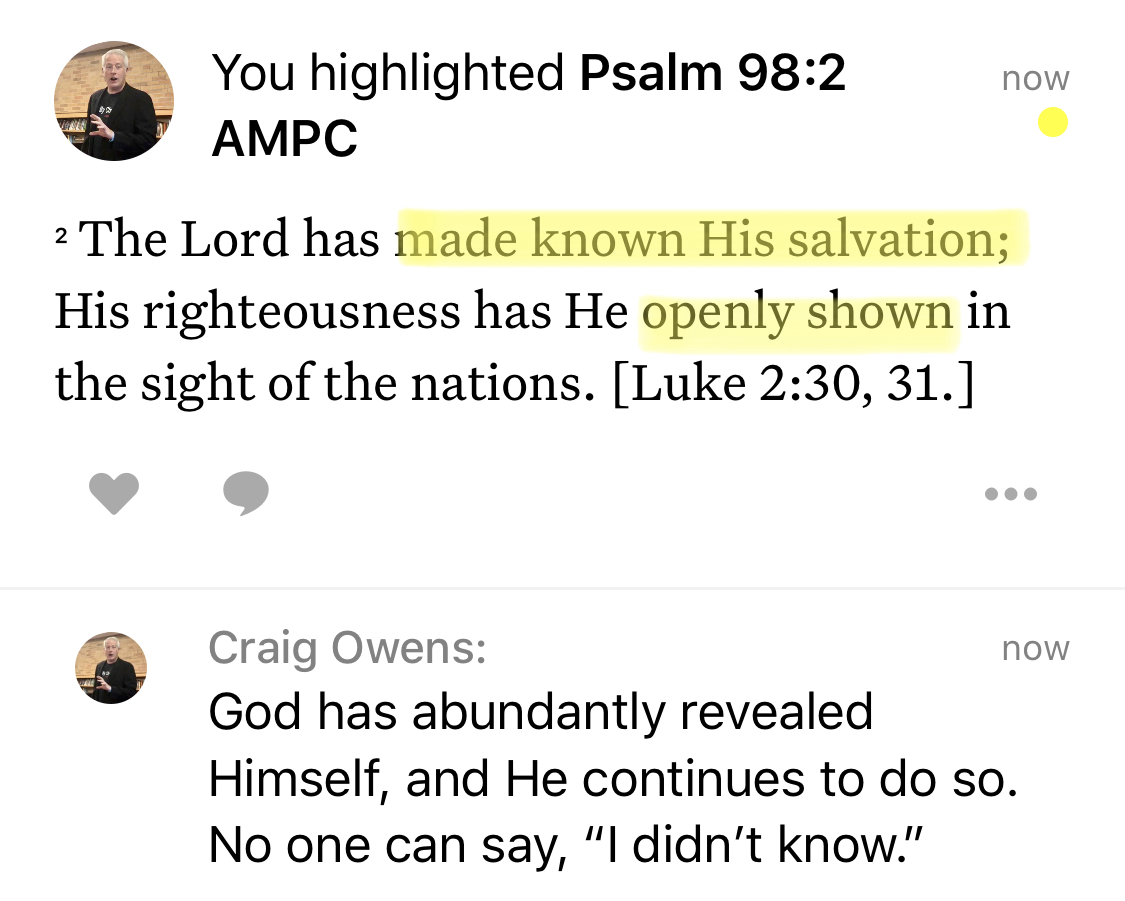
This psalmist happily extols all of the ways God the Creator has revealed Himself to mankind:
He has done marvelous things
the Lord has made His salvation known
He has revealed His righteousness to the nations
the ends of the earth have seen the salvation of our God
let the sea resound, and everything in it
let the world praise, and all who live in it
let the rivers clap their hands
let the mountains sing together for joy
This tells me how fitting it is for us to use all of the sciences—every “ology” to declare God’s greatness: biology, astronomy, cosmology, chemistry, psychology, anthropology, and even theology. All observations point to the glory of God.
C.S. Lewis wrote,
“If I swallow the scientific cosmology as a whole (that excludes a rational, personal God), then not only can I not fit in Christianity, but I cannot even fit in science. If minds are wholly dependent on brains, and brains on biochemistry, and biochemistry (in the long run) on the meaningless flux of the atoms, I cannot understand how the thought of those minds should have any more significance than the sound of the wind in the trees. And this is to me the final test. … Christian theology can fit in science, art, morality, and the sub-Christian religions. The scientific point of view cannot fit in any of these things, not even science itself. I believe in Christianity as I believe that the Sun has risen not only because I see it but because by it I see everything else.”
The apostle Paul agreed with this psalmist, telling us that creation itself is enough proof that there is a God. But God went further: He gave us His word, He gave us prophets to remind us of His word, and ultimately, He sent His Son Jesus to earth. Paul concluded that “men are without excuse—altogether without any defense or justification” for refusing to believe in God.
Don’t ever buy into the lie that science and Christianity are incompatible. All of the discoveries of science point to a Creator. We use all of these “ologies” because we never know which one may eventually get someone’s attention.
Famed scientist Sir Isaac Newton noted, “In the absence of any other proof, the thumb alone would convince me of God’s existence.”
Let’s join our minds, our hearts, and our voices in declaring the greatness of our Creator at every opportunity we have!
Listen to the podcast of this post by clicking on the player below, and you can also subscribe on Apple or Spotify.
Jesus lived out the example of wholly healthy growth. The way Dr. Luke records it, the pinnacle of Christ’s health (and our health too) is seen in our relationships with other people.
Why is relational maturity at the peak of the pinnacle? How else could you know whether you truly have mental, physical, and spiritual health unless it’s put to the test? And the ultimate test is how we react when we’re caught off guard. Our so-called Freudian slips can reveal an area of immaturity. C.S. Lewis reminds us that the suddenness of the provocation that caused the slip didn’t create our immature response, but it actually revealed what is really inside our hearts. Surely our unplanned reactions are a better indicator of our spiritual maturity than our planned actions!
Jesus told us that our “slips” reveal what’s really inside (Matthew 15:19), but are these really unknown to us? If we’re really honest, how many times do we think unpleasant things without saying them or doing them? The Holy Spirit—the Spirit of Truth—knows so well what’s on the inside (Psalm 139:1-4).
When we experience one of these slip ups, the devil loves to pounce! Paul calls it “sin seizing an opportunity” (Romans 7:7-11). But even as sin pounces, Paul assures us, “Therefore there is no condemnation for those who are in Christ Jesus” (Romans 8:1).
What is the “therefore” there for? After the “therefore” the Holy Spirit as the Spirit of Adoption reminds us we are in Jesus and children of God, and the Holy Spirit as the Spirit of Intercession help us pray perfect, childlike prayers. So what comes before the “therefore” must be something that makes us feel unworthy, distant, and condemned.
Paul explains that “we died to sin” (Romans 6:2). That word “died” means to be separated from one thing which brings about the destruction of the other thing. When we are separated from God by our sin we are dead, when are separated from our sin by God we are alive. At that moment of salvation, we stand before Almighty God justified—just as if I’d never sinned. That is irrevocable: God will never go back on that, we will never slip away from His grace. But that moment of salvation also begins a lifelong process of sanctification—or as I like to say it saint-ification.
Remember that pyramid of growth Jesus demonstrated for us? Paul says, “I myself in my mind am a slave”(Romans 7:25). The mind is where the Spirit of Truth begins His maturing, saint-ifying process in us. As our minds are transformed, then our bodies and our mouths can live out a Christlike lifestyle (see Romans 12:1-2). It’s this mind and body transformation that matures our spiritual health, which is then revealed in our relationships with others.
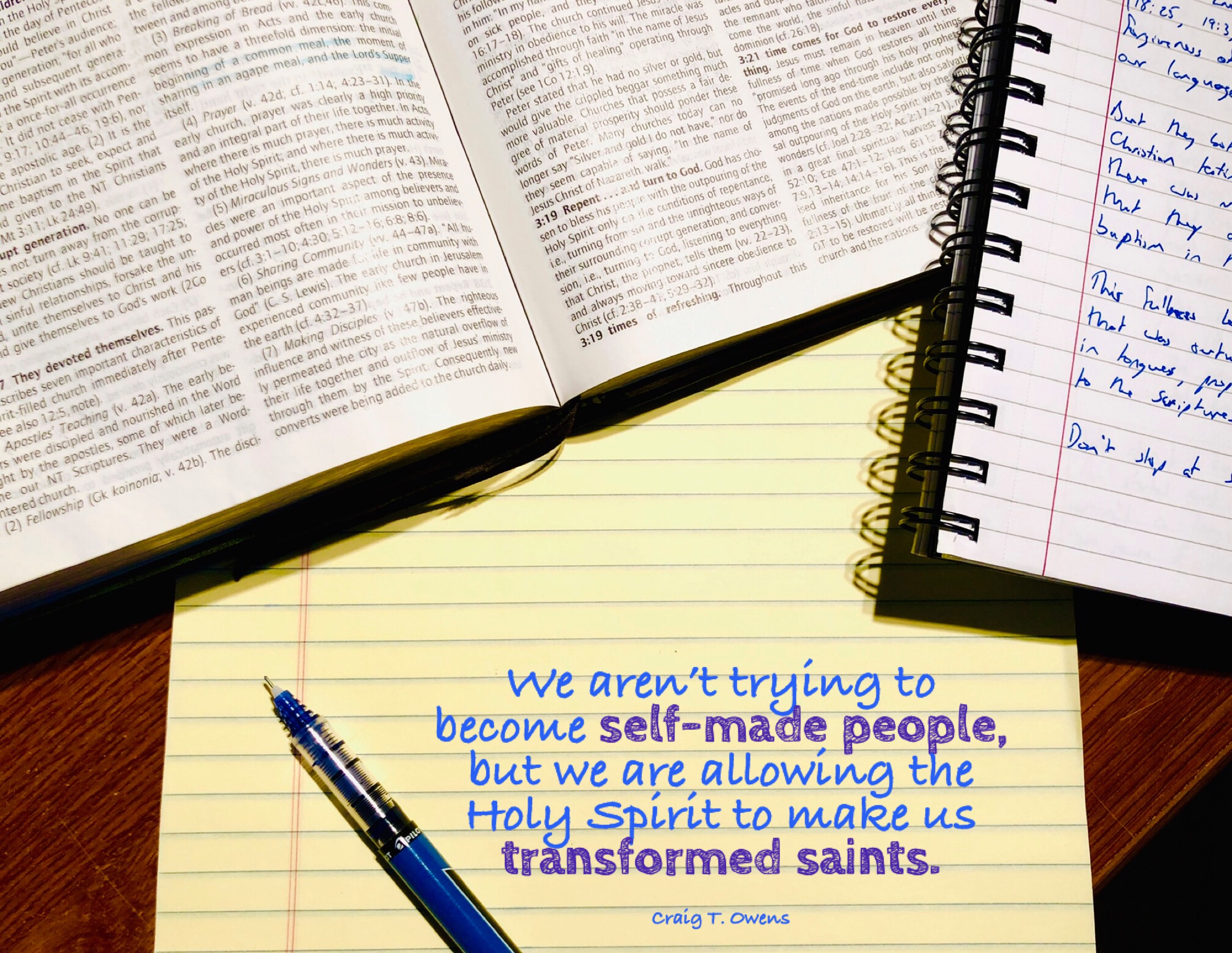
Notice that it is after we have been through this transformation of mind, body, and spirit that Paul tells us the standard for God-honoring living. This is where we see even our unplanned reactions becoming more and more Christ-like (Romans 12:9-21). We cannot live out this Romans 12 mandate solely on our own willpower. We aren’t trying to become self-made people, but instead, we are allowing the Holy Spirit to make us transformed saints. Transformed saints that are known by their unplanned Christlike reactions.
This is why I keep stressing for Christians to not stop at salvation, but to press on to be baptized in the Holy Spirit.
Listen to the podcast of this post by clicking on the player below, and you can also subscribe on Apple or Spotify.
For they have devoured Jacob and devastated his homeland. (Psalm 79:9)
This verse is at the middle of this psalm, which in Hebrew literature makes it the central theme of this psalm. Asaph describes something that is not a very pretty situation.
Asaph says “they” have done this. But to whom have they done it? To the Israelites? Yes, but it goes deeper than that. Or should I say it goes higher than that? “They” have actually done these terrible things to God Himself—
Your inheritance is invaded
Your temple is destroyed
Your servants are attacked
Your name is dishonored
insults are hurled at You
In the New Testament, Jesus said His followers should expect persecution. But notice that Jesus said this persecution was because of Him. “They” are not really attacking Christians, but “They” are attacking Jesus Himself. When Jesus revealed Himself to the persecutor of Christians named Saul of Tarsus, He said to him, “Saul, why do you persecute Me?”
Asaph recognizes “They” are attacking God, so he also expects that God will deal with them—
may Your mercy meet us
may Your name be glorified
may Your strong arm be revealed
may Your sheep be protected
may You be praised forever
When—not if—persecution comes our way, we must remember to shift our paradigm from “They” to “You.” “They” are not to be feared, but God is to be feared and reverenced. “They” don’t get the final word, but God, “You” get the final and decisive word. When the attacks come because you stand for Christ, take your eyes off of your persecutors and put them on your God.
This is a weekly series with things I’m reading and pondering from Charles Spurgeon. You can read the original seed thought here, or type “Thursdays With Spurgeon” in the search box to read more entries.
Listen to the podcast of this post by clicking on the player below, and you can also subscribe on iTunes or Spotify.
An Assured Eternity
The life of God in the soul is not transient but abiding. Not temporary but eternal. Some think that the life of God in the believer’s soul may die out. But how then could it be eternal? If it dies, it is not eternal life. If it is eternal life, it cannot die. … We are said to have been made ‘partakers of the divine nature’ (2 Peter 1:4). Surely this means, among other things, that we receive an undying life. …
If our life is Christ’s life, we will not die until Christ dies. …
This is John’s desire for you: that you would believe with all your heart and soul and strength. He would have you believe more constantly, so that you may say, ‘My heart is steadfast, O God, my heart is steadfast; I will sing and give praise’ (Psalm 57:7). It is not always so with us. We are at times chicken-hearted. We play the man today and the mouse tomorrow. Lord, have mercy upon us. We are an inconsistent people, fickle as the wind. The Lord would have us abide always in Him with strong and mighty confidence, being rooted and built up in Him. He would have us trust courageously.
From The Blessing Of Full Assurance
John the Beloved wrapped up his Gospel with this statement: “But these are written that you may believe that Jesus is the Messiah, the Son of God, and that by believing you may have life in His name” (John 20:31). The word John uses for “life” is the Greek word zoe. This is how zoe is defined—
Life real and genuine, a life active and vigorous, devoted to God, blessed, in the portion even in this world of those who put their trust in Christ, but after the resurrection to be consummated by new accessions…and to last for ever. (Strong’s Greek dictionary)
Do you believe Jesus died and rose again? Based on that faith, have you asked the Father to forgive you of your sins? If so, then listen for the voice of the Holy Spirit in your heart that is giving you full assurance of promises like these:
Everyone who believes may have eternal life in [Jesus] (John 3:15)
Whoever believes in [Jesus] shall not perish but have eternal life (John 3:16)
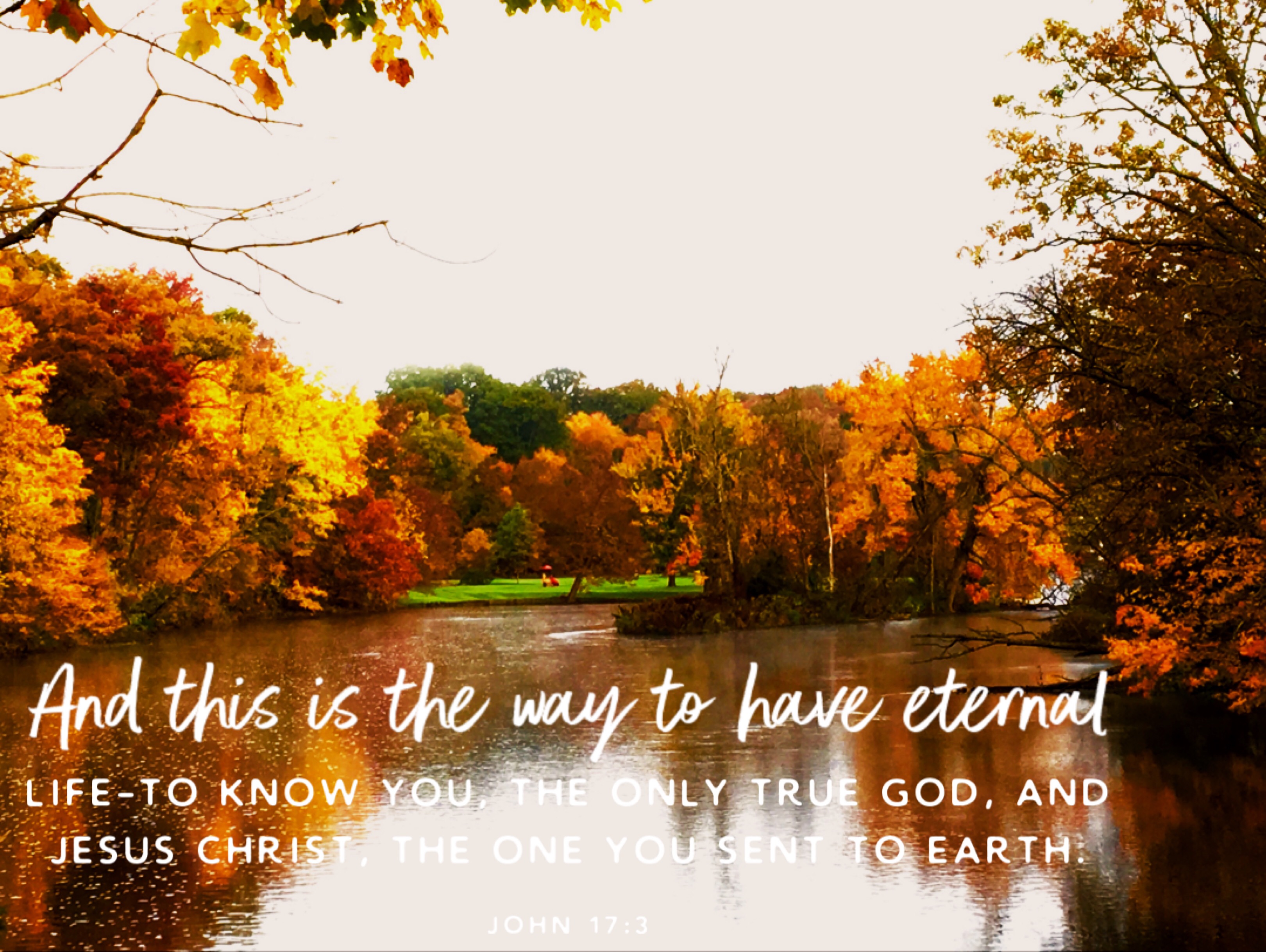
Now this is eternal life: that they know You, the only true God, and Jesus Christ, whom You have sent (John 17:3)
Whoever believes in the Son has eternal life (John 3:36)
Whoever drinks the water I give them will never thirst. Indeed, the water I give them will become in them a spring of water welling up to eternal life (John 4:14)
Because I live, you also will live (John 14:9)
Whoever hears My word and believes Him who sent Me has eternal life and will not be judged but has crossed over from death to life (John 5:24)
My Father’s will is that everyone who looks to the Son and believes in Him shall have eternal life, and I will raise them up at the last day (John 6:40)
When Christ, who is your life, appears, then you also will appear with Him in glory (Colossians 3:4)
Resting in the hope of eternal life, life which the ever truthful God Who cannot deceive promised before the world or the ages of time began (Titus 1:2)
I write these things to you who believe in the name of the Son of God so that you may know that you have eternal life (1 John 5:13)
Friend, this is why it’s so important for us to regularly read the Bible. We need to have our faith bolstered by hearing these rock-solid, unchanging, eternal words of God so that we can live each day in full assurance of our salvation and eternal life.
Listen to the podcast of this post by clicking on the player below, and you can also subscribe on Apple or Spotify.
Have you ever read the children’s book Alexander and the Terrible, Horrible, No Good, Very Bad Day? Poor Alexander, his day just seemed to get worse—nothing was going right. He wakes up with gum in his hair, trips on his skateboard, and drops his favorite sweater in the sink filled with water. Breakfast doesn’t get any better, things go sideways at school, his least-favorite food is served for dinner, his nightlight burns out. And if all that’s not bad enough, the cat decides to sleep with his brother instead of with him.
Can you relate to Alexander?
Doesn’t it seem like when one thing goes wrong, everything goes wrong? And if things go wrong for too many days in a row, it seems like the bad times are lasting forever! All of us have a tendency to exaggerate during the dark days.
A psalmist named Asaph seemed to be having a terrible, horrible, no good, very bad day of his own. Listen to some of his words, including the exaggerations of how bad he thought everything was:
Why have You rejected us forever, O God? … Your foes roared in the place where You met us… They said in their hearts, “We will crush them completely!” They burned everyplace where God was worshiped in the land. … How long will the enemy mock you, O God? Will the foe revile Your name forever? Why do You hold back Your hand? (Psalm 74:1, 4, 8, 10, 11)
In the middle of the storm, we tend to not only exaggerate how bad things are but we also seem to lose our bearings and we can even lose sight of God. I think that’s what was happening to Asaph in the first half of his lament. But then we come to the middle verse of this psalm and we notice the beginning of a change in perspective: “But You, O God, are my King from of old; You bring salvation upon the earth” (v. 12).
Aha! In the middle of his terrible, horrible, no good, very bad day, Asaph stopped looking at all the bad things around him and turned his gaze upward. “Look,” he tells himself, “there is God still reigning as the Supreme King!” Asaph begins to recount all that God has done, using the phrase “It was You” who did these miraculous things five times in the next five verses.
In the middle of the storm, Asaph has to remind himself…
God existed before time began
He is still the sovereign ruler in this present moment
He gets the final and decisive word at the end
He never forgets His covenant of love with His people
He defends His cause and His people
His desires can never be thwarted or even delayed a single moment
He is the only One who exists as the Eternal I AM
His love and His power are unmatched and unrivaled anywhere in the universe
He will rise up to save me
My friend, I implore you to remember these words of Asaph. Commit them to your memory now, so that when your terrible, horrible, no good, very bad day happens—when it seems like everything is going to go wrong forever—that you can spot those lying exaggerations, you can turn your gaze upward, and you can find hope in knowing your God not only has all power to save you in the storm, but He has unlimited love that wants to save you through the storm.
Look up, look up, look up and see your God reigning supremely over even the worst terrible, horrible, no good, very bad day.
Listen to the podcast of this post by clicking on the player below, and you can also subscribe on Apple or Spotify.
Do not be far from me, my God; come quickly, God, to help me. (Psalm 71:12)
This is the middle verse of this psalm and the heart of this psalm’s message. This verse speaks not only of God’s omnipresence and His omnipotence, but it also speaks of a lifelong, increasing awareness of His presence and power.
What a blessing to know that I have a sure Rock to which I can always go (v. 3), and a Savior whom I have had as my confidence since my youth (v. 5). This hopeful assurance causes me to praise God—the more I hope, the more I praise. As a result, my praise grows from an occasional response, to a daily practice, to a moment-by-moment lifestyle.
Listen to these words from the psalmist:
I will ever praise You
my mouth is filled with Your praise, declaring Your splendor all day long
I will always have hope; I will praise You more and more
my mouth will tell of Your righteousness, of Your salvation all day long
I declare Your marvelous deeds
my tongue will tell of Your righteous acts all day long
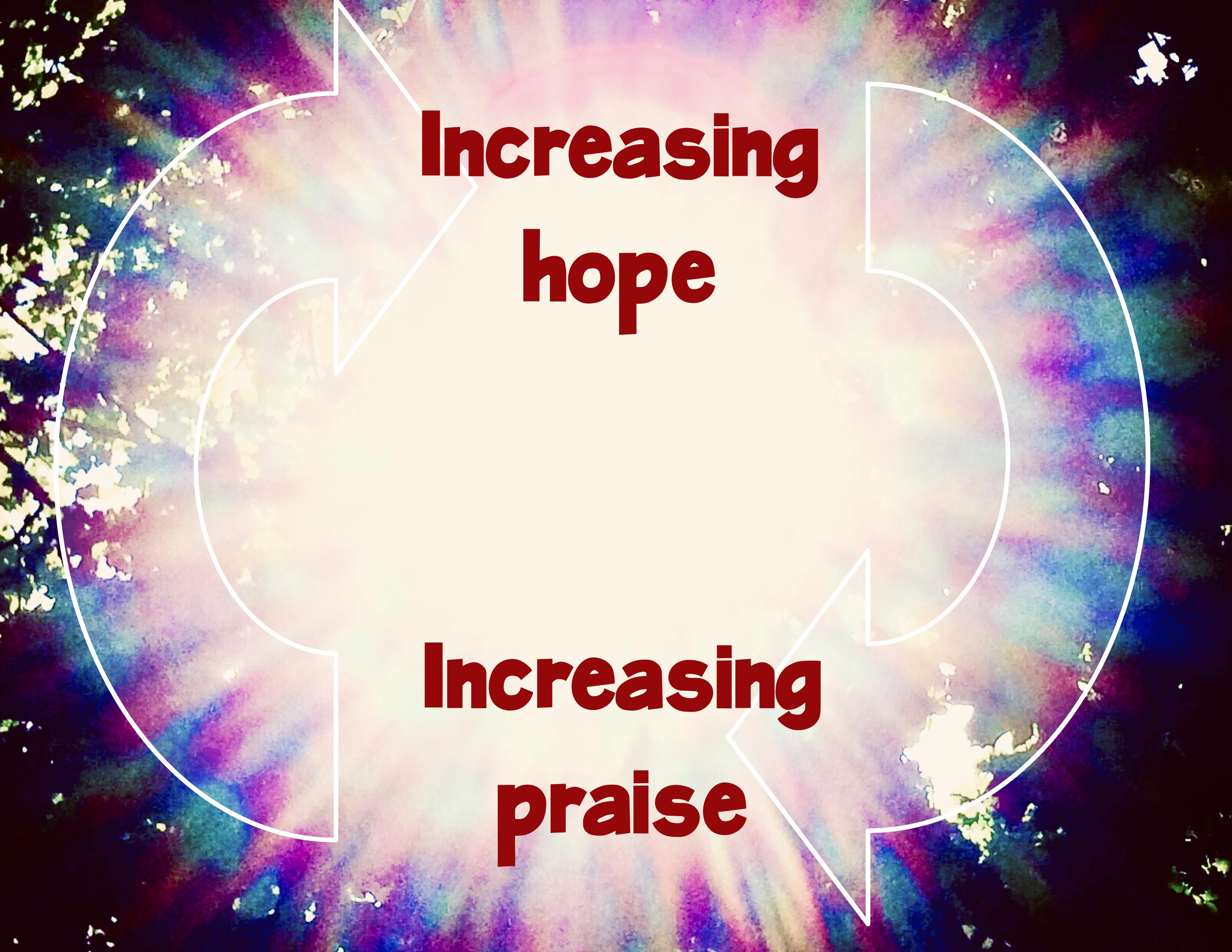
My hope fuels my praise. My praise strengthens my hope. The more I realize hope, the more I praise God, and the more I praise God, the more hope-filled I become!
My friend, there are more reasons to praise God than you can possibly count but go ahead and start counting them anyway. As the words of the old hymn remind us, “Count your blessings, name them one by one … and it will surprise you what the Lord has done.”
May our tongues be continually telling of God’s blessings, and may our praise be continually filling us with renewed hopefulness of His future blessings!
This is a weekly series with things I’m reading and pondering from Charles Spurgeon. You can read the original seed thought here, or type “Thursdays With Spurgeon” in the search box to read more entries.
Listen to the podcast of this post by clicking on the player below, and you can also subscribe on iTunes or Spotify.
Value The Scriptures
John wrote to believers, ‘These things I have written to you who believe in the name of the Son of God’ (1 John 5:13). It is worthy of note that all the Epistles are so written. …
We do not wonder that certain men do not receive the Epistles, for they were not written to them. … Here is a will and you begin to read it. But you do not find it interesting. It is full of words and terms that you do not take the trouble to understand because they have no relation to yourself. But should you, in reading that will, come upon a clause in which an estate is left to you, I guarantee you that the nature of the whole document will seem changed to you.
You will be anxious now to understand the terms and to make sure of the clauses, and you will even wish to remember every word of the clause that refers to yourself. O dear friends, you may read the testament of our Lord Jesus Christ as a testament of love to yourselves, and then you will prize it beyond all the writings of the sages. …
But as these things are written to believers, believers ought especially to make themselves acquainted with them and to search into their meaning and intent. … Do not, I beseech you, neglect to read what the Holy Spirit has taken care to write to you. …
Value the Scriptures. … The saint can say, ‘Oh, how I love Your law!’ (Psalm 119:97). If we cannot say so, something is wrong with us. If we have lost our relish for Holy Scripture, we are out of condition and need to pray for spiritual health.
From The Blessing Of Full Assurance
The Bible is God’s love letter to you. I love what Smith Wigglesworth said about the Word of God:
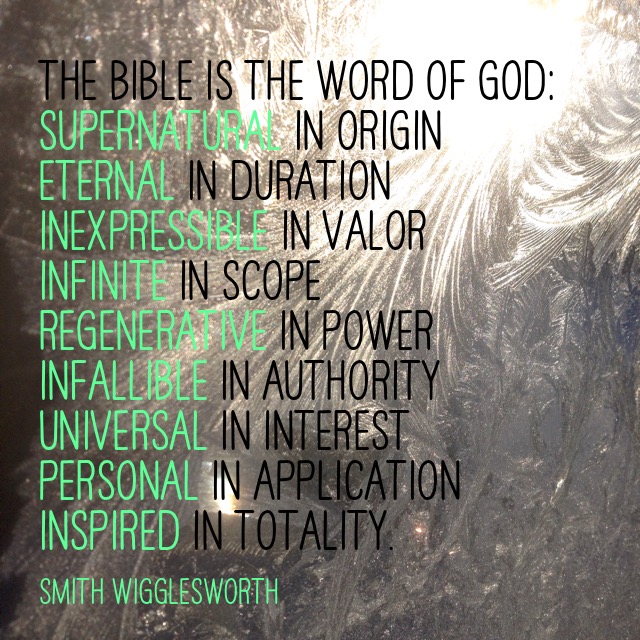
“Never compare this Book with other books. Comparisons are dangerous. Never think or say that this Book contains the Word of God. It is the Word of God. It is supernatural in origin, eternal in duration, inexpressible in value, infinite in scope, regenerative in power, infallible in authority, universal in interest, personal in application, inspired in totality. Read it through. Write it down. Pray it in. Work it out. And then pass it on.”
I spent a whole week blogging about my favorite Book. You can check out those posts by clicking here. In the meantime, let me encourage you in the strongest possible terms: Make the time to read your Bible every single day. Doing so will totally transform your life!
David was uncomfortable with the spiritual status quo that had seemed to descend on him and the people around him. He desperately wanted to stoke the passion of his heart to burn hot for God again. So he prayed, he fasted, he abased himself, he cried out to God. Zeal for God consumed David!
In both of them we see a passion for God that moved them to action, but action that also aroused the anger of those who preferred the passivity of “religious activity” to the realness of God’s presence. Both David and Jesus became the targets of insults, scorn, and mockery.
Just as Jesus would announce 1000 years later, David expressed the same motivation that prompted his zealous action: God’s glory—
may those who hope in You not be disgraced because of me
may those who seek You not be put to shame because of me
may Your salvation protect me
Zeal for a real closeness to God’s presence is rare.
Zeal for that intimacy upsets hypocrites.
Zeal for God empowers others who aren’t satisfied with merely playing at religion.
Zeal for God glorifies God.
And most importantly: Zeal for God pleases God!
When you see play actors and religionists blocking hungry seekers from coming closer to God, I pray that your zeal, too, burns white hot. Be prepared to be the target of scorn, but know that God’s smile on your zeal for Him far outweighs their insults.



 Psalm 93 opens with these powerful words: The LORD reigns.





 Craig T. Owens