Perspective In The Middle Of The Storm

Listen to the podcast of this post by clicking on the player below, and you can also subscribe on Apple or Spotify.

Have you ever read the children’s book Alexander and the Terrible, Horrible, No Good, Very Bad Day? Poor Alexander, his day just seemed to get worse—nothing was going right. He wakes up with gum in his hair, trips on his skateboard, and drops his favorite sweater in the sink filled with water. Breakfast doesn’t get any better, things go sideways at school, his least-favorite food is served for dinner, his nightlight burns out. And if all that’s not bad enough, the cat decides to sleep with his brother instead of with him. 

Can you relate to Alexander? 

Doesn’t it seem like when one thing goes wrong, everything goes wrong? And if things go wrong for too many days in a row, it seems like the bad times are lasting forever! All of us have a tendency to exaggerate during the dark days. 

A psalmist named Asaph seemed to be having a terrible, horrible, no good, very bad day of his own. Listen to some of his words, including the exaggerations of how bad he thought everything was: 

Why have You rejected us forever, O God? … Your foes roared in the place where You met us… They said in their hearts, “We will crush them completely!” They burned every place where God was worshiped in the land. … How long will the enemy mock you, O God? Will the foe revile Your name forever? Why do You hold back Your hand? (Psalm 74:1, 4, 8, 10, 11) 

In the middle of the storm, we tend to not only exaggerate how bad things are but we also seem to lose our bearings and we can even lose sight of God. I think that’s what was happening to Asaph in the first half of his lament. But then we come to the middle verse of this psalm and we notice the beginning of a change in perspective: “But You, O God, are my King from of old; You bring salvation upon the earth” (v. 12). 

Aha! In the middle of his terrible, horrible, no good, very bad day, Asaph stopped looking at all the bad things around him and turned his gaze upward. “Look,” he tells himself, “there is God still reigning as the Supreme King!” Asaph begins to recount all that God has done, using the phrase “It was You” who did these miraculous things five times in the next five verses. 

In the middle of the storm, Asaph has to remind himself…

  • God existed before time began
  • He is still the sovereign ruler in this present moment 
  • He gets the final and decisive word at the end
  • He never forgets His covenant of love with His people 
  • He defends His cause and His people 
  • His desires can never be thwarted or even delayed a single moment 
  • He is the only One who exists as the Eternal I AM
  • His love and His power are unmatched and unrivaled anywhere in the universe 
  • He will rise up to save me 

My friend, I implore you to remember these words of Asaph. Commit them to your memory now, so that when your terrible, horrible, no good, very bad day happens—when it seems like everything is going to go wrong forever—that you can spot those lying exaggerations, you can turn your gaze upward, and you can find hope in knowing your God not only has all power to save you in the storm, but He has unlimited love that wants to save you through the storm. 

Look up, look up, look up and see your God reigning supremely over even the worst terrible, horrible, no good, very bad day. 

►► Would you please prayerfully consider supporting this ministry? ◀︎◀︎
Hope-Fueled Praise

Listen to the podcast of this post by clicking on the player below, and you can also subscribe on Apple or Spotify.

Do not be far from me, my God; come quickly, God, to help me. (Psalm 71:12) 

This is the middle verse of this psalm and the heart of this psalm’s message. This verse speaks not only of God’s omnipresence and His omnipotence, but it also speaks of a lifelong, increasing awareness of His presence and power. 

What a blessing to know that I have a sure Rock to which I can always go (v. 3), and a Savior whom I have had as my confidence since my youth (v. 5). This hopeful assurance causes me to praise God—the more I hope, the more I praise. As a result, my praise grows from an occasional response, to a daily practice, to a moment-by-moment lifestyle. 

Listen to these words from the psalmist: 

  • I will ever praise You
  • my mouth is filled with Your praise, declaring Your splendor all day long 
  • I will always have hope; I will praise You more and more 
  • my mouth will tell of Your righteousness, of Your salvation all day long 
  • I declare Your marvelous deeds 
  • my tongue will tell of Your righteous acts all day long

My hope fuels my praise. My praise strengthens my hope. The more I realize hope, the more I praise God, and the more I praise God, the more hope-filled I become! 

My friend, there are more reasons to praise God than you can possibly count but go ahead and start counting them anyway. As the words of the old hymn remind us, “Count your blessings, name them one by one … and it will surprise you what the Lord has done.” 

May our tongues be continually telling of God’s blessings, and may our praise be continually filling us with renewed hopefulness of His future blessings! 

►► Would you please prayerfully consider supporting this ministry? ◀︎◀︎
Thursdays With Spurgeon—Value The Scriptures

This is a weekly series with things I’m reading and pondering from Charles Spurgeon. You can read the original seed thought here, or type “Thursdays With Spurgeon” in the search box to read more entries.

Listen to the podcast of this post by clicking on the player below, and you can also subscribe on iTunes or Spotify.

Value The Scriptures

     John wrote to believers, ‘These things I have written to you who believe in the name of the Son of God’ (1 John 5:13). It is worthy of note that all the Epistles are so written. … 

     We do not wonder that certain men do not receive the Epistles, for they were not written to them. … Here is a will and you begin to read it. But you do not find it interesting. It is full of words and terms that you do not take the trouble to understand because they have no relation to yourself. But should you, in reading that will, come upon a clause in which an estate is left to you, I guarantee you that the nature of the whole document will seem changed to you.

You will be anxious now to understand the terms and to make sure of the clauses, and you will even wish to remember every word of the clause that refers to yourself. O dear friends, you may read the testament of our Lord Jesus Christ as a testament of love to yourselves, and then you will prize it beyond all the writings of the sages. … 

     But as these things are written to believers, believers ought especially to make themselves acquainted with them and to search into their meaning and intent. … Do not, I beseech you, neglect to read what the Holy Spirit has taken care to write to you. …  

     Value the Scriptures. … The saint can say, ‘Oh, how I love Your law!’ (Psalm 119:97). If we cannot say so, something is wrong with us. If we have lost our relish for Holy Scripture, we are out of condition and need to pray for spiritual health.

From The Blessing Of Full Assurance 

The Bible is God’s love letter to you. I love what Smith Wigglesworth said about the Word of God: 

“Never compare this Book with other books. Comparisons are dangerous. Never think or say that this Book contains the Word of God. It is the Word of God. It is supernatural in origin, eternal in duration, inexpressible in value, infinite in scope, regenerative in power, infallible in authority, universal in interest, personal in application, inspired in totality. Read it through. Write it down. Pray it in. Work it out. And then pass it on.”

I spent a whole week blogging about my favorite Book. You can check out those posts by clicking here. In the meantime, let me encourage you in the strongest possible terms: Make the time to read your Bible every single day. Doing so will totally transform your life!

►► Would you please prayerfully consider supporting this ministry? ◀︎◀︎
Zeal For God

Listen to the podcast of this post by clicking on the player below, and you can also subscribe on Apple or Spotify.

For zeal for Your house consumes me, and the insults of those who insult You fall on me (Psalm 69:9). 

David said this about 1000 years before Jesus lived it out. 

David was uncomfortable with the spiritual status quo that had seemed to descend on him and the people around him. He desperately wanted to stoke the passion of his heart to burn hot for God again. So he prayed, he fasted, he abased himself, he cried out to God. Zeal for God consumed David! 

Jesus wanted all people everywhere to come into His Father’s presence. So when Jesus saw His Father’s house overrun by merchants, effectively keeping people away from the closeness that David and others longed for, He went into action. Zeal for God consumed Jesus! 

In both of them we see a passion for God that moved them to action, but action that also aroused the anger of those who preferred the passivity of “religious activity” to the realness of God’s presence. Both David and Jesus became the targets of insults, scorn, and mockery. 

Just as Jesus would announce 1000 years later, David expressed the same motivation that prompted his zealous action: God’s glory—

  • may those who hope in You not be disgraced because of me
  • may those who seek You not be put to shame because of me
  • may Your salvation protect me 

Zeal for a real closeness to God’s presence is rare.

Zeal for that intimacy upsets hypocrites. 

Zeal for God empowers others who aren’t satisfied with merely playing at religion. 

Zeal for God glorifies God. 

And most importantly: Zeal for God pleases God! 

When you see play actors and religionists blocking hungry seekers from coming closer to God, I pray that your zeal, too, burns white hot. Be prepared to be the target of scorn, but know that God’s smile on your zeal for Him far outweighs their insults. 

►► Would you please prayerfully consider supporting this ministry? ◀︎◀︎
Ruth + Boaz—The Mother’s Day Version

Listen to the podcast of this post by clicking on the player below, and you can also subscribe on Apple or Spotify.

John Maxwell said, “We overestimate what we can do in a day; we underestimate what we can do in a year.” In the case of parents, I think we do the same thing: we lose sight of the big picture when we get bogged down in the details and the pressures of each day. As a result, many times we are unaware of the long-lasting rewards that come from our daily obedience and God’s eternal faithfulness. This was never more true than in the fantastic love story of Ruth + Boaz. 

Last week we looked at the history of Pentecost and what took place 50 days after the Passover, we saw a picture in the Old Testament that was fulfilled in the New Testament. The Jews saw this too. In the Hagiographa (Holy Writings), they picked one of the books of the Old Testament to read at each of the annual Jewish feasts, and the Book of Ruth was selected for Pentecost. I think this was because Ruth herself is in essence a “harvest” of God’s blessing. She is the firstfruits of the non-Jewish people whom God has engrafted into His holy family. 

The story of Ruth’s coming into God’s family is birthed out of heartache. Elimelech and Naomi live in Bethlehem, which means “house of bread,” but it was a time of famine; Elimelech’s name means “God is King,” but Israel had no king and everyone lived for themselves; Naomi’s name means “pleasant,” but her days were bitter (see Judges 21:25; Ruth 1:1-5). 

After Elimelech and his two sons die, Naomi changes her name to Mara (which means bitterness), and yet she hears “that the LORD had come to the aid of His people by providing food for them” (1:6) and she decides to return to Bethlehem. She counsels her daughters-in-law to remain with their families in Moab, but Ruth decides to cling to Naomi. 

In the face of utter hopelessness, Ruth could have chosen what was familiar—her family, her homeland, her gods—but instead she chose to cling to Jehovah. 

Perhaps when she heard that Jehovah had come to the aid of His people she realized, “I’ve never heard of Chemosh coming to the aid of his people. We sacrifice to him but he doesn’t do anything for us. This Jehovah cares for His people. I will put my faith in Him.” 

Ruth’s first step of obedience triggers a whole series of events, starting with one that the writer of this story introduces by saying, “As it turned out, Ruth found herself working in a field belonging to Boaz.” 

But this is no accident—God oversees and directs all of the details. All of history is His story. God is in charge of the tiniest of details: even down to directing Ruth to the right barley field. Ruth’s trust in Jehovah, her obedience in following Him, set things in motion that God had planned, just as Paul explained in Romans 8:28. 

Moms, at the end of the story of your life, you will look back and see so many as-it-turned-out moments. But that means you are living in an as-it-turned-out moment right now. If you believe God is overseeing the details of your life, then every moment is divinely orchestrated by Jehovah, every moment is strategic, every moment is God-directed. You must remain daily obedient to God. 

Don’t underestimate the legacy of God’s provision that is being established every single day that you remain obedient in following Him. Look at the amazing way God used Ruth and Boaz in the family tree of Jesus Christ (Ruth 4:16-22; Matthew 1:1-6).

Moms, your obedience today is preparing your children—and their future generations—for them to experience God’s provision in a coming famine (see Amos 8:11; Psalm 91).

Of course, Ruth can’t give birth to Obed without there being a father, which is why the story is called Ruth + Boaz. On Father’s Day we’ll look at the integrity of Boaz that made this possible too, so please make plans to join me then.

►► Would you please prayerfully consider supporting this ministry? ◀︎◀︎
A Leader’s Prayer

Listen to the podcast of this post by clicking on the player below, and you can also subscribe on Apple or Spotify.

…May the Lord grant all of your requests (Psalm 20:5). 

To me, the blessing of this psalm feels like the blessing God gave to the high priest to pronounce over the people of Israel (Numbers 6:23-27). But in this blessing of Numbers 6, the people are simply passive recipients of the priestly blessing. 

Here in Psalm 20, David is asking God to give the people the blessing of His answer to their prayers. The people aren’t just passive but are actively involved in seeking God’s blessing. David teaches his people that they can pray for: 

  • relief from distress 
  • protection
  • help
  • support
  • acceptance of their sacrifices 
  • fulfillment of their desires
  • successful plans
  • victory

And in case someone might think that one or two of those items aren’t worthy of God’s attention, David adds this closing line, “May the Lord grant ALL your requests.” 

David also shows us the assurance with which his people can pray these prayers. He says, “Now I know…” 

  • God is the Source 
  • God answers out of His limitless power 
  • God is completely trustworthy 
  • God does “answer us when we call” 

This is a blessing a leader prays over his people as an encouragement to them to pray about anything and everything that is of concern to them. 

A mark of a godly leader is his prayer of blessing on the people under his care. 

This is part 56 in my series on godly leadership. You can check out all of my posts in this series by clicking here.

►► Would you please prayerfully consider supporting this ministry? ◀︎◀︎
Global And Personal

Listen to the podcast of this post by clicking on the player below, and you can also subscribe on Apple or Spotify.

You who answer prayer … You answer us with awesome and righteous deeds, God our Savior…. Shout for joy to God, all the earth! (Psalm 65:2, 5; 66:1). 

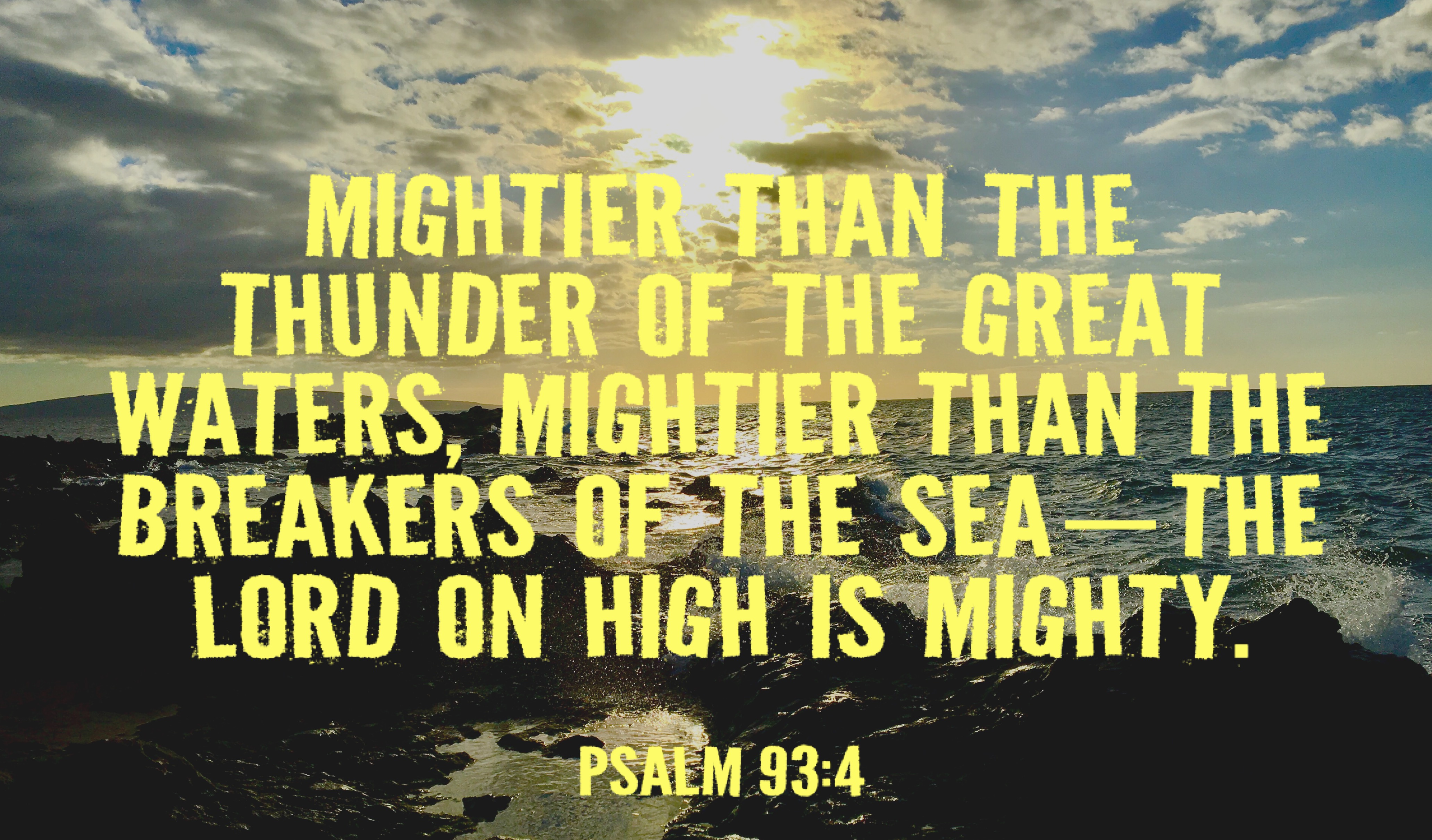
Psalms 65 and 66 tell of God’s awesome involvement in our lives. He is both globally involved and personally involved. He’s not too big to care for my needs, and He’s not so preoccupied with me that He is unaware of global events. 

Look at the grandeur of our Creator—

  • You answer us with awesome deeds of righteousness 
  • You are the hope of all the ends of the earth 
  • You formed the mountains by Your power
  • You stilled the roaring of the seas 
  • You care for the land and water it; You enrich it abundantly 
  • Your carts overflow with abundance 
  • all of creation shouts for joy and sings praise to You
  • all the earth says, “How awesome are Your deeds!” and bows down to You in praise 
  • You rule forever by Your power, Your eyes watch the nations 
  • how awesome are Your works on man’s behalf! 

And yet He is not just God of global events, but He is intimately involved with each and every person. He notices me! 

The psalmist says, “Come and listen, all you who fear God; let me tell you what He has done for me.” Then he tells how God…

  • forgave my sin
  • listened to my prayer
  • honored my prayer 
  • has not withheld His love from me 

Oh, come and see! See how awesome God is that the earth trembles before Him. See how awesomely loving He is that He stoops to listen to me. He is indeed a global God but He is also an intimately personal God. 

The more we know our God in both His majesty and His intimacy, the more we will praise Him.

►► Would you please prayerfully consider supporting this ministry? ◀︎◀︎

Blessing Over Judgment

Listen to the podcast of this post by clicking on the player below, and you can also subscribe on Apple or Spotify.

My heart is steadfast, O God, my heart is steadfast; I will sing and make music. (Psalm 57:7) 

David is on the run, hiding in a cave. The bad guys are described as lions, ravenous beasts with teeth like spears and arrows, and tongues like swords. They hotly pursue David, setting traps for him everywhere he would go. So it’s no wonder that David begins this prayer crying out to God, 

Have mercy on me, O God have mercy on me, for in You my soul takes refuge. I will take refuge in the shadow of Your wings until the disaster has passed (v. 1). 

As David is prone to do in many of his psalms, he inserts the word Selah, reminding both himself and his readers to pause for a moment. He records how God answers his prayer: “God sends from heaven and saves me, rebuking those who hotly pursue me” (v. 3). 

But the Selah comes in the middle of the verse, almost as if David is pausing to ask, “How exactly does God save me?” In this instance, it’s not so much God rebuking the wicked as it is God blessing David. After the Selah pause he says, “God sends forth His love and His faithfulness. 

By blessing His righteous servant David, God rebukes the wicked and vindicates David by creating a longing in those wicked men to also be blessed by God. 

In the New Testament we see that the arrival of Jesus was an act of God’s kindness: “Because of and through the heart of tender mercy and loving-kindness of our God, a Light from on high will dawn upon us and visit us” (Luke 1:78). And it is God’s kindness that continues to draw us to Himself: “…Are you unmindful or actually ignorant of the fact that God’s kindness is intended to lead you to repent—to change your mind and inner man to accept God’s will?” (Romans 2:4). 

David foresees his enemies falling into the very traps they have set for him (v. 6). And then once again he calls for a Selah pause to consider how God has and is blessing him. 

From this point on, David expresses no more thoughts about the wicked people pursuing him, but all of his words through the remainder of this psalm are worship, praise, and exaltation (vv. 7-11). 

When evil people are assailing you perhaps you could pray this prayer: 

O God, that my heart could be so transformed that I desire Your blessing on my life more than I look for Your judgment or retribution on the wicked! I pray that my heart would be a place of continual praise to You, and not a hotbed of anxious thoughts about wicked people. Father, may Your kindness to me be such a powerful testimony to even evildoers, that they will repent—change their mind to accept You as their God too. In Jesus’ name, I pray. Amen. 

►► Would you please prayerfully consider supporting this ministry? ◀︎◀︎
5 Truisms From Psalm 62

Listen to the podcast of this post by clicking on the player below, and you can also subscribe on Apple or Spotify.

When I see words like truly (3 times), surely (2 times), and yes (1 time) occurring so frequently in a rather short psalm, it catches my attention. Combined with the call for a Selah pause another two times in this twelve-verse psalm, and this is clearly a chapter that we should read slowly and deliberately. 

Because of these words truly and surely, I find five truisms that David makes clear to us, and I also find that they are linked together in a beautiful circular chain. 

Truism #1—God keeps me secure. He alone is my source of security (vv. 1-2). 

Truism #2—Evil people are envious of a righteous person’s secure position and will try to pull them down (vv. 3-4). When this happens I need to take a Selah pause to remember Who holds me secure. 

Truism #3—These attacks by evil people do not put my security in jeopardy, but instead it gives me a been-there-done-that testimony to share with others (vv. 5-8). Again, I need to Selah to remember that my challenges are often for the benefit of others as much as they are for my strengthening. 

Truism #4—Poor people are not excluded from God’s help, and rich people are not above God’s help (vv. 9-10). God sees every human being as infinitely valuable. 

Truism #5—God is both All-Loving and All-Powerful. He gets the final word on both judgment and reward (vv. 11-12). This fifth truism should refuel my understanding of the first truism—that God holds me securely—which continues my confident journey through this chain of beautiful truisms all over again. 

Friends, I urge you to go slowly through your personal Bible reading time. Pray for the Holy Spirit’s illumination before you begin reading, and then watch to see how He will point out to you patterns, repeated words, and other insights that will allow you to apply God’s Word to your daily life.

►► Would you please prayerfully consider supporting this ministry? ◀︎◀︎

“Father, Into Your Hands I Commit My Spirit”

Listen to the podcast of this post by clicking on the player below, and you can also subscribe on Apple or Spotify.

I have some sobering news for you: You are going to die. 

Death is the great equalizer. It comes for the rich and poor, the scholar and the illiterate, all races, all ages, the healthy as well as the sick. Unless you’re still alive when Jesus comes back again, your odds of dying are 1-in-1. 

What happens “on the other side”? What happens after this life is over? Since it seems dark and mysterious to most people, they tend to ignore it until it’s thrust upon them. That’s why I find the dying words of people interesting. Like P.T. Barnum asking, “How were the receipts today at Madison Square Garden?” or W.C. Fields reading a Bible on his deathbed and telling a friend, “I’m looking for a loophole.” 

Or the very last words of Jesus: “Father, into Your hands I commit My spirit.” 

Jesus is steeped in Scripture, so nearly everything He says in His final four declarations come directly from the Psalms, including His final phrase which comes from Psalm 31:5. 

When Jesus broke a three-hour silence with His cry, “My God, My God, why have You forsaken Me,” both Matthew and Mark use the Greek words megas phoné to describe how loudly Jesus spoke. And now with His final words, Luke uses the same megas phoné description. 

Notice in the first megaphone cry Jesus calls on God the All-Powerful Creator. And with His last megaphone declaration, He calls on His Father who is All-Loving. How comforting it is to know that God is both All-Powerful and All-Loving! Not only can He answer our cries, but He delights to answer them! 

The word Jesus uses for “commit” is in the future tense and it means “to entrust as a deposit.” Jesus believed that God was going to do more than just give Him life again, but that He would give life to all who would believe in Him. 

Unlike atheist Bertrand Russell who said, “I would never die for my beliefs because I might be wrong,” Jesus DID die for His beliefs, and by rising from the dead proved He was right in trusting God. 

Job saw an inescapable death for all mankind, but he also foresaw the forgiveness of God (Job 14:5, 16-17). Jesus died once for all mankind and was then resurrected, bringing about the death of death by making forgiveness accessible to anyone (Hebrews 9:27-28; 1 Corinthians 15:19-22). 

We can now have the peace that comes from trusting the only One to Whom we can safely entrust our souls. Because Jesus brought death to death, we can have the same peace when we die that Jesus had when He died. 

With faith in Jesus, you can…

…live today knowing you’re invincible until God calls you home 

…live today full of joy because your home in heaven is secure

…live your very last day in peace because you know to Whom your soul is entrusted 

Because Jesus died at peace with God, we can face death triumphantly! 

If you’ve missed any of the messages in our series on the dying declarations of Jesus, you can access the full list by clicking here.

►► Would you please prayerfully consider supporting this ministry? ◀︎◀︎