The Need For Confession

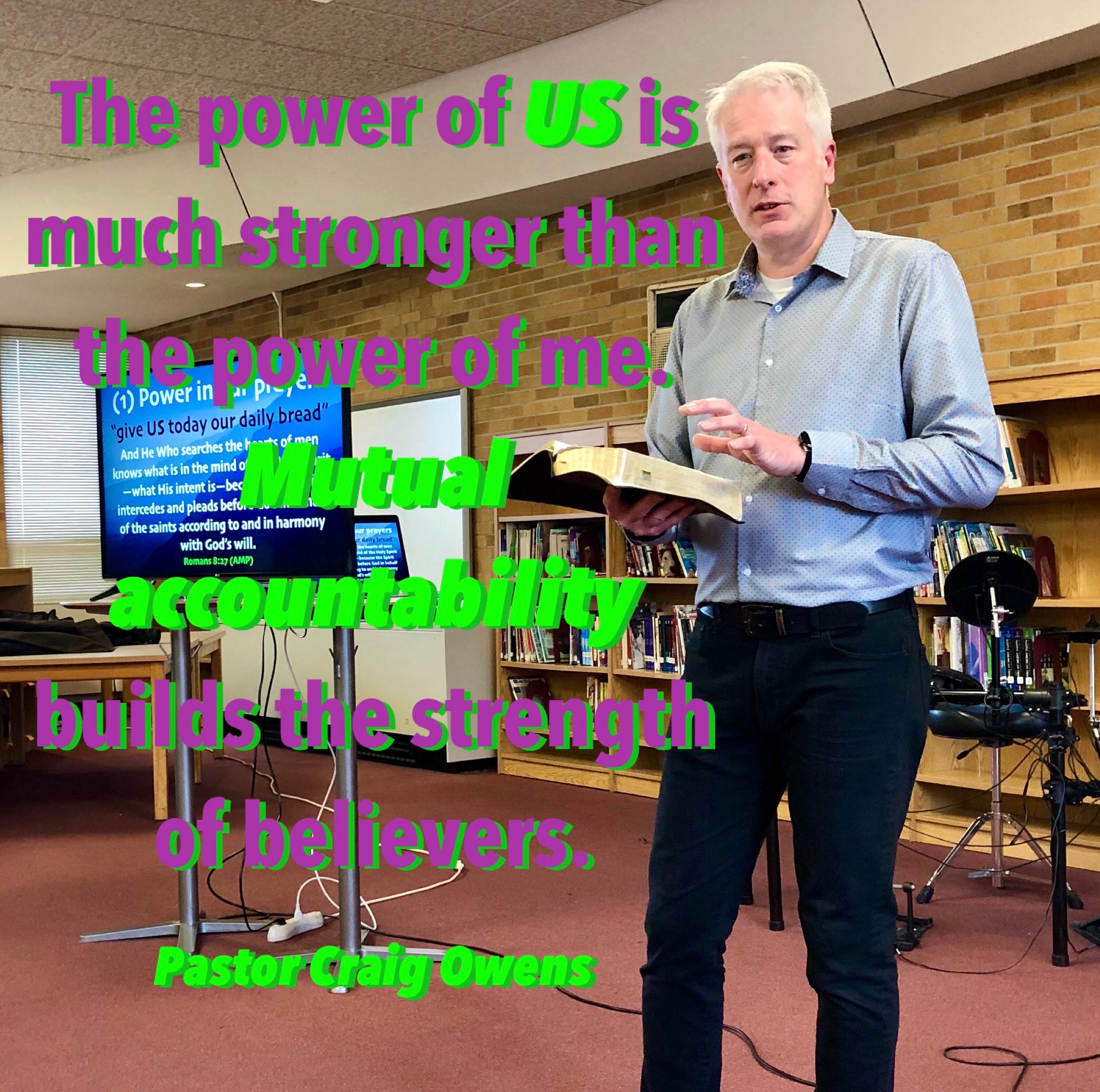
Jesus taught us to pray to OUR Father. This speaks of community and accountability. Ken Blanchard noted: “Accountability means: We owe each other for something we’ve agreed upon.” What have the saints of God agreed upon? That God is our Father, that Jesus is His Son and our Brother, and that the Holy Spirit is our Helper. We’ve agreed that if we are brothers and sisters in God’s family, we are mutually accountable to one another. 

The part of accountability that some people don’t like is the realization that I make mistakes: I let people down; I sin. In a community of saints, my shortfall not only affects me but the rest of the community too. But there is a remedy—The remedy for my sin starts with my confession of my sin. 

If people like David, Isaiah, Daniel, Nehemiah, and Paul confessed their sin and called themselves sinners, what makes me think that I’m exempt from that diagnosis or that cure?! 

Confession is an owning of my sin. It’s saying to God, “I have sinned. I need forgiveness. I will repent of this. I need Your mercy.” And it’s saying to my fellow saints, “I need your help so I don’t have to repeat this sin.” 

Unconfessed sin is life-draining (Psalm 32:1-5). The word confess in the Old Testament Hebrew means to “throw out your hand.” Expose it all! In the New Testament Greek confess means to acknowledge that my life does not measure up to God’s standard. 

Confession may start in my personal prayer closet, but it needs to move to the public domain of the community of saints. Jesus made it plural, “Forgive US OUR debts, as WE have forgiven OUR debtors.” 

Sometimes I cannot see my own debts that need to be forgiven (Psalm 19:12), so I need the conviction of the Holy Spirit and the loving confrontation of someone who loves me (Psalm 139:23-24; Proverbs 27:6, 2 Samuel 12:1-13). 

The apostle James helps us see how a loving community brings healing, deliverance, and restoration. The key components that James lists are prayer and confession (James 5:13-16). 

Dietrich Bonhoeffer echoed James when he wrote, “A man who confesses his sins in the presence of a brother knows that he is no longer alone with himself; he experiences the presence of God in the reality of the other person. As long as I am by myself in the confession of my sins everything remains in the dark, but in the presence of a brother the sin has to be brought into the light.”  

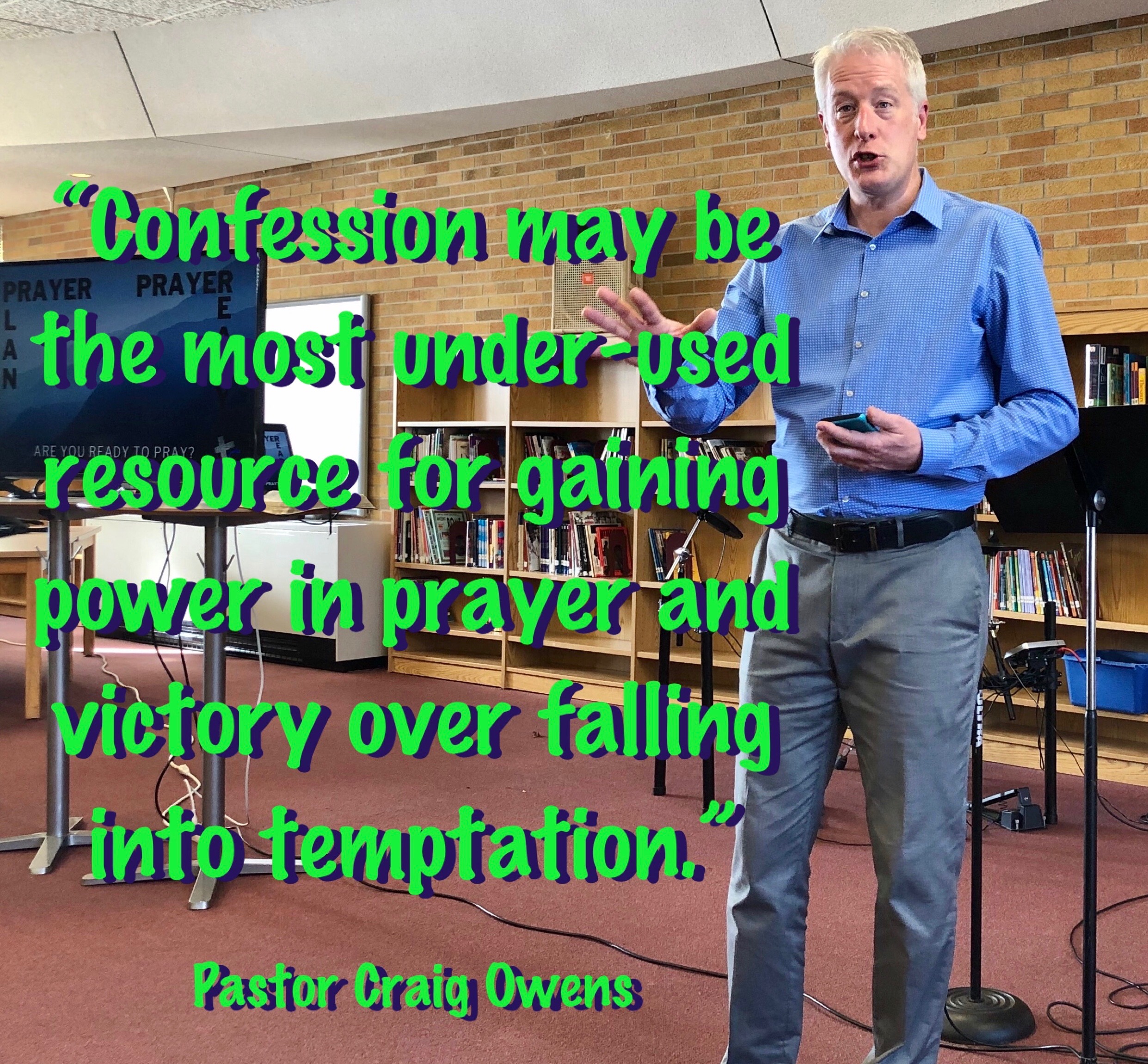
Confession may be the most under-used resource for Christians to gain power in prayer and victory over falling into temptation!

Let’s continually make use of this wonderfully freeing discipline. 

Earthly Pursuits Can Inhibit Prayer

“To pray for ‘things’ without a heavenly end in mind is close to idolatry. Use your material wealth with holy fear, dear saint, lest earth should rob heaven, and your temporal enjoyments endanger your heavenly interests. … 

“Sometimes God lavishes us with things, not so we can hang on to them, but so we will have something to let go of to show our love for Him. … What enterprise will pay more lasting dividends than to invest what you possess in the cause of Christ? … You cannot labor for heavenly possessions if your hands and heart are loaded down with earthly pursuits.” —William Gurnall, The Christian In Complete Armour (emphasis added)

A Praying Family

Not one word in Scripture is wasted: not one word is redundant or replaceable. When Jesus taught us to pray to a Heavenly Father, He taught us to say, “OUR Father.” That means we are all His children, with His Holy Spirit helping us to grasp this—The Spirit Himself testifies with our spirit that WE are God’s children. Now if WE are children, then WE are heirs—heirs of God and co-heirs with Christ… (Romans 8:16-17). 

Did you know that the word saints never appears in the singular in Scripture? No one person is singled out for his or her saintliness. Because we are saintS, praying together to OUR Father, this means accountability. For some people, accountability is a bad word. It seems to them to feel like someone is looking over their shoulder or checking up on them. But Christians should never feel this way! I like how Ken Blanchard defines this: “Accountability means: We owe each other for something we’ve agreed upon.” 

What have the saints of God agreed upon? That God is our Father, that Jesus is His Son and our Brother, and that the Holy Spirit is our Helper. We’ve agreed that if we are brothers and sisters in God’s family, we are mutually accountable to one another. 

In the context of the prayer Jesus taught us to pray, being mutually accountable means: 

  1. Power in our prayersgive US today our daily bread. Jesus talks about the power in agreement, and the apostle Paul emphasizes how the Holy Spirit helps believers harmonize in prayer with each other and with God’s will (Matthew 18:19-20; Romans 8:27). 
  1. Strengthening of our characterforgive US our debts, as WE also have forgiven our debtors. Jack Hayford points out that, “The believer’s best defense against self-deception is through mutual accountability to one another.” In order for our character to be strengthened, we have to allow others to speak into our lives—even the lovingly painful words (Proverbs 27:17, 6). 
  1. Protection from falling to temptationlead US not into temptation, but deliver US from the evil one. Samson became entangled with a prostitute when he was all by himself; Elijah became depressed when he sent his servant away; David fell into sin when he was alone; Peter denied Christ when all of the other disciples had run away. That’s why the writer of Hebrews counsels us to stick close to our Christian family members (Hebrews 10:21-25). 

In an earlier post, I noted that how we view God is going to determine what we pray and what we expect after we pray. Coming together and praying together will help us see God better. Just as the angels around the throne are always crying out to each other “Holy! Holy! Holy!”, when we come together we can show our fellow saints what we’ve learned about our holy Father’s love and power. This is both an encouragement to others and allows others to be an encouragement to us too. Then together we can pray more boldly and expect great things in response to our prayer. 

Being mutually accountable to the saints in prayer…

  • hallows God as our Father

  • glorifies Jesus as our Brother

  • honors the Spirit as our Helper

God never intended that you would have to walk through life alone. He wants us to share the journey with fellow saints—His family made up of our brothers and sisters. This praying family truly honors God’s name! 

Join me on Sunday as we continue to learn more about prayer. 

Poetry Saturday—What Is Prayer?

Prayer is the soul’s sincere desire,
Unuttered or expressed;
The motion of a hidden fire,
That trembles in the breast.

Prayer is the burden of a sigh,
The falling of a tear;
The upward glancing of an eye,
When none but God is near.

Prayer is the simplest form of speech
That infant lips can try;
Prayer, the sublimest strains that reach 
The Majesty on high.

Prayer is the Christian’s vital breath,
The Christian’s native air;
His watchword at the gates of death—
He enters heaven with prayer.

Prayer is the contrite sinner’s voice,
Returning from his ways;
While angels in their songs rejoice
And cry, ‘Behold, he prays!’ 

The saints in prayer appear as one,
In word, in deed, and mind;
While with the Father and the Son,
Sweet fellowship they find.

No prayer is made by man alone
The Holy Spirit pleads;
And Jesus, on th’ eternal throne
For sinners intercedes.

O Thou! by Whom we come to God,
The Life, the Truth, the Way;
The path of prayer Thyself hast trod:
Lord, teach us how to pray. —James Montgomery

Thursdays With Spurgeon—Our Father In Heaven

This is a weekly series with things I’m reading and pondering from Charles Spurgeon. You can read the original seed thought here, or type “Thursdays With Spurgeon” in the search box to read more entries.

Our Father In Heaven

     I believe that this prayer [“Our Father in heaven, hallowed be Your name”] was never intended for universal use. Jesus Christ taught it not to all men, but to His disciples, and it is a prayer adopted only to those who are the possessors of grace and are truly converted. In the lips of an ungodly man, it is entirely out of place. Does not one say, “You are of your father the devil, and the desires of your father you want to do” (John 8:44)? Why then should you mock God by saying, “Our Father in heaven”? 

     Let none despise this prayer. It is matchless, and if we must have forms of prayer, let us have this first, foremost, and chief. But let none think that Christ would tie His disciples to the constant and only use of this. Let us rather draw near to the throne of heavenly grace with boldness, as children coming to a father, and let us tell forth our wants and our sorrows in the language that the Holy Spirit teaches us. …

     If we say, “Our Father in heaven,” we must remember that our being sons involves the duty of obedience to God. When I say “my Father,” it is not for me to rise up and go in rebellion against His wishes. If He is my Father, let me note His commands and let me reverentially obey. If He has said, “Do this,” let me do it, not because I dread Him, but because I love Him. And if He forbids me to do anything, let me avoid it. …

     We are one in the family of God and no one is ahead of the other. One may have more grace than another, but God does not love one more than another. One may be an older child than another, but he is not more a child. One may do mightier works and may bring more glory to his Father, but he whose name is the least in the kingdom of heaven is as much the child of God as he who stands among the king’s mighty men. Let this cheer and comfort us when we draw near to God and say, “Our Father in heaven.” … 

     And after you have prayed that, rise up and act it. Say not “our Father” and then look upon your brethren with a sneer or frown. I beseech you, love like a brother and act like a brother. Help the needy. Cheer these sick. Comfort the fainthearted. Go about doing good; minister to the suffering people of God wherever you find them. Let the world take notice of you—that you are when you are on your feet what you are upon your knees—that you are a brother to all the brotherhood of Christ, a brother born for adversity, like your Master Himself.

From The Fatherhood of God

This kind of prayer speaks of…

  • access
  • responsibility
  • power
  • love
  • provision
  • assurance
  • protection
  • acceptance
  • joy
  • and more blessings than we can ever enumerate! 

What a blessing to pray to a Heavenly Father who is also Holy God.

Prayer Expectations

Many of our prayers could be much bolder and much more specific than they are. Why is that? Because how we view God is going to determine what we pray and what we expect after we pray.

When we pray, we approach an All-Loving Father, and we approach an All-Powerful God. I have found that typically people get warmed by the idea of Father and get scared by the idea of God. They say things like: “What if my prayers don’t hallow God’s name? What if He’s mad at me? What if I pray an improper prayer?” 

God wants us to come to Him in prayer, so He makes Himself very accessible! The Father is both Father and God; the Son is both Friend and King; the Spirit is both Comforter and Convictor. We get ALL of this in One God. 

Charles Spurgeon had this word of encouragement: “If You are my Father, then You love me. If I am Your child, then You will regard me, and poor though my language is, You will not despise it.” Jesus came to earth fully God and fully man, making Him our perfect intermediary (see Job 9:32-35; 1 Timothy 2:5; Hebrews 7:25). And the Holy Spirit helps interpret our groaning prayers (Romans 8:26-27). 

Have you ever noticed that neither the prophets of the Old Testament, nor Jesus in the Gospels, nor the apostles in the New Testament ever prayed, “God, if this is Your will please do such-and-such”? They simply prayed. Or more accurately, they prayed so boldly and specifically it almost sounded like a command: “Stand up” or “Be clean” or “Go, your prayer has been answered.” 

When you and I are praying to an All-Loving and All-Powerful Father, with Jesus interceding for us, and the Spirit helping us, we too can pray these bold and highly specific prayers. 

After all, if you don’t pray specifically and expectantly, how will you know when your prayer is answered? 

I find John Piper’s acrostic very helpful in praying these bold and expectant prayers. He calls it APTAT: 

  • A—Admit I can’t do anything without Christ. This hallows His Name. 
  • P—Pray for help to do it. 
  • T—Trust a specific promise of God to help me (two general promises are found in Isaiah 41:10 and Romans 8:32). 
  • A—Act. Do the things I need to do: apply for the job, ask forgiveness, schedule a meeting. 
  • T—Thank Him when I’m done. 

Two final thoughts—

  1. Make prayer more of a listening relationship than a talking relationship. 
  2. Give yourself some grace as you are maturing; don’t expect immediate perfection. Start praying and then let the Father, the Son, and the Spirit help you mature in your prayer life. 

I hope you can join me this Sunday as we continue to work on our plans to pray.

Poetry Saturday—Give To The Winds Thy Fears

Give to the winds thy fears,
hope and be undismayed;
God hears thy sighs and counts thy tears;
God shall lift up thy head.

Through waves and clouds and storms,
He gently clears the way;
wait thou His time, so shall this night
soon end in joyous day.

Still heavy is thy heart,
still sink thy spirits down?
Cast off the weight, let fear depart,
and ev’ry care be gone.

What though thou rulest not,
yet heav’n, and earth, and hell
proclaim, God sitteth on the throne,
and ruleth all things well.

Leave to His sov’reign sway
to choose and to command.
so shalt thou wond’ring own His way,
how wise, how strong His hand!

Far, far above thy thought
His counsel shall appear,
when fully He the work hath wrought,
that caused thy needless fear.

Thou seest our weakness, Lord,
our hearts are known to Thee;
O lift Thou up the sinking heart,
confirm the feeble knee.

Let us in life, in death, 
Thy steadfast truth declare,
and publish with our latest breath
Thy love and guardian care. —Paul Gerhardt (translated by John Wesley)

Thursdays With Spurgeon—The Oftener The Better

This is a weekly series with things I’m reading and pondering from Charles Spurgeon. You can read the original seed thought here, or type “Thursdays With Spurgeon” in the search box to read more entries.

The Oftener The Better 

     It is strange that spiritual blessings are our only possessions that we do not employ. We get a great spiritual blessing and we let the rest get on it for many a day. There is the mercy seat, for instance. Ah, my friends, if you had the cash box as full of riches as that mercy seat is, you would go often to it, as often as your necessities require. But you do not go to the mercy seat half so often as you need to go. Most precious things God has given to us, but we never overuse them. The truth is, they cannot be overused. We cannot wear a promise threadbare. We can never burn out the incense of grace. We can never use up the infinite treasures of God’s lovingkindness. … 

     How seldom do we ask counsel at the hands of the Lord! How often do we go about our business without asking His guidance? In our troubles how constantly do we strive to bear our burdens, instead of casting them upon the Lord, that He may sustain us! And this is not because we may not, for the Lord seems to say, “I am yours, soul; come and make use of Me as you will. You may freely come to My store, and the oftener the better. Welcome.” … 

     Have not God in name only. Since He allows you to have such a Friend, use Him daily. My God will supply all your wants. Never want while you have a God. Never fear or faint while you have a God. Go to your treasure and take whatever you need. There is bread and clothes, and health and life, and all that you need. O Christian, learn the divine skill to make God all things; to make bread of your God, and water, and health, and friends, and ease. He can supply you with all these. … 

     Oh! Child of God, let me urge you to make use of your God. Make use of Him in prayer. I beseech you, go to Him often, because He is your God. … Fly to Him; tell Him all your wants; use Him constantly by faith, at all times. …  

     Go to God continually, importunately, confidently. Delight yourself in the Lord, and He will bring it to pass. Commit your way to the Lord, and He will guide you by His counsel and afterward receive you to glory (Psalm 73:24).

From God In The Covenant 

Oh what peace we often forfeit
Oh what needless pain we bear
All because we do not carry
Everything to God in prayer

Hallowed Be Your Name

Jesus was once asked, “What is the greatest commandment?” He responded by saying, “The Lord our God, the Lord is One,” and then saying we should love God with all our heart, soul, mind, and strength (which fulfills the first four of the Ten Commandments), and then love our neighbor as ourselves (which fulfills the next six of the Commandments).

To live this way, we need to pray this way too! That’s why Jesus taught us a model prayer—which we typically call “The Lord’s Prayer”—in which the first three petitions are for God’s glory (hallowed be Your name; Your kingdom come; Your will be done), and the next three petitions are for man’s help (daily bread, forgiveness, victory over temptation). 

Jesus says we can pray to our Heavenly Father, but we still need to remember that He is also the God of the Hallowed Name. The Greek word for hallowed is made up of two other Greek words: 

  • hagnos is something totally immaculate, blindingly pure, and unapproachable. The apostle Paul said this about God: Our Master, Jesus Christ, is on His way. He’ll show up right on time, His arrival guaranteed by the Blessed and Undisputed Ruler, High King, High God. He’s the only one death can’t touch, His light so bright no one can get close. He’s never been seen by human eyes—human eyes can’t take Him in! Honor to Him, and eternal rule! (1 Timothy 6:15-16) 
  • thalpo means cherished. The same apostle Paul also said that God has given us the right to approach Him as “Abba, Father” or “Daddy, God” (Romans 8:15). 

He is both unapproachable and approachable. He is both awful and lovable. He is both Supreme power and Supreme love. He is both Hallowed and Father. He is unique. Since He is unique, we must approach Him uniquely in holy prayer. But we must always approach first and foremost to reverence His holy Name. As Matthew Henry said, “Let Him have the praise of His perfections, and then let us have the benefit of them.” 

Think of His glory in every request you make of Him. Father, may Your holy, righteous name be hallowed and exalted and made famous as You…

  • … provide my daily bread
  • … forgive me and help me forgive others
  • … give me victory over temptations

Let’s not pray prayers that rob God of His glory. Prayers like:

  • Selfish prayers that are all about me, me, me
  • Doubtful prayers that aren’t really sure God can help
  • Little prayers that insult God’s power and His love
  • Unexpectant prayers that ask God to do something, but we don’t really expect that He will

Let’s be known as people who pray confidently humble prayers. Let’s come to a Father Who is All-Love and to a God Who is All-Powerful—a God Whose power is perfectly balanced by His love, and Whose love is perfectly balanced by His power. May our prayers HALLOW His name! 

Join me this Sunday as we continue to learn more about prayer. 

Praying The Word

The more consistently we pray on the ordinary days, the more prepared we will be to pray on the extraordinary days. But some people say, “I don’t know how to pray” or “I don’t know what to ask for.” That ignorance hinders a lot of people—even someone like Peter who not only spent huge amounts of time with Jesus but was with Him when He was in one of His most glorious states (Luke 9:28-33). As Jesus is transfigured before his very eyes, both Mark and Luke say this about the statement Peter blurted out: He did not know what he was saying. 

While Peter was still speaking from his ignorance, God the Father gave him (and us) some invaluable advice: This is My Son, whom I have chosen; listen to Him. 

So when the disciples ask Jesus to teach them to pray, Jesus didn’t reprimand them for asking. In fact, He told us how much He wants us to pray and how much His Father wants to answer our prayers (Luke 11:1-13; 12:32).  

There is a consistent theme about the “name” of God that permeates all that Jesus teaches about prayer. We see Him instructing us to address our prayer to our “Heavenly Father” and to pray “in My name” (Luke 11:2; John 14:13-14; 15:7; 16:23-24). This doesn’t mean that simply saying, “Dear Heavenly Father” at the beginning of a prayer or “in the name of Jesus, amen” at the end of a prayer makes our prayer magical. 

It’s about praying in the character of Jesus, directing our prayer to the only One who can help us, all with the guidance of the Holy Spirit. 

To help us do this, we have an invaluable prayer resource preserved for us in the pages of the Bible. The Scriptures are inspired by the Holy Spirit—the same Holy Spirit that lives in a Christian and helps the Christian pray according to God’s will. The same Spirit who inspired the Word can illuminate the Word to us, so we need to get into the Word and let the Holy Spirit get the Word into us! 

No matter what you’re going through, you can apply God’s Word to your situation. Look through the prayers of the Psalms, read the prayers of other great saints throughout the Scriptures, check out the prayers the apostles prayed in the New Testament, and even read the prayers of Jesus Himself. Then make those prayers your prayers!

If you let the Holy Spirit show you how the Bible applies to your situation, you will NEVER again be at a loss of how to pray to your Heavenly Father in the name of Jesus!

Join me this Sunday as we continue to learn how to to be ready to pray by making our plan to pray.