God’s blessings are not primarily for me, but they are through me for His glory. This is a short clip from an exclusive video I shared with my Patreon supporters. Become a supporter today! I have lots of new content every week, which you can check out on my YouTube channel.
“What to do with a mistake: recognize it, admit it, learn from it, forget it.” —Dean Smith
Until the mid-1800s, the historicity of King Sargon II (mentioned by Isaiah) was in doubt. Not only has archeology again affirmed the historical statements made in Scripture, but “the way Isaiah spelled Sargon’s name is an indicator that the prophet lived at the time of Sargon II, and that the book was not penned hundreds of years later.” Check out this archeological biography of Sargon II.
And then there is this archeological report about the destruction of Sodom and Gomorrah. Fascinating!
How sweet and gracious even in common speech,
Is that fine sense which men call Courtesy!
Wholesome as air and genial as the light,
Welcome in every clime as breath of flowers—
It transmutes aliens into trusting friends,
And gives its owner passport round the globe. —James T. Fields
“A person always doing his or her best becomes a natural leader, just by example.” —Joe DiMaggio
Not using the spiritual gift God has given you is selfish. He gave you these gifts on purpose so that His kingdom could be made more visible and desirable.
Listen to the podcast of this post by clicking on the player below, and you can also subscribe on Apple, Spotify, or Audible.
I did a series of Advent messages a few years ago called “The Carols of Christmas” with the premise that many of our old familiar carols had become too familiar and we had lost the true meaning in those beautiful songs.
I think the same is true with the sentiment of wanting to experience the glory of God. Sometimes you will hear people say, “We just want to see God’s glory!” but I’m not sure they really mean this or really want it.
Throughout the Bible, “glory” comes from the Hebrew word which means weightiness. When God appears—or even one of His angels glowing with His glorious presence—people collapse under the weight of His glory. Look at the examples of Moses, Isaiah, Daniel, and even John the beloved disciple of Jesus (Exodus 3:6; Isaiah 6:3-5; Daniel 8:15-17; Revelation 1:12-17).
In the light of Christ’s glory everything is exposed. We have no excuses for our sin. We are seen exactly as we are, and the fear of God’s judgment causes us to collapse under that weight.
But the First Advent story is filled with the phrase “Fear not.” Let me show you two examples. First, notice the strong emotions when the angels appear to the shepherds—
An angel of the Lord appeared to them, and the glory of the Lord shone around them, and they were terrified. But the angel said to them, “Do not be afraid. I bring you good news that will cause great joy for all the people.” (Luke 2:9-10)
What was this good news that would turn their fear into joy? Listen to the angelic message to Joseph—
Joseph son of David, do not be afraid to take Mary home as your wife, because what is conceived in her is from the Holy Spirit. She will give birth to a Son, and you are to give Him the name Jesus, because He will save His people from their sins. (Matthew 1:20-21)
Notice the phrase, “HE will save His people from their sins.” Part of what contributes to our fear of God’s glorious presence is knowing that we are helpless to remove our sins. The fact that Jesus would do this for us was foretold in prophecies like Isaiah 25:7-9 and 59:15-16.
How will Jesus do this? In 1 Corinthians 15:53, Paul says that in order to enter into God’s presence our perishable, mortal lives have to be exchanged for something imperishable and immortal. We are unable to do this, but in the Incarnation, the immortal God put on mortal flesh!
Paul goes on in 1 Corinthians 15 to say, “When the perishable has been clothed with the imperishable, and the mortal with immortality, then the saying that is written will come true: “Death has been swallowed up in victory.” Where, O death, is your victory? Where, O death, is your sting?” (1 Corinthians 15:54-55)!
If our sins were still clinging to us, spending eternity in the presence of the King of Glory would be torturous! Our fear of His weighty glory is only changed into joy when we accept that He has saved us from the penalty of our sins. Now our fear of His glory isn’t a crippling fear, but as we worship Him for His salvation our fear becomes reverential worship.
Or we could say it this way—When we fear the King of Glory we fear nothing else!
Charitie Lees Bancroft captures that idea in these stanzas of her poem:
When satan tempts me to despair
And tells me of the guilt within,
Upward I look and see Him there
Who made an end of all my sin.
Because the sinless Savior died,
My sinful soul is counted free;
For God the Just is satisfied
To look on Him and pardon me.
Behold Him there! The risen Lamb,
My perfect, spotless righteousness;
The great unchangeable “I AM,”
The King of glory and of grace!
One with Himself I cannot die,
My soul is purchased by His blood;
My life is hid with Christ on high,
With Christ, my Savior and my God.
With our sins forgiven by our faith in Jesus, we can now enjoy an eternity in the weighty, awesome presence of the King of Glory!
One of the loudest, most persistent advertising messages is about speed: Take action now, get immediate results as soon as you sign up, don’t miss out, act today! Because of this sentiment that appears all around us, many people often think that any life changes they make should bring about immediate and lasting results.
I’ve often joked that I wish I had the superpower to zap myself or a friend—“<Poof!> There, you’ve got it now. You’re all set!” Unfortunately, that’s usually not how it works.
Instead, we need to be ready for a lengthy process—possibly even a lifelong process—of the Holy Spirit helping us to make the micro-adjustments that are necessary.
Check out this part of my conversation with Jim and John as we discussed this idea.
If you would like to watch this full interview on the Leading From Alignment podcast, please go here.
I’ll be sharing more clips from this interview soon, so please stay tuned. My book Shepherd Leadership: The Metrics That Really Matter is available in print or ebook, and in audiobook through either Audible or Apple.
There is no shortage of books that define “success” in our business or ministry endeavors, but as Christians, let’s try to get a more precise definition—a biblical definition.
I did a quick search for the words “success” or “successful” in just the New International Version of the Bible, and I was somewhat surprised by two things. First of all, the relatively few times this word is used: Only 25 times in the entire Scripture. We read of prayers offered for a successful journey, or a king’s reign, or a building project, success that comes to someone because of God’s favor on their life, or success in battle.
The second thing that surprised me: The word “success” isn’t used in the New Testament. The reason this surprised me is because without there being even a close second, Jesus has to be the most successful person who ever walked this planet. No one ever taught like He did, performed the miracles He did, or willingly laid down His life and was resurrected like He was. And yet the word “success” is never attached to His life.
This means we are left to draw some Holy Spirit-illuminated inferences from the Bible on how to define success. You may ask, “Why do we even need to know what ‘success’ is?” I would say we need a biblical definition for success to avoid the inevitable feelings of failure that come if things aren’t going as well as we thought they should.
In business, we often define success as revenue growth or a healthy net profit. In ministry, we typically measure success by church attendance, the number of people launched into ministry, or the amount of money given to missions work.
But what happens if we apply these metrics to the work Jesus did while He was on Earth? We see His disciples fretting over not having enough money to buy food for the congregation, and Jesus mentioning He often didn’t have a bed to sleep in, or the fact that Jesus only had one set of clothes. As a businessman, Jesus wouldn’t be considered successful by any current metrics. Even as a ministry leader, the congregation that gathered after Jesus was resurrected back to life only numbered 120 people. So if we consider Jesus as a pastor, His church wasn’t exactly thriving according to modern metrics.
After Peter’s sermon on the day of Pentecost (Acts 2) and his sermon following the healing of the lame man (Acts 3), we don’t hear much about quantitative growth throughout the rest of the Book of Acts. But in the balance of the Book of Acts, in the teachings of Jesus, and in the instructions in the epistles, we do hear substantially more about qualitative growth.
I think the clear message is that qualitative metrics are much more important to God than quantitative measurements. Specifically, I think we see the emphasis on two important qualities for godly leaders: faithfulness and excellence.
Solomon wrote, “Whatever you do, do well” (Ecclesiastes 9:10 NLT), and Paul told us, “Whatever you do, do it all for the glory of God” (1 Corinthians 10:31 NIV). These things tell us that our best effort is always required—no cutting corners, no half-measures, no bare-minimum effort. Instead, we should always do the best that we can, always striving for excellence.
My Grandma drilled a poem into my memory whenever I wanted to stop at “good enough.” She would say—
Good, better, best
Never let it rest
Until your good is better
And your better is best
How long do we do this excellent work? Until our Master returns.
Jesus said, “Who then is the faithful and wise manager, whom the master puts in charge of his servants to give them their food allowance at the proper time? It will be good for that servant whom the master finds doing so when he returns” (Luke 12:42-43 NIV).
Our devotion to these qualitative metrics of faithfulness and excellence can only truly be judged by listening to the Holy Spirit each day. He alone can speak to each of our hearts about our level of excellence and faithfulness for that day. He alone can help us know what true success is. We need to listen to His voice so that we don’t get distracted, disillusioned, and possibly even de-railed by trying to measure up to others’ quantitive metrics of success.
After all, ultimate success for any leader is to hear the applause from nail-scarred hands as our Master says, “Well done—excellently and faithfully done—My good and faithful servant!”
Listen to the podcast of this post by clicking on the player below, and you can also subscribe on Apple, Spotify, or Audible.
I love reading, and I love sharing my love of good books with others! Here is a list of the books I read and reviewed in 2022. Click on a title to be taken to that review.
This is the most-viewed reel I have ever shared on Instagram! The Bible isn’t a bunch of “once upon time” stories but they are actual events at actual moments in history. Check out how Jesus verifies the historicity of the Bible.
“All obedient believers are near akin to Jesus Christ. They wear His name, bear His image, have His nature, are of His family. He loves them, converses freely with them as His relations. He bids them welcome to His table, takes care of them, provides for them, sees that they want nothing that is fit for them: when He died He left them rich legacies, now He is in heaven He keeps up a correspondence with them, and will have them all with Him at last, and will in nothing fail to ‘do the kinsman’s part’ (Ruth 3:13), nor will ever be ashamed of His poor relations, but will confess them before men, before the angels, and before His Father.” —Matthew Henry
Even skeptics of the claims of the Bible cannot help including biblical themes in their books, movies, plays, and TV shows. I discussed that in this apologetic video—
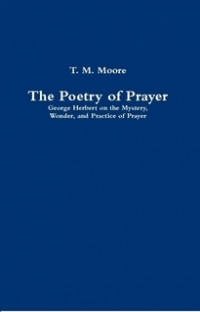
In The Poetry Of Prayer, T.M. Moore not only introduces us to the imaginative poetry of George Herbert, but he also shows us what Herbert was trying to portray: There’s an undiscovered world in our prayer time! You can check out my full book review by clicking here.
“The imagination is a wonderful if much-neglected resource. It is that place in the soul where mind, heart, and conscience, most fruitfully overlap to enhance, enrich, and enlarge each other.
“When our imaginations are functioning as God intends, they can open the windows of refreshment into our souls, so that we think bigger and more clearly and excitedly; we feel with more urgency and delight; and we establish new priorities and values.
“Poetry stretches the imagination by inviting it on to familiar ground and then changing the nature of that ground, right under our feet. Images, metaphors, rhyme, rhythm, and in an agreeable form can lead us, through our imaginations, into seeing familiar things in new and exciting ways.”
“Prayer fixes the focus of our minds on unchanging spiritual realities. Prayer engages our imaginations—what Paul calls ‘the eyes of your understanding’—with visions of unseen glories and wonders. …
“At the same time, as we gaze in prayer upon the beauty of Christ, and commune with Him in His glory, we find that our hearts are enlarged in love for the Lord. The sheer beauty, majesty, and immensity of God can suck the breath out of us and fill us with the Spirit of the Lord at the same time. Lesser things lose their thrall as we drink in the vision of Christ and pour out heartfelt words of worship, adoration, and praise. These, in turn, exercise our heart in love for the Lord, just as our physical muscles are exercised during a workout.”
“We feed our souls in prayer when, having entered His presence, we fill our minds with the vision of His glory, our hearts with the joy and pleasure of His presence, and our wills with iron resolve to serve this glorious God at every moment.”
“Even now, as the Apostle Paul indicates [2 Corinthians 4:6], we who feast at the banquet table of prayer can glimpse the glory of God in the face of Jesus Christ and know daily revival and renewal in His grace.”
“Prayer brings us from earth to heaven, and then brings heaven to earth in our transformed souls and renewed commitments for the day ahead.”
My Patreon supporters have been given all the rest of the quotes I pulled from this book. If you would like to have access to all of the content I regularly share with my Patreon team, please click here.
Wow, talk about a win-win for me: The Poetry Of Prayer combines one of my go-to theologians (T.M. Moore) with one of my favorite poets (George Herbert)! In another win, this book opens up a new richness for a Christian’s prayer life.
George Herbert’s poems hold a unique place in the world of literature[*]. Of the 167 poems in the collection of his poems called The Temple, 116 of them are written with meters that are not repeated. In several instances, Herbert created meters that no poet had used before. In his poem “Poetry (1),” Herbert leans into his poetic prowess to try to capture adequate descriptions of prayer.
T.M. Moore thinks deeply and writes clearly about how Christians should be saturated in the Bible and prayer. In The Poetry Of Prayer he dissects Herbert’s poem phrase by phrase and invites us to see the awesome potential in prayer that far too often goes untapped.
In each chapter, Moore helps us examine each of Herbert’s poetic phrases, explore the scriptural references that apply, and consider some “next steps” for applying these principles to our personal prayer time. As you progress through the book, Herbert’s poem takes on deeper and richer meaning so that you should become enthralled with cultivating your own rich prayer time.
I cannot recommend this book to you strongly enough—a true gem in developing a greater appreciation for the intimacy and power in prayer.