What Can I Change In Me?

Listen to the podcast of this post by clicking on the player below, and you can also subscribe on AppleSpotify, or Audible. 

When a shepherd leader is bitten by a sheep under their care, it’s quite natural to say, “What’s wrong with them?” Let me highlight that word: natural. 

In my book When Sheep Bite, I contrast the natural response with the supernatural response. It takes a lot of work because “natural” comes just so, well, naturally. But to respond supernaturally is going to take some re-training. 

We need to be able to reflect after we’ve interacted with a biting sheep. If we reacted in an inappropriate way, we need to ask forgiveness and attempt to make things right. Then we need to engage in some Holy Spirit-led introspection to switch the natural question of, “What’s wrong with them” to the supernaturally-led question, “What can I change in myself?” 

In a recent interview with Karl Vaters on his Church Lobby Podcast, we talked a bit about this topic. 

One chapter in my book is titled ‘Is God Trying to Get My Attention?’ Here’s an excerpt—
     Pain always takes priority. It always gets our attention and demands to be attended to immediately. We don’t schedule painful things on our daily “To Do” list, but that painful item will become the one and only thing which clamors to be addressed. 

     The same thing is true when the sheep bite and kick their shepherd. It hurts, it demands an immediate response, and it seems to become the only item on our agenda. But I would like to advocate that we don’t respond immediately. Why? Because our primal, gut-level response is almost always very shortsighted, and frequently, upon reflection, we later end up second-guessing what we said or did. 

     I believe there is also a more important reason we need to delay our response to those slights: We need to make sure the bites we receive are not God’s attempt to get our attention for being dull in our shepherding. God told Jeremiah, “For the shepherds have become dull-hearted, and have not sought the Lord” (Jeremiah 10:21 NKJV). As a result, God had to send something painful to those religious leaders to make them aware of the dullness that had set in. 

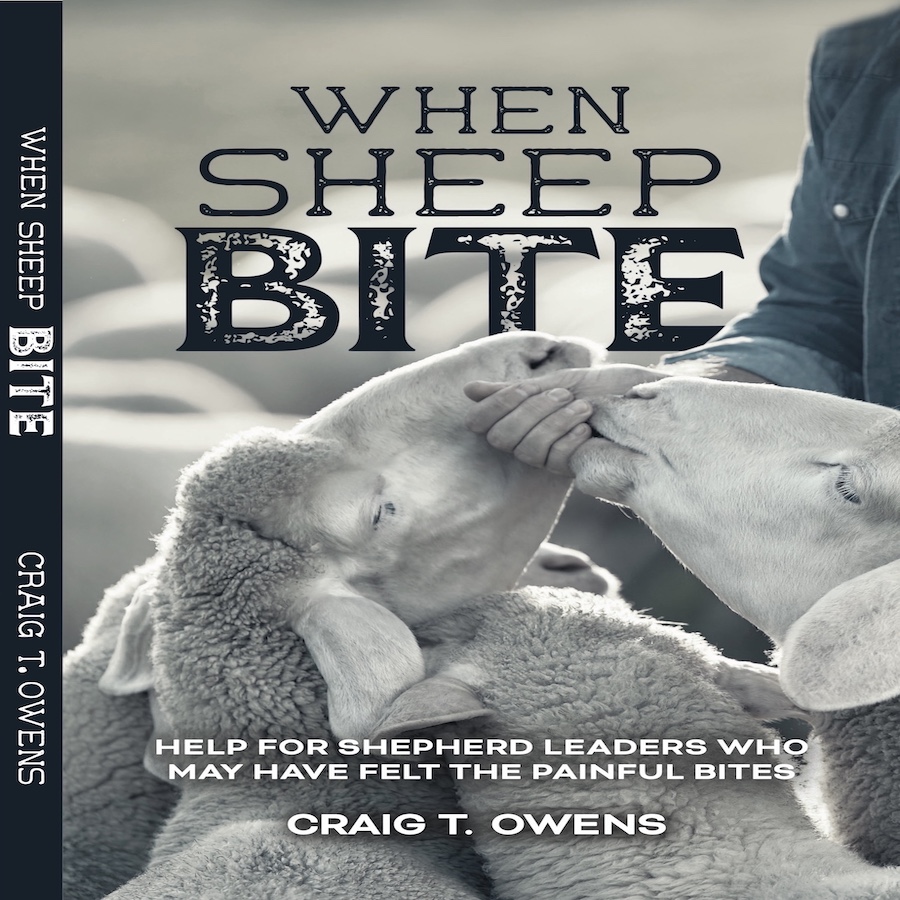
I conclude this chapter with a prayer for shepherds who have been bitten—
     Father, Your sheep continued to wallow in the unhealthy habit of biting the hand that fed them and cared for them. In Your perfect love, You knew just how to discipline them, always with a heart of drawing these wayward sheep back to You. I ask You to please cultivate this loving heart in me. 

     Jesus, even as You were nailed to the Cross by the very sheep You came to save, You didn’t lash out in anger but lovingly prayed, “Father, forgive them for they don’t know what they are doing.” You know how much it hurts when my loving shepherding of these flock under my care is repaid with bites and kicks and abandonment. Jesus, help me to learn to respond in loving forgiveness as You did. 

     Holy Spirit, as David prayed, so I pray, “Search me.” As I do, please show me where my words, actions, or attitudes have rubbed the sheep under my care the wrong way and prompted them to lash out. Help me to repent, forgive, and ask forgiveness. Even if the attack was unprovoked by anything I have done, my heart’s desire is for none to be lost so please help me learn how to bring about restoration. 

     I pray this in the name of my Good Shepherd, Jesus. Amen.

To find out more about When Sheep Bite, or to pick up a copy for yourself, please click here.

►► Would you please prayerfully consider supporting this ministry? My Patreon supporters get behind-the-scenes access to exclusive materials. ◀︎◀︎
A Book Review of “When Sheep Bite”

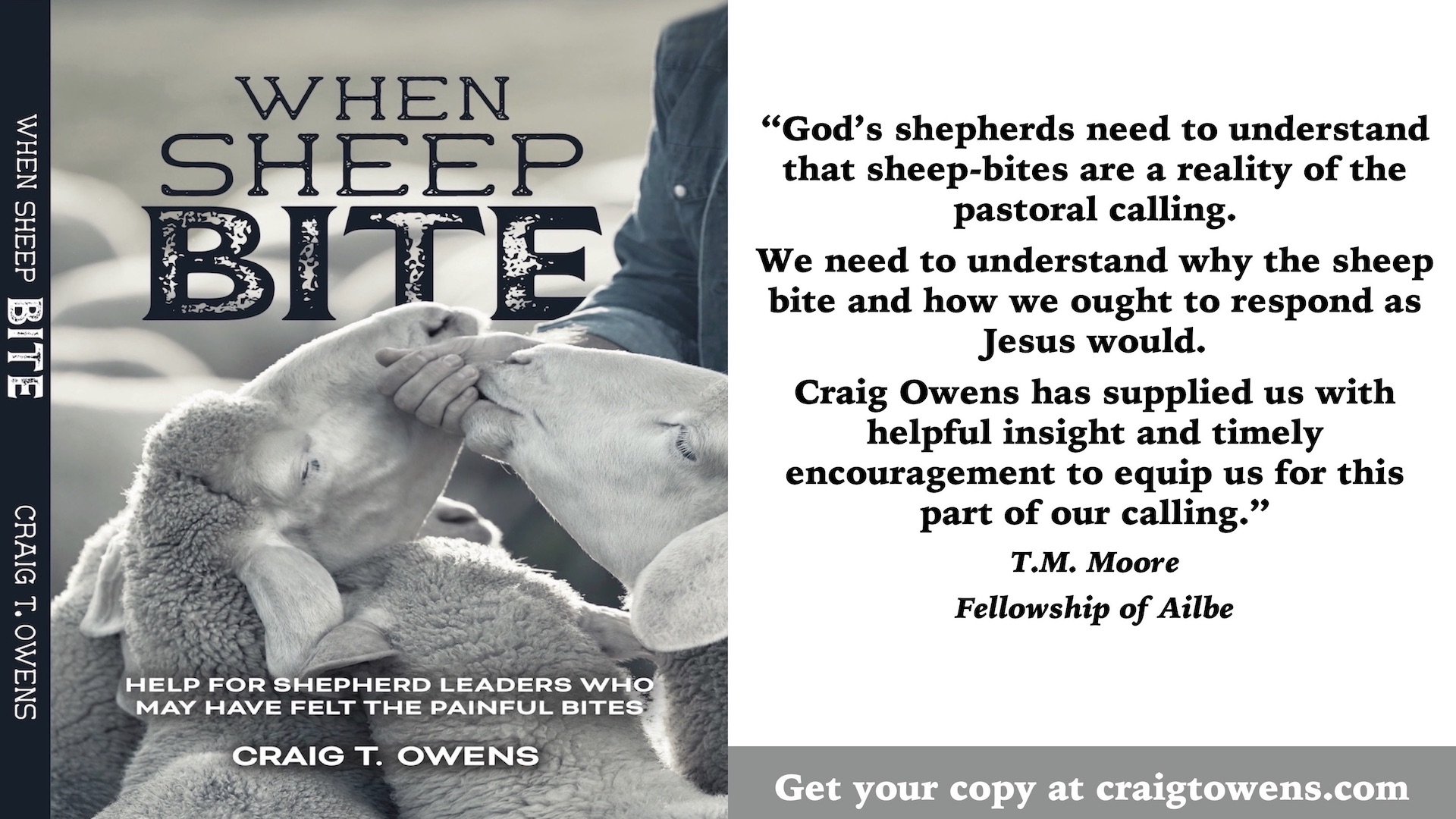
I was honored when T.M. Moore agreed to write an endorsement for my book When Sheep Bite, but I am beyond thrilled with the book review he wrote of my book! 

Here’s how he opens his review—

     Shepherding the Lord’s flock can be challenging in the best of times. I recall a comment by John Muir, the father of the national parks movement, who served as a shepherd in Yellowstone valley for some time. He observed that the sheep were difficult to move and to keep going in a single direction. They didn’t always respond well. In fact, he wrote, “It takes a whole flock of sheep to make a single dumb animal.”

     Since we are all the Lord’s sheep, we can probably identify with that—slow to learn, hard-headed, cold-hearted, lazy, complacent, and easily irritated. Not all the time, of course, but some of it, at any rate.

     But when your calling from the Lord is to be a shepherd in the Lord’s flock, to feed and nurture His sheep, protect them from spiritual harm, guide them into a richer and fuller experience of Jesus, and help them find their proper place of service in the Kingdom of God, tending the sheep can be especially challenging.

You can read the rest of his review here. And you can also check out my interview with Moore and his co-host Rusty Rabin on the Ailbe podcast. 

If you are a pastor—or if you love your pastor—please check out When Sheep Bite.

Can Criticism Ever Be A Good Thing?

Listen to the podcast of this post by clicking on the player below, and you can also subscribe on AppleSpotify, or Audible. 

Don’t be too quick on this one: I’m wondering if criticism can ever be a good thing?  

Check out this episode of The Podcast. 

The Scriptures that I reference in this video are found in Acts 10-11 

I mentioned my blog post where I talk more about Peter’s rooftop vision and how we went from confused to enlightened. The post is Clearing Up the Confusion.

In the chapter on the bite of criticism, I wrote this—

     Treating our critic as an opponent we have to defeat is sure to injure them and provide an opening for the enemy of our souls to pounce. Perhaps instead we should consider these wise words from A.W. Tozer: “Never be afraid of honest criticism. If the critic is wrong, you can help him; and if you’re wrong, he can help you. Either way, somebody’s helped.” 

     On the other hand, if you come into your meeting with a critic with a humble, willing-to-learn attitude, you will immediately soften the mood in the room. This kind of quietness keeps tempers from flaring (Proverbs 15:1). 

     See beyond the criticism to the critic. … Keep reminding yourself that this is a person to be loved, not an argument to be dismantled. 

Get more information on When Sheep Bite here. 

►► Would you please prayerfully consider supporting this ministry? My Patreon supporters get behind-the-scenes access to exclusive materials. ◀︎◀︎
Both Shepherds And Sheep Must Do Better

Listen to the podcast of this post by clicking on the player below, and you can also subscribe on AppleSpotify, or Audible. 

It’s the age-old question of which came first. I think I’ve got some insight for you.  

Check out this episode of The Podcast. 

You can get more information on both of my books here: 

And check another clip I shared from the Fellowship of Ailbe podcast here.

►► Would you please prayerfully consider supporting this ministry? My Patreon supporters get behind-the-scenes access to exclusive materials. ◀︎◀︎

Links & Quotes

Leaders need to give others confidence to try something new. We need to help people get moving so that we can coach what they are doing. For more great leadership insights, check out The Craig and Greg Show.

I have lots of new content every week, which you can check out on my YouTube channel.

A couple of thought-worthy quotes for pastors. First from David Mathis: “Pastors, observe that in and of itself, mocking is no clear reflection of the faithfulness or fruitfulness of preaching Christ. Wise preachers do not take mocking as an indicator of failure, nor as an indicator of success. Twice in Athens some mock Paul, which may seem like a failure compared to his homiletic triumphs elsewhere. However, others say, ‘We will hear you again.’ And then, in the end: ‘some men joined him and believed’ [Acts 17:32-34]. … How foolish it would be to distract ourselves with the mockers. Or to call special attention to the mocking as some great badge of our own faithfulness. Rather, we have the example of Paul at Mars Hill, who, so far as we can tell, wholly overlooks, with a holy disregard, these mockers and concerns himself instead with those asking honest questions.”

…and then one from John Piper: “Preaching is a happy business. Because even if the text is a hard word that devastates the hearers, the preacher connects the hard word with the gracious word and the hopeful word, and he catches them as they fall. So, in the end, all preaching is a happy business.

“A people that values its privileges above its principles soon loses both.” —Dwight D. Eisenhower

“For condemnation to work, we must say to God what the devil has said to us and believe it. If I want to stand before God with excuses that make what He said to me void, I’ll have to quote the devil to God. Does that sound like a good thing to do? God’s will for me is not to condemn me, but to liberate me from everything that holds me back from being what He created me to be through an ongoing relationship. To accomplish that, I need to do the opposite of what I used to do when I walked in condemnation. Instead of quoting to God what the devil is saying, I quote to the devil what God has said.” —Jim Wiegand, in Recruiting To Releasing 

Thinking about “how Martin Luther, a professor at Wittenberg University, helped to spark the 16th century Protestant Reformation,” J. Calvin Holsinger conceived the idea of preparing missionaries to US colleges and universities—a ministry called Chi Alpha.

Another great story from the “Here We Stand” series of biographies of notable people during the Reformation. “An attendant asked [King Henry VIII] whom he wished to have at his bedside. The king asked for Thomas [Cranmer]. By the time Cranmer arrived, King Henry was unable to speak. Foxe tells the story. ‘Then the archbishop, exhorting him to put his trust in Christ, and to call upon His mercy, desired him though he could not speak, yet to give some token with his eyes or with his hand, that he trusted in the Lord. Then the king, holding him with his hand, did wring his hand in his as hard as he could (Foxe’s Book of Martyrs, 748).’ The scene sweetly punctuates the most important friendship in the English Reformation. Whatever King Henry believed when he squeezed Cranmer’s hand that day, God used the bond between them to break England free from Roman Catholicism and to recover the one true gospel.”

The ICR reports, “Genesis claims that people in the pre-Flood world routinely attained 900-year lifespans. The best-known example is Methuselah, who had the longest recorded lifespan of 969 years (Genesis 5:27). Skeptics dismiss these great ages as fanciful legends, but recent fossil data are providing unexpected, albeit indirect, corroboration of the Bible’s testimony.” Check out this full report.

“In my experience, each failure contains the seeds of your next success—if you are willing to learn from it.” —Paul Allen, cofounder of Microsoft

When Shepherds And Sheep Talk

Listen to the podcast of this post by clicking on the player below, and you can also subscribe on AppleSpotify, or Audible. 

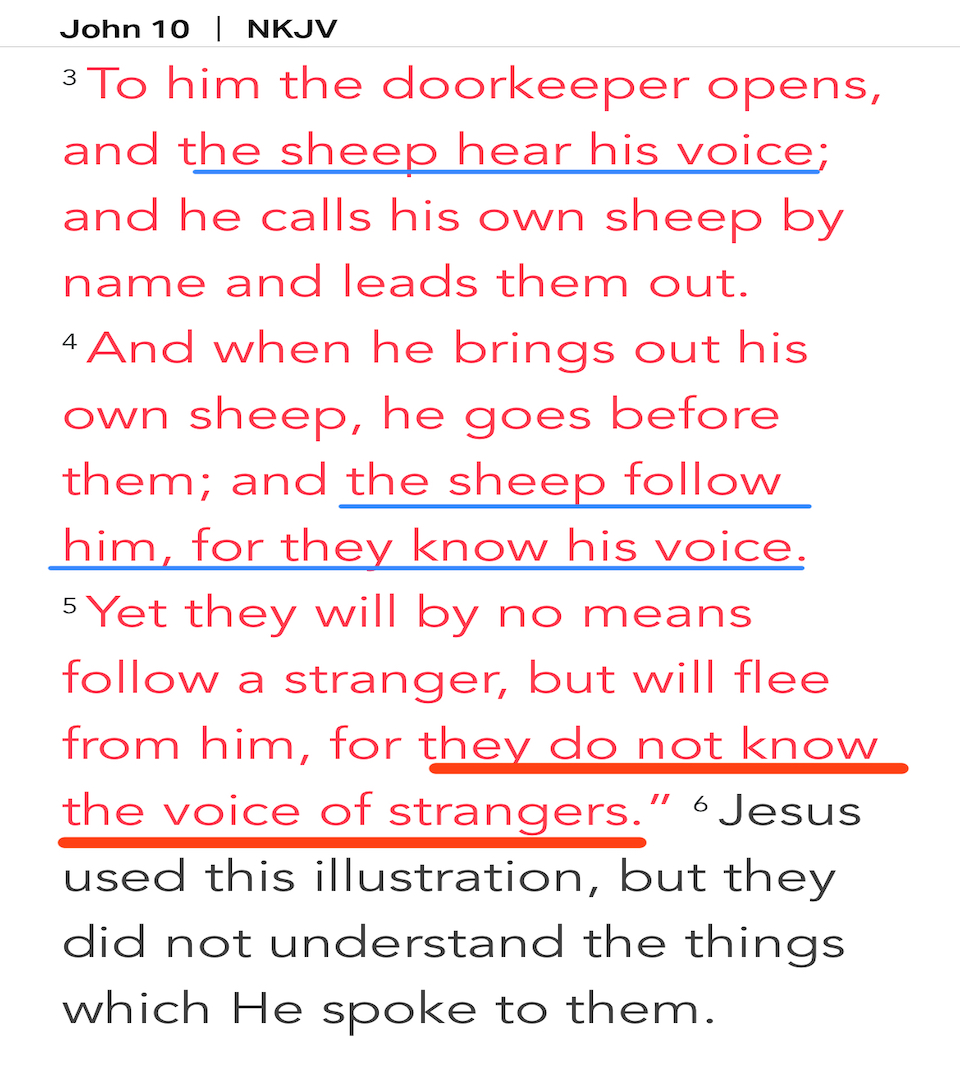
In John 10:1-18, Jesus calls Himself the Good Shepherd, and He refers to those who follow Him as His sheep. 

Anyone who has ever seen a shepherd interact with his sheep knows that the sheep are listening for their shepherd’s voice to give them direction, but they will ignore or run away from a stranger’s voice. 

(You may want to check out this video clip where I talk about how shepherds individualize their care for their sheep.)

This requires two-way communication. The shepherd must speak tenderly and convincingly, and the sheep must remain tuned in to their shepherd’s voice with an ear to follow. 

This requires proximity. The shepherd cannot speak from a distance without raising his voice, and sheep will never be attracted to someone who yells at them. 

This requires consistency. The shepherd needs to continually speak life-giving words, and the sheep need to consistently obey the shepherd’s words in order to reap the benefits. 

This requires discernment. The sheep have to be able to know the difference between their shepherd’s voice and a stranger’s voice. The shepherd needs to speak “words of eternal life” (see John 6:68-69). 

This requires patience. A shepherd’s directions really “get through” the first time, so the message needs to be patiently, lovingly, and creatively repeated. 

This requires abiding. The shepherd needs to show himself trustworthy, and the sheep need to show themselves faithful in their abiding with their shepherd. 

Jesus is the good and perfect Shepherd. There is no one else to whom I should be trusting, abiding with, listening to, and obeying. 

The Good Shepherd will call some of His sheep to serve as His under-shepherds for other sheep. Those under-shepherds bring the Good Shepherd glory by shepherding just as Jesus models for them. 

When shepherds and sheep remain in constant communication, there is a vitality and maturity that is readily apparent. And when the communication breaks down, the health of the sheep quickly deteriorates. 

If you have been called to be an under-shepherd, please check out my books Shepherd Leadership and When Sheep Bite that will give you practical, biblical guidelines for you to thrive in this beautiful ministry. 

►► Would you please prayerfully consider supporting this ministry? My Patreon supporters get behind-the-scenes access to exclusive materials. ◀︎◀︎

Shepherds Individualize Their Care

Listen to the podcast of this post by clicking on the player below, and you can also subscribe on AppleSpotify, or Audible. 

Karl Vaters and I share the same passionate belief that pastors—shepherd leaders—need to be in the pastures where God has placed them, faithfully caring for the sheep under their care. 

Check out this clip from my interview on The Church Lobby—

In my book Shepherd Leadership, I wrote this—

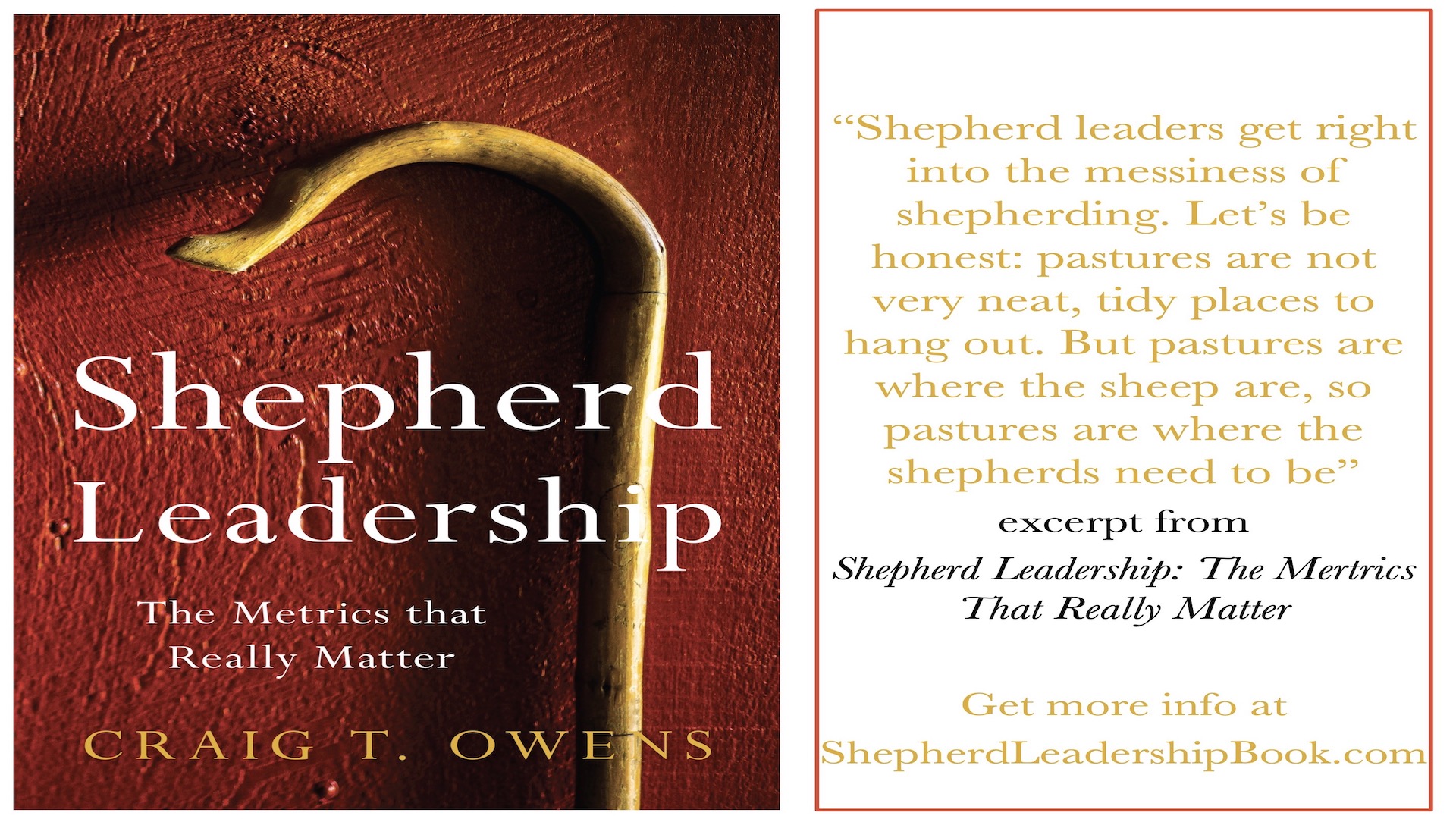
     Jesus said not only that He knew His sheep, but that His sheep knew Him, too. Shepherd leaders get right into the messiness of shepherding. Let’s be honest: pastures are not very neat, tidy places to hang out. But pastures are where the sheep are, so that is where the shepherds need to be. If the only time you interact with others is when you want to make an announcement or someone needs to be corrected, your sheep will begin to either resent you or fear your arrival. 

The best way to know the voice of each one of the sheep in your pasture (and the best way for those sheep to know your voice as well) is to be in the pasture as often as you can. This is what Jesus did at the Good Shepherd, and His under-shepherds honor Him when we follow His example. 

You can check out more clips from this Church Lobby interview here. 

Check out my book Shepherd Leadership for yourself or for a pastor that you love. And also check out my latest book When Sheep Bite, which I think of as the prequel to Shepherd Leadership.

►► Would you please prayerfully consider supporting this ministry? My Patreon supporters get behind-the-scenes access to exclusive materials. ◀︎◀︎
Shepherds Must Not Give In To Fight-Or-Flight 

Listen to the podcast of this post by clicking on the player below, and you can also subscribe on AppleSpotify, or Audible. 

Both physically and psychologically, our natural response to an attack, a surprise, or pain is to fight or flight. 

Although this is a natural response, it’s not the best response for shepherd leaders. Think about it: when a sheep is biting you or misbehaving, although you would like to smack them on the fuzzy nose or run away from them, those are not healthy responses. 

Jesus said that those who ran away in the face of attacks—either from sheep within or wolves without—aren’t worthy of the title “shepherd” (John 10:12-13). And Paul told Timothy that shepherd leaders “must not be quarrelsome but must be kind to everyone” (2 Timothy 2:24). 

As I said, fight-or-flight is natural, but Jesus is calling His under-shepherds to a supernatural response. This will require God’s help, which He frequently provides for us in the timely counsel of wise friends who have experienced the same pain you are experiencing. 

Check out this short video where I talked to a group of pastors about this topic. 

I would like to invite you to join a cohort of pastors that will be dealing with the same painful sheep bites you have experienced. We’ll meet together online every other week for 10 sessions to discuss the biblical principles that will help us all respond in the supernatural ways that strengthen our leadership, heal our flocks, and bring glory to the Chief Shepherd. 

This cohort is limited to just 10 pastors so that we can develop some solid friendships that will last well beyond the cohort, so please sign up today.

Check out more information on my book When Sheep Bite here.

Links & Quotes

Guys, you don’t have to “live down” to the poor male role models that Hollywood portrays, but you can create a beautiful culture in your marriage, your home, and your workplace. Check out the full sermon this clip came from.

I have lots of new content every week, which you can check out on my YouTube channel.

“Challenge yourself; it’s the only path which leads to growth.” —Morgan Freeman

Michael R. Emlet writes, “There are no easy answers here. In thinking about the juxtaposition of mental-health issues and church discipline, we want to be wary of two extremes. First, we don’t want to avoid corrective pastoral care out of fear that we will ‘add insult to injury’ for those struggling with mental affliction. Second, we don’t want to care for someone with mental illness exactly as we would care for someone without such a struggle. We want biblical truth and love to guide us.” This is a thoughtful post about how pastors should think about mental illness in church disciple. I shared a year-long series of messages on a Christian’s mental health, which you can find here.

Why does Paul call satan “the prince of the power of the air” (Ephesians 2:2)? Pastor John Piper gives us some excellent thoughts on Bible study in general and this verse in particular. 

Critics Can Be Gifts To Us

Listen to the podcast of this post by clicking on the player below, and you can also subscribe on AppleSpotify, or Audible.

I’m going to guess that I’m not alone in this: I don’t like when people criticize me. 

Especially when I’m in a leadership position, trying my best to make good decision for the entire organization, and someone comes up to me to criticize my decision-making abilities or my skill at carrying out my decisions. 

The easiest thing to do is simply dismiss their biting remarks. We can so easily say, “They have no idea what they’re talking about so I can ignore everything they’ve said to me.” 

Criticism is one of the most common bites that sheep dispense to those who are trying to shepherd them. 

But before we simply dismiss them, let me ask you to consider this: 

  • Is it possible that God is using these critics to get your attention? 
  • Is it possible that you have a flaw in a blind spot, and this critic is showing you something that you’ve been missing? 

If you can answer, “Yes” to even one of those questions, then you can also say that your critic is a God-sent gift for you to improve your leadership capacity. 

I discussed this recently on the Fellowship of Ailbe podcast.

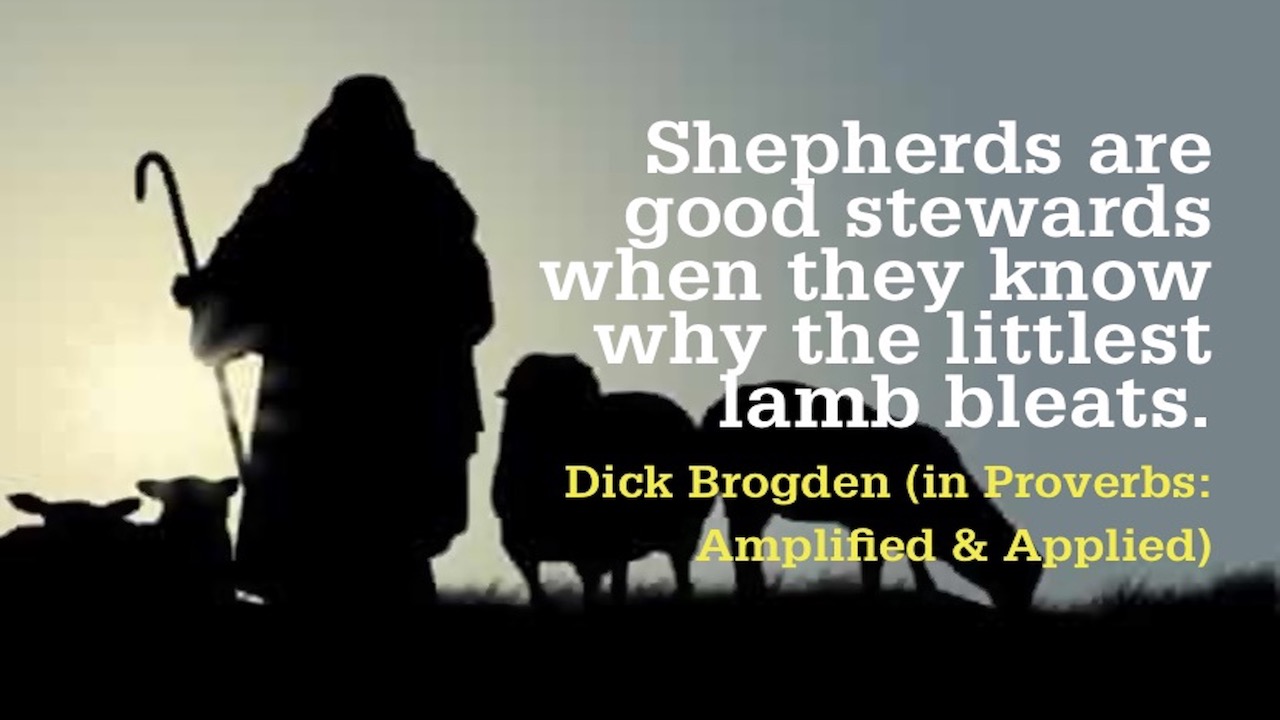
The full quote from Dick Brogden’s book Proverbs: Amplified and Applied says: “Critics and skeptics are gifts to us, for in their aspersions they often bring to light a brokenness or a liability early on in its development in us. If we are secure enough to ferret out the truth through the condemnation of others, we remain healthy in the long term as our malady is exposed and dealt with before it becomes too serious.” 

This means that criticism should lead us to a time of honest introspection.

In the chapter “Is God Trying to Get My Attention?” in my book When Sheep Bite, I wrote—

      Remember that we are naturally self-protective, so this time of introspection will need to be supernaturally empowered by the Holy Spirit if we are going to see the true prompter of the attack. A prayer I have prayed more times than I can count is, “Search me thoroughly, O God, and know my heart! Try me and know my thoughts! And see if there is any wicked or hurtful way in me, and lead me in the way everlasting” (Psalm 139:23-24 AMPC). 

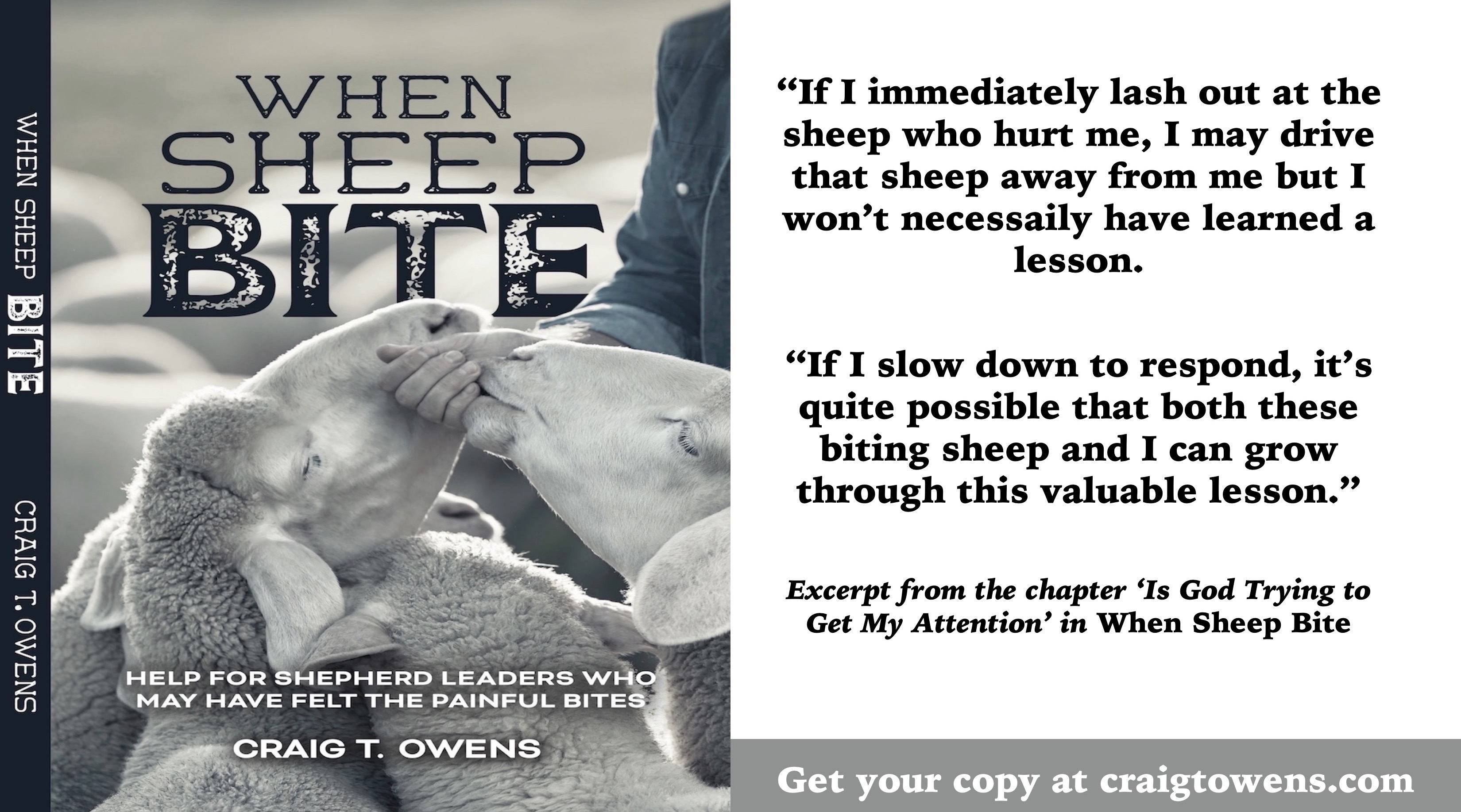
      It is only this humble reflection that can turn an experience into a lesson. If I immediately lash out at the sheep who hurt me, I may drive that sheep away from me but I won’t necessarily have learned a lesson. The one who bit me may have left my pasture, but perhaps they will never join any other pasture but may wander in the wilderness for the rest of their life. If I slow down to respond, it’s quite possible that both these biting sheep and I can grow through this valuable lesson. 

Let’e reframe the way we think about critics and their criticism. Before we simply dismiss it, let’s prayerfully consider if there is a lesson that God is trying to teach to us through this critic. 

You can check out the full conversation I had on the Ailbe podcast here. 

You can order a copy of When Sheep Bite here.

And you may be interested in two related blog posts: 20 helpful thoughts on criticism and What is valid criticism?

►► Would you please prayerfully consider supporting this ministry? My Patreon supporters get behind-the-scenes access to exclusive materials. ◀︎◀︎