


 Moses had a staff.
David had a sling.
Samson had a jawbone.
Rahab had a string.
Mary had some ointment.
Aaron had a rod.
Dorcas had a needle.
All were used of God.
What do you have? —Max Lucado, in You!
Moses had a staff.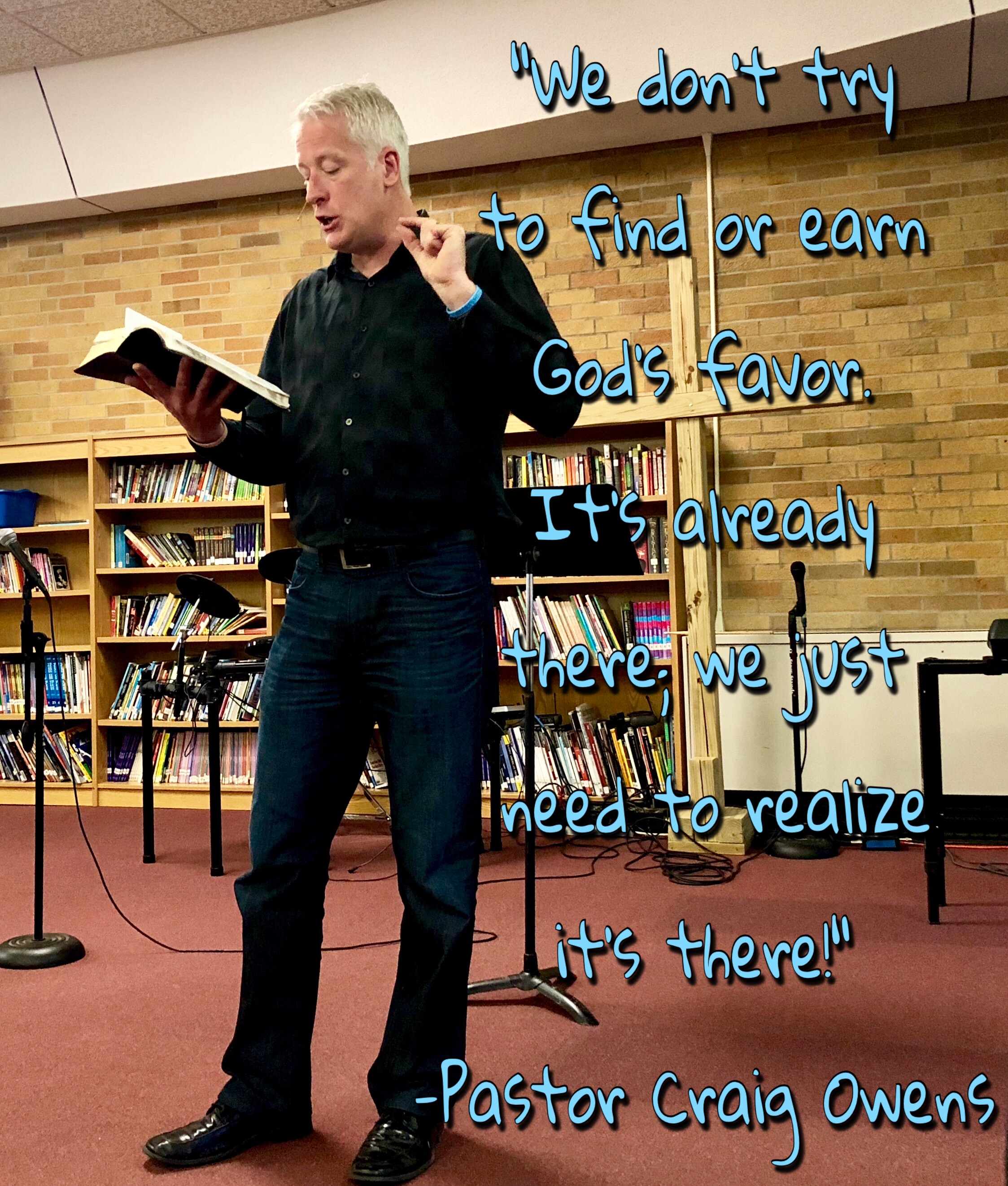 “It was because of His grace that God the Father sent His only Son to die in our place. To say it another way, Christ’s death was the result of God’s grace; grace is not the result of Christ’s death.” —Jerry Bridges
God had been showing us His love throughout the Old Testament period, but the Advent of Jesus made it abundantly and unmistakably clear that God is for us!
Check out how Luke focuses on God’s favor in a way that no other Gospel writer does:
But please notice this truth—We don’t try to find or earn God’s favor. It’s already there; we just need to realize it’s there!
You see, we don’t grow in God’s favor, nor do we get more favor, but we progressively become more deeply and intimately acquainted with God’s favor that is already there. Check out what Moses said:
If I have found favor in Your sight, show me now Your way, that I may know You progressively become more deeply and intimately acquainted with You, perceiving and recognizing and understanding more strongly and clearly and that I may find favor in Your sight (Exodus 33:13)
The angel said to Mary, “You are HIGHLY FAVORED” (Luke 1:28). God uses the same word when He says to us: God made us ACCEPTED in the Beloved (Ephesians 1:6).
How can this be?? Because on the Cross, Jesus switched places with us. He took all our sin and DISgrace, and gave us all of His righteousness. Now when God the Father looks at us, all He sees is the righteousness of His Son. Now all praise to God for His wonderful kindness to us and His favor that He has poured out upon us because we belong to His dearly loved Son (TLB).
God’s grace is undiminished. It is as full today as it ever has been. God could never love you more than He already does. God could never love you less because of anything you do. Keep your eyes on Him and you will find just how much favor He has for you!
Join me this Sunday either in person or on Facebook Live as we continue to learn more about God’s favor.
These are wise words from John Maxwell in The Maxwell Leadership Bible…
 Then Miriam and Aaron spoke against Moses because of the Ethiopian woman whom he had married; for he had married an Ethiopian woman. (Numbers 12:1)
Leaders can bank on two truths. First, they will be criticized. Second, criticism always changes the leader. Unhappy people tend to attack the point person.
Moses’ only family criticized him. Notice what God and Moses teach us on how to handle criticism (Numbers 12):
Beyond that, consider the ways leaders should handle criticism:
You might also want to check out—
 “A false peace is sweeping through many churches today, a peace that will fail in the troubled days ahead. Moses called stubborn Israel ‘self-blessed,’ meaning self-deceived. He warned Israel that a curse would come upon all wicked, disobedient children of God who walked in idolatry. They would plaster over their sinful ways with a false sense of peace: ‘When he hears the words of this curse, that he bless himself in his heart, saying, I shall have peace, though I walk in the imagination of mine heart’ (Deuteronomy 29:19).
“Moses is describing the child of God who decides to satisfy his lust for evil by finding a cozy doctrine that tells him he’s still saved, heaven bound—while still sinning. He says to himself, ‘I will do as I please and still not lose the peace in my heart.’ False peace!” —David Wilkerson (emphasis added)
 I would like for you to get a really clear picture in your mind of your best friend. This is someone you have opened your heart to, and they have opened their heart to you as well. This is the friend that encourages you when you’re down, but never when you’re on a self-destructive path. This is the companion that cries with you when something is broken, but who also challenges you to accept responsibility if you are the one who broke it.
Do you have that friend clearly in mind?
Now I’d like you to imagine if your interaction with your friend went something like this. Every day around 7 o’clock in the morning, you call your friend and say…
“Good morning! I’m so grateful you took my call. Listen, I’ve got a few things that I’d love for you to help me with today. I’ve been fighting a cold and I’d really like you to help me feel better. My Aunt Sally is in the hospital, and it would be great if you could stop in to see her. Also, that guy at work has really been on my nerves lately and so I need some insight on how to deal with that. It would so great if you could help me with all of this. If you do, I’ll be singing your praises to everyone I meet. Have a great day. Thanks!”
And then you hang up and never talk to your friend again until the next morning when the exact same scenario is repeated. How do you think your relationship would progress? Do you see your relationship getting deeper over time, or becoming more distant? I’m guessing that, like me, you don’t see a future in this relationship.
Sadly, this is how many people treat prayer! We come to God once a day with our list of concerns, ask Him for His help, then say “goodbye” and never think about Him again until the next day. Or until we find ourselves in desperate need.
But we forget: God never leaves us!
We also forget something even more vital—God wants us to talk with Him, and He wants to talk with us, as a friend to a friend.
Abraham was called a friend of God—Abraham believed God, and it was credited to him as righteousness, and he was called God’s friend (James 2:23).
Moses, too, was also God’s friend—The Lord would speak to Moses face to face, as one speaks to a friend (Exodus 33:11).
This isn’t something that was just for them, but it’s relationship that’s available for ALL of us—For since our friendship with God was restored by the death of His Son while we were still His enemies, we will certainly be saved through the life of His Son. So now we can rejoice in our wonderful new relationship with God because our Lord Jesus Christ has made us friends of God (Romans 5:10-11).
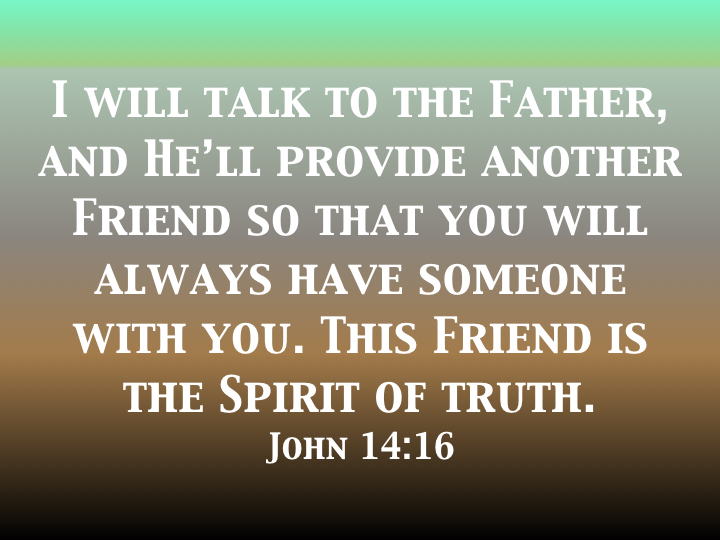
From the moment we accepted Jesus as our Lord and Savior, His Holy Spirit took up residence in our heart. Before Jesus ascended to Heaven, He promised us, “I will talk to the Father, and He’ll provide you another Friend so that you will always have someone with you. This Friend is the Spirit of Truth” (John 14:16).
Amazing! Astounding! Mind-blowing! But totally true—Prayer is conversation with a Friend!
How would your day go differently if you kept up a conversation with your Best Friend all day long? How much more wisdom do you think you would receive? How many mistakes could you avoid if He was telling you which way to go and what to say?
You don’t have to live with the “what ifs.” He IS your constant Companion, your most loyal Friend, your wisest Counselor. All you have to do is keep the lines of conversation open!
Application questions:
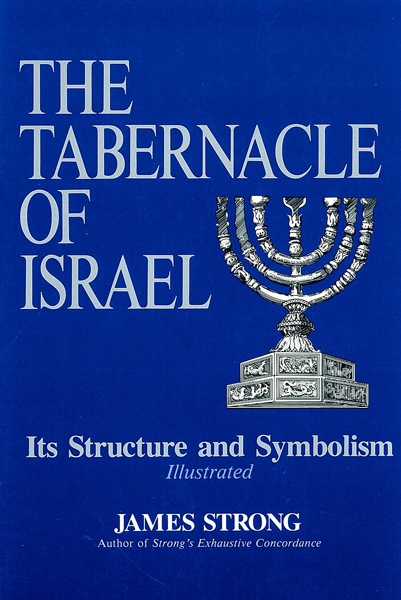 If you have ever used the Strong’s Exhaustive Concordance Of The Bible, you are probably familiar with the work of Dr. James Strong. By the way, if you haven’t used this concordance, it is 1500+ pages listing every word in the Bible and their Hebrew or Greek word and definition. By contrast, Dr. Strong’s book on The Tabernacle Of Israel is only 170 pages, but it’s just as jam-packed with helpful information.
I was recently reading through the books of the Bible where God gives Moses highly specific instructions for the portable Tabernacle that is to be used for the Hebrews to conduct their worship services. This temporary Tabernacle not only served them while they sojourned in the wilderness for 40 years, but it became the pattern for the brick-and-mortar Temple that King Solomon built years later, and its pattern is referred to again in the New Testament book of Hebrews as being a pattern of the worship in heaven. Obviously this is a significant thing!
Dr. Strong uses his extraordinary skills to compile an easy-to-follow study of the design guidelines, building materials, and exact layout of this Tabernacle. He uses not only the biblical accounts, but also augments his work with extensive archeological discoveries.
Then to wrap up the book, Dr. Strong talks about the significance of the layout, colors, materials, and even mathematical significance of the Tabernacle’s design, showing how it still impacts the New Testament Christian to this day.
This is an academic book, but it is well worth your time if you would like to get a more in-depth knowledge of the Tabernacle which God commanded Moses to build.
 I found Josh and Sean McDowell’s book The Beauty Of Intolerance to be such a timely book! Parents, teachers, pastors, and anyone who works with youth should definitely read this book to help navigate through the tolerance-saturated world we live in. You can check out my review of this book by clicking here.
“God gave Moses pages and pages of highly specific rules to govern the relationships and morality of His people. Each of those rules, which we call precepts, applies to a specific situation. But each is important because it is grounded in a principle, which is a fundamental, primary law from which other laws—the precepts—are derived. Each principle, in turn, is grounded in a Person—in the very character of God Himself. … God is not behind the principles and precepts simply to validate the rules; He is there as a Person for the purpose of relationship.”
“When moral truth becomes a matter of opinion, personal preference, or the individual’s views and feelings, then practically anything goes. … In a culture of tolerance where the individual decides morality, morality has no bounds.”
“An entire generation tends to go to the Bible not to discover the truth and bend their lives to it accordingly but to use it as sort of a self-help book to help them form their own version of what’s true and false, good and evil, right and wrong.”
“When you discuss the Bible, do not refer to it simply as a spiritual book that teaches us how to live, but as a road map leading one toward the discovery of true reality. … The one true God’s communication to humanity and the whole of Christianity as a religion is based on three primary realities supported by evidences: (1) The historic reliability of Scripture; (2) The deity of Christ; and (3) Christ’s bodily resurrection.”
“While we all may have a sense of what is evil and what is good, under the philosophy of cultural tolerance, evil and good can only be relative ideals. Without an objective truth—a set of universal moral values—good and evil are defined by the individual, community, or society. Therefore we have no moral basis by which to judge another person, community, or nation for what they do or don’t do.”
“Unless justice is rooted in a moral authority beyond those with the most power or even with the most votes, there cannot be true justice for all. … Justice, charity, and human rights are grounded in the fact that we are created in God’s image with value, dignity, and worth. … God’s mercy and justice as our model has fostered societal justice and provided more positive contributions to society in general than any other force in history.”
“The intolerance of the early Christians was a beautiful thing. They believed that everyone—including the poor, the homeless, the handicapped, the sick—was made in the image of God with dignity and worth. They were utterly intolerant of injustice, and they did whatever they could to correct the injustices they saw in society.”
“Real love—biblical, Godlike love—exposes cultural tolerance as the counterfeit of love because cultural tolerance fails to point people to a universal standard of morality designed to save them from serious harm. Cultural tolerance does not address what is in the best interest of a person—it possesses no moral standard that aligns to what is universally right and good. Real love, on the other hand, looks out for the best interest of others.”
“Every truth, every rule, and every guideline coming from God’s Word is issued from the loving heart and character of God for our own good.”
“Love is making the security, happiness, and welfare of another person as important as your own. Biblical love is not merely focused on another but on the good of another, even if the other does not recognize or accept the reality of the good.”
To read the first set of quotes I shared from The Beauty Of Intolerance, please click here. And be sure to follow me on Twitter and Tumblr to read more quotes from this book, and from lots of other profound thinkers, that I share daily.
 “‘Stand firm and you will see the deliverance the Lord will bring you today’ (Exodus 14:13). This verse contains God’s command to me as a believer for those times when I am confronted with dire circumstances and extraordinary difficulties. What am I to do when I cannot retreat or go forward and my way is blocked to the right into the left? The Master’s word to me is, ‘Stand firm.’ And the best thing I can do at these times is to listen only to my Master’s word, for others will come to me with their suggestions and evil advice.
“Despair will come, whispering, ‘Give up—lie down and die.’ …
“Cowardice will come and say, ‘You must retreat to the world’s way of acting. It is too difficult for you to continue living the part of a Christian. Abandon your principles.’ …
“Impatience will come, crying, ‘Get up and do something! To “stand firm” and wait is sheer idleness.’ …
“Arrogance will come, boasting, ‘If the sea is blocking your way, march right into it and expect a miracle.’ …
“‘Stand firm.’ I must maintain the posture of one who stands ready for action, expecting further orders, and cheerfully and patiently awaiting the Director’s voice. It will not be long until God will say to me, as distinctly as He told Moses to tell the children of Israel, ‘Move on’ (Exodus 14:15).” —Charles Spurgeon
 This is a weekly series with things I’m reading and pondering from Oswald Chambers. You can read the original seed thought here, or type “Thursdays With Oswald” in the search box to read more entries.
Don’t Rush God’s Timing
Moses was learned in all the wisdom of the Egyptians, he was a mighty man and a great statesman, and when he saw the oppression of his people he felt that God had called him out to deliver them, and in the righteous indignation of his own spirit he started to right their wrongs. God is never in a hurry. After the first big strike for God and for the right things, God allowed Moses, the only man who could deliver his own people, to be driven into the desert to feed sheep—forty years of blank discouragement.
Then when God appeared and told him to go and bring forth the people, Moses said—“Who am I, that I should go?” … At first, Moses was certain he was the man, and so he was, but he was not fit yet. He set out to deliver the people in a way that had nothing of the stride of God about it. Moses was right in the individual aspect, but he was not the man for the work until he had learned communion with God, and it took forty years in the desert while God worked through him in ways of terrific personal enlargement before he recognized this.
We have to learn that our individual effort for God is an impertinence, our individuality must be rendered incandescent by a personal relationship to God, and that is not learned easily.
From The Place Of Help (emphasis added)
Do you feel like God has called you to do something great for Him? You’re right, He has! But don’t rush His timing. Listen to the counsel of wise people in your life, pray about it, count the cost, and let God prepare you for it. He has perfect timing … don’t rush Him!

“The Apostle Paul tells us that a temple of God, properly adorned and maintained, grows in unity and maturity in the Lord Jesus, as pastors and teachers equip church members to do the work of ministry (Ephesians 4:11-16). A building and other facilities can aid in this process, but they are not essential. Indeed, in many ways they can actually distract us from our task by so defining and confining what we do in the name of ministry that our endeavors consistently look more like the ways of the world than the work of the Lord, more like maintaining and maximizing an institution than seeking and advancing a Kingdom not of this world. … As we build our churches let us not lose sight of the fact that what matters most to the Lord is not the number, shape, and usability of the buildings we erect, but the health, growth, and ministries of the people in whom He has come to dwell.” —T.M. Moore
“When we blindly adopt a religion, a political system, a literary dogma, we become automatons. We cease to grow.” —Anais Nin
“The Lord’s Prayer contains 56 words; the Gettysburg Address, 266; the Ten Commandments, 297; the Declaration of Independence, 300; and a recent U.S. government order setting the price of cabbage, 26,911. At the state level, over 250,000 bills are introduced each year. And 25,000 pass the legislatures to disappear into the labyrinths of the law.” —Al Ries and Jack Trout
“For some (even for some Christians), faith is best defined as ‘believing in something that lacks supporting evidence.’ But this is not the definition of faith that is presented on the pages of Christian Scripture.” Read more from J. Warner Wallace on how Christianity Promotes Rational (and Evidential) Exploration.
Frank Turek points out, “Remember, Moses was on the wrong side of the golden calf. And [Abraham] Lincoln’s Emancipation Proclamation was on the wrong side of Dred Scott.…” In this post he shares why same-sex “marriage” proponents are on the wrong side of God, evolution and humanity.
[VIDEO] This 5-minute clip of noted New Testament scholar N.T. Wright on homosexuality is well worth your time—
My son tipped me off to a thought-provoking post on dating relationships: How Our Dating Culture As Already Broken Your Future Wife’s Heart.


 Craig T. Owens