Links & Quotes

link quote

These are links to articles and quotes I found interesting today.

Beat the flu: 10 Ways To Boost Your Immune System

[VIDEO] Better Google searches

For 20-somethings: 20 Things People Over 20 Should Stop Doing

“If Christians today want to find the right church, they must begin with prayer! No one is ever going to find God’s true Church by jumping on a bus, train or plane and racing around the world in search of it. We simply can’t get to His Church by any modern conveyance. The only reliable map is our secret closet of prayer!” —David Wilkerson

So President Obama, who has sworn to uphold the law of the land, won′t even uphold his own law?!? New Obamacare Delay

Truth: 10 Bad Reasons To Be A Pastor

“My greatest fear in life is standing before the Lord and hearing Him say, ‘I had so much more for you, but you held on too tightly.’” —Larry Burkett

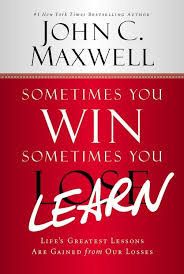
21 Quotes From “Sometimes You Win, Sometimes You Learn”

Sometimes You WinAs I mentioned in my book review (which you can read by clicking here), John Maxwell always expands my horizons with his writings. I appreciate his ability to use his own life experiences as well as historical and contemporary examples and writings. So some of my favorite quotes from Sometimes You Win, Sometimes You Learn are from Dr. Maxwell, and some are from others that he quotes. Enjoy!

“I sometimes react to making a mistake as if I have betrayed myself. My fear of making a mistake seems to be based on the hidden assumption that I am potentially perfect and that if I can just be very careful, I will not fall from heaven. But a mistake is a declaration of the way I am, a jolt to the way I intend, a reminder that I am not dealing with facts. When I have listened to my mistakes, I have grown.” —Hugh Prather

“Those who profit from adversity possess a spirit of humility and are therefore inclined to make the necessary changes needed to learn from their mistakes, failures, and losses. … When we are focused too much on ourselves, we lose perspective. Humility allows us to regain perspective and see the big picture. … Humility allows us to let go of perfection and keep trying.” —John Maxwell

“Most people spend their entire lives in a fantasy Island called ‘Someday I’ll.’” —Denis Waitley 

“An idealist believes the short-run doesn’t count. A cynic believes the long run doesn’t matter. A realist believes that what is done or left undone in the short-run determines the long run.” —Sydney J. Harris

“Those things that hurt, instruct.” —Benjamin Franklin

“You can’t grow and learn if your focus is on finding someone else to blame instead of looking at your own shortcomings.” —John Maxwell

“The highest reward for our toil is not what we get for it but what we become by it. … Mistakes are not failures. They are proof that we are making an effort. When we understand that, we can more easily move out of our comfort zone, try something new, and improve. … Improvement demands a commitment to grow long after the mood in which it was made has passed.” —John Maxwell 

“Success in most things comes not from some gigantic stroke of fate, but from simple, incremental progress.” —Andrew Wood

“The main trouble with despair is that it is self-fulfilling. People who fear the worst tend to invite it. Heads that are down can’t scan the horizon for new openings. Bursts of energy do not spring from a spirit of defeat. Ultimately, helplessness leads to hopelessness.” —Norman Cousins

“Positive thinking must be followed by positive doing.” —John Maxwell

“When you are influential and highly respected, people tend to tell you what you want to hear, not what you need to hear. They are seeking your approval, or they flatter you. Unfortunately, this creates a gap between what you hear and reality. If you find yourself in that situation, you will need to work extra hard to get the people close to you to speak honestly into your life. And you will have to become highly intentional in observing and listening.” —John Maxwell 

“Wisdom is the reward you get for a lifetime of listening when you would have preferred to talk.” —Doug Larson

“Circumstances are the rulers of the weak; but they are the instruments of the wise.” —Samuel Lover 

“Mistakes are painful when they happen, but years later a collection of mistakes is what is called experience.” —Denis Waitley

“Ninety percent of those who fail are not actually defeated; they simply quit. … As you face bad experiences, it’s important for you to remember that you can rarely see the benefits while you’re in the midst of them. You usually gain perspective on the other side of it.” —John Maxwell 

“Most people would rather change their circumstances to improve their lives when instead they need to change themselves to improve their circumstances. They put in just enough effort to distance themselves from their problems without ever trying to go after the root, which can often be found in themselves. Because they don’t try to change the source of their problems, their problems keep coming back at them.” —John Maxwell

“To grow, you must be willing to let your present and future be totally unlike your past. Your history is not your destiny.” —Alan Cohen

“If I had my life to live over again, I’d make the same mistakes, only sooner.” —Tallulah Bankhead

“Maturity is doing what you are supposed to be doing, when you’re supposed to be doing it, no matter how you feel.” —Dom Capers 

“Have you not succeeded? Continue! Have you succeeded? Continue!” —Fridtjof Nansen, Nobel Peace Prize winner

“How we think when we lose determines how long it will be until we win.” —G.K. Chesterton

Thursdays With Oswald—God’s Word In Hard Places

This is a weekly series with things I’m reading and pondering from Oswald Chambers. You can read the original seed thought here, or type “Thursdays With Oswald” in the search box to read more entries.

Oswald Chambers

God’s Word In Hard Places     

To search for a word of God to suit one’s case is never Divine guidance, but guidance by human caprice and inclination. The Holy Spirit Who brings to our remembrance what Jesus has said and leads us into all truth, does so to glorify Jesus Christ. Divine guidance by the Word always makes us realize our responsibility to God…. 

     How often have our misunderstandings of God’s Word proved to us the need for the penetrating words of our Lord, “I have yet many things to say unto you, but you cannot bear them now.” In our prayings, in our desirings, in our patience, does our knowledge of God enable us to say and really mean, “Speak, Lord; for Your servant is listening”? Would we really hear God’s Word, or are we not rather in this immediate tribulation waiting for God to persuade us that our own way is right after all?

From Christian Disciplines

There is a difference between saying, “God get me out of this” and “God, what do You want to get out of this?”

There is a difference between praying, “God, please bless what I’m doing” and “God, please show me what You’re blessing so that I may do it.”

We need to be very careful that we don’t read into Scripture something that will justify what we’re feeling or doing or experiencing. Instead, we need to let the Holy Spirit speak God’s Word to us clearly and without any hidden agenda.

I know your situation may be tough, but don’t try to find a shortcut out of it. Let God accomplish what He wants to accomplish; let His Word be your guide; let the Holy Spirit make that Word come alive to you.

Thursdays With Oswald—The Word & The Words

This is a weekly series with things I’m reading and pondering from Oswald Chambers. You can read the original seed thought here, or type “Thursdays With Oswald” in the search box to read more entries.

Oswald Chambers

The Word & The Words

     The Bible is the Word of God only to those who are born from above and who walk in the light. Our Lord Jesus Christ, the Word of God, and the Bible, the words of God, stand or fall together, they can never be separated without fatal results. A man’s attitude to our Lord determines his attitude to the Bible. 

     The “sayings” of God to a man not born from above are of no moment; to him the Bible is simply a remarkable compilation of literature—“that it is, and nothing more.” All the confusion arises from not recognizing this. 

     But to the soul born from above, the Bible is the universe of God’s revealed will. The Word of God to me is ever according to my spiritual character; it makes clear my responsibility to God as well as my individuality apart from Him. 

From Christian Disciplines (emphasis mine)

Do you agree with Chambers on this viewpoint?

In light of this, how will you view Scripture differently?

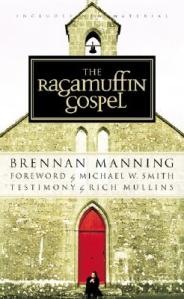
22 Quotes From “The Ragamuffin Gospel”

Ragamuffin GospelThe Ragamuffin Gospel by Brennan Manning really resonated with me. You can read my full book review by clicking here, but below are some of the quotes I especially appreciated.

“The institutional church has become a wounder of the healer rather than a healer of the wounded.” 

“Personal responsibility has replaced personal response. We talk about acquiring virtue as if it were a skill that can be attained, like good handwriting or a well-grooved golf swing. In the penitential seasons we focus on overcoming our weaknesses, getting rid of our hang-ups, and reaching Christian maturity. We sweat through various spiritual exercises as if they were designed to produce a Christian Charles Atlas. Though lip service is paid to the gospel of grace, many Christians live as if only personal disciplines and self-denial will mold the perfect me. The emphasis is on what I do rather on what God is doing. In this curious process God is a benign old spectator in the bleachers who cheers when I show up for morning quiet time.”

“God has a single relentless stance toward us: He loves us. He is the only God man has ever heard of who loves sinners. False gods—the gods of human manufacturing—despise sinners, but the Father of Jesus loves all, no matter what they do.” 

“Jesus comes not for the super-spiritual but for the wobbly and the weak-kneed who know they don’t have it all together, and who are not too proud to accept the handout of amazing grace.”

“The Word we study has to be the Word we pray.”

“We must never allow the authority of books, institutions, or leaders to replace the authority of knowing Jesus Christ personally and directly. When the religious views of others interpose between us and the primary experience of Jesus as the Christ, we become unconvicted and unpersuasive travel agents handing out brochures to places we have never visited.”

“Whatever past achievements might bring us honor, whatever past disgraces might make us blush, all have been crucified with Christ and exist no more except in the deep recess of eternity.” 

“It is unimaginable to picture a wooden-faced, stoic, joyless, and judgmental Jesus as He reclined with ragamuffins.”

“We miss Jesus’ point entirely when we use His words as weapons against others. They are to be taken personally by each of us.” 

“The saved sinner is prostrate in adoration, lost in wonder and praise. He knows repentance is not what we do in order to earn forgiveness; it is what we do because we have been forgiven. It serves as an expression of gratitude rather than an effort to earn forgiveness. Thus the sequence of forgiveness and then repentance, rather than repentance and then forgiveness, is crucial for understanding the gospel of grace.”

“Maybe this is the heart of our hang-up, the root of our dilemma. We fluctuate between castigating ourselves and congratulating ourselves because we are deluded into thinking we save ourselves. We develop a false sense of security from our good works and scrupulous observance of the law. Our halo gets too tight and a carefully disguised attitude of moral superiority results. Or we are appalled by our inconsistency, devastated that we haven’t lived up to our lofty expectations of ourselves. The roller coaster ride of elation and depression continues. Why? Because we never lay hold of our nothingness before God, and consequently, we never enter into the deepest reality of our relationship with Him. But when we accept ownership of our powerlessness and helplessness, when we acknowledge that we are paupers at the door of God’s mercy, then God can make something beautiful out of us.” 

“Honesty is such a precious commodity that it is seldom found in the world or the church. Honesty requires the truthfulness to admit the attachment and addictions that control our attention, dominate our consciousness, and function as false gods. I can be addicted to vodka or to being nice, to marijuana or being loved, to cocaine or being right, to gambling or relationships, to golf or gossiping. Perhaps my addiction is food, performance, money, popularity, power, revenge, reading, television, tobacco, weight, or winning. When we give anything more priority than we give to God, we commit idolatry. Thus we all commit idolatry countless times every day.”

“To be alive is to be broken. And to be broken is to stand in need of grace. Honesty keeps us in touch with our neediness and the truth that we are saved sinners. There is a beautiful transparency to honest disciples who never wear a false face and do not pretend to be anything but who they are. … Getting honest with ourselves does not make us unacceptable to God. It does not distance us from God, but draws us to Him—as nothing else can—and opens us anew to the flow of grace.” 

“When we wallow in guilt, remorse, and shame over real or imagined sins of the past, we are disdaining God’s gift of grace. Preoccupation with self is always a major component of unhealthy guilt and recrimination. … Yes, we feel guilt over sins, but healthy guilt is one which acknowledges the wrong done and feels remorse, but then is free to embrace the forgiveness that has been offered.”

“The evil one is the great illusionist. He varnishes the truth and encourages dishonesty. ‘If we say, “We have no sin,” we are deceiving ourselves, and the truth has no place in us’ (1 John 1:8). satan prompts us to give importance to what has no importance. He clothes trivia with glitter and seduces us away from what is real. He causes us to live in a world of delusion, unreality, and shadows.” 

“At Sunday worship, as in every dimension of our existence, many of us pretend to believe we are sinners. Consequently, all we can do is pretend to believe we have been forgiven. As a result, our whole spiritual life is pseudo-repentance and pseudo-bliss.”

“The way we are with each other is the truest test of our faith. How I treat a brother or sister from day to day, how I react to the sin-scarred wino on the street, how I respond to interruptions from people I dislike, how I deal with normal people in their normal confusion on a normal day may be a better indication of my reverence for life than the antiabortion sticker on the bumper of my car.” 

“A little child cannot do a bad coloring; nor can a child of God do bad in prayer.”

“The call asks, Do you really accept the message that God is head over heels in love with you? I believe that this question is at the core of our ability to mature and grow spiritually. If in our hearts we really don’t believe that God loves us as we are, if we are still tainted by the lie that we can do something to make God love us more, we are rejecting the message of the Cross.” 

“There are some real problems with projecting the perfect image. First of all, it’s simply not true—we are not always happy, optimistic, in command. Second, projecting the flawless image keeps us from reaching people who feel we just wouldn’t understand them. And third, even if we could live a life with no conflict, suffering, or mistakes, it would be a shallow existence. The Christian with depth is the person who has failed and who has learned to live with it.”

“We project into the Lord our own measured standard of acceptance. Our whole understanding of Him is based in a quid pro quo of bartered love. He will love us if we are good, moral, and diligent. But we have turned the tables; we try to live so that He will love us, rather than living because He has already loved us.” 

“No greater sinners exist than those so-called Christians who disfigure the face of God, mutilate the gospel of grace, and intimidate others through fear. They corrupt the essential nature of Christianity.”

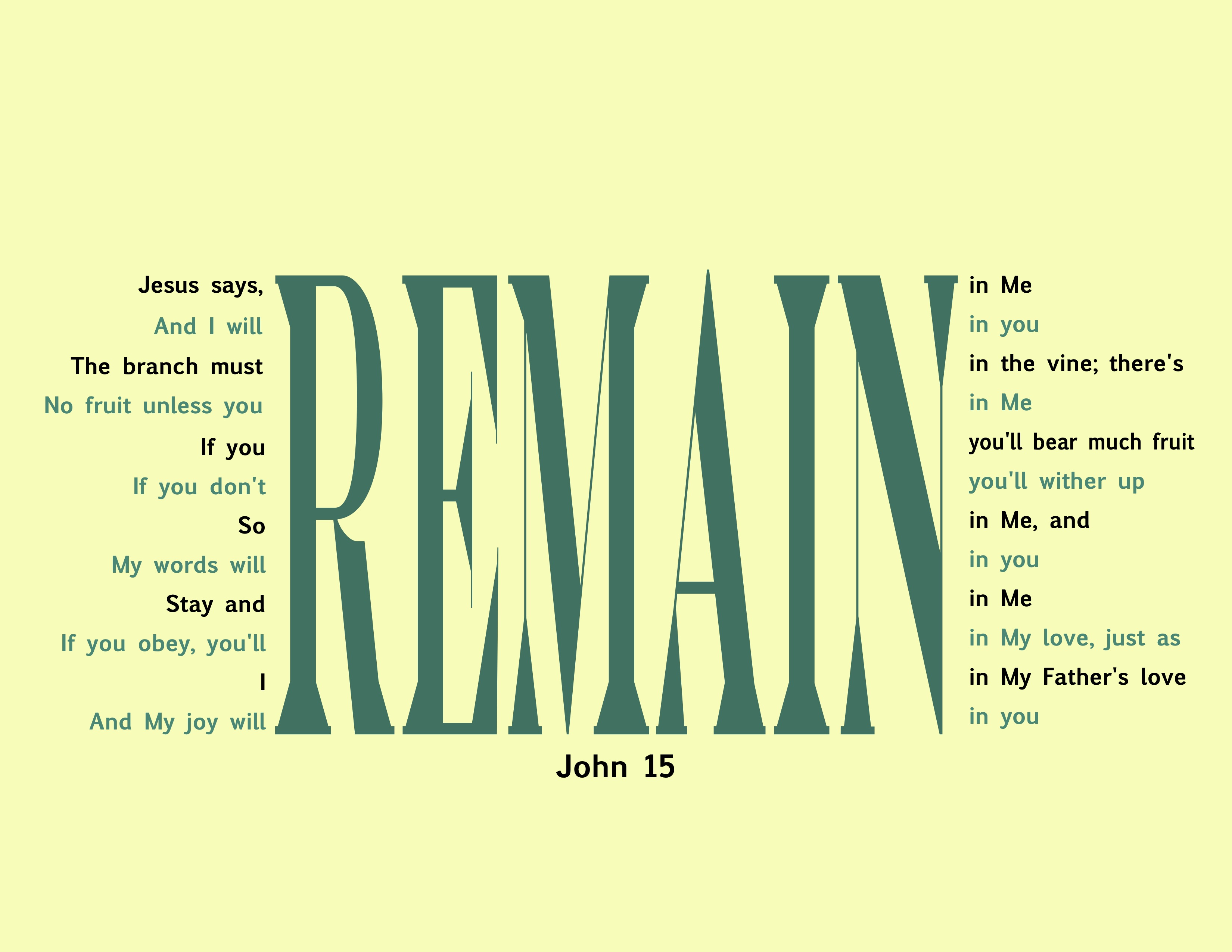
Remain

Jesus says, REMAIN in Me,
And I will REMAIN in you.
The branch must REMAIN in the vine; there’s
No fruit unless you REMAIN in Me.
If you REMAIN, you’ll bear much fruit;
If you don’t REMAIN, you’ll wither up.
So REMAIN in me, and
My words will REMAIN in you.
Stay and REMAIN in Me.
If you obey, you’ll REMAIN in My love, just as
I REMAIN in My Father’s love
And My joy will REMAIN in you. (John 15)

Counterfeit Or Authentic Spirituality?

Spiritual battleCharles Spurgeon said, “It is ever the Holy Spirit’s work to turn our eyes away from self to Jesus; but satan’s work is just the opposite of this.”

Oswald Chambers said it even more succinctly: “satan counterfeits the Holy Spirit.”

It’s true that whenever there is an authentic move of the Holy Spirit, satan will try to pervert it or counterfeit it. He wants Christians disempowered, so he will do all that is within his power to get us off track, especially in regard to the role of the Holy Spirit in our lives. That’s why Scripture tells us, “Do not stifle the Holy Spirit. Do not scoff at prophecies, but test everything that is said. Hold on to what is good.” (1 Thessalonians 5:19-21, NLT)

Did you know that the Secret Service―who is tasked with tracking down those who counterfeit U.S. currency―spends more time studying authentic currency than they do counterfeit currency. Why is that? Because there are many ways to make a counterfeit bill, but only one way to make the genuine article! So these agents spend so much time handling and studying the authentic, that they can spot a fraud in a split second.

If we are going to test everything related to the Holy Spirit, we don’t need to focus on all of the counterfeit displays, but simply get to know the authentic. Here are six authenticating proofs we can look for to know the baptism of the Holy Spirit in our lives is genuine.

Our live are producing better quality and more fruit

When you bear much fruit, My Father is honored and glorified, and you show and prove yourselves to be true followers of Mine. (John 15:8, AMP)

We are experiencing empowered spontaneous ministry

Notice in the first Pentecostal church how the Spirit-baptized Christians just did ministry whenever and wherever (see Acts 2:42-47 and 4:32-37). They didn’t form committees or discuss strategies; they just did what needed to be done to make Jesus known.

We have an increased sensitivity to sin

Things bother us now that didn’t bother us before, because we don’t want there to be anything in our lives that strains our relationship with God (see Galatians 5:16-25).

There’s a noticeable growth in our spiritual maturity

In Acts 4:8-13 the religious leadership was astounded at how Peter and John showed spiritual maturity beyond their training. The Holy Spirit helped them to pull out and apply Scripture to the circumstances they faced.

We experience greater sensitivity to God’s promptings

In Acts 16:6-7, we see the Holy Spirit stopped Paul and his companions from preaching the gospel. He was directing them to the perfect time and place for their ministry. This reminds me of the Old Testament promise: “Your own ears will hear Him. Right behind you a Voice will say, ‘This is the way you should go,’ whether to the right or to the left.” (Isaiah 30:21)

We have a greater desire to tell others about Jesus

The Holy Spirit empowers us to tell more and more people about Jesus with greater boldness than we had before (Acts 1:8 and 4:31).

Don’t worry about trying to study the fakes. Get to know the authentic move of the Holy Spirit, and you will have no problem knowing what a genuine move of the Spirit looks like!

I am continuing my series called Come Holy Spirit this upcoming Sunday. If you are in the area, I would love to have you join me.

Don’t Create Spiritual Parasites

MosquitoPastor, here are two quotes for your consideration…

Theology is the science of Christianity; much that is wrongly called theology is mere psychological guess-work, verifiable only from experience. Christian theology is the ordered exposition of revelation certainties. If our teaching and preaching is not based on a recognition of those things that cannot be experienced it will produce parasites, people who depend on being fed by others. —Oswald Chambers (emphasis added)

Now the Berean Jews were of more noble character than those in Thessalonica, for they received the message with great eagerness and examined the Scriptures every day to see if what Paul said was true. —Acts 17:11 (emphasis added)

As a pastor our job is not to spoon-feed a watered-down message to everyone. Our job is to challenge our congregations to find God for themselves. We should be creating in them a hunger for God’s Word; we should be encouraging them to study the Bible for themselves; we should be preparing them to feed themselves on the richness of Scripture.

Or, we create needy spiritual parasites. It’s our choice…

Growing Pains

Listen to the podcast of this post by clicking on the player below, and you can also subscribe on AppleSpotify, or Audible. 

I remember when I was a teenager having such an ache in my legs at night. I’d be laying on my bed trying to sleep, but I couldn’t get comfortable because of that dull, unrelenting ache in my legs. I’d go ask my Mom what was going on, and her reply was simple: “Those are growing pains.”

In order to grow in any area of our lives—physically, emotionally, mentally, relationally—we have to go through a certain amount of pain.

No pain, no gain.

The process is not always a lot of fun, but that’s why we have to keep our eyes on the goal. The process may not be something we like, but the end results will make the pain worth it.

For instance, you may not like dieting but you like the weight loss or lower cholesterol numbers, so you stick with it. You may not like saying, “I’m sorry, I was wrong, please forgive me” but you like the healed relationship, so you say it.

Throughout the New Testament the phrase one another is frequently used to address how members of the Body of Christ should relate to each other. God desires that all of us operate interdependently with one another. In order to get there, we must get ready for some growing pains!

In Ephesians 4:2, Paul tells us what is required to get to a place of unity and maturity in the Church:

  • Be completely humble (the King James Version says lowliness). This Greek word means not letting our thoughts rise far from the ground. In other words, we are thinking of ourselves as God thinks of us, not independently as a self-made man or woman, but viewing all of my success as God-appointed. This process toward interdependence starts in our thoughts—in our attitudes about ourselves and about others.
  • Gentle means strength under control. Gentleness says, “I could do this, but for your sake I won’t.”
  • Patient interaction (KJV: longsuffering) with others is allowing them the freedom to grow just as others allowed me the freedom to grow.
  • Bearing with one another in love. Think of a load-bearing wall in a building that is holding up the weight of the roof and walls. When we bear with one another we are helping to share the burdens.

Being humble with ourselves and gentle and patient with others is the way we go through the growing pains of bearing with one another in love. The process may not be a lot of fun, but the end result is something that glorifies God, that’s why we must stick with one another through all our growing pains.

Check out all of the other messages in our series Live Together by clicking here.

►► Would you please prayerfully consider supporting this ministry? My Patreon supporters get behind-the-scenes access to exclusive materials. ◀︎◀︎

Thursdays With Oswald—Stair-step Growth

Listen to the podcast of this post by clicking on the player below, and you can also subscribe on AppleSpotify, or Audible. 

This is a weekly series with things I’m reading and pondering from Oswald Chambers. You can read the original seed thought here, or type “Thursdays With Oswald” in the search box to read more entries.

Stair-step Growth

     There are stages in spiritual development when God allows us to be dull, times when we cannot realize or feel anything. It is one of the greatest mercies that we have those blank spaces, for this reason, that if we go on with spiritual perception too quickly we have no time to work it out; and if we have no time to work it out, it will react in stagnation and degeneration. 

From Bringing Sons Unto Glory

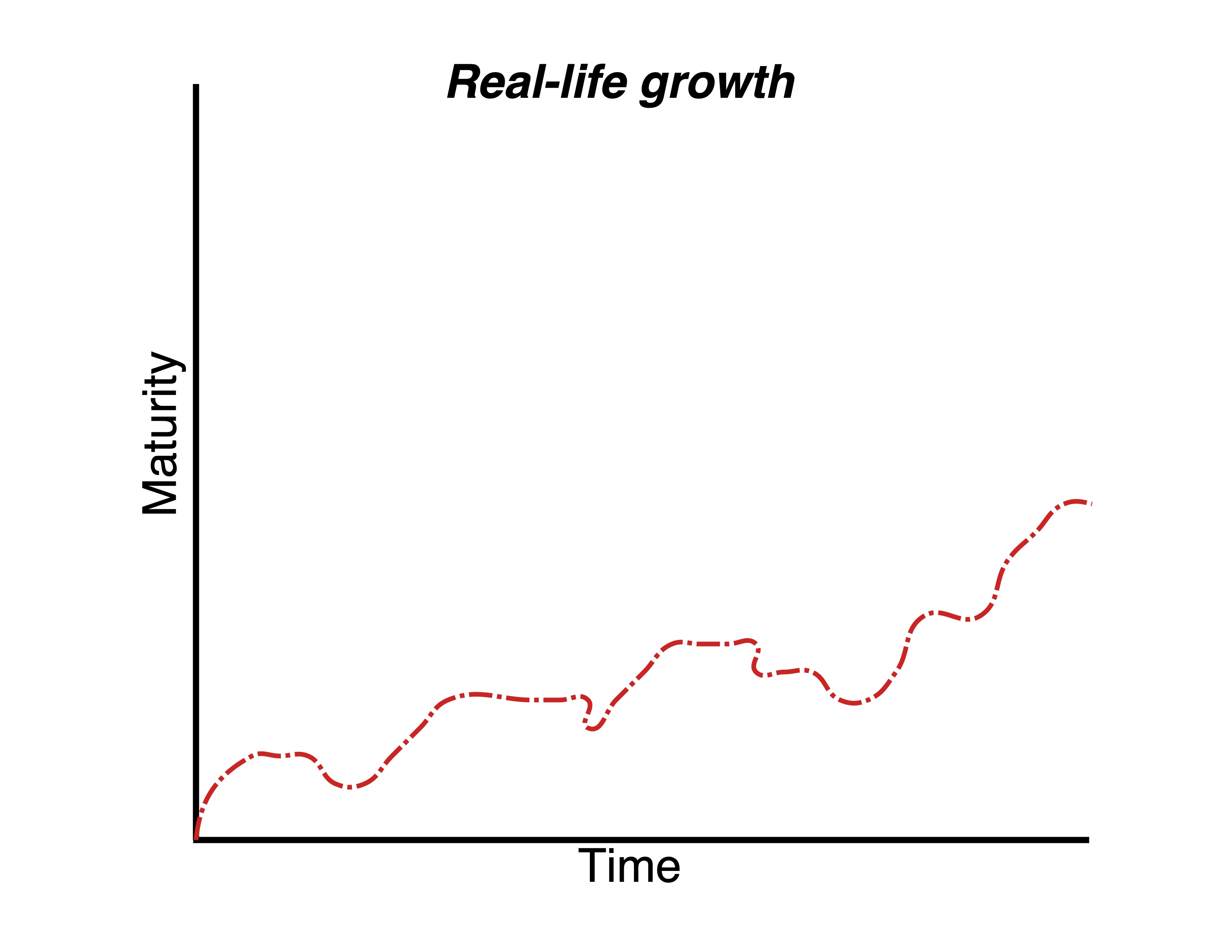
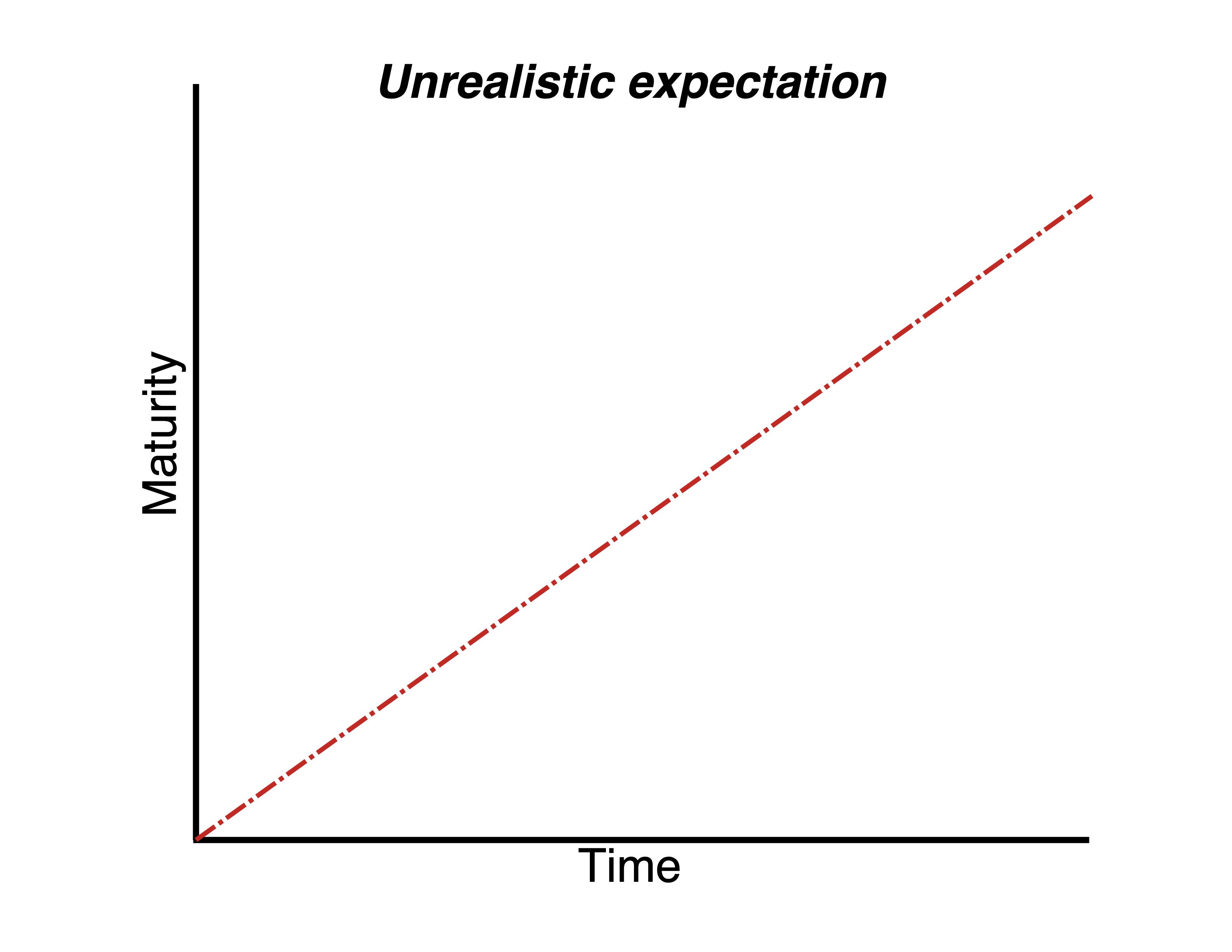
Many people mistakenly think that their growth in spiritual maturity should be a steady, unbroken climb. They think that the line on the “spiritual growth graph” should always move upward and to the right. This is not only an inaccurate view, but an unhealthy view as well. It simply isn’t possible.

In reality, our growth looks more like a staircase. There are times of growth, times of relapse, and times of plateau. Growth and relapse we usually understand, but many of us have a hard time with the “blank spaces” when we don’t feel anything going on one way or the other. But God purposely gives us these flat times.

I’ve learned that these God-given plateaus are for two things:

  1. Assimilating what we have learned <or>
  2. Preparing for the next upward climb

So don’t get frustrated by the plateaus, for they are, as Chambers say, one of the greatest mercies God gives us.

►► Would you please prayerfully consider supporting this ministry? My Patreon supporters get behind-the-scenes access to exclusive materials. ◀︎◀︎