The Seven Laws Of Love (book review)

The Seven Laws Of Love“Love is an unconditional commitment to selflessly serve, truthfully communicate, fearlessly protect, gracefully forgive, compassionately heal, and enduringly remain in relationship with and for the sake of another.” What a great definition of love from Dave Willis in his book The Seven Laws Of Love!

This quote is only the introduction to seven laws of love which Dave unpacks from the Scripture to fill-out that hefty definition. You’ll discover the principles which make loving relationships so rich, fulfilling, and God-honoring. Principles like commitment, sacrifice, truth and grace.

The first part of the book gives us the seven laws, and the second part of the book gives us practical ways to put these laws into action. In action loving your spouse, your friends and enemies, God, and even loving yourself.

Dave does a masterful job of weaving together biblical examples, personal stories, and down-to-earth applications to make this a very readable book. You will discover ways to improve or strengthen all of your relationships almost immediately. I could hardly put this book down! I think you’ll love it too.

I am a Thomas Nelson book reviewer.

10 Quotes From C.S. Lewis

C.S. Lewis(When is it ever not a good day to share C.S. Lewis quotes?!)

“There is either a warning or an encouragement here for every one of us. If you are a nice person—if virtue comes easily to you—beware! Much is expected from those to whom much is given. If you mistake for your own merits what are really God’s gifts to you through nature, and if you are contented with simply being nice, you are still a rebel: and all those gifts will only make your fall more terrible, your corruption more complicated, your bad example more disastrous. The devil was an archangel once; his natural gifts were as far above yours as yours are above those of a chimpanzee.” —C.S. Lewis 

“The monstrosity of sexual intercourse outside marriage is that those who indulge in it are trying to isolate one kind of union (the sexual) from all the other kinds of union which were intended to go along with it and make up the total union. …You must not isolate that pleasure and try to get it by itself, any more than you ought to try to get the pleasures of taste without swallowing and digesting, by chewing things and spitting them out again.” —C.S. Lewis

“On the contrary, those who are seriously attempting chastity are more conscious, and soon know a great deal more about their own sexuality than anyone else. They come to know their desires as Wellington knew Napoleon, or as Sherlock Holmes knew Moriarty; as a rat-catcher knows rats or a plumber knows about leaky pipes. Virtue—even attempted virtue—brings light; indulgence brings fog.” —C.S. Lewis

“For there are two things inside me, competing with the human self which I must try to become. They are the Animal self, and the Diabolical self. The Diabolical self is the worse of the two. That is why a cold, self-righteous prig who goes regularly to church may be far nearer to hell than a prostitute. But, of  course, it is better to be neither.” —C.S. Lewis

 “A great deal of our anxiety to make excuses comes from not really believing in it, from thinking that God will not take us to Himself again unless he is satisfied that some sort of case can be made out in our favor. But that would not be forgiveness at all. Real forgiveness means looking steadily at the sin, the sin that is left over without any excuse, after all allowances have been made, and seeing it in all its horror, dirt, meanness, and malice, and nevertheless being wholly reconciled to the man who has done it. That, and only that, is forgiveness, and that we can always have from God if we ask for it.” —C.S. Lewis 

“To be a Christian means to forgive the inexcusable, because God has forgiven the inexcusable in you.” —C.S. Lewis

“The human lives in time but our enemy destines them to eternity. He therefore, I believe, wants them to attend chiefly to two things, to eternity itself, and to that point of time which they call the Present. For the Present is the point at which time touches eternity. Of the present moment, and of it only, humans have an experience analogous to the experience which our Enemy has of reality as a whole; in it alone freedom and actuality are offered them. He would therefore have them continually concerned either with eternity (which means being concerned with Him) or with the Present—either meditating on their eternal union with, or separation from, Himself, or else obeying the present voice of conscience, bearing the present cross, receiving the present grace, giving thanks for the present pleasure.” —C.S. Lewis

“War creates no absolutely new situation; it simply aggravates the permanent human situation so that we can no longer ignore it.” —C.S. Lewis

“The rescue of drowning men is, then, a duty worth dying for, but not worth living for.” —C.S. Lewis

“Christianity does not simply replace our natural life and substitute a new one; it is rather a new organization which exploits, to its own supernatural ends, these natural materials.” —C.S. Lewis

Lettie Cowman On Prayer

Lettie Cowman“Often it is simply the answers to our prayers that cause many of the difficulties in the Christian life.

“We pray for patience, and our Father sends demanding people our way who test us to the limit, ‘because…suffering produces perseverance’ (Romans 5:3). …

“We pray to be unselfish, and God gives us opportunities to sacrifice by placing other people’s needs first and by laying down our lives for other believers. …

“We pray to the Lord, as His apostles did, saying, ‘Increase our faith!’ (Luke 17:5). Then our money seems to take wings and fly away; our children become critically ill; an employee becomes careless, slow, and wasteful; or some other new trial comes upon us, requiring more faith than we have ever before experienced.

“We pray for a Christlike life that exhibits the humility of a lamb. Then we are asked to perform some lowly task, or we are unjustly accused and given no opportunity to explain….

“We pray for gentleness and quickly face a storm of temptation to be harsh and irritable.

“We pray for quietness, and suddenly every nerve is tested to its limit with tremendous tension so that we may learn that when He sends His peace, no one can disturb it.

“We pray for love for others, and God sends unique suffering by sending people our way who are difficult to love and who say things that get on our nerves and tear at our heart. …

The way to peace and victory is to accept every circumstance and every trial as being straight from the hand of our loving Father.” —Lettie Cowman

The Importance Of Good Theology

Brandon D. Smith“Theology is about love—of God and neighbor. We worship rightly so we can share the gospel rightly. We want to know God rightly, and we want to tell others about him rightly. … It’s not loving to lead people into a false relationship with a false god, so we shouldn’t take our theology lightly.

“Good theology is the system of roots that keeps our tree of faith vibrant and alive. It keeps us grounded and centered, yet growing. When we are rooted, we won’t remain stagnant. And neither will those around us.

“Forging and sharpening a good theology is valuable, for the worship of God and the mission to others.” —Brandon D. Smith

Praying For Your Congregation

I heart my churchPastors often ask for their congregation to pray for them. This is a good thing! But the Apostle Paul gives pastors a model for praying for their congregation.

In his letter to the Church at Philippi, Paul says, “And this is my prayer…” (Philippians 1:9).

First, notice the motivation for Paul’s prayer: thankfulness. He’s not skeptical nor cynical. He doesn’t browbeat them for any shortcomings. He doesn’t think, “Ministry would be great if it weren’t for these people.” No! He was full of thanks that bubbled up in joyful prayer for these precious people (vv. 3, 4).

Paul also had an attitude of confidence for this congregation. He believed they could carry out ministry responsibilities, and that in the process they could continue to mature in Christ (vv. 5, 6).

Paul had affection for this church: he really liked these people! It’s one thing to love someone (after all, Jesus commanded us to do that), but something entirely different when we like being around people. The King James Version says Paul greatly longed after these folks. The Greek is even better—it says he doted on them (v. 8).

With this in mind, look how Paul prayed for these precious folks on whom he doted. He prayed that…

  • …their love might abound
  • …they would increase in knowledge and insight
  • …their level of spiritual discernment would help them always see the best
  • …their purity and blamelessness would remain intact all the days of their life
  • …they would be filled with God’s righteousness
  • …they would bring glory to God

Pastor, this is a great prayer to pray over the precious people on whom you dote!

Blessing Others

CAG ministry teamI am so proud of my Calvary Assembly of God family! Everyone pitched in to donate supplies, pack everything up, and then take these vital supplies to the needy in the inner city of Grand Rapids. One of the best compliments I heard was from a gentleman who stopped by for some items, when he said, “Thank you for treating us like human beings!”

Our team was there to show the love of Jesus in the most tangible way they could.

This slideshow requires JavaScript.

The 10 Commandments Of Using Social Media

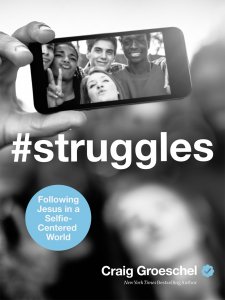
#strugglesI found a ton of great content in Craig Groeschel’s latest book #struggles. This book focuses on the proper balance between technology and personal relationships. Near the end of the book, Craig shared his 10 Commandments for Christians to use social media in a God-honoring way…

  1. Put God first in all you say and post.
  2. Love others as you want to be loved.
  3. Use social media to facilitate, not to replace, real relationships.
  4. Use social media instead of being controlled by it as an idol.
  5. Turn your virtual other cheek to posts that offend you.
  6. Do not post out of emotion.
  7. Always reflect Jesus, loving God whether online or off.
  8. Do not use social media to fuel temptations.
  9. Form your own opinions; do not follow the crowd.
  10. Do not base your identity on what people think.

You can read my book review of #struggles by clicking here.

I also shared some quotes from #struggles here and here. I also shared a special set of quotes from this book directed at online gossip, which you can read here.

Is “Christian” Just A Label?

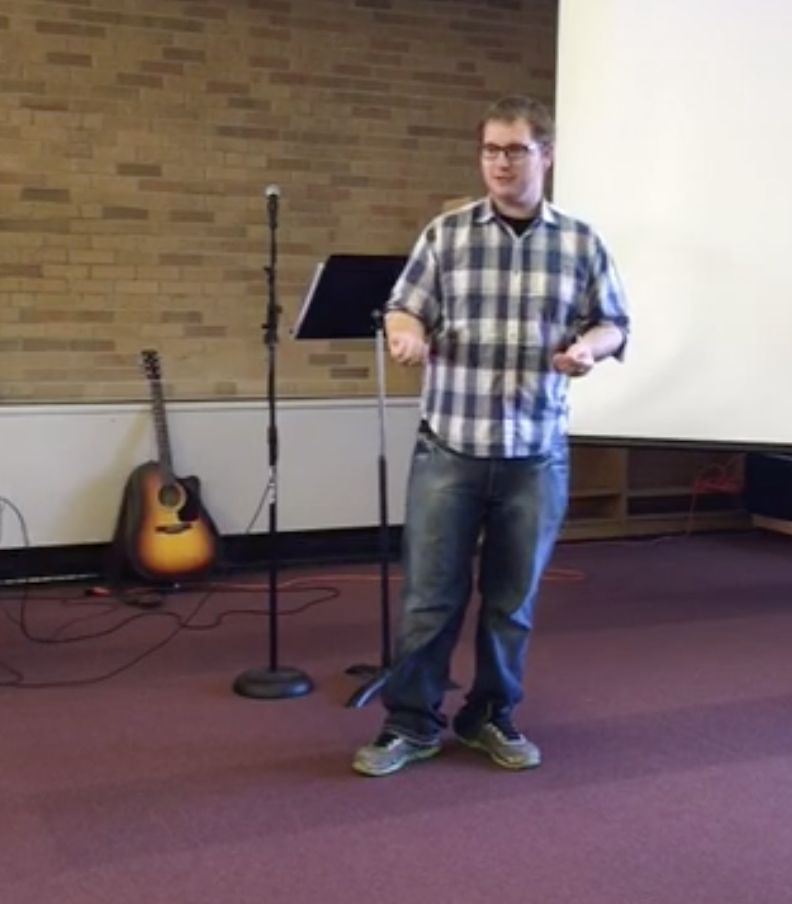
Josh SchramOur youth pastor, Josh Schram, shared a message yesterday which really convicted me. Here are my notes just as I took them Sunday morning.

Some stereotypes of Christians aren’t very flattering. If we ask someone to think of a farmer or a plumber, we probably all get the same sorts of images in our minds. But when we say “Christian,” there are a lot of images that come to mind. And many of them aren’t very flattering.

The word Christian only appears three times in New Testament (in the NIV)—Acts 11:26; Acts 26:28; 1 Peter 4:16.

The followers of Jesus preferred to call themselves disciples (see Acts 26:11). That signals a lifestyle, not just a label.

Does my lifestyle reflect the fact that I’m a follower of Jesus, or am I just happy with the title “Christian”? Am I trying to justify not doing the discipleship work that Jesus commanded me to do, namely loving God and loving others (Luke 10:25-37)? Notice especially this verse: But he wanted to justify himself, so he asked Jesus, “And who is my neighbor?” (Luke 10:29).

Why don’t Christians want to put their love into action? They say they’re busy, or don’t have enough resources, or don’t want to get involved, or they think helping may be a trap. But the priest and Levite who didn’t stop to help may have saved the injured man’s life! How much so the Christian of today!

Does my faith in Jesus change the way I live, or is “Christian” just a title I’m happy to live with?

As kids, when we play “follower the leader” we follow all the actions of the leader. But Christians seem to change the rules: “I just need to believe what He says, but I don’t have to do what He says.”

To truly be called a “Christian”—a disciple of Jesus—my LOVE should be in action, just like Jesus (Luke 10:27-28; c.f. Acts 10:38).

If you’re ready to be challenged, check out Josh’s message for yourself—

Links & Quotes

link quote

“No man can murder his brother who has not first murdered God in himself.” —Oswald Chambers

“We love our neighbors when, like Jesus, we seek them out to love them (cf. Luke 19:1-10). Jesus did not wait for lost or hurting people to find their way to Him. He went looking for them. He learned the names of many of them, and used their names freely. He took the initiative in making certain contacts, some of which He repeated many times during His earthly sojourn. Jesus started conversations with people and was doubtless a good listener. And He prayed often for others, seeking their wellbeing before the Father. We can know that we love our neighbors when, like Jesus, we go seeking them, in order to touch them with His love.” —T.M. Moore

“The Word of God is our only hope. The good news of God’s promises and the warnings of His judgment are sharp enough and living enough and active enough to penetrate to the bottom of my heart and show me that the lies of sin are indeed lies. Abortion will not create a wonderful future for me. Neither will cheating, or dressing provocatively, or throwing away my sexual purity, or keeping quiet about dishonesty at work, or divorce, or vengeance. And what rescues me from this deception is the Word of God.” —John Piper

“If you spend too much time looking for your next big break, you’ll be stealing your opportunity to do your best work. Which is the the most important break of all.” —Seth Godin

“God’s definition of promotion isn’t a move up the ladder, it is a move toward your call. Don’t let someone ‘promote’ you out of your call!” —Max Lucado

“In the parable of Matthew 18:23-27 did the king overlook his servant’s sin? Did he wink at his debt and merely excuse it? No, not at all. The fact is, by forgiving him, the king placed upon this man a weighty responsibility, a responsibility even greater than the burden of his debt. Indeed, this servant now owed his master more than ever. How? He was responsible to forgive and love others, just as the king had done for him.” —David Wilkerson

If you don’t think Planned Parenthood’s business of abortion is a huge money-maker for them, why are they spending $20 million in 2016 to elect pro-abortion candidates?

For Detroit Red Wings fan, here is a nice mini-biography of Mr. Hockey: Gordie Howe.

[VIDEO] Barbabas Piper and Bobby Conway on the difference between knowing and believing

Links & Quotes

link quote

“There is only one basic reason why we disobey the commands of Jesus: it’s because we don’t have confidence that obeying will bring more blessing than disobeying. We do not hope fully in God’s promise.” —John Piper

“The rule for all of us is perfectly simple. Do not waste time bothering whether you ‘love’ your neighbour; act as if you did. As soon as we do this we find one of the great secrets. When you are behaving as if you loved someone, you will presently come to love him. If you injure someone you dislike, you will find yourself disliking him more. If you do him a good turn, you will find yourself disliking him less. There is, indeed, one exception. If you do him a good turn, not to please God and obey the law of charity, but to show him what a fine forgiving chap you are, and to put him in your debt, and then sit down to wait for his ‘gratitude’, you will probably be disappointed.” —C.S. Lewis

Cedar Springs has annual worship service for all of the churches in the area to come together. We call it UNITED. Check out this post on loving as Christians.

“Hitler was successful not because of the righteousness of his cause, but because of the way it was packaged and sold to the public. Planned Parenthood and the abortion industry are successful for very similar reasons.” Read more about Planned Parenthood’s Big Lie.