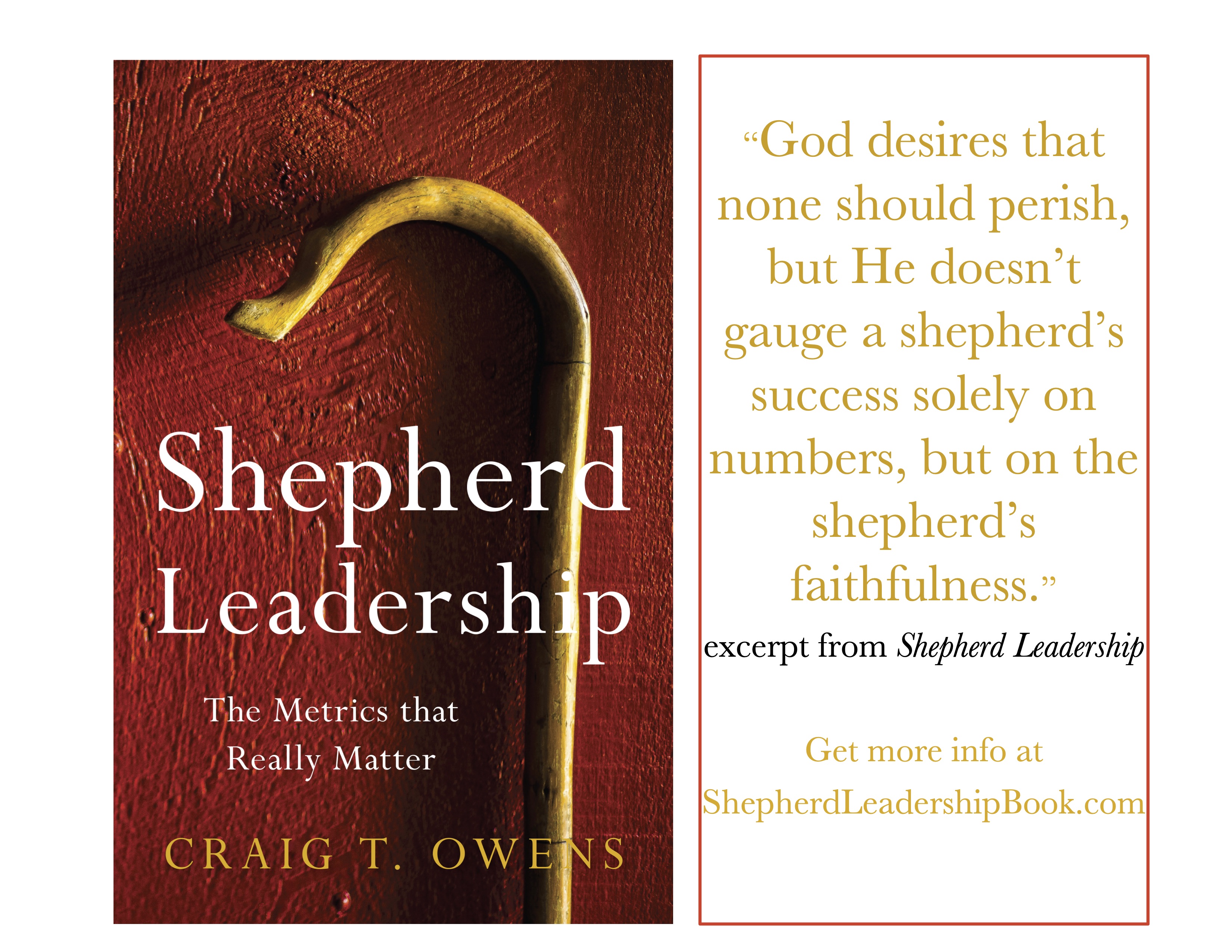
My book Shepherd Leadership: The Metrics That Really Matter releases September 28, 2021, and I am looking for some of my fellow bloggers to read an advanced copy of this book and post a book review. You can watch a trailer video we recorded for this book by clicking here.
This book was written to help pastors and leaders of non-profit organizations reevaluate their definitions of “success” in light of the principles seen in the Bible. I also share helpful strategies for these leaders to care for themselves, care for the flocks under their care, and raise up the next generation of shepherd leaders for their organizations. If you feel like you and your blogging audience would be interested in an advanced look at this book, let’s talk!
Obviously, I cannot send out an advanced reader’s copy to everyone, so please email me with your name and your blog’s URL, and I’ll get back in touch with you.
I’m just looking for an honest review and some insightful feedback on what you read. I would like to request that you post your review sometime during the month of September 2021.
This is a weekly series with things I’m reading and pondering from Charles Spurgeon. You can read the original seed thought here, or type “Thursdays With Spurgeon” in the search box to read more entries.
Listen to the podcast of this post by clicking on the player below, and you can also subscribe on iTunes or Spotify.
A Word To Preachers
I planted, Apollos watered, but God gave the increase. So then neither he who plants is anything, nor he who waters, but God who gives the increase. Now he who plants and he who waters are one, and each one will receive his own reward according to his own labor. For we are God’s fellow workers; you are God’s field, you are God’s building. (1 Corinthians 3:6-9)
Paul is a laborer, Apollos is a laborer, Cephas is a laborer, but not so much as a foot of the farm is Paul’s, nor does a single parcel of land belong to Apollos, or the smallest allotment to Cephas. ‘You are Christ’s, and Christ is God’s’ (1 Corinthians 3:23). The fact is that in this case the laborers belong to the land and not the land to the laborers, ‘for all things are yours: whether Paul or Apollos or Cephas’ (3:21-22). …
Brothers, a laborer may work very hard at a whim of his own and waste his labor, but this is folly! Some discourses do a little more than show the difference between a Tweedledum and Tweedledee, and what is the use of that? …
All God’s laborers must go to Him for their seed, or else they will scatter tares. All good seed comes out of God’s granary. If we preach, it must be the true word of God or nothing can come of it. … A sermon is vain talk and dreary word spinning unless the Holy Spirit enlivens it. …
Here we have mention of a personal service and a personal reward: ‘Each one will receive his own reward according to his own labor.’ The reward is proportionate, not to the success, but to the labor! Many discouraged workers may be comforted with that expression. You are not to be paid by results, but by endeavors.
From Farm Laborers
My dear preacher friend, God sees you. He has placed you in the field where He needs you to be, and He has given you the skills you need to have to labor for Him. Never doubt that!
You may be the one breaking up hard ground, or the one sowing seed, or the one watering, or the one bringing in the harvest. Wherever you are and whatever you are doing, rely on the strength God gives you. He will illuminate His Word to your heart first so that you can share a timely word with those under your care. Then He will send the Holy Spirit to enliven all that you preach.
God has given you the tools and skills, now you must diligently supply the effort. Don’t become discouraged by what seems to be a lack of “success.” As God tells us through Paul, He will reward your faithful labor in His field.
My book Shepherd Leadership: The Metrics That Really Matter elaborates on this point. The thoughts in this book will remove from you the burden of trying to live up to any unbiblical metric of “success” in your ministry. I hope you will get a copy of this book! Check out ShepherdLeadershipBook.com for more details.
what is the difference between unity and conformity, and how do leaders promote the right thing [7:20]
we need to help independent people choose to be interdependent [8:27]
we unpack a quote Greg shares about trading doing what we want to do for doing what we ought to do [8:54]
we don’t want to be told what to do unless we understand why we need to do it—helping a team grasp this is how leaders get buy-in [10:23]
Greg shares a quote from Francis of Assisi about living out what we are talking about [12:00]
Check out this episode and subscribe on YouTube so you can watch all of the upcoming episodes. You can also listen to our podcast on Spotify and Apple.
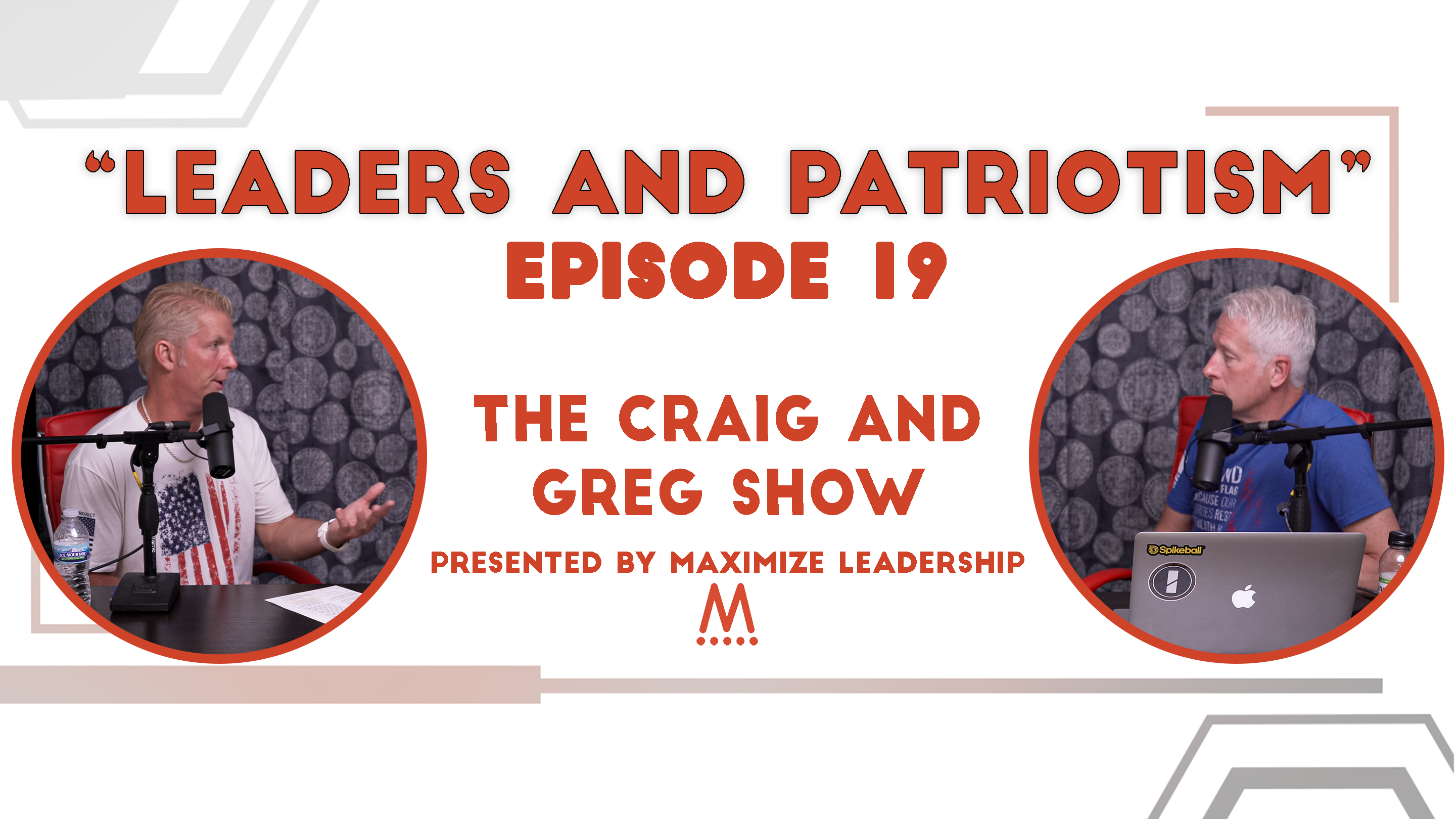
the difference between patriotism and nationalism both in our country and in your organization [1:35]
Greg explains how leaders need to lead inside out [2:42]
I share one sure-fire way for leaders to evaluate potential new leaders, and how this relates to citizenship [3:27]
leaders can change the culture without having an office or a title [4:25]
the value of team building and how it relates to patriotism [5:10]
Chuck Colson said politics are downstream from culture, so what happens in your backyard will ultimately affect Washington, D.C. [5:45]
how my grandfather changed his business culture [6:43]
Greg explains how gratefulness and patriotism are directly related [8:13]
wherever you are, you can make a difference—your daily actions have a cumulative effect [12:43]
Check out this episode and subscribe on YouTube so you can watch all of the upcoming episodes. You can also listen to our podcast on Spotify and Apple.
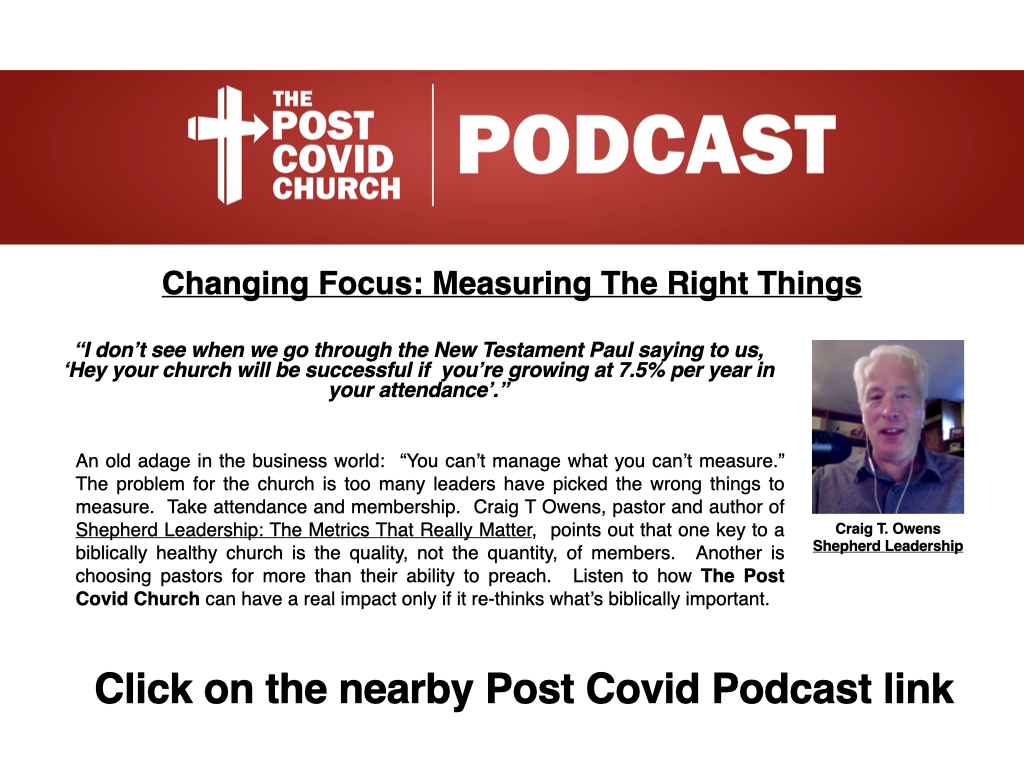
I was recently interviewed on The Post Covid Church Podcast.
In this episode, Stuart Kellogg and I discuss church leadership, my forthcoming book Shepherd Leadership: The Metrics That Really Matter, and even how church members can effectively talk to their pastor about some needed changes in their church. The episode is entitled Changing Focus: Measuring The Right Things and you can listen to it by clicking here. Stuart also provided a transcript of the entire interview—
Announcer
Welcome to the post COVID church podcast with your host, Stuart Kellogg.
Stuart Kellogg 0:12
Thank you for joining us. You know, since The Post Covid Church project is all about helping churches…our mission statement is Helping the church share more of the good news in the face of hostility, persecution and disinterest….Well, that can’t be done unless we spend a lot of time talking about leadership. Today, you’ll hear from a leader who’s focusing on helping churches to quit focusing on numbers, and start focusing on what matters.
Craig T. Owens is a pastor of Calvary Assembly of God in Cedar Springs, Michigan, the northern part of that northern state. He’s also worked in a variety of leadership positions in the for profit and nonprofit worlds. It’s given him a great perspective on how to help The Post Covid Church regain its influence to, as we say, here, not just survive, but thrive. Craig is an accomplished blogger, podcaster and author. He’s also as I mentioned, a pastor. We’ll be talking about what he’s learned and shared in his book, Shepherd Leadership, The Metrics That Really Matter. Craig and his wife, Betsy have three children. Welcome, Craig to The Post Covid Church Podcast.
Craig T. Owens
Thanks, Stuart. It’s great to be here with you.
Stuart:
Let’s jump right into the tough stuff. You say way, way too many pastors are measuring the wrong things. Please explain.
Craig
Yeah, you know, where this really kind of I guess started for me was when I have some well-meaning friends that would ask me, “You know, how are things going in your church?” And almost before I can answer their follow up question that is in their mind, I guess gauging whether I’m actually doing well or not was, ‘How many are you running on Sunday morning?” And I used to just answer that question. But then after a while, I began to say, “Alright, well, what if I said, 300?” And I get see him get really excited. And then I say, “What if I said, 20.” And they began to look a little confused. And so I said, “Well, let me clarify, what if I said, 300 that only show up on Sunday morning? And that’s it? I don’t see anything else happening the rest of the week. But what if I said 20, that not only showed up on Sunday morning, but throughout the entire week, I see them engaged, living out their faith actively involved. So you know, which would you rather have?” And they’re like, “Well, the 20.” And so I said, “So then why are you asking me? How many is showing up on Sunday morning? That is that the number that really matters? So are we counting the right things that we measuring the right things?” And you know, I just don’t really see when we go through the New Testament, I don’t see like, you know, Paul saying to us, “Hey, your church will be successful. If you’re growing at 7.5% per year in your attendance.” That’s never been the biblical metric for success.
Stuart
Well, is it because we’re in America, and that’s the American way, counting grow?
Craig 3:03
I think that’s part of it. And I think the other part and again, you know, when I wrote the book, I told my editor, I said, right up front, “Listen, check me on this, I don’t want to be on a soapbox sounding like I’m preaching at people, I want to help people.” And so I think a lot of this stuff, people were very well-intentioned. When we look at churches, and even parachurch nonprofit organizations, for the most part, the boards are made up of people from the corporate world. And so their natural mindset, the way that they think all of the time is in those quantifiable things that you can measure, they look at a bottom line, or they look at how many widgets or they look at, you know, they’re things that they can count. And so I think they’re well-intentioned, when they are then speaking to their pastor or the leader of their nonprofit organization and say, “Hey, show us what is how you’re being successful here.” And they’re almost forcing them to start counting things.
Stuart
Well, to use your example, you’re still counting by saying we have 30 who are engaged. It’s just that you’re counting a different activity.
Craig 4:18
I use the words really, I’m looking for things that are more quality than I am quantity. I mean, quantity’s fine, but not by itself. You know, we could use the example of Philip in the book of Acts. He goes to Samaria and he is preaching there, people are getting saved. Demons are being cast out, people get healed. And then God takes him from there, out into the wilderness. And at first, it appears to Philip he doesn’t even have a mission. It’s just get on this road that goes to Gaza through the desert. If we’re in worldly standards, you know, we would say Philip looks like he really took a step backwards. He went from a church if you will a congregation of hundreds to go where? But perhaps it was that maybe Philip’s way of talking to that Ethiopian official was the one guy that was going to be able to help him connect.
Here’s what I’m reading in the Old Testament scripture and connect that to Jesus. And so we wouldn’t say that that was a step backwards. That was where God needed Philip to go. But, you know, I, I think that sometimes we just go, well, it’s got to it, things have to keep moving up. The dollars got to go up, the donors have to go up, the attendance has to go up. But toward what end? What are we trying to accomplish with that?
Stuart
As the church re-gathers now, should leaders start by rethinking their mission, how to impact the culture and make disciples and from that, the numbers will follow?
Craig
Yes. So I think that, especially for leaders of churches, and this is why I called the book Shepherd Leadership, because when you think in terms of a shepherd and a flock, shepherds don’t reproduce more sheep. The role of the shepherd is to take the sheep to the place where there’s a healthy environment, help the sheep get healthy, so that they can reproduce. And so it’s not necessarily again about, “Okay, how many sheep do I have here?” Well, you might have a whole bunch of them, and they’re unhealthy. So it’s, how healthy are the sheep? If there’s, if there’s lots of them, great. I’m not, you know, again, I don’t mean to be preaching at somebody and saying, “You should never have a large church or a large organization.” That’s, that’s not it. I’m just saying we shouldn’t say I’m successful, because it’s big. We want it to be really God-honoring healthy sheep-producing sheep.
Stuart 6:53
My guest, Craig T. Owens pastor, author, leadership, podcaster. And about to be published Shepherd Leadership, The Metrics That Really Matter.
George Barna, who has been studying the church for a generation plus, told me one big problem is that senior pastors get their jobs by being really good preachers and teachers, not because they’re great leaders. Do you agree? And if so, what should churches do?
Craig
Yeah, I totally agree. I’ve laughed with people about that before. I’m like, you know, we could spend like hours interviewing a potential pastor for a church. And really it comes down to how does he preach on Sunday? And so you’re like, “So you’re going to pick the way that he can speak publicly for 30 minutes?” Doesn’t necessarily, that’s not an indication of the the rest of the the week that he’s interacting with people.
You know, you had a previous guest on that was talking about in Ephesians, chapter four, that there are gifts that God gives to the church. And I paraphrase, so this will kind of dated but Dwight Eisenhower when he was President, he said, “If we ever think of the United States as one leader and 158 million followers, it wouldn’t be the United States.” I think the same thing in the church. If we think of it as just being one pastor, one minister, and then the rest of the congregation, t’s not really a healthy church.
I see myself as the shepherd. Yes, I minister to people, but my main goal, according to Ephesians, four, God, Jesus gave these gifts to the church to prepare the people to do the works of service, prepare them to minister. So really, my focus should be on, I want my whole congregation to be ministers. I don’t want them to just think of, “well, Craig Owens, is the minister here.” No, I’m not the minister. I’m one of the ministers. I might be the pastor the shepherd. But I’m not the only minister.
Stuart
So that means giving up control, delegating and finding talent in the pews.
Craig
Absolutely. Because I, I’ll be the first to admit I don’t do everything well. There are some things that the people say, you know, just stop doing that. It’s not very good. And so then there’s other people that God has equipped them and gifted them and say, “Boy, this is right in your strength zone.” This is how you’re going to be a key part of the body of Christ by using your gifts to minister this way.
Stuart:
How can lay leaders or members best take the initiative and help a pastor be a better shepherd leader if the pastor isn’t, or isn’t open to change?
Craig: 9:40
Well, you know, that’s a tough one because I know that there are some pastors that have the mentality that they are the final authority in the church and they’re really not open to input from other people. So I have usually said to people, you know, they’re like, I think I need to leave my church or I want to help my pastor. Change something. And the bottom line is like for myself, I’m not going to change unless I want to change, if I’m open to wanting to change. And if I don’t have that kind of humility, or that posture, the words that other people speak aren’t going to do anything to me.
So I think that that has to be the first spot is that a senior pastor, any senior leader needs to be out among the people all the time and admit your mistakes, and let people know, “Hey, I was no good in this area. That’s why I’m reading this book, or why I’ve gotten a mentor.” Those kind of things will send the signals, “Hey, I’m teachable. I’m open, I’m willing to hear what other people have to say to me.” Or, as you mentioned, when a senior pastor gives up some of their authority when they take their hands off some things that sends a signal. So I’d say if somebody’s a leader, a lay leader in a church, and they’re not seeing those kind of things, I’d be really cautious about approaching because, you know, you might be stepping on some toes there. But if you hear those kind of statements coming from that pastor, that leader, then they probably are open to having further conversations.
Stuart
What are some success stories you’ve seen at organizations you’ve consulted with?
Craig
Well, you know, I’ll tell you one of the organizations I just recently worked with, it was really eye-opening for me was, I was seeing it was a pregnancy Resource Center. And I saw this huge disconnect between the staff and the board. They were all friendly, they all got along, but you could just see that they weren’t on the same page. And as I just kind of sat back during one time, was just kind of observing. I realized that all of the board members, were all business owners.
And so I spoke to him like this. I said, “You know, in your business, if you made a $10,000 investment in your company to buy a new piece of equipment, or hire somebody or something like that, you would be looking at at the end of your fiscal year, at the bottom line financially, how did that affect us?” And you know, they all kind of agreed with that. So I said, “But now as a board member here, if you go out and raise $10,000, for this pregnancy Resource Center, they’re going to spend all $10,000 there’s not going to be any money left over at the end. But how many women that were abortion-minded? Might they have convinced to keep their child? What value would you put on that life that was saved?” And they just really kind of were all speechless. And so I said, “So that’s where I think that the disconnect is, is you guys are raising money. And then you’re expecting to see something that you can, like, ‘Oh, hey, look at the bottom line.’ And you might not see that, but you do see a life that was saved? And can you put a value on that? Of course, you can’t. It’s, it’s priceless.”
And, and that organization since that time, what’s been amazing, is that when the board went out and started their fundraising efforts, again, they were a now with this total mindset of saying to the staff, “What can we do as we raise this money, so that you can better get the message out to women who are in that crisis place.” And so it was just that little shift of thinking on their part. And then I watched Unity as that that staff in that board then got on the same page, and realize what it was that they were actually working for is not just you know, paying off a mortgage, or, you know, having nicer furniture in there, or that sort of thing. But it was creating a place where they could change people’s minds who were maybe leaning towards abortion to change the other way. So I think it’s never really been big changes. When I’ve consulted with people, it’s just dropping that one seed, how does it look? And then when people get it, because, as I said earlier, I think those board members, I think a lot of those people, everybody is well-intentioned. They just you just got to get maybe you’re speaking a slightly different accent. Let’s get everybody on the same page. And that’s what I love being able to do.
Stuart
Well, would an analogy in the church be “Christ said the mission is making disciples. So everything we do should be focused on doing that. making disciples.”
Craig 14:51
Yeah, I think that, you know, like I joked with one church, they were like, “Hey, do you have any ideas how to grow the church?” And I said, “Well, define grow for me.” And they really couldn’t. So I said, I offered a very tongue-in-cheek suggestion I said, “You’re right here on the main road and you have a big marquee out front. So why don’t you put a sign up that says free $50 gift certificate for all first-time visitors, you should have the church packed on Sunday morning.” And they all were like, “No, no.” I said, “Oh, that’s not what you meant by grow. Okay, so now that we got that out of the way, you know, let’s focus: What does grow really mean?”
So even if it’s just one person, you know, can you move them to the next step in their leadership development, ultimately, having them become disciple makers themselves and raising up other disciple makers. That, that sounds like a better plan for grow than just, “let’s, you know, turn on the lights and do some really cool stuff that makes people come in and go, ooh, you have a lot of people there.” But are you moving them towards becoming disciple makers?
Stuart
And a key part of what you’re talking about is communication.
I’ve really noticed that leaders tend to gravitate toward one pole or the other. The confident leader, you know, knows that God has a call on their life. I use a simple phrase, God chose me. So I would say, Okay, well, God’s the one who chose me. So I, I’m confident in that. But if that confidence is not balanced by humility, that leader can come across as so hard-charging, so focused on the goal that I think that sometimes people have a hard time approaching or getting around them for fear of, “Well, what if I get in the way am I am I going to get run over?” That would be I’d be the first to admit, that’s the way that I’m naturally wired. So I have to deliberately find ways to serve the servants, I have to find ways to do things that other people find distasteful. To do whatever that is, you know, certainly serving alongside the church custodians or, you know, you’re just you’re finding your ways to make sure that you’re sending again, that message to everybody else, “Hey, it’s not like I’ve arrived on some level. And these other tasks are beneath me.” Now, if Jesus, who in John chapter 13, it says that he knew that God had placed everything under his power. So John 13 opens with us seeing that Jesus is the most powerful person and he knew it, and his very next action is to stoop down and begin to wash feet.
Did he want to do that? I don’t, you know, that’s not a very pleasant task. But he delighted in being able to serve those people that were around him. And so I think that if you find yourself being that overly confident leader, you know that you tend towards that poll, you’re really going to have to make the extra effort to add humility, to your confidence.
Stuart
You’re a blogger, podcaster writer, you’re also a pastor. What gives you the greatest joy as a senior pastor?
Craig:
Well, that’s an easy one. I love when I can just sit back and just watch, especially like Sunday morning. I’ve often joked, like when we kind of have a greeting time, or whatever, and people are going around, even like, the start at the beginning, when people are arriving. If If I didn’t go up front, or send somebody up front and say, “Let’s start now”, they would just keep going all morning. And I just listen in, you know, here’s somebody over here talking about, yeah, I’ve got this medical concern. I’m not sure what’s going on. And a couple people say, well, let’s pray. You know, somebody said, I just got foot surgery coming up. Can we help get to the store to get groceries for you?
You know, I just those are the kinds of conversations that I overhear, or when we’re out in the community, just watching the way that, you know, totally on their own, I watched our youth group, organize a time where they all got garbage bags, and they just went around the school campus and just started picking up all the trash that was around the school campus. That’s the most thrilling thing for me as a pastor to just say, you know, there it is, in a real simple, tangible way. They’re exhibiting the love of Jesus. They’re saying, “This is our community. We didn’t make the mess. We’re more than happy to clean it up, clean it up.” You know, there’s somebody that’s in need, we don’t need to, you know, “Let’s call the church office and organize what we’re right here. Let’s just take care of it. We’ll get meals to that person. We’ll pray for him. We’ll take them to a doctor’s office.” You know what, whatever it is I that is the biggest thrill for me.
Stuart 19:58
That sounds kind of biblical.
Craig
Yeah, just sounds like that Acts chapter 2, you know, when everybody’s together taking care of each other.
Stuart
What a time for that to happen. Thanks for sharing. How can folks find out more about you your ministry and creative work?
Craig:
craigtowens.com is my blog. Just about every day I’m blogging, devotional thoughts or books I’m reading or different things like that. There’s a separate page on there that talks about that book.
And then I’m more than happy to I love dialoguing with people. My email is real simple. It’s just craig@craigtowens.com
Stuart
The contact information will be in the transcript of this podcast. Just go to the website, www.thepostcovidchurch.com, click on the title, Changing Focus Measuring the Right Things. There it is. Thank you, Craig, for joining me today.
Craig
My pleasure.
Stuart
This is the 50th Post Covid Church episode. Thank you for taking part and listening. I’d love to hear from you. Ideas feedback, anything: stuart@thepostcovidchurch.org I mentioned the website www.thepostcovidchurch.com You can go there and find all the archive material from the last year. I so appreciate your support. I’m Stuart Kellogg.
Announcer
Thank you for listening to The Post Covid Church Podcast. You can find much more at The Post Covid Church group on Facebook or on the website, http://www.thepostcovidchurch.com
a previous episode where we discussed how leaders handle general problems [0:28]
the distinction between conflict management and conflict leadership [1:30]
managers who try to make people get along vs. leaders who empower people to solve their own issues [2:44]
my 3 tips to prepare yourself before a meeting with your teammates [3:38]
how to look beyond the “triggers” to the root issue of a problem [5:04]
most people share the same values but conflict happens when they express that value differently [6:17]
leaders allow for the differences in style and personality [7:15]
how leaders can proactively prepare themselves and their team members to navigate personnel conflicts [8:00]
Greg relates conflict leadership to parenting terminology [10:15]
leaders need to stay among their team members [11:29]
what “peace” really is and where conflicts usually originate [12:50]
team members bring their past experiences with them [14:20]
Craig & Greg are ready to help coach you [16:30]
Check out this episode and subscribe on YouTube so you can watch all of the upcoming episodes. You can also listen to our podcast on Spotify and Apple.
UPDATE: You all are amazing! Your support put me over the top. The special offers for these early investors are now full, but stay tuned on my Shepherd Leadership page for some very special pre-release offers.
My cheering section (known as my parents and my wife) has been asking me for years, “When are you going to write a book?” My response has always been the same, “I wouldn’t even know where to start.”
But Tom Freiling knew where I should start! This accomplished publisher contacted me and after several lengthy conversations, we decided the time was right.
My book is entitled Shepherd Leadership: The Metrics That Really Matter. It is a leadership book for pastors and leaders of nonprofit ministries. My prayer is that this book will liberate these leaders from the needless and unprofitable practices and measures of “success” that we’ve allowed to creep in to our ministries. The bottom line: Our focus has turned to unbiblical practices, and as a result, we are missing the joy of really doing ministry. I cannot wait to help these leaders learn the freeing principles of shepherd leadership!
But in order to help these ministry leaders, I first need some help from you.
Since I’m a first-time author, you can probably understand why my publisher wants me to cover some of the costs for this inaugural book. This is where I am humbly asking for your help.
Would you consider being a sponsor of this book?
For a donation of $35, you will get an advanced, pre-release copy of the ebook. You will be reading this book before anyone has it!
For a donation of $75, you will not only get the pre-release copy of the ebook, but also an autographed copy of the pre-released print version of the book.[UPDATE: 5 donations received at this level]
For a donation of $150, you will get all of the above plus a free copy of the audiobook.[UPDATE: 2 donations received at this level]
For a donation of $250 or more, you will get all of the above, AND you will have access to the opening paragraphs of each chapter as they are written, as well as some behind-the-scenes video of the publishing and recording process.[UPDATE: 7 donations received at this level]
My blog has always used this prayer of John Newton’s as its focus: “Oh! that the power of God would set my heart and pen at liberty while writing, and fill your hearts while reading, that we may rejoice with joy unspeakable and full of glory.” Now, more than ever, that is my fervent prayer for both this blog and now this new book on shepherd leadership.
Thank you for your prayerful and financial involvement in this vital project.
how you can get a free copy of The Shawn Effect [3:53]
Shawn’s parents set him up for success [5:15]
leaders get informed so they can interact with others and stay relevant [6:28]
Shawn demonstrated chivalry and trained young men to be gentlemen [7:53]
leaders don’t need a platform or a big following to be an influencer [8:40]
Shawn shows how leaders love [10:33]
leaders are encouragers [11:37]
leaders are readers and appliers [12:27]
Check out this episode and subscribe on YouTube so you can watch all of the upcoming episodes. You can also listen to our podcast on Spotify and Apple.
Check out this episode and subscribe on YouTube so you can watch all of the upcoming episodes. You can also listen to our podcast on Spotify and Apple.
I call out Greg’s lie less than a minute into the broadcast!
leaders will inherit problems when they come into a new position, so they need to prepare for that
some problems cannot be addressed until the leader gains some credibility or better understands the organization’s culture
the way you solve problems will define your leadership
reach out to other leaders from other industries to help you get a better perspective
Greg reminds us that sometimes leaders have to be firefighters, but I added that it’s not healthy if we are firefighters every single day
sometimes leaders have to choose not to solve a problem
Greg shares some insights from an experience where he coached a CEO
I share a strategy I employed to spot fledgling leaders in one of my organizations
I also share how leaders can use Stephen Covey’s urgent/important grid to address problems
Greg uses a quote from Albert Einstein to help us think differently about problems
Check out this episode and subscribe on YouTube so you can watch all of the upcoming episodes. You can also listen to our podcast on Spotify and Apple.



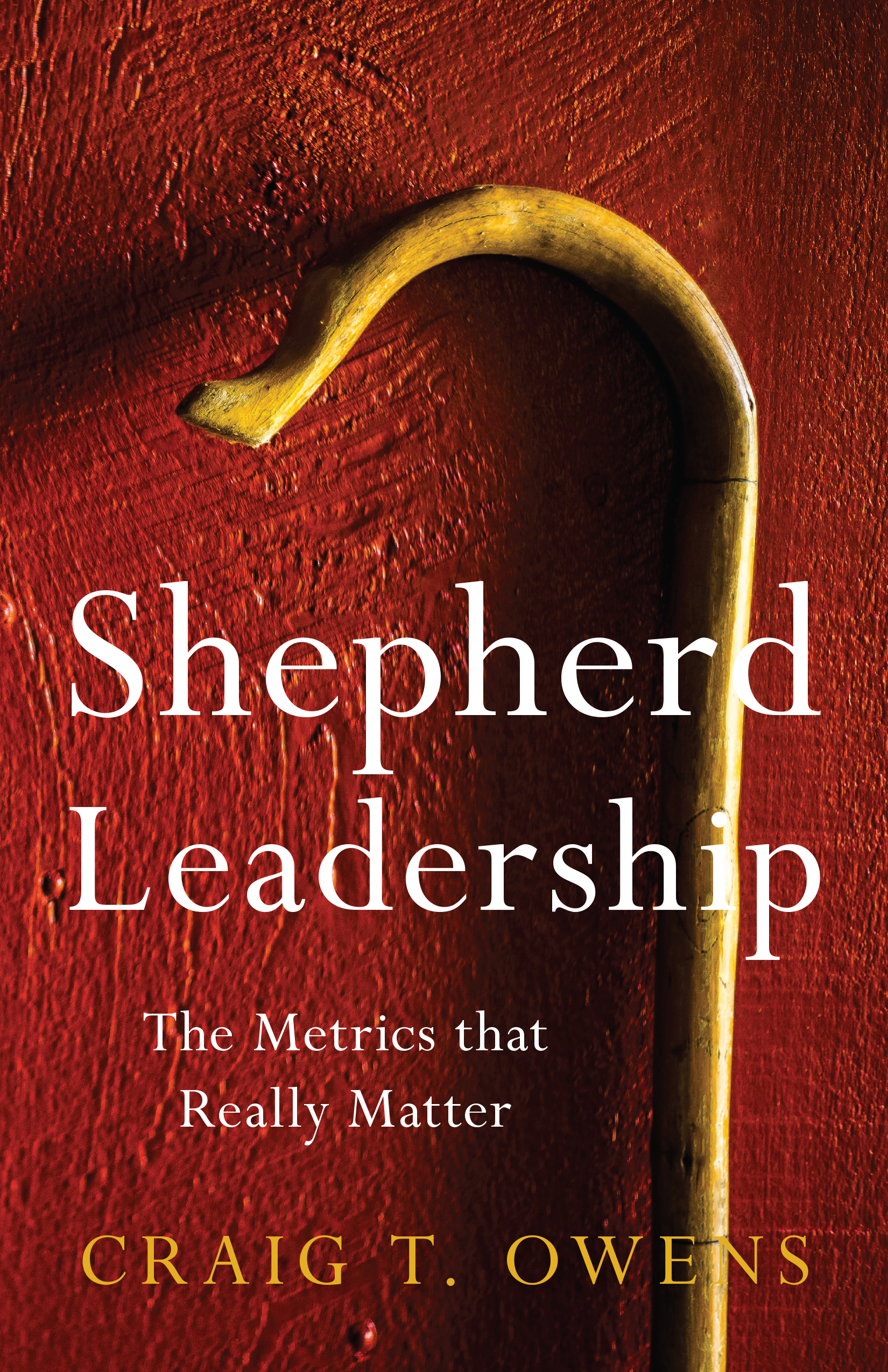 My book Shepherd Leadership: The Metrics That Really Matter releases September 28, 2021, and I am looking for some of my fellow bloggers to read an advanced copy of this book and post a book review. You can watch a trailer video we recorded for this book by clicking here.