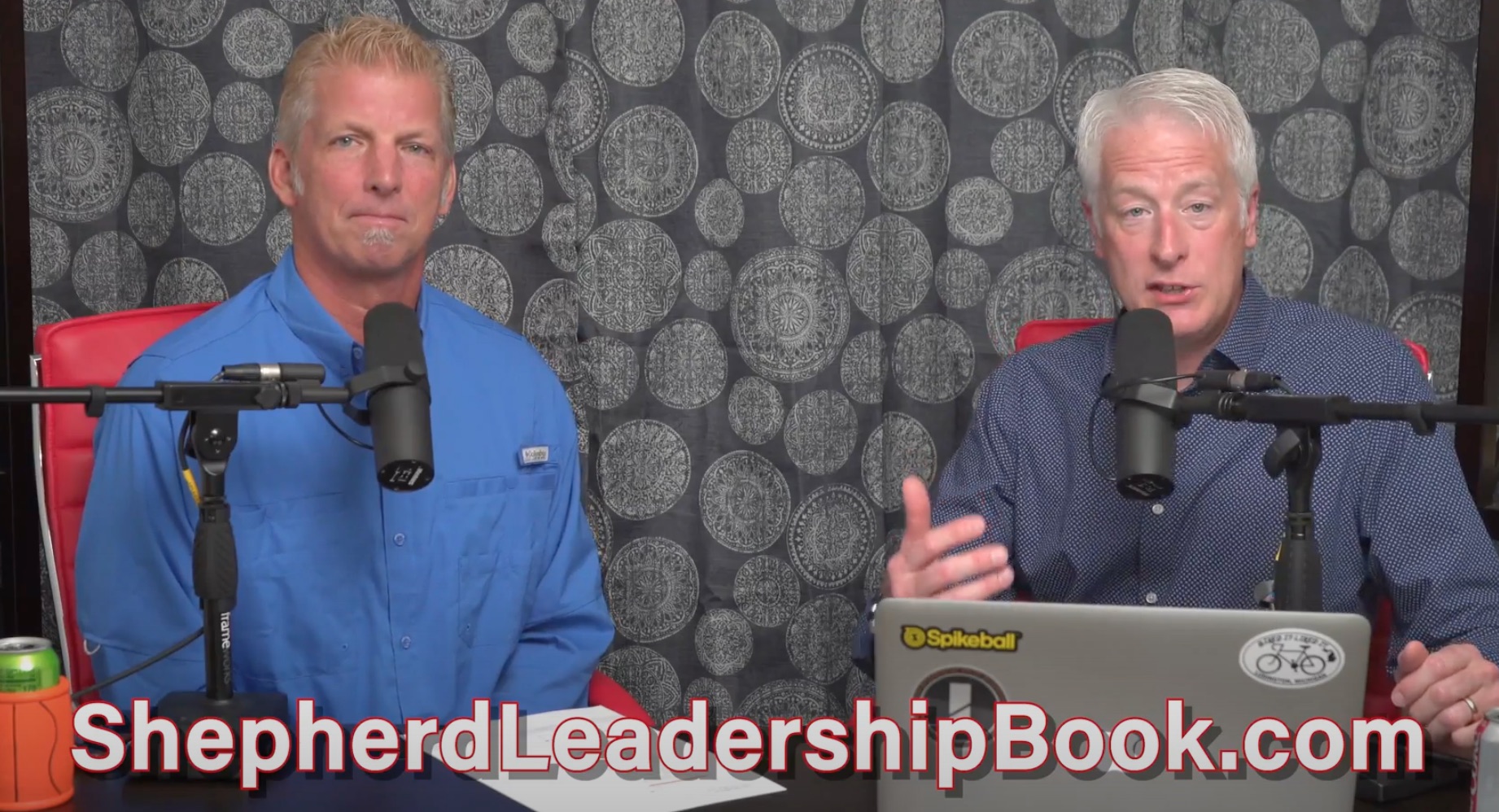
The Craig And Greg Show: Leaders Solve Problems

On this episode of “The Craig And Greg Show” we talk about: 

  • I call out Greg’s lie less than a minute into the broadcast!
  • leaders will inherit problems when they come into a new position, so they need to prepare for that  
  • some problems cannot be addressed until the leader gains some credibility or better understands the organization’s culture
  • the way you solve problems will define your leadership
  • reach out to other leaders from other industries to help you get a better perspective
  • Greg reminds us that sometimes leaders have to be firefighters, but I added that it’s not healthy if we are firefighters every single day
  • sometimes leaders have to choose not to solve a problem
  • Greg shares some insights from an experience where he coached a CEO
  • I share a strategy I employed to spot fledgling leaders in one of my organizations  
  • I also share how leaders can use Stephen Covey’s urgent/important grid to address problems
  • Greg uses a quote from Albert Einstein to help us think differently about problems

Check out this episode and subscribe on YouTube so you can watch all of the upcoming episodes. You can also listen to our podcast on Spotify and Apple.

John Adams (book review)

Listen to the podcast of this post by clicking on the player below, and you can also subscribe on Apple or Spotify.

I find David McCullough to be one of the most thorough, impartial, comprehensive, and engaging historians that I have read. These attributes—and many others—are on full display in his biography of our second president John Adams. 

Many have rightly called Thomas Jefferson the pen of the Declaration of Independence and John Adams the voice of the Declaration. But it’s not just this historic document for which Adams should be remembered, but the very form of government which we enjoy right now is a living tribute to his forceful and persuasive genius. 

This biography is brilliantly told by McCullough through the first-person accounts of Adams’ vast quantity of letters, as well as the letters written to and about him, and the contemporary newspapers of the day. McCullough takes us back to Adams’ boyhood home to give us a good understanding of the upbringing and family heritage that fueled his quest for learning and leading. From his first elected office, through his time in Europe advocating for the newly created United States of America, into his presidency, and then through his long retirement, Adams was tireless in his efforts to make this country the best it could be. 

For students of history or leadership, this is a remarkably insightful look into a man that was at the heart of so much of what characterizes our great nation today. I have other books about John Adams in my library, but David McCullough’s lengthy work is, in my opinion, the definitive source. 

►► Would you please prayerfully consider supporting this ministry? ◀︎◀︎

A Leader’s Prayer

Listen to the podcast of this post by clicking on the player below, and you can also subscribe on Apple or Spotify.

…May the Lord grant all of your requests (Psalm 20:5). 

To me, the blessing of this psalm feels like the blessing God gave to the high priest to pronounce over the people of Israel (Numbers 6:23-27). But in this blessing of Numbers 6, the people are simply passive recipients of the priestly blessing. 

Here in Psalm 20, David is asking God to give the people the blessing of His answer to their prayers. The people aren’t just passive but are actively involved in seeking God’s blessing. David teaches his people that they can pray for: 

  • relief from distress 
  • protection
  • help
  • support
  • acceptance of their sacrifices 
  • fulfillment of their desires
  • successful plans
  • victory

And in case someone might think that one or two of those items aren’t worthy of God’s attention, David adds this closing line, “May the Lord grant ALL your requests.” 

David also shows us the assurance with which his people can pray these prayers. He says, “Now I know…” 

  • God is the Source 
  • God answers out of His limitless power 
  • God is completely trustworthy 
  • God does “answer us when we call” 

This is a blessing a leader prays over his people as an encouragement to them to pray about anything and everything that is of concern to them. 

A mark of a godly leader is his prayer of blessing on the people under his care. 

This is part 56 in my series on godly leadership. You can check out all of my posts in this series by clicking here.

►► Would you please prayerfully consider supporting this ministry? ◀︎◀︎

The Craig And Greg Show: Leaders Pay Their Dues

On this episode of “The Craig And Greg Show” we talk about: 

  • I open with a fabulous quote from Greg
  • continuing to pay your dues increases your leadership influence  
  • if leaders begin to coast, they lose momentum and credibility
  • integrity is key
  • we pay more attention to our physical health as we get older, but why do we think we can pay less attention to our leadership health as we mature?
  • coasting means you are either plateaued or beginning to go downhill
  • leaders need to be very intentional about the dues they pay
  • it is easier to pay your dues when you have an abundance mindset 
  • leaders need to guard against an entitlement attitude 
  • we want to help you grow—instead of trying to figure it out all on your own, check out our coaching huddles

Check out this episode and subscribe on YouTube so you can watch all of the upcoming episodes. You can also listen to our podcast on Spotify and Apple.

The Craig And Greg Show: Leaders And Laughter

On this episode of “The Craig And Greg Show” we talk about: 

  • sometimes leaders and laughter don’t together, but sometimes humor can bring about the ice breaker that teams need
  • leaders need to practice laughter  
  • how Greg used to prepare himself for meetings while he was on the road
  • I share that leaders need to lighten up even before in-office meetings
  • people want to follow leaders not just to win, but to have fun along the way too
  • how do leaders find the appropriate use of humor? Greg shares two important words to keep in mind
  • leaders need to get on the same page with their teammates, and the best way to do this is to laugh at ourselves
  • in a previous episode, we talked about love languages, which is also key in the appropriate use of humor 
  • laughing is good for your health—both physical health and emotional health
  • we wonder about the statute of limitations on some pranks with which we may have been involved
  • laughter triggers endorphins in us but also triggers the mirror neurons in others
  • we announce a really fun contest!

Check out this episode and subscribe on YouTube so you can watch all of the upcoming episodes. You can also listen to our podcast on Spotify and Apple.

The Craig And Greg Show: Apathy Vs. Passion

On this episode of “The Craig And Greg Show” we talk about: 

  • the first in our series of leadership builders and killers, and I go negative right away!  
  • the danger with apathy is that you don’t know that you don’t care—Greg says apathy is a nebulizer
  • the value of an honest, loving friend
  • it takes a lot more energy to get to a boiling point than it does to keep your passion at the boiling point  
  • apathy is “have to” but passion is “get to”
  • Greg likes to exchange heartstorming for brainstorming
  • I talk about the warning signs for leaders, and how to build passion-fueling activities into our daily agendas 
  • good feelings follow good actions
  • leaders need to be the thermostats for their team

Check out this episode and subscribe on YouTube so you can watch all of the upcoming episodes. You can also listen to our podcast on Spotify and Apple.

The Craig And Greg Show: What’s New, Leadercat?

On this episode of “The Craig And Greg Show” we talk about: 

  • the challenge for leaders when things are changing
  • too many leaders get comfortable with the status quo 
  • leaders need to adopt a growth mindset
  • what if we changed “what’s the worst that could happen?” to “what’s the best that could happen?”
  • I reference John Maxwell’s helpful book Sometimes You Win—Sometimes You Learn  
  • Greg cautions that either we address change or we avoid change, but if we avoid changing, our group may move on without us
  • just because we are changing doesn’t mean we are growing
  • Greg offers counsel on what leaders need to evaluate when considering changes
  • “unhealthy leaders change things to gain more control; healthy leaders change things to help the whole team get better,” Greg says
  • we don’t grow in areas of comfort: we learn most of our lessons moving forward, but we learn very few lessons sitting still
  • good leaders reassure other leaders to make thoughtful changes
  • the right way for leaders to partner with their team to effect positive changes

Check out this episode and subscribe on YouTube so you can watch all of the upcoming episodes. You can also listen to our podcast on Spotify and Apple.

Halfway Leaders Become Evil Leaders

Listen to the podcast of this post by clicking on the player below, and you can also subscribe on Apple or Spotify.

Amaziah did what was right in the eyes of the Lord, but not wholeheartedly (2 Chronicles 25:2).

Notice the contradictions in Amaziah’s life and leadership: 

obeyed God’s law (v. 4)
🚫disobeyed God’s law (v. 14)

trusted that God would give success to the army of Judah (v. 5)
🚫supplemented his army with mercenaries from Israel (v. 6)

listened to the prophet God sent to him (vv. 7-10)
🚫ignored the prophet God sent to him (vv. 15-16)

trusted God (vv. 9-10)
🚫turned to idols (v. 14)

Sadly, the “not wholeheartedly” leader usually ends up just like other leaders that God calls “evil” (vv. 22-24, 27). 

Bottom line: there is no such thing as a halfway leader in God’s eyes. There is only following God or rebelling against God—all leaders must choose one or the other.

A mark of a godly leader is one who consistently chooses to follow God wholeheartedly.

This is part 55 in my series on godly leadership. You can check out all of my posts in this series by clicking here.

►► Would you please prayerfully consider supporting this ministry? ◀︎◀︎
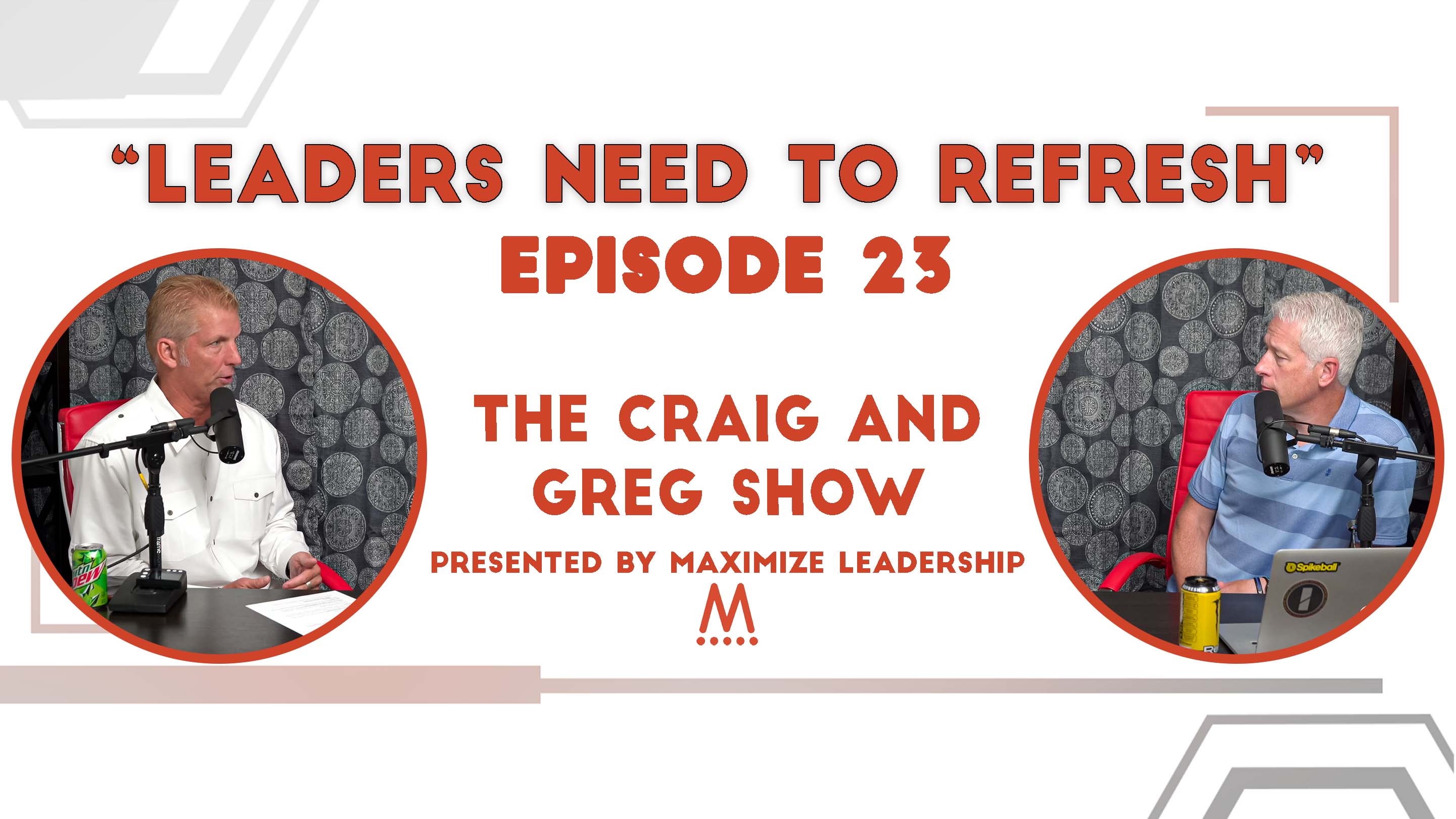
The Craig And Greg Show: The Value Of Feedback

On this episode of “The Craig And Greg Show” we talk about: 

  • “Feedback is the breakfast of champions,” says Greg
  • giving and receiving feedback is a mark of a healthy leader 
  • why people don’t like feedback
  • whose feedback we should value
  • the best attitude for both giving and receiving feedback
  • we should view feedback as a tool to help people (including ourselves) get better  
  • how do we gain credibility that will better enable us to give feedback
  • my pet peeve about feedback and what Greg suggests to correct this
  • an important spiritual component of feedback
  • feedback is never intended to make clones of the leader, nor is it to make the leader superior over his/her teammates
  • why it is important to be both “do as I say” and “do as I do” leaders
  • our coaching huddles are an excellent place for leadership-lifting feedback

Check out this episode and subscribe on YouTube so you can watch all of the upcoming episodes. You can also listen to our podcast on Spotify and Apple.

6 Quotes From “Voice Of A Prophet”

Listen to the podcast of this post by clicking on the player below, and you can also subscribe on Apple or Spotify.

A.W. Tozer pulls no punches in the way he confronts modern-day preachers (those he calls “sons of the prophets”). He challenges pastors to return to the Scriptures, hit their knees in prayer, and do some serious soul searching on where they may be falling short of the standard set by the biblical prophets. You can read my full book review of Voice Of A Prophet by clicking here. 

“It is not the messenger, it is the message that needs to be proclaimed. If you study the Old and New Testaments you will discover that no prophet can ever be a celebrity. The most significant thing about the prophet is the message he conveys, and that message had better by rooted in the heart of God.” 

“The responsibility of the prophet is not to come up with his own message, but to faithfully deliver the message—the warning—that is coming from God.” 

“The song of the prophet is, ‘Thus saith the Lord.’ Any other song will never do for God’s man to be God’s voice to his generation.” 

“God takes so much delight in us that He will go to any length to bring us back to that delight.” 

“Jesus said that our problem is a spiritual danger, not a physical danger, and our visible enemies are rarely our real enemies. The man who comes at you with a gun is not your real enemy, though his intention may be to kill you. Your real enemy is that enemy within you that makes you vulnerable to him. Esau was Jacob’s enemy because of what Jacob had done to him, but Esau was not Jacob’s real enemy. Jacob was Jacob’s enemy. The crookedness in Jacob’s heart was against Jacob, and when God straightened that out, Esau was not his enemy anymore.” 

“Well do I know, Thou God of the prophets and the apostles, that as long as I honor Thee Thou will honor me. Help me therefore to take this solemn vow to honor Thee in all my future life and labors, whether by gain or by loss, by life or by death, and then to keep that vow unbroken while I live. … Save me from the error of judging a church by its size, its popularity or the amount of its yearly offering. Help me to remember that I am a prophet—not a promoter, not a religious manager, but a prophet. Let me never become a slave to crowds.” 

Would you please prayerfully consider supporting this ministry?