Obedience Is Success

David said, “…I had it in my heart to build a house as the place of rest for the ark of the covenant of the Lord. … But God said to me, ‘You are not to build a house for My name…’” (1 Chronicles 28:2-3).

David’s son Solomon would later write about how we make plans in our hearts, but God directs all our steps (Proverbs 16:9, 19:21). 

David not only had the desire to build this temple for God but he said the Holy Spirit gave him the plans (1 Chronicles 28:12, 19). As a result of this, David began amassing resources and organizing personnel. All of this David could then hand over to Solomon, the man who would build the house for the ark of the covenant of the Lord. 

I am sure David felt a twinge of disappointment when God said “no.” Still, David continued to work the plan the Spirit had given him. Who knows how Solomon would have begun his reign as king if David hadn’t done all of this for him. Many of the plans God gives me will not be for me but for the following generations who will benefit from my diligence in those plans.

A mark of a godly leader is one who knows that obedience to God IS success. 

In one of David’s psalms, he prays for success and for his heart’s desire to be fulfilled, but he also acknowledges God’s sovereignty over these things (Psalm 20). May I always keep in mind that obedience IS success. Success isn’t limited only to what I can see and measure during my lifetime.

This is part 53 in my series on godly leadership. You can check out all of my posts in this series by clicking here.

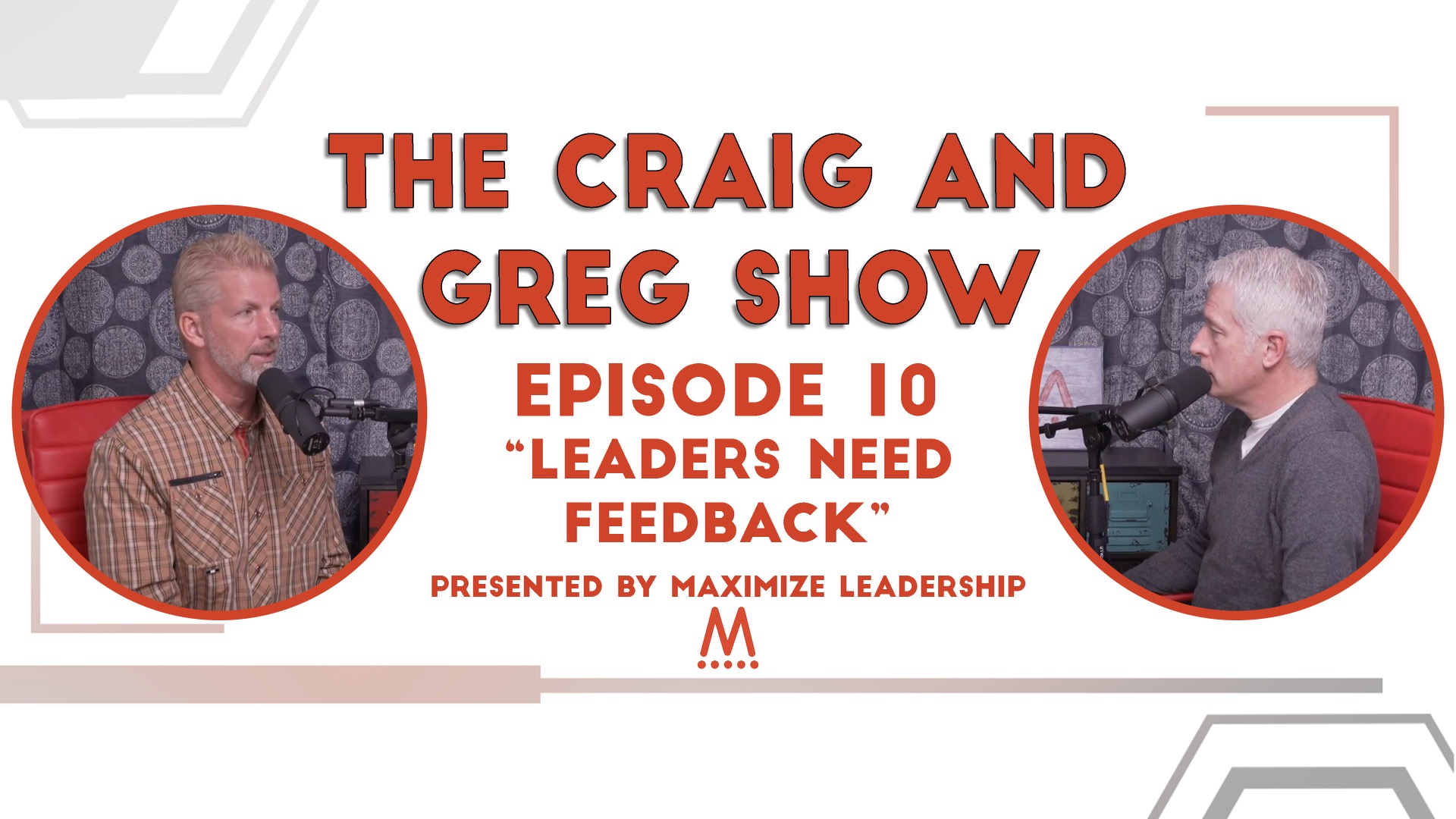
The Craig And Greg Show: Leaders Vs. Loneliness

On this episode of “The Craig And Greg Show” we talk about: 

  • the winner of last month’s winner of our drawing  
  • busyness can actually lead to loneliness 
  • how leaders can guard against loneliness  
  • insight from Josh McDowell on how coronavirus impacts feelings of loneliness  
  • some strategies to eliminate busyness  
  • how leaders can empower others to overcome isolation
  • the importance of a leader’s presence
  • the New Testament only uses “saints” in the plural because we need each other
  • Greg tries to get me to name names
  • leaders need to boldly initiate even with people who seem closed off
  • the new coaching page on our website
  • more ways to be entered into our January drawing

Check out this episode and subscribe on YouTube so you can watch all of the upcoming episodes. You can also listen to our podcast on Spotify and iTunes.

Authority To Serve

And David knew the Lord has established him as king over Israel and that his kingdom had been highly exalted for the sake of His people Israel. (1 Chronicles 14:2) 

“David knew” reminds me of “Jesus knew” in John 13:3.

Both knew God had placed them exactly where they were supposed to be. 

Both knew the authority God had given them. 

Both knew the power that was theirs to use.

Both knew they could do self-glorifying, self-promoting things with their power. Yet both used their authority and power to serve others: “for the sake of His people.”

Jesus gave His authority to us (Matthew 28:18). 

Do I know that? 

I mean, really know that? 

If so, am I using His authority to serve others?

A mark of a godly leader is one who uses his God-given authority to serve others. 

This is part 53 in my series on godly leadership. You can check out all of my posts in this series by clicking here.

In Such Good Company (book review)

I grew up watching The Carol Burnett Show. The interaction between Carol, her special guests, and regular cast members Harvey Korman, Vicki Lawrence, Lyle Waggoner, and Tim Conway, were always enjoyable. In In Such Good Company, Carol takes us behind the scenes to tell us how the magic happened. 

What goes into such a successful show that won 25 Emmy Awards over its 11-year run? Is it good fortune? Lots of talented people? Hard work? The answer is quite simply: Yes. Of course, those of us enjoying the show week after week were unaware of the hard work and good fortune that was at play. And although we saw several talented actors, musicians, and dancers on stage each week, there were dozens of unseen, talented people that were just as crucial to the show’s success. 

I choose the audiobook version, and I’m glad I did. Carol read her own book, adding a personal touch that I would have otherwise missed by reading it myself. In addition, the audiobook also includes interviews with some of the key personnel that made the show what it was. 

Carol and her team loved what they were doing. They were talented people who continued to work extremely hard to hone their craft. All of us who watched the show were beneficiaries of these talented people. I loved going behind all of the lights and cameras to hear from Carol herself how this all came together. 

If you enjoyed watching The Carol Burnett Show, I’ll bet you will find yourself appreciating it even more after you hear/read Carol’s recollections. 

The Craig And Greg Show: The Importance Of Gratitude

On this episode of “The Craig And Greg Show” we talk about: 

  • the importance of a leader’s gratitude  
  • team members need to hear genuine words 
  • how Chick-fil-A onboards grateful employees 
  • Ken Blanchard teaches us to catch people doing something right 
  • the lasting impact of a simple text I sent to a teammate  
  • Greg says gratitude is both an attitude and an action  
  • being ungrateful makes people feel like products
  • when gratitude fades, entitlement takes its place
  • you cannot compliment too often: more people die from a broken heart than from a big head
  • being around grateful people is energizing 
  • Greg says being grateful leads to great-filled leaders
  • more ways to be entered into our November drawing

Check out this episode and subscribe on YouTube so you can watch all of the upcoming episodes. You can also listen to our podcast on Spotify and iTunes.

The Craig And Greg Show: A Salute To Veterans

On this episode of “The Craig And Greg Show” we talk about: 

  • a question from a viewer about job interviewing 
  • how to get in the drawing for a special monthly prize 
  • helping wounded veterans stay on the move through the Oscar Mike organization 
  • some astounding stats about our veterans 
  • how we can best show gratitude to our veterans 
  • Greg and I share some cool stories of our interactions with veterans 
  • some insights into true sacrifice

Check out this episode and subscribe on YouTube so you can watch all of the upcoming episodes. You can also listen to our podcast on Spotify and iTunes.

When To Seek Consensus

David conferred with each of his officers…. He then said to the whole assembly of Israel, “If it seems good to you and if it is the will of the Lord our God…let us bring the ark of our God back to us….” The whole assembly agreed to do this, because it seemed right to all the people. (1 Chronicles 13:1-4) 

David cast a vision, consulted with his inner circle of leaders, shared the vision with the people, and got unanimous agreement from everyone. 

And yet things went horribly wrong: a man was killed and David became terrified of God.

In the above verses, notice all of the plural pronouns: we and us. David worked hard to build a consensus among the people. 

David was quick to notice that the ark of the covenant of the Lord wasn’t used to consult God during the reign of King Saul (v. 3), but that’s exactly what David didn’t do. He built a consensus among the people without getting a “yes” from God. Even a unanimous decision of the people will fail if God isn’t in it! 

Thankfully, in chapter 15, David corrects this omission. We read phrases like: 

  • “we did not inquire of [God] about how to do it in the prescribed way” 
  • we should do this “in accordance with the word of the Lord” 

I also notice that David no longer sought consensus but merely announced to the people what was happening. In this successful attempt to move the ark, David’s only consultation was with God. After that, he made arrangements with the Levites, gathered his inner circle of leaders, and then asked the people to join in the celebration. 

God had already spoken about how the ark of the covenant was to be moved: it was written in His word. Therefore, as noble as it might sound, there was no reason for David to seek a consensus from the people.

Even if it is not an area or activity explicitly addressed in the Bible, God’s will is to be sought before others are consulted. If God says “yes,” the leader must proceed even if the people say “no.” And the leader must not listen to the people’s “yes” if God has said “no.” 

Consensus is fine in its place, but only in its proper place. 

A mark of a godly leader is one who knows when to seek consensus among the people.

This is part 53 in my series on godly leadership. You can check out all of my posts in this series by clicking here.

How A Leader Gains Followers

And David became more and more powerful because the Lord Almighty was with him (1 Chronicles 11:9). 

David had followers from all twelve tribes of Israel—warriors, leaders, talented men, fierce men. David wasn’t recruiting them or promising them any rewards, but they volunteered, coming in “one accord” and creating “joy in Israel” in the process (12:1-40). 

David was prepared to go alone. He fled from Saul without a single helper. David’s attitude was one of all-in trust in God, so all of these warriors came to David because of what he represented, not because of what he advertised. It was David’s wholehearted commitment to God that won the wholehearted commitment of these valiant men.

Their unity of purpose—“fully determined … one mind” (12:38)—was not because of a compelling vision that David cast but because of a mighty God David fully feared and loved. 

A leader’s focus should never be on building a following or casting a compelling vision, but on wholehearted, single-minded love and commitment to God. Any power or following only comes “because the Lord Almighty was with him.” 

A mark of a godly leader is his wholehearted devotion to God which creates a wholehearted devotion in his followers. 

This is part 52 in my series on godly leadership. You can check out all of my posts in this series by clicking here

The Craig And Greg Show: Fearless Leaders

On this episode of “The Craig And Greg Show” we talk about: 

  • Greg used to trick his younger sister into doing something he was afraid to do  
  • fear makes us tunnel-visioned   
  • I teach Greg a new phobia  
  • doctors say only two fears are innate; all the rest are learned fears   
  • “If fear is learned, it can be unlearned, and a new path relearned,” says Craig 
  • the lessons we’ve learned in the past can help us conquer today’s fears
  • what we can learn from the acrostic F.E.A.R.  
  • how Greg’s Dad helped him overcome a fear of failure  

Check out this episode and subscribe on YouTube so you can watch all of the upcoming episodes. You can also listen to our podcast on Spotify and iTunes.

9 Quotes From “War As I Knew It”

General George Patton gives us an insightful leadership look into how his army was able to accomplish so much during such a short time in World War II. Check out my full book review by clicking here. 

“An ounce of sweat saves a gallon of blood.” 

“This is another example of the many I’ve encountered in life where great disappointments have proven to be the road to future success.” 

“Successful generals make plans to fit the circumstances, but do not try to create circumstances to fit plans.” 

“The 8th of May, 1945, marked exactly two-and-a-half years since we had landed in Africa. During all that time we had been in practically continuous battle, and when not in battle had been under the strain of continuous criticism, which I believe is harder to bear.” 

“It is unfortunate and to me a tragic fact, that in our attempts to prevent war we have taught our people to belittle the heroic qualities of the solider.” 

“Wars are not won by defensive tactics. … The best armor and the best defense is a rapid and well-directed fire.” 

“An army commander does what is necessary to accomplish his mission, and that nearly eighty percent of his mission is to arouse morale in his men.” 

“Don’t delay. The best is the enemy of the good. By this, I mean that a good plan violently executed now is better than a perfect plan next week.” 

“Fatigue breeds pessimism.”