Links & Quotes

link quote

No matter how loving Christians are, and no matter how carefully we present our beliefs, people will still be offended. Check out this short video from Alan Shlemon at Stand To Reason.

“I am considering not how, but why, [God] makes each soul unique. If He had no use for all these differences, I do not see why He should have created more souls than one. Be sure that the ins and outs of your individuality are no mystery to Him; and one day they will no longer be a mystery to you. The mould in which a key is made would be a strange thing, if you had never seen a key: and the key itself a strange thing if you had never seen a lock. Your soul has a curious shape because it is a hollow made to fit a particular swelling in the infinite contours of the Divine substance, or a key to unlock one of the doors in the house with many mansions. For it is not humanity in the abstract that is to be saved, but you—you, the individual reader, John Stubbs or Janet Smith. Blessed and fortunate creature, your eyes shall behold Him and not another’s. All that you are, sins apart, is destined, if you will let God have His good way, to utter satisfaction.” —C.S. Lewis in The Problem Of Pain

“One doesn’t realize in early life that the price of freedom is loneliness. To be happy one must be tied.” —C.S. Lewis

Eric Metaxas asks, “What’s the difference between evolutionary theory and an octopus?” You will love his answer!

“We make a mistake as Christians if we hold the view that all non-Christian culture is worthless and should be avoided. This is simply not the case. God has given gifts for making culture to every human being, and very often those who do not know Him are capable of making artifacts, establishing institutions, or promoting conventions that actually are very useful for human flourishing. This is a measure of God’s common grace to all people. Believers must not despise such gifts, and we must not ignore or avoid them. … We do not repudiate those unbelieving aspects of culture which are good and useful. Rather, we appropriate all such forms, learning as much as we can about them and considering ways they might be put to use for the glory of God.” —T.M. Moore

Margaret Sanger, the founder of Planned Parenthood wanted to rid society of “human weeds,” and in 1925 she wrote, “We must clear the way for a better world; we must cultivate our garden.” Read more here.

“There is no rule binding with iron force upon you, for we are not under law in Christ’s church, but under grace, and grace will prompt you to do more than law might suggest….” —Charles Spurgeon

“We wouldn’t dare rob somebody of his gold watch or bank account. Yet God states clearly that slandering someone’s name is robbery of the worst kind. And we can do it in the subtlest of ways: by pointing an accusing finger, questioning one’s character, passing on tidbits of gossip. Indeed, three of the most damning words we can speak are, ‘Have you heard?’ The mere suggestion of the question robs a person of something valuable. And it defiles our own mouth.” —David Wilkerson

Frank Turek has an interesting look at the Kim Davis situation in Kentucky.

Links & Quotes

link quote

“The reason we know so little about God’s wisdom is that we will only trust Him as far as we can work things out according to our own reasonable common sense.” —Oswald Chambers

“To know God in His glory is to know ultimate reality—defining beauty, goodness, and truth. It is to enter into the heart of reality itself and to glimpse eternity in a most personal, intimate, and loving way. This is what God desires for us, that our hearts might soar within His glory and rejoice in things too wonderful to express.” —T.M. Moore

“My greatest fear in life is standing before the Lord and hearing Him say, ‘I had so much more for you, but you held on too tightly.’” —Larry Burkett

“Give me good proofs of what you have alleged: it is not enough to say—in such a bush there lies a thief—in such a cave a beast; you must show him to me ere I shoot, else I may kill one of my straggling sheep.” —William Shakespeare

“A man must keep his friendship in constant repair.” —Samuel Johnson

Eric Metaxas asks, “Why would a national museum refuse to remove an exhibit honoring one of the leading racists of the 20th century?” Check out his profound answer.

Bear Grylls praying over Barak ObamaThank you, Bear Grylls, for giving us a great example to follow! May we all pray for our President.

Exactly right: Christians cannot stand by and do nothing about these precious people displaced by war.

A very interesting legal look at the Kim Davis situation in Kentucky.
Read The Red Letters

Read the red lettersLet’s see if you can guess what famous person said the following (the answers are below … but no cheating!):

  1. “The phonograph is of no commercial value.”
  2. “I think there is a world market for about five computers.”
  3. “I tell you Wellington is a bad general, the English are bad soldiers; we will settle the matter by lunch time.”
  4. “There will never be a bigger plane built.”
  5. “The world potential market for copying machines is 5000 at most.”

People get it wrong lots of times. Even really smart, successful people. King Solomon, who was called the wisest of all, wrote a book called Ecclesiastes in which he shared some bad advice he tried to follow. In the closing verses he gave this warning, “My son, be warned. Of making many books there is no end so do not believe everything you read, and much study is the weariness of the flesh” (Ecclesiastes 12:12).

In the Hebrew world there were three departments of knowledge:

  • Law―words from God to man
  • Prophesy―judgment from God on how man is doing in observing God’s law
  • Wisdom―man’s attempt to live out God’s law based on observation, experience, and reflection (for a great example of all three departments at work, see Luke 10:25-37)

What we need is someone who (1) knows God’s way, (2) lives God’s way, and (3) can teach us how to live out God’s way for ourselves. Someone who is perfect, flawless in every phase. We need the One Who said, “Heaven and earth will pass away, but My words will never pass away” (Matthew 24:35). That One is Jesus.

Can I make a suggestion that will bring you amazing results? Spend some time reading the red letters. That is, go to the Gospels of Matthew, Mark, Luke and John and focus on the words of Jesus (which many Bible translations print in a red font). There I am certain you will discover the greatest words ever spoken!

If you can, please join me over the next few Sundays as we will be attempting to discover the greatest words ever spoken on a variety of subjects. Folks have turned in the questions that they would like answered, and we are going to look to the red letters to see what Jesus has to say.

Answers to the quiz:

  1. Thomas Edison, remarking on his own invention 
  2. Thomas Watson, Sr., chairman of IBM
  3. Napoleon Bonaparte, at a breakfast with his generals preceding the Battle of Waterloo
  4. A Boeing engineer, after the first flight of the 247, a twin engine plane that held ten people 
  5. IBM board of directors, to the eventual founders of Xerox

Going To Pot (book review)

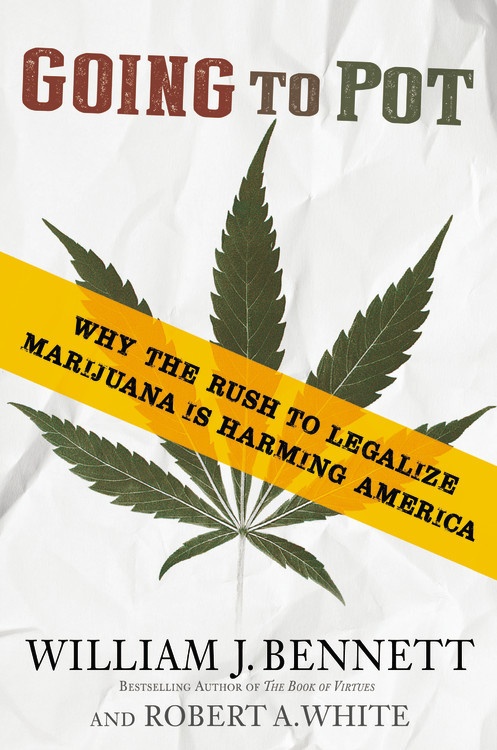
Going To PotI have been concerned for some time about the pro-legalization (or de-criminalization) movement throughout our country. There seems to be haste to un-do the laws that have served our nation well for many, many years. One especially troubling aspect is expertly addressed in Going To Pot: Why the rush to legalize marijuana is harming America by William Bennett and Robert White.

One by one, Bennett and White dismantle each of the pro-legalization arguments that are being promoted. And these gentleman are truly in a position to speak authoritatively: William Bennett has served as the Drug Czar and as the Secretary of Education (both Cabinet-level positions), and Robert White served as an Assistant US Attorney. In short, these guys know what they’re talking about!

Bennett and White systematically lay out each argument, and then share the facts which completely destroy the arguments. They talk about drug policies that haven’t worked internationally, and they also show the failure of the legalization of marijuana within our own borders. In addition, they also lay out a very thoughtful plan for our country going forward.

This topic is going to continue to come up for a vote on the State-level, so concerned citizens should read Going To Pot to arm themselves with the facts that will contradict the hype and rhetoric of the pro-marijuana crowd.

I am a Center Street book reviewer.

Links & Quotes

link quote

John Calvin explaining how singing together in church is like praying together. “We do this [sing corporately] openly, that all men mutually, each one from his brother, may receive the confession of faith and be invited and prompted by his example.” —John Calvin

“It is not that we prepare a palace for God, but that He comes into our mortal flesh and we do our ordinary work, in an ordinary setting, amongst ordinary people, as for Him.” —Oswald Chambers

“Let every man remember that to violate the law is to trample on the blood of his father, and to tear the character of his own, and his children’s, liberty. Let reverence for the laws be breathed by every American mother to the lisping babe that prattles on her lap. Let it be taught in schools, in seminaries, and in colleges. Let it be written in primers, spelling books, and in almanacs. Let it be preached from the pulpit, proclaimed in legislative halls, and enforced in courts of justice.” —Abraham Lincoln

This makes me respect Tim Tebow even more―he is organizing Valentine proms for students with special needs.

Have you ever read how Solomon describes his bride in the Song of Songs? The talented folks at The Overview Bible Project have actually put this together, and it is quite…eye-opening! Check it out.

[VIDEO] I like Kid President! Check out his letter to the future―

Links & Quotes

link quote

“Do not forget the close bond between the inner room and the outside world. The attitude of the inner prayer room must remain with us all day. The object of secret prayer is to unite us to God that we may know His abiding presence with us.” ―Andrew Murray

“There are two ways by which man might have been for ever blessed. The one was by works: ‘This do and thou shalt live; be obedient and receive the reward.’ The other plan was: ‘Receive grace and blessedness as the free gift of God; stand as a guilty sinner having no merit, and as a rebellious sinner deserving the very reverse of goodness, but stand there and receive all thy good things, simply, wholly, and alone of the free love and sovereign mercy of God.’ Now, the Lord has not chosen the system of works.” —Charles Spurgeon

It is appalling to me that people still try to defend abortion. This post talks about the pain that babies experience during the abortion procedure.

Interesting: 11 trends in American marriages and families.

[VIDEO] A very intriguing interview on Meet The Press with Dr. Martin Luther King, Jr. in 1965―

12 Quotes From “Keeping The Ten Commandments”

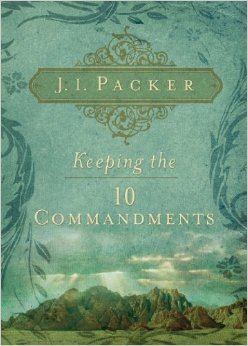
Keeping The Ten CommandmentsJ.I. Packer wrote a very readable, but scholarly, book examining how 21st-century people should live out the biblical Ten Commandments. You can read my full book review by clicking here, but I’m sharing some of my favorite quotes below.

“God’s love gave us the law just as His love gave us the gospel, and as there is no spiritual life for us save through the gospel, which points us to Jesus Christ the Savior, so there is no spiritual health for us save as we seek in Christ’s strength to keep the law and practice the love of God and neighbor for which it calls.”

“Where the law’s moral absolutes are not respected, people cease to respect either themselves or each other; humanity is deformed, and society slides into the killing decadence of mutual exploitation and self-indulgence.”

“The negative form of the Commandments has positive implications. ‘Where a sin is forbidden, the contrary duty is commanded’ (Westminster Larger Catechism, Question 99). The negative form was needed at Sinai (as in the West today) to curb current lawlessness that threatened both godliness and national life.” 

“Moral permissiveness, supposedly so liberating and fulfilling, is actually wounding and destructive: not only of society (which God’s law protects), but also of the lawless individual, who gets coarsened and reduced as a person every time.”

“Law-keeping is that life for which we were fitted by nature, unfitted by sin, and refitted by grace, the life God loves to see and reward; and for that life liberty is the proper name.”

“The Bible, however, takes promises very seriously; God demands full faithfulness of our vows. Why? Partly because trustworthiness is part of His image, which He wants to see in us; partly because without it society falls apart.”

“We honor God by respecting His image in each other, which means consistently preserving life and furthering each other’s welfare in all possible ways.”

“We have in us capacities for fury, fear, envy, greed, conceit, callousness, and hate that, given the right provocation, could make killers out of us all. … When the fathomless wells of rage and hatred in the normal human heart are tapped, the results are fearful.”

“When you lie to put someone down, it is malice; when you lie to impress, move, and use him, and to keep him from seeing you in a bad light, it is pride.”

“Reformed theologians said that God’s law has three uses or functions: first, to maintain order in society; second, to convince us of sin and drive us to Christ for life; third, to spur us on in obedience, by means of its standards and its sanctions, all of which express God’s own nature.”

“What is God’s ideal? A God-fearing community, marked by common worship (commandments 1, 2, 3) and an accepted rhythm of work and rest (commandment 4), plus an unqualified respect for marriage and the family (commandments 5, 7), for property and owner’s rights (commandments 8, 10), for human life and each man’s claim on our protection (commandment 6), and for truth and honesty in all relationships (commandment 9).”

“When God’s values are ignored, and the only community ideal is permissiveness, where will moral capital come from once the Christian legacy is spent? How can national policy ever rise above material self-interest, pragmatic and unprincipled? How can internal collapse be avoided as sectional interests, unrestrained by any sense of national responsibility, cut each other down? How can an overall reduction, indeed destruction, of happiness be avoided when the revealed way of happiness, the ‘God first, others next, self last’ of the Commandments, is rejected? The prospects are ominous. May God bring us back to Himself and to the social wisdom of His Commandments before it is too late.”

The Delight In God’s Word

Psalm 119Psalm 119 is a loving poem to God because His Word to us is so amazing! All 176 verses of this psalm say something special about God’s laws, statutes, decrees, precepts, or commands.

Like this psalmist, we too can discover 176 praiseworthy things in God’s Word. Things like…

  1. Blessing by walking according to His law
  2. Blessing by keeping His statues
  3. Blamelessness when walking in His ways
  4. Full obedience when obeying His precepts
  5. Steadfastness because we obey His decrees
  6. No shame in following His commands
  7. Uprightness in learning His laws
  8. His continual presence when obeying His decrees
  9. Purity in living by His word
  10. Direction when following His commands
  11. A sinless life by hiding His word in our hearts
  12. More reasons to praise Him when He teaches us His decrees
  13. Joy in recounting His laws
  14. Rejoicing in following His statutes
  15. Joy in meditating on His precepts
  16. Delight in attending to His word
  17. Life and goodness in obeying His word
  18. Wonderful things in His law
  19. God’s companionship in His commands
  20. Our soul’s longings fulfilled in His laws
  21. No curses by keeping His commands
  22. No scorn in keeping His statutes
  23. Immune to slander in meditating on His decrees
  24. A delightful counselor in His statues
  25. A preserved life in His word
  26. God’s answers in His decrees
  27. Understanding wonderful things in His precepts
  28. Strength in His word
  29. Grace in His law
  30. Truth in His laws
  31. No shame in His statutes
  32. Freedom in His commands
  33. God’s counsel in His decrees
  34. Deeper understanding in His law
  35. Direction and delight in His commands
  36. A strengthened heart through His statutes
  37. Eternal life in His word
  38. Fulfillment in His promises
  39. No dread nor disgrace in His laws
  40. Preserved life in His precepts
  41. Salvation in His promises
  42. Answers for enemies in His word
  43. Hope in His laws
  44. Eternal security in His law
  45. Freedom in His precepts
  46. Influence in His statutes
  47. Delight in His commands
  48. Love in His commands
  49. Hope in His word
  50. Comfort in suffering in His promises
  51. Steadfastness in His law
  52. Comfort in His laws
  53. Proper emotions toward the wicked in His law
  54. Songs in His decrees
  55. Nighttime comfort in His law
  56. Healthy practices in His precepts
  57. Complete help in His word
  58. Finding God in His promise
  59. Course corrections in His statutes
  60. Motivation in His commands
  61. Rescue in His laws
  62. Midnight thanks in His laws
  63. Friendship-strengthener in His precepts
  64. Seeing His love everywhere through His decrees
  65. Blessing in His word
  66. Knowledge and good judgment in His commands
  67. Healing in His word
  68. Goodness in His decrees
  69. Immunity to slander in His precepts
  70. Enlivened emotions in His law
  71. Help for affliction in His decrees
  72. Riches in His law
  73. Understanding in His commands
  74. Encouragement for others in His word
  75. Godly paradigms in His laws
  76. The comfort of His unfailing love in His promise
  77. Delightful compassion in His law
  78. Justice in His precepts
  79. Influential friendships in His statutes
  80. Blamelessness in His decrees
  81. Hope in His word
  82. Comfort in His promise
  83. Preservation in His decrees
  84. Perseverance in His law
  85. Victory in His law
  86. Trust in His commands
  87. Staying power in His precepts
  88. Life and love in His statutes
  89. Firm foundation in His word
  90. Generational faithfulness in His word
  91. Enduring glory revealed in His laws
  92. Delight in affliction in His law
  93. Preserved life in His precepts
  94. Salvation in His precepts
  95. Peace in His statutes
  96. Perfection in His commands
  97. Love in His laws
  98. Wisdom in His commands
  99. More insight than your peers in His statutes
  100. More understanding in His precepts
  101. Avoiding evil through His word
  102. Personally taught by God in His laws
  103. Sweetness in His words
  104. Understanding in His precepts
  105. Light in His word
  106. Direction in His laws
  107. Preservation in His word
  108. Praise in His laws
  109. Safety in His laws
  110. Avoiding snares in His precepts
  111. Joyful heritage in His statutes
  112. Developing an obedient heart through His decrees
  113. Strong love in His law
  114. Hopeful refuge in His word
  115. Repelling evildoers through His commands
  116. Sustaining power in His promise
  117. Deliverance in His decrees
  118. Acceptance in His decrees
  119. Purity in His statutes
  120. Awe and reverence in His laws
  121. God’s constant presence in His word
  122. Victory over oppressors in His law
  123. Salvation in His promises
  124. Loving treatment in His decrees
  125. Discernment in His statutes
  126. Justice in His law
  127. Riches in His commands
  128. Knowing right from wrong through His precepts
  129. Wonder in His statutes
  130. Illumination in His words
  131. Fulfillment in His commands
  132. Mercy in His word
  133. Victory over sin in His word
  134. Redemption in His precepts
  135. His favor in His decrees
  136. Passion in His law
  137. Righteousness in His laws
  138. Confidence in His statutes
  139. Zeal in His words
  140. Throughly-tested truths in His promises
  141. Enhanced memory in His precepts
  142. Everlasting truth in His law
  143. Peace in trouble in His commands
  144. Fuller understanding in His statutes
  145. Answers in His decrees
  146. Salvation in His statutes
  147. Hope in His word
  148. Peaceful meditation in His promises
  149. Preservation in His laws
  150. Peace around enemies in His law
  151. God’s presence in His commands
  152. Eternity in His statutes
  153. Deliverance in His laws
  154. Defense in His promise
  155. Finding God in His decrees
  156. Compassion in His laws
  157. Victory over persecutors in His statutes
  158. Satisfaction in His word
  159. Love in His precepts
  160. Eternal truths in His laws
  161. Learned reverence in His word
  162. Great riches in His promise
  163. Love in His law
  164. Reasons to praise in His laws
  165. Great peace and stability in His law
  166. Salvation in His commands
  167. Great love in His statutes
  168. Blessed paths in His precepts
  169. Understanding in His word
  170. Answers to prayer in His promise
  171. Praise in His decrees
  172. Songs in His word
  173. Ready help in His precepts
  174. Delight in His law
  175. Sustaining praise in His laws
  176. God seeking me out in His commands

Oh, how wonderful is God’s Word!!

5 Quotes On Law & Grace From “Transforming Grace”

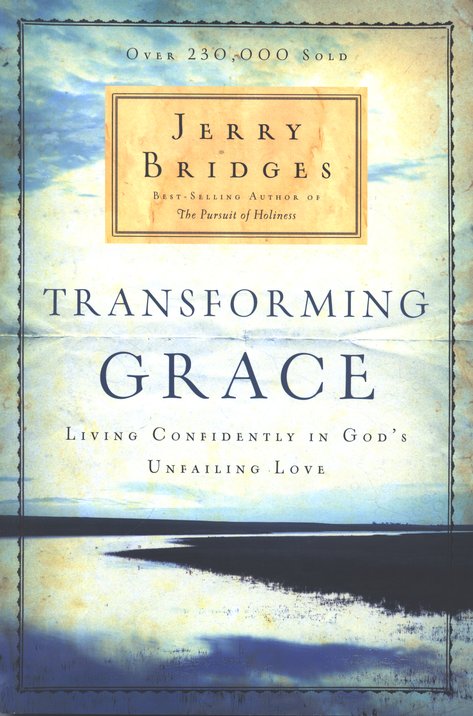
Transforming GraceJerry Bridges wrote a book that was an eye-opener for me called Transforming Grace. I’ve shared a couple of other posts with quotes from this book (you can read them by clicking here and here), but these quotes zero-in on the battle some people have in their minds between law and grace.

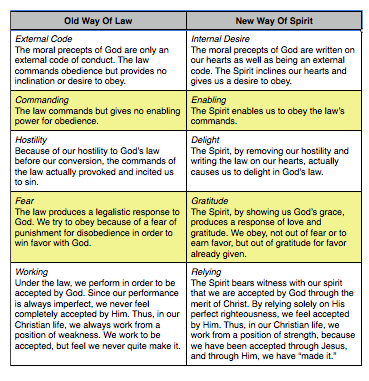
“Under a sense of legalism, obedience is done with a view to meriting salvation or God’s blessing on our lives. Under grace, obedience is a loving response to salvation already provided in Christ, and the assurance that, having provided salvation, God will also through Christ provide all else that we need.”

(click for a larger view)

(click for a larger view)

You can download a PDF version of this chart here → Law and Grace  ←

“Do you view God’s moral precepts as a source of bondage and condemnation for failure to obey them, or do you sense the Spirit producing within you an inclination and desire to obey out of gratitude and love? Do you try to obey by your own sheer will and determination, or do you rely on the Spirit daily for His power to enable you to obey? Do you view God as an ogre who has set before you an impossible code of conduct you cannot keep, or do you view Him as your divine Heavenly Father who has accepted you and loves you on the basis of the merit of Christ? In other words, in terms of your acceptance with God, are you willing to rely solely on the finished perfect work of Jesus, instead of your own pitifully imperfect performance?”

“We are much more concerned about someone abusing his freedom than we are about his guarding it. We are more afraid of indulging the sinful nature than we are of falling into legalism. Yet legalism does indulge the sinful nature because it fosters self-righteousness and religious pride. It also diverts us from the real issues of Christian life by focusing on external and sometimes trivial rules.” 

“That is the way a lot of manmade ‘dos and don’ts’ originate. They begin as a sincere effort to deal with real sin issues. But very often we begin to focus on the fence we’ve built instead of the sin it was designed to guard against. We fight our battles in the wrong places; we deal with externals instead of the heart. … For all of us, it may be good to have some fences, but we have to work at keeping them as just that—fences, helpful to us but not necessarily applicable to others. … I’m not suggesting you jump over fences just to thumb your nose at the people who hold on to them so dearly. We are to ‘make every effort to do what leads to peace and mutual edification’ (Romans 14:19). Use discretion in embracing or rejecting a particular fence. But don’t let others coerce you with manmade rules. And ask God to help you see if you are subtly coercing or judging others with your own fences.”

“Spiritual disciplines are provided for our good, not for our bondage. They are privileges to be used, not duties to be performed. … I do think we should actively promote spiritual disciplines. They are absolutely necessary for growth in our Christian lives. And since ours is a largely undisciplined age, many believers are losing out on the benefits of those disciplines that could help them grow to maturity in Christ. But we should promote them as benefits, not as duties.” 

You can read my full book review of Transforming Grace by clicking here.

Don’t Misuse God’s Name

Representing God's nameYou’ve heard the old nursery rhyme: Sticks and stones may break my bones but words will never hurt me. We all know this isn’t true: words do hurt, and names that people call us may leave lasting wounds.

Words and names are important to God. God used His word to create the universe (God said, “Let there by light”); Jesus was called The Word (see John 1:1); God has named people and even renamed them to reflect their character or destiny.

The most important name of all is God’s own name, so the Third Commandment says, “You shall not misuse the name of the LORD your God…” (Exodus 20:7). How can we misuse God’s name? There are five ways—

(1) As emptiness or nothingness

  • Are our words empty? Do we use filler phrases like “Oh my God!” that neither talk to Jehovah or about Jehovah? We shouldn’t use God’s name unless we’re talking to Him or about Him in a respectful way.

(2) In vanity

  • In reality this means calling ourselves a Christian, but speaking in an un-Christlike way.
  • “Giving God a ‘bad name’ might diminish or demolish people’s belief, respect, and awe for God, a tragedy for a world that needs holiness. … It is a major responsibility to represent God; one which should not be taken lightly.” —Dr. Laura Schlessinger

(3) Being insincere

  • Are our promises empty, or is our word our bond? If we have to use phrases like “I swear to God that I will…” then that means we cannot be trusted on our own merits. When we claim to be Christians but cannot be trusted, we undermine the trustworthiness of God in the minds of other people.
  • “The godly man, therefore, will make promises cautiously but keep them conscientiously once they are made, knowing that irresponsibility and unreliability here are great and grievous sins.” —J.I. Packer

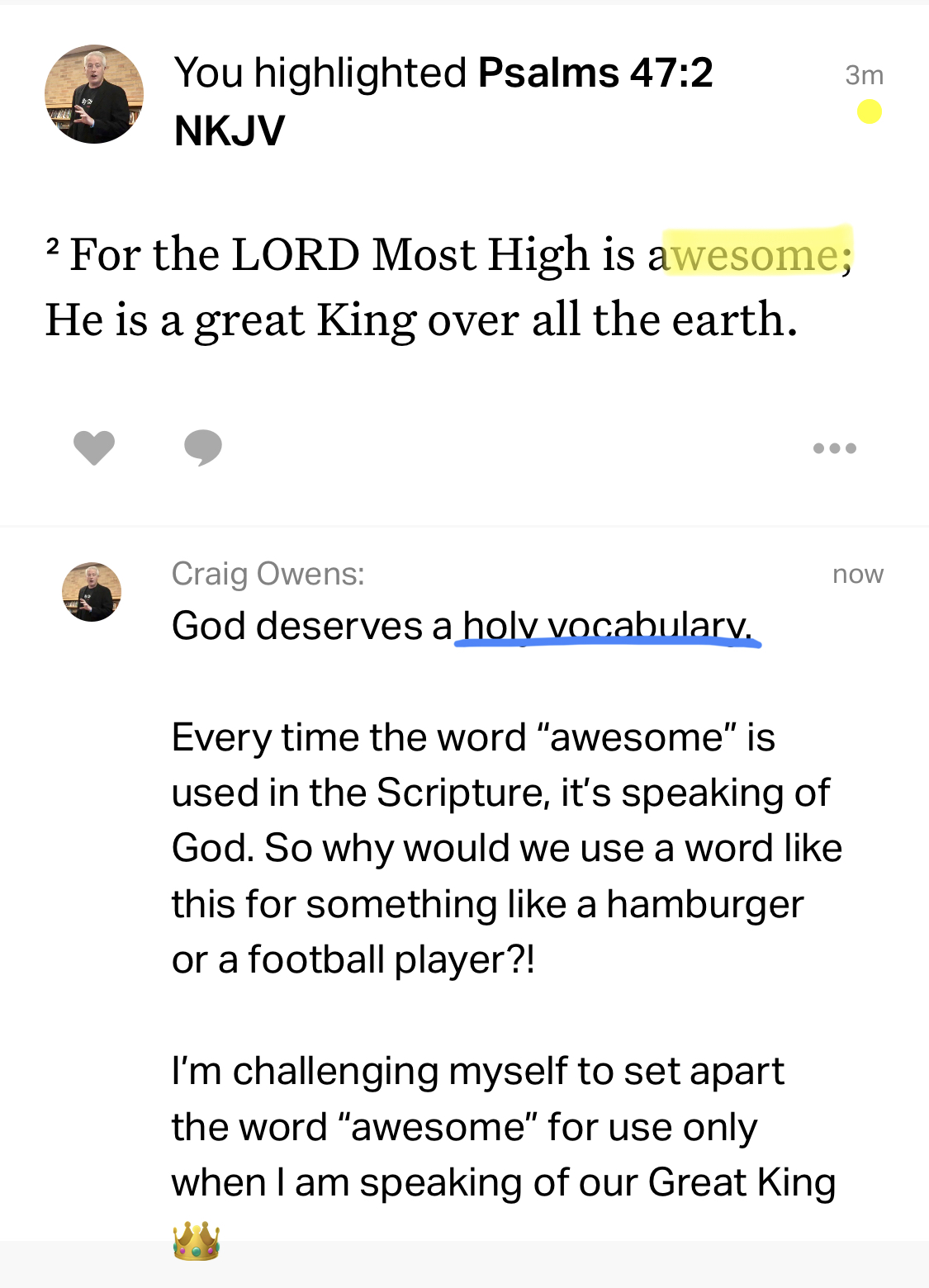
(4) Having an unholy vocabulary

  • Holy means something set apart for a special use. Perhaps there are words we use to describe God that we are also using for lesser things. It might be good to listen to how the Holy Spirit would challenge us to have a unique vocabulary to talk to or about our unique God.

(5) Worthlessness of conduct

  • As the cliche goes, “What you do speaks so loudly that I cannot hear what you are saying.” So we need to make sure that we both talk like Jesus talked and live like Jesus lived.

Anything less than these standards just may be misusing God’s holy name and character by misrepresenting Him or giving Him a “bad name.” What do you think?

If you have missed any of the messages in our series The Love In The Law, you can find them all by clicking here.