Psalm 101 is only eight verses long, but David makes nine I will resolutions to God. Perhaps you might consider making these resolutions yourself—
(1) I will sing of mercy and justice. These are two sides of the same coin; in fact, it’s only when we know God’s justice that we can appreciate His mercy. Both God’s justice and His mercy need to be celebrated.
(2) I will sing praises. Regardless of our situation or setting, God is worthy to be praised.
(3) I will behave wisely in a perfect way AND (4) I will walk within my house with a perfect heart. A commitment to integrity, living a godly lifestyle, and leaving a godly legacy.
(5) I will set nothing wicked before my eyes AND (6) I will not know wickedness. A commitment to be childlike in regard to wickedness, and watchfulness of anything impure.
(7) I will destroy AND (8) I will not endure AND (9) I will destroy all the wicked. A resolution to cut-off all relationships that are not God-honoring.
Resolutions aren’t just for New Year’s Day. Resolutions can be made any time we sense something in our life isn’t as God-pleasing as it could be.
Longing For A Changed World will help you (re)establish a prayer focus that could be the beginning of the next great revival! You can check out my full book review here, and then enjoy some of the quotes that especially caught my attention.
“Our age, severed from its Biblical moorings, is neglecting history’s lessons.”
“Another characteristic of today’s Church is a lack of prayer. Instead of communing and listening to God, lifting our needs and concerns to the Lord, we rely on our own abilities and in technology to compensate for any inadequacy we may have. Thus armed, we are confident in taking on the challenges of our day, even those spiritual in nature.”
“True revival impacts all aspects of life, even to the concerns of the last, the least, and the lost. A people who uphold justice and righteousness and seeks to alleviate the plight of the poor and needy, are a people truly gripped with revival. For when we are consumed with God’s holiness and how blessed we are by His grace, we are compelled to take this Gospel to all aspects of our culture.”
“Our propensity is to focus on being doers—to be on the battlefield, sword in hand, fighting for the Kingdom and for righteousness. But as in the battle with the Amalekites, battles are won by God’s people lifting up their arms to the Lord.”
“I have been more focused on what I wanted to say in my prayer than on Whom I am approaching in prayer. This often leads to prayer that amounts to a tallying-up of my wants, without proper regard for the One into Whose presence I have come.”
“Our prayers as a whole, and prayers for revival, should reflect our poverty and powerlessness before a God who is forgiving and gracious.”
“Pray for boldness in the church—boldness to proclaim God’s Word and to firmly stand on it. Pray for boldness to confront sin yet boldness accompanied with humility as the church is aware (painfully aware) of its own sinfulness. And pray for boldness to present Christ as the Way and the Truth.”
“Praying expectantly requires us to pray to God in line with His Word and His promises. Thus a decline in biblical literacy has resulted in our prayer life wavering as well.”
“Our pleas for revival will go unheeded until we stand up for God’s Word, forsake the idols of our age, shake off the trappings of our secular and materialistic age, and embrace God’s truth.”
“As we pray for revival—for changed lives, renewed churches, and a transformed culture—our tendency might be to enlist the charismatic, the eloquent, and those who project confidence and success, traits that so readily appeal to us. But God’s manner of bringing revival has often been through ordinary people who endure affliction, hardship, and suffering, much as he did with Paul and Timothy and the Apostles.”
I’ll be sharing more resourced and thoughts from this book soon, so stay tuned!
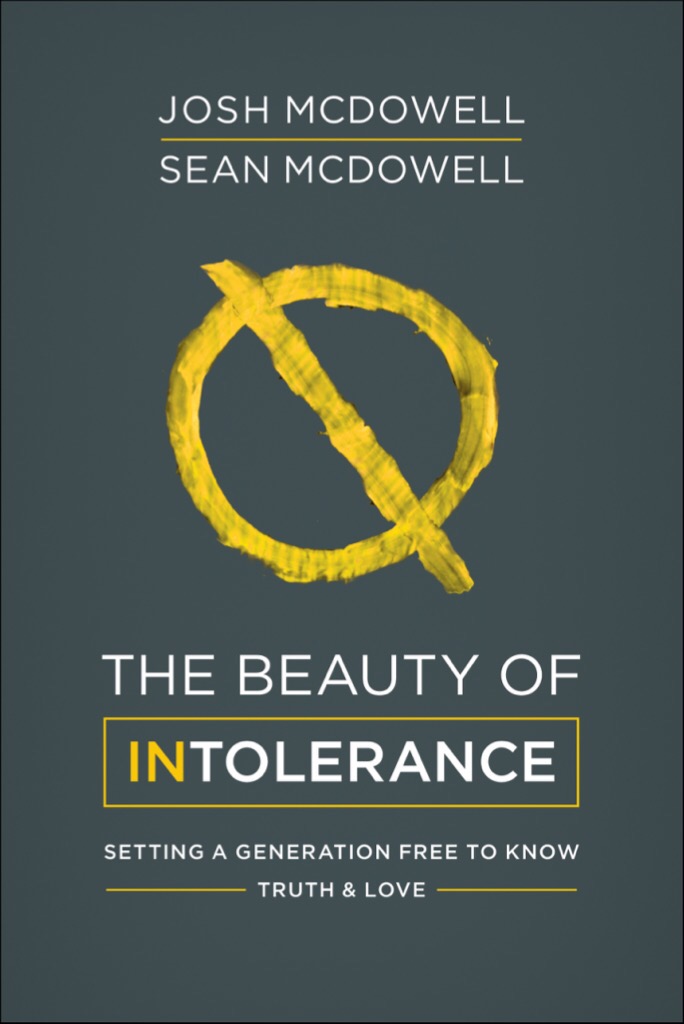
This is the fourth set of quotes I’ve shared from Josh McDowell and Sean McDowell’s book The Beauty Of Intolerance. You can check out the other quotes here, here, and here; and if you missed my review of this book, please click here to read that.
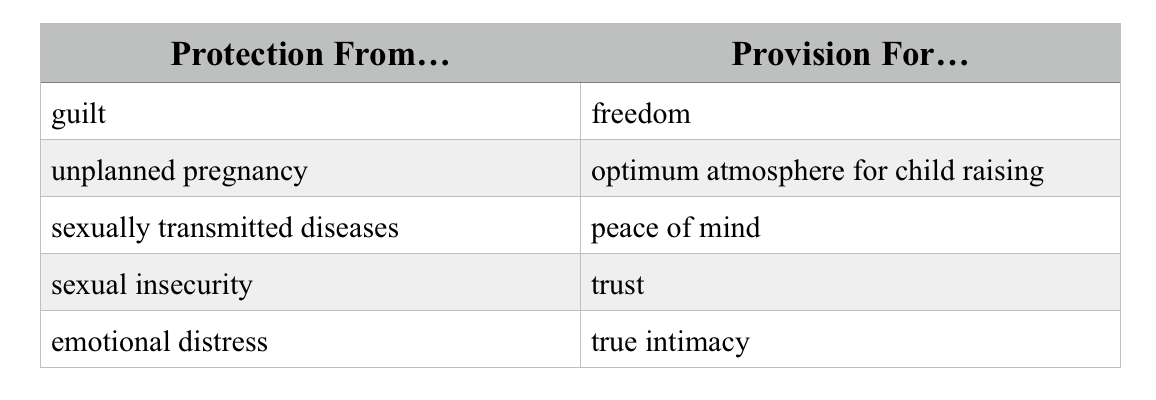
“Respecting the boundaries of sexual morality and prohibitions for extramarital and premarital sex does bring protection and provision. Here are just a few ways it does this:
“Although sin has separated us from God, His original intent for us and the reality that we were created in His image have not changed. What we do or don’t do may distort that image, but our worth to God as human beings never changes.”
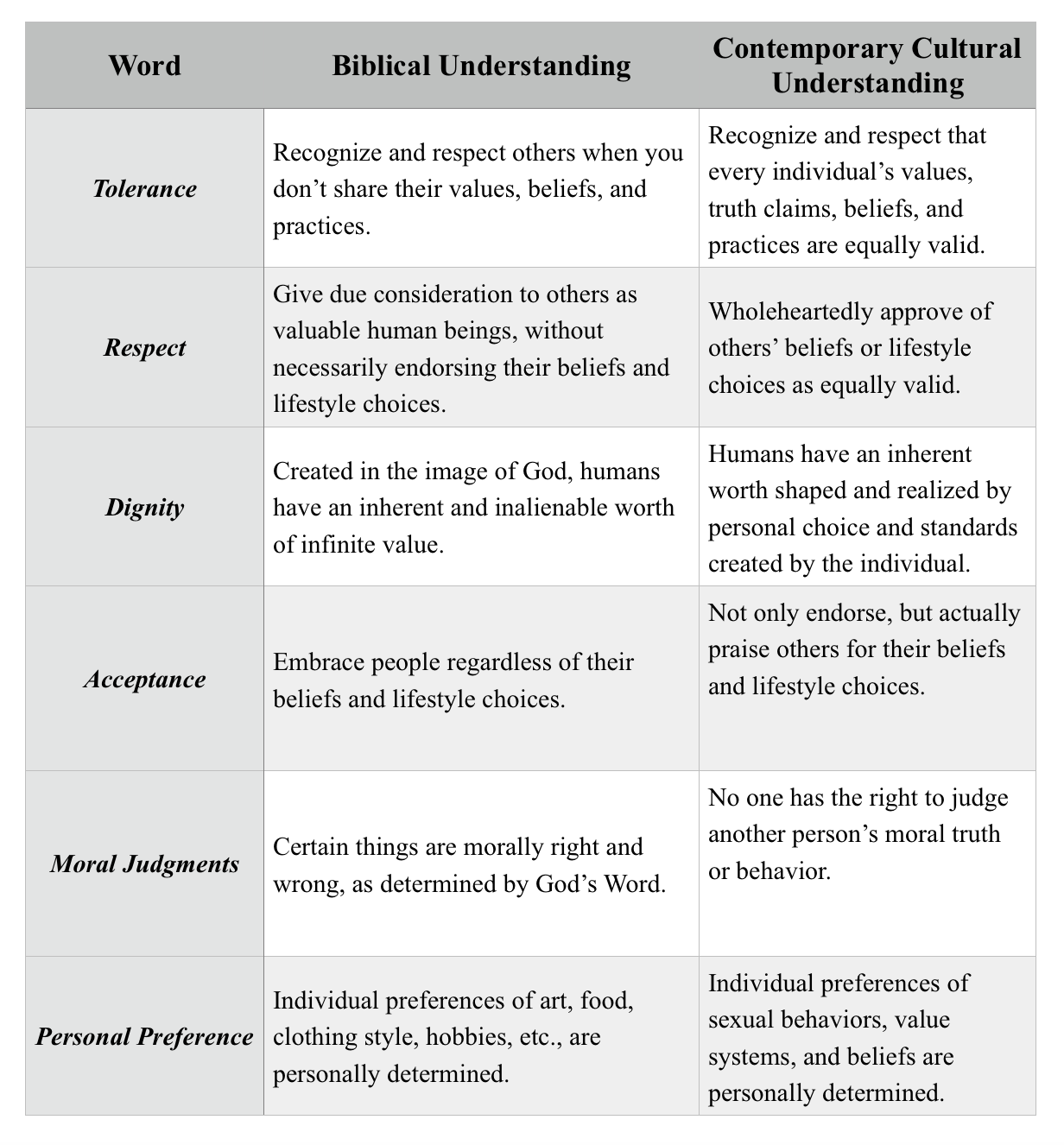
“So how has Christ loved you? He values all people for their inherent worth and offers grace freely to all people without exception. Cultural tolerance, on the other hand, claims to accept everyone’s differing beliefs, values, and lifestyles, yet it qualifies that acceptance. … What distinguishes God’s unconditional acceptance from that of our culture is authentic love. His love is intended to make the security, happiness, and welfare of another as important as His own. It is other-focused, not performance-focused. … Real valuing of another’s personhood expressed in the context of authentic love separates doing from being and sees the acts of sin distinct from the sinner (which, by the way, is all of us).”
“The beauty of intolerance is its opposition to wrong and evil in the world—in alignment with God’s righteous and perfect standard of justice, equality, human rights, and caring for others. Intolerance of evil is not mean-spirited and condemnatory; it is actually the only way to be loving and caring. Far from being judgmental, it advances God’s righteous kingdom.”
“Most people in America subscribe to a view of morality called ‘cultural ethics.’ In other words, they believe that whatever is acceptable in that culture is moral; if the majority of people say a thing is right, then it is right. … But there’s a problem with that. If that is true, then how can we say the ‘aborting’ of six million Jews in the Holocaust was wrong? In fact, the Nazis offered that very argument as a defense at the Nuremberg Trials. They argued, ‘How can you come from another culture and condemn what we did when we acted according to what our culture said was acceptable?’ In condemning them, the tribunal said that there is something beyond culture, above culture, that determines right and wrong.”
“We are all entitled to our own beliefs, but this doesn’t mean each of us has our own truths. Our beliefs describe the way we think the world is. Truth describes the objective state of the world regardless of how we take it to be. Beliefs can be relative, but truth cannot. … Moral truth was never meant to be spoken or understood outside of a loving relationship. Being like Christ and speaking the truth in love are synonymous.”
Imagine you are taking a nice autumn color tour. As you are enjoying the beautiful fall colors, you come upon a quaint town, where the speed limit through town drops to 25 mph.
As you make your way through town, enjoying the scenery, you suddenly become aware of the flashing lights of a police car behind you. Quickly glancing down at your speedometer, you notice that you are traveling at 35 mph!
The officer approaches your car, asks for your license and registration and returns to his car. At this point, there are two things that could happen.
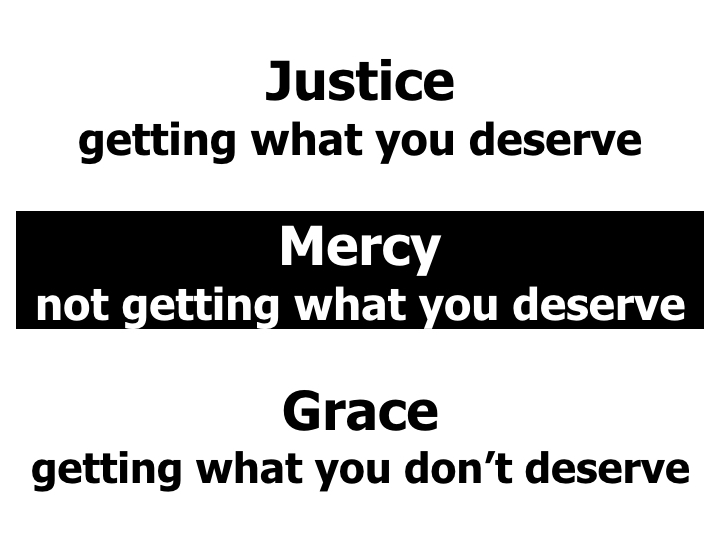
Since you did break the law, the officer might return to your car with a traffic ticket, indicating that you were driving 10 mph over the speed limit. You may have all kinds of excuses, and even a spotless driving record, but the truth of the matter is you broke the traffic laws of that city. The ticket you received is, in fact, justice.
Now imagine the officer returns to your car and says, “You have a pretty good driving record, and I believe that you were enjoying the fall scenery, so I’m going to let you off with a warning this time.” Even though you broke the law, this police officer extended mercy to you by not giving you the penalty you deserved.
Have you ever experienced this kind of justice or mercy? Most of us probably have.
But here’s something you have probably never experienced. Imagine you are driving through the same quaint town, admiring the beauty, when you see those flashing lights in your rearview mirror. Quickly glancing down at your speedometer you see that you are traveling under the speed limit. You double-check that your seatbelt is fastened and you are obeying all of the traffic laws.
When the officer approaches your car, he says, “Do you know why I pulled you over? I pulled you over because you are following all of the traffic laws and I wanted to give you a $50 gift certificate to one of the best restaurants we have in town.”
If this ever happened to you, this would be the definition of grace: getting a blessing you didn’t deserve to receive!
Christians certainly understand justice averted, when the penalty for our sins fell on Jesus instead of on us. Christians also understand mercy, when we don’t have to pay for the sins we have committed. But have you ever stopped to consider the amazing grace God continues to pour over your life?
John describes it like this: For out of Christ’s fullness we have all received—all had a share and we were all supplied with—one grace after another and spiritual blessing upon spiritual blessing and even favor upon favor and gift heaped upon gift (John 1:16 AMP).
All of us have blessing upon blessing, favor upon favor, gift upon gift heaped onto our lives. The Apostle Paul then asks, “What am I going to do with all of this grace I’ve received?”
His answer: I’m going to make sure I pass it along to others! (see Ephesians 3:1-9)
Gordon MacDonald wrote, “The world can do almost anything as well as or better than the church. You need not be a Christian to build houses, feed the hungry, or heal the sick. There is only one thing the world cannot do. It cannot offer grace.”
So here’s my question to you: how are you handling the grace God has lavished on you? Are you even aware of His grace gifts? Are you hoarding them for yourself?
Or are you making sure that those around you are recipients of the overflow of grace from your life? In other words, are you demonstrating what the world can never show?
Christian, make sure the world sees your grace-filled life in action! This is what brings glory to God and draws others to their own personal relationship with Jesus Christ.
I found Josh and Sean McDowell’s book The Beauty Of Intolerance to be such a timely book! Parents, teachers, pastors, and anyone who works with youth should definitely read this book to help navigate through the tolerance-saturated world we live in. You can check out my review of this book by clicking here.
“God gave Moses pages and pages of highly specific rules to govern the relationships and morality of His people. Each of those rules, which we call precepts, applies to a specific situation. But each is important because it is grounded in a principle, which is a fundamental, primary law from which other laws—the precepts—are derived. Each principle, in turn, is grounded in a Person—in the very character of God Himself. … God is not behind the principles and precepts simply to validate the rules; He is there as a Person for the purpose of relationship.”
“When moral truth becomes a matter of opinion, personal preference, or the individual’s views and feelings, then practically anything goes. … In a culture of tolerance where the individual decides morality, morality has no bounds.”
“An entire generation tends to go to the Bible not to discover the truth and bend their lives to it accordingly but to use it as sort of a self-help book to help them form their own version of what’s true and false, good and evil, right and wrong.”
“When you discuss the Bible, do not refer to it simply as a spiritual book that teaches us how to live, but as a road map leading one toward the discovery of true reality. … The one true God’s communication to humanity and the whole of Christianity as a religion is based on three primary realities supported by evidences: (1) The historic reliability of Scripture; (2) The deity of Christ; and (3) Christ’s bodily resurrection.”
“While we all may have a sense of what is evil and what is good, under the philosophy of cultural tolerance, evil and good can only be relative ideals. Without an objective truth—a set of universal moral values—good and evil are defined by the individual, community, or society. Therefore we have no moral basis by which to judge another person, community, or nation for what they do or don’t do.”
“Unless justice is rooted in a moral authority beyond those with the most power or even with the most votes, there cannot be true justice for all. … Justice, charity, and human rights are grounded in the fact that we are created in God’s image with value, dignity, and worth. … God’s mercy and justice as our model has fostered societal justice and provided more positive contributions to society in general than any other force in history.”
“The intolerance of the early Christians was a beautiful thing. They believed that everyone—including the poor, the homeless, the handicapped, the sick—was made in the image of God with dignity and worth. They were utterly intolerant of injustice, and they did whatever they could to correct the injustices they saw in society.”
“Real love—biblical, Godlike love—exposes cultural tolerance as the counterfeit of love because cultural tolerance fails to point people to a universal standard of morality designed to save them from serious harm. Cultural tolerance does not address what is in the best interest of a person—it possesses no moral standard that aligns to what is universally right and good. Real love, on the other hand, looks out for the best interest of others.”
“Every truth, every rule, and every guideline coming from God’s Word is issued from the loving heart and character of God for our own good.”
“Love is making the security, happiness, and welfare of another person as important as your own. Biblical love is not merely focused on another but on the good of another, even if the other does not recognize or accept the reality of the good.”
To read the first set of quotes I shared from The Beauty Of Intolerance, please click here. And be sure to follow me on Twitter and Tumblr to read more quotes from this book, and from lots of other profound thinkers, that I share daily.
“O Lord, keep me strong in the sense of Thy call.” —Thomas Boston, Scottish Presbyterian pastor
“You have remained true to God under the great tests, now be alert over the least things.” —Oswald Chambers
“Mighty events turn on a straw.” —Thomas Carlyle
“God is love, but God is also just, as severely just as if He had no love, and yet as intensely loving as if He had no justice. To gain a just view of the character of God you must perceive all His attributes as infinitely developed; justice must have its infinity acknowledged as much as mercy.” —Charles Spurgeon
“Pleasures demean, disappoint, and destroy us when they are merely fleeting, fleshly, and foolish. The pleasure we ultimately seek, and for which we were created, can only be found in one place, in fellowship and communion with the Lord of heaven and earth.” —T.M. Moore
John Piper has some very insightful words in the wake of the tragedy in Paris—France: A Fabric Torn.
Jim Cymbala reminds us, “There are no trendy shortcuts, no hocus-pocus mantras that can defeat satan.” Read more in No Hocus-Pocus.
“Don’t hold onto anything so tightly that Jesus can’t take it from you.” —Corrie ten Boom
“Forgiveness doesn’t diminish justice; it just entrusts it to God. He guarantees the right retribution.” —Max Lucado
“History is a vast early warning system.” —Norman Cousins
“How do we develop such trust? We seek the Lord in prayer, meditate on His Word, and walk in obedience. You may object, ‘But those things are all works.’ I disagree. They are all acts of faith. As we observe these disciplines, we are trusting that the Holy Spirit is at work in us, building up a reservoir of strength for our time of need.” Read more of David Wilkerson’s post Entering God’s Rest.
A couple of thousand years ago Socrates called the youth generation lazy, disrespectful, and lacking responsibility. Tim Elmore points out that there are 7 changes that affect every generation. Parents, teachers, coaches, and others that work with youth need to check this out.
Every summer in Cedar Springs all of the churches combine together for a huge worship service called UNITED. This year we have a special project: united to change the world.
[VIDEO] This morning I launched my first live broadcast on Periscope. You can find me there at username @craigtowens. Here is the video from my live feed—
“When we go through the trial of faith we gain so much wealth in our heavenly banking account, and the more we go through the trial of faith the wealthier we become in the heavenly regions.” —Oswald Chambers
“The promise that frees us from an unforgiving, bitter, vengeful spirit is the promise that God will settle our accounts. He will do it more justly and more thoroughly than we ever could. Therefore we can back off and leave room for God to work.” —John Piper, commenting on Romans 12:19
“‘Revenge is sweet;’ but not to the man who has tasted Christ, for he says, ‘How can I have vengeance upon my fellow, when Christ has put away my sin?’ Now, forgiveness is sweet, and he loathes malice, and turns aside from it as from venom itself.” —Charles Spurgeon
The Isaiah 53:5 Project reblogged one of my all-time favorite blog posts: The Parable Of The Lifeguard. Thanks, James!
Melinda Penner reminds us of the dangers of abusing our freedom. “If there is nothing objective to constrain our freedom, then there’s nothing objective to constrain the government. Our rights become whatever we declare them to be and whatever the government at any time and place declares them to be, changing with the fashions of the day.”
“What does ‘every need of yours’ mean in view of Philippians 4:19? It means ‘all that you need for God-glorifying contentment.’ Paul’s love for the Philippians flowed from his contentment in God, and his contentment flowed from his faith in the future grace of God’s infallible provision.” —John Piper
“Sometimes we get into the habit of shutting our eyes to difficulty; that will not do: faith is not a fool, faith does not shut her eyes to difficulty, and then run head-foremost against a brick wall—never. Faith sees the difficulty, surveys it all, and then she says, ‘By my God will I leap over a wall’; and over the wall she goes.” —Charles Spurgeon
Here is a good way to stop the spread of pornography, child exploitation, and the sex slave trade: Be aware of what companies are on the Dirty Dozen List (these are companies that profit off of porn).
I love the infographics and study tips that The Overview Bible Project prepares. Here is the latest one on Hosea. Do yourself a favor: go to Overview and subscribe!
[VIDEO] John Piper reminds us of the importance of getting into our Bibles—



 Psalm 101 is only eight verses long, but David makes nine I will resolutions to God. Perhaps you might consider making these resolutions yourself—





 Craig T. Owens