Love Changes Everything (book review)

One of the most fascinating love stories in the Bible is between Hosea and Gomer. In this story, we see a picture of God’s unconditional love so clearly. Using this story as a backdrop, Micah Berteau explains how this love is still potent for all of us today. His book is called Love Changes Everything.

Micah believes our culture has watered down and diminished what love really means. And I heartily agree with him! There’s an old children’s song that says, “Jesus loves me this I know,” but Micah entitles one of his chapters: “Jesus loves me… this I don’t know.” This book is meant to help us recapture what real love is. 

Weaving aspects of the rescuing love Hosea had for Gomer throughout the entire book, Micah teases out thoughts that many may not have considered. He then skillfully uses his own personal life journey to bring a modern-day feel to this love story. Each chapter opens a new facet of God’s love that is intended to dismantle all of the false definitions of love too many have previously taken to heart. 

Although this book is a good reminder for a wide audience, I especially think this would be a good discussion guide for a mature Christian to use with someone who is struggling to believe that God can unconditionally love and forgive them. 

I am a Revell book reviewer. 

Poetry Saturday—Hark! The Sound Of Jubilee

Hark! the song of jubilee,
Loud as mighty thunders roar,
Or the fullness of the sea,
When it breaks upon the shore:
“Hallelujah! for the Lord
God Omnipotent shall reign;
Hallelujah!” let the word
Echo round the earth and main.

Hallelujah! hark! the sound,
From the depths unto the skies.
Wakes above, beneath, around
All creation’s harmonies;
See Jehovah’s banner furled,
Sheathed His sword; He speaks; ‘tis done;
And the kingdoms of this world
Are the kingdoms of His Son.

He shall reign from pole to pole
With illimitable sway;
He shall reign when, like a scroll,
Yonder heavens have passed away.
Then the end; beneath His rod
Man’s last enemy shall fall:
Hallelujah! Christ in God,
God in Christ is All in All. —James Montgomery

Thursdays With Spurgeon—Christ Is Glorified In Your Uniqueness

This is a weekly series with things I’m reading and pondering from Charles Spurgeon. You can read the original seed thought here, or type “Thursdays With Spurgeon” in the search box to read more entries.

Christ Is Glorified In Your Uniqueness

     To my mind it is a very beautiful thing that the Lord Jesus Christ, when He comes into the soul, does not annihilate any part of the personality, but shines in each separate being, for He is not only all, but He is in all His people [Colossians 3:11]! Very well, the grace of God does not turn the Gentile into a Jew. He remains a Gentile, but Christ is in him, and therefore he is made into a new creature [Colossians 3:9-10]. … Then comes the Jew. When he is saved, Christ is in him. … The Lord Jesus Christ, dwelling in the Jew, leaves him still a member of the house of Abraham, but through the presence of the Lord Jesus within him, how wondrously his whole character is exalted! …

     Yes, let a man be a brown man, or a yellow man, or a red man, or whatever color God made him! The more he keeps to his own nationality and reflects the glory of Christ from that angle, the more will Christ’s gospel triumph and the more will Christ Himself be honored! … 

     Christ is all, and Christ is in all His people, each one remaining the same in his individuality, but Christ shining in each one! … So note again that because Christ dwells in him, every believer becomes a copy of Christ.  

     What is more, Christ in each one of these believers creates them all into one body [Colossians 3:14-15]. … Christ in you all makes you into one body in a mysterious and unique manner.

From All And All In All

God isn’t in the cloning business. He made all of us unique. Think of that: in all of human history there has never been another YOU. In all the 7.5 billion people on planet Earth right now YOU aren’t duplicated. And for however long history goes on there will never be another YOU! 

When Jesus is your Lord and Savior, He doesn’t want to turn YOU into a copycat. He wants YOU to be YOU, with all your glorious, inimitable uniqueness. His Holy Spirit in YOU, helps YOU to be more YOU because the One who created YOU is now living in YOU. 

How amazing is that?! 

YOU be YOU. That is how God is most glorified through YOU! 

Close To God

Imagine being close enough to hear God’s voice—Your ears will hear a word behind you, “This is the way, walk in it,” whenever you turn to the right or to the left. (Isaiah 30:21)

Here’s a great question I recently heard: “What if God doesn’t want to give us answers, because He wants to give us His presence?” 

Perhaps if God showed me my whole path, I might just take off down the path as fast as I could. Maybe I’d even say something like, “Thanks, God, I’ll take it from here!”

But God wants me close to Him. He wants me to hear His voice at every single step saying, “This is the way, walk in it.” 

The model prayer that Jesus taught us is all about that closeness and total reliance on God’s close presence: 

  • Our Father in heaven, hallowed be Your name [close enough to worship Him intimately],
  • Your kingdom come, Your will be done on earth as it is in heaven [close enough to know His heart].
  • Give us today our daily bread [close enough to rely on Him for all of my daily needs].
  • And forgive us our debts, as we also have forgiven our debtors [close enough to know His forgiving love for me and for others].
  • Lead us not into temptation, but deliver us from the evil one [close enough to His strength to say “no” to temptations that would entice me off of His path].
  • For Yours is the kingdom, and the glory, and the power forever [close enough to bask perpetually in His glory and His power].

God wants us THAT close to Him—to rely on Him, to lean into Him, to be empowered by Him, to be protected in Him. 

A good question for all of us to ponder: How close to God am I?

Thursdays With Spurgeon—Jesus Is All We Need

This is a weekly series with things I’m reading and pondering from Charles Spurgeon. You can read the original seed thought here, or type “Thursdays With Spurgeon” in the search box to read more entries.

Jesus Is All We Need

     So is it with every other ordinance, whether ordained of God or of man. It must never be placed in the front as if it were the means of salvation! I say to you who may have been sprinkled, or to you who may have been immersed; to you who may bow at your altars, or to you who may come to the communion table, I do not place these rites on a level, certainly, for some are of God and some are not. But I do place them all on a par in this respect: that they enter not into the essence of our salvation! And I say to all of you, “These things cannot save you, for ‘Christ is all’” [Colossians 3:11]. Be you who you may, and do you what you may, you will not be saved because of your natural birth or because of any supposed holy acts that you may perform! Neither will you be saved by any transactions that may be the work of a human priest! You must have Christ as your Savior and you must rest in Him alone, or you cannot be saved! He is the one foundation, “For no other foundation can anyone lay than that which is laid, which is Jesus Christ” (1 Corinthians 3:11), for “Christ is all.” The Lord Jesus Christ sums up everything that ordinances can possibly mean and all that pedigree and descent can possibly bring, and He is infinitely more than all of them! …  

     You must not add anything to Christ as your ground of confidence, but just lean the weight of your sin, your sorrow, your needs, and your desires wholly and entirely upon Him who lives to stand for you before God. Christ, then, is all our trust!

From All And All In All

It’s not our family lineage, it’s not our church attendance, it’s not our religious activities. It’s all Jesus. 

Jesus alone paid for our salvation, and it’s by faith in Him alone that we have the forgiveness of our sins. Don’t let anyone try to convince you that it’s “Jesus plus something else.” Nothing else needs to be added—Jesus is completely sufficient in and of Himself!

Turning From Moral Folly To Wisdom

“The man who says, ‘I want to go to heaven, but I don’t want to live a pure life; I want to be free to continue with my present life. I will change a little and do better, but I have no desire to be pure,’ or the man who says, ‘I want to escape hell and make heaven my home at last, but I have no particular desire to cease to live as I have lived’ is deceiving himself. You are hearing the language of a moral fool. This is not the language of wisdom, but the folly of the damned. … 

“The penitent man wants to be changed. If you are still sufficiently in love with yourself and all you want is a little improvement, I see no possibility of faith approaching your heart. Unless a man comes to Christ seeking to be a different person, to be humble, meek, and self-effacing, he is not coming to Christ at all. Unless we hate evil and love righteousness, at least to the degree we are able at the moment, we are still in the bonds of iniquity and the enemies of righteousness. … 

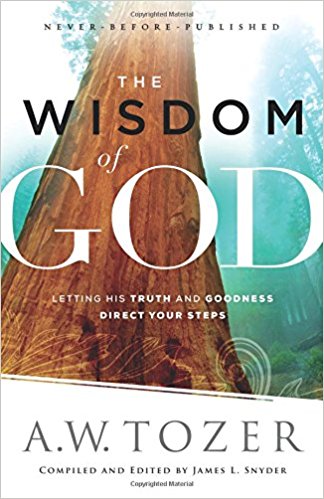
“Join me in this prayer: “Oh, I want to be other than what I am. I want to be different. I want to change. I am not satisfied. I want to believe in Thee, and trust in Thee, and throw myself boldly on Thee, and I want to be made like Thyself. I do not want only to escape hell, I want to escape sin. I not only want to go to Heaven at last, but I want to have Heaven in my heart now. I not only want to dwell with the redeemed, I want to be like the redeemed here on earth. I want to be another kind of person.” —A.W. Tozer, in The Wisdom of God

Self-made Or Spirit-led?

“And behold, two men were conversing with Him—Moses and Elijah, who appeared in splendor and majesty and brightness and were speaking of His exit from life, which He was about to bring to realization at Jerusalem.” (Luke 9:30-31)

Jesus was constantly making decisions that kept Him on the path straight toward Calvary’s Cross. He would let nothing deter Him from God’s appointed mission. Even when His own friends and family urged Him to find another route. 

It was at a moment like this—when Jesus had yet another choice to make about what path He would follow—that Moses and Elijah talked to Him, reminding Him of the ultimate outcome of His obedient and correct choices. 

At every crossroads—at every decision point—Jesus chose correctly. He chose to do God’s will for His life. He could have decided to do things His own way, but He leaned into the unmistakable voice of the Holy Spirit pointing Him toward the right path.

What does that mean for us today?

I have failed to make the right choice.
That means that I could have chosen correctly.
Jesus was human just like me.
Which means He had choices too.
He always chose correctly, even though the other possibility was there.
So the question is: Will I try to be a self-made man or a Spirit-led man?
I cannot be both.

The Day Of The Lord

All we know about the prophet Joel is that he is the son of Pethuel, and his name means Jehovah is God. He appears to be addressing the southern part of Israel (Judah/Jerusalem). 

What is interesting to note about Joel’s writing is a recurring theme that goes something like this: 

Foreshadowing (or prophetic foretelling) → Calling for a godly response → God’s blessing on a right response or God’s punishment on a wrong response → An outcome which foreshadows or foretells another more dire event → repeat…

For instance, in Joel’s prophesy the massive invasion of locusts was intended to get the Israelites to pay attention to their sins. Joel calls for fasting and repentance and warns (foreshadows/foretells) that an invading army at a later date would do even greater damage (1:2-14). 

Likewise, the invading army—which would do more damage than the invading locusts—should also call the Israelites to repentance and imploring God for His help. 

Jesus, just like Joel, taught that whether it was an evil man, an accident, or even a natural disaster, painful things should cause us to consider the state of our eternal soul (see Luke 13:1-5). And Jesus and Joel both foretell of the Day of the Lord when there will be no more opportunities for repentance. 

To prepare God-fearing people for this dreadful day of the Lord, Joel foretells if the outpouring of the Holy Spirit. This is the same empowering Spirit that Jesus said would equip His followers to take the message of salvation to all four points of the compass (Acts 1:4-8). And just as Joel foretold 800 years earlier, on the first Pentecost Sunday after Christ’s ascension back into heaven, the Christians were baptized in the Holy Spirit, prompting Peter to quote an extension passage from Joel (compare Joel 2:28-32 with Acts 2:14-21).

Joel’s final chapter talks about Judgment Day, and about the multitudes, multitudes in the valley of decision. Peter confronted his audience as well about the decision they should make to turn to Jesus as their Savior and Lord. 

The Day of the Lord could come at any moment and millions around the world are still in the valley of decision. I find these words quite sobering—

“Someone asked, ‘Will the heathen who have never heard the Gospel be saved?’ It is more a question with me whether we—who have the Gospel and fail to give it to those who have not—can be saved.” —Charles Spurgeon 

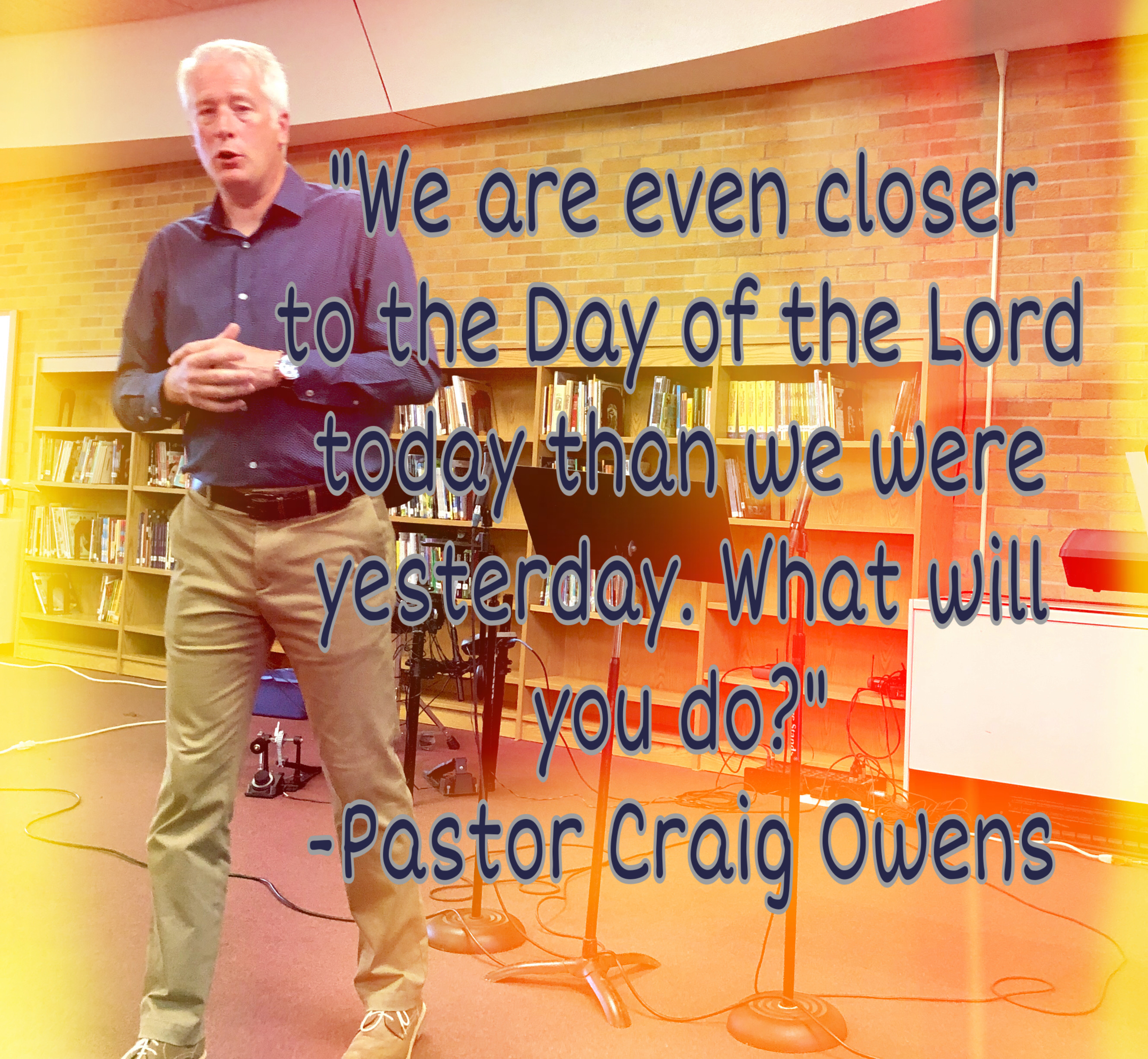
We are even closer to the Day of the Lord today than we were yesterday. What will you do?

Please join me this Sunday as we continue our series learning the major lessons from the minor prophets.

Thursdays With Spurgeon—The Patience Of God

This is a weekly series with things I’m reading and pondering from Charles Spurgeon. You can read the original seed thought here, or type “Thursdays With Spurgeon” in the search box to read more entries.

The Patience Of God

     But why are His chariots so long in coming? Why does He delay? The world grows gray, not only with age, but also with iniquity, and yet the Deliverer comes not. We have waited for His footfall at the dead of night and looked out for Him through the gates of the morning. We have expected Him in the heat of the day and reckoned that He might come before yet another sun went down. But He is not here! He waits. He waits very, very long. Will He not come?

     Long-suffering is that which keeps Him from coming. He is bearing with men. Not yet the thunderbolt! Not yet the riven heavens and the reeling earth! Not yet the great white throne and the Day of Judgment, for He is full of pity and bears long with men! Even to the cries of His own elect, who cry day and night to Him, He is not in haste to answer, for He is very patient, slow to anger, and plenteous in mercy. …

From the sermon God’s Long-Suffering

As a young child, I frequently heard my parents and grandparents say, “Jesus could return at any moment. His Second Coming is closer today than ever before.” My grandparents have all died and are with Jesus in Heaven, but I’m still here. 

Yet, I still believe it’s true: Jesus could return at any moment. His Second Coming is closer today than ever before.

Why does God delay Christ’s return? I believe the apostle Peter says it best—The Lord is not slow in keeping His promise, as some understand slowness. Instead He is patient with you, not wanting anyone to perish, but everyone to come to repentance (see 2 Peter 3:3-15). 

That’s why Spurgeon concludes this sermon with this impassioned call to Christians: 

“God calls upon us, until the world is utterly destroyed with fire, to go on saving men with all our might and main. Every year that passes is meant to be a year of salvation. We rightly call each year the year of our Lord. Let us make it so by more earnest efforts for the bringing of sinners to the Cross of Christ.” 

Let’s continue to look for Christ’s soon return, but let’s be busy telling everyone about a God who loves them, who is patient with them, and who wants them to come to repentance and spend eternity with Him! 

8 Quotes From “Jesus In Me”

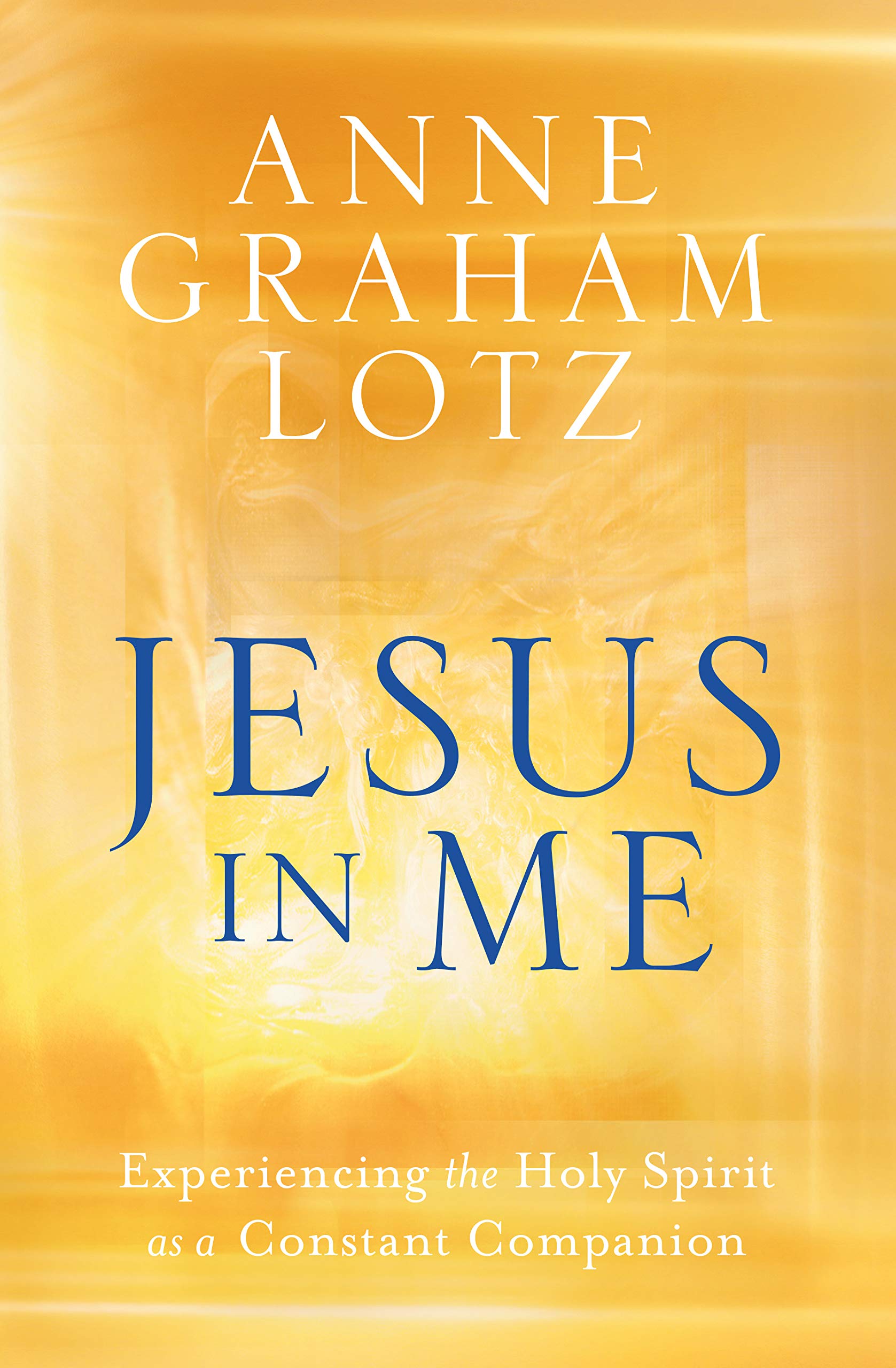
Anne Graham Lotz has given us a delightful book that feels like a living room chat with a friend as we discuss how the Holy Spirit operates in our lives. Check out my full book review of Jesus In Me by clicking here. 

“The Holy Spirit is not a thing but a Person. His personhood is emphasized in John 16, when eleven times in eight verses, He is referred to by the personal, masculine pronouns He, Him, or His.” 

“Could it be that you have missed the comfort of the Comforter because it has come indirectly through someone or something else? Like Mary Magdalene at the empty tomb, are your tears blinding you to the presence of Jesus right there beside you? Right there within you? My prayer is that He will use these words to comfort you as you experience the constant companionship of the Holy Spirit. Ask Him to open your eyes to the nearness of the One who is, in fact, Jesus in you.” 

“Whether your situation involves a misunderstanding with your neighbors, or a disagreement within your church, or tension in your home, or slander in your school, or gossip in your office, the Holy Spirit is able to defend you and plead your cause. Always. Ask Him. He’s never lost a case.” 

“Multiple times God has told me He would strengthen me through the howling winds of hardship. In Jeremiah He clearly warned me that people would fight against me but that He would make me an iron pillar. Through Isaiah He told me that people would rage against me and oppose me but that I was not to be afraid because He would strengthen me. He encouraged me from Revelation that if I would endure patiently and with humility, He would make me ‘a pillar in the temple of my God.’” 

“It’s a huge relief to know that it’s not my job to convict anyone else of sin. That’s the Holy Spirit’s job. Which leaves me free to love people just as they are. Yes, I can counsel and advise if they are open to it. Yes, I can speak the truth in love. Yes, I can point out the potential consequences of their sin. But in the end the most effective thing I can do is to pray for them with a heart full of love. Because the power to transform is His alone.” 

“As we choose to fix our eyes on Jesus, pursue righteousness, live by the truth, and fulfill God’s purpose for our lives, the Holy Spirit will guide us, sharpening our focus in the midst of life’s distractions and confusion.” 

“Maintaining the fire requires intentionally establishing some common spiritual disciplines. They are simple choices but not always easy. They include daily prayer, daily Bible reading, sharing the gospel, continuous obedience as you live out what God says in His Word, continuous trust as you relinquish your expectations and let Him have His way, deepening surrender to His authority—especially during times of pain and suffering.” 

“He uses all things without exception, not just some things, for my ultimate good. And my ultimate good is not health, wealth, prosperity, happiness, or sometimes the things we associate with ‘good.’ My ultimate good is to fulfill God’s purpose of shaping me into the image of Jesus Christ so I bring glory to Him.”