Listen to the podcast of this post by clicking on the player below, and you can also subscribe on Apple, Spotify, or Audible.
CEO stands for “chief executive officer” and usually designates the person who is at the top of the organization’s flowchart. Those who occupy that office frequently exhibit a top-down mindset, where everyone below them is only in that position to serve the CEO.
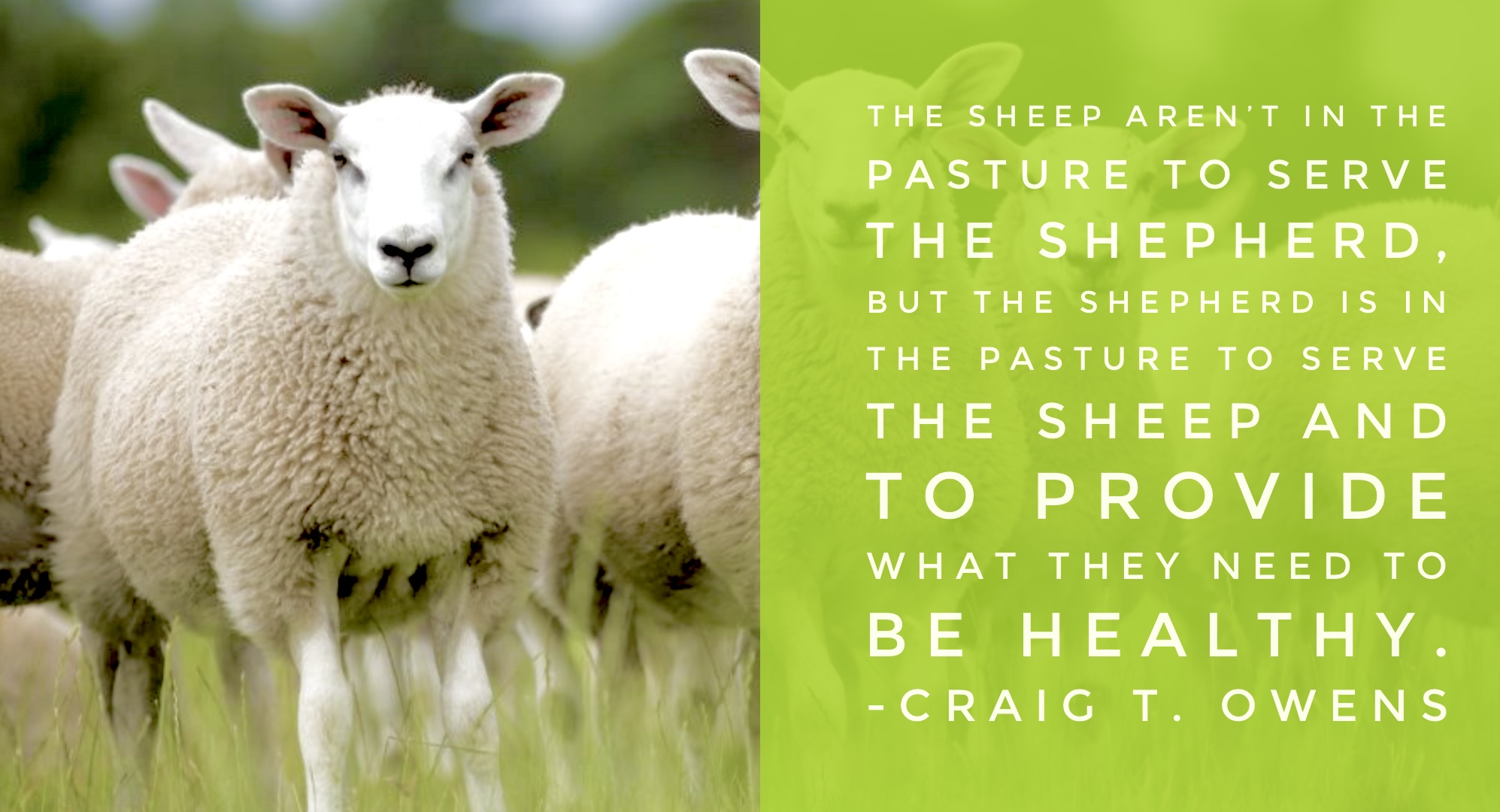
This may work well in the corporate world, but this is not at all the heart Jesus demonstrates toward us. Therefore, it shouldn’t be the mindset or practice of Christ’s under-shepherds—those whom He has called to pastor His sheep. The sheep aren’t in the pasture to serve the shepherd, but the shepherd is in the pasture to serve the sheep and to provide what they need to be healthy.
Check out this conversation I had when I joined a pastoral staff that is using my book Shepherd Leadership as a study guide.
Jesus was confident in who He was and what His Father’s plan was: “Jesus knew that the Father had given Him authority over everything and that He had come from God and would return to God” (John 13:3 NLT).
Yet Jesus also said, “For even the Son of Man came not to be served but to serve others and to give His life as a ransom for many” (Mark 10:45 NLT).
If you are a pastor, you have been charged with caring for the sheep under your care, and not the other way around—
Tend (nurture, guard, guide, and fold) the flock of God that is your responsibility, not by coercion or constraint, but willingly; not dishonorably motivated by the advantages and profits belonging to the office, but eagerly and cheerfully; not domineering—as arrogant, dictatorial, and overbearing persons—over those in your charge, but being examples (patterns and models of Christian living) to the flock (the congregation). (1 Peter 5:2-3 AMP)
Listen to the podcast of this post by clicking on the player below, and you can also subscribe on Apple, Spotify, or Audible.
I’ll bet you have “go-to” people in your life. The ones you immediately call when you need computer help, relationship insights, household or car repairs, Bible questions, or even cooking instructions.
We love having these go-to people in our lives, but I’m also going to guess that none of us has someone who possesses all of these go-to skills. After all, all of us are only human, with limitations and deficiencies.
We’ve learned that in prayer we can come to God as a Father—calling Him our Abba Father.We can also come to God as a Brother—knowing that Jesus has walked every path we will ever walk, and He intercedes to the Father on our behalf.
In fact, we saw last week that Jesus was never at a loss of what to say, what path to take, or what prayer to pray. He spoke what He did, and did what He did, and prayed what He did because of the help of the indwelling Holy Spirit.
This is the same Holy Spirit that is in us as Christians. It’s because of this that we can come to God as a Counselor. The Holy Spirit is THE Go-To Resource for everything!
Andrew Murray wrote, “Prayer is simply the breathing of the Spirit in us; power in prayer comes from the power of the Spirit in us as we wait on Him. Failure in prayer is the result of a spirit that is not yielded to the Spirit of God.”
What does it mean to yield to the Holy Spirit? It means that we don’t look for other go-to people for certain situations, but we trust the Spirit to be the Go-To Resource for everything. This is what Jesus did.
As Jesus relied on the Counselor, so must we. As the Counselor helped Jesus, so He will help us.
Second, Jesus was never at a loss of what path to take, and neither do we have to experience any confusion about what to do and when to do it (Matthew 4:1; Luke 2:27; Acts 16:6-10).
In addition, there is not one issue we will ever face that God hasn’t already addressed for us in Scripture (Ephesians 3:4-5). We see Jesus being totally reliant on Scripture (Luke 4:4, 8, 12). In an identical way, the Holy Spirit will help illuminate and apply the Scripture to our lives (John 14:26; 1 Corinthians 2:13).
Let me repeat this vital truth: The Holy Spirit is THE Go-To Resource for everything!
We are vulnerable to temptation without the help of our Go-To Counselor.
We are limited in our understanding of Scripture without the help of our Go-To Counselor.
We have a shallow prayer life without the help of our Go-To Counselor.
We will be frequently confused about words to use or paths to take without the help of our Go-To Counselor.
Let us learn to rely on our Counselor, as we keep our eyes on our Brother, and as we go together to our Father in childlike prayer. This is what leads to true intimate conversation!
If you’ve missed any of the other messages in our prayer series Intimate Conversation, please click here.
Listen to the podcast of this post by clicking on the player below, and you can also subscribe on Apple, Spotify, or Audible.
Being the firstborn, I didn’t have a big brother, but I took being the big brother to my little sister very seriously! Like when young men would come to pick her up for a date, I would meet them on the front porch and say, “I hope you have a really nice evening. Just so you know, I will be home all evening waiting by the phone. You’d better pray that my little sister doesn’t have to call me!” Hopefully, that let my sister know I was ready to protect her whenever she may need it.
Whenever we go into any situation for the first time, there is always a natural fear of the unknown. What’s going to happen? How do I behave? What do I say? How will others treat me? How will I know who to trust? Or even, how will I know what to pray for?
Those unknowns cause fear, and fear prevents intimacy. The Bible says, “There is no fear in love” (1 John 4:18). Where there is love, fear has to leave. But when there is fear, love is pushed aside.
We learned that we can come to God in prayer as a Father—we can bring Him all our fears and concerns and problems—but did you know that we can also come to God in prayer as coming to a Brother?
Jesus loves the fact that we can come to our Abba Father just as He did, which is why He taught us to begin our prayers with, “Our Father in heaven.”
How wonderful it is to have a “big brother” to show us the ropes, to walk with us, to give us his counsel! One that says, “I’ve already been to that high school … I know that employer … I have experience with that kind of relationship … I’ve solved that problem … I’ve tasted that pain.…” That’s exactly what Jesus does for us. He is our perfect Big Brother!
Jesus knows everything we will experience in life. There might be unknown things that we walk into, but they are never unknown to Him. And more importantly, they are never unexperienced by Him. Check out these assuring words from the Book of Hebrews—
Both the One who makes people holy and those who are made holy are of the same family. So Jesus is not ashamed to call them brothers and sisters. … For this reason He had to be made like them,fully human in every way, in order that He might become a merciful and faithful high priest in service to God, and that He might make atonement for the sins of the people. Because He Himself suffered when He was tempted, He is able to help those who are being tempted. (2:11, 17-18)
For we do not have a high priest who is unable to empathize with our weaknesses, but we have one who has been tempted in every way, just as we are—yet He did not sin. Let us then approach God’s throne of grace with confidence, so that we may receive mercy and find grace to help us in our time of need. (4:15-16)
Jesus has been there, done that, and has the scars to prove that He is victorious!
We never have to be at a loss of what to say (John 12:49-50)
We never have to be at a loss of what path to take (John 14:6)
We never have to be at a loss of what prayer to pray (John 16:23)
Charles Spurgeon said, “The Lord Jesus Christ is always ready to take the most imperfect prayer and perfect it for us. If our prayers had to go up to heaven as they are, they would never succeed; but they find a Friend on the way, and therefore they prosper.”
Solomon wrote, “Trust in the Lord with all your heart; do not depend on your own understanding.Seek His will in all you do, and He will show you which path to take (Proverbs 3:5-6).
“We tend to crave God’s explicit direction for the momentous choices of life—marriage, study, career, transition, promotion, change—but sail through a thousand daily choices independent of consultation with Him. Functionally, we act as if we only need God’s help for big things because we can handle the small things without Him. The error in this dichotomy of dependence (thinking we only need God’s help for big decisions) is twofold. First, big decisions are not divorced from small decisions; they are simply the crowning act, the summary of a legion of choices. Second, big decisions are not more important than small decisions. It is the small, simple, silent, serial choices of daily living that make one wise. When we acknowledge the Lord in all the minutia, our course is chosen and our path is set, and we do not stand bewildered at the critical crossroads of life.”
Walking with Jesus as our Brother keeps us free from fear. His perfect love opens our hearts to have intimate conversation with our Heavenly Father. You can trust our Brother to help you with every single decision at every single moment. Let’s learn to lean on Him more!
When Jesus says, “I need you,” will you be able to say, “I’m ready for You”? Here is a great example of a man who stayed ready year after year for that precise moment when Jesus said, “It’s time.” Please subscribe to my YouTube channel.
Pastors, I was challenged by the insight from T.M. Moore, and I hope you will take a couple of minutes to read the full post and even subscribe to his regular emails. “John Calvin explained that one of the marks of a true church is that the Word of God is faithfully proclaimed and heard. He did not consider a church to be fulfilling its mission simply by sound preaching. Sound preaching had to be coupled with sound hearing and obedience, for only as believers do the Word to they receive it as God intends.
“In this, Calvin and Columbanus are in agreement: ‘While we preach often we improve slowly; often are we offended, seldom patient, often conquered, seldom conquerors, often led astray, seldom wise. Then what will help us, like weak and unskilled fighters whose weapons turn and wound them, while it is no credit to hear these things, but to accomplish them? For the law does not make holy by hearing, but doubtless by performance; each should honour the Lord, not simply by words and bodily toil, but by ripeness of character and purity of heart’ (Sermon II).”
Listen to the podcast of this post by clicking on the player below, and you can also subscribe on Apple, Spotify, or Audible.
Jesus told us numerous times that we can come to God as our Father.
Have you ever played a word association game? For instance, if I said “winter” you might say “shoveling” (or kids might say “sledding”). If I said “summer” you might say “vacation.” But I think the word “father” may bring up a lot of very different feelings or images. Some may have fond memories of the word “father” while others may think:
playful but not a good provider
disciplinarian
hard to please
absent
unavailable
Even if our human fathers were good, they were still flawed. Jesus said this about us, “If you parents, that even know how to give good things to your kids are evil, how much more amazing is the goodness and love of God” (Matthew 7:11). But Jesus had something entirely different in mind for us when He told us we could come to God as our Father. And, sadly, it’s a level of intimacy that many have never known.
All of us could only experience limited intimacy with our earthly fathers, but with our Heavenly Father we can have unlimited and unimaginable intimacy!
When Jesus was teaching us to pray in Matthew 6:6-9, there are two thoughts that stand out to me about coming to God as our Father. First, Jesus tells us that we don’t have to use any special language. When He said some people babble in prayer, Jesus was saying they were using a language that was unnatural to them—they weren’t being themselves.
Our Heavenly Father wants us to come to Him as children: full of innocence, and wonder, and expectation, and imagination!
Second, I notice that three times Jesus calls God “your Father,” but when He begins His model prayer He says, “Our Father.” Think of that: Jesus is saying we can approach God the same way He approached His Father!
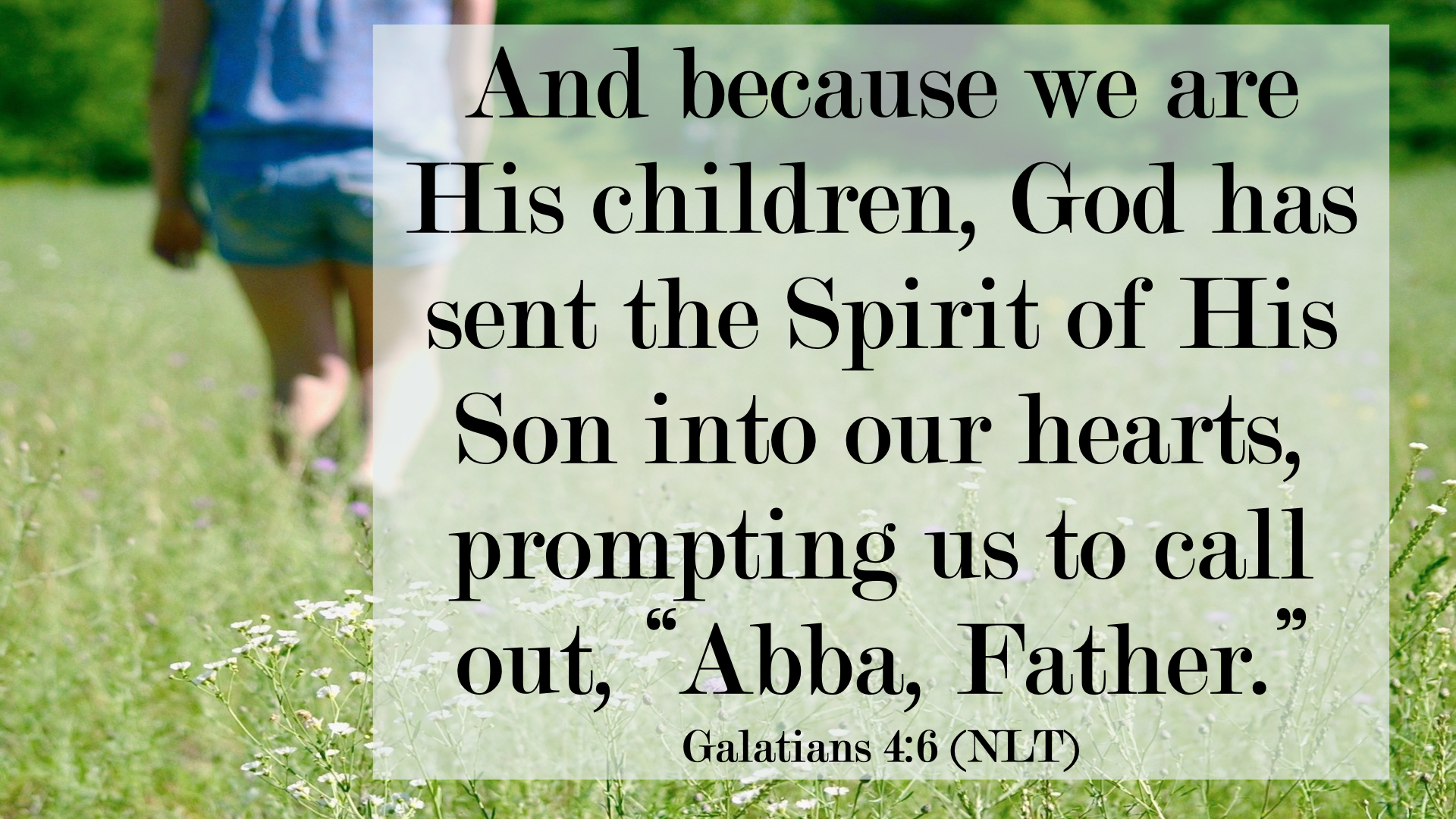
In His intense prayer time just before His crucifixion, Jesus used the phrase “Abba Father” to express His intimacy. This phrase is used two other times in the New Testament. Both of these times it’s telling us that we can approach our Heavenly Father the same way Jesus did (see Mark 14:36; Galatians 4:6; Romans 8:15).
The Romans understood the weight that was associated with the practice of adoption. They knew that a father chose that child to be a part of his family, giving that child full acceptance into the family. Marvin Vincent noted,
“We have but a faint conception of the force with which such an illustration would speak to one familiar with the Roman practice; how it would serve to impress upon him the assurance that the adopted son of God becomes, in a peculiar and intimate sense, one with the heavenly Father.”
In writing to the Romans, Paul reminds them that for those who are in Christ Jesus, there is no condemnation—nothing holding them back from God’s presence. He also said that God has fully adopted us into His family, and that the Holy Spirit was now in us, encouraging us to call God “Abba Father” just as Jesus did (Romans 8:1, 14-16).
Check out these two final thoughts from Jesus: He encourages us to approach God as innocent children, and He praises Our Father for then intimately confiding in His children—
“Truly I tell you, unless you change and become like little children, you will never enter the kingdom of heaven. … I praise You, Father, Lord of heaven and earth, because You have hidden these things from the wise and learned, and revealed them to little children.” (Matthew 18:3, 11:25)
No matter what your relationship was with your earthly father, Jesus encourages us to approach our Heavenly Father in innocence, wonder, expectation, imagination, and intimacy. This is what God desires in His relationship with you!
God made you uniquely YOU on purpose. So you can ask Him to show you why He put you together as He did—with all of the gifts that make you YOU. Please subscribe to my YouTube channel.
“It is best not to be too dogmatic about the events surrounding [Christ’s] second coming. But if language is a vehicle of thought at all, it certainly takes a good deal of explaining and interpreting to make anything else out of Jesus’ words than that He Himself looked forward to His coming again as a definite historical event in which He will personally and literally appear to gather to Himself and to eternal glory those who have been redeemed by His blood.
“And it is best not to cloud the hope of His coming with too detailed a theory as to what is going to happen when He comes. Some people may be disappointed if Jesus does not follow the schedule they have mapped out for Him.”
“The future doesn’t belong to the fainthearted; it belongs to the brave.” —Ronald Reagan
“We are not called to punish the people for whom Jesus was already punished.” —Kevin Berry
Daniel B. Wallace, a New Testament professor at Dallas Theological Seminary, wrote, “If you could stack up all handwritten manuscripts of the New Testament—Greek, Syriac, Latin, Coptic, all languages—how tall would the stack be? … I have said in many lectures that it would be the equivalent of c. 4 & 1/2 Empire State Buildings stacked on top of each other. How did I come up with that number?” Check out his post to read how he calculated this astounding number. This is just another link in the chain of evidence for the historicity of the Bible.
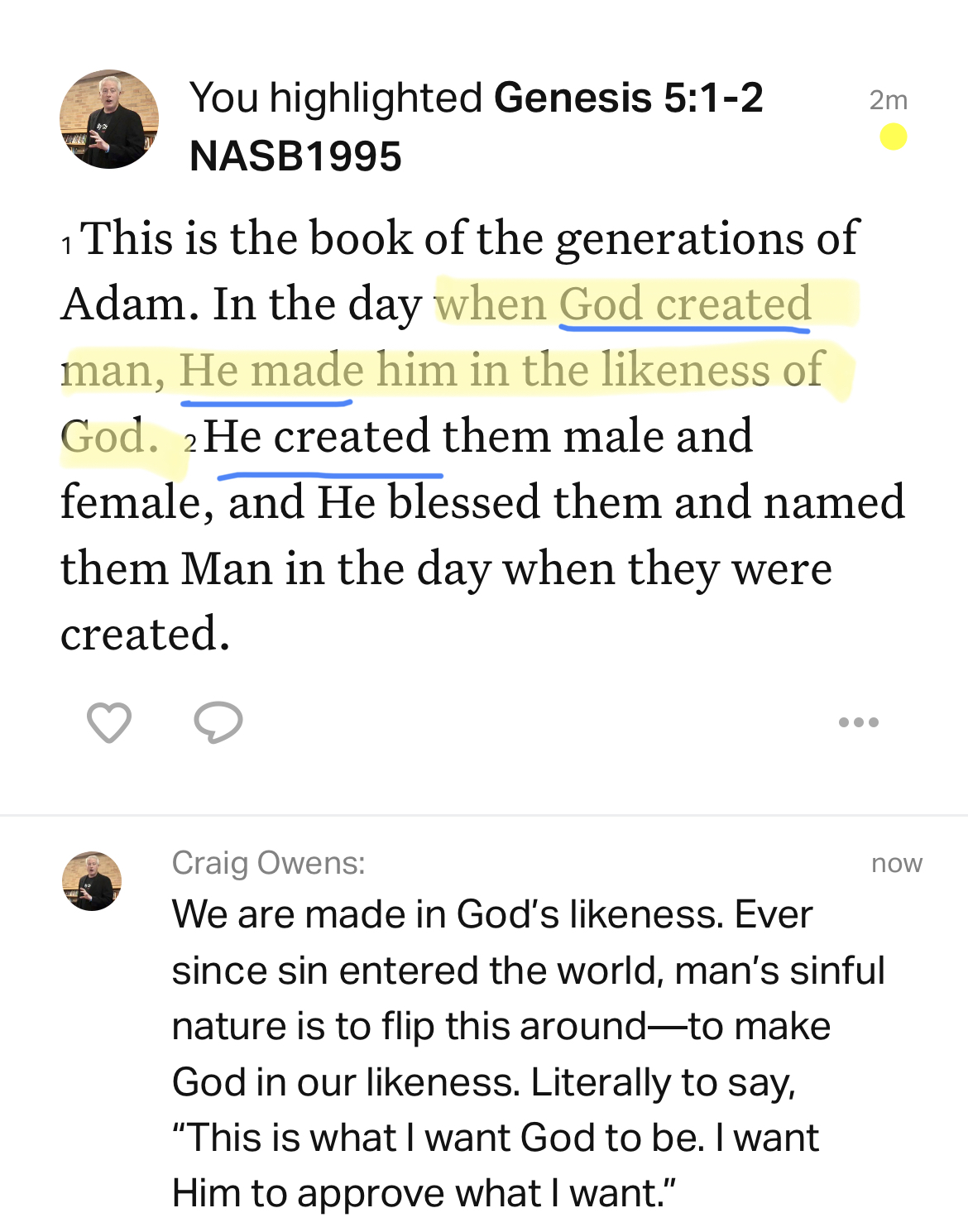
I shared this commentary on YouVersion this week: We are made in God’s likeness. Ever since sin entered the world, man’s sinful nature is to flip this around—to make God in our likeness. Literally to say, “This is what I want God to be. I want Him to approve what I want.”
“Pure humor is the most difficult of all of comedy. Late night humor is funny because it is mean. It is relatively easy to be crude, cynical, and sarcastic. It comes naturally to our fallen natures to criticize, tease, mock, and scoff. It’s much harder to make people laugh by lifting others up.” —Dick Brogden, in his book Proverbs: Amplified and Applied, commenting on Proverbs 1:22
Listen to the podcast of this post by clicking on the player below, and you can also subscribe on Apple, Spotify, or Audible.
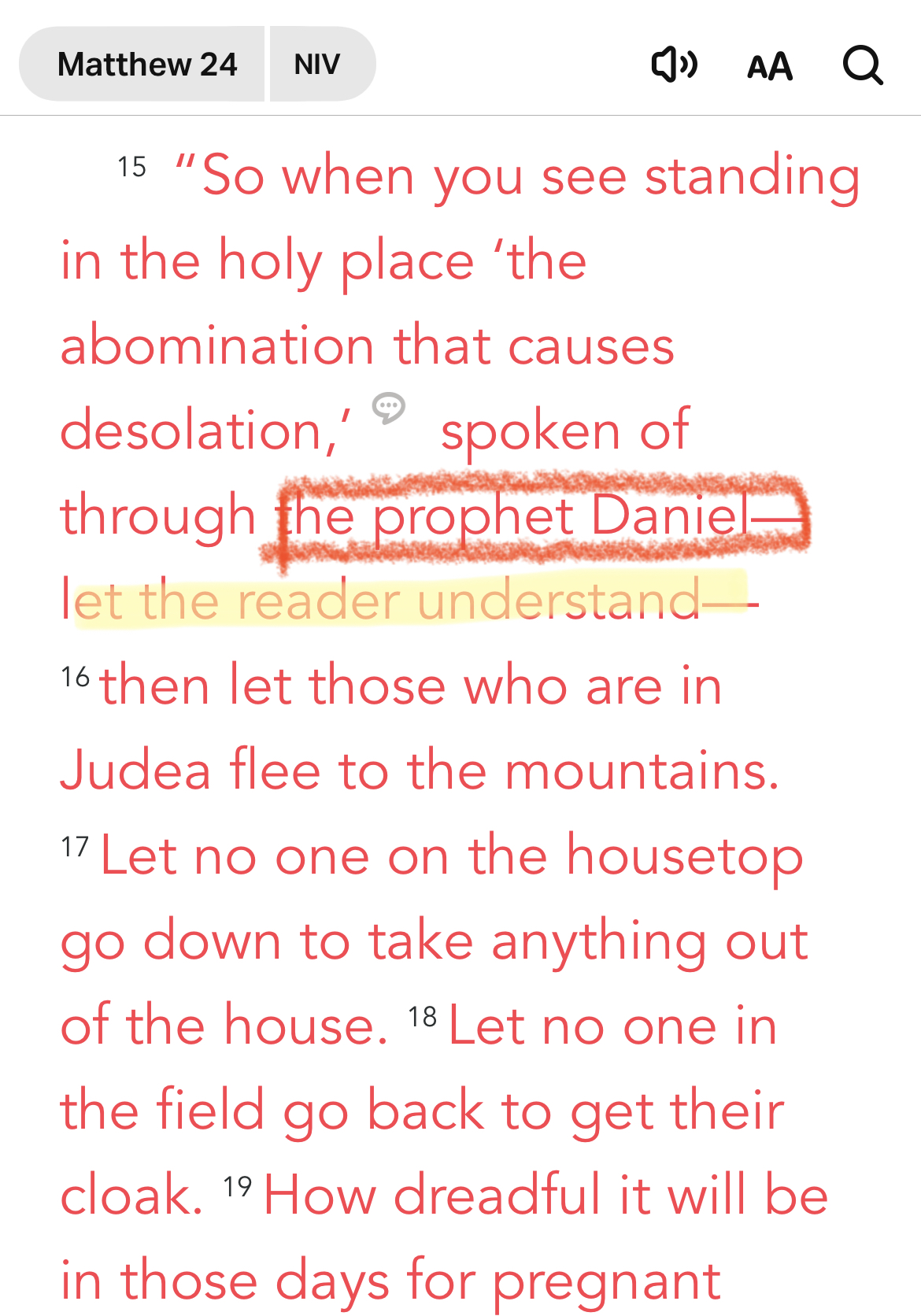
When Jesus said, “Let the reader understand,” He was saying He wants us to be able to understand and apply every Scripture we read. Check out this teaching video—
And although I didn’t mention it in the video, you can check out five different kinds of Bible studies I have shared here and here.
I’m excited to hear about your Bible study journey. If you have questions or other resources to share, please get in touch with me or leave a comment below.
Listen to the podcast of this post by clicking on the player below, and you can also subscribe on Apple, Spotify, or Audible.
The apostle Peter said he wrote two letters to the church “as reminders to stimulate you to wholesome thinking” (2 Peter 3:1). And Paul reminded his young friend Timothy to “keep reminding [your congregation] of these things” (2 Timothy 2:14).
In the spirit of those great apostles, I have made it a practice to take time at the end of each year to look back on all that we have learned in the previous year, and then to look forward to where God may be leading Calvary Assembly of God in this upcoming year.
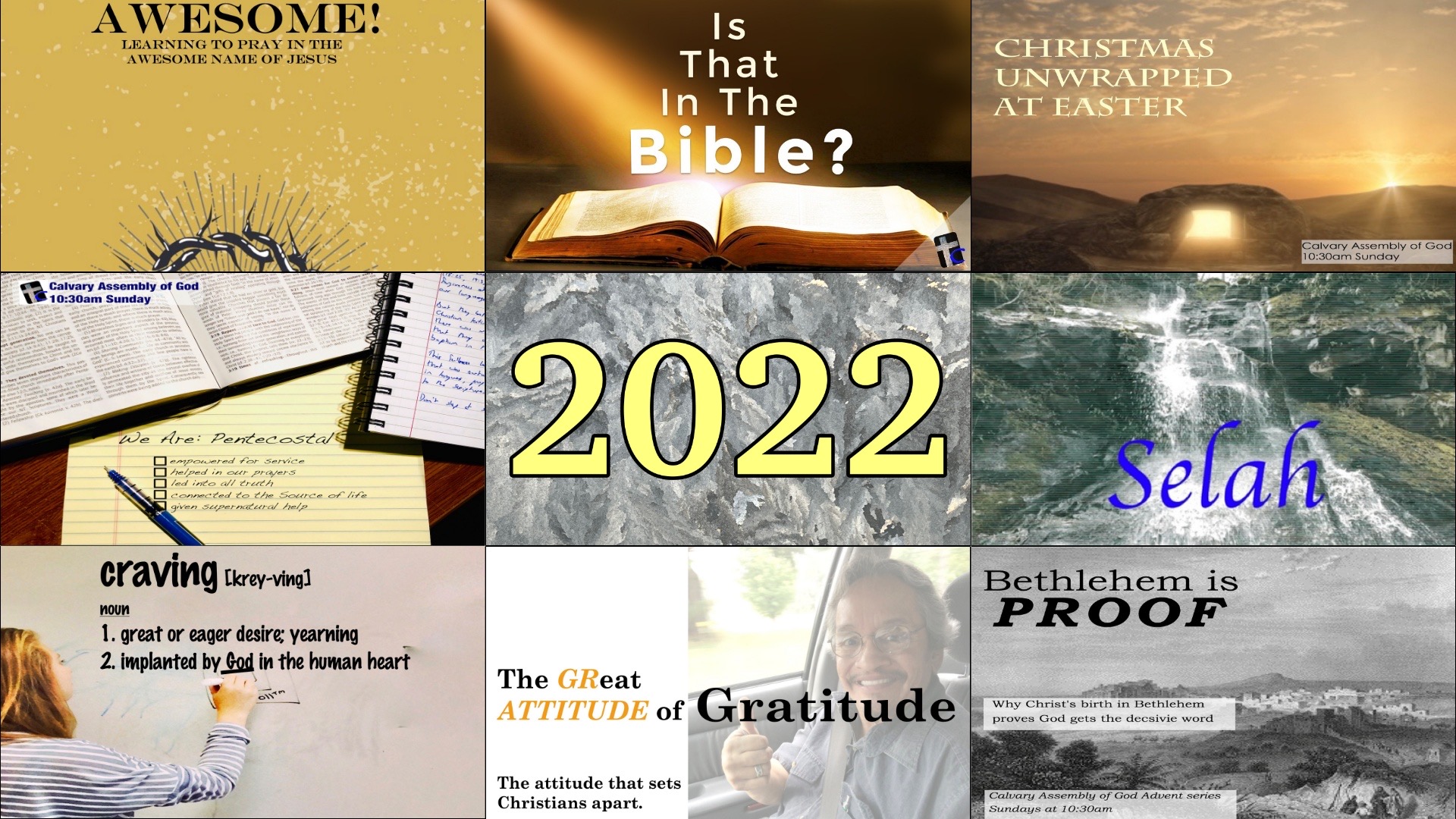
Clicking on each series title will take you to a list of all of the sermons in that series.
Awesome—Jesus told us that we could pray in His name and expect amazing things (see John 14:13-14, 15:16, 16:23-24). This does not mean that simply adding the phrase “in Jesus’ name, Amen” to the end of a prayer unlocks a secret code. Rather, it means that the more we understand just how awesome our Savior is, and that He is the Key to God’s storeroom, the more we will being to align our prayers with the will of God. Jesus desires for His Father’s glory to be seen on earth through the answers to our prayers. The writer of Hebrews opens his letter by reminding us that Jesus is “the radiance of God’s glory and the exact representation of His being, sustaining all things by His powerful word” (Hebrews 1:3).
Is That In The Bible? (part 1 and part 2)—A meme that makes me chuckle every time I see it is a “quote” attributed to Abraham Lincoln in which he says, “The problem with quotes found on the internet is that they are often not true.” (Not to spoil the joke for you, but unless Lincoln knew how to time travel to the future, I don’t think he knew about the modern internet! ). I love this meme because it captures something that so many people fall into: a quick acceptance of a statement without verifying its source or thinking through the implications of the statement’s truthfulness. I think you may be surprised to discover just how many phrases we call biblical aren’t, and how many phrases there are that we never realized are actually in the Bible.
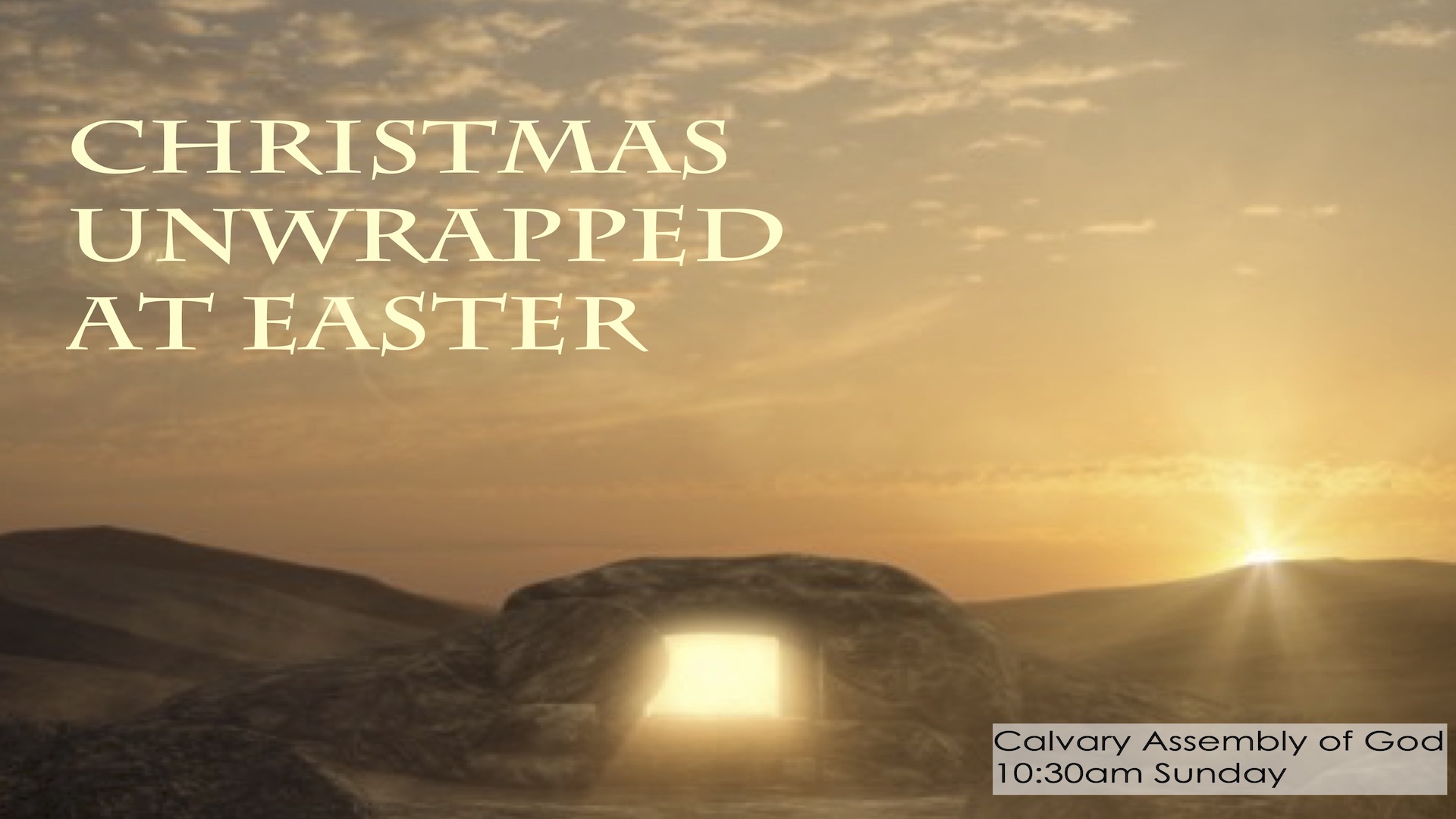
Christmas Unwrapped At Easter—Remember as a kid when you would unwrap a gift and discover it wasn’t something you really wanted, but then your parents explained that it was something you needed? The birth of Jesus in Bethlehem was a little like that—it wasn’t exactly what people were hoping for, but it was exactly what they needed. The real meaning of that Christmas gift wasn’t realized until after Jesus was crucified and resurrected back to life.
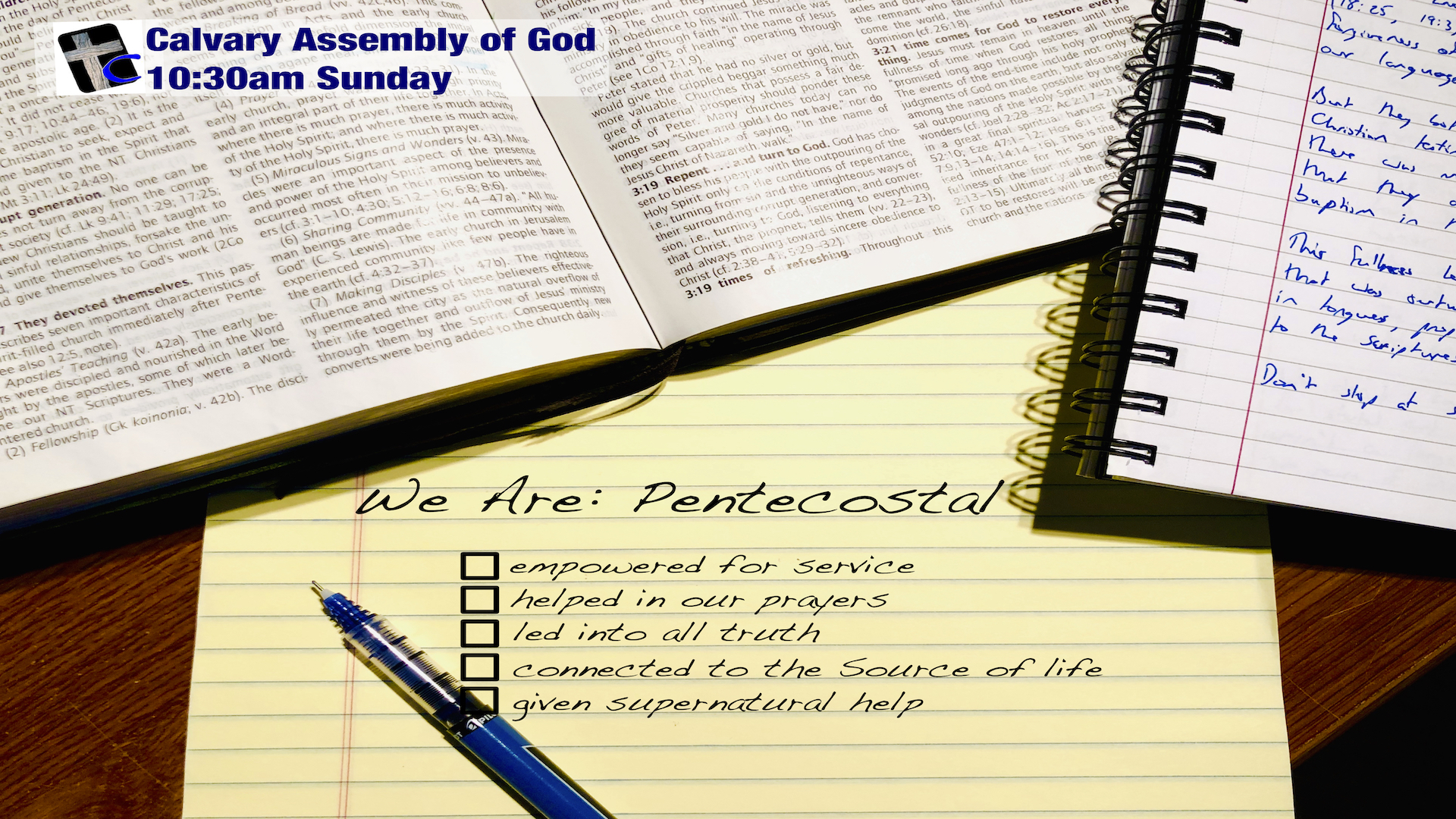
We Are: Pentecostal—Pentecost for over 1500 years was a celebration in Jerusalem that brought in Jews from all over the world. But on the Day of Pentecost that came just ten days after Jesus ascended back into heaven, the meaning of Pentecost was forever changed! Followers of Jesus—now empowered by an infilling of the Holy Spirit—began to take the good news of Jesus all over the world. These Spirit-filled Christians preached the Gospel and won converts to Christ even among hostile crowds, performed miracles and wonders, stood up to pagan priests and persecuting governmental leaders, and established a whole new way of living as Christ-followers. We, too, can be Pentecostal followers of Jesus Christ today.
Selah—The word Selah appears nearly 70 times in the Bible, almost exclusively in the Psalms. Although it is primarily a musical term, it applies beautifully to our summer series. It means a pause. Throughout the Psalms, Selah appears at the end of a verse, at the end of the psalm, or sometimes even mid-sentence. But each one of them is perfectly placed by the Spirit-inspired authors to get us to take a breath and deeply contemplate what we just read or sang.
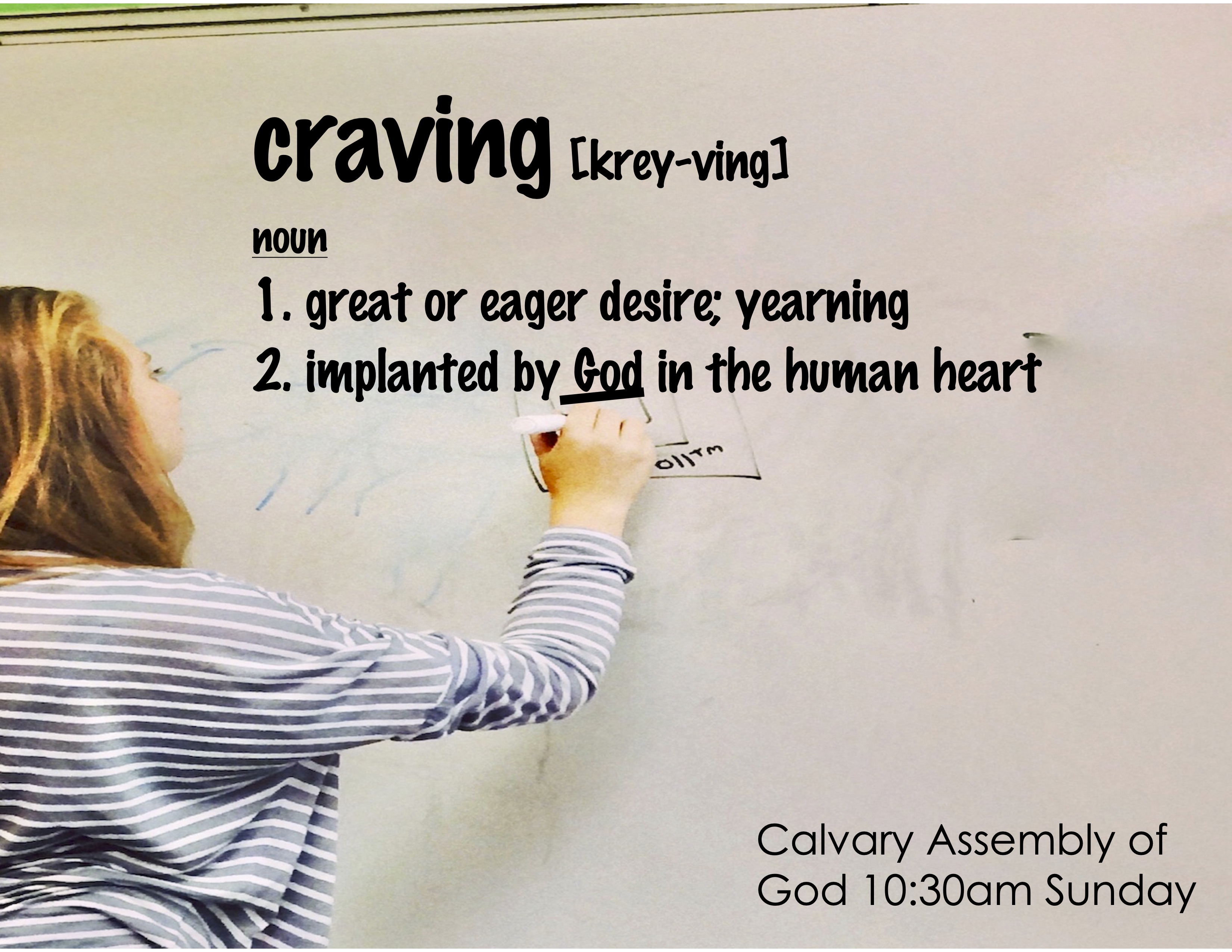
Craving—Doesn’t it seem like far too many Christians think of their relationship with Jesus as bland? After all, we’ve been told that any cravings we have should be quickly downplayed so that they don’t carry “good Christians” away. But what we discover in the Bible is that God made us to be craving creatures—He wants us to long deeply and find ultimate satisfaction for those longings. In short, God created us to long after the things that only He can fulfill. As we dive into this new series, I think you will find it quite eye-opening and heart-lifting.
The Great Attitude Of Gratitude—There’s something about gratitude that distinguishes people. Think about it: would you rather hang around with grumblers or grateful people? The gratitude of Paul and Silas certainly made them stand out from the crowd when they were in Philippi. Wrongly accused, beaten, and thrown in prison, but instead of bellyaching, they were praising God. Later on, when Paul wrote his letter to the Christians in Philippi, the theme of gratefulness permeates his letter. The distinguishing mark is actually in the title: The GReat ATTITUDE spells out GRATITUDE!
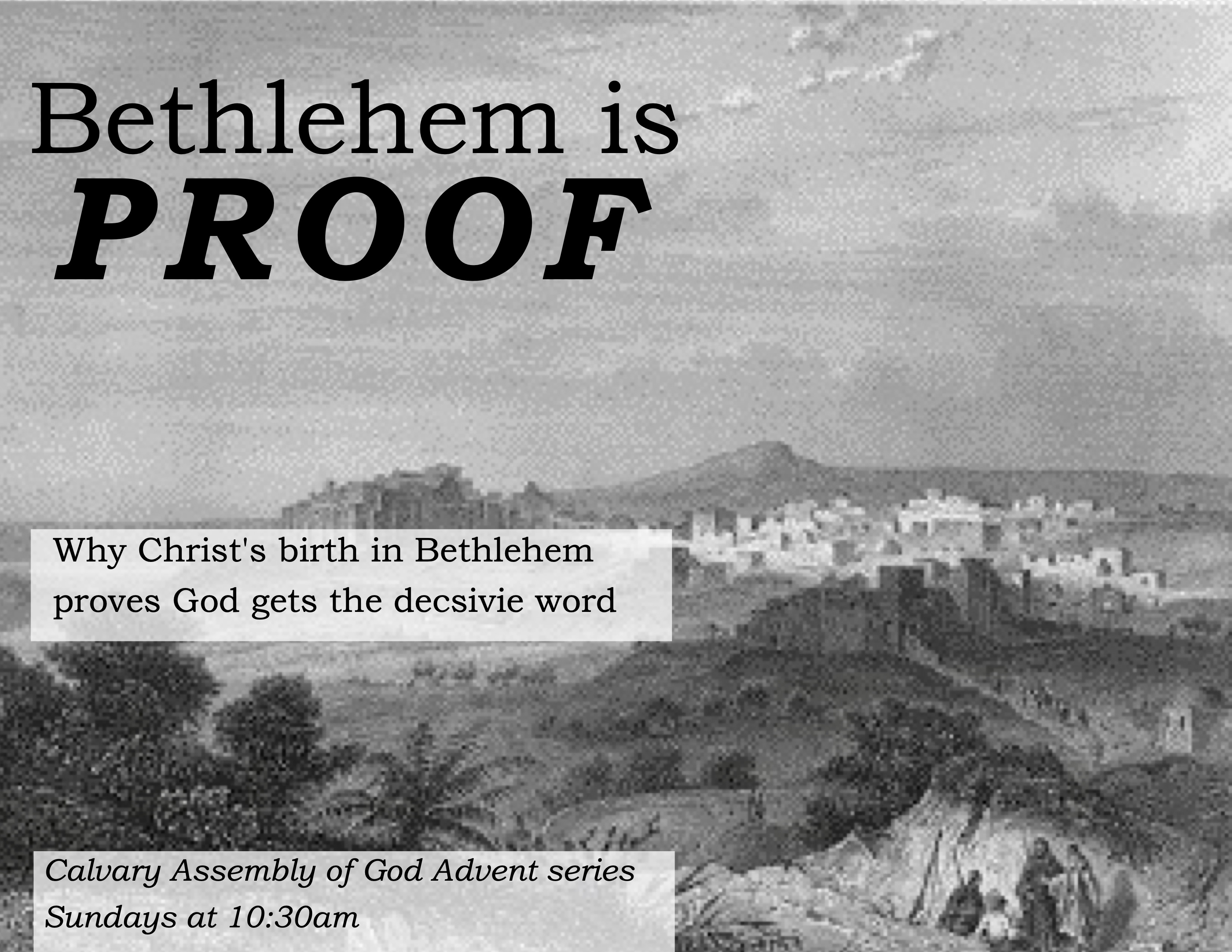
Bethlehem Is Proof—The prophet Micah foretells that the Messiah will arrive in dark times. Enemies will surround Israel, and Israel’s ruler will receive a nasty punch to the jaw. Demonic strongholds, witchcraft, and idolatry will appear to be gaining the upper hand. And then Micah turns his attention to a small village just south of Jerusalem—a village so small that it is often overlooked—a village from which no one would expect Israel’s Deliverer. And yet, Micah writes, “But you, Bethlehem Ephrathah, though you are small among the clans of Judah, out of you will come for Me One who will be Ruler over Israel, Whose origins are from of old, from ancient times” (Micah 5:2). Jesus the Deliverer was born in the little town of Bethlehem, and His birth there 700 years after Micah foretold it is our proof that God always gets the last word, the decisive word, and the best word!
We will be returning to a couple of these series in 2023, and we’ll be launching some brand-new ones as well. If you don’t have a home church in the northern Kent County area, I would love to have you join us!
Listen to the podcast of this post by clicking on the player below, and you can also subscribe on Apple, Spotify, or Audible.
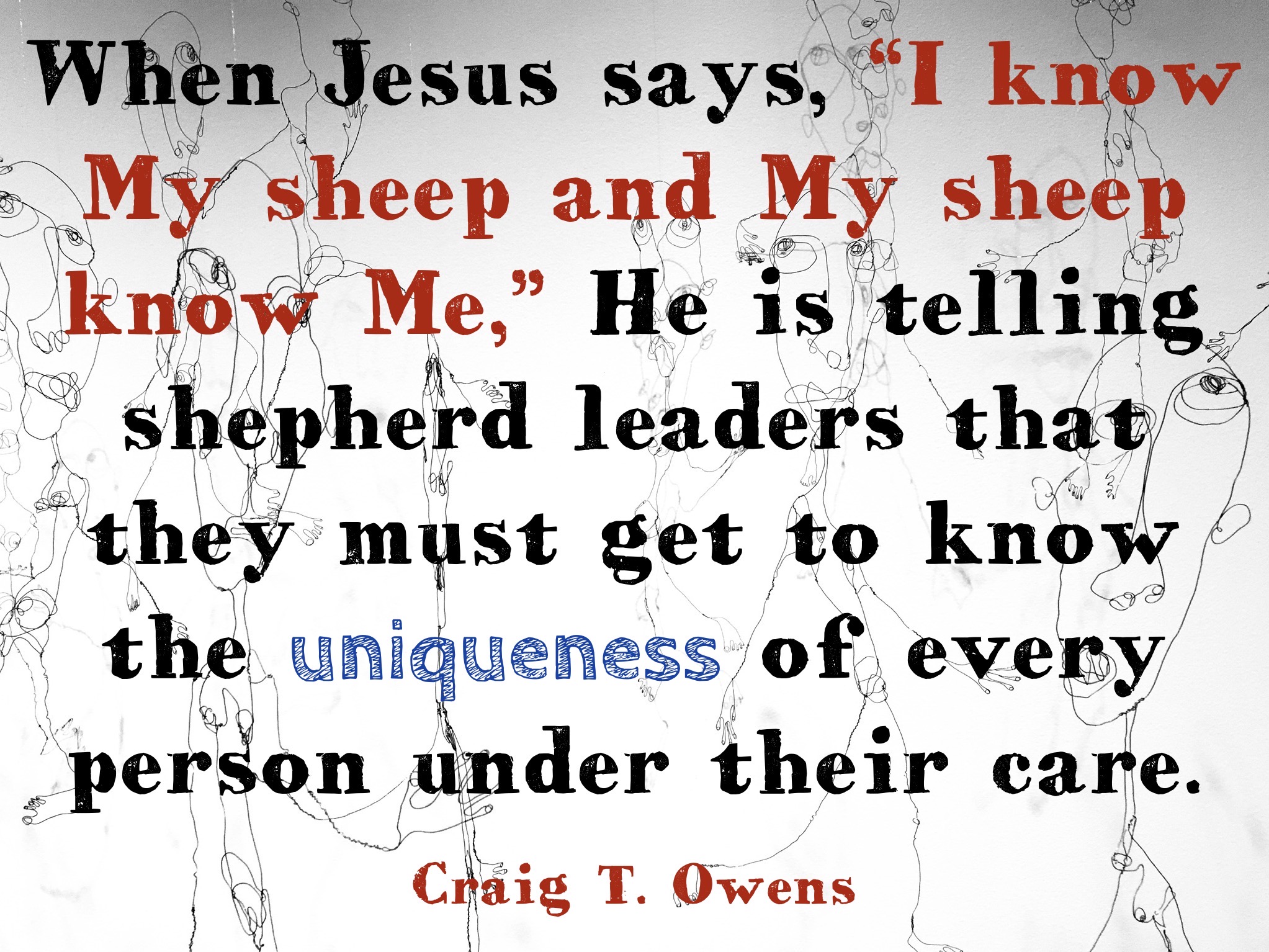
An interesting comment that Jesus made that should catch the attention of every leader is this: “I know My sheep and My sheep know Me” (John 10:14). Jesus is telling us that He knows the uniqueness of every person.
Combine this with David’s encouraging words about Jesus as our Good Shepherd in the opening words of Psalm 23, “The Lord is my shepherd; I have all that I need” (Psalm 23:1 NLT).
This tells me that quality shepherd leaders…
…are around their teammates enough to know them personally.
…can quickly ascertain when their teammates are feeling stress or anxiety.
…know how to give their teammates what they need to destress in a healthy way.
My friend Greg and I discussed how leaders can use playtime as an effective tool to keep their teammates at their healthiest. Check out this short clip—
If you would like to watch this full episode from The Craig And Greg Show, please click here.
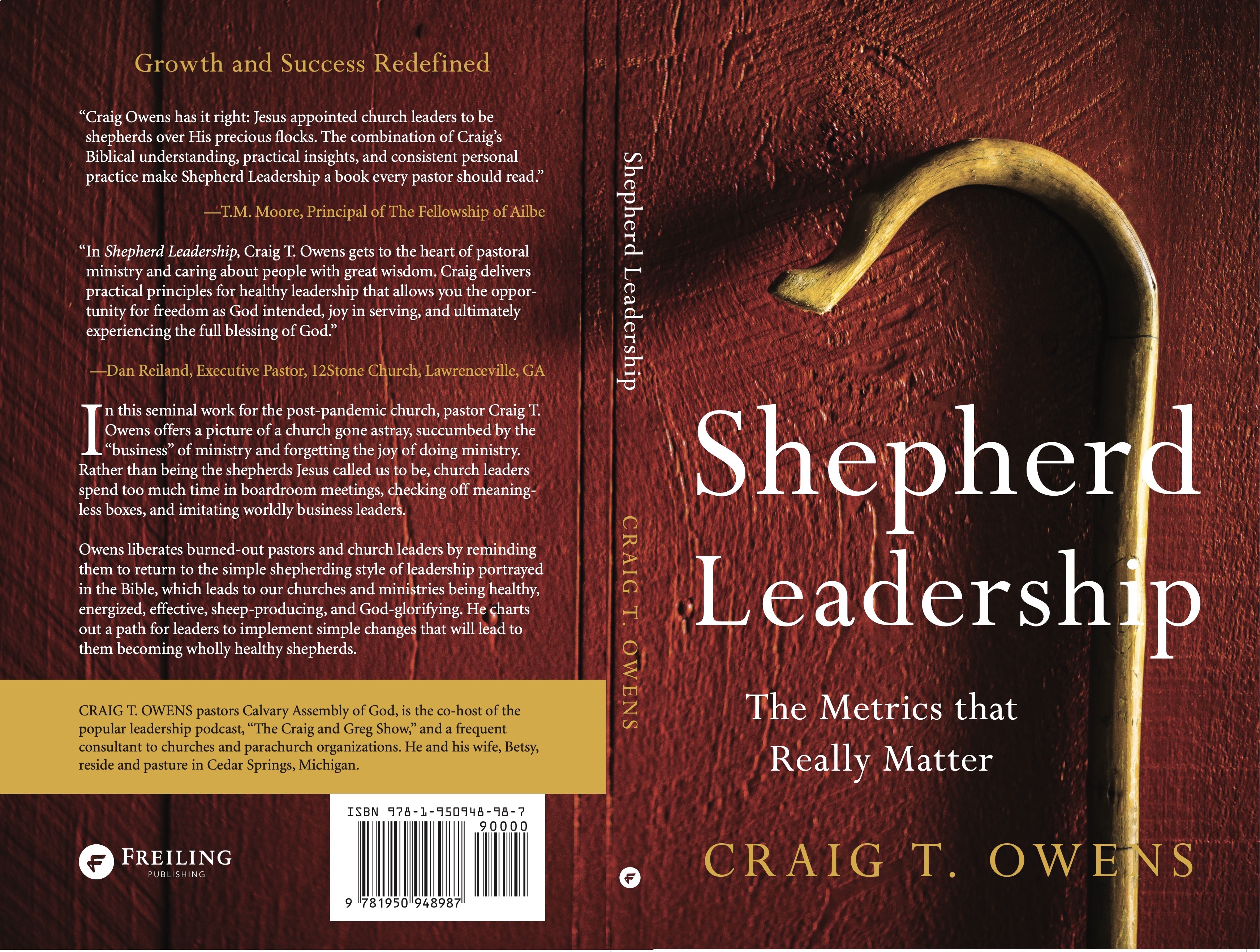
I also talk about how wise leaders take care of those under their care in my book Shepherd Leadership: The Metrics That Really Matter. It’s available in print or ebook, and in audiobook through either Audible or Apple.
Listen to the podcast of this post by clicking on the player below, and you can also subscribe on Apple, Spotify, or Audible.
Have you ever noticed how many of our Christmas carols celebrate the dark night giving way to the bright light? For instance, the hymn O Holy Night contains the line, “long lay the world in sin and error pining until He appeared.”
English historian and theologian Thomas Fuller was the first to put into print what has now become a cliché that so many people use: “It is always darkest just before the Day dawneth.” Indeed, Micah paints a very dark scene just before the Messiah makes His First Advent (Micah 5:1).
The Light of Jesus that burst onto planet Earth in a Bethlehem stable revealed Him as our Great Shepherd, our Prince of Peace, and our Mighty Deliverer. And there is also one more title that Micah foretells: our Triumphant King!
What does our Triumphant King do? He confronts and defeats the darkest foes. Check out the words in Micah 5:9-15: destroy (5x), demolish (2x), tear down, uproot, take vengeance.
Christ’s birth in Bethlehem is our proof that God’s plan prevails. God always gets the final word, the decisive word, and the best word!
Most of the Old Testament prophets foresaw both the first and second advents of Jesus simultaneously. The mountains of prophecy look like they are on top of each other, so it’s very common for the prophets to see events of both advents happening simultaneously. So Micah sees both the coming of Jesus in Bethlehem and His coming at the end of time as King.
There is a spiritual battle that has been raging since before Time began (Ephesians 6:12). It started when Lucifer became satan by his rebellion against God, and then he began his agenda of the destruction of God’s people (Ezekiel 28:12-17; Revelation 12:7-9, 13, 17).
Into this dark battle, Jesus enters the scene. The reason the Son of God was made manifest (visible) was to undo—destroy, loosen, and dissolve—the works the devil has done (1 John 3:8 AMP).
I already talked about how the death of Jesus on the Cross meant the death of Death, and Jesus became our Mighty Deliverer! The resurrection of Jesus means satan’s time is nearing an end. It may be dark now, but the darkness has to give way to the Light of the King of kings (check out these verses in Revelation).
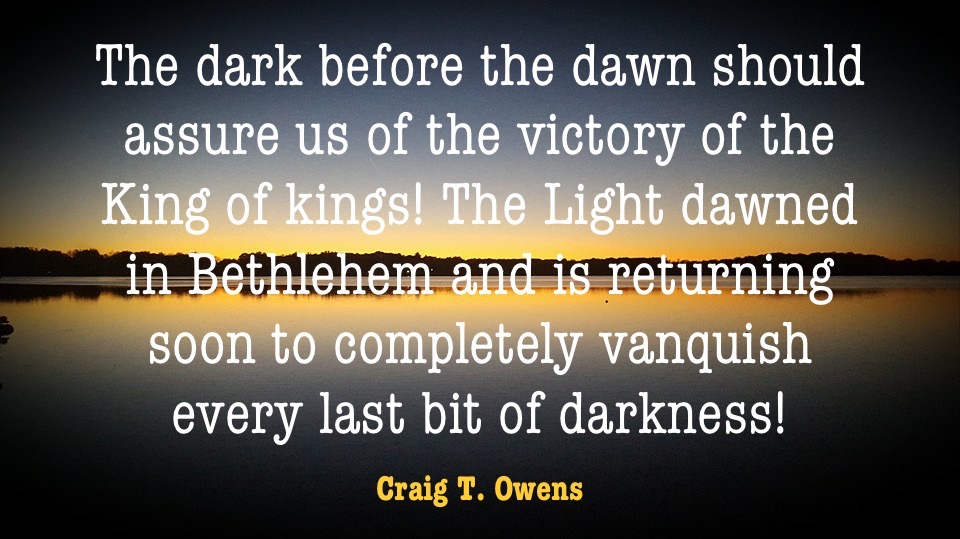
“It is always darkest just before the Day dawneth” should assure us of the victory of the King of kings! Jesus assured us that darkness is only afforded an hour, and then the Light will completely overwhelm it. The Light dawned in Bethlehem and is returning soon to completely vanquish every last bit of darkness!



 CEO stands for “chief executive officer” and usually designates the person who is at the top of the organization’s flowchart. Those who occupy that office frequently exhibit a top-down mindset, where everyone below them is only in that position to serve the CEO.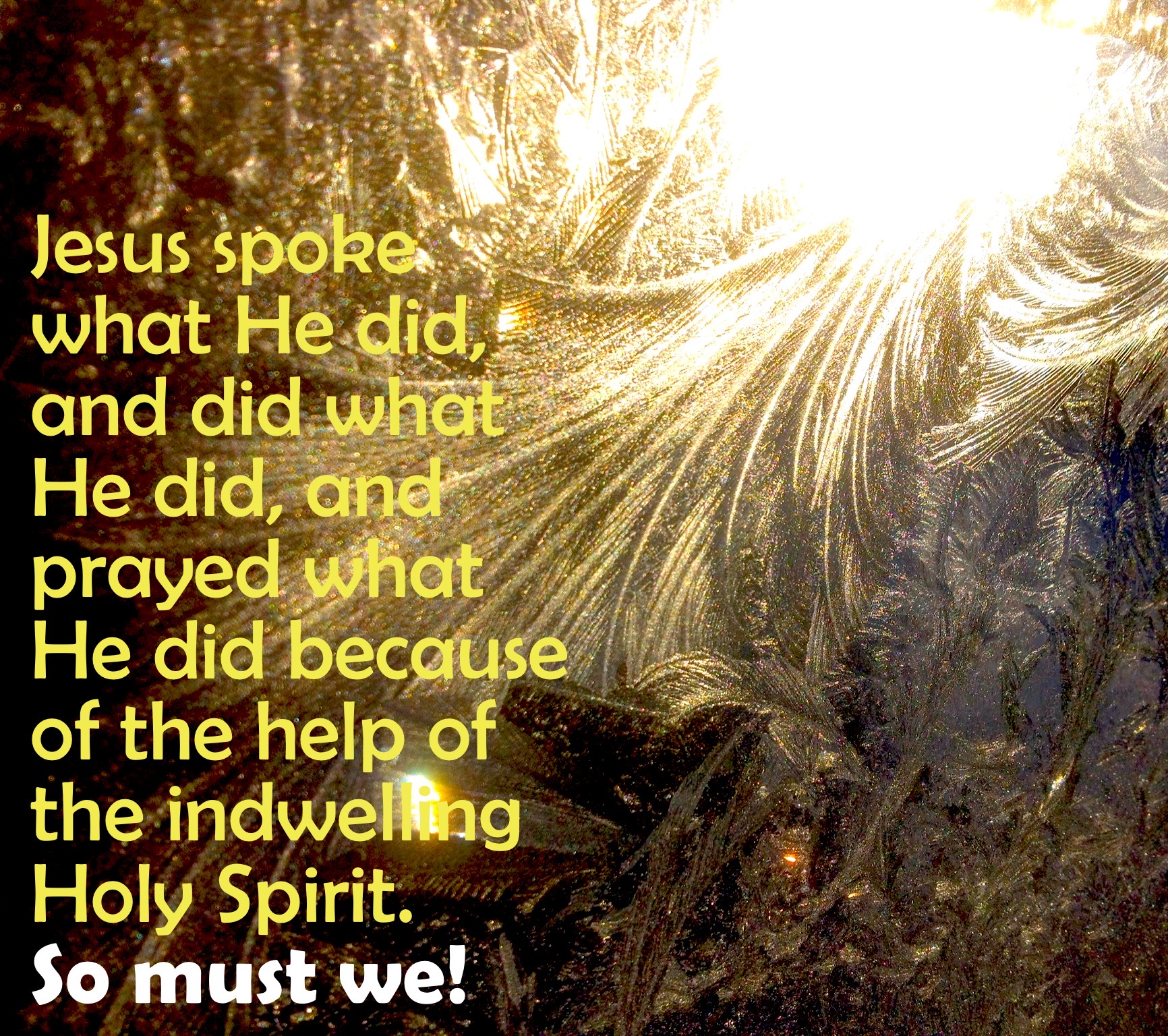




 ). I love this meme because it captures something that so many people fall into: a quick acceptance of a statement without verifying its source or thinking through the implications of the statement’s truthfulness. I think you may be surprised to discover just how many phrases we call biblical aren’t, and how many phrases there are that we never realized are actually in the Bible.