Thursdays With Oswald—Becoming A Real Saint

Oswald ChambersThis is a weekly series with things I’m reading and pondering from Oswald Chambers. You can read the original seed thought here, or type “Thursdays With Oswald” in the search box to read more entries.

Becoming A Real Saint

     The real life of the saint on this earth, and the life that is most glorifying to Jesus, is the life that steadfastly goes on through common days and common ways, with no mountain-top experiences. We read that John the Baptist “looked upon Jesus as He walked…”—not at Jesus in a prayer meeting or in a revival service, or Jesus performing miracles; he did not watch Him on the Mount of Transfiguration, he did not see Him in any great moment at all, he saw Him on an ordinary day when Jesus was walking in an ordinary common way, and he said, “Behold the Lamb of God!” That is the test of reality. …

     God’s purpose is to make us real, that is, to make us perfectly at one with all our own powers and perfectly at one with God, no longer children but understanding in our heads as well as in our hearts the meaning of the Redemption, and slowly maturing until we are a recommendation to the redeeming grace of our Lord Jesus Christ.

From The Philosophy Of Sin

Oh, how I want to be a real saint!

Not someone who only shines for Christ when I have a mountain-top experience, but one who shines brightly for Him every day, in every common setting. What an amazing thing for my life to be a recommendation to the redeeming grace of our Lord Jesus Christ!

Notes From The Global Leadership Summit

I had an amazing time last week at the Willow Creek Global Leadership Summit. Every year I came away with some many thoughts, and a brand new passion for the various leadership roles in which I get to serve.

Below are just a few of my notes that I jotted down during an intense two days.
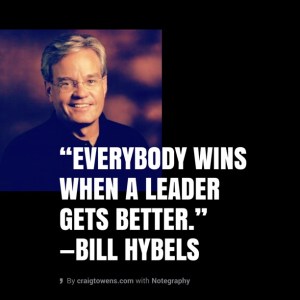
Hybels - everybody winsBill Hybels—The Lens Of Leadership

“Everybody wins when a leader gets better.”

“Armed with enough humility, leaders can learn from anyone.”

Hybels discussed four leadership lenses:

1.   Passionate leader (depicted by vibrant bright red frames)

  • They understand unbridled passion in leadership.
  • “Passion is like protein for the team.”
  • A motivated worked will outperform an unmotivated worker by 40%.
  • People are more motivated by working for a passion-filled leader than they are by compensation or perks.
  • Passion comes from a mountain-top dream, or a valley-deep frustration of current settings.

2.   People leader (cool frames, but cracked lenses)

  • An organization will only be as healthy as the top leader wants it to be.
  • This world needs more pastors of businesses, factories, medical offices, military units, etc.

3.   Performance leader (self-adjusting glasses)

  • Leaders ask: what progress should be made? how do we measure this? what doesn’t need to be measured?
  • Every worker wants to know how they are doing. For the leader, it’s cruel to hire someone and never let them know how they’re doing. Every staff member should get an update at least every six months.

4.   Legacy leader (sunglasses with a rearview mirror [cyclist])

  • Every once in awhile we need to look behind to see what legacy we’re leaving behind.
  • Leaders should reflect on this annually.
  • If my leadership assignment were to end today, what legacy would I leave?
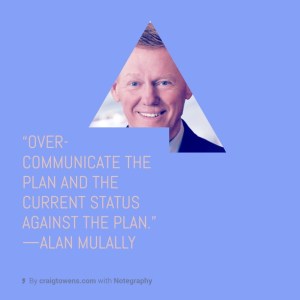
Mulally - overcommunicateAlan Mulally—CEO Boeing and Ford Motor Company

An average commercial airline has 4 million parts!

  • People first
  • Include everyone
  • Create a compelling vision
  • Present a workable strategy
  • Set clear performance goals
  • Relentless implementation
  • Share lots of data
  • “Over-communicate the plan and the current status against the plan.”
  • Instill a positive can-do attitude
  • Keep your emotional resilience
  • Have fun


Melinda Gates - hear the criesMelinda Gates—Gates Foundation

Melinda says of herself, “I am an impatient optimist. We are changing the world, but we need to change it faster.”


“At the end of the day, you have to hear the cries of those in need, let your heart break and act in courage.”

Jossy Chacko—Empart

“All of us have been entrusted with something. What are we doing to leverage it?”

In thinking about the parable of the talents … “To Jesus, faithfulness is not just sitting with what you have been given, but multiplying what you have been given. God’s mission is not maintaining.”

“Playing it safe is not enough for a follower of Jesus Christ.”

Three principles for expanding our leadership reach:
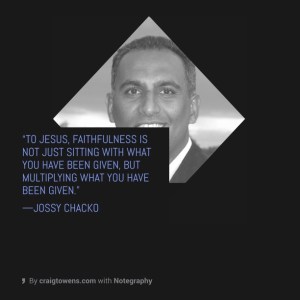
Jossy Chacko - faithfulness1. Enlarge your vision

  • “When people hear my vision, they should know the size of my God.”
  • “An enlarged vision should keep us driven.”
  • “Do not be confused about what people say about your vision; trust what God has said to you.”

2. Empower your people

  • “Leadership is about taking wise chances and giving people opportunities.”
  • “Your leadership reach will be determined by your empowerment choices.”
  • Three things to keep in mind: (1) Focus on building their character before empowering them; (2) Empowerment has to be through relationship; and (3) Make sure we have agreed on the right outcomes, and have the right way to measure them.

3. Embrace risk

  • Faith = risk. Without faith it is impossible to please God = without taking risks it is impossible to please God.
  • Paradigms to be changed: (1) See risk as your friend to love, not as your enemy to be feared; (2) See comfort and safety as your enemies; and (3) Increase your pain threshold.
  • “Your leadership capacity is in direct relationship to your pain threshold.”
  • “Don’t allow the fear of losing what we have to lose what God has in store for you.”
  • “By me not taking risks, who is missing out?”
Bradberry - EQDr. Travis Bradberry—TalentSmart

All inputs into the brain travel through the limbic system first (emotional center) before the inputs travel to the frontal cortex. The EI (emotional intelligence) center is in the front of the brain, just above the left eye.

Only 36% of people are able to accurately identify their emotions as they happen.

EQ (the Emotional Quotient that measures emotional intelligence) is not IQ.

EQ can be improved all throughout life.

Four components of emotional intelligence:

 1. Self-awareness: knowing my emotions, and knowing my tendencies. I need to lean into my discomfort if I want to improve.

   2. Self-management: what I do with this increased self-awareness. This is not “stuffing” my feelings. The biggest mistake is only trying to manage negative emotions; positive emotions need to be managed too.

   3. Social awareness: focusing more on others than on myself.

   4. Relationship management: using the first three skills in concert. Seeing how my behavior is affecting the other person, and then adjusting accordingly.


How to increase my EQ:

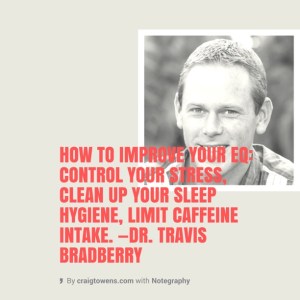
  1. Control stress—stress under control is healthy; chronic stress is unhealthy. Gratitude reduces the stress hormone cortisol.
  2. Clean up my sleep hygiene—sleep cleans up toxic hormones in the brain. To get better sleep: (1) Don’t take any kind of sleeping pill; and (2) Reduce “blue lights” in the evening.
  3. Reduce my caffeine input—especially after noon.
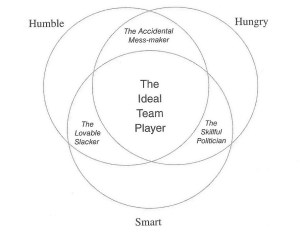
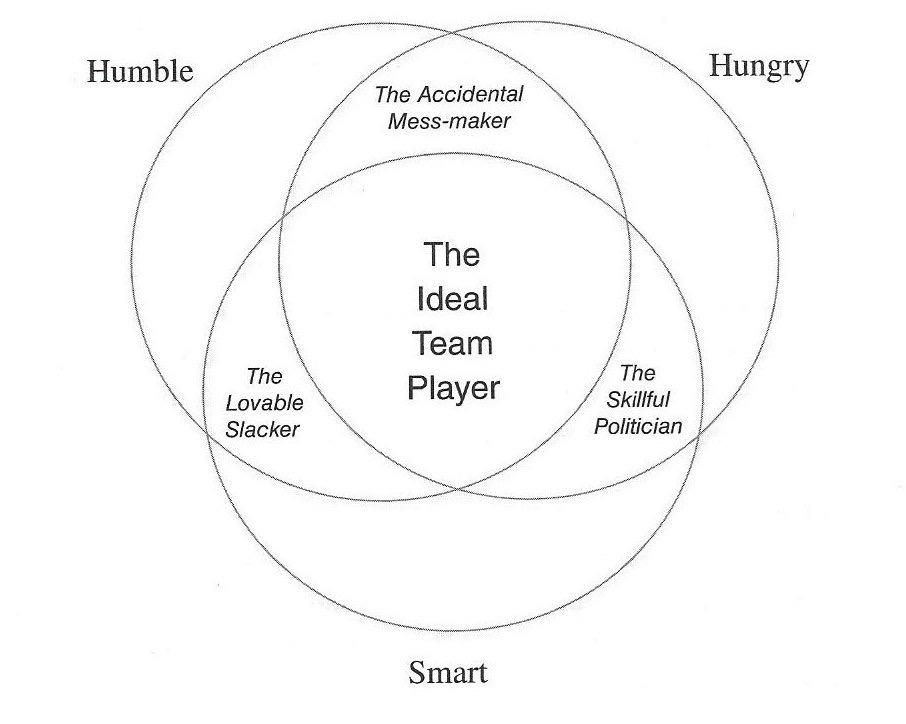
Ideal team playerPatrick Lencioni—Author

Three qualities of an ideal team player:

1.   Humble

  • Lacking self-confidence is not humility.
  • “Denying skills and downplaying abilities is not humility.”

2.   Hungry

  • Strong work ethic
  • Driving hard

3.   Smart

  • Not intellectual smarts, but people smarts = EQ

“To develop people, we have to have the courage to humbly and constantly talk to people about their ‘stuff.’”
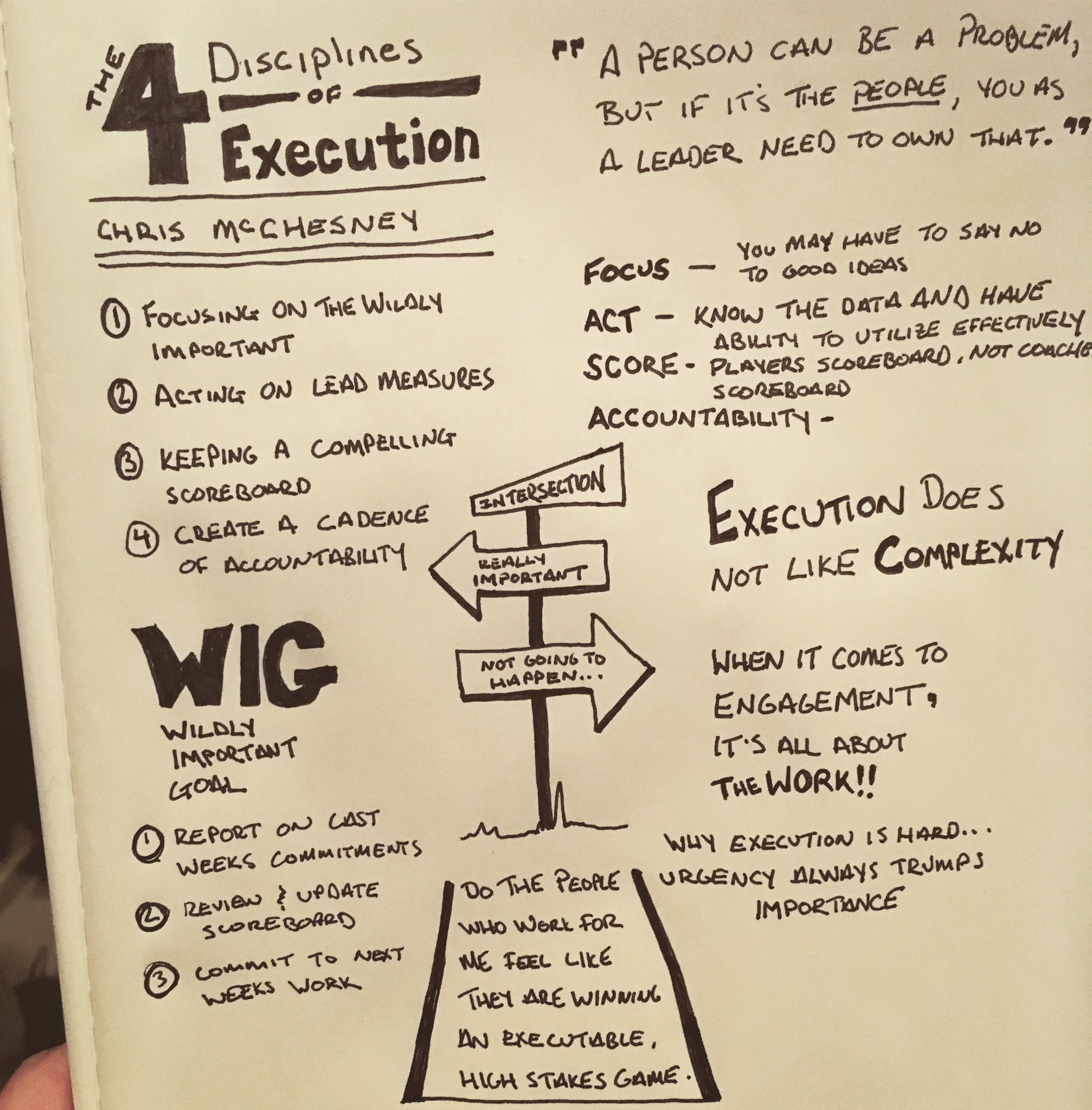
McChesney - execution disciplinesChris McChesney—Franklin Covey

Rahm Charan asked:

  • Q: Do leaders struggle more with strategy or execution? A: Execution.
  • Q: Are leaders more educated in strategy or execution? A. Strategy.

“The hardest thing a leader will ever do is drive a strategy that changes someone’s behavior.”

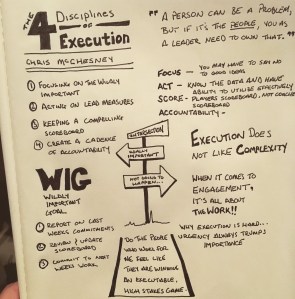
There are four disciplines for making changes in human behavior:

1.  Focus

  • “Focus on the wildly important.”
  • If a team focuses on 2-3 goals, they are likely to get them done. But if there are 4-10 goals, momentum is killed. At 11+ goals, the team is going backward.
  • We narrow the focus by coming up with a WIG: wildly important goal (this lives at the intersection of ‘really important’ and ‘not going to happen’).

2.  Leverage

  • “What are the fewest number of battles necessary to win the war?”
  • “When you want to go big, don’t think big, think narrow.”
  • One WIG per team at the same time. Everything else is in sustainment mode.
  • Make goals like this—“From x to y by when.”

3.  Engagement

  • “The biggest driver of engagement is when people feel like they’re winning.”
  • “Do the people who work for me feel like they’re playing a winnable game?”

4.  Accountability

  • Everyone needs to answer: “What are the things I do that have the biggest impact on the WIG?”
  • After sharing the scoreboard, allow people to determine what they need to do next. The people need to determine their own next moves, not the leader. The leader pulls this out of people.
Erin Meyer - contextErin Meyer—INSEAD

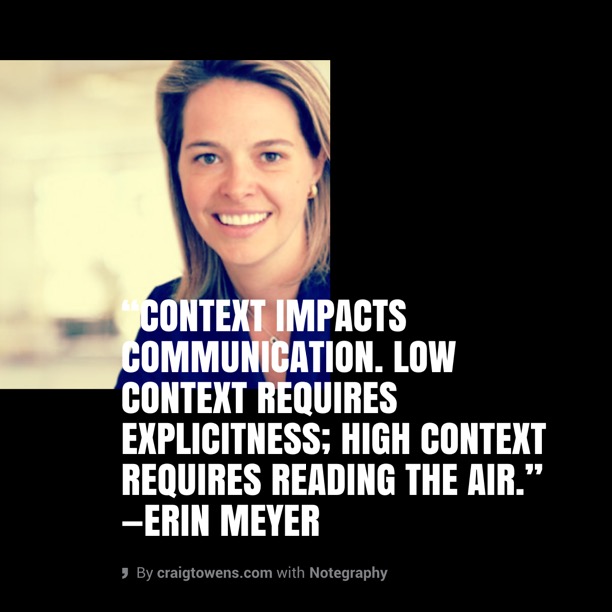
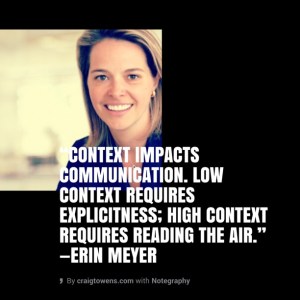
On The Culture Map communication is divided into Low vs. High Context:

  • Low = feel we don’t have the same context or relationship. We feel we need to explain things very simply and explicitly.
  • High = we assume we have a larger body of shared reference points. We feel communication is more implicit or nuanced.

Anglo-Saxon countries are typically low context.

Latin American are mid-low.

Asian countries are usually high context.

In low context we tend to nail things down in writing, where in high context we leave things more open to later interpretation.

“Context impacts communication. … We need to read both the messages ‘in the air’ as well as the explicitly stately messages.”

“In a high context culture, repeat things less, ask more questions, learn to ‘read the air.’”
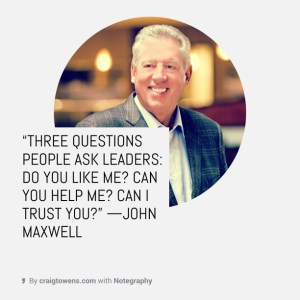
 

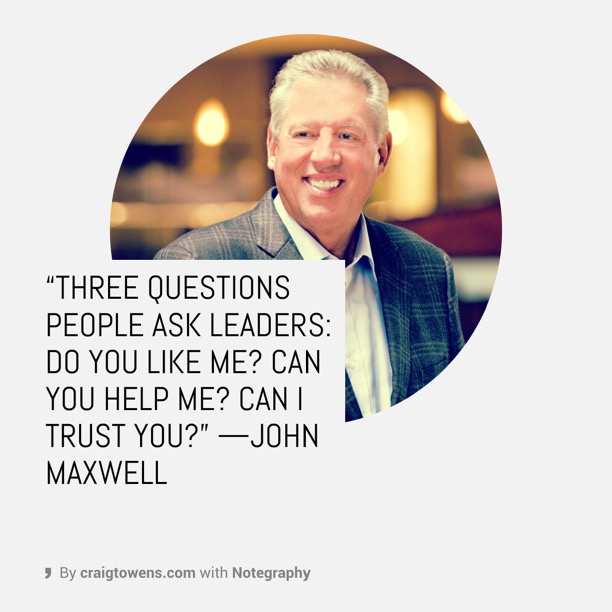
Maxwell - 3 questionsJohn Maxwell—Author 

“Good leaders lift.”

“You have to find the people before you lead the people.”

“The one thing leaders have to get right—they must intentionally add value to people every day.”


Five things that intentionally adds value to people:

  1. Value people—“God values people I don’t know; He even value people I don’t like.” “Are we going to spend our lives connecting with people, or correcting them?”
  2. Think of ways to add value to people—“Intentional living is thinking upfront on how to help people.”
  3. Look for ways to add value to people.
  4. Do things that add value to people.
  5. Encourage others to add value to people.

If you attended the GLS, please share in the comments below something amazing / challenging / paradigm-busting that you learned. Let’s all keep on learning!

Thursdays With Oswald—Are You Self-Made Or God-Made?

Oswald ChambersThis is a weekly series with things I’m reading and pondering from Oswald Chambers. You can read the original seed thought here, or type “Thursdays With Oswald” in the search box to read more entries.

Are You Self-Made Or God-Made?

     It is possible to be perfectly real to ourselves but not real to God; that is not reality. It is possible to be perfectly real to ourselves and real to other people, but not real in our relationship to God; that is not reality. The only reality is being in harmony with ourselves and other people and God. That is the one great reality towards which God is working, and towards which we are working as we obey Him. … 

     The critical moment in a man or woman’s life is when they realize they are individually separate from other people. When I realize I am separate from everyone else, the danger is that I think I am different from everyone else. Immediately I think that, I become a law to myself; that means I excuse everything I do, but nothing anyone else does. ‘My temptations are peculiar,’ I say; ‘my setting is very strange; no one knows but myself the peculiar forces that are in me.’ … This sense that I know what other people do not know, that I have a special intuition that tells me things, is even more dangerous than the sense of individualism because it leads to spiritual deception in a religious nature and to hard intellectual conceit in a natural nature. … 

     Self-realization naturally cares nothing about God, it does not care whether Jesus lived or died or did anything at all. For ourselves we live and for ourselves we die; that is self-realization that leads to death and despair; it is absolutely and radically opposed to Christ-realization. True self-realization is exhibited in the life of Our Lord, perfect harmony with God and a perfect understanding of man; and He prays “that they may be one, even as We are one.” … 

     God’s purpose is to make us real, that is, to make us perfectly at one with all our own powers and perfectly at one with God, no longer children but understanding in our heads as well as in our hearts the meaning of the Redemption, and slowly maturing until we are a recommendation to the redeeming grace of our Lord Jesus Christ.

From The Philosophy Of Sin

Oswald Chambers says we have a choice: Will we try to be a self-made man or woman, OR will we allow the Holy Spirit to make us a God-made man or woman? Only the second option puts us in touch with ourselves, others, and God.

10 Quotes From “The Psychology Of Redemption”

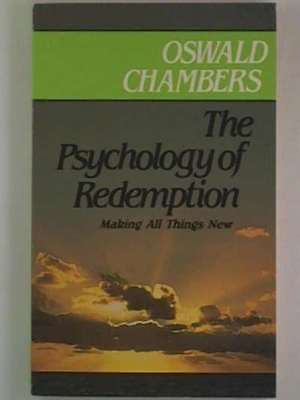
The Psychology Of RedemptionOswald Chambers always gives me a paradigm-expanding look at the Bible and Christianity. In The Psychology Of Redemption (see my book review here), he does so in a unique way, by joining psychology and theology. Here are just a few of the many, many passages I highlighted in this fascinating book.

“Christian Psychology is the study of a supernatural life made natural in our human life by the Redemption.” 

“Sin dwells in human nature, but the Bible makes it very clear that it is an abnormal thing, it has no right there, it does not belong to human nature as God designed it. Sin has come into human nature and perverted and twisted it. The Redemption of God through our Lord Jesus Christ delivers human nature from sin, and then begins the possibility of the manifestation of the life of Jesus in our mortal flesh. We are saved by God’s grace, but, thank God, we have something to do. We must take care to meet God’s supernatural work of grace by our human obedience.”

“The vital relationship which the Christian has to the Bible is not that he worships the letter, but that the Holy Spirit makes the words of the Bible spirit and life to him.” 

“The practicing is ours, not God’s. God regenerates us and puts us in contact with all His divine resources, but He cannot make us walk according to His will. If we will obey the Spirit of God and practice through our physical life all that God has put in our hearts by His Spirit, then when the crisis comes we shall find that we have not only God’s grace to stand by us but our own nature also, and the crisis is passed without any disaster, but exactly the opposite happens, the soul is build up into a stronger attitude towards God.”

“Jesus Christ sets the standard of God’s life in us. We have not to ask what good men have experienced, but to go direct to the Lord Jesus Christ and study His exhibition of the character of God’s normal man.”

“When Christ is formed in us, we are a satisfaction to our Lord and Master wherever He places us. The point of importance is to know that we are just exactly where He has engineered our circumstances. There is no ‘foreign field’ to our Lord.”

“Another evidence of new birth is that we see the rule of God. We no longer see the haphazard of chance for fate, but by the experience of new birth we are in able to see the rule of God everywhere. … We all see the common occurrences of our daily life, but who amongst us can perceive the arm of the Lord behind them? The saint recognizes in all the ordinary circumstances of his life the hand of God and the rule of God, and Jesus says we cannot do that unless we are born from above. … Nothing happens by chance to a saint, no matter how haphazard it seems. It is the order of God.”

“The Sermon on the Mount is a statement of the life we will live when the Holy Spirit is getting His way with us.”

“We have to nourish the life of the Son of God in us, and we do it by obedience, that is, by bringing our natural life into accordance with His life and transforming it into a spiritual life.”

“The curse of much modern religion is that it makes us so desperately interested in ourselves, so overweeningly concerned about our own whiteness. Jesus Christ was absolutely interested in God, and the saint is to be a simple, unaffected, natural human being in dwelt by the Spirit of God. If the saint is paying attention to the Source, Jesus Christ, out of him and unconsciously to him are flowing the rivers of living water wherever he goes (John 7:37-39). Men are either getting better or worse because of us.”

To read more Oswald Chambers quotes, you may want to subscribe to my blog. Every Thursday I publish a lengthy passage from the current Chambers book I am reading. You can subscribe by simply filling in your email address in the blank on the right side of the screen.

I also share Oswald Chambers quotes frequently on both Twitter and Tumblr.

The Psychology Of Redemption (book review)

The Psychology Of RedemptionTo put psychology (a social science) and redemption (a decidedly theological term) together in the same title seems a bit paradoxical. Yet Oswald Chambers was such a well-rounded, well-studied man, that The Psychology Of Redemption seems like a perfect topic for him to tackle!

Chambers himself described these collection of thoughts this way: “Christian Psychology is based on the knowledge of the Lord Jesus Christ, not on the knowledge of ourselves. It is not the study of human nature analyzed and expounded, but the study of the new life that is born in us through the Redemption of our Lord, and the only standard of that new life is our Lord Himself.”

Chambers goes on to explain in this outstanding work that our true self was marred when Adam sinned. We were made by God, so we can best understand ourselves (psychology) when we are reestablished in our original relationship with God (redemption). So the topics that Oswald Chambers goes into in this book are some of the deepest topics of any I have read to-date in his books. But he does it in such an accessible way, that anyone from a novice, to a trained psychologist, to a trained theologian will find value in his thoughts.

Editor David Lambert further advises us: “To profit by this book demands concentrated thought, with Bible in hand, and with a humble eagerness to ‘act on the Word, instead of merely listening to it and deluding yourselves’ (James 1:22).’”

Chocolate Or Bullets?

Corrie ten Boom tells a short story with a profound lesson in her book I Stand At The Door And Knock.

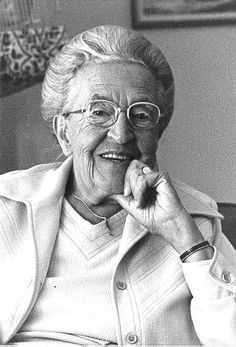
Corrie ten Boom“At the beginning of World War II there was a young man in one of my clubs who had to serve in the military. He and his father ran a bakery and confectionery. He was a cheerful lad. One night he and the other soldiers were called to march out immediately. ‘War has broken out,’ they said. He didn’t believe it at all and thought, ‘It will be another of those boring maneuvers.’ So he quickly put some bars of chocolate in his ammunition bag instead of ammunition. That’s how he wanted to cheer up his comrades, because they had been called out in the middle of the night. In the fields he realized that it really was war. Fortunately his superiors never heard what he had done. There is a heavy battle on its way and maybe it has already started: the battle between Jesus Christ and the Antichrist. And each child of God will be at the frontline. Do we want to fight with chocolate or with bullets?”

If you would like to read other quotes from this book, check them out here.

Poetry Saturday—Pressed

Annie Johnson FlintPressed beyond measure ; yes, pressed to great length.
Pressed so intensely, beyond my own strength;
Pressed in the body and pressed in the soul,
Pressed in the mind till the dark surges roll.
Pressure from foes, and pressures from dear friends.
Pressure on pressure, till life nearly ends.

Pressed into knowing no helper but God;
Pressed into loving His staff and His rod.
Pressed into liberty where nothing clings;
Pressed into faith for impossible things.
Pressed into living my life for the Lord,

Pressed into living a Christ-life outpoured. —Annie Johnson Flint

6 Quotes From “The Fi5th Gospel”

The Fi5th GospelI have been watching the One Minute Apologist videos from Bobby Conway for quite awhile, and find them very helpful. Recently I finished a reading plan in YouVersion based on Bobby’s book The Fi5th Gospel. Here are a few quotes that especially caught my attention.

“If I am the only Gospel people will ever experience are they experiencing the true Gospel?”

“At no other time in human history has God so plainly and blatantly revealed Himself than at Calvary. At no point has He so graphically uncovered His heart for mankind. It was there, on a hill outside Jerusalem, the Messiah bled for us, suffering hellish agony and sin-induced banishment, all the while enduring the brutal wrath of a holy and righteous God.”

“The exclamation point to this graphic love letter to us was the resurrection—Jesus’ conquering moment of triumph over sin, satan, and the grave. This is what Christians are all about right? It’s how we are saved. Take away the Cross and we’re no different from any other religious idea. It’s Jesus Christ, His death and resurrection. Strip away all the modern church fluff and this is what you find at the core of our faith. It’s essential. Nonnegotiable. Undeniable. It’s what makes us who we are. It’s what makes Christians ‘Christian.’ And it’s why Jesus is the answer to all of life’s deepest issues.”

“The sacrifice [God] requires isn’t death on a cross, but rather death to our pride and fear of what other might think. God just wants us to be proud of Jesus and what He has done for us. He wants us to be unashamed of His Son.”

“Though we were originally created in God’s image, God’s reflection in us was marred in the Garden of Eden when Adam and Eve sinned. And though His image wasn’t completely erased, it was defaced and tarnished. When you trusted in Christ, the Holy Spirit began a beautiful work of ‘image restoration’ in you; masterfully remaking you to more accurately reflect God’s virtue. He began sculpting, forming, and transforming your character to better display Christ to the world. You become His image-bearer, and His ongoing work in your life distinguishes you from the world. This is a lifelong process, by the way, and one God is committed to completing.”

“None of us will ever perfectly represent God’s character. As long as we’re on this earth, we’ll have imperfections. And it’s these imperfections that some unbelievers are quick (and happy) to point out and expose. But there is value in listening to what others say, of taking an honest look in the mirror, of stepping into an unbeliever’s shoes to see what they perceive about Jesus and His bride. Think of it as a spiritual awareness-building exercise.”

Thursdays With Oswald—6 Questions About Your Relationship With Jesus

Oswald ChambersThis is a weekly series with things I’m reading and pondering from Oswald Chambers. You can read the original seed thought here, or type “Thursdays With Oswald” in the search box to read more entries.

6 Questions About Your Relationship With Jesus

“How much more shall the blood of Christ, Who through the enteral Spirit offered Himself without blemish unto God, cleanse your conscience from dead works to serve the living God?” (Hebrews 9:14)

     Our right to ourselves in every shape and form was destroyed once and for ever by the death of Jesus, and we have to be educated into the realization of what this means in all its fullness. We have to come to a relationship to the Cross in thought as well as in life. … 

     We are here with no right to ourselves, for spiritual blessing for ourselves; we are here for one purpose only—to be made servants of God as Jesus was. …

   “How much more” does the death of Jesus mean to us today than it ever has before? Are we beginning to be lost in wonder, love and praise at the marvelous loosening from sin, and are we so assimilating the nature of Jesus that we bear a strong family likeness to Him?

     The most devout among us are too flippant about this great subject of the death of Jesus Christ. When we stand before the Cross, is our every common pious mood stripped off? … 

     How does all the profound thought underlying the death of Jesus touch us? The writer to the Hebrews instantly connect it with conscience—“How much more shall the blood of Christ,…cleanse your conscience from dead works to serve the living God?” Has conscience the place in our salvation and sanctification that it ought to have? … 

     Are you thankful to God for your salvation and sanctification, thankful He has purged your conscience from dead works? Then go a step further; let Jesus Christ take you straight through into identification with His death until there is nothing left but the light at the foot of the Cross, and the whole sphere of the life is hid with Christ in God. 

From The Philosophy Of Sin

I challenge you: take some time to thoughtfully answer these questions.

10 Quotes From “Letters To A Birmingham Jail”

Letters To A Birmingham JailIn Letters To A Birmingham Jail, it was very eye-opening to read how modern-day clergy respond to Dr. Martin Luther King’s 50-year-old “Letter From A Birmingham Jail.” What an innovative book! Check out my review of this book by clicking here, and then enjoy a few quotes.

“Our nation is losing a sense of gratitude for the abundance and great bounty that God has bestowed upon us. In America we have witnessed the god of materialism sink his teeth into the fabric of the human soul. He has unleashed a spirit of rugged individualism, fueled by selfish greed. This has become normalized behavior that discourages a care for the other, and especially for the poor. The hope for America is that we will see our responsibility to care for the least among us in recognition of the truth that every person is created in the very image of God.” —John Perkins

“God-centered, Christ-exalting, Bible-saturated churches where the gospel is cherished—these are the birthplace of the kind of racial harmony that gives long-term glory to God and long-term gospel good to the world.” —John Piper

“Some may have quoted, ‘Wait for the Lord; be strong, and let your heart take courage; wait for the Lord!’ (Psalm 27:14). But this call to wait for the Lord never meant stop doing what He commanded us to do in the pursuit of holy goals. Waiting for the Lord means our action is essential, but His is decisive. The farmer must wait for the harvest. But no one works harder than the farmer.” —John Piper

“Now, to be sure the Bible teaches that the government does exist for the well-being of the people; but too many Christians got lock-jaw, saying very little or nothing when in fact the country needed the engagement of the church and a word from God. Silence and business as usual did severe damage to our prophetic integrity. We’ve made progress but our efforts are still woefully inadequate.” —Crawford W. Loritts, Jr.

“I believe from Genesis to Revelation that God is the God of all nations and all peoples. He created all things, including all peoples, all people groups, all races, and all skin colors. From the beginning of the Bible to the end of the Bible, you see God redeeming all people to Himself. John 3:16 tells us God sent Jesus because ‘God so loved the world.’ The Acts of the Apostles tells the story of the earliest church plants. The gospel-dominated people of Matthew, Mark, Luke, and John spilled over into the launching of gospel communities, or church plants in Acts. Racial and cultural issues surfaced almost immediately. Jesus had actually been the One to begin stirring the pot in His ministry as He intentionally went to Samaria, and did all sorts of things with and for Gentiles that Jewish men were not supposed to do.” —John Bryson

“If the torrential force of the first church as found in the book of Acts is to become our twenty-first-century reality, then the faces of most of our churches must look like the faces of the first-century church: multiethnic.” —Bryan Loritts

“If folks feel that this kind of ‘affirmative action’ equals ‘reverse discrimination,’ we can gently lead them to the apostolic solution to the racial controversy in Acts 6:1-7, where the men appointed to resolve a serious ethnic crisis all appear to be from the minority Hellenistic population! It’s called Christian wisdom.” —Sandy Willson

“The mission of the church, the pursuit of the legacy of Christ, cannot simply be about business and culture as usual. If we allow it to be so simple, we will soon find ourselves in the trap the disciples are caught in as they begin to walk around Samaria out of habit, only to notice that Jesus is going a different way. How often this conflict arises when we attempt to follow Jesus! We set out with the best of intentions, and soon find ourselves not following Him but expecting Him to follow us. The sin in us longs to travel only the road that offers comfort and familiarity. Yet Jesus unapologetically walks the more challenging road, inviting us to witness what He will do if we choose to follow.” —Albert Tate

“Diversity is an implication and hope fueled by the gospel, but it is not the good news. Yet, while the gospel and diversity are not equal ideas, diversity is nevertheless an issue that we are weak in and need to grow in—an issue that requires much time, energy, and prayer.” —Matt Chandler

“Producing homogenous churches can be done with relative ease and a total lack of dependence on the Spirit.” —Matt Chandler