Links & Quotes

Dan Reiland shares 7 practical questions for leaders to create their best strategy.

A powerful story of a life radically transformed. How Bruno Frigoli went from fascism to a relationship with Jesus Christ and became an Assemblies of God leader in Bolivia.

Scott Klusendorf wrote, “If Roe and Casey are struck, it will be a truly historical moment, and pro-lifers should indeed celebrate. Nine unelected judges on the Supreme Court will no longer have sole legal authority to determine abortion policy. Rather, the legislative and executive branches of the federal government, along with those in the individual states, will now decide how the practice is governed. Put simply, the American people—your friends, your classmates, your coworkers, and your family members—will now determine if unborn humans enjoy the same legal protections as you and I, or get relegated to the dumpster.” This is a fascinating article about how pro-life Christians should prepare for a post-Roe America.

Even the pro-abortion research firm The Guttmacher Institute reports “an estimated 100,000 children are killed after the first trimester of pregnancy each.” Let that sink in: 300 lives are snuffed out every day by burtual, inhumane abortion techniques!

Dr. Tim Clarey at the Institue for Creation Research explains how the dinosaurs in the Juassic Park series are “imaginary dinosaur science.” He then lays out the facts.

J. Warner Wallace is a cold-case detective. His investigation into the biblical claims of the death and resurrection of Jesus led him to become a Christian. In this video he explains his thought process as an atheist—

Links & Quotes

C.S. Lewis identifies one of the harmful effects of pornography. “For me the real evil of masturbation would be that it takes an appetite which, in lawful use, leads the individual out of himself to complete (and correct) his own personality in that of another (and finally in children and even grandchildren) and turns it back: sends the man back into the prison of himself, there to keep a harem of imaginary brides. And this harem, once admitted, works against his ever getting out and really uniting with a real woman. For the harem is always accessible, always subservient, calls for no sacrifices or adjustments, and can be endowed with erotic and psychological attractions which no woman can rival.” —C.S. Lewis

“Joy is not a requirement of Christian discipleship; it is a consequence.” —Eugene Peterson

Dan Reiland has an excellent post for leaders entitled 4 Layers To Gaining Wisdom.

In my personal devotional time, I came across a sobering idea in the book of Amos about God’s love. I am reading through the Bible in Halley’s Study Bible, where I also read this: “The basket of ripe fruit [Amos 8] is another symbol that the sinful kingdom was ripe for ruin. And Amos reiterates the causes: greed, dishonesty, and merciless brutality toward the poor. Over and over, through many images, the Bible makes it plain that there is no possible way to escape the consequences of persistent sin.” —Dr. Henry Halley

The Institute for Creation Research has a powerful post explaining how seafloor spreading matches Creation predictions.

J. Warner Wallace wrote, “The historic development of language and communication prepared the way for the birth of Jesus. God orchestrated this timing, along with the development of roads, postal services and a 200-year period peace within the Roman Empire (known as the Pax Romana) to prepare the world for the arrival of Jesus.”

Our church is taking time on Fridays to fast and pray. Here is a reminder of the expected results that I shared with our church family—

Links & Quotes

How would you respond to someone who asked, “Why would God punish Jesus for what I did?” Here’s a thoughtful reply from cold-case detective J. Warner Wallace.

“It were a good strife amongst Christians, one to labor to give no offense, and the other to labor to take none. The best men are severe to themselves, tender over others.” —Richard Sibbes

What can archeology tell us about the place where Pilate sentenced Jesus to death by crucifixion?

Doug Clay shares some thoughts on what the resurrection of Jesus means for us today.

Wow, check out this photo from the Hubble Space Telescope. It is the most distant star yet photographed.

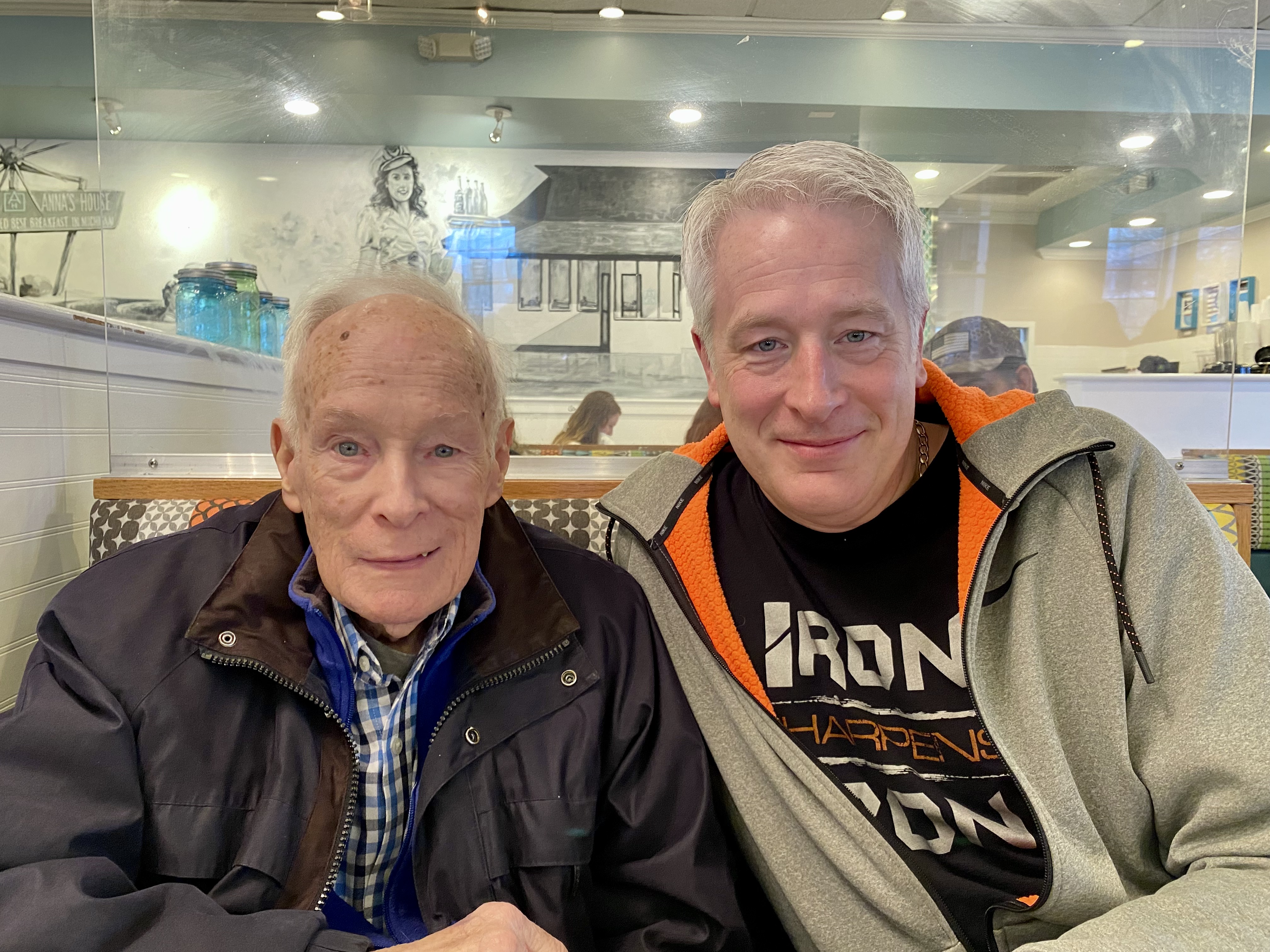
Celebrating my Dad’s 90th birthday!

Fight The New Drug shares the benefits of quitting porn from people who actually quit using pornography.

Links & Quotes

I love the humanitarian work of Convoy of Hope wherever there is a need. They are on the front lines of Ukraine right now. If you are looking for a good organization to support financially, please check out their current efforts and click the Donate button on their page.

Dr. Roy Spencer always brings clarity to the climate change debate. Here is a post looking at the numbers behind the claims that climate change is largely man-made.

I love following the archeological and paleontological discoveries as they come to light. The Institute for Creation Research shares some enlightening news that comes from the discovery of a human vertebra.

Dan Reiland shares about 5 enemies of the soul that hurt your church.

Cold-case detective J. Warner Wallace talks about the evidence that makes the resurrection of Jesus a reasonable conclusion:

“For the diligent the week has seven todays, for the slothful seven tomorrows.” —Anonymous

In light of all the uncertainty around us, this quote is a good reminder. “I want you to pray about world events and pursue peace as you are able. However, it’s crucial to recognize what you can change and what you cannot. Fretting about things that are beyond your control will drain your energy and discourage you. Instead of this hurtful focus, endeavor to fix your thoughts on Me. … Remember that I am a God of justice and I know everything. Eventually I will right all wrongs. So be still in My presence—trusting in Me with a steadfast heart while waiting for Me to act.” —Sarah Young, in Jesus Always

Links & Quotes

“While grief is expressed in words, its resolution is in God and the hope He gives for the future. In a way, the lamentation process is one of coming to grips with all that God wants us to see about our present circumstances.” —Dr. Henry Halley

Welsh dinosaur tracks found in flood rocks: “The evidence continues to stack up in support of the global Flood. The rocks don’t lie!”

In this video, J. Warner Wallace addresses how we can reconcile variations between biblical manuscripts.

My friend Greg Heeres and I have a brand new episode in our leadership podcast called The Craig And Greg Show. This discussion is all about setting good priorities.

The Historicity Of The Gospels

Listen to the podcast of this post by clicking on the player below, and you can also subscribe on Apple or Spotify.

I’m intrigued by the way the four Gospel writers have recorded the dying declarations of Jesus:

  • Father, forgive them—only in Luke 
  • Today you will be with Me in paradise—only in Luke 
  • Dear women, behold your son—only in John 
  • My God, My God, why have You forsaken Me?—only in Matthew and Mark (and this is the only dying declaration they record) 
  • I thirst—only in John
  • It is finished—only in John
  • Father, into Your hands I commend My spirit—only in Luke 

This is an excellent apologetic for the legitimacy and authenticity of the historical record. 

You know that when your friends are at an important event, not everyone notices the same thing or even to the same extent as the others. 

Cold-case detective J. Warner Wallace has pointed out that when he’s conducting an investigation, he separates the eyewitnesses from each other exactly so they don’t get their stories to “match.” Detective Wallace is able to get the full story precisely because of the differences in each of the accounts. 

This is why the Gospel writers’ accounts ring true: they tell us the same historical event from their unique perspectives. It’s only by reading all of them that we get the full picture. If the death and resurrection of Jesus had been a conspiracy, these writers clearly would have collaborated to “get their story straight” ahead of time, and as a result, we would have four identical stories. 

The historicity of Jesus as told in the Bible is spot-on and completely trustworthy! 

►► Would you please prayerfully consider supporting this ministry? ◀︎◀︎

The Deity And Divinity Of Jesus

Listen to the podcast of this post by clicking on the player below, and you can also subscribe on Apple or Spotify.

Some really silly guys did a series of videos called “Neature Walk” because they wanted to share how neat is nature! In episode one Vic sees a tree that he really likes and says, “Score! This is an aspen tree. You can that it’s an aspen tree because of the way it is.” This is either circular reasoning or an obvious statement. “Just look at this thing. You can tell it’s this thing because it looks and acts like this thing.” 

I feel a lot like this when I look at the first part of our third foundational truth statement: “We believe in the Deity of the Lord Jesus Christ.” (As a side note, I covered the second part of this statement—“As God’s Son, Jesus was both human and divine”—in another post, which you may find here.) 

Check this out: the definition for Deity is the divine character of God, and the definition for divine means things relating to the Deity. In saying we believe Jesus is God we are really saying, “You can tell that Jesus is God because of the way He is.” 

In order to make this definition work, we need evidence for both the divinity and the deity of Jesus. That being said, let me remind you of J. Warner Wallace’s instruction on faith. There is:

  • Blind faith—believing in something without evidence 
  • Unreasonable faith—believing in something in spite of the evidence 
  • Reasonable faith—believing in something because of the evidence 

Here is some evidence that I think makes it reasonable to believe that Jesus is divine:

  1. Virgin birth—Isaiah 7:14; Luke 1:34-35; Matthew 1:22-23 
  2. Sinless life—Isaiah 53:4-6, 9; Hebrews 7:26-27; 1 Peter 2:22 
  3. Miracles—Acts 10:38; 2:22-24 
  4. Death, resurrection, exaltation—Isaiah 53:10-12; Philippians 2:6-8; Hebrews 1:3 

(Check out all the Scriptural references listed above by clicking here.) 

I think the best evidence for the Deity of Jesus is the connection He Himself made between the “Jehovah” titles of the First Testament and His “I AM” statements in the Second Testament:

  • Jehovah Jireh (I Am Your Provider) → I am the Bread of Life (John 6:35)
  • Jehovah Rapha (I Am Your Healing) → I am the Resurrection and the Life (John 11:25-26)
  • Jehovah Nissi (I Am Your Source) → I am the Vine (John 15:5)
  • Jehovah Shalom (I Am Your Peace) → I am the Light of the world (John 8:12)
  • Jehovah Raah (I Am Your Shepherd) → I am the Good Shepherd (John 10:11)
  • Jehovah Sabaoth (I Am Your Wall Of Protection) → I am the Gate (John 10:9)
  • Jehovah Tsid-kenu (I Am Your Righteousness) → I am the Way, Truth, and Life (John 14:6)
  • Jehovah Shammah (I Am Here) → I am the Alpha and Omega (Revelation 1:8; 22:13). 

(Check out all the Scriptural references listed above by clicking here.)

The Jewish leadership understood perfectly what Jesus was claiming! But the more pertinent question is this: Do we understand what we must do with this evidence? 

We cannot claim that Jesus was born of a virgin, or lived a sinless life, or did miracles, or died and rose again and then not believe He is God. We cannot pick and choose the parts of Jesus we want. 

The apostle Paul reminded us that someday “at the name of Jesus every knee should bow, in heaven and on earth and under the earth, and every tongue acknowledge that Jesus Christ is Lord, to the glory of God the Father” (Philippians 2:11-12). 

Every knee will bow to Him one day: Either in worship of Jesus their Savior, or in abject terror of Jesus their Judge. 

I pray that you believe in Jesus as your Lord and Savior today… don’t wait another moment! 

►► Would you please prayerfully consider supporting this ministry? ◀︎◀︎

If you’ve missed any of the other messages in our Foundational Stones series, which is exploring our foundational beliefs, you may access all of them by clicking here.

Book Reviews From 2018

10 Quotes + 1 Infographic From “Cold-Case Christianity”

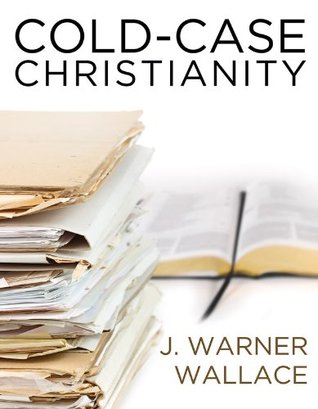
Cold-Case Christianity by J. Warner Wallace is educational in a number of ways. Not only will you learn more about police investigations and courtroom deliberations, but Christians and skeptics alike will learn about the reliability of the biblical account concerning Jesus. You can check out my full book review by clicking here. 

“The Christian tradition is actually intellectually robust and satisfying, even if we believers are occasionally unable to respond to your challenges. The answers are available; you don’t have to turn off your brain to be a believer. Yes, it is possible to become a Christian because of the evidence rather than in spite of the evidence.” 

“Faith is actually the opposite of unbelief, not reason. … The biblical definition of faith is a well-placed and reasonable inference based on evidence.” 

“What about cases that have no direct evidence connecting the suspect to the crime scene? Can the truth be proved beyond a reasonable doubt when all the evidence we have is circumstantial? Absolutely. 

“Jurors are instructed to make no qualitative distinction between direct and circumstantial evidence in a case. Judges tell jurors, ‘Both direct and circumstantial evidence are acceptable types of evidence to prove or disprove the elements of a charge, including intent and mental state and acts necessary to a conviction, and neither is necessarily more reliable than the other. Neither is entitled to any greater weight than the other.’” 

“William Dembski (the well-known mathematician, statistician, theologian, and intelligent-design advocate) has argued that specified complexity (and, therefore, the intervention of an intelligent agent) can be identified by using an ‘explanatory filter.’ If an object or event (1) cannot be explained by some natural law that necessitates its appearance, (2) exists in spite of the high improbability that it could occur as the result of chance, and (3) conforms to an independently existing and recognizable pattern, the most reasonable inference is that it is the product of an intelligent designer.” 

“The early church fathers and leaders recognized that the Gospels were the eyewitness testimony of the apostles, and they set the Gospels apart for this reason. The ancient Christian author Tertullian wrote in AD 212: ‘The same authority of the apostolic churches will afford evidence to the other Gospels also, which we possess equally through their means, and according to their usage—I mean the Gospels of John and Matthew—whilst that which Mark published may be affirmed to be Peter’s whose interpreter Mark was’ (Against Marcion). 

“Skeptics cannot reject the reasonable inferences from the evidence we do have, simply because there may possibly be some evidence we don’t have; skeptics also need to defend their doubt evidentially.” 

“The reasonable inference from the circumstantial evidence is that the Gospels were written very early in history, at a time when the original eyewitnesses and gospel writers were still alive and could testify to what they had seen.” 

“Some have argued that the Gospels are late because none of the authors specifically identifies himself in the accounts. … BUT … The Gospels are not the only ancient documents that fail to identify the author within the text of the manuscripts. Tacitus (the Roman senator and historian who lived from AD 56 to AD 117) wrote a history of the Roman Empire from the reign of Augustus Caesar to Nero entitled Annals. Tacitus was, in fact, present during much of this period of time, but failed to include himself in any of his descriptions or identify himself as the author.” 

“While it is possible that the Gospels were not written by the traditional first-century authors and were given these attributions only much later in history, it is not evidentially reasonable. If skeptics were willing to give the Gospels the same ‘benefit of the doubt’ they are willing to give other ancient documents, the Gospels would easily pass the test of authorship.” 
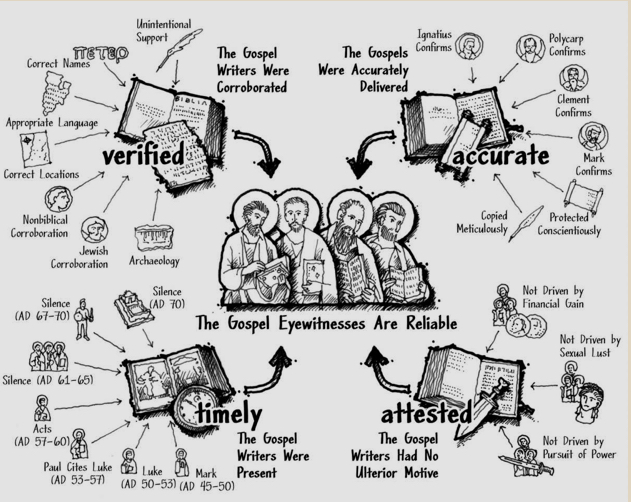
“The most reasonable inference is that the gospel writers were present, corroborated, accurate, and unbiased. If this is the case, we can conclude with confidence that their testimony is reliable.” 

Cold-Case Christianity (book review)

From Perry Mason and Dragnet to Blue Bloods and Law & Order, I’ve always been a fan of watching detectives and attorneys sorting through all of the evidence to find the truth. I’m also passionate about Christian apologetics, so Cold-Case Christianity by J. Warner Wallace is totally in my wheelhouse! 

Wallace is a cold-case detective and he’s also a Christian, but criminal investigative work was a part of his life long before he had a relationship with Jesus. In fact, Wallace grew up as an avowed atheist and openly mocked Christians for their “faith.” That is until someone challenged him to investigate the claims of the Bible regarding Jesus as he would investigate one of his cases. 

The similarities are fascinating. In most cases, Wallace cannot interview eyewitnesses, but has to rely on other evidence. Slowly, diligently, he tracks down each lead to come to the most reasonable conclusion. It was exactly the same with the biblical claims about Jesus: the eyewitnesses have long since died. Using his talents for successfully solving crimes which had been left unsolved for years and years, Wallace one day told his wife, “I think it might be true. I think Jesus is who the Bible says He is.” 

Wallace now shares with his readers how they too can use the same skills to explain to skeptics why the biblical case for the authenticity of Jesus is reasonable. He takes us out to the crime scenes as we look for evidence, into the interview room to talk to witnesses, and into the jury box to weigh all of the evidence. 

Skeptics of Christianity will find this book eye-opening, and Christians will find this book informative and helpful to them as they become Christian case makers. This book reads like a detective story to me, and I think others will be just as fascinated with the content as I was.