14 Quotes From “Pentecost”

Pentecost

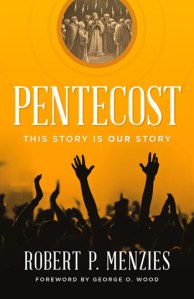
I thoroughly enjoyed reading Pentecost by Robert P. Menzies, and learned quite a bit. You can read my full book review by clicking here. Here are a few quotes that stood out to me.

“It’s because Pentecostals fuse the biblical and contemporary horizons that we link baptism in the Holy Spirit with speaking in tongues, since that’s what Acts 2 does. It’s why we associate Spirit-baptism with empowerment for mission rather than with spiritual regeneration. And it’s why we expect God to perform ‘signs and wonders’ and to manifest spiritual gifts in worship services. All these things happened in the first Pentecostal community, and their story is our story.” 

“At its heart, the Pentecostal movement is not Spirit-centered but Christ-centered. The work of the Spirit, as Pentecostals understand it, centers on exalting and bearing witness to the Lordship of Christ.”

“Pentecostals are ‘people of the Book.’ Although Pentecostals certainly encourage spiritual experience, they do so with a constant eye to Scripture.”

“So, the stories of Acts are our stories, and we read them with expectation and eagerness: stories of the Holy Spirit’s power, enabling ordinary disciples to do extraordinary things for God. … The hermeneutic of the typical Pentecostal believer is straightforward and simple: the stories in Acts are my stories—stories that were written to serve as models for shaping my life and experience.”

“In Luke’s view, every member of the church is called (Luke 24:45–49; Acts 1:4–8/Isaiah 49:6) and empowered (Acts 2:17–21; cf. 4:31) to be a prophet. Far from being unique and unrepeatable, Luke emphasizes that the prophetic enabling experienced by the disciples at Pentecost is available to all of God’s people. … Through his two-volume work, Luke declares that the church, by virtue of its reception of the Pentecostal gift, is nothing less than a community of prophets. It matters not whether we are young or old, male or female, rich or poor, black or white; the Spirit of Pentecost comes to enable every member of the church, each one of us, to fulfill our prophetic call to be a light to the nations.” 

“Not long ago a Chinese house church leader commented, ‘When Western Christians read the book of Acts, they see in it inspiring stories; when Chinese believers read the book of Acts, we see in it our lives.’”

“Luke’s theology of the Spirit is different from that of Paul. Unlike Paul, who frequently speaks of the soteriological dimension of the Spirit’s work, Luke consistently portrays the Spirit as a charismatic or, more precisely, a prophetic gift, the source of power for service.” 

“Luke crafts his narrative so that the parallels between Jesus’ experience of the Spirit (Luke 3–4) and that of the disciples on the day of Pentecost (Acts 1–2) cannot be missed. Both accounts: 1. Are placed at the outset of Luke’s Gospel on the one hand, and the book of Acts on the other; 2. Associate the reception of the Spirit with prayer; 3. Record visible and audible manifestations; 4. Offer explanations of the event in the form of a sermon that alludes to the fulfillment of Old Testament prophecy.”

“Luke’s understanding of baptism in the Holy Spirit, I have argued, is different from that of Paul. It is missiological rather than soteriological in nature. … The tendency in Protestant churches has been to read Luke in the light of Paul. Paul addresses pastoral concerns in the church; Luke writes a missionary manifesto.” 

“Bold witness for Jesus is recognized as our primary calling and the central purpose of our experience of the Spirit’s power. Missions is woven into the fabric of our DNA.”

“I do not wish to minimize in any way the significance of the great doctrinal truths of Paul’s writings. I merely point out that since Paul was, for the most part, addressing specific needs in various churches, his writings tend to feature the inner life of the Christian community. His writings, with some significant exceptions, do not focus on the mission of the church to the world. … It is probably fair to say that while Paul features the ‘interior’ work of the Spirit (e.g., the fruit of the Spirit, Gal. 5:22–23); Luke features His ‘expressive’ work (Acts 1:8). Thus, by appropriating in a unique way the significant contributions of Luke-Acts, Pentecostals have developed a piety with a uniquely outward or missiological thrust.”

“The clarity of the Pentecostal message flows from the simple, straightforward manner in which we read the Bible. As I have noted, Pentecostals love the stories of the Bible. We identify with the stories that fill the pages of the Gospels and Acts, and the lessons gleaned from these stories are easily grasped and applied in our lives. For Pentecostals, the New Testament presents models that are to be emulated and guidelines that are to be followed. It should be noted that our approach to doing theology is not dependent on mastering a particular set of writings, say, the works of Luther; or coming to terms with a highly complex theological system. Pentecostals also do not worry much about cultural distance or theological diversity within the canon. We do not lose sleep over how we should understand the miracle stories of the Bible or how we might resolve apparent contradictions in the Bible. Our commitment to the Bible as the Word of God enables us to face these questions with a sense of confidence.”

“We must remember that whatever we do, God is measuring the work we do for Him in a qualitative, not quantitative way. … Only the work which is done by the power of the Holy Spirit can be acceptable in the Kingdom of God.” —David Yonggi Cho

“Some will still remain skeptical. They will ask: Is not this approach to church life, with its emphasis on ecstatic experience, emotional response, and spiritual power, filled with inherent dangers? Might it not encourage us to feature emotionally manipulative methods and to focus on superficial matters? Yes, undoubtedly, there are dangers. However, there is more danger in an approach that fails to make room for the full range of human experience, including the emotions, in our encounter with God.”

A Truly White Christmas

White as snow

Why did Jesus come to earth, to be born as a baby, to live a sinless life, to die on our Cross in our place, to be raised to life again three days later?

So that we could all have a WHITE Christmas! 

Though your sins are like scarlet, they shall be as white as snow. (Isaiah 1:18)

Jesus Is The Supernova

Listen to the podcast of this post by clicking on the player below, and you can also subscribe on AppleSpotify, or Audible. 

In astronomical terms, a supernova is an explosion almost beyond compare. For a brief moment the explosion is the brightest point in the universe, sending enriching energy reverberating in every direction.

There was a supernova in the opening words of the Old Testament—in the beginning God created (Genesis 1:1). There was an explosion of God’s love that was the brightest spot in the universe He just created. But shortly after a supernova explodes, it appears to go dark for a period of time.

In history this could be seen as the time in-between the in the beginning of the Old Testament and the time before Jesus is born. Isaiah describes this as a people walking around in darkness and gloomy distress. Then all of sudden Isaiah says a great light explodes on the scene—

Nevertheless, there will be no more gloom for those who were in distress…. The people walking in darkness have seen a great light; on those living in the land of deep darkness a light has dawned. … For to us a Child is born, to us a Son is given, and the government will be on His shoulders. And He will be called Wonderful Counselor, Mighty God, Everlasting Father, Prince of Peace. (Isaiah 9:1-2, 6)

The reverberation of God’s supernova in the opening words of the Old Testament show up again in the opening words of the New Testament—A record of the genealogy of Jesus Christ (Matthew 1:1). The light of Jesus exploded on the scene!

And the Christ became flesh and tabernacled among us; and we actually saw His glory, such glory as an only begotten Son receives from His Father, full of grace and truth. (John 1:14)

Because of the energy released in the supernova of Creation and the reverberation of Christ’s First Advent, we are the beneficiaries. Astronomers tell us that the explosion of a supernova makes it possible for other stars to be born. That’s you and me!

Live clean, innocent lives as children of God, shining like bright stars in a world full of crooked and perverse people. (Philippians 2:15)

May this Advent season remind you of the supernova explosion of love of Jesus Christ, and our ability to shine brightly because of His life in us. Shine brightly!

Check out the other ways Jesus shined brightly at His Advent in our series The Star Of CHRISTmas.

►► Would you please prayerfully consider supporting this ministry? My Patreon supporters get behind-the-scenes access to exclusive materials. ◀︎◀︎

The Returning King

Listen to the podcast of this post by clicking on the player below, and you can also subscribe on AppleSpotify, or Audible.

John opens the book of Revelation with this greeting: Grace and peace to you from Him who is, and who was, AND WHO IS TO COME… (Revelation 1:4). This is so significant because of the other descriptive phrases John uses for Jesus:

  • Jesus was pre-existent before creation (John 1:1).
  • John was witness to everything Jesus did during His public ministry, including all of the claims Jesus made about Himself (1 John 1:1).
  • And now John says not only has Jesus existed before time existed, not only is He alive now, but He is coming back again!

This is what makes the resurrection of Jesus so important. Jesus Himself told us exactly what was going to happen with His death by crucifixion and His resurrection three days later. The fact that these statements all turned out to be true gives us greater assurance that His promise that He is coming back is also true.

In His very first sermon, Jesus quoted from Isaiah about how He would conduct His earthly ministry (see Isaiah 61:1-2 and Luke 4:18-19). But when He quotes the passage from Isaiah, He leaves off a phrase “and a day of vengeance of our God.” God’s wrath against sin is being held back for now, but the day of judgment is coming.

John says Jesus is the One Who is to come, and records later on how Jesus will come—

     I saw Heaven standing open and there before me was a white horse, whose rider is called Faithful and True. With justice He judges and wages war. His eyes are like blazing fire, and on His head are many crowns. He has a name written on Him that no one knows but He Himself. He is dressed in a robe dipped in blood, and His name is the Word of God. The armies of Heaven were following Him, riding on white horses and dressed in fine linen, white and clean. Coming out of His mouth is a sharp sword with which to strike down the nations. “He will rule them with an iron scepter.” He treads the winepress of the fury of the wrath of God Almighty. (Revelation 19:11-15)

God made Jesus to be sin for us. He suffered and died to pay the penalty for our sins, and those who are still found in their sins—unforgiven, without placing their faith in Jesus Christ’s sacrificial death and resurrection—must face the wrath of God.

Jesus is not only our Risen Savior, but He is the soon-returning King and Judge. 

Three times the last book of the Bible records Jesus Himself saying, “I am coming soon!” This isn’t a scare tactic, it’s real. As certainly as Jesus rose from the grave, He is returning soon.

Are you ready for His return? Are you telling others that Jesus is our soon-returning King? I hope you know what it means to have Jesus as your Lord and Savior, and I hope you are telling as many other people as you can about our soon coming King!

If you have missed any of the messages in this series called Who Is Jesus?, you can find them all here.

►► Would you please prayerfully consider supporting this ministry? My Patreon supporters get behind-the-scenes access to exclusive materials. ◀︎◀︎

O Lord, Forgive

A friend of mine gave me some solid counsel a number of years ago that has always stuck with me: The mark of a maturing Christian is one who is closing the gap between sin and repentance.

Sin is open treason against God. Why would I want to overlook it or excuse it?! Once I recognize it as sin, why would I want to hold on to it?!

If we freely admit that we have sinned and confess our sins, He is faithful and just (true to His own nature and promises) and will forgive our sins—dismiss our lawlessness—and continuously cleanse us from all unrighteousness—everything not in conformity to His will in purpose, thought, and action. (1 John 1:9 AMPC) 

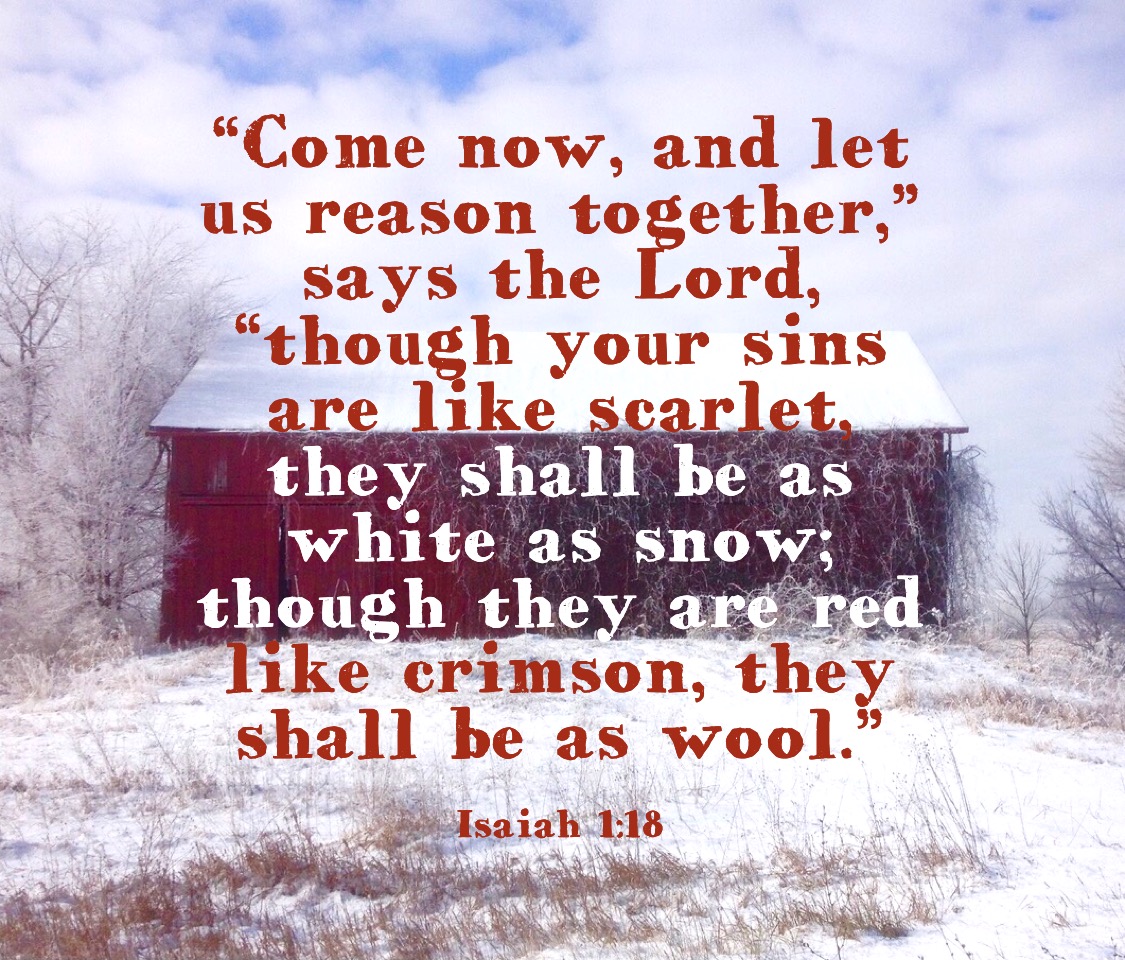
“Come now, let’s settle this,” says the Lord. “Though your sins are like scarlet, I will make them as white as snow. Though they are red like crimson, I will make them as white as wool.” (Isaiah 1:18) 

May we all take the time to reflect on our words and actions to see if we have sinned, and then to quickly confess that sin and ask for our loving God’s forgiveness.

“If my soul has turned perversely to the dark;

If I have left some brother wounded by the way;

If I have preferred my aims to Yours;

If I have been impatient and would not wait;

If I have marred the pattern drawn out for my life;

If I have cost tears to those I loved;

If my heart has murmured against Your will,

O Lord, forgive.” —F. B. Meyer

Thursdays With Oswald—Two Ways To Handle A Crisis

Listen to the podcast of this post by clicking on the player below, and you can also subscribe on AppleSpotify, or Audible. 

This is a weekly series with things I’m reading and pondering from Oswald Chambers. You can read the original seed thought here, or type “Thursdays With Oswald” in the search box to read more entries.

Two Ways To Handle A Crisis

     A man must decide whether he will be identified with the death of the Lord Jesus Christ, which will mean the turning out not only of the “old man,” but of the old responsible intelligence, the old bondage, the old legalism, the things which used to guide the life before, and the forming of a totally new mind. 

     It works out this way: in your practical life you come to a crisis where there are two distinct ways before you, one the way of ordinary, strong, moral, common sense and the other the way of waiting on God until the mind is formed which can understand His will. 

     Any amount of backing will be given you for the first line, the backing of worldly people and of semi-Christian people, but you will feel the warning, the drawing back of the Spirit of God, and if you wait on God, study His Word, and watch Him at work in your circumstances, you will be brought to a decision along God’s line, and your worldly “backers” and your semi-Christian “backers” will fall away from you with disgust and say, “It is absurd, you are getting fanatical.” 

From Biblical Psychology 

When you have to deal with a crisis, there are two options:

  1. Use your common sense and the good ideas of others
  2. Do it God’s way

God’s ways usually defy the world’s common sense.

“As the heavens are higher than the earth, so are My ways higher than your ways and My thoughts than your thoughts,” says God. (Isaiah 55:9)

For the foolishness of God is wiser than man’s wisdom, and…the wisdom of this world is foolishness in God’s sight. (1 Corinthians 1:25; 3:19)

If you want to try to do it the “common sense” way, go ahead. God will let you try it, and a lot of people will encourage you to keep at it. But I think you will quickly find that the “God sense” way is so much better! Although very quickly your former “backers” and “cheerleaders” will look at you as a fanatic.

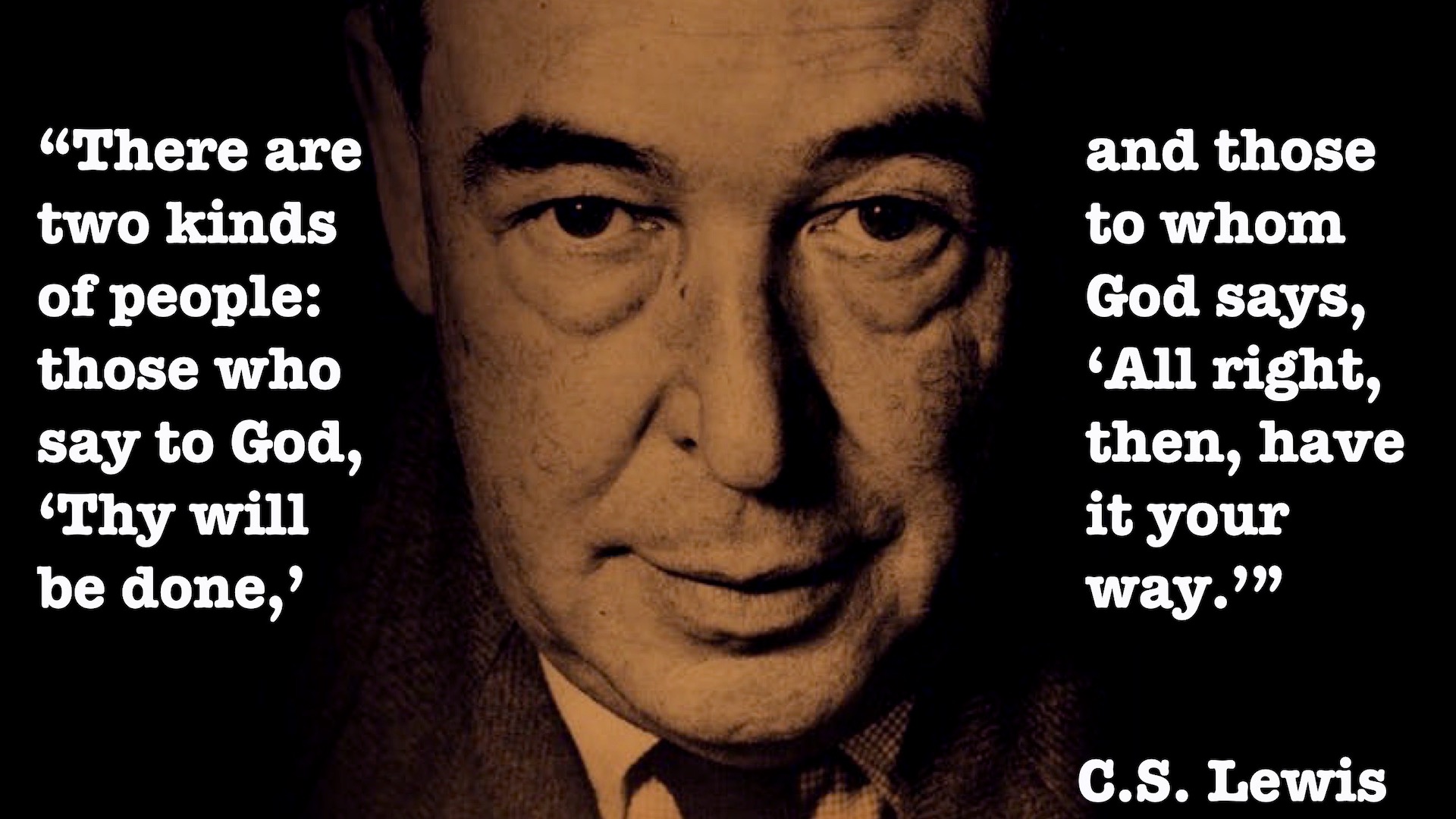
“There are two kinds of people: those who say to God ‘Thy will be done’ and those to whom God says, ‘All right then, have it your way.’” —C.S. Lewis

You must decide how you will respond in a crisis.

►► Would you please prayerfully consider supporting this ministry? My Patreon supporters get behind-the-scenes access to exclusive materials. ◀︎◀︎

Hot Pursuit

Listen to the podcast of this post by clicking on the player below, and you can also subscribe on AppleSpotify, or Audible.

While I was reading From Azusa To Africa To The Nations, I came across a fascinating statement from William Seymour, the pastor who led his congregation into that early 20th-century revival that shook the world. Pastor Seymour was so hungry for God’s presence in his life that he set aside five hours each day to seek God’s deeper touch. He prayed liked this for over 3 years. At this point He read about the outpouring of the Holy Spirit in the Book of Acts, and something stirred in him to pray for this same outpouring on himself and on his congregation. He then increased his prayer time to seven hours a day, and continued to pray in this fashion for another two years before the answer came and the revival broke out.

I did the math. That means he prayed 11,500 hours!

How many of us get tired after praying just one hour?

Would it be easier for you to tenaciously pursue God in prayer if you knew He was also tenaciously pursuing you? Mark Batterson points out in The Circle Maker that the verb in Psalm 23:6 is poorly translated in English as shall follow me. He reminds us that it’s really a hunting term, used for a hunter in hot pursuit of his quarry. God’s love and mercy are in hot pursuit of you!

The Lord longs to be gracious to you; He rises to show you compassion. For the Lord is a God of justice. Blessed are all those who wait for Him! (Isaiah 30:18)

Want to see a great story about this in the life of Jesus? Matthew tells us about a get-away that Jesus and His disciples took. While they were relaxing, a woman barged in, imploring Jesus to heal her daughter. She would not be denied. She tenaciously implored Jesus to minister to her daughter. At last Jesus cried out, “Woman, you have great faith! Your request is granted.”

(Check out this video where I talk more in-depth about this persistent mother.)

It may sound like this woman was pursuing Jesus. But Jesus put Himself in a place for her to find Him. He pursued her first.

  • As a Canaanite (a non-Jew), it was unsafe for her to travel to southern Israel.
  • As a woman, it was unacceptable for her to go talk to a man.
  • As a mother with a sick child at home, it was unwise for her to leave home.

So Jesus traveled to a region He has never been to before, and would never go back to again. He pursued this mother-in-need so that she could find Him in prayer!

God is in hot pursuit of you, too. He hears every prayer, so keep on tenaciously praying. Don’t settle, don’t give up, don’t stop! Pray as long as it takes for God to say to you, “You have great faith! Your request is granted.”

To check out the others messages in this series on prayer called Praying Circles, please click here.

►► Would you please prayerfully consider supporting this ministry? My Patreon supporters get behind-the-scenes access to exclusive materials. ◀︎◀︎

Thursdays With Oswald—Don’t Let Others Stumble Because Of Me

This is a weekly series with things I’m reading and pondering from Oswald Chambers. You can read the original seed thought here, or type “Thursdays With Oswald” in the search box to read more entries.

Don’t Let Others Stumble Because Of Me

     There is a difference between “offense” and “stumbling.” And they were offended in Him. But Jesus said unto them, “A prophet is not without honor, save in his own country…” (Matthew 13:57). But Jesus knowing in Himself that His disciples murmured at this, said unto them, “Does this cause you to stumble?” (John 6:61; see also Matthew 5:29; 11:6; 13:41; 16:23; 17:27; 18:6-7). Offense means going contrary to someone’s private opinion, and it is sometimes our moral duty to give offense.

     …Stumbling is different from offense. For example, someone who does not know God as well as you do, loves you and continually does what you do because he loves you, and as you watch him you begin to discern that he is degenerating spiritually, and to your amazement you find he is doing what you are doing. No offense is being given, but he is stumbling, distinctly stumbling.

From Biblical Psychology

In 1 Corinthians 8 and 9 Paul talks about not causing someone else to stumble because of what we do. It’s a fine line sometimes between offense and stumbling, but it’s a distinct line that the Holy Spirit can help us discern.

Jesus often offended people because their mindset was so rigid, and He didn’t act in a way that fit their rigid religious stereotypes. But Jesus was very cautious about making sure He never caused someone to stumble. As Matthew points out, Jesus fulfilled the prophesy of Isaiah: He will not quarrel or cry out…. A bruised reed He will not break, and a smoldering wick He will not snuff out… (Matthew 12:19-20; Isaiah 42:1-4).

My prayer: Lord Jesus, please don’t let others stumble because of me! Let me have the discernment of the Holy Spirit to know when to offend, but to never cross the line to cause others to stumble. May I have Your same gentle spirit to not quarrel, and to treat the “bruised reeds” with utmost care.

Scared Half To Death

Mega fearHave you ever had a really good scare that turned your life around? For some people, they need to be scared half to death in order for them to make changes in their lives.

I think this is what happened to the shepherds outside Bethlehem the night Jesus was born (Luke 2:8-20). The Bible says that when the glory of the Lord shone around them they were terrified (the King James Version is very picturesque when it says they were sore afraid). The Greek word for fear is phobeo, but the phrase Luke uses here for “terrified” is megas phobeo phobos. Get the picture? They were scared half to death!!

But now, what to do what that fear? The angel gave them the first step—Go find Jesus. He didn’t tell them to get themselves cleaned up, or start going to church, or even to stop acting a certain way. Simply go find Jesus.

The shepherds obeyed and went to meet Jesus, and then something amazing happens.

  • Their fear is turned to praise—the shepherds returned, glorifying and praising God.
  • Their silence is turned to testimony—they spread the word concerning what had been told them.

Jesus was born as a Man to experience all our fears and sorrows and pains. But He took these upon Himself as He became the perfect, once-for-all sacrifice. Now there are no fears that can keep us from God’s presence. Jesus conquered all that kept us from God! 

There was nothing beautiful or majestic about His appearance, nothing to attract us to Him.He was despised and rejected—a Man of sorrows, acquainted with deepest grief. We turned our backs on Him and looked the other way. He was despised, and we did not care. Yet it was our weaknesses He carried; it was our sorrows that weighed Him down. And we thought His troubles were a punishment from God, a punishment for His own sins! But He was pierced for our rebellion, crushed for our sins. He was beaten so we could be whole. He was whipped so we could be healed.

All praise to God, the Father of our Lord Jesus Christ, who has blessed us with every spiritual blessing in the heavenly realms because we are united with Christ. Even before He made the world, God loved us and chose us in Christ to be holy and without fault in His eyes. (Isaiah 53:2-5; Ephesians 1:3-4)

This Christmas I pray you will…

Find Jesus for yourself!

Let your praises to Him ring out!

Tell others what Jesus has done for you!

If you have missed any of the messages in our Fear Not! series, you can find them all by clicking here.

The End?

Listen to the podcast of this post by clicking on the player below, and you can also subscribe on AppleSpotify, or Audible.

When Jesus was arrested, almost all of His disciples ran away. Peter, however, stayed somewhat close to Jesus, but not for the reason I originally thought.

Meanwhile, Peter followed Him at a distance and came to the high priest’s courtyard. He went in and sat with the guards and waited to see how it would all end. (Matthew 26:58 NLT)

Peter waited to see how it would all end.

Peter thought, “This is the end, roll the credits, turn out the lights, we can all go home now.”

When we think we can figure out how it will all end, our faith is too small. It’s not our story—it’s HIS story. And God’s story never ends for those who love Him. Their story is a perpetual, never-ending love story that gets better and better as eternity rolls on!!

Don’t put a period where God hasn’t put one. Don’t look for how it’s going to end. If you are a follower of God, you have His eternal life. That means the story never ends. It goes on and on and on and on….

Trust in the Lord always, for the Lord God is the eternal Rock. (Isaiah 26:4)

►► Would you please prayerfully consider supporting this ministry? My Patreon supporters get behind-the-scenes access to exclusive materials. Like this exceptional Bible study tool to help with Creation apologetics. ◀︎◀︎