


 “Certain songs can only be learned in the valley. No music school can teach them, for no theory can cause them to be perfectly sung. Their music is found in the heart. They are songs remembered through personal experience, revealing their burdens through the shadows of the past, and soaring on the wings of yesterday. … Therefore, dear soul, in this life you are receiving a music lesson from your Father. You are being trained to sing in a choir you cannot yet see, and there will be parts in the chorus that only you can sing. … Others have said that He sends sorrow to test you, yet this is not the case. He sends sorrow to educate you, thereby providing you with the proper training for His heavenly choir. … O dear soul, do not despise your school of sorrow. It is bestowing upon you a unique part in the heavenly song [Revelation 14:3].” —George Matheson
God’s Heavenly Choir
June 16, 2016 — Craig T. Owens10 Quotes On The Difference Between Christianity And Islam
June 13, 2016 — Craig T. OwensNabeel Qureshi wrote a couple of outstanding books to help those in the West better understand Islam (Seeking Allah, Finding Jesus and Answering Jihad).
 In Answering Jihad, Nabeel invests several chapters in looking at the differences between Christianity as displayed in the Bible and Islam as displayed in the Quran. Here are some of the more noteworthy quotes I pulled from this book. The references in parenthesis in these quotes are references to a chapter and verse in the Quran.
“Christians believe Jesus is God, but the Quran is so opposed to this belief that it condemns Jesus worshipers to hell (5:72).”
“According to Jesus, God is our Father, yet the Quran very specifically denies that God is a father (112:1-4).”
“Islam roundly condemns worship of the Trinity (5:73), establishing in contrast its own core principle of Tawhid, the absolute oneness of God. Tawhid emphatically denies the Trinity, so much so that it is safe to say the doctrine of God in Islam is antithetical to the doctrine of God and Christianity. … The Trinity teaches that God is not a person, but three Persons: Father, Son, and Spirit. To assert that the God of Islam is the same person as the God of Christianity becomes almost nonsensical at this point, as the Christian God is tripersonal, two persons of Islam specifically denies in the Quran.”
“The Trinity is an elaboration of Jewish theology, not a rejection. By contrast, Tawhid is a categorical rejection of the Trinity, Jesus’ deity, and the Fatherhood of God, doctrines that are grounded in the pages of the New Testament and firmly established centuries before the advent of Islam. The earliest Christians were all Jews, incorporating their encounter with Jesus into their Jewish theology. Nothing of the sort is true of Muhammad, who was neither a Jew nor a Christian. Islam did not elaborate on the Trinity but rejected and replaced it.”
“Christians worship the triune God: a Father Who loves unconditionally, a Son Who incarnates and Who is willing to die for us so that we may be forgiven, and an immanent Holy Spirit Who lives in us. This is not who the Muslim God is, and it is not what the Muslim God does. Truly, Tawhid is antithetical to the Trinity, fundamentally incompatible and only similar superficially and semantically. Muslims and Christians do not worship the same God.”
“The warfare the Quran commands is not due to any evil action, but rather due to the beliefs of non-Muslims, such as the Christian belief that Jesus is the Son of God (9:29, 30).”
“Warfare in the Old Testament is not about subjugating inferior peoples. Yahweh does not promise the Jews that they are the best of people and that their enemies are less than they are. He makes this quite clear in Deuteronomy 9:4-6. … The Quran, by contrast, envisions Muslims as the best people: ‘You are the best of all people, evolved for mankind’ (3:110). It teaches that Jews and Christians who do not convert to Islam are the worst of all creation: ‘Those who do not believe [in Islam] from among the Jews and Christians and the idolaters will go to hell. They are the worst of creatures’ (98:6; see 98:1-5 for context). This is why the Quran in 9:33 commands Muslims to fight Jews and Christians, so that Allah may cause Islam ‘to prevail over all religions.’”
“Muhammad’s life moved from peaceful to violent in a crescendo, reflecting the trajectory of the Quran, and he died just after conquering the Arabian Peninsula. His words in the canonical collections were, ‘I have been ordered by Allah to fight against the people until they testify that none has the right to be worshiped but Allah and that Muhammad is Allah’s messenger. … [O]nly then will they save their lives and property from me’ (Sahih Bukhara 1.2.25). Muslims are commanded to follow Muhammad’s example, and his example was jihad.
“By contrast, the stories in the Old Testament do not enjoin Jews or Christians to fight today. Though commands to fight are recorded in the text, no Jew or Christian is commanded to memorialize these battles as ongoing conduct. They were a part of the history of Israel, certainly, not a mandate or continuing command going forward.”
“Violence has a very different place in Islam and Christianity’s theological frameworks. The final marching order of Islam is jihad. The final marching orders of Christians are grace and love.”
But I especially love this thought from Nabeel: “One can both love Muslims and insist that the God they worship is not the same as the Christian God.” Amen!
Other quotes from Answering Jihad are here and here.
Additional quotes from Seeking Allah, Finding Jesus are here.
Thursdays With Oswald—What Prayer Does In Us
June 2, 2016 — Craig T. Owens This is a weekly series with things I’m reading and pondering from Oswald Chambers. You can read the original seed thought here, or type “Thursdays With Oswald” in the search box to read more entries.
What Prayer Does In Us
Prayer is the point where the reality of God merges with human life. Until we are born from above, prayer with us is honestly nothing more than a mere exercise; but in all our Lord’s teaching and in His own personal life, as well as in the emphasis laid on prayer by the Holy Ghost after He had gone, prayer is regarded as the work (see John 14:11-13). …
If prayer is the highest reach of communion possible between Almighty God and the Son of Man, what part ought prayer to play in our lives? …
Prayer is not meant to develop us, but to develop the life of God in us after new birth.
From The Psychology Of Redemption
In another lesson, Chambers reminds us that prayer is easy for us because it cost Jesus so much to make it possible for us.
Jesus knew the value of prayer, which is why it was an essential priority all throughout His earthly life. Now we have access to the same Almighty God through the name of Jesus. Yes, Jesus is interceding for us, but we don’t have to stop there—we should never stop there!—because Christ’s death and resurrection makes a way for us to go right into Almighty God’s presence.
Prayer is powerful! Prayer brings the life of God right down into our own souls.
So… what part ought prayer to play in your life?
Thursdays With Oswald—My God-Given Vocation
May 19, 2016 — Craig T. OwensThis is a weekly series with things I’m reading and pondering from Oswald Chambers. You can read the original seed thought here, or type “Thursdays With Oswald” in the search box to read more entries.
My God-Given Vocation
The vocation of our Lord had accepted was that of sin-bearer, not of dominating world-lord. satan’s aim was to get Him to fulfill His vocation on another line, “There is no need to die for sin, You can fulfill Your vocation by a ‘short cut’ and evade the Cross.” Our Lord came here for one purpose only—to bear away the sin of the world in His own Person on the Cross. He came to redeem man, not to set them a wonderful example. …
Have we accepted that kind of vocation, or are we only concerned that we get deep conscious communion with God? The acceptance of the saint for himself is that he is concerned about nothing at all saving this one thing, “that I might finish my course with joy,” not happiness. Joy is the result of the perfect fulfillment of what a man is created for. Happiness depends on things that happen, and may sometimes be an insult. It is continually necessary to revert to what the New Testament asks us to accept about ourselves.
Have we received to this ministry from Jesus, “As Thou hast sent Me into the world, even so have I also sent them into the world”? How did the Father send Him? “For I came down from heaven, not to do Mine own will, but the will of Him that sent Me.” The first obedience of Jesus was to the will of His Father, not to the needs of men. Then our first accepted vocation is not to help men, but to obey God, and when we accept that vocation we enter into relationship with the despised and the neglected.
From The Psychology Of Redemption
Do I sometimes wish God would give me a “bigger ministry”? Or that He would use me in more visible ways? Am I looking for applause or recognition?
Jesus prayed, “Not My will, but Yours be done.” And He taught us to pray, “Your kingdom come, Your will be done.”
If I truly accept the vocation God has given me, I will see that it is the same vocation He gave Jesus: to go to the “despised and neglected,” and in the process to be despised and rejected by the world, just as Jesus was. But I’m not looking for the applause of men; I just want to obey God regardless of the personal cost. This is my God-given vocation.
Lettie Cowman On Prayer
May 18, 2016 — Craig T. Owens “Often it is simply the answers to our prayers that cause many of the difficulties in the Christian life.
“We pray for patience, and our Father sends demanding people our way who test us to the limit, ‘because…suffering produces perseverance’ (Romans 5:3). …
“We pray to be unselfish, and God gives us opportunities to sacrifice by placing other people’s needs first and by laying down our lives for other believers. …
“We pray to the Lord, as His apostles did, saying, ‘Increase our faith!’ (Luke 17:5). Then our money seems to take wings and fly away; our children become critically ill; an employee becomes careless, slow, and wasteful; or some other new trial comes upon us, requiring more faith than we have ever before experienced.
“We pray for a Christlike life that exhibits the humility of a lamb. Then we are asked to perform some lowly task, or we are unjustly accused and given no opportunity to explain….
“We pray for gentleness and quickly face a storm of temptation to be harsh and irritable.
“We pray for quietness, and suddenly every nerve is tested to its limit with tremendous tension so that we may learn that when He sends His peace, no one can disturb it.
“We pray for love for others, and God sends unique suffering by sending people our way who are difficult to love and who say things that get on our nerves and tear at our heart. …
“The way to peace and victory is to accept every circumstance and every trial as being straight from the hand of our loving Father.” —Lettie Cowman
Thursdays With Oswald—Stretched Like A Bow
May 5, 2016 — Craig T. OwensThis is a weekly series with things I’m reading and pondering from Oswald Chambers. You can read the original seed thought here, or type “Thursdays With Oswald” in the search box to read more entries.
Stretched Like A Bow
God takes the saints like a bow which He stretches and at a certain point the saint says, “I can’t stand any more,” but God does not heed, He goes on stretching because He is aiming at His mark, not ours, and the patience of the saints is that they “hang in” until God lets the arrow fly. … Remain spiritually tenacious.
From God’s Workmanship
Endure hardship as discipline; God is treating you as His children. For what children are not disciplined by their father? If you are not disciplined—and everyone undergoes discipline—then you are not legitimate, not true sons and daughters at all. Moreover, we have all had human fathers who disciplined us and we respected them for it. How much more should we submit to the Father of spirits and live! They disciplined us for a little while as they thought best; but God disciplines us for our good, in order that we may share in His holiness. No discipline seems pleasant at the time, but painful. Later on, however, it produces a harvest of righteousness and peace for those who have been trained by it. (Hebrews 12:7-11)
My prayer is that we all remain spiritually tenacious until God lets the arrow of our life fly!
4 Practical Prayer Tips From Jesus
January 4, 2016 — Craig T. OwensListen to the podcast of this post by clicking on the player below, and you can also subscribe on Apple, Spotify, or Audible.
 One of the best ways to learn how to pray is not to read about prayer. It’s not even to listen to other people pray. The best way to learn how to pray is … to pray!
Can you imagine a baby thinking to herself, “I’m not going to start talking until I’ve got the English language nearly mastered. I need to brush up on my vocabulary and have a few tongue-twisters handy, and then I’ll start talking”? Of course not!
Babies learn to talk by talking! Well, perhaps they learn by babbling first. But ask any parent, and they will tell you that those first da-da, ma-ma, ba-ba sounds are like music in their ears!
It’s the same way with our Heavenly Father. He’s not waiting for you to be a prayer expert (whatever that is!) before you start talking with Him. Even if your attempt at praying sounds like a baby’s babbling to you, those attempts are sweet sounds to our loving Heavenly Father.
One verse about Jesus gives us four practical prayer tips to help us practice praying—
Very early in the morning, while it was still dark, Jesus got up, left the house and went off to a solitary place, where He prayed. (Mark 1:35)
Check out these four prayer tips:
1. early in the morning. This speaks to me of priority. I want to talk with God before I talk with anyone else—before I make my plans for the day, or even before I have any major decisions to make.
Practical application: I need to go to bed on time.
2. Jesus got up. This was a physical change of position to make sure He was alert.
Practical application: Don’t try to pray laying in bed, but find a posture where I am most alert; maybe even go for a walk while I pray.
3. left the house [and] went to a solitary place. He left the familiar and left any distractions behind. Some translations of Matthew 6:6 say we should go into our prayer closet.
Practical application: Find a place that’s just for prayer, then eliminate the distractions (like turning off my phone).
4. He prayed. This Greek word is used 87 times in the New Testament and it means … PRAY. There’s nothing wrong with reading the Bible, or listening to worship music, but I shouldn’t allow these activities to substitute for prayer.
Practical application: My mind can wander when I’m praying unless I’m intentional about staying focused. So I keep a list of things I want to pray about, and I keep a blank piece of paper ready for things that come to my mind. Both of these things keep my mind from wandering away from prayer.
How about you: Can you make prayer a priority? Can you find a place and posture that will help you pray? What can you do to stay focused while you’re praying?
Remember: the best way to learn how to pray is to pray. Get started today! Your Father is waiting to hear your sweet voice!
You may also be interested in my post Continually learning to pray.
I’ll be continuing our series on Practical Prayer this Sunday. If you don’t have a home church in Cedar Springs, I’d love to have you join us. Otherwise, you can tune in to our live broadcast via Periscope.
►► Would you please prayerfully consider supporting this ministry? My Patreon supporters get behind-the-scenes access to exclusive materials. ◀︎◀︎
Links & Quotes
November 17, 2015 — Craig T. Owens
“One of the greatest mercies God bestows upon us is His not permitting our inclinations and opportunities to meet. Have you not sometimes noticed that when you had the inclination to a sin there has been no opportunity, and when the opportunity has presented itself you have had no inclination towards it? satan’s principal aim with believers is to bring their appetites and his temptations together….” —Charles Spurgeon
“In a very real sense, we are what we love. … What we treasure in our heart will be what we seek in life and what we become in fact. … What we most love, therefore, tells us something about the condition of our hearts. If the best part of our spiritual and physical energies are invested in making a good living—if being materially well-off is the treasure we seek—then this will be evidence of a heart which believes it can only be satisfied by the enjoyment of things and the realization of every whim.” —T.M. Moore
“Let us make war, not with other people, but with our own unbelief. It is the root of anxiety, which, in turn, is the root of so many other sins. So let us turn our eyes fixed on the precious and very great promises of God. Take up the Bible, ask the Holy Spirit for help, lay the promises up in your heart, and fight the good fight—to live by faith in future grace.” —John Piper
“This third Person is called, in technical language, the Holy Ghost or the ‘spirit’ of God. Do not be worried or surprised if you find it (or Him) rather vaguer or more shadowy in your mind than the other two [Father and Son]. I think there is a reason why that must be so. In the Christian life you are not usually looking at Him: He is always acting through you. If you think of the Father as something ‘out there,’ in front of you, and of the Son as someone standing at your side, helping you to pray, trying to turn you into another son, then you have to think of the third Person as something inside you, or behind you. Perhaps some people might find it easier to begin with the third Person and work backwards. God is love, and that love works through men—especially through the whole community of Christians. But this spirit of love is, from all eternity, a love going on between the Father and Son.” —C.S. Lewis, Mere Christianity
Max Lucado reminds us of the original terrorist.
Lenny Esposito shares 3 problems for atheism.
Good reminders: 5 things married couples should do every day.
[VIDEO] George Will explains campaign finance “reform” in a way I haven’t heard anyone else say it—
Thursdays With Oswald—Passionate, Devoted, Absorbed
November 5, 2015 — Craig T. OwensThis is a periodic series with things I’m reading and pondering from Oswald Chambers. You can read the original seed thought here, or type “Thursdays With Oswald” in the search box to read more entries.
Passionate, Devoted, Absorbed
Christian experience does not mean we have thought through the way God works in human lives by His grace, or that we are able to state theologically that God gives the Holy Ghost to them that ask Him—that may be Christian thinking, but it is not Christian experience. Christian experience is living through all this by the marvelous power of the Holy Ghost. The Holy Ghost working in me does not produce wonderful experiences that make people say “What a wonderful life that man lives”; the Holy Ghost working in me makes me a passionate, devoted, absorbed lover of the Lord Jesus Christ.
From Our Place Of Help
Too many people are trying to “figure out” Christianity. But let me ask this: can you figure out why you fell in love? You probably can’t give the hows and whys of your love for someone else, but you know you are in love nonetheless.
The Holy Spirit isn’t given to a Christian so that he can come up with good theology, or even so he can have an experience. The Holy Spirit is given to make Jesus real—God has poured out His love into our hearts by the Holy Spirit (Romans 5:5).
This is why Jesus wants us to receive His Spirit, because the Spirit would make Jesus known to us (John 14:16-17) … make Him real to us (John 14:25-26) … make us into a passionate, devoted, absorbed lover of the Lord Jesus Christ.
Have you received the Holy Spirit? If not, you can—How much more will your Father in Heaven give the Holy Spirit to those who ask Him (Luke 11:13).
Quotes On Prayer
October 20, 2015 — Craig T. Owens “How does your child come to you when he wants anything? Does he open a big book, and begin reading, ‘My dear, esteemed, and venerated parent, in the effulgence of thy parental beneficence’? Nothing of the kind. He says, ‘Father, my clothes are worn out, please buy me a new coat;’ or else he says, ‘I am hungry, let me have something to eat.’ That is the way to pray, and there is no prayer which God accepts but that kind of prayer—right straight from the heart, and right straight to God’s heart.” —Charles Spurgeon
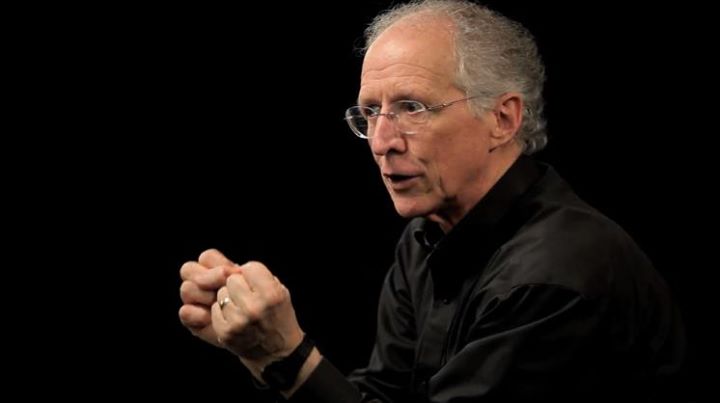 “How is God glorified by prayer? Prayer is the open admission that without Christ we can do nothing. And prayer is the turning away from ourselves to God in the confidence that He will provide the help we need.” —John Piper
“Pray; pray always; or literally, in all times and seasons; not yesterday only, but today; not in darkness only, but in the light; not in adversity only, but in prosperity; not in the day of bereavement, and terror, and weariness, but in the time of security, and comfort, and peace. Pray always. Pray without ceasing.” —Horatius Bonar
My most-viewed posts


 Craig T. Owens