Listen to the podcast of this post by clicking on the player below, and you can also subscribe on Apple or Spotify.
►► Would you please prayerfully consider supporting this ministry? ◀︎◀︎
Listen to the podcast of this post by clicking on the player below, and you can also subscribe on Apple or Spotify.
►► Would you please prayerfully consider supporting this ministry? ◀︎◀︎
This is a weekly series with things I’m reading and pondering from Charles Spurgeon. You can read the original seed thought here, or type “Thursdays With Spurgeon” in the search box to read more entries.
Listen to the podcast of this post by clicking on the player below, and you can also subscribe on iTunes or Spotify.
Never Give Up On Grace And Mercy
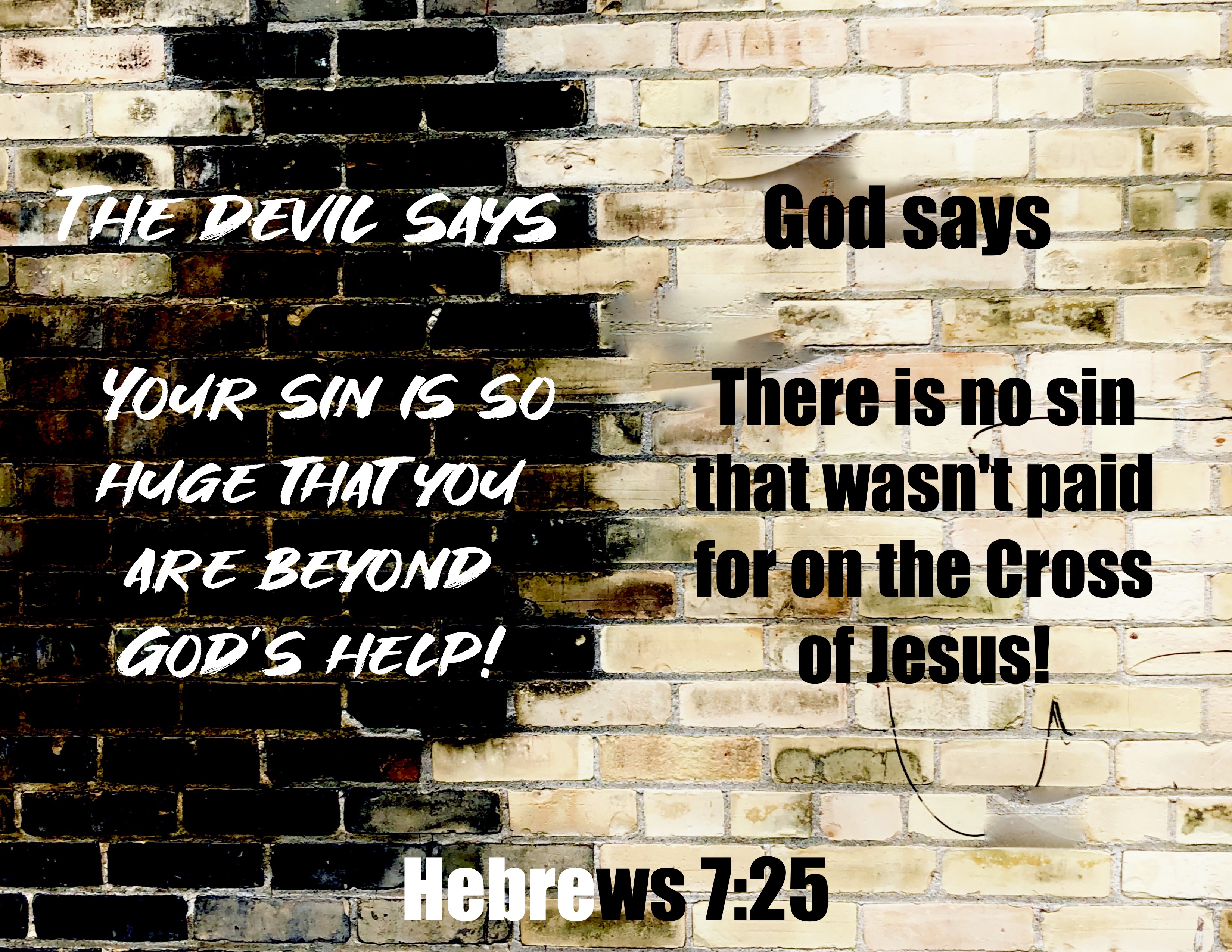
Therefore He is also able to save to the uttermost those who come to God through Him, since He always lives to make intercession for them. (Hebrews 7:25)
My friends, it is one thing to go to church or chapel. It is quite another thing to go to God. …
Coming to God is not what some of you suppose, that is, now and then sincerely performing an act of devotion but giving to the world the greater part of your life. You think that if sometimes you are sincere, if now and then you put up an earnest cry to heaven, God will accept you. And though your life may be still worldly and your desires still carnal, you suppose that for the sake of this occasional devotion God will be pleased, in His infinite mercy, to blot out your sins. I tell you, sinners, there is no such thing as bringing half of yourselves to God and leaving the other half away. …
If I should see a sinner staggering on his progress to hell, I would not give him up, even when he had advanced to the last stage of iniquity. Though his foot hung trembling over the very edge of perdition, I would not cease to pray for him. And though he should in his poor drunken wickedness go staggering on till one foot was over hell and he was ready to perish, I would not despair of him. Till the pit had shut its mouth upon him I would believe it is possible that divine grace might save him. See there! He is just upon the edge of the pit, ready to fall. But before he falls, free grace bids, ‘Stop that man!’ Down mercy comes, catches him on her broad wings, and he is saved—a trophy of redeeming love.
From Salvation To The Uttermost
My friend, if you don’t have a personal relationship with God through the forgiving work that Jesus accomplished on the Cross, I implore you to come to Him before another minute passes. When Jesus said from this Cross, “It is finished,” He told you that He paid in full your debt that would have kept you separated from God forever.
Now you just need to come to Him in faith. Simply pray something like this: “God, I acknowledge that I am a sinner separated from You. But I believe that Jesus paid the penalty for all of my sins when He died on the Cross. Because of that payment, I am asking You to forgive me and bring me into a full relationship with You. I pray this in the name of Jesus. Amen.”
And let me speak to you, my Christian brother or sister who has been praying earnestly for the salvation of someone dear to you. Let me encourage you to not give up! God’s mercy and God’s grace are so swift that even with the last breath they can swoop in to save. Never cease to pray for them and know that Jesus is interceding for them before God’s throne too!
►► Would you please prayerfully consider supporting this ministry? ◀︎◀︎
Listen to the podcast of this post by clicking on the player below, and you can also subscribe on Apple or Spotify.
Jesus has been hanging on the Cross silently for three hours. And now He gathers His strength for four final statements that all come in pretty close proximity. His first three dying declarations have been declarations of love:
But now comes a word of sheer, unparalleled agony. A word from a heart that is experiencing the depths of betrayal and pain that has never been known—or even approached—in all of human history: Eloi, Eloi, lama sabachthani! (Matthew 27:45-46; Mark 15:33-34)
Does this sound like a good Friday message: My God, My God, why have You forsaken Me?
This is the only one of the seven dying declarations of Jesus that Matthew and Mark record, and they do it nearly identically:
This is a word for everyone: Jews and Greek, nobles and commoners, religious people and pagans.
This dying declaration comes from words taken directly from Psalm 22. David wrote this psalm 1000 years before the crucifixion of Jesus, but note the amazing accuracy in the despicable treatment of Jesus, gambling for Christ’s clothes, even the crucifixion itself (which was unknown in David’s time), and then there’s the heart-wrenching cry My God, My God, why have You forsaken Me?
Matthew and Mark say Jesus “cried out.” This can mean a cry of joy or a cry of pain. They also record that He cried out with “a loud voice.” The Greek words here will sound very familiar even to English ears—“loud” is the word megas, and “voice” is the word phoné. Literally: Jesus raised a megaphone voice to make sure everyone heard His cry!
Remember that cried out can either be a cry of joy or of pain? Which one was it? You could make the case that it is both of these meanings. But there is a third way of using this word: a cry for help.
Jesus is about to take a plunge. He is about to descend deeper than anyone else ever has. He is about to voluntarily go into Hell itself. This megaphone cry is His battlecry before storming the gates of Hell!
Christ’s megaphone battlecry was heard in Hell and in Heaven as Jesus descended to decisively defeat hell, death, and the grave! Make no mistake, Jesus undoubtedly won that battle! That same descriptive word megas is also used for…
His megaphone declaration from the Cross on Good Friday was a cry of pain over our sin, a battlecry as He stormed the gates of Hell, and a cry of joy over His coming victory!
So now we can say, “Where, O Death, is your victory? Oh yeah, you don’t have one because my Savior has totally defeated you!”
If you’ve missed any of the other dying declarations of Jesus from the Cross, you may access the full list by clicking here.
►► Would you please prayerfully consider supporting this ministry? ◀︎◀︎
Listen to the podcast of this post by clicking on the player below, and you can also subscribe on iTunes or Spotify.
C.S. Lewis gives us fantastic insight into the temptations the devil tries to use against Christians. You can read my full book review here. Just as a reminder: When Screwtape talks about “the Enemy” he is referring to God and when he says “our Father” he is talking about satan.
“Prosperity knits a man to the World. He feels that he is ‘finding his place in it,’ while really it is finding its place in him.”
“Music and silence—how I detest them both! How thankful we should be that ever since our Father entered Hell—though longer ago than humans, reckoning in light years, could express—no square inch of infernal space and no moment of infernal time has been surrendered to either of those abominable forces, but all has been occupied by Noise—Noise, the grand dynamism, the audible expression of all that is exultant, ruthless, and virile—Noise which alone defends us from silly qualms, despairing scruples, and impossible desires. We will make the whole universe a noise in the end.”
“Let his inner resolve be to bear whatever comes to him, but to bear it ‘for a reasonable period’—and let the reasonable period be shorter than the trial is likely to last. It need not be much shorter…. The fun is to make the man yield just when (had he but known it) relief was almost in sight.”
“Surely you know that if a man can’t be cured of churchgoing, the next best thing is to send him all over the neighborhood looking for the church that ‘suits’ him until he becomes a taster or connoisseur of churches.”
“Our Enemy is a hedonist at heart. All those fasts and vigils and stakes and crosses are only a facade. Or only like foam on the seashore. Out at sea, out in His sea, there is pleasure, and more pleasure. He makes no secret of it; at His right hand are ‘pleasures forevermore.’ Ugh! … He has filled His world full of pleasures. There are things for humans to do all day long without His minding in the least—sleeping, washing, eating, drinking, making love, playing, praying, working. Everything has to be twisted before it’s any use to us.”
“You will say that these are very small sins; and doubtless, like all young tempters, you are anxious to be able to report spectacular wickedness. But do remember, the only thing that matters is the extent to which you separate the man from the Enemy. It does not matter how small the sins are provided that their cumulative effect is to edge the man away from the Light and out into the Nothing. Murder is no better than cards if cards can do the trick. Indeed the safest road to Hell is the gradual one—the gentle slope, soft underfoot, without sudden turnings, without milestones, without signposts.”
“Your patient has become humble; have you drawn his attention to the fact? All virtues are less formidable to us once the man is aware that he has them, but this is specially true of humility. Catch him at the moment when he is really poor in spirit and smuggle into his mind the gratifying reflection, ‘By Jove! I’m being humble,’ and almost immediately pride—pride at his own humility—will appear. If he awakes to the danger and tries to smother this new form of pride, make him proud of his attempt. … You must therefore conceal from the patient the true end of Humility. Let him think of it not as self-forgetfulness but as a certain kind of opinion (namely, a low opinion) of his own talents and character.”
“There are two equal and opposite errors into which our race can fall about the devils. One it to disbelieve in their existence. The other is to believe, and to feel an excessive and unhealthy interest in them.”
“Even of his sins the Enemy does not want him to think too much: once they are repented, the sooner the man turns his attention outward, the better the Enemy is pleased.”
“Whenever they are attending to the Enemy Himself we are defeated, but there are ways of preventing them from doing so. The simplest is to turn their gaze away from Him towards themselves. Keep them watching their own minds and trying to produce feelings there by the action of their own wills. When they meant to ask Him for charity, let them, instead, start trying to manufacture charitable feelings for themselves and not notice that this is what they are doing. When they meant to pray for courage, let them really be trying to feel brave. When they say they are praying for forgiveness, let them be trying to feel forgiven. Teach them to estimate the value of each prayer by their success in producing the desired feeling; and never let them suspect how much success or failure of that kind depends on whether they are well or ill, fresh or tired, at the moment.”
…make you fishers of men” (Matthew 7:23; Mark 1:17)
…acknowledge in Heaven those who acknowledge Me on earth” (Matthew 10:32-33)
…give you rest” (Matthew 11:28)
…build My church” (Matthew 16:18)
…give you the keys of the Kingdom of Heaven” (Matthew 16:19)
…show you whom you should fear” (Luke 12:5)
…drive out demons and heal people” (Luke 13:32)
…never drive away those who come to Me” (John 6:37)
…give My life for your life” (John 6:51)
…rise again from the dead” (Matthew 27:63; Mark 14:28; John 2:19)
…raise up believers to eternal life” (John 6:40, 44, 54)
…come back to take you to be with Me forever” (John 14:3)
…do whatever you ask in My name” (John 14:13, 14; 16:28)
…not leave you as orphans” (John 14:18)
…ask the Father to give you an Advocate” (John 14:18)
…give you words and wisdom that are irresistible” (Luke 21:15)
…see you again and give you eternal joy” (John 16:22)
Oh, what a Savior!
Psalm 68 is a Christological Psalm. That means it points to Jesus and it is fulfilled through Christ’s First and Second Advents. These types of psalms don’t make sense if they are restricted strictly to the Old Testament.
As I have explained previously, Hebrew literature often puts the key point in the middle—in the case of this psalm, that’s verses 18-20. The opening verse sets the stage, or the scene of battle, and then right in the middle of this psalm of David is the description of God’s victory won through Jesus.
There are three Selahs in this psalm, and I want you to notice what’s happening at each one:
Do you remember the three definitions of Selah? A pause to consider; a breath before the crescendo; a time to weigh what’s valuable. In this case, I believe we should lean more to the second definition. Why? Because all three of these Selahs shows us what God has done, what He is still doing, and what He will ultimately do in the eternity of Heaven. I believe we are living in the breath/Selah after Christ’s First Advent and leading up to the crescendo of His Second Advent.
Jesus is BOTH the Immanuel that came to earth at His First Advent AND the returning King at His Second Advent. We are living in an era of BOTH “now” AND “not yet.”
The apostle Paul looks back to this psalm (especially those middle verses of 18-20) even as he looks forward to the Second Advent. He captures the essence of “now” and “not yet” in all these passages:
So how shall we now live in this time of “now” and “not yet”? In a word: AWARE…
Now is not the time for fainting, but fighting the good fight. Our Immanuel has won the battle, He will continue to strengthen us every day that we walk this Earth, and He will keep us by His side as He reigns for all eternity as King of kings and Lord of lords!
If you’ve missed any of the previous posts in this series, you can check out the full list by clicking here.