Listen to the podcast of this post by clicking on the player below, and you can also subscribe on Apple, Spotify, or Audible.
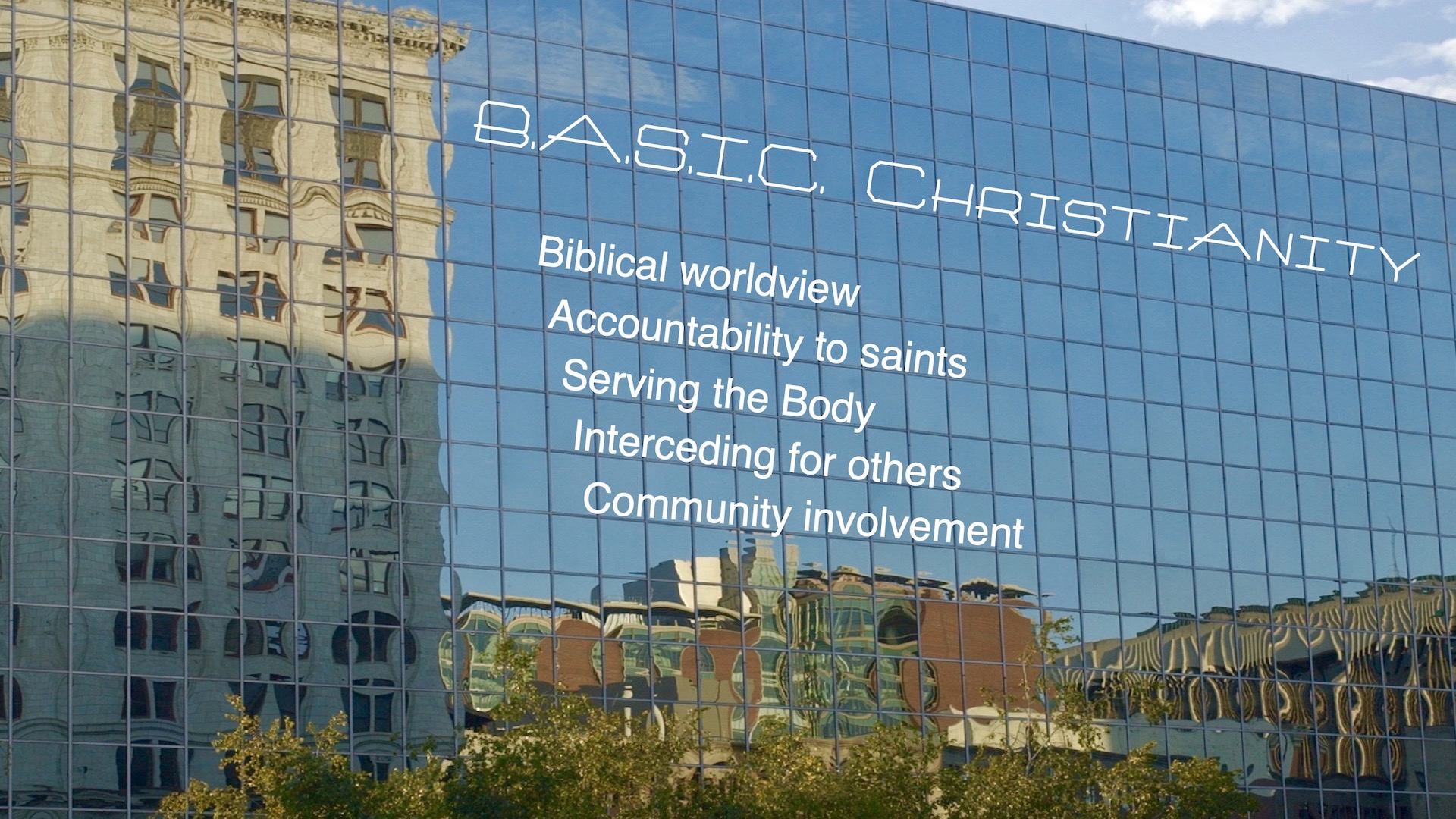
The letters we’ve looked at so far—B, A, S, and I—are bringing about greater fruitfulness and joy-fullness in our lives, which is then enhancing our personal testimony. So the B, A, S, and I all lead up to the C—community involvement.
One of the first things we need to consider about our community is our role—both what the Bible says is and isn’t our area of concern. Jesus helps us with a parable about wheat and weed and its explanation a few verses later (Matthew 13:24-30, 36-43).
From Jesus we learn that the world was created good—that’s what God said at each day of Creation. Since the fall of man, satan has sown his evil seeds alongside Christ’s good seeds.
Our responsibility isn’t about pointing out what’s wrong in the world
It isn’t about rooting out the evil in the world
It isn’t about judging the evil or even the evildoers in the world
Our responsibility is to proclaim how good our God is
Our responsibility is to bear as much God-honoring fruit as we can
Our responsibility is to embody biblical principles and proclaim the benefits of God’s Kingdom to others
The apostle Paul helps us see our role in our community with his payer in Ephesians 1:17-20. Paul desires that we know…
The hope to which God has called us. A rock-solid, irrevocable, eternal hope!
The riches of His inheritance in His saints. The treasure is in us. We get to be God’s blessing to those around us.
God’s incomparably great power for us. We’re never lacking anything because His power is for us—God Himself is for us!
When our eyes are opened to this, we can see better how to live in our communities. God has placed us and equipped us to proclaim His glorious Gospel in our Personal Mission Field. The PMF includes places like our:
Family—John 1:35-42
Friend group—John 1:43-46
Neighborhood—Colossians 1:3-8
Workplace—Ephesians 6:5-9
How do we do this?
We talk about the daily interactions you have with Jesus—make it clear that He is a real Person with Whom you have a relationship.
We live out our biblical worldview.
We stay in fellowship with out saints so that we are sharpened and prepared to give an answer for the reason for the hope we have.
We continually monitor our conversation and attitude to make sure they are Christ-like.
Let us saints be known for what we’re for more than for what we’re against!
Instead of railing on the evil, proclaim the favor of God, proclaim the soul-satisfying joy of a relationship with Jesus, and proclaim the advantages of the Holy Spirit’s continual counsel.
If you’ve missed any of the previous messages in our series B.A.S.I.C. Christianity, you can find them all here.
Listen to the podcast of this post by clicking on the player below, and you can also subscribe on Apple, Spotify, or Audible.
I take some time at the end of each calendar year for a quick recap of everything we have learned during this year at Calvary Assembly of God. I do this because I want to make sure we are all on the same page with each other before we move into a new year. And I also think it’s very important that we are continually reminded and reassured of what God has done for us. In our series on gratitude we talked about the dangers of forgetting to remember and re-tell the blessings of God. We see in the letters from the apostles both a re-telling of their own words, and reusing and amplifying the words of Jesus and other apostles.
You can click on the sermon series title to find a list of all of the sermons in that series. Clicking on those individual sermons will give you a short written recap of that message, and it will also give you the link to watch the video of the full sermon.
Kingdom Praying. Jesus made it clear time and time again that He came to reveal the Kingdom of God to us. He described what the Kingdom was like and told us that He came to be the means by which we could enter God’s Kingdom. He also told us how God’s children could access the power and privileges of our Heavenly Father through the means of prayer. He assured us with words like, “Do not be afraid, little flock, for your Father has been pleased to give you the Kingdom” (Luke 12:32). Jesus said quite simply that we had access to our Father through prayer. And then to make sure we didn’t miss out on this awesome privilege, He instructed us, “This, then, is how you should pray” (Matthew 6:8).
Jots and Tittles. As we get closer to the death and resurrection of Jesus, there are an increasing number of prophecies that are fulfilled in these events. Jesus appears to have been very attentive to making sure that each and every one of these prophecies were fulfilled to the smallest detail. Near the beginning of His public ministry, Jesus noted that not one iota—or “one jot or tittle” in the Old English vocabulary—of any of God’s promises would be left unfulfilled (Matthew 5:18). It’s amazing that Jesus so carefully attended to all of these, but it’s also important to ask ourselves what these fulfilled prophecies mean to us today.
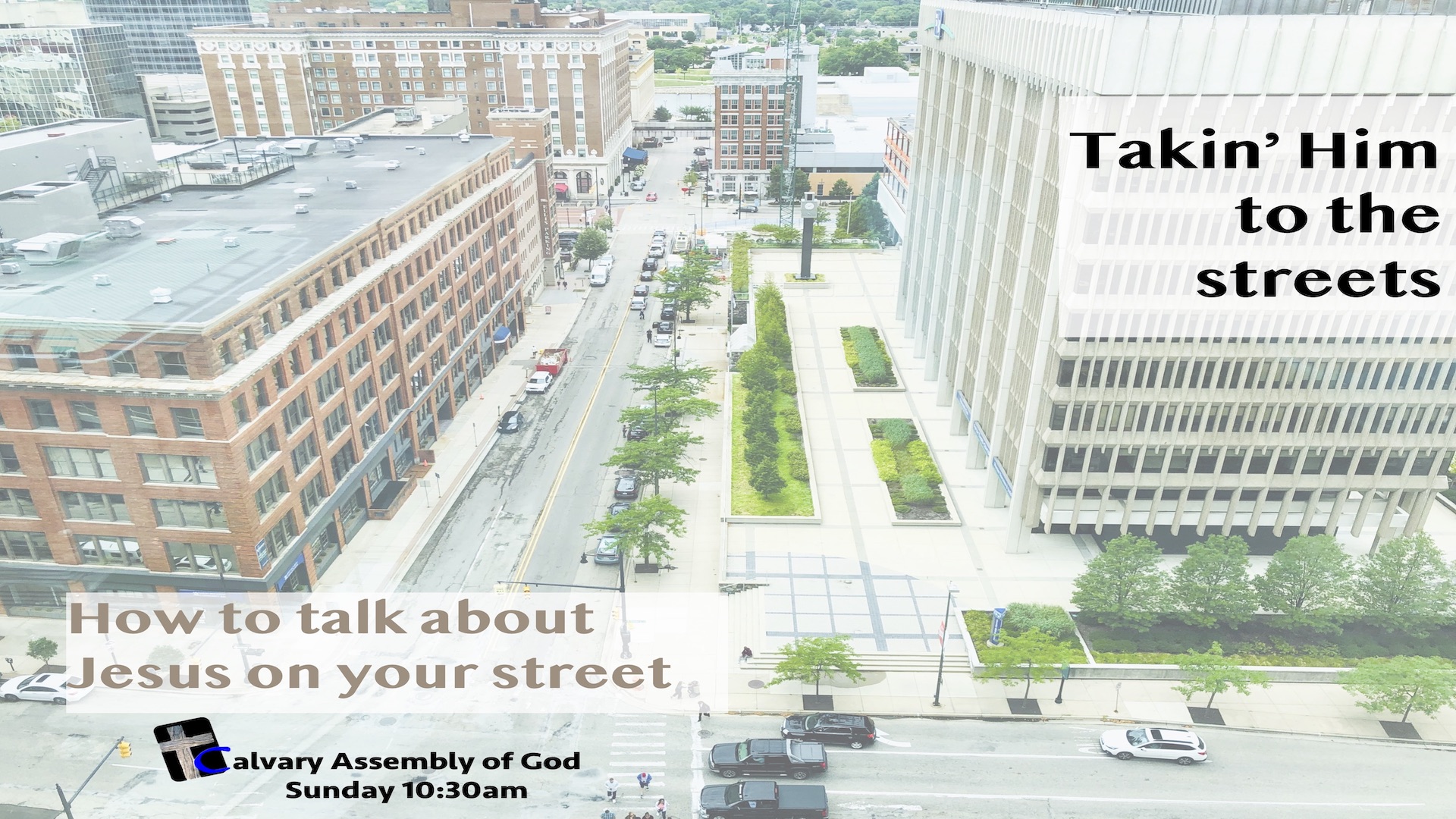
Takin’ Him to the Streets. Just before Jesus ascended to Heaven, He told His followers that they would have the joyful responsibility of taking the good news of forgiveness and eternal life to all the highways and byways of every nation. Later on, Paul would get more specific about all of the groups to which he was taking the message of Jesus (see Luke 24:46-47; 1 Corinthians 9:20-22). That commission is still in effect for Christians today: We are to share the gospel with everyone—from easy street to skid row, from Wall Street to Main Street, and every street in between. The streets on which you live and work are different from the streets where I travel. In fact, all of us live on different streets, but everyone we meet on every street needs to hear about Jesus. In this new series of messages, we are going to learn how the Holy Spirit can help us be ready to take Jesus to those on each street where God sends us.
Ascending. Every year, Jews from around the world made four pilgrimages up to Jerusalem for various feasts and sacrifices. These journeys reminded them of God’s goodness as they went to the Temple to worship, and they helped refocus on God’s ways as they returned to their regular routines. Jerusalem is over 2500 feet above sea level, so the pilgrimage there was a physical workout as well as a spiritual workout. These workouts were beneficial for God’s people, preparing them to minister in their cities in the following months. The Book of Psalms contains 15 songs that these pilgrims would sing to and with each other as they traveled up to Jerusalem. These Psalms of Ascent are still instructive for Christians today.
Living in your Gift Zone. God created each and every human being uniquely. We all come in different shapes and sizes, but we all share one thing in common: He created each of us with a unique personality and a unique gift package. By unique, I truly mean that we are all one-of-a-kind creations that have never existed in all of history! Here’s another thing we all have in common: We usually live in a comfort zone that is far smaller than our gift zone. Living this way keeps us from soaring through life in the way that God intended. He wants each of us to know our gifts, and to use our gifts in a way that benefits our world and brings Him glory. It starts with believing that we are indeed gifted by our Creator. Then we must have the courage to step out of our comfort zone into the much larger gift zone God has given us.
Is that in the Bible? A meme that makes me chuckle every time I see it is a “quote” attributed to Abraham Lincoln in which he says, “The problem with quotes found on the internet is that they are often not true.” (Not to spoil the joke for you, but unless Lincoln knew how to time travel to the future, I don’t think he knew about the modern internet!). I love this meme because it captures something that so many people fall into: a quick acceptance of a statement without verifying its source or thinking through the implications of the statement’s truthfulness. In this series I think you may be surprised to discover just how many phrases we call biblical aren’t, and how many phrases there are that we never realized are actually in the Bible.
Be Thankful. It’s so easy to spot the negative things. It’s so easy to gripe about the bad stuff with others. It’s so easy to complain about what’s wrong with the world. But the Bible repeatedly calls the saints of God to rise above this downward pull of negativity. In fact, for those who have a relationship with their Heavenly Father, who call Jesus their Savior, and who call the Holy Spirit their Counselor, there is really only one way to live: Grateful!
Christ’s Advents. The word Advent means the appearing—something that bursts onto the scene. At this time of year we are actually thinking about TWO Advents. We look backward in gratitude to celebrate the first Advent of Jesus when He was born in a manger in Bethlehem. And then we look forward in joyful expectation to the second Advent of Jesus when He will return to earth again as King of kings. As Christians live in this time between the two Advents, our celebration and expectation should bring four noticeable attributes from our lives: hope, peace, joy, and love.
This next year promises to be another amazing time of learning and growing. If you live in northern Kent County and don’t have a home church, I would love for you to visit us!
Listen to the podcast of this post by clicking on the player below, and you can also subscribe on Apple, Spotify, or Audible.
The Christians could have used the “great persecution” that broke out against them (Acts 8:1) as a great excuse to hide or to remain quiet. After all, Saul and his hoard were specifically targeting those who were known to be Christians, so keeping quiet or out of sight might have saved their lives.
Instead, these fearless Christians used this great persecution as a messenger from God to keep them on-mission in fulfilling the Great Commission (Matthew 28:18-20; Acts 1:8), taking the Gospel to even the despised Samaritans (Acts 8:4)!
Would they have taken this message to these folks without this “nudge” of persecution? Maybe, but then again, maybe they would have stayed in Jerusalem and delayed too long in sharing with those who lived in the capital city. It’s a really good bet that without this persecution they wouldn’t have come up with the idea of going to Samaria on their own!
I think we can learn some good lessons from this incident. When unexpected difficulties crash into our lives, let’s re-frame our thinking. Instead of using this hardship as an excuse to do less, let’s ask:
Do I need to re-evaluate what I have (or haven’t) been doing? Do I need to repent of anything?
Am I on-mission as a Christian witness? Am I consistently using my God-given gifts in God-glorifying ways to point others to Jesus?
How can I live out and proclaim the Word of God even in this unexpected place?
Let’s be like those Christians who didn’t grumble, who didn’t hide, who didn’t make excuses. But they said, “This is just another opportunity for us to invite people to meet Jesus as their Lord and Savior,” and then they joyfully moved forward.
Listen to the podcast of this post by clicking on the player below, and you can also subscribe on Apple, Spotify, or Audible.
In the 40 days between His resurrection and His ascension, we read that Jesus was with His disciples “giving instructions through the Holy Spirit” (Acts 1:2).
I think this word “instructions” in the NIV is too soft. The other translations say things like:
commandments (NKJV)
orders (NASB & NET)
instructed and commanded (AMPC)
The Greek word Luke uses in Acts 1:2 is entellomai and it is a word that carries weight. Throughout the New Testament this word is used to identify…
…the words of God (Matthew 4:6, 15:4; Luke 4:10; Acts 13:47; Hebrews 9:20)
…the words of Moses (Matthew 19:7; Mark 10:3; John 8:5)
…the words of Jesus (Matthew 17:9, 28:20; Mark 11:6; John 14:31; 15:14, 17; Acts 1:2, 13:47)
…the words of recognized leaders (Mark 13:34; Hebrews 11:22)
In other words, these aren’t just any words, but they carry an awesome authority with them. These are binding commands. They are not merely wise counsel or suggestions for godly living. They are indispensable to the Christian life.
Luke points out that Jesus gave these commands “through the Holy Spirit” because it is only through the Holy Spirit that you and I can understand them, apply them, and be empowered to obey them.
Jesus uses the same word entellomai in the Great Commission (Matthew 28:20) as well as in Acts 1:2. Clearly, the Scripture is telling us that we are powerless to understand and powerless to obey without the Holy Spirit’s daily empowerment. Jesus would never give us commands that we were unable to carry out, which is why He gives us instructions through the Spirit, and then the Spirit gives us the power to joyfully obey those commands.
Don’t ever think that you are on your own in trying to figure out what Jesus said, and how you are going to live it out.
I discuss the role of the Holy Spirit in a Christian’s life in much greater detail in my series called We Are: Pentecostal.
Listen to the podcast of this post by clicking on the player below, and you can also subscribe on Apple, Spotify, or Audible.
Just as assuredly as Jesus fulfilled God’s promise of His crucifixion and resurrection, we Christians are fulfilling God’s promise that we would take the message of forgiveness of sins to the whole world (Luke 24:45-48). We are taking Him to every street where God sends us. There is a song written by Michael McDonald called “Takin’ it to the streets.” One verse says—
Take this message to my brother
You will find him everywhere
Wherever people live together
Tied in poverty’s despair
We know what the “it” is. He is a Savior, a God, a Redeemer, a Father who has made it possible for everyone everywhere to be in a personal relationship with Him for all of eternity!
When anyone talks about taking the Good News of Jesus to people, our minds typically think “missionary.”
What is a missionary? What comes to mind when you think of a missionary?
Quite simply, a missionary is a person sent on a mission (see Luke 24:47; Matthew 28:19-20).
We are not sent on our mission unprepared, but Jesus promised us both His authority and the indwelling power of the Holy Spirit (Matthew 28:18-19; Luke 24:49; Acts 1:8). In both Luke and Acts, Jesus says that our witness is to begin in Jerusalem.
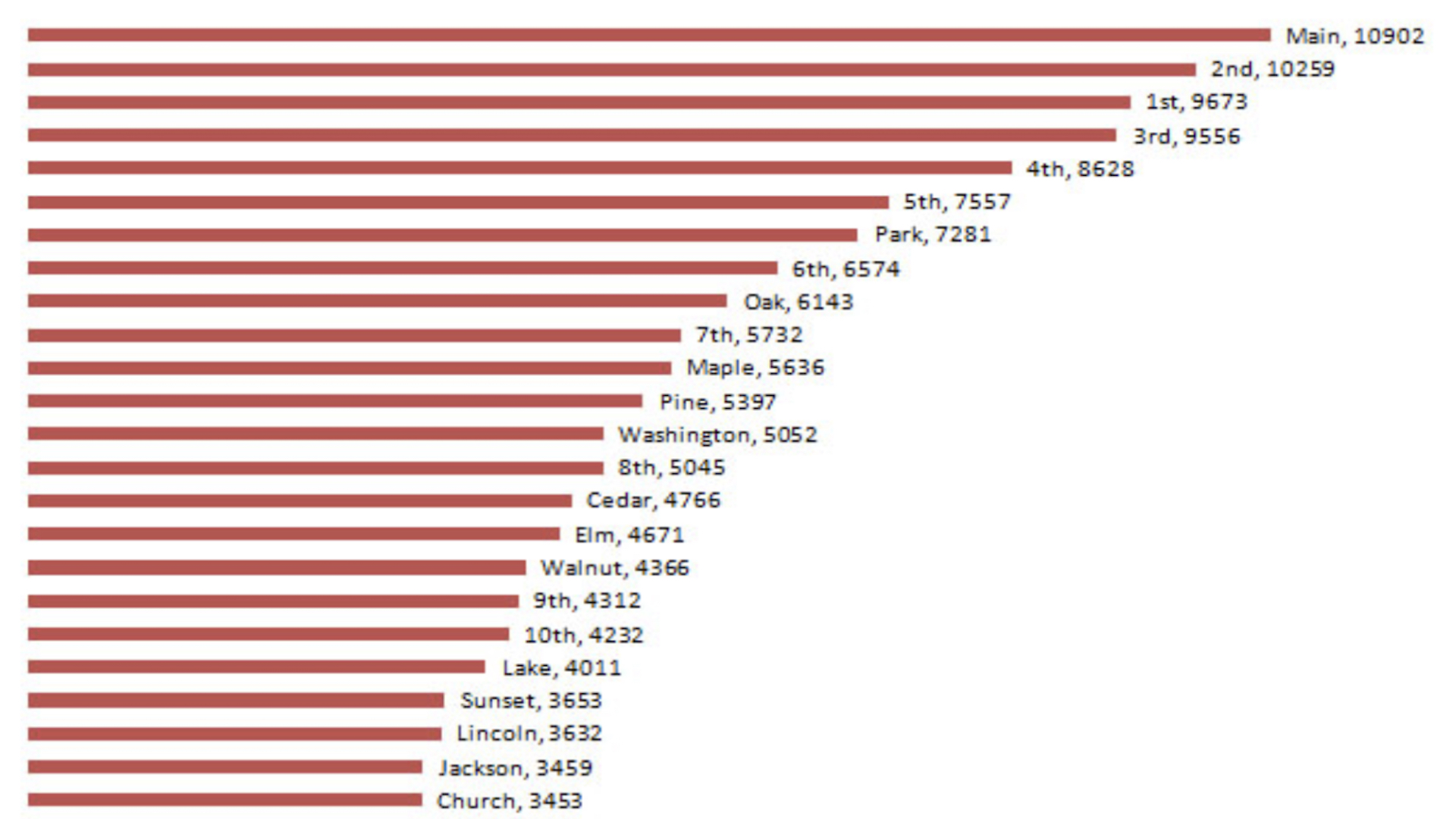
I recently looked up a list of the most common street names in America. I found that the most common street name is “Main Street.” But Main Street is also used as a way for people to describe the average setting in the USA.
Going to “Jerusalem” or “Main Street” first is foretold in the Old Testament (Ezekiel 3:4-5). We’re not first sent to people with an unknown language or obscure customs, but to people we know and understand. These are people to whom we can easily find common interests.
There are two simple steps when we take Jesus to our Main Street.
Ask the Holy Spirit to reveal truth to you today and every day.
You cannot give to others what you do not first have yourself, so you need to hear what the Holy Spirit is saying to you first. Pray before reading the Bible to ask the Spirit to give you insight (Psalm 119:18).
Find a friend and tell them what was revealed to you.
After Jesus was revealed to Andrew, he found Peter and told him what he had discovered. And after Philip met Jesus, he found Nathanael and brought him to Jesus (John 1:35-46).
Every person with whom you interact today is precious to God. Our mission is to help them realize that awesome truth.
So get filled up with the wisdom from the Spirit and then find a friend on Main Street and bring them to Jesus!
Follow along with all of the messages in this series Takin’ Him To The Streets by clicking here.
Just before Jesus ascended to Heaven, He told His followers that they would have the joyful responsibility of taking the good news of forgiveness and eternal life to all the highways and byways of every nation. Later on, Paul would get more specific about all of the groups to which he was taking the message of Jesus (see Luke 24:46-47; 1 Corinthians 9:20-22).
That commission is still in effect for Christians today: We are to share the gospel with everyone—from easy street to skid row, from Wall Street to Main Street, and every street in between.
The streets on which you live and work are different from the streets where I travel. In fact, all of us live on different streets, but everyone we meet on every street needs to hear about Jesus. In this new series of messages, we are going to learn how the Holy Spirit can help us be ready to take Jesus to those on each street where God sends us.
I hope you can join me at Calvary Assembly of God for this highly practical series of messages. If you missed any of the messages, you can find them all here:
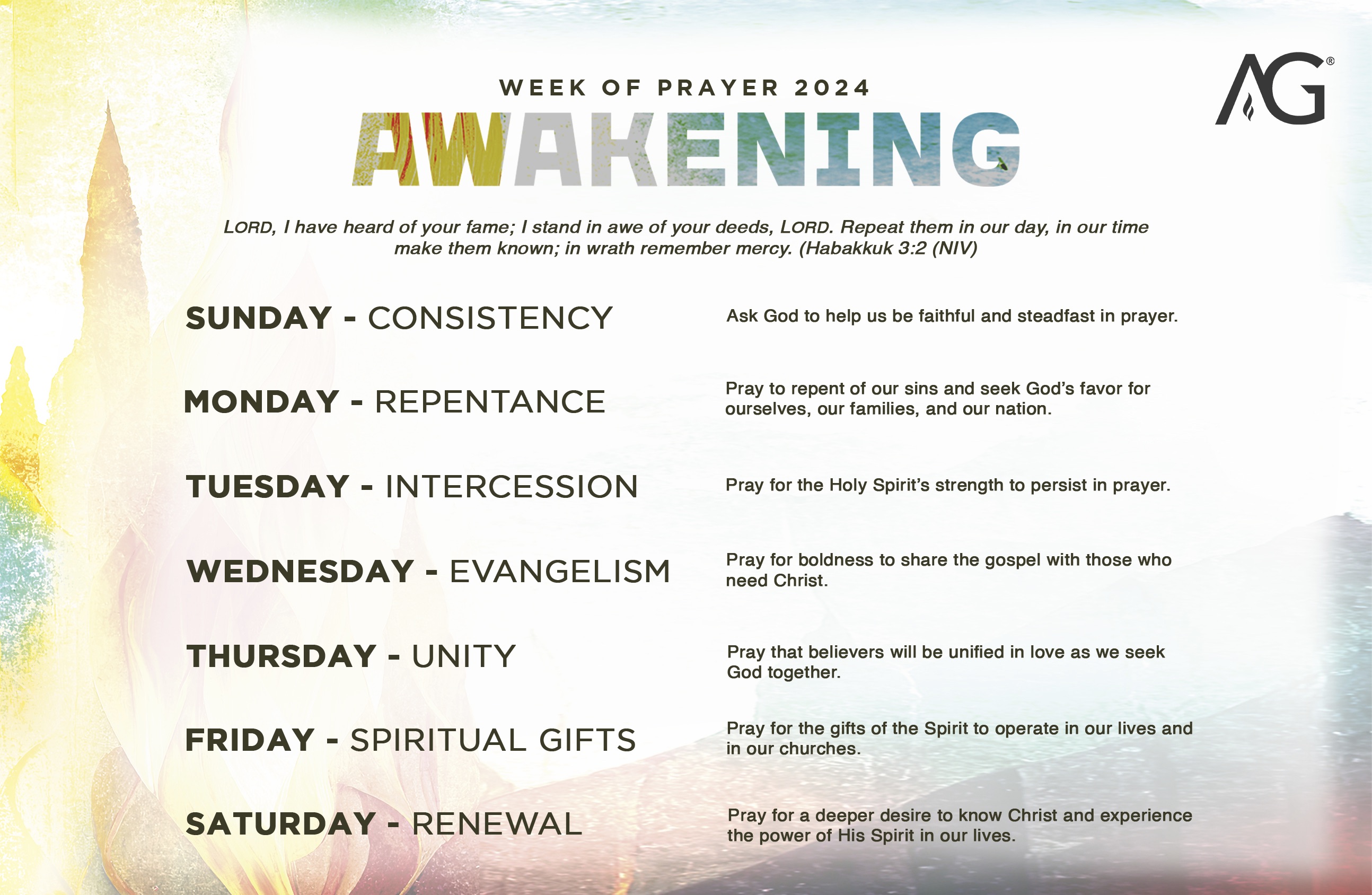
I grew up with a phrase ringing in my ears, “The Church moves forward on its knees.”
I believe this is true! We cannot expect to be effective in any kingdom-building endeavor if we are not empowered by heavenly help. So we like to begin each new year with a dedicated week of prayer. I invite you to join us in kicking off the new year with a renewed passion for prayer.
If you were one of Christ’s disciples, wouldn’t you think it would be time for Jesus to take a victory lap? Maybe He could show up at the next meeting of the Sanhedrin, or in Pontius Pilate’s courtroom, or King Herod Antipas’ throne room. You can almost hear their longing for this when they asked Jesus, “Lord, are You at this time going to restore the kingdom to Israel?” (Acts 1:6).
Jesus answered that question by saying, “Your race is just now beginning!” You see, Christ’s resurrection wasn’t the end of the race, but an important—absolutely indispensable—part of our ongoing race. “I will be raised back to life again” was a bold claim, but it wasn’t the final bold claim. There is one more for us to consider.
The resurrection of Jesus is our assurance that what Jesus says He will do, He will do. One of the things He promised is, “I am going to prepare a place for you and I will come back to get you” (John 14:1-3). The place Jesus has prepared for us is the end of our race—the finish line for which every Christian should be longing.
The disciples asked Jesus how they could know when His return was getting closer. He gave them a lot of things to watch for, but He concluded by saying, “And this gospel of the kingdom will be preached in the whole world as a testimony to all nations, and THEN the end will come” (Matthew 24:14).
In order for us to go Home, the whole world—people in all nations—have to hear the Good News of the Kingdom of God.
In one of the boldest claims of all, Jesus says He has ultimate authority, and that He is commissioning us to use His authority for the express purpose of our missionary work to all nations. Notice the “therefore” which indicates what we are to do with His authority—
All authority in heaven and on earth has been given to Me. Therefore go andmake disciples of all nations, baptizing them in the name of the Father and of the Son and of the Holy Spirit, and teaching them to obey everything I have commanded you. And surely I am with you always, to the very end of the age. … But you will receive power when the Holy Spirit comes on you; and you will beMy witnesses in Jerusalem, and in all Judea and Samaria, and to the ends of the earth. (Matthew 28:18-20; Acts 1:8)
The apostle Paul appreciated this analogy of running a race. Just before it was time for Paul to go Home, he told his friend Timothy, “I have fought the good fight, I have finished the race, I have kept the faith” (2 Timothy 4:7).
Earlier in his life, Paul used a running example when he wrote to the Christians at Corinth—
Do you not know that in a race all the runners run, but only one gets the prize? Run in such a way as to get the prize. Everyone who competes in the games goes into strict training. They do it to get a crown that will not last, but we do it to get a crown that will last forever. Therefore I do not run like someone running aimlessly; I do not fight like a boxer beating the air. No, I strike a blow to my body and make it my slave so that after I have preached to others, I myself will not be disqualified for the prize. (1 Corinthians 9:24-27)
Paul gives us three don’ts and three dos in this passage:
Don’t fail to train, don’t run aimlessly, don’t get disqualified by focusing on the temporal
Do go into strict training, do stay focused on the eternal, do run for the prize of hearing Jesus say, “Well done!”
Do you want to go Home? Do you want Jesus to come again to take all of His children Home? Then finish the race of telling everyone in the whole world the Good News about Jesus.
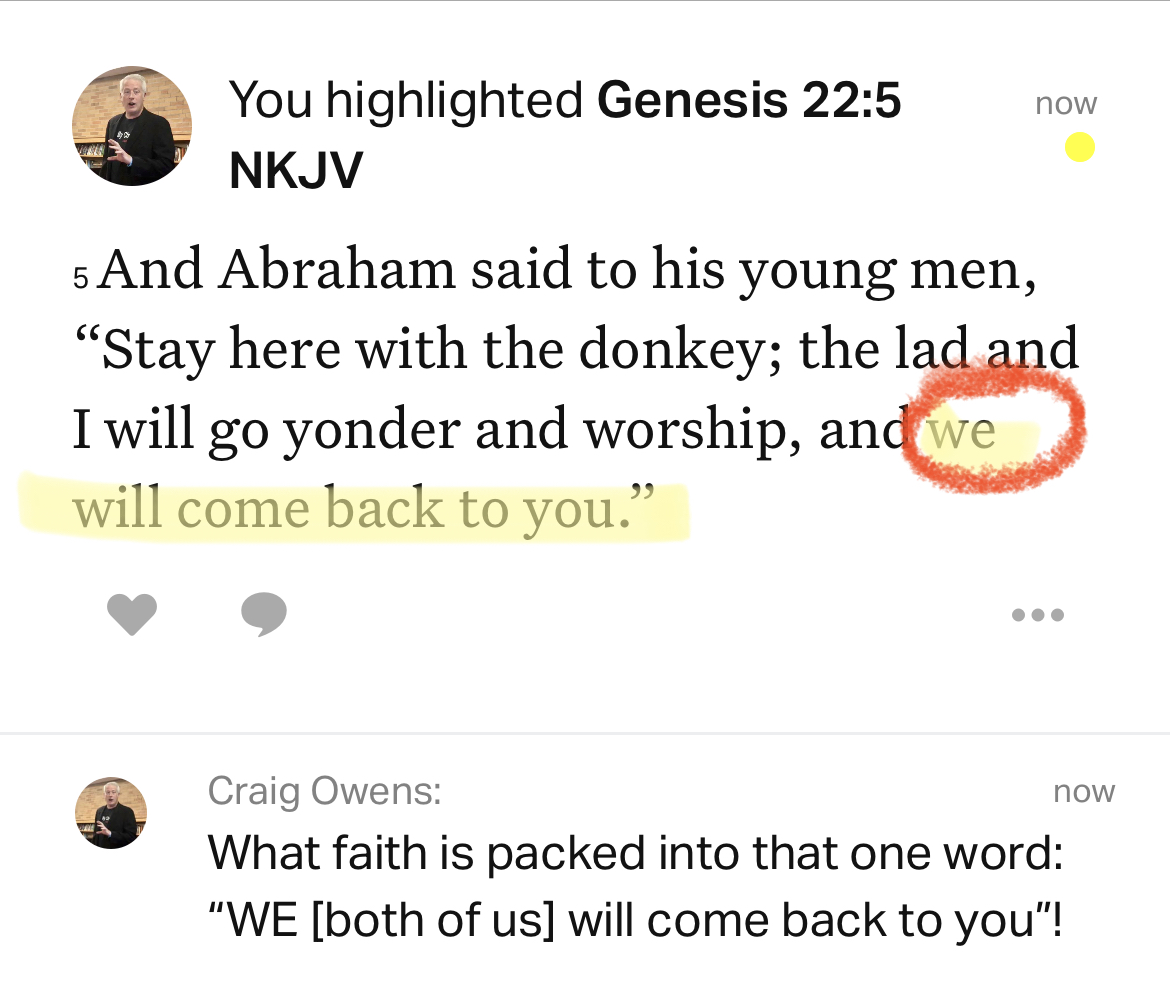
Abraham is commanded by God to sacrifice his son Isaac. Look at Abraham’s faith in just one word: “WEwill come back to you.”
Follow me on YouVersion so we can share more thoughts on God’s Word with each other.
Wil Robinson shares a fable from Leo Tolstoy with the three most important questions everyone should ask themselves. The three questions are: How can I learn to do the right thing at the right time? Who are the people I most need, and to whom should I, therefore, pay more attention than to the rest? And, what affairs are the most important and need my first attention?
“Faithfulness is displayed in both word and deed—seen best by combining the Great Commission’s instruction to ‘make disciples’ with the second greatest commandment to ‘love thy neighbor.’ The beauty of the Gospel is found in both proclamation and demonstration. Neither comes first; neither comes second. Like the perfect marriage, it’s the duty of the Christians to take on each, giving 100 percent effort to both.” —Gabe Lyons, The Next Christians
“Oh, that the eyes of sinners may be speedily opened—that they may see the difference of things, the beauty which is in holiness, and the astonishing madness that is in sin!” —Thomas Watson
John Piper observes, “The number-one reason why people in such seemingly hopeless situations purchase scratch-offs is because things already look so hopeless for improvement that the so-called ‘stupidity’ of wasting this dollar won’t really make anything worse.” This post elaborates on how the lottery preys on the poor.
Listen to the podcast of this post by clicking on the player below, and you can also subscribe on Apple, Spotify, or Audible.
When you’ve been at a church service have you ever asked yourself, “What are we doing here? What exactly is ‘church’? What are we supposed to be doing?”
Some people think church is saints going out to tell people about Jesus, and some people think church is saints coming together to hear about Jesus (see Matthew 28:19-20; 1 Corinthians 11:18). I think this is an either-or trap.
I think a better way of looking at this is “both-and” and “so that”: BOTH coming to a gathering of believers so that we can be equipped to go out AND going out to tell people about Jesus so that we can bring new disciples into the church.
Our foundational truth statement says: The Church is the Body of Christ, the habitation of God through the Spirit, with divine appointments for the fulfillment of her great commission. Each believer, born of the Spirit, is an integral part of the General Assembly and Church of the Firstborn, which are written in heaven.
To help us see where we play a vital role in all of this, the Bible gives us three pictures of the church:
All of these pictures speak of multiple parts making up one unified, healthy whole. Remove any part or any function, and the whole thing is diminished. All of these pictures also speak of intentionality. No one becomes healthy by accident, or builds a sound structure by accident, or enjoys a fulfilling marriage by accident. Health, soundness, and fulfillment all result from being intentional about our choices and interactions.
I believe these three pictures also help us see what the church isn’t and is.
A healthy church isn’t about numbers
A healthy church isn’t about the day of the week that we meet
The first Church in the New Testament showed us how they followed the example of Jesus. Before trying to fulfill the Great Commission of going into all the world, they first obeyed the directive from Jesus to stay in Jerusalem until they were empowered by the Holy Spirit. Then we see an intentionality, and an empowerment, and a complete reliance on the Holy Spirit in everything they undertook from that point on.
It’s not about going to “my church” or going to “your church.” It’s about being the Church (with a capital “C”)—the Body of of Christ, the Building of Christ, the Bride of Christ.
Bottom line:
Christians are being the Church when they are intentionally living in a way that makes Jesus known.



 The letters we’ve looked at so far—B, A, S, and I—are bringing about greater fruitfulness and joy-fullness in our lives, which is then enhancing our personal testimony. So the B, A, S, and I all lead up to the C—community involvement.
  How do we do this?








 Craig T. Owens