4 Thoughts To Help Prayer Become A Daily Habit

ImportunityI have shared several strategies about prayer throughout this series (you can read them here, here, here, and here). One danger in putting these steps into practice in our life is what I would call one-and-done. We do it once and think we’ve done all we need to do.

Scientists tell us at a minimum it takes 21 days in a row to make a habit. Jesus went even farther than that in talking about prayer in Matthew 7:7. When we look at the three aspects of the verbs ask, seek, and knock in this verse, it would be better stated like this—

You need to keep on asking, and keep on seeking, and keep on knocking. This is not good advice or a helpful suggestion, but it is vital for your spiritual life. So after you have asked, sought, and knocked, then do it again, and again, and AGAIN.

Matthew Henry said it this way: “Here is a precept in three words to the same purport, Ask, Seek, Knock; that is, in one word, ‘Pray; pray often; pray with sincerity and seriousness; pray, and pray again; make conscience of prayer, and be constant in it; make a business of prayer, and be earnest in it.’”

In the English language the dictionary has a word for this: importunity. This means being urgent and persistent, sometimes annoyingly so!

I believe importunity requires these four characteristics:

  1. Trust. Remember Jesus taught us to begin our prayer with, “Our Father.” We have to come to Him again and again and again trusting that He loves us, that He alone is the Source of our help, and that He wants to help us. We also have to trust that our Father wants to give us the very best (Matthew 6:8, 7:7-11).
  2. Perseverance. I love the story of the persistent widow in Luke 18:1-5. This determined lady kept coming back again and again. Henry Ward Beecher said, “The difference between perseverance and obstinacy is, that one often comes from a strong will, and the other from a strong won’t.”
  3. Creativity. One of my favorite New Testament stories is about a mother who is not only as persistent as the widow in Luke 18, but she is creative in her prayer as well (Mark 7:24-30). This lady bantered with Jesus in a way that I believe caused Christ to throw back His head and laugh! This is not bargaining with God, as Oswald Chambers wrote, “Repetition in intercessory importunity is not bargaining, but the joyous insistence of prayer.”
  4. Action. Paul was looking for an open door to preach the Gospel, but he didn’t sit still while he waited for God to say “yes” (Acts 16:6-10).

Keep these in mind as you make importunity a key part of your prayer life. And check out the full video of my message on importunity in prayer.

Confession: I Struggle With Being An Atheist

ITLWYou see, I love my day to be highly organized. I like to get to all my meetings on time, and then have them run smoothly and efficiently. I like to setup my To Do list, and then methodically check off each item as I go through my day. I like to be in charge of my day.

I am an atheist.

I’m the one calling the shots. I set my agenda. I determine my day. I decide who to see and what project to accept.

There was a guy that Jesus talked about who did the exact same thing. This guy thought to himself and talked to himself all about his plans. Seriously, in just three verses he says me/I/my a dozen times (Luke 12:17-19)!

But God said, “You fool!” The word for fool means without mind. He didn’t mind his mind. He thought the thoughts he wanted to think, without ever consulting anyone else. Not even God.

Jesus made prayer a priority every day (Mark 1:35). What do you think He prayed? Do you think He said, “Here’s what I’m going to do today, and I want You to bless it, Father”? No way!

When Jesus taught us to pray He said, Your kingdom come, Your will be done” (Matthew 6:9-13). Not only did Jesus pray this way, He lived this way too. He didn’t do a single thing unless His Father directed Him to do it (John 6:38), and He didn’t say a single word unless His Father directed Him to say it (John 12:49).

The problem is not going into my prayer closet to meet with God in the morning, the problem is thinking I can leave God in the closet as I go about my day! That is atheism!

The Apostle James gave us this sound counsel: Instead of making my plans all on my own, I should say, “If the Lord wills, this is what I will do today” (James 4:13-17). And wise King Solomon said I shouldn’t lean on my own thoughts when planning my days, but lean onto God, and then watch to see how He will direct my life in the right way (Proverbs 3:5-6).

I’ve begun writing I.T.L.W. on the top of my daily calendar. It’s my reminder to say, “If The Lord Wills” this is what I will do today. And if something else comes up, I quickly acknowledge that God is directing my path where He needs me to go.

Your Kingdom come means my kingdom has to go. Your will be done means my agenda takes a distant second.

If you’re feeling stressed about your schedule, that should be your reminder to pray: “God, what do you want to have done here.” Silence the atheistic thoughts that sound like, “I have to get my list done.” Stop and pray right there on the spot.

Here’s the full video of my message on this topic—

We will be continuing our series called Practical Prayer this Sunday. If you don’t have a home church in Cedar Springs, please come be our guest. Or you can tune into our live broadcast via Periscope.

Week Of Prayer—Monday

WOP_2016_Slide_MonOur week of prayer continues today with this prayer focus—

Pray that in the midst of impossible circumstances, doubt will be replaced by absolute trust in God’s promise to intervene in your need or circumstance.

When I pray, I love to pray God’s Word. Perhaps on Monday you could pray something like this:

Jesus, You said if I have faith as small as a mustard seed, I can say to this mountain—this “impossible thing” in my life—“Move from here to there,” and it will move. Nothing will be impossible [Matthew 17:20]. It was impossible for death to hold You, Jesus, so I know that no word from You will ever fail [Acts 2:24; Luke 1:37]

I have some seemingly “impossible” situations in my life. There is a relationship that seems beyond repair … there is a doctor’s diagnosis that seems terminal … there is a financial debt that seems like a bottomless pit … there is a situation that seems hopeless. But things that seem like they’re terminal, impossible and hopeless to man are perfect opportunities for You to do what only You can do. I put my absolute trust in You. I believe that You are going to do what others say is impossible, so that all will see Your unequaled greatness. In Jesus’ mighty name I pray, Amen.

4 Practical Prayer Tips From Jesus

Listen to the podcast of this post by clicking on the player below, and you can also subscribe on AppleSpotify, or Audible.

One of the best ways to learn how to pray is not to read about prayer. It’s not even to listen to other people pray. The best way to learn how to pray is … to pray! 

Can you imagine a baby thinking to herself, “I’m not going to start talking until I’ve got the English language nearly mastered. I need to brush up on my vocabulary and have a few tongue-twisters handy, and then I’ll start talking”? Of course not!

Babies learn to talk by talking! Well, perhaps they learn by babbling first. But ask any parent, and they will tell you that those first da-da, ma-ma, ba-ba sounds are like music in their ears!

It’s the same way with our Heavenly Father. He’s not waiting for you to be a prayer expert (whatever that is!) before you start talking with Him. Even if your attempt at praying sounds like a baby’s babbling to you, those attempts are sweet sounds to our loving Heavenly Father.

One verse about Jesus gives us four practical prayer tips to help us practice praying—

Very early in the morning, while it was still dark, Jesus got up, left the house and went off to a solitary place, where He prayed. (Mark 1:35)

Check out these four prayer tips:

1. early in the morning. This speaks to me of priority. I want to talk with God before I talk with anyone else—before I make my plans for the day, or even before I have any major decisions to make.

Practical application: I need to go to bed on time.

2. Jesus got up. This was a physical change of position to make sure He was alert.

Practical application: Don’t try to pray laying in bed, but find a posture where I am most alert; maybe even go for a walk while I pray.

3. left the house [and] went to a solitary place. He left the familiar and left any distractions behind. Some translations of Matthew 6:6 say we should go into our prayer closet.

Practical application: Find a place that’s just for prayer, then eliminate the distractions (like turning off my phone).

4. He prayed. This Greek word is used 87 times in the New Testament and it means … PRAY. There’s nothing wrong with reading the Bible, or listening to worship music, but I shouldn’t allow these activities to substitute for prayer.

Practical application: My mind can wander when I’m praying unless I’m intentional about staying focused. So I keep a list of things I want to pray about, and I keep a blank piece of paper ready for things that come to my mind. Both of these things keep my mind from wandering away from prayer.

How about you: Can you make prayer a priority? Can you find a place and posture that will help you pray? What can you do to stay focused while you’re praying?

Remember: the best way to learn how to pray is to pray. Get started today! Your Father is waiting to hear your sweet voice!

You may also be interested in my post Continually learning to pray.

I’ll be continuing our series on Practical Prayer this Sunday. If you don’t have a home church in Cedar Springs, I’d love to have you join us. Otherwise, you can tune in to our live broadcast via Periscope.

►► Would you please prayerfully consider supporting this ministry? My Patreon supporters get behind-the-scenes access to exclusive materials. ◀︎◀︎

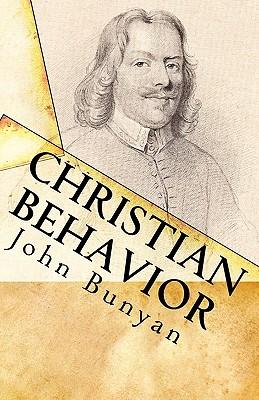
10 Quotes From “Christian Behavior”

Christian BehaviorAlthough written over 300 years ago, and written in Old English, John Bunyan’s instructions in Christian Behavior still ring true today. You can read my full book review by clicking here. Below are just a few quotes; I’ll be sharing more soon.

“Faith alone can see the reality of what the Gospel saith.”

“God’s people are faithful in good works according to the proportion of their faith. If they be slender in good works, it is because they are weak in faith. … Therefore the way to be a more fruitful Christian; it is to be stronger in believing.”

“I shall propound unto you what it is for a work to be rightly good. First, a good work must have the Word for its authority. Second, it must, as of afore was said, flow from faith. Third, it must be both rightly timed and rightly placed. Fourth, it must be done willingly, cheerfully.”

“Good things mistimed are fruitless, unprofitable, and vain.”

“There are three things that a man should have in his eye in every work he doth. First, the honor of God (1 Corinthians 6:20). Second, the edification of his neighbor (1 Corinthians 14:26). Third, the expediency or inexpediency of what I am to do (1 Corinthians 6:12).”

In a section to the head of the household—

“But mark, when the Word saith thou art to provide for thy house, it giveth thee no license to distracting carefulness; neither doth it allow thee to strive to grasp the world in thy heart, or coffers, nor to take care for years or days to come, but so to provide for them, that they may have food and raiment; and if either they or thou be not content with that, you launch out beyond the rule of God (1 Timothy 6:8; Matthew 6:34).”

“Take heed of driving so hard after this world as to hinder thyself and family from those duties towards God which thou art by grace obliged to: as private prayer, reading the Scriptures, and Christian conference. It is a base thing for men so to spend themselves and families after this world as that they disengage their heart to God’s worship.”

In a section to husbands—

“When husbands behave themselves like husbands indeed, then will they be not only husbands, but such an ordinance of God to the wife, as will preach to her the carriage of Christ to his spouse. There is a sweet scent wrapped up in the relations of husbands and wives that believe (Ephesians 4:32).”

“Oh! How little sense of the worth of souls is there in the heart of some husbands, as is manifest by their unchristian carriage to and before their wives! … Beware that she takes no occasion from any unseemly carriage of design to proceed in evil. And here thou hast need to double thy diligence, for she lieth in thy bosom, and therefore is capable of his espying the least miscarriage in thee.”

“If she behave herself unseemly and unruly, as she is subject to do, being Christless and graceless, then labor thou to overcome her evil with thy goodness, her forwardness with thy patience and meekness. Take fit opportunities to convince her. Observe her disposition, and when she is most likely to bear, then speak to her very heart. When thou speakest, speak to purpose. Let all be done without rancor, or the least appearance of anger.”

More quotes from Christian Behavior coming soon…

6 Facts About Angels

Angels from the realms of gloryAngels play a fairly visible role in the First Advent story. As a result, we can begin to piece together some facts about angels from the biblical accounts. In my series on The Carols Of Christmas, I was looking at Angels From The Realms Of Glory, and there is information about the angels in this carol that is well-support from the Scripture.

  1.  Angels were created before the Earth was created, and they celebrated as God created our universe (Job 38:4-7). The Christmas carol says, “ye who sang Creation’s story now proclaim Messiah’s birth,” which we see in Luke 2:8-14.
  2. Angels are messengers sent from God, and they carry a message from God to turn people toward God (Daniel 10:12; Matthew 1:20-23; Luke 1:11-20, 26-38). In the Christmas carol they remind us to leave our contemplations and “seek the great Desire of nations.”
  3. Angels are not to be worshiped, because they are created beings. Lucifer’s desire to be worshipped is what led to his rebellion against God and expulsion from Heaven (Isaiah 14:13-14). And he still tries to appear today as an angel of light (2 Corinthians 11:14).
  4. Angels long to look into the Gospel that humans can know by personal experience (1 Peter 1:12).
  5. Angels know that Christ’s First Advent is a reminder of His Second Advent (Acts 1:10-11; see also 1 Thessalonians 4:13-18).
  6. We have been given an angelic responsibility to tell others about Christ’s First and Second Advents (notice that the messengers in the churches are called angels in Revelation 2:1, 8, 12, 18; 3:1, 7, 14; 22:16). The carol reminds us that it’s “all creation” (that includes us!) that joins the angels in praising God.

One of the biggest lessons we need to learn from this Christmas carol, and the corresponding verses about angels, is that we aren’t just celebrating the First Advent. We are anticipating and looking forward to the Second Advent as well! 

Next Sunday we will be continuing our look at the rich messages in the familiar Christmas carols. Please join me!

In the video below, we had some slight technical difficulties. But it clears up about the 5-minute mark, so hang in there!

If you have missed any of the messages in our series The Carols Of Christmas, you can find the full list by clicking here.

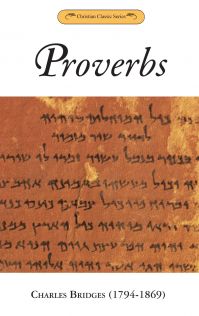
8 Quotes Worth Studying From “Proverbs”

ProverbsIn my review of Proverbs by Charles Bridges (which you can read by clicking here), I noted how he weaved the principles in the biblical book of Proverbs into the teaching that occurs throughout the Scripture. In others words, he showed that the wisdom in Proverbs wasn’t just a “stand-alone” wisdom, but integrated into the whole.

In the quotes I’m sharing today, I trust you will get a glimpse of what I mean. The reference in brackets before the quote indicate the Proverb to which Bridges is commenting. I have also linked all of the Scripture references to my friends at Bible Gateway, so you can look them up easily (and I encourage you to do so!).

[Proverbs 1:10-16] “If the temptation prevail, charge it not on God; no—nor on the devil. As the worst he can do, he can only tempt, he cannot force us, to sin. When he has plied us with his utmost power, and most subtle artifice, it is at the choice of our own will, whether we yield or no (see James 1:13-15). The habitual resistance of the will clears us of responsibility (cp. Romans 7:14-17, 19-20, 23). The consent, even if it be not carried out into the act, lays the responsibility at our own door.”

[Proverbs 2:10-11] “The forsaken sin only makes way for some more plausible, but not less deadly passion. The heart, cast into the mold of the Gospel, is the only cover from those snares within and without (Romans 6:17, 18; 2 Corinthians 3:18), which so imperceptibly, yet so fatally, estrange us from God. Never, till the vital principle is implanted, is their mischief discerned. Never, till then, does the heart find its proper object, its true resting-place.”

[Proverbs 3:5-6] “Take one step at a time, every step under Divine warrant and direction (cp. Ezekiel 18:21-23; Nehemiah 1:11). Ever plan for yourself in simple dependence on God. It is nothing less than self-idolatry to conceive that we can carry on even the ordinary matters of the day without His counsel. He loves to be consulted. Therefore, take all thy difficulties to be resolved by Him. Be in the habit of going to Him in the first place—before self-will, self-pleasing, self-wisdom, human friends, convenience, expediency. Before any of these have been consulted, go to God at once. Consider no circumstances too clear to need His direction. In all thy ways, small as well as great; in all thy concerns, personal or relative, temporal or eternal, let Him be supreme.”

[Proverbs 3:11-12] “Faith understands the reasons of the discipline (1 Peter 1:6, 7); acknowledges it as a part of His gracious providence (Deuteronomy 8:2, 15, 16), and the provision of His everlasting covenant (Psalm 89:30-32); waits to see the end of the Lord (James 5:11); and meanwhile draws its main support from the seal of adoption.”

[Proverbs 4:14-17] “To pray not to be led into temptation; yet not to watch, that we enter not into it (Matthew 6:13; 26:41)—is practically to contradict our prayers; to mock our God, by asking for what we do not heartily wish.”

[Proverbs 11:18-19] “Righteousness is the seed; happiness is the harvest. The reward indeed is not from cause, but of consequence; not of debt, but of grace depending upon a free promise; mercifully yet surely linked with Christian perseverance (Ecclesiastes 11:6; Hosea 10:12; 1 Corinthians 15:58; Galatians 6:7, 8).”

[Proverbs 17:22] “If then, Christian, you believe the Gospel to be ‘glad tidings’ (Luke 1:19; 8:1), show that you believe it, by lighting up your face with a smile.”

[Proverbs 28:13] “The love of sin struggles with the power of conscience. The door of access to God is barred (Psalm 66:18). Christian confidence is clouded (Psalm 32:3, 4); and, unless Sovereign mercy interpose, it must end in the sting of ‘the never-dying worm’ (Isaiah 66:24; Mark 9:44-48). The covering of the disease precludes the possibility of the cure. Only the penitent confessor can be the pardoned sinner.”

“The best work on the Proverbs. While explaining the passage in hand, he sets other portions of the Word in new lights.” —C.H. Spurgeon, commenting on this book

Links & Quotes

link quote

“No man can murder his brother who has not first murdered God in himself.” —Oswald Chambers

“We love our neighbors when, like Jesus, we seek them out to love them (cf. Luke 19:1-10). Jesus did not wait for lost or hurting people to find their way to Him. He went looking for them. He learned the names of many of them, and used their names freely. He took the initiative in making certain contacts, some of which He repeated many times during His earthly sojourn. Jesus started conversations with people and was doubtless a good listener. And He prayed often for others, seeking their wellbeing before the Father. We can know that we love our neighbors when, like Jesus, we go seeking them, in order to touch them with His love.” —T.M. Moore

“The Word of God is our only hope. The good news of God’s promises and the warnings of His judgment are sharp enough and living enough and active enough to penetrate to the bottom of my heart and show me that the lies of sin are indeed lies. Abortion will not create a wonderful future for me. Neither will cheating, or dressing provocatively, or throwing away my sexual purity, or keeping quiet about dishonesty at work, or divorce, or vengeance. And what rescues me from this deception is the Word of God.” —John Piper

“If you spend too much time looking for your next big break, you’ll be stealing your opportunity to do your best work. Which is the the most important break of all.” —Seth Godin

“God’s definition of promotion isn’t a move up the ladder, it is a move toward your call. Don’t let someone ‘promote’ you out of your call!” —Max Lucado

“In the parable of Matthew 18:23-27 did the king overlook his servant’s sin? Did he wink at his debt and merely excuse it? No, not at all. The fact is, by forgiving him, the king placed upon this man a weighty responsibility, a responsibility even greater than the burden of his debt. Indeed, this servant now owed his master more than ever. How? He was responsible to forgive and love others, just as the king had done for him.” —David Wilkerson

If you don’t think Planned Parenthood’s business of abortion is a huge money-maker for them, why are they spending $20 million in 2016 to elect pro-abortion candidates?

For Detroit Red Wings fan, here is a nice mini-biography of Mr. Hockey: Gordie Howe.

[VIDEO] Barbabas Piper and Bobby Conway on the difference between knowing and believing

4 Reasons Why God’s Way Is Better

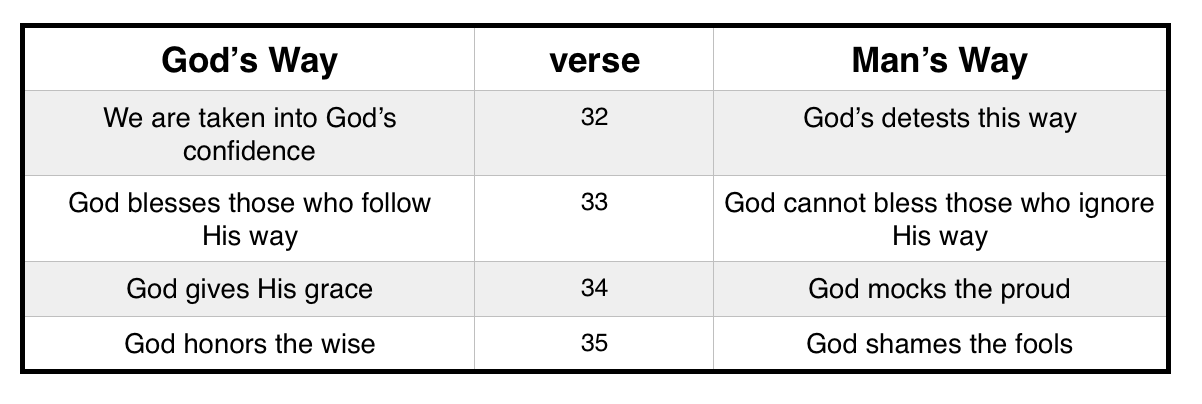
Notice the contrasts (see the conjunction “but”) in these wise words from King Solomon—

For the Lord detests a perverse man but takes the upright into His confidence.

The Lord’s curse is on the house of the wicked, but He blesses the home of the righteous.

He mocks proud mockers but gives grace to the humble.

The wise inherit honor, but fools He holds up to shame. (Proverbs 3:32-35)

Solomon is inviting us to compare God’s way with our way.

God's way or man's way

Looking at this, it’s not too hard to figure out which way is the better way to live! 

Charles Bridges commented on these verses, “The value of our inheritance is beyond all price; its happiness unspeakable; its security unchangeable; its duration eternity. The wise shall inherit glory. ‘They that be wise shall shine as the brightness of the firmament for ever and ever’ (Daniel 12:3; Matthew 13:43).”

(To download a PDF version of the chart above, click here → God’s way or man’s way)

Authority Comes From Submission

Authority comes from submissionOut of all the unlikely places, I never would have expected that guy to be a theologian! After all, the ones with the amazing insight into how God works are supposed to be deep into Scripture, know the ancient biblical languages, and be able to preach profound sermons. This guy had none of that.

He was simply an officer in the military who had an aide-de-camp who was sick. He had enough basic knowledge to see that Jesus could do something for his faithful assistant, but—strangely enough—he didn’t think he was worthy of having Jesus come into his home.

He said something that caused Jesus to be amazed. When Jesus is amazed by something a man does, that gets my attention!

This military officer said, “Although I’m an officer who can tell people what to do—when I say, ‘Jump!’ they say, “How high, sir?’ When I say, ‘Go!’ they say. ‘Yes, sir!’—I’m also a man under authority. I recognize that you too, Jesus, are a Man of authority. So if You simply say, ‘Go!’ to this disease, it will go.”

Jesus was amazed!

What theology came from that guy—a Roman centurion! This military officer saw that authority came from being under authority. Jesus had authority because He remained under the authority of His Heavenly Father (see John 12:49-50; Philippians 2:5-11).

We can learn a valuable lesson from this unlikely theologian. Authority comes NOT from trying to get our way, but from doing things God’s way … from staying under His authority. All the authority you will ever need is found in the Word of God (see Matthew 9:6-8; 10:1; 16:19).

This is a great story. Check it out for yourself here.