Dr. Robertson wrote: “The purpose of a harmony is not to teach theology, but to make available for men of any faith the facts in the Gospels concerning Jesus of Nazareth.” And that’s exactly what this book does.
It is one of the more interesting ways I have ever read Matthew, Mark, Luke and John. When I followed the outline in Robertson’s book, instead of reading each gospel straight through, I read them in chronological order. For instance, in reading about John’s message announcing the soon-arrival of Jesus, I was reading Mark 1:7-8, Matthew 3:11-12, and Luke 3:15-18.
In other words, you will be reading the four gospels in chronological order as the events unfolded in Christ’s ministry. Right alongside each section of study are Dr. Robertson’s fascinating and insightful notes. Reading the gospels this way really brought out details that you may have missed when just reading through the gospels in a more traditional manner.
You don’t have to be a scholar to use this book, you just need to be desirous to learn more about Jesus.
Listen to the podcast of this post by clicking on the player below, and you can also subscribe on Apple, Spotify, or Audible.
We have become a numbed culture: we try to soften every blow, water down each negative report, ask only surface questions in the hopes that no one will really tell us how much they’re hurting, and then medicate away every symptom. But these symptoms are screaming to be noticed!
Dr. Paul Brand the renown hand surgeon and missionary to leprosy patients in India, wrote:
“Pain contributes daily to a normal person’s quality of life…. Every normal person limps occasionally. Sadly, leprosy patients do not limp. Their injured legs never get the rest needed for healing…. This inability to ‘hear’ pain can cause permanent damage because the body’s careful responses to danger will break down. … A body only possesses unity to the degree that it possesses pain…. We must develop a lower threshold of pain by listening, truly listening, to those who suffer. … The body protects poorly what it does not feel.” —Dr. Paul Brand & Philip Yancey, In His Image
The Gospels often talk of the compassion of Jesus. His compassion led Him to teach the confused, feed the hungry, and heal the sick. The phrase usually used in the NKJV is descriptive: Jesus was moved with compassion. In other words His feelings moved Him to action.
The Old English way of describing compassion was to say someone was “moved in his bowels.” This is because when someone else is suffering it should be like a kick in my gut too.
Jesus gravitated toward the hurting, but in one story He told, Jesus related something different about His Father’s compassion. It’s the story we now call the story of the prodigal son. In this story Jesus said His Father watched the horizons every day to see if His wayward child would return. When He saw this child coming into view, God saw his slumped shoulders, He could detect his heavy heart and worn-out body. Then Jesus says something amazing, “The Father was moved with compassion and He RAN TO HIS SON!”
If our Heavenly Father runs TO another’s pain, what right do we have to ever run AWAY from it?
If we are to be God-honoring in our interaction with others, we need to—as Dr. Brand says—lower our threshold of pain. We need to feel what others feel, to feel it like a kick in our own gut, and then move toward the pain with help and healing and restoration.
Christians—if we are truly Christ-like—should be known as the most compassionate people of anyone.
So we need to always be asking: What am I doing to let this compassion be seen in my life?
Check out all of the other messages in our series Live Togetherby clicking here.
I wrote to the church, but Diotrephes who loves to be first, will have nothing to do with us. (3 John 9)
The King James Versions says that Diotrephes loveth to have the preeminence. He loved his title, his position of authority, and having everything in the church flow through him.
He wanted not only to approve who spoke in the church, but even with whom church people could socialize outside of church. He wielded his positional authority like a sword and cut off people from the fellowship of the church if they didn’t join lockstep with him.
He used fear and intimidation to demand people follow him, and wouldn’t receive a loving letter from the Apostle John. To counteract any who would question him, Diotrephes engaged in gossip and character assassination of any he perceived to be a threat to his position as pastor.
My fellow pastor, having the title of pastor doesn’t mean I’m the smartest person in the room, or that I have all the answers. I am one member of the Body of Christ. Each member of the Body needs all the other members of the Body. I should humbly serve, never demanding allegiance to me or blind obedience to my wishes. I should never try to hide behind my title, but be the most transparent, the most willing to admit my mistakes, and the first to forgive and to ask forgiveness.
Lord, guard my heart against the spirit of Diotrephes!!
UPDATE: This is one of the seed thoughts that went into my book Shepherd Leadership.
Jesus came to love us. And for those that have received His love, He commands us to love others just like He loved us. In fact, Jesus said all of the commandments in the Bible could be summed up in just one word: LOVE.
Love the Lord your God with all your heart and with all your soul and with all your mind and with all your strength…. Love your neighbor as yourself. There is no commandment greater than these. (Mark 12:30-31)
But what about people who aren’t very lovable? Are we really supposed to love them? Isn’t there some sort of “escape clause” to let us out of loving those people who get on our nerves, or who are mean to us?
Although you probably already know what the answer is (in case you don’t: we’re commanded to love everyone), the Bible helps us learn how and why to love the unloveable.
If you missed any of the messages in this series, check them out here:
This is a weekly series with things I’m reading and pondering from Oswald Chambers. You can read the original seed thought here, or type “Thursdays With Oswald” in the search box to read more entries.
What Motivates My Service?
If my love is first of all for God, I shall take no account of the base ingratitude of others, because the mainspring of my service to my fellowman is love to God. The point is very practical and clear. If I love someone and he treats me unkindly or ungenerously, the very fact that I love him makes me feel it all the more, and yet Paul says loves “takes no account of evil,” because self is absorbed and taken up with love for Jesus Christ.
If you are going to live for the service of your fellowman, you will certainly be pierced through with many sorrows, for you will meet with more base ingratitude from your fellowman than you would from a dog. You will meet with unkindness and “two-facedness,” and if your motive is love for your fellowman, you will be exhausted in the battle of life. But if the mainspring of your service is love for God, no ingratitude, no sin, no devil, no angel, can hinder you from serving your fellowman, no matter how they treat you.
The Bible tells me to love my neighbor as I love myself. But I also know that my heart is naturally evil, that I am naturally self-centered and self-absorbed. I can only love myself correctly if I see myself correctly, and that can only happen if my heart has been made new through the forgiveness of my sins.
That’s why the first greatest command is:Love the Lord your God with all your heart, and with all your soul, and with all your mind, and with all your strength (Mark 12:29-30). When I love God first and best, I can see myself correctly: As a trophy of His grace. Then—and only then—can I love others in a way that will never be exhausted, nor offended; nor will my motivation to love my fellowman be diminished by others’ ingratitude.
This is a weekly series with things I’m reading and pondering from Oswald Chambers. You can read the original seed thought here, or type “Thursdays With Oswald” in the search box to read more entries.
Don’t Love People Too Highly
The natural man does not like God’s commands; he will not have them, he covers them over and ignores them. Jesus said the first commandment is: “Thou shalt love the Lord thy God with all thy heart, and with all thy soul, and with all thy mind, and with all thy strength” [Mark 12:29-31]. Men put the second commandment first: “Thou shalt love thy neighbor as thyself.” The great cry today is “love for mankind.” The cry of Jesus is “love for God first,” and this love, the highest love, the supreme, passionate devotion of the life, springs from the inner center.
Twice in Romans 7, the Apostle Paul uses the phrase “but sin, seizing the opportunity” (vv. 8, 11).
Sin always seizes any opportunity it gets. The devil always prowls around looking for an opportunity to tempt and destroy. And my flesh is always only too eager to give in to the pull of sin and the devil (v. 25).
If we want victory over sin and the devil, we have to be AWARE and be PREPARED.
“When the devil had finished all this tempting, he left Jesus until an opportune time” (Luke 4:13).
The devil will bide his time.
“…satan has asked to sift you as wheat…” (Luke 22:31).
It’s not always the big shakings that will cause us to sin, but the little siftings can wear us down.
“Stay alert! Watch out for your great enemy, the devil, prowls around like a roaring lion, looking for someone to devour. Resist him, standing firm in the faith…” (1 Peter 5:8-9).
“Keep awake and watch and pray constantly, that you may not enter into temptation; the spirit indeed is willing, but the flesh is weak” (Mark 14:38).
If you haven’t been tempted lately, or if you’ve recently overcome a temptation, stay humble. “So, if you think you are standing firm, be careful that you don’t fall!” (1 Corinthians 10:12).
And then stay ready: “Put on all of God’s armor so that you will be able to stand firm against all strategies of the devil” (Ephesians 6:11).
A warrior in a combat zone never has a single day he is without his armor.
Our Where’s God? Easter drama reached its climax when the veil in the temple was torn by Christ’s death on the Cross. All three of the synoptic gospels record this—
This was so significant in answering the question “Where’s God?” The veil prevented anyone from going into God’s presence (except the high priest on the Day of Atonement). This made God’s presence something of a mystery: Does God see me? Does He care about me? How do I get to God? Can I even approach Him? Would He receive me or would He reject me?
The best way to remember the definition for atonement is like this: at-onement.
In one moment, when Jesus said, “It is finished,” all that separated us from God was removed! And we can now live forgiven! We can now be at onementwith God!
The veil not only literally and physically hung in the temple, but it figuratively and spiritually hangs in our hearts. This is what the Apostle Paul writes—
But their minds were made dull, for to this day the same veil remains when the old covenant is read. It has not been removed, because only in Christ is it taken away. Even to this day when Moses is read, a veil covers their hearts. But whenever anyone turns to the Lord, the veil is taken away. Now the Lord is the Spirit, and where the Spirit of the Lord is, there is freedom. And we, who with unveiled faces all reflect the Lord’s glory, are being transformed into His likeness with ever-increasing glory, which comes from the Lord, Who is the Spirit. (2 Corinthians 3:14-18)
Jesus Christ’s death on the Cross allowed the Heavenly Father to tear apart the physical veil in the temple. Have you allowed the Holy Spirit to tear apart the spiritual veil in the temple of your heart? Here’s how you can know that the veil has been torn apart—you can notice that you are being transformed more and more into Christ’s likeness.
That’s the significance of the torn veil! That’s the power of Christ’s atonement!
Have you ever been depressed? I have. I know all too well how depression robbed me of sleep, sapped joy from my day, kept me from smiling and on the verge of tears all the time, made sunny days seem cloudy, caused me to sigh all the time and lose interest in the things that used to bring me pleasure, and brought such a sense of loneliness and isolation.
Did you know that Jesus felt the crushing load of depression too? As He was praying in the Garden of Gethsemane just before His arrest, listen to these words—
He began to be sorrowful and troubled
He became anguished and distressed
He began to show grief and distress of mind and was deeply depressed
He said to them, “My soul is overwhelmed with sorrow to the point of death”
He prayed more fervently, and He was in such agony of spirit that His sweat fell to the ground like great drops of blood
“Abba, Father,” He cried out, “everything is possible for You. Please take this cup of suffering away from Me. Yet I want Your will to be done, not Mine.” (see Matthew 26:37-38; Mark 14:36; Luke 22:44)
The writer of Hebrews wrote this about Jesus—
While Jesus was here on earth, He offered prayers and pleadings, with a loud cry and tears, to the One who could rescue Him from death. And God heard His prayers because of His deep reverence for God. Even though Jesus was God’s Son, He learned obedience from the things He suffered. In this way, God qualified Him as a perfect High Priest, and He became the source of eternal salvation for all those who obey Him. (Hebrews 5:7-9)
Our part is to pray. Time and time and time again, not only did Jesus pray, but He encouraged His disciples to pray as well. As you continue to pray, Jesus is your High Priest praying for you. Only He truly knows how to translate the cry of your heart into a language Abba Father can understand.
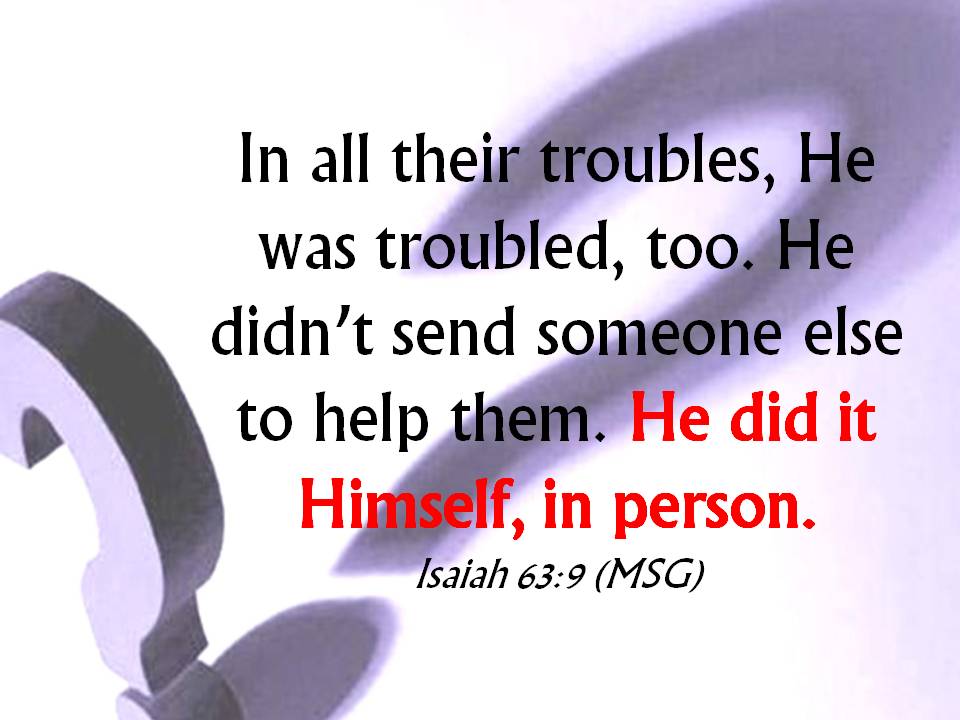
In all their troubles, He was troubled, too. He didn’t send someone else to help them. He did it Himself, in person. (Isaiah 63:9)
In our Live Dead series, we have been talking about different areas we need to allow to die, so that we might truly live for Christ as His disciples.
One of the things that often gets in the way of our pursuit of Christ is our cravings. This word—which the dictionary defines as a longing or an eager desire—has an interesting origin. The root word in both Latin and Old English means to lay claim to or to demand by right.
In other words, a craving is when something that was originally a want has now become a need in my mind. So I lay claim to it, saying that it’s something that is owed to me.
The Apostle Paul talks about cravings that we all had before we came to know Christ as Savior when he wrote, “All of us also lived among them at one time, gratifying the cravings of our sinful nature and following its desires and thoughts” (Ephesians 2:3).
This same Greek word shows up in Christ’s parable of the sower when He talks about the seed that falls among the weeds. These people, He explains, allow the worries of this life, the deceitfulness of wealth and the desires for other things come in and choke the Word (Mark 4:19).
Gratifying my cravings = Choking out the life of Christ in me
The problem is that this craving or desire for things other than Christ is often an unconscious habit. We have allowed them to become cravings—laying our claim to them as needs—without even realizing it.
The antidote: fasting. When we give up something, the Holy Spirit can show us if that thing has created an I-Have-To-Have-It attitude in our hearts. This spiritual discipline is hard because our bodies will rebel against having to give up “a right.” But when we press through with this discipline of fasting, God describes the results:
Then your light will break forth like the dawn, and your healing will quickly appear; then your righteousness will go before you, and the glory of the LORD will be your rear guard. Then you will call, and the LORD will answer; you will cry for help, and He will say: Here am I. (Isaiah 58:8-9)
That’s how I want to live! So I must live dead to my cravings. I can only do this when I allow a time of fasting to open my heart to hear the Holy Spirit point out all my I-Have-To-Have-It attitudes.
To check out all of the messages in our Live Dead series, please click here.



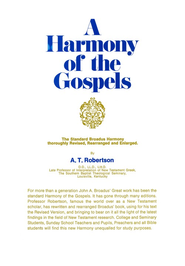 For anyone who wants to read the four New Testament gospels with greater insight, I highly recommend A Harmony Of The Gospels For Students Of The Life Of Christ by A.T. Robertson.
![Loving The Unlovable [web]](https://craigtowens.com/wp-content/uploads/2013/01/loving-the-unlovable-web.jpg)