11 Quotes From “Pleasure & Profit In Bible Study”

Pleasure & ProfitD.L. Moody’s book Pleasure & Profit In Bible Study is a Bible study rejuvenator for both the novice and experienced reader of the Bible. You can read my full book review by clicking here. Below are some of the quotes I especially appreciated in this book.

“The more you love the Scriptures, the firmer will be your faith. There is little backsliding when people love the Scriptures.” 

“I believe we should know better how to pray if we knew our Bibles better. … And if we feed on the Word, it will be so easy then to speak to others; and not only that, but we shall be growing in grace all the while, and others will take notice of our walk and conversation.”

“It is a very interesting fact that of the thirty-nine books of the Old Testament, it is recorded that our Lord made quotations from no less than twenty-two. … About 850 passages in the Old Testament are quoted or alluded to in the New…. In the Gospel by Matthew there are over a hundred quotations from twenty of the books in the Old Testament. In the Gospel of Mark there are fifteen quotations taken from thirteen of the books. In the Gospel of Luke there are thirty-four quotations from thirteen books. In the Gospel of John there are eleven quotations from six books. In the four Gospels alone there are more than 160 quotations from the Old Testament. … In Paul’s letter to the Corinthians there are fifty-three quotations from the Old Testament; sometimes he takes whole paragraphs from it. In Hebrews there are eighty-five quotations, in that one book of thirteen chapters. In Galatians, sixteen quotations. In the book of Revelation alone, there are 245 quotations and allusions.”

“It is very important that every Christian should not only know what the Old Testament teaches, but he should accept its truths, because it is upon this that truth is based. Peter said the Scriptures are not given for any private interpretation, and in speaking of the Scriptures, referred to the Old Testament and not to the New. … If the Old Testament Scriptures are not true, do you think Christ would have so often referred to them, and said the Scriptures must be fulfilled? When told by the tempter that He might call down the angels from heaven to interpose in His behalf, he said: ‘Thus it is written.’ Christ gave Himself up as a sacrifice that the Scriptures might be fulfilled. Was it not said that He was numbered with the transgressors? And when He talked with two of His disciples by the way journeying to Emmaus, after His resurrection, did He not say: ‘Ought not these things to be? am I not to suffer?’ And beginning at Moses He explained unto them in all the Scriptures concerning Himself, for the one theme of the Old Testament is the Messiah. … Christ referred to the Scriptures and their fulfillment in Him, not only after He arose from the dead, but in the book of Revelation He used them in Heaven. He spoke to John of them on the Isle of Patmos, and used the very things in them that men are trying to cast out. He never found fault with or rejected them.”

“Prophecy is history unfulfilled, and history is prophecy fulfilled. … Between 500 and 600 hundred Old Testament prophecies have been remarkably and literally fulfilled, and 200 in regard to Jesus Christ alone. Not a thing happened to Jesus Christ that was not prophesied from 1700 to 400 years before He was born.”

“Someone has said that there are four things necessary in studying the Bible: Admit, submit, commit and transmit. First, admit its truth; second, submit to its teachings; third, commit it to memory; and fourth, transmit it. If the Christian life is a good thing for you, pass it on to some one else.”

“Application to the Word will tend to its growth within and its multiplication without.”

“We learn that Christ prayed when he was baptized, and nearly every great event in His ministry was preceded by prayer. If you want to hear from Heaven you must seek it on your knees.”

“If you want to reach people that do not agree with you, do not take a club to knock them down and then try to pick them up. When Jesus Christ dealt with the erring and the sinners, He was as tender with them as a mother is with her sick child.” 

“Let us go to the Bible and see what that old Book teaches. Let us believe it, and go and act as if we believed it, too.”

“But we can not be ready if we do not study the Bible. So whenever you hear a good thing, just put it down, because if it is good for you it will be good for somebody else; and we should pass the coin of heaven around just as we do the coin of the realm.”

7 Quotes From “Did Jesus Rise From The Dead?”

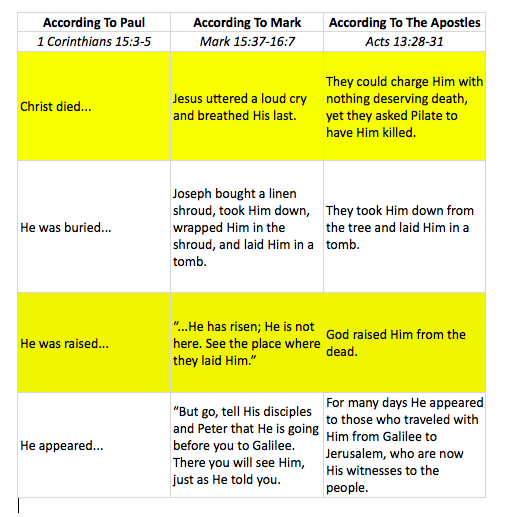
Did Jesus Rise From The DeadDid Jesus Rise From The Dead? is an excellent apologetic for both the biblical skeptic and the biblical student. You can read my full book review by clicking here. Below are seven noteworthy quotes and one infographic from this fascinating book.

“One of the most noteworthy facts about the early Christian belief in Jesus’ resurrection was that it flourished in the very city where Jesus had been publicly crucified. So long as the inhabitants of Jerusalem thought that Jesus’ corpse lay in the tomb, few would have been prepared to believe such silliness as the claim that God had raised Jesus from the dead.”

“We have the extraordinary number of at least five independent sources for Jesus’ burial, some of which are extremely early. The Gospels describe Joseph as a rich man, a member of the Jewish Sanhedrin. As a member of the Jewish Sanhedrin that condemned Jesus, Joseph of Arimathea is unlikely to be a Christian invention. The Sanhedrin was a sort of Jewish high court made up of seventy of the leading men of Judaism, which presided in Jerusalem. There was an understandable hostility among early Christians toward the Jewish Sanhe-drists, for Christians blamed the Sanhedrists for engineering a judicial murder of Jesus at the hands of the Romans. … Therefore, Jesus’ burial by Joseph is very probably historical, since it would be almost inexplicable why Christians would invent a story about a Jewish Sanhedrist who gives Jesus a proper burial.”

“Matthew is clearly working with an independent source, for he includes the story of the guard at the tomb, which is not derived from Mark and is unique to his Gospel; moreover, his comment that the rumor that the disciples had stolen Jesus’ body, ‘And this story has been spread among the Jews to this day,’ (Matthew 28:15) shows that the guard is not Matthew’s own creation, but was part of prior tradition. Luke also has an independent source, for he tells the story, not found in Mark, of two disciples’ inspecting the tomb to verify the women’s report that the tomb was vacant. This story cannot be regarded as Luke’s own creation, since the incident is independently reported in John’s Gospel. And, again, given John’s independence of the other three Gospels, we have yet another independent report of the empty tomb.”

Did Jesus Rise From The Dead infographic

(click image for a larger view)

“To appreciate how restrained Mark’s narrative is, we need only read the account in the second-century apocryphal Gospel of Peter. It describes Jesus’ triumphant exit from the tomb as a gigantic figure whose head reaches above the clouds, supported by giant angels, followed by a talking cross, heralded by a voice from heaven, and all witnessed by a Roman guard, the Jewish leaders, and a multitude of spectators! This is how real legends look: They’re richly decorated with theological and apologetical motifs. By contrast, Mark’s account is stark in its simplicity.”

“Think about that: ‘His disciples came by night and stole Him away’ [Matthew 28:13]. The Jewish authorities did not deny the fact that Jesus’ tomb was empty; instead they entangled themselves in a hopeless series of absurdities, trying to explain it away. In other words, the Jewish claim that the disciples stole the body presupposes that the body was, in fact, missing. Therefore, we have evidence from the very adversaries of the early Christian movement for the fact of the empty tomb.”

“All the followers of those first century messianic movements were fanatically committed to the cause…. But in no case right across the century before Jesus and the century after Him do we hear of any Jewish group saying that their executed leader had been raised from the dead, and he really was the Messiah after all.” —N.T. Wright

“A supernatural explanation of the empty tomb, the resurrection appearances, and the origin of the Christian faith is not contrived given the context of Jesus’ own unparalleled life, ministry, and personal claims.”

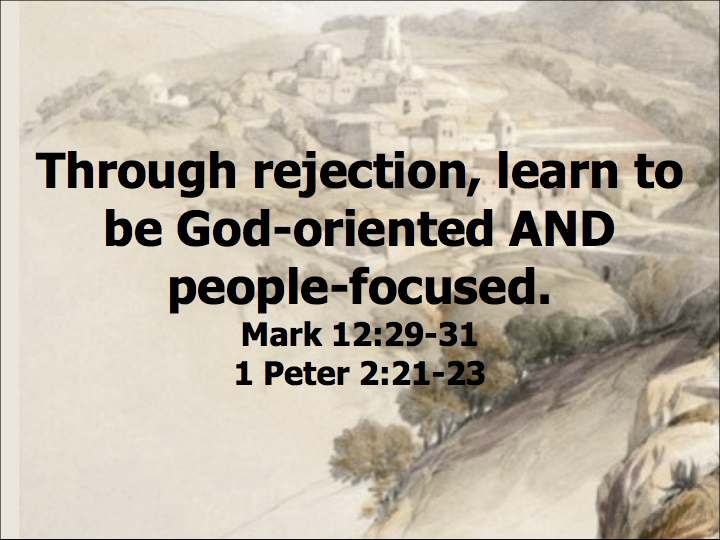
God-Oriented & People-Focused

God-oriented & People-focusedYou can spin it around, roll it down the stairs, throw it high in the air, and still it isn’t phased one bit. It doesn’t matter if you’re moving fast or slow, if you’re at high altitudes or in Death Valley, it still works. The needle of the compass always points north.

It can’t help it: it is naturally oriented to the north pole. Whether it’s pitch-black outside, or 40 degrees below zero; whether you feel like north is “north” or not, the needle will always point its way back to north.

Jesus could be cheered by the crowds or jeered by them. People could shout “Hosanna!” or “Crucify Him!” The weather could be calm or stormy, His disciples could be courageous or scared to death, and still Jesus was oriented to His Father.

Every word Jesus said, every action He undertook, every lesson He taught, every prayer He prayed was God-oriented.

But not only that, even as much as people ridiculed Him, snubbed Him, rejected Him, or denied Him, Jesus was still people-focused. After being so cruelly treated, I think I may have turned from some people, or even turned on some people with some not-so-kind words. I may have even begun to withdraw from people. But despite the way people mistreated Him, Jesus remained lovingly people-focused (see 1 Peter 2:21-23).

Jesus us told us that if we stand for Him, we will be mistreated as well (see Luke 21:17 and John 15:20). But He also told us there was a reward for that mistreatment (see Matthew 5:11-12).

When asked what the greatest of all the commandments was, Jesus replied that it was to be God-focused and people-oriented

Jesus replied, “The most important commandment is this: ‘Listen, O Israel! The Lord our God is the one and only Lord. And you must love the Lord your God with all your heart, all your soul, all your mind, and all your strength.’ The second is equally important: ‘Love your neighbor as yourself.’ No other commandment is greater than these.” (Mark 12:29-31)

So a good check-up question for us all: How am I doing at being God-oriented and people-focused, no matter what the circumstances are?

UPDATE: I explore the example of how Jesus responded to His critics in a couple of chapters of my book When Sheep Bite.

A Harmony Of The Gospels (book review)

HarmonyFor anyone who wants to read the four New Testament gospels with greater insight, I highly recommend A Harmony Of The Gospels For Students Of The Life Of Christ by A.T. Robertson.

Dr. Robertson wrote: “The purpose of a harmony is not to teach theology, but to make available for men of any faith the facts in the Gospels concerning Jesus of Nazareth.” And that’s exactly what this book does.

It is one of the more interesting ways I have ever read Matthew, Mark, Luke and John. When I followed the outline in Robertson’s book, instead of reading each gospel straight through, I read them in chronological order. For instance, in reading about John’s message announcing the soon-arrival of Jesus, I was reading Mark 1:7-8, Matthew 3:11-12, and Luke 3:15-18.

In other words, you will be reading the four gospels in chronological order as the events unfolded in Christ’s ministry. Right alongside each section of study are Dr. Robertson’s fascinating and insightful notes. Reading the gospels this way really brought out details that you may have missed when just reading through the gospels in a more traditional manner.

You don’t have to be a scholar to use this book, you just need to be desirous to learn more about Jesus.

Run To The Pain

Listen to the podcast of this post by clicking on the player below, and you can also subscribe on AppleSpotify, or Audible.

We have become a numbed culture: we try to soften every blow, water down each negative report, ask only surface questions in the hopes that no one will really tell us how much they’re hurting, and then medicate away every symptom. But these symptoms are screaming to be noticed!

Dr. Paul Brand the renown hand surgeon and missionary to leprosy patients in India, wrote:

     “Pain contributes daily to a normal person’s quality of life…. Every normal person limps occasionally. Sadly, leprosy patients do not limp. Their injured legs never get the rest needed for healing…. This inability to ‘hear’ pain can cause permanent damage because the body’s careful responses to danger will break down. … A body only possesses unity to the degree that it possesses pain…. We must develop a lower threshold of pain by listening, truly listening, to those who suffer. … The body protects poorly what it does not feel.” —Dr. Paul Brand & Philip Yancey, In His Image

The Gospels often talk of the compassion of Jesus. His compassion led Him to teach the confused, feed the hungry, and heal the sick. The phrase usually used in the NKJV is descriptive: Jesus was moved with compassion. In other words His feelings moved Him to action.

The Old English way of describing compassion was to say someone was “moved in his bowels.” This is because when someone else is suffering it should be like a kick in my gut too.

Jesus gravitated toward the hurting, but in one story He told, Jesus related something different about His Father’s compassion. It’s the story we now call the story of the prodigal son. In this story Jesus said His Father watched the horizons every day to see if His wayward child would return. When He saw this child coming into view, God saw his slumped shoulders, He could detect his heavy heart and worn-out body. Then Jesus says something amazing, “The Father was moved with compassion and He RAN TO HIS SON!

If our Heavenly Father runs TO another’s pain, what right do we have to ever run AWAY from it? 

If we are to be God-honoring in our interaction with others, we need to—as Dr. Brand says—lower our threshold of pain. We need to feel what others feel, to feel it like a kick in our own gut, and then move toward the pain with help and healing and restoration.

Christians—if we are truly Christ-like—should be known as the most compassionate people of anyone.

So we need to always be asking: What am I doing to let this compassion be seen in my life?

Check out all of the other messages in our series Live Together by clicking here.

►► Would you please prayerfully consider supporting this ministry? My Patreon supporters get behind-the-scenes access to exclusive materials. ◀︎◀︎

The Domineering Pastor

I wrote to the church, but Diotrephes who loves to be first, will have nothing to do with us. (3 John 9)

The King James Versions says that Diotrephes loveth to have the preeminence. He loved his title, his position of authority, and having everything in the church flow through him.

He wanted not only to approve who spoke in the church, but even with whom church people could socialize outside of church. He wielded his positional authority like a sword and cut off people from the fellowship of the church if they didn’t join lockstep with him.

He used fear and intimidation to demand people follow him, and wouldn’t receive a loving letter from the Apostle John. To counteract any who would question him, Diotrephes engaged in gossip and character assassination of any he perceived to be a threat to his position as pastor.

For shame! 

This type of attitude has no place in the Body of Christ, especially among the pastorate! Jesus came to serve, and taught us to do likewise. Jesus didn’t snuff out the smoldering wick or stomp on the bruised reed, but ministered lovingly to all. Peter told shepherds to never use their position to lord it over others.

My fellow pastor, having the title of pastor doesn’t mean I’m the smartest person in the room, or that I have all the answers. I am one member of the Body of Christ. Each member of the Body needs all the other members of the Body. I should humbly serve, never demanding allegiance to me or blind obedience to my wishes. I should never try to hide behind my title, but be the most transparent, the most willing to admit my mistakes, and the first to forgive and to ask forgiveness.

Lord, guard my heart against the spirit of Diotrephes!!

UPDATE: This is one of the seed thoughts that went into my book Shepherd Leadership.

Loving The Unloveable

Loving The Unlovable [web]Jesus came to love us. And for those that have received His love, He commands us to love others just like He loved us. In fact, Jesus said all of the commandments in the Bible could be summed up in just one word: LOVE.

Love the Lord your God with all your heart and with all your soul and with all your mind and with all your strength…. Love your neighbor as yourself. There is no commandment greater than these. (Mark 12:30-31)

But what about people who aren’t very lovable? Are we really supposed to love them? Isn’t there some sort of “escape clause” to let us out of loving those people who get on our nerves, or who are mean to us?

Although you probably already know what the answer is (in case you don’t: we’re commanded to love everyone), the Bible helps us learn how and why to love the unloveable.

If you missed any of the messages in this series, check them out here:

Thursdays With Oswald—What Motivates My Service?

This is a weekly series with things I’m reading and pondering from Oswald Chambers. You can read the original seed thought here, or type “Thursdays With Oswald” in the search box to read more entries.

What Motivates My Service?

     If my love is first of all for God, I shall take no account of the base ingratitude of others, because the mainspring of my service to my fellowman is love to God. The point is very practical and clear. If I love someone and he treats me unkindly or ungenerously, the very fact that I love him makes me feel it all the more, and yet Paul says loves “takes no account of evil,” because self is absorbed and taken up with love for Jesus Christ. 

     If you are going to live for the service of your fellowman, you will certainly be pierced through with many sorrows, for you will meet with more base ingratitude from your fellowman than you would from a dog. You will meet with unkindness and “two-facedness,” and if your motive is love for your fellowman, you will be exhausted in the battle of life. But if the mainspring of your service is love for God, no ingratitude, no sin, no devil, no angel, can hinder you from serving your fellowman, no matter how they treat you. 

From Biblical Psychology

The Bible tells me to love my neighbor as I love myself. But I also know that my heart is naturally evil, that I am naturally self-centered and self-absorbed. I can only love myself correctly if I see myself correctly, and that can only happen if my heart has been made new through the forgiveness of my sins.

That’s why the first greatest command is: Love the Lord your God with all your heart, and with all your soul, and with all your mind, and with all your strength (Mark 12:29-30). When I love God first and best, I can see myself correctly: As a trophy of His grace. Then—and only then—can I love others in a way that will never be exhausted, nor offended; nor will my motivation to love my fellowman be diminished by others’ ingratitude.

Thursdays With Oswald—Don’t Love People Too Highly

This is a weekly series with things I’m reading and pondering from Oswald Chambers. You can read the original seed thought here, or type “Thursdays With Oswald” in the search box to read more entries.

Don’t Love People Too Highly

     The natural man does not like God’s commands; he will not have them, he covers them over and ignores them. Jesus said the first commandment is: “Thou shalt love the Lord thy God with all thy heart, and with all thy soul, and with all thy mind, and with all thy strength” [Mark 12:29-31]. Men put the second commandment first: “Thou shalt love thy neighbor as thyself.” The great cry today is “love for mankind.” The cry of Jesus is “love for God first,” and this love, the highest love, the supreme, passionate devotion of the life, springs from the inner center. 

From Biblical Psychology 

I can only love my wife as I understand how Jesus loves me.

I can only love my kids as I understand how my Heavenly Father loves me.

I can only learn to love my friends as I learn how the Holy Spirit reveals God’s love to me.

If I want to love others better, I must learn to love God more fully: with all my heart, all my soul, all my mind, all my strength.

Don’t try to love people more than you love God, because it cannot be done.

Victory!

Twice in Romans 7, the Apostle Paul uses the phrase “but sin, seizing the opportunity” (vv. 8, 11).

Sin always seizes any opportunity it gets. The devil always prowls around looking for an opportunity to tempt and destroy. And my flesh is always only too eager to give in to the pull of sin and the devil (v. 25).

If we want victory over sin and the devil, we have to be AWARE and be PREPARED.

When the devil had finished all this tempting, he left Jesus until an opportune time” (Luke 4:13).

The devil will bide his time.

“…satan has asked to sift you as wheat…” (Luke 22:31).

It’s not always the big shakings that will cause us to sin, but the little siftings can wear us down.

Stay alert! Watch out for your great enemy, the devil, prowls around like a roaring lion, looking for someone to devour. Resist him, standing firm in the faith” (1 Peter 5:8-9).

Keep awake and watch and pray constantly, that you may not enter into temptation; the spirit indeed is willing, but the flesh is weak” (Mark 14:38).

If you haven’t been tempted lately, or if you’ve recently overcome a temptation, stay humble. “So, if you think you are standing firm, be careful that you don’t fall!” (1 Corinthians 10:12).

And then stay ready: “Put on all of God’s armor so that you will be able to stand firm against all strategies of the devil” (Ephesians 6:11).

A warrior in a combat zone never has a single day he is without his armor.

There’s a time to take a stand against the devil: “So be subject to God. Resist the devil [stand firm against him], and he will flee from you” (James 4:7).

And there’s a time to run toward something else: “Shun youthful lusts and flee from them, and aim at and pursue righteousness…” (2 Timothy 2:22).

Victory is yours IF you will be aware and be prepared. You don’t have to give in to the devil’s temptation to sin! Fight victoriously today!