Thursdays With Spurgeon—An Important Distinction

This is a weekly series with things I’m reading and pondering from Charles Spurgeon. You can read the original seed thought here, or type “Thursdays With Spurgeon” in the search box to read more entries.

Listen to the podcast of this post by clicking on the player below, and you can also subscribe on iTunes or Spotify.

An Important Distinction

     Many had been the good works of Abram. It was a good work to leave his country and his father’s house at God’s bidding. It was a good work to separate from Lot in so noble a spirit. It was a good work to follow after the robber-kings with undaunted courage. It was a grand work to refuse to take the spoils of Sodom and to lift up his hand to God that he would not take a thread even to a shoelace. It was a holy work to give to Melchizedek tithes of all that he possessed and to worship the Most High God.

     Yet none of these are mentioned in the text, nor is there a hint given of any other sacred duties as the ground or cause, or part cause, of his justification before God. No, it is said, ‘And he believed in the Lord, and He accounted it to him for righteousness’ (Genesis 15:6). … 

     If there is salvation for the dying thief and others like him, it cannot be of debt, but of grace, seeing they have no good works! If Abram, when full of good works, is not justified by them, but by his faith, how much more we, being full of imperfections, must come to the throne of the heavenly grace and ask that we may be justified by faith that is in Christ Jesus and saved by the free mercy of God! …  

     Always distinguish between the truth of God that living faith always produces works, and the lie that faith and works cooperate to justify the soul. We are made righteous only by an act of faith in the work of Jesus Christ. That faith, if true, always produces holiness of life. But our being righteous before God is not because of our holiness in life in any degree or respect, but simply because of our faith in the divine promise [Romans 4:22-25]. 

From Justification By Faith

“I’ve been made righteous in God’s sight SO THAT I can live a holy life” is vastly different from “I’m living a holy life SO THAT I can be made righteous in God’s sight.” 

None of our good works—no matter how many we do—will ever wipe the slate clean of our sins. It’s an impossibility! That is why faith in the work of Jesus on the Cross is vital. It’s my faith in His substitutionary work that has canceled the record of my sins and made me holy before God, SO THAT now I am free to live out that holy life! 

What freedom there is in allowing our living faith to overflow into our loving deeds! Our holy living is our thankful worship to God for His precious gift of Jesus. 

►► Would you please prayerfully consider supporting this ministry? ◀︎◀︎
 

Thursdays With Spurgeon—The Joyful Journey To Realization

This is a weekly series with things I’m reading and pondering from Charles Spurgeon. You can read the original seed thought here, or type “Thursdays With Spurgeon” in the search box to read more entries.

Listen to the podcast of this post by clicking on the player below, and you can also subscribe on iTunes or Spotify.

The Joyful Journey To Realization

And [Abram] believed in the Lord, and [God] accounted it to him for righteousness. (Genesis 15:6) 

     Brothers and sisters, this everyday faith is the faith of God’s elect! There are persons who imagine saving faith to be a barren conviction of the truth of certain abstract propositions, leading only to a quiet contemplation upon certain delightful topics, or separating ourselves from all sympathy with our fellow creatures. But it is not so! Faith, restricted merely to religious exercise, is not Christian faith. It must show itself in everything. … 

     There may be some of you here today who have been called by divine grace from darkness into marvelous light. You have been led to look to Jesus and you believe you have received pardon of your sin, and yet, for lack of knowledge, you know little of the sweet meaning of such words as these: ‘accepted in the Beloved’ (Ephesians 1:6); ‘perfect in Christ Jesus’ (Colossians 1:28); ‘complete in Him’ (Colossians 2:10). You are doubtless justified, though you scarcely understand what justification means. And you are accepted, though you have not realized your acceptance. And you are complete in Jesus Christ, though you have, today, a far deeper sense of your personal incompleteness than of the all-sufficiency of Jesus. … 

     But there will come a time, beloved, when you who are called will clearly realize your justification and will rejoice in it! It will be intelligently understood by you and will become a matter of transporting delight—lifting you to a higher platform of experience and enabling you to walk with a firmer step, sing with a merrier voice, and triumph with an enlarged heart!  

From Justification By Faith

I was once asked, “If you could have a superpower, what would it be?” After a moment’s thought, I answered, “I’d like the power to just go <poof> for someone and they would be able to fully comprehended God’s love for them, or they would instantly realize how to live out their Christian faith.” 

Alas, there is no such superpower. But you and I have something far, far better: the Holy Spirit! 

Abram (who would later become Abraham) obediently followed God, even though the Bible said he didn’t fully grasp where he was going nor how God was going to give him many descendants. But he followed, and he trusted, and he listened, and slowly God began to reveal more and more to him. 

Jesus said the Holy Spirit would guide us into all truth. He didn’t say, “The Holy Spirit will go <poof> and you will immediately and fully understand everything.” Like Abram, we believe what God says about us, we follow, we trust, we listen, we obey, and the Spirit will begin to illuminate God’s Word to us. We’ll discover more each day what He’s asking of us, and we will notice that both our joy in Him and our effectiveness for the Kingdom of God are increasing along the journey! 

Don’t bail out early! Stick with it! I promise you that the joy still to be revealed along this journey is beyond compare with anything which would tempt you to stay behind to acquire.

►► Would you please prayerfully consider supporting this ministry? ◀︎◀︎
 

Thursdays With Spurgeon—Mercy Finds The Loophole

This is a weekly series with things I’m reading and pondering from Charles Spurgeon. You can read the original seed thought here, or type “Thursdays With Spurgeon” in the search box to read more entries.

Listen to the podcast of this post by clicking on the player below, and you can also subscribe on iTunes or Spotify.

Mercy Finds The Loophole

And the Lord smelled a soothing aroma. Then the Lord said in His heart, “I will never again curse the ground for man’s sake, although the imagination of man’s heart is evil from his youth; nor will I again destroy every living thing as I have done.” (Genesis 8:21) 

     To begin, then, with the text, we have here a most painful fact that man’s nature is incurable. ‘The imagination of man’s heart is evil from his youth.’ You will remember, before the flood, in the fifth verse of the sixth chapter, it is written, ‘Then the Lord saw that the wickedness of man was great in the earth, and that every intent of the thoughts of his heart was only evil continually’ (Genesis 6:5). After the flood it was just the same. … 

     You might have hoped that after so terrible a judgment, when only a picked and peculiar few, that is, eight, were saved by water, that man began anew with better stock.… It is not one wit so. The same God who, after looking at men, declared that his imagination was evil before the flood, pronounces the very same verdict upon them afterward. …

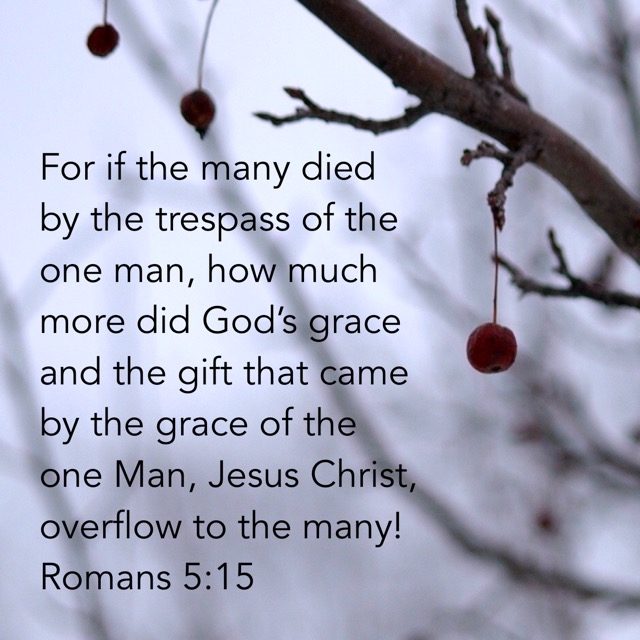
     I believe that God might justly have condemned the whole race of Adam on account of Adam’s sin and their own guilt. But I do think that this was a blessed loophole through which His mercy could, as it were, come fairly to the sons of men. ‘No,’ He says, ‘I made them not distinct individuals but a race. They fell as a race; they will rise as an elect race. “For as in Adam all die, even so in Christ all shall be made alive” (1 Corinthians 15:22). And ‘For as by one man’s disobedience many were made sinners, so also by one Man’s obedience many will be made righteous” (Romans 5:19).’ … 

     I must have more than nature can give me. More than my mother gave me, more than my father gave me, and more than flesh and blood can produce under the most favorable circumstances. I must have the Spirit of God from heaven.

From Human Depravity And Divine Mercy

When Adam and Eve sinned, God wasn’t scrambling to come up with a Plan B. Jesus is described as the Lamb slain from the foundation of the world (Revelation 13:8), meaning that God had His merciful plan of redemption ready before He even created humans! 

The atoning sacrifice Jesus made on the Cross was the “loophole” that God’s mercy used to pardon our sins. We can never earn our salvation because we are still people with evil hearts. But we can put our faith in the One who took our punishment upon Himself so that His righteousness can be our righteousness. 

O what a Savior! O what mercy God has shown! O how great is His love for us! How shall we escape appropriate retribution if we neglect and refuse to pay attention to such a great salvation…? (Hebrews 2:3)

►► Would you please prayerfully consider supporting this ministry? ◀︎◀︎
 

Prideful Prayer

Listen to the podcast of this post by clicking on the player below, and you can also subscribe on Apple or Spotify.

To some who were confident of their own righteousness and looked down on everybody else, Jesus told this parable: “Two men went up to the temple to pray, one a Pharisee and the other a tax collector. The Pharisee stood up and prayed about himself: ‘God, I thank You that I am not like other men—robbers, evildoers, adulterers—or even like this tax collector. I fast twice a week and give a tenth of all I get.’

“But the tax collector stood at a distance. He would not even look up to heaven, but beat his breast and said, ‘God, have mercy on me, a sinner.’

“I tell you that this man, rather than the other, went home justified before God. For everyone who exalts himself will be humbled, and he who humbles himself will be exalted.” (Luke 18:9-14) 

I think the NIV footnote on verse 11 is the most accurate rendering of “the Pharisee stood up and prayed about himself.” The footnote says, “He prayed TO himself.” He made himself God, which, if you will recall, is exactly how satan tempted Adam and Eve—you will be like God (Genesis 3:5). 

In a portion of William Cowper’s poem Truth, he addresses the pride of the Pharisee, and warns us that this could be our pride too if we aren’t carefully guarding our hearts. 

Who judged the Pharisee? What odious cause
Exposed him to the vengeance of the laws?
Had he seduced a virgin, wrong’d a friend,
Or stabb’d a man to serve some private end?
Was blasphemy his sin? Or did he stray
From the strict duties of the sacred day?
Sit long and late at the carousing board?
(Such were the sins with which he charged his Lord.)
No—the man’s morals were exact. What then?
‘Twas his ambition to be seen of men;
His virtues were his pride; and that one vice
Made all his virtues gewgaws [gyoo-gaws] of no price;
He wore them as fine trappings for a show,
A praying, synagogue-frequenting beau.
The self-applauding bird, the peacock, see—
Mark what a sumptuous Pharisee is he!
Meridian sunbeams tempt him to unfold
His radiant glories, azure, green, and gold:
He treads as if, some solemn music near,
His measured step were govern’d by his ear;
And seems to say—“Ye meaner fowl give place;
I am all splendour, dignity, and grace!”
Not so the pheasant on his charms presumes,
Though he, too, has a glory in his plumes.
He, Christian-like, retreats with modest mien
To the close copse or far sequester’d green,
And shines without desiring to be seen.
The plea of works, as arrogant and vain,
Heaven turns from with abhorrence and disdain;
Not more affronted by avow’d neglect,
Than by the mere dissembler’s feign’d respect.
What is all righteousness that men devise?
What—but a sordid bargain for the skies!
But Christ as soon would abdicate His own,
As stoop from heaven to sell the proud a throne.

When the writer of Hebrews says that we can approach the throne of grace boldly, it is clear that it is not because of our righteous deeds, even if they are as exacting and as perfect as a Pharisee. We can only come boldly into God’s presence because we come in the name and the righteousness of Jesus. “I tell you that this man, rather than the other, went home justified before God.” 

Adding “in Jesus name” to the end of our prayers isn’t a password that opens the storeroom of Heaven, but it is a reminder that we have nothing in ourselves to commend us to God. We come boldly only in Jesus.

►► Would you please prayerfully consider supporting this ministry? ◀︎◀︎
God Is One, God Is Love

Listen to the podcast of this post by clicking on the player below, and you can also subscribe on Apple or Spotify.

There is a common characteristic among every human civilization: they all have had a pantheon of gods. It seems that no one god could capture all of the attributes each civilization thought were important, so they created multiple gods to help fill in the gaps. 

Onto the world scene comes the account recorded for us in the Bible of a God who creates the universe. The Hebrew word for this God is elohiym which means “a divine one.” This name is used throughout the Creation story in Genesis 1. 

Then in Genesis 2:4, a new name appears, one that is used over 6500 times in the Bible. It is the unpronounceable name YHWH: often pronounced Yahweh or substituted with the word Jehovah. In most Bible translations this name is designated by all capital letters: LORD. Yahweh or Jehovah means “the existing One.” 

The first part of our second foundational truth states, “The one true God has revealed Himself as the eternally self-existent ‘I AM,’ the Creator of heaven and earth and the Redeemer of mankind.” This Creator is uncreated: He sustains the universe without needing to be replenished Himself. He is utterly complete in Himself; hence, His name means I AM (see Exodus 3:13-15). 

The second part of this foundational truth statement says, “He has further revealed Himself as embodying the principles of relationship and association as Father, Son and Holy Spirit.” 

The I AM is One (see Deuteronomy 6:4), but He reveals Himself in three Persons—Father, Son, Spirit—that we call the Trinity (although this is not a word found in the Bible). 

Sometimes Christians have done a disservice to the I AM by making it appear He is divided. For instance, we might say, “The Father is the Creator, the Son is the Redeemer, and the Spirit is the Regenerator.” But remember that our One God is not a pantheon of gods; He is One. We see the fullness of the Trinity operating in every area. Here’s just a short sampling:  

  • The creation of the universe—Genesis 1:1; Colossians 1:15-16; Psalm 104:30 
  • The creation of man—Genesis 1:26-27 
  • A prophecy about Jesus’ advent—Isaiah 9:6 
  • The incarnation of Jesus—Luke 1:35 
  • The baptism of Jesus—Matthew 3:16-17
  • The resurrection of Jesus—Acts 2:32; John 10:18; Romans 1:4 
  • Our atonement—Hebrews 9:14 
  • A Christian’s baptism in the Holy Spirit—John 14:16 

(You can read all of these verses for yourself by clicking here.) 

A good question for us to ponder is: Why would this I AM God create humans? If He needs nothing to complete Himself or sustain Himself, why make us? 

The apostle John captures the essence of the Trinity in three words: God is love.

God created us out of an overflow of His love so that we too could enjoy the intimate, eternal pleasure of being at-onement with Him forever. God then wants our love to overflow to everyone around us, so that they will also be drawn into this at-oneness with the I AM. 

When Jesus was asked to state the greatest commandment, He first quoted from Deuteronomy 6: “Hear, O Israel: The LORD [Yahweh] our God, the LORD [Yahweh] is one.” Christ’s conclusion was for us to love this All-Loving God with all our heart, soul, mind, and strength. And then Jesus added an obvious overflow of that love: “And love your neighbor as yourself” (see Mark 12:29-31).

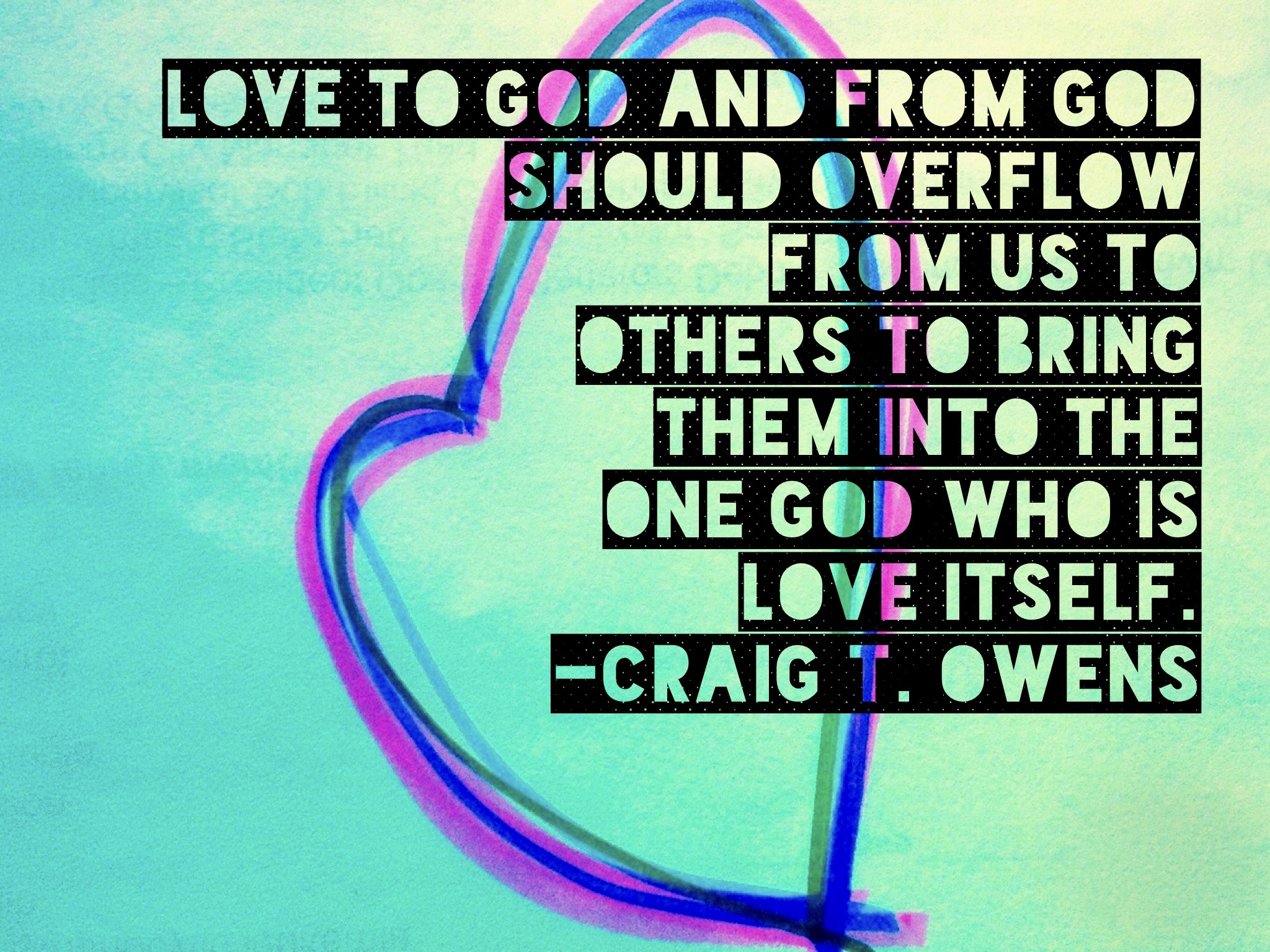
Love to God and from God should overflow from us to others to bring them into the One God who is love itself.  

The more we understand this love that the I AM has for us: (1) the better able we will be to love and worship Him, (2) the more we will love others out of this overflow of love, and (3) the more glory our awesome GOD will receive. Which is exactly what the apostle Paul prayed for us in Ephesians 3:14-19. 

This idea of an I AM God who reveals Himself as Father, Son, and Spirit has been described by the Latin phrase mysterium tremendum. It is indeed a mystery: not one that frightens and confuses, but one that energizes and enlivens. Pray Paul’s prayer for yourself, so that you can see more dimensions of this awesome love that God has for you! 

If you missed any parts of this series exploring our foundational belief statements, you can check out the full list by clicking here.

Thursdays With Spurgeon—Adopted By God

This is a weekly series with things I’m reading and pondering from Charles Spurgeon. You can read the original seed thought here, or type “Thursdays With Spurgeon” in the search box to read more entries.

Listen to the podcast of this post by clicking on the player below, and you can also subscribe on iTunes or Spotify.

Adopted By God

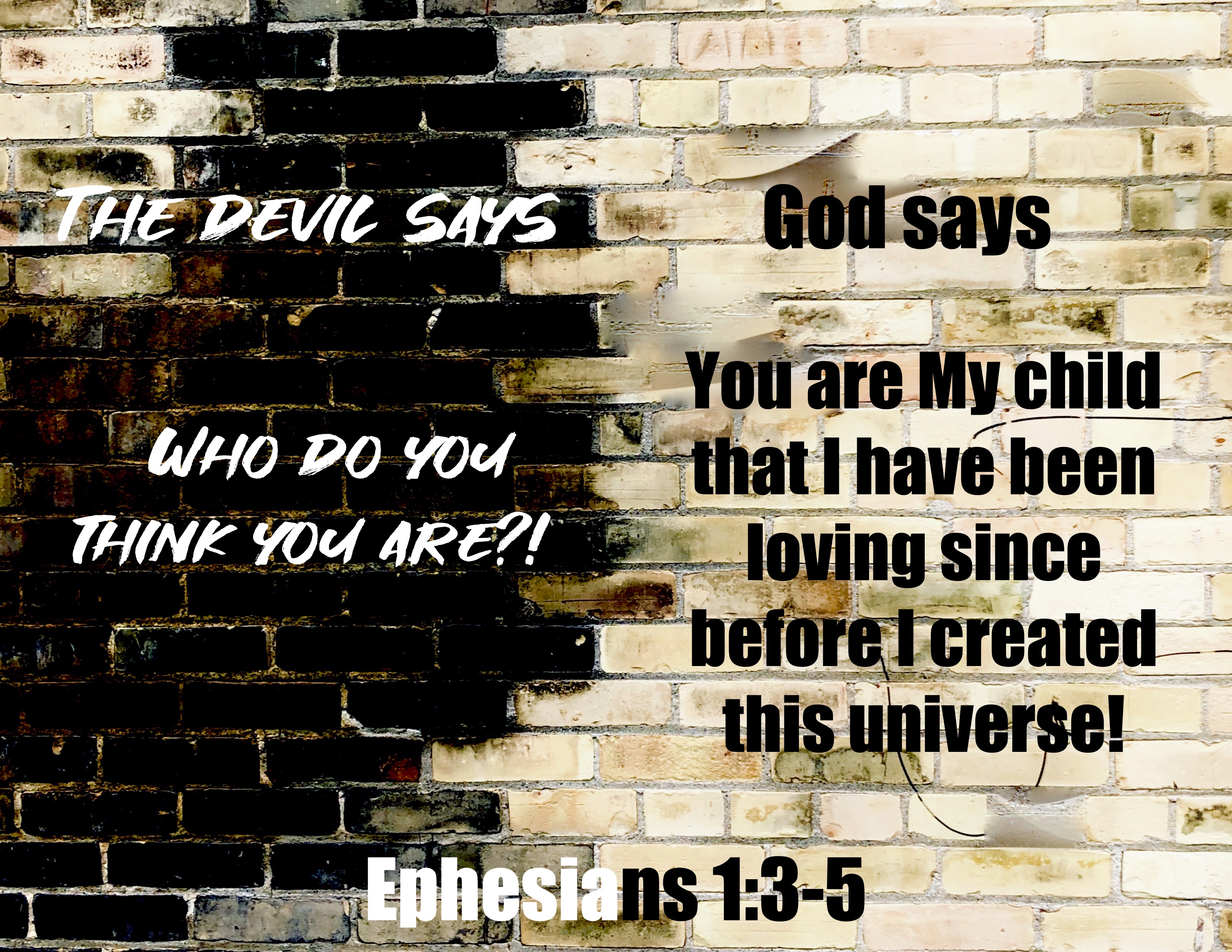
Blessed be the God and Father of our Lord Jesus Christ, who has blessed us with every spiritual blessing in the heavenly places in Christ, just as He chose us in Him before the foundation of the world, that we should be holy and without blame before Him in love, having predestined us to adoption as sons by Jesus Christ to Himself, according to the good pleasure of His will. (Ephesians 1:3-5) 

     It is at once a doctrine of Scripture and of common sense that whatever God does in time, He predestined to do in eternity. …  

     Adoption is that act of God whereby men who were by nature the children of wrath, even as others, and were of the lost and ruined family of Adam, are from no reason in themselves, but entirely of the pure grace of God, translated out of the evil and dark family of satan and brought actually and virtually into the family of God. … This is an act of pure grace. …  

     [God] found a rebellious child, a filthy, frightful, ugly child. He took him to His bosom and said, ‘Evil though you are, you are comely in my eyes through my Son Jesus. Unworthy though you are, yet I cover you with His robe, and in your Brother’s garments I accept you.’ …  

     His only begotten and well-beloved Son was quite enough for Him. … And His own omnipotence was adequate enough to have created a race of beings far superior to us. He stood in no need whatever of any to be His darlings. It was, then, an act of simple, pure, gratuitous grace—and of nothing else—because He will have mercy on whom He will have mercy and because He delights to show the marvelous character of His condescension.

From Adoption

I love that thought that “whatever God does in time, He predestined to do in eternity.” When Adam and Eve sinned, God wasn’t scrambling to fix the sin problem. When He said that a remedy for sin was coming (Genesis 3:15), He was talking about a plan that was already in place. 

When John the Baptist said of Jesus, “Behold the Lamb of God who takes away the sin of the world!” (John 1:29), he was only announcing what was a fact from before time began, where the apostle John described Jesus as “the Lamb slain from the foundation of the world” (Revelation 5:12, 13:8)! And the apostle Paul said God “chose us in [Jesus] before the foundation of the world”! 

Friends, think of what this means: God saw a relationship with you—saw you adopted into His family—before you were born, even before the universe was created! What indescribable love! What amazing grace! 

Do you realize your value in God’s eyes? He didn’t have to send Jesus, but He did. He didn’t have to lavish His love on you, but He does. He didn’t have to adopt you into His family, but what He has done in time, He predestined to do in eternity—from before He even said, “Let there be light” at the moment of creation. 

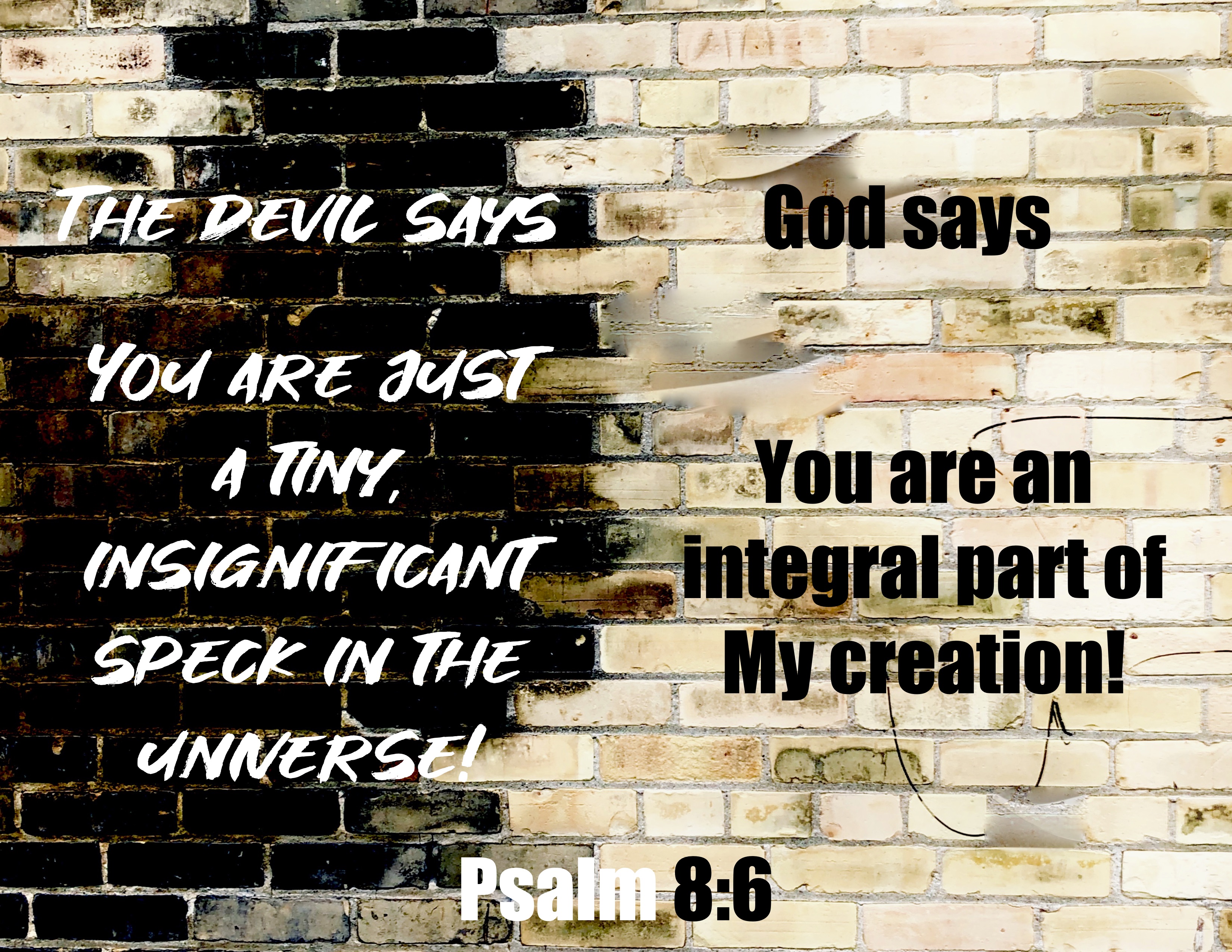
Don’t ever buy into the lies of satan that you’re nothing special, when, in fact, you mean more to God than you can possibly comprehend!

Don’t Give In To Pseudo-Wisdom

Listen to the podcast of this post by clicking on the player below, and you can also subscribe on iTunes or Spotify.

Dr. Craig Bartholomew wrote, “Wisdom is deeply experiential.” In other words, we can’t just have head knowledge and call it “wisdom,” but we have to have an experience in which we have learned a lesson in order for it to truly be called wisdom. 

In the three wisdom books of the Bible—Job, Proverbs, and Ecclesiastes—the wisdom that is shared is hard-won by people who personally experienced what they shared with us. Even if we consider the wisdom in the poetic books of Psalms and the Song of Solomon, we are still reading first-person, firsthand experiences. True wisdom can never be dispensed by someone who hasn’t “been there, done that” and learned a valuable lesson from that experience. 

In Job, we meet three of his friends who claim to have wisdom but don’t meet the criteria of personal experience. This pseudo-wisdom always comes in the form of, “I’ve heard that…,” or “It’s obvious from my observations…,” or “Everyone knows that….” 

That means that satan’s tactics fall into this pseudo-wisdom category too: he has no personal, first-hand experience of human situations that result in hard-won wisdom! The best he can offer is secondhand observations. 

Jesus, on the other hand, fully entered into the human experience. Jesus IS Wisdom. As a human He had first-hand experiences, and as God He doesn’t just see fragments of lessons, but He sees the whole, eternal picture into which all lessons fit. 

This is why Solomon wrote, “The fear of God is the beginning of wisdom.” This holy respect and willingness to heed the words of Wisdom Himself is the starting point and the conclusion of wisdom. This is also why the writer of Hebrews wrote that Jesus knows every situation that we are going through. He knows how to help us because He has personal, first-hand, experiential wisdom.

satan’s temptations are only suppositions. He can never say, “I know from personal experience.” Look at his temptations of Adam and Eve, Job, Jesus, and the apostle Paul:

  • Did God really say?
  • Does this suffering even make sense?
  • Doesn’t the Scripture tell us…?
  • I don’t think you deserve the thorn in the flesh. 

Don’t give in to the pseudo-wisdom that satan pushes!

Jesus was tempted in every human way possible. He learned wisdom by this personal experience. Jesus alone is qualified to be the only source of Wisdom that you and I need to successfully handle trials and temptations. 

Because He Himself in His humanity has suffered in being tempted, tested and tried, Jesus is able immediately to run to the cry of—to assist and relieve—those who are being tempted and tested and tried…. (Hebrews 2:18 AMP)

Learning Life’s Lessons

Listen to the podcast of this post by clicking on the player below, and you can also subscribe on iTunes or Spotify.

Have you heard the cliché, “Experience is the best teacher”? I don’t think that’s really true. I’ve known a lot of people who have had some huge experiences but haven’t learned a single lesson from them. Honestly this is the better statement: Evaluated and recalled experience is the best teacher. 

Many of my “life lessons” have cost me money. For instance, I was told numerous times by my parents, grandparents, and my driving instructor not to speed, but I didn’t learn that lesson the easy way. It cost me financially. I recovered from that, and I’ve only had one speeding ticket in the 40 years that followed! 

Most of us can recover from a financial loss. But other life lessons cost us more dearly: our broken physical health, lost intimacy in a relationship, a damaged reputation, or missed opportunities. Then we walk around with the weight of guilt, baggage, second-guessing, and regret. Jesus didn’t die on a Cross for us to live weighed down like this! 

God wants to help us! So why do we wait to call on Him until after we’ve tried to do it ourselves? Or until after we’re so deep in trouble or weighed down with baggage? Perhaps we think, “This is such a tiny thing. I can handle it myself.” 

  • Solomon said it was the tiny things that brought ruin 
  • God told Cain that it was the sin that was crouching at his door that wanted to take him down 
  • The devil prowls around and looks for the most opportune time to pounce on us 
  • Which is why Paul tells us to put on all of God’s armor and prayer all the time (see Song 2:15; Genesis 4:7; 1 Peter 5:8; Luke 4:13; Ephesians 6:10-11, 18) 

Portia Nelson summed it up well in her short story that I think all of us can relate to…

Chapter 1
I walk down the street.
   There is a deep hole in the sidewalk.
   I fall in.
   I am lost… I am helpless. It isn’t my fault.
It takes forever to find a way out.

Chapter 2
I walk down the same street.
   There is a deep hole in the sidewalk.
   I pretend I don’t see it.
   I fall in, again.
I can’t believe I am in the same place. But it isn’t my fault.

Chapter 3
I walk down the same street.
   There is a deep hole in the sidewalk.
   I see it is there.
   I still fall in… it’s a habit… but my eyes are open, I know where I am.
It’s my fault. I get out immediately.

Chapter 4
I walk down the same street.
   There is a deep hole in the sidewalk.
   I walk around it.

Chapter 5
I walk down another street.
    —Portia Nelson

Prayer helps us avoid the holes in our sidewalk, the crouching sin at our door, the prowling devil, and the lurking temptations. But more than that, prayer puts us on the right path to avoid all of these things in the first place (see Proverbs 3:5-6; Isaiah 30:21; 2 Samuel 22:34, 37)! 

God doesn’t have to get ready to help us; He’s already ready to help us. He’s just waiting for us to ask for His help. 

No matter how little or big the challenges, with God I can overcome! 

No matter how obvious or hidden the hole is, with God I can go down the right street! 

No matter how many times I fall in the hole, God can get me out! 

No matter how much the devil wants to bring me down, with God I can live righteously! 

No matter how many times sin pounces on me and I give in to it, God can forgive me! 

Don’t wait a moment longer to call on your heavenly Father in prayer. Let Him hear your voice early and often—He loves to hear from you and respond to you! 

If you’ve missed any of the other posts in this series on prayed called Be A First Responder, you can find the full list by clicking here.

Thursdays With Spurgeon—The Unity Of Scripture

This is a weekly series with things I’m reading and pondering from Charles Spurgeon. You can read the original seed thought here, or type “Thursdays With Spurgeon” in the search box to read more entries.

The Unity Of Scripture

He will glorify Me, for He will take of what is Mine and declare it to you. All things that the Father has are Mine. Therefore I said that He will take of Mine and declare it to you. (John 16:14-15) 

     Let us never allow anybody to divide between the word of the apostles and the word of Christ! Our Savior has joined them together. ‘I do not pray for these alone, but also for those who will believe in Me through their word’ (John 17:20). And if any begin rejecting the apostolic word, it will be outside the number for whom Christ prays. …  

     Such a doctrine that we are sometimes taunted about as being not revealed by Christ but by His apostles were all revealed by Christ, every one of them! They can all be found in His teaching, but they are very much in parabolic form. It is after He has gone up into glory and has prepared a people, by His Spirit, to understand the truths of God more fully that He sends His apostles and says, ‘Go forth, and open up to those whom I have chosen out of the world the meaning of all I said.’ The meaning is all there, just as all the New Testament is in the Old! … [Jesus Christ] is the Old Testament to which the Epistles come in as a kind of New Testament, but they are all one and indivisible. They cannot be separated. …  

     Remember that the quickest way into a text is praying in the Holy Spirit. Pray the chapter over! I do not hesitate to say that if a chapter is read upon one’s knees, looking up at every word to Him who gave it, the meaning will come to you with infinitely more weight than by any other method of studying it. ‘He will glorify Me, for He will take of what is Mine and declare it to you.’ He will redeliver the Master’s message to you in the fullness of its meaning!

From Honey In My Mouth

Augustine wrote, “Scripture is the unus sermo Dei—the one sermon of God.” 

There is one consistent message in the Bible from Genesis 1:1 through Revelation 22:21, and the Holy Spirit wants to reveal that message to us. He is our Helper that will illuminate to our lives what has already been inspired in the Scripture. 

Jesus is Jehovah God from beginning to end. He is the “one sermon of God” that we can read and understand. Think about this: the same Spirit who inspired the pens of the biblical writers is the same Spirit in you who can help you understand and apply those words to your life. More than that, the Holy Spirit wants to make the Word of God clear to you. 

God is glorified and you are edified when Scripture comes alive in your heart and mind. 

Peter wrote this about Paul, “His letters contain some things that are hard to understand….” But if we don’t take the time to wrestle with that passage, Peter says this is what happens next: “…which ignorant and unstable people distort, as they do the other Scriptures, to their own destruction” (2 Peter 3:16). So, as Spurgeon suggests, begin your Bible reading time in prayer. Then if you come to a difficult text, don’t rush past it and don’t turn too quickly to what another human has written in a commentary, but ask the Holy Spirit to help. (I shared a 5-step process I use for these challenging passages here.) 

Pray, read, pray, apply, pray. The Holy Spirit WILL help you! “Remember that the quickest way into a text is praying in the Holy Spirit.”


9 Quotes From “Starlight And Time”

Starlight And Time by Dr. Russell Humphreys is a fascinating read for Creation apologists! Check out my full book review by clicking here. 

“The Creator, who sees the end from the beginning (Isaiah 46:10, Revelation 22:13, John 8:58, and more) is outside of time. Time is a created feature of His universe, like matter and space. It is interesting that the equations of GR [general relativity] have long indicated that time itself had a beginning.” 

“The Bible lays a good foundation for a young-earth relativistic cosmology.” 

“In this new picture of the cosmos, gravity and black hole physics play a central role. In particular, an experimentally-measured general relativistic effect, called gravitational time dilation by some authors, causes clocks (and all physical processes) to tick at different rates in different parts of the universe. … By this effect on time itself, God could have made the universe in six ordinary days as measured on earth, while still allowing time for light to travel billions of light-years to reach us by natural means. The theory also appears to explain the two other major cosmological phenomena we see: the red shifts of light from distant galaxies and the cosmic microwave background radiation. Thus, this biblical foundation appears to lead to a young-earth cosmology which is consistent with Einstein’s general theory of relativity and astronomical observations. As measured by clocks on earth, the age of the universe today could be as small as the face-value biblical age of about 6000 years.” 

“We don’t study Genesis in order to know the mind of Moses; we study to know the mind of God.” 

“We now have very good scientific reasons to think that the amount of carbon dioxide in the pre-flood atmosphere was many times greater than today. That would produce a strong greenhouse effect, a warm climate, and as a bonus, stimulate plant growth to produce the large amount of plant life we find in the fossils. The additional ordinary carbon in the biosphere would dilute carbon 14, so that the pre-flood 14C/12C ratio would be considerably lower due to that effect alone, thus explaining the “old” post-flood radiocarbon dates. In addition, we have evidence suggesting that the earth’s magnetic field was at least ten times greater before the flood than now. That would enable the geomagnetic field to be a very effective shield for cosmic rays, thus greatly reducing the production of carbon 14, making the pre-flood world a healthier place, and further explaining post-flood radiocarbon dates.” 

“Gravitational time dilation causes clocks (and all physical processes) to tick at different rates in different places. This means we must consider which set of clocks the Bible is referring to when it makes statements about time.” 

“[God’s] intention, among other things, was to give markers in the sky which would allow us to clearly measure periods of time in terms of the earth’s rotation and the earth’s movement around the sun, and thus he further defines ‘days’ and ‘years’ [Genesis 1:14-15]. In other words, God quite reasonably tells us periods of time in terms of our own frame of reference, not in terms of some otherworldly frame of reference, as some authors would have it. So Genesis 1, Exodus 20:11, and other passages are telling us that God made the universe in 6 days E.S.T.—Earth Standard Time.” 

“According to the best physics and cosmological knowledge we have today, these ideas lead directly to the conclusion that our cosmos expanded out of a white hole (a black hole running in reverse). As a consequence, gravitational time dilation caused clocks (and all physical processes) both inside and outside the event horizon (the border of the white hole) to tick at vastly different rates from one another in different places.” 

“This paper covers a great deal of scientific territory unfamiliar to many readers. But the bottom line is simple: God used relativity to make a young universe.”