Love Changes Everything (book review)

One of the most fascinating love stories in the Bible is between Hosea and Gomer. In this story, we see a picture of God’s unconditional love so clearly. Using this story as a backdrop, Micah Berteau explains how this love is still potent for all of us today. His book is called Love Changes Everything.

Micah believes our culture has watered down and diminished what love really means. And I heartily agree with him! There’s an old children’s song that says, “Jesus loves me this I know,” but Micah entitles one of his chapters: “Jesus loves me… this I don’t know.” This book is meant to help us recapture what real love is. 

Weaving aspects of the rescuing love Hosea had for Gomer throughout the entire book, Micah teases out thoughts that many may not have considered. He then skillfully uses his own personal life journey to bring a modern-day feel to this love story. Each chapter opens a new facet of God’s love that is intended to dismantle all of the false definitions of love too many have previously taken to heart. 

Although this book is a good reminder for a wide audience, I especially think this would be a good discussion guide for a mature Christian to use with someone who is struggling to believe that God can unconditionally love and forgive them. 

I am a Revell book reviewer. 

Thursdays With Spurgeon—Jesus Is All We Need

This is a weekly series with things I’m reading and pondering from Charles Spurgeon. You can read the original seed thought here, or type “Thursdays With Spurgeon” in the search box to read more entries.

Jesus Is All We Need

     So is it with every other ordinance, whether ordained of God or of man. It must never be placed in the front as if it were the means of salvation! I say to you who may have been sprinkled, or to you who may have been immersed; to you who may bow at your altars, or to you who may come to the communion table, I do not place these rites on a level, certainly, for some are of God and some are not. But I do place them all on a par in this respect: that they enter not into the essence of our salvation! And I say to all of you, “These things cannot save you, for ‘Christ is all’” [Colossians 3:11]. Be you who you may, and do you what you may, you will not be saved because of your natural birth or because of any supposed holy acts that you may perform! Neither will you be saved by any transactions that may be the work of a human priest! You must have Christ as your Savior and you must rest in Him alone, or you cannot be saved! He is the one foundation, “For no other foundation can anyone lay than that which is laid, which is Jesus Christ” (1 Corinthians 3:11), for “Christ is all.” The Lord Jesus Christ sums up everything that ordinances can possibly mean and all that pedigree and descent can possibly bring, and He is infinitely more than all of them! …  

     You must not add anything to Christ as your ground of confidence, but just lean the weight of your sin, your sorrow, your needs, and your desires wholly and entirely upon Him who lives to stand for you before God. Christ, then, is all our trust!

From All And All In All

It’s not our family lineage, it’s not our church attendance, it’s not our religious activities. It’s all Jesus. 

Jesus alone paid for our salvation, and it’s by faith in Him alone that we have the forgiveness of our sins. Don’t let anyone try to convince you that it’s “Jesus plus something else.” Nothing else needs to be added—Jesus is completely sufficient in and of Himself!

Turning From Moral Folly To Wisdom

“The man who says, ‘I want to go to heaven, but I don’t want to live a pure life; I want to be free to continue with my present life. I will change a little and do better, but I have no desire to be pure,’ or the man who says, ‘I want to escape hell and make heaven my home at last, but I have no particular desire to cease to live as I have lived’ is deceiving himself. You are hearing the language of a moral fool. This is not the language of wisdom, but the folly of the damned. … 

“The penitent man wants to be changed. If you are still sufficiently in love with yourself and all you want is a little improvement, I see no possibility of faith approaching your heart. Unless a man comes to Christ seeking to be a different person, to be humble, meek, and self-effacing, he is not coming to Christ at all. Unless we hate evil and love righteousness, at least to the degree we are able at the moment, we are still in the bonds of iniquity and the enemies of righteousness. … 

“Join me in this prayer: “Oh, I want to be other than what I am. I want to be different. I want to change. I am not satisfied. I want to believe in Thee, and trust in Thee, and throw myself boldly on Thee, and I want to be made like Thyself. I do not want only to escape hell, I want to escape sin. I not only want to go to Heaven at last, but I want to have Heaven in my heart now. I not only want to dwell with the redeemed, I want to be like the redeemed here on earth. I want to be another kind of person.” —A.W. Tozer, in The Wisdom of God

It’s Time To Come Home

I already shared the bizarre but beautiful sermon illustration that Hosea lived out for the Israelites and for us. His wife had been unfaithful to him and had gotten herself so far in debt that she was a virtual slave. Hosea, in a clear picture of God’s amazing, unrelenting love, bought back his wife, paid off her debts, and completely restored her to himself. 

Sadly, the people of Israel—even after seeing this grace-filled living lesson—continue to push farther and farther away from God. This prompted God to announce the indictment against them… 

Hear the word of the Lord, you Israelites, because the Lord has a charge to bring against you who live in the land: “There is no faithfulness, no love, no acknowledgment of God in the land. There is only cursing, lying and murder, stealing and adultery; they break all bounds, and bloodshed follows bloodshed” (Hosea 4:1-2). 

It wasn’t the first time that someone preferred the things of the world to the things of God (like Adam and Eve), and it wasn’t the last time (like you and me). We mortals tend to be seduced by what we can see and hold right now, instead of trusting God for something far better. 

Jesus told a story about a son who enjoyed the full privilege and favor of his father, yet this son thought he could do better on his own. He asked his father for his share of the inheritance and left for a distant land, determined to live a life where he called all the shots. But with his money gone, he found himself in debt, starving, and working as a hired hand in a pigsty. 

It was then that Jesus said that young man came to his senses. He had nothing to bring to his father—no gift of restitution, no token of respect, nothing except his words. All he could say was, “Father, forgive me.” 

But that’s all that was needed. Hosea counseled the Israelites to do the same thing:

Return, Israel, to the Lord your God. Your sins have been your downfall! Take words with you and return to the Lord. Say to Him: “Forgive all our sins and receive us graciously, that we may offer the fruit of our lips” (Hosea 14:1-2). 

The wayward son had a rehearsed speech asking his father to simply hire him as a servant, as if he wasn’t worthy to be considered a son any longer. But the father—in words that reflect our Heavenly Father’s love—cut the son’s speech short. He let the son only say, “Forgive me,” but before the son could make the request to be a servant the father totally restored him. 

After Hosea calls the wayward people to return with their “forgive us,” he quotes God’s reply: “I will heal their waywardness and love them freely, for My anger has turned away from them” (14:4). 

How could this be? How could God’s full judgment not fall on His wayward people? How could it not fall on you and me?! Because it fell on Jesus (2 Corinthians 5:21)! So when we come back to God with our words of forgiveness, He restores us and clothes us in the robe of Jesus (Galatians 3:27). 

Absolutely amazing! 

God longingly speaks to His wayward people, “It’s time to come home. I’m waiting for you with open arms. I am ready to restore you completely. Just come home.”

Join me next week as we continue to learn about the major lessons we can discover in the minor prophets. 

Poetry Saturday—The Precious Blood

Before Your Cross I kneel and see
the heinousness of my sin,
my iniquity that caused You to be
‘made a curse,’
the evil that excites the severity of divine wrath.

Show me the enormity of my guilt by
the crown of thorns,
the pierced hands and feet,
the bruised body,
the dying cries.

Your blood is the blood of incarnate God,
its worth infinite, its value beyond all thought.
Infinite must be the evil and guilt
that demands such a price.

Sin is my condition, my monster, my foe, my viper,
born in my birth,
alive in my life,
strong in my character,
dominating my faculties
following me as a shadow,
intermingling with my every thought,
my chain that holds me captive in the empire of my soul.

Sinner that I am, why should the sun give me light,
the air supply breath,
the earth bear my treat,
its fruit nourish me,
its creatures serve my ends?

Yet, Your compassion yearns over me,
Your heart hastens to my rescue,
Your love endured my curse,
Your mercy bore my deserved stripes.

Let me walk humbly in the lowest depths of humility,
bathed in Your blood
tender of conscience,
triumphing gloriously as an heir of salvation. —Arthur Bennett

Do It! [reblog]

[I originally posted this about 10 years ago(!), but recently came across it as I was studying the book of Ezekiel. I hope you (re)enjoy this classic.]

Here’s what God said to His people—five times!—through the prophet Ezekiel, “I will judge you according to your conduct.”

It’s not what I believe. It’s not what I discuss. It’s not what I intend to do. It’s not what I know is right and wrong. It’s what I do.

I have to give an account for my conduct. I have to answer to God for how I lived out my beliefs. I have to show God what I did with what I believed about Him. I have to put into practice what’s in my heart.

Do I believe God is God? Do I have idols?

Do I believe God is holy? Do I sin?

Do I believe God forgives? Do I repent?

Do I believe God looks after orphans and widows? Do I?

Do I believe God is my Provider? Do I steal? Do I get jealous or envious?

Do I believe He is Lord? Do I give Him control of everything?

Do I believe I should do something for the hungry, thirsty, naked, sick and imprisoned? Do I actually do something?

What God judges is not just godly beliefs, but godly actions motivated by those godly beliefs.

Don’t just believe it … do it.

A Bizarre Sermon Illustration

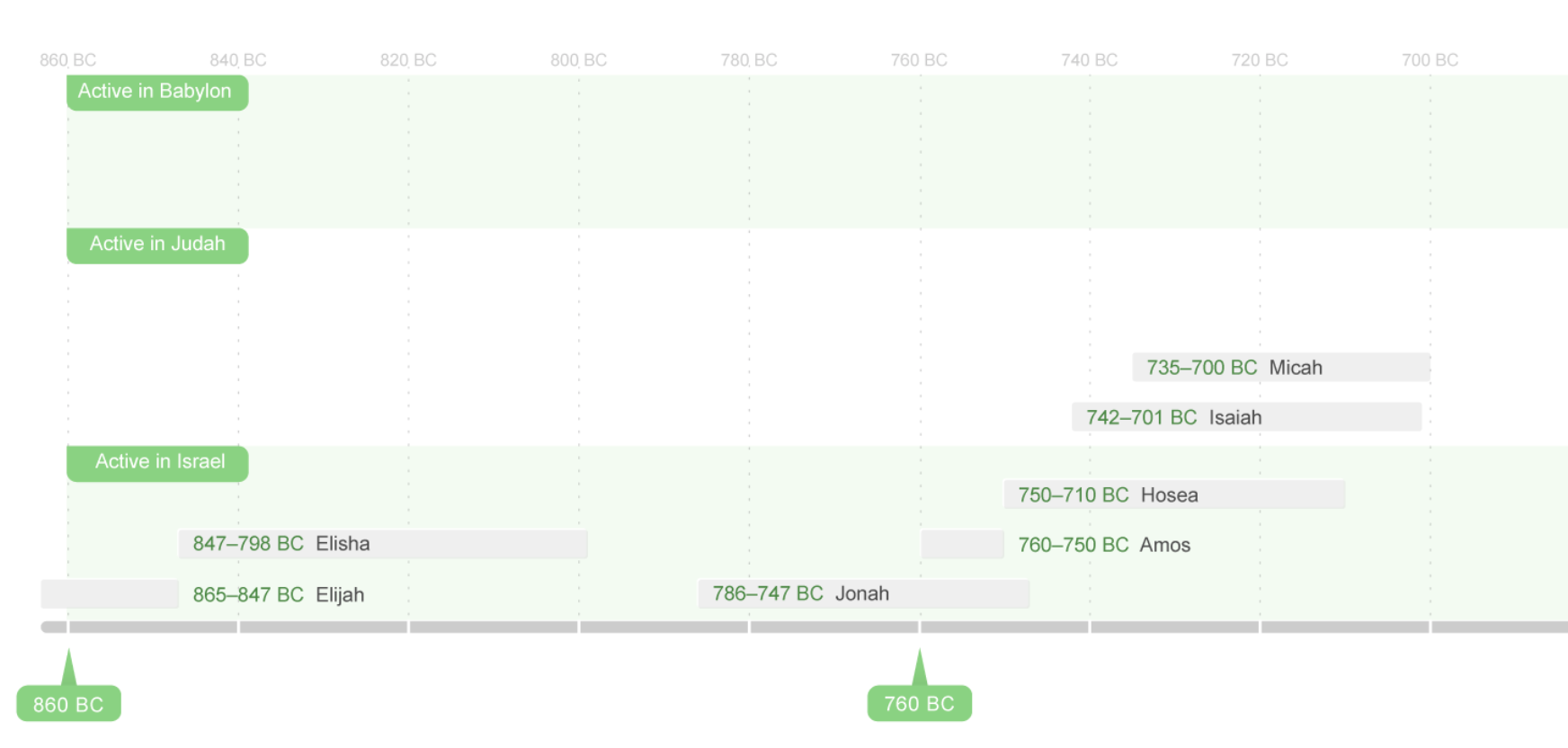
Hosea is the only prophet from Israel (he calls the Israelite king “our king” in 7:5), and along with Amos he is the only prophet to address the northern kingdom exclusively. Hosea addresses the northern tribes of Israel with brutal honesty—he calls them an adulteress wife! Hosea isn’t alone in saying this, as Isaiah, Jeremiah, and Ezekiel all same the same thing too. 

But Hosea alone is called on to live out his message in a most unusual way: God instructs him to marry “an adulterous woman”! The question is: was she already a promiscuous woman before they married? Or did she become unfaithful after they were married? 

I believe that she became unfaithful after marriage. When Gomer gives birth to their first son, Hosea writes that “she bore him a son”—indicating he is the father. But with Gomer’s second and third pregnancies, Hosea simply writes, “she gave birth,” leading me to think that Hosea wasn’t the father of those children. 

The names of the children are also interesting: 

  • Jezreel—This boy’s name means “God sows.” It is a neutral word meaning either sowing good seed and reaping a healthy harvest, or sowing godlessness and reaping punishment. 
  • Lo-Ruhamah—Her name means “not pitied.” God indicates that He will bring a judgment on Israel that is deserved justice. He has been patiently calling them to repentance but they kept running farther away from Him. 
  • Lo-Ammi—This boy’s name is saddest of all. It means “not My people.” 

How sad! Can you imagine Hosea’s heartache?! Can you imagine God’s heartache?! God tells Hosea the penalty for their adulterous life (Hosea 2:2-13), which the apostle Paul would later sum up in these straightforward words: the wages of sin is death (Romans 6:23). 

“YET” and “THEREFORE”…

In the middle of God expressing His heartache over His wayward wife He says two amazing words “Yet” and “Therefore” (1:10; 2:14). 

  • “Yet I will bless you and reverse your misfortune” 
  • “Therefore I will allure you and speak tenderly to you” 

This is UNBELIEVABLE!! Who would respond like this to such vile unfaithfulness?! 

God would.

God did! But God shows and clearly proves His own love for us by the fact that while we were still sinners, Christ—the Messiah, the Anointed One—died for us (Romans 5:8). 

Hosea—whose name means salvation—is called on to do exactly what Jesus did for us. Hosea buys back his wife from her master. Hosea pays the price for Gomer’s sin, just as Jesus paid the price for our sin. 

What amazing love God has for us! 

You have never lived an unloved day in your life. Not a single one! God loves you more than the best husband could ever love his wife. He paid for your forgiveness and your freedom. Will you receive that forgiveness and restoration today?

Join me next Sunday as we learn more major lessons from the minor prophets. 

10 Quotes From “Start With The Heart”

Kathy Koch has given parents, teachers, and anyone who works with younger children, and excellent resource to improve your relationship with your kiddos and empower them to greater success. Check out my full book review of Start With The Heart by clicking here. 

“For your children to want what you want for them, for changes to occur, and for improvements to remain, your hearts must be intertwined. Your motivational power and influence over their obedience comes out of the love you have for each other.” [see Proverbs 23:26] 

“Affirm your children when they do use the character qualities you’re emphasizing and correct them when they don’t. … Specifically, look for gratitude and joy. The lack of one or both of these emotions causes children (and adults) to use character qualities inconsistently.” 

“Here is my list of understandings that can secure children’s hearts and increase your influence so you’ll be able to motivate them to be responsible, brave, and so much more.

  • Parent by faith
  • Parent with grace and mercy
  • Forgive quickly and often
  • Ask to be forgiven quickly and often
  • Tell your children you are confident in God
  • Prioritize children, not their behavior
  • You can dislike what children do while you still like and love them
  • Be who you want your children to be
  • Raise the children you were given, not the children you wish you had
  • Remember needs and wants are different
  • Listen when children are little if you want them to talk with you when they’re older
  • When children have a problem, remember they are not the problem
  • Teach children to fail well
  • Prioritize progress, not perfection” 

“Children are even more susceptible to the influences around them. We should have and model solid character so our behavior, attitudes, and decisions glorify God. We should also prioritize our character so we don’t lead a child astray. Making every effort to use these qualities ourselves matters. And, of course, apologizing when we don’t is key to maintaining a positive relationship.” 

“The desire to develop self-control is birthed in self-respect. Self-control makes it possible to use other character qualities successfully.” 

“Do we choose to see our children’s circumstances and respond appropriately? Although consistency is usually appropriate when raising and motivating children, if we don’t have compassion and individualize our reactions and decisions when it’s appropriate, why would our children? Modeling this character quality matters tremendously.” 

“Initiative: Children may never develop this quality if you remind them of everything they must do. Rather, it’s birthed when you help them grow in appropriate independence. … Is it possible that your children may not be motivated as you’d like because you rescue them to early, too often? … I know you value the things you worked hard for. Don’t rob children of that same satisfaction. Allow them to persevere.” 

“Prayer is a powerful tool—use it! Your personal and specific prayers for your children communicate your deep love for them and your dependence on God. Your prayers are a significant way your children learn who you hope they’ll be and what you hope they’ll do. Pray they’ll develop a heart for Christ. Model and teach what they need for their heart to be transformed into His likeness. This will change their character and, therefore, their motivation and motives, too.” 

“Just making statements like these can be empowering:

  • I need to take off arguing and put on first-time obedience.
  • I need to take off bullying and put on kindness.
  • I need to take off distractions and put on focus.
  • I need to take off ‘I don’t want to’ and put on ‘do it anyway.’” 

“This might surprise you, but all children are motivated. … It doesn’t help to ask, ‘How do I get my kids motivated?’ Rather, we need to ask, ‘How can I redirect their motivation?’” 

Stay tuned: more quotes coming soon…

Rejoicing At The Coming Of The Judge

In Psalm 50, we read the first-of-twelve psalms written by King David’s handpicked worship leader, a man named Asaph. On the day that Asaph first took up his position as worship leader, David gave him a special song, which definitely influenced Asaph’s songwriting.  

Psalm 50 has a pretty easy outline: an introduction in the first six verses, followed by 17 verses of God speaking to His people—speaking to you and me! In between the introduction and God’s speaking is the word selah.

Selah means a time for us to pause and carefully consider. So Asaph is essentially saying, “God is getting ready to speak with us, so we need to selah—pause from what we are doing so that we can pay careful attention to His words!”  

Asaph sets the stage in the first verse, telling us that the Mighty One, God, the Lord speaks. The words that are about to be spoken come from THE I AM—the All-Sufficient One, the Omnipotent, the All-Knowing, All-Powerful Ruler of the Universe. Asaph also reminds us that He is coming as THE Judge.

When you hear that THE All-Powerful, All-Knowing One is THE Judge that has summoned you into His courtroom, it’s quite likely that your heart would skip a beat. Especially when God lists some of the sins you and I are guilty of breaking in verses 16-20. 

It’s also possible that the news that you have to appear before THE Judge could cause you to rejoice. What? How can we rejoice at that?! David taught Asaph this concept in the song he gave him: God’s people should rejoice over God’s judgments. 

You see, in Psalm 50 God says, “I do not rebuke you for your sacrifices, or for all your attempts to follow the rules.” It’s not in the practices of the law that we find salvation.

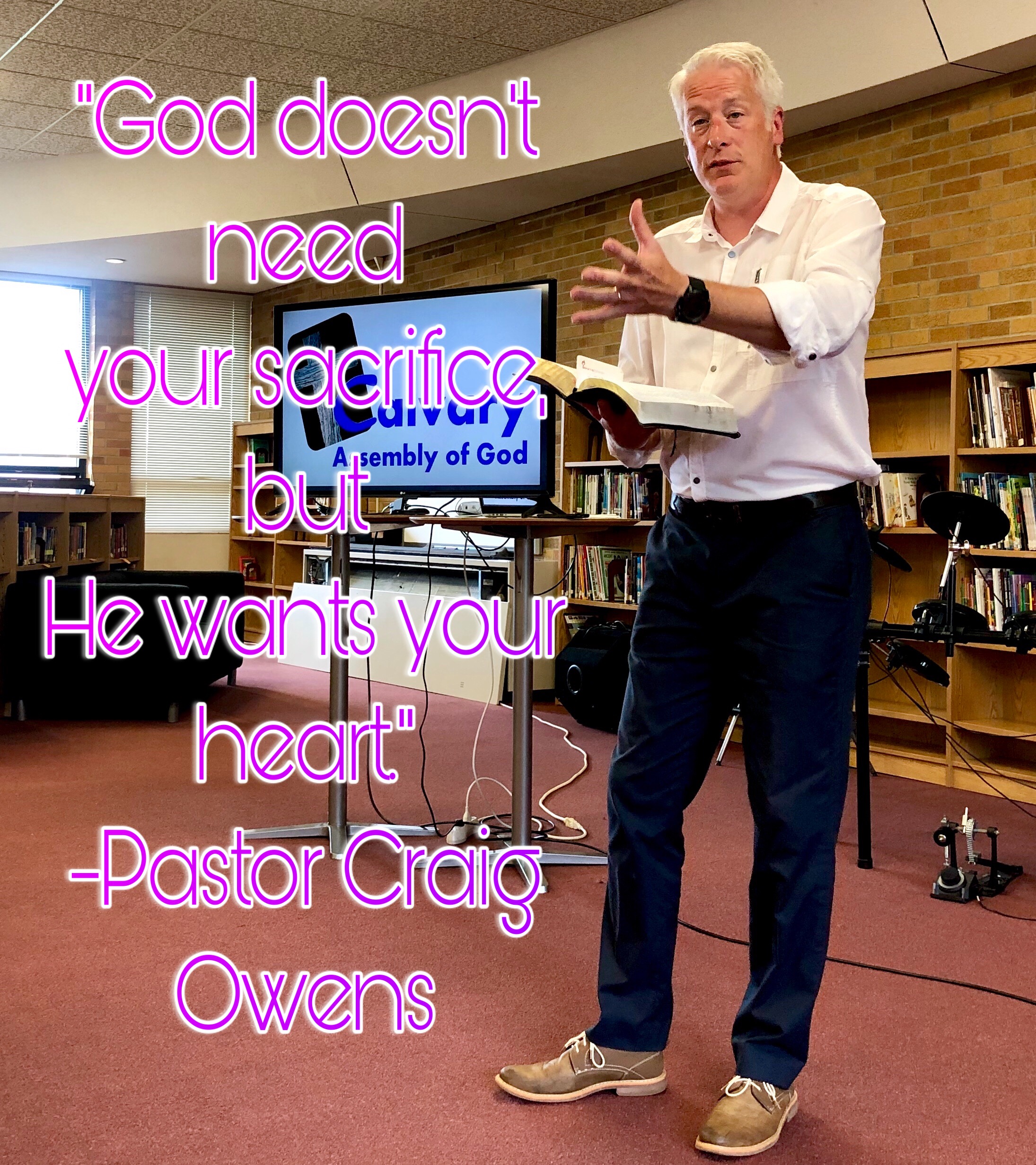
God doesn’t need our sacrifices, but He wants our hearts. 

In order to win our hearts for Himself, THE Judge did something absolutely mind-blowing—THE I AM became flesh like us. And then He became the once-for-all sacrifice for our sins, paying our penalty Himself when He died on the Cross (see Hebrews 2:14-17; 7:17-27). 

This is why we can rejoice when we hear we have to stand before THE Judge. When you have placed your faith in what Jesus did for you on the Cross, when THE Judge opens His perfect record book to your page He will read this inscription written in the crimson red blood of Jesus: PAID IN FULL!

This is why we can rejoice at the thought of seeing THE Judge face to face!

Join me next Sunday as we wrap up this summer looking at the Selahs in the Psalms. We plan to restart this series next summer, unless the Judge calls us home before then!

The Church Needs To Foster Community

“Amid the confusion of Christians mistreating people with gender dysphoria to prop up their sense of self-righteousness, and progressives mistreating them to advance their agenda of autonomy, those with real identity struggles are forgotten. Christ alone understands who we are through and through. And because of that each one of us in our fractured states needs to come to Him. …

“The need of the hour is for biblically faithful compassion. The church needs to open its doors and Christians need to open their hearts so that those struggling to find resolution to their dysphoria—and those who are struggling to find clarity amidst other confusions—can find community and, ultimately, their true identity in Christ. In Christ, they can be understood. …

“God’s original intent is for harmony between one’s soul and one’s body. This is why Christians, of all people, should be compassionately concerned with helping people find mind-body congruence. For the Christian, the mind and the body are both important and were meant to work harmoniously. … This biblical perspective defends our integrity as whole human beings in contradistinction to the secular effort to reduce us to our chemistry and jettison any idea that we have an immaterial mind or soul. …

“That is why the invitation of Christ has come in this order: recognition, repentance, redemption, regeneration. When we recognize our need for the Savior (because of our sins in general, not because of our dysphoria), repentance happens and then we are redeemed. But that redemption works itself out in our lives over time. It is the Holy Spirit who lives and works in us to conform us to Jesus’ likeness. It is not an overnight process, which means the church must do a better job of helping that process along. The church needs to foster community.” —Abdu Murray