Unexpected Faithfulness

Listen to the podcast of this post by clicking on the player below, and you can also subscribe on AppleSpotify, or Audible. 

Imagine you just preached a sermon that was so Holy Spirit-anointed that crowds of people turned to Jesus. This kind of activity made a big stir in town, and some supposedly religious people became quite jealous of the fruit of your ministry. In their jealousy, they begin slandering you to others in town, causing a huge backlash against your ministry. 

How would you respond? Would you give those jealous slanderers a piece of your mind? Would you give them some of their own medicine? Would you leave town?

The scenario I described isn’t make believe; it actually happened to Paul and Barnabas in the city of Iconium (Acts 14:1-2). In the very next verse, Luke describes Paul and Barnabas’ response: some biblical translations use the word “so” and some use the word “therefore” to indicate the natural connection—

So Paul and Barnabas stayed on there for a long time, speaking freely and fearlessly and boldly in the Lord” (v. 3). 

They didn’t fight their slanderers nor did they flee from Iconium; they remained faithful to the task to which God had called them! 

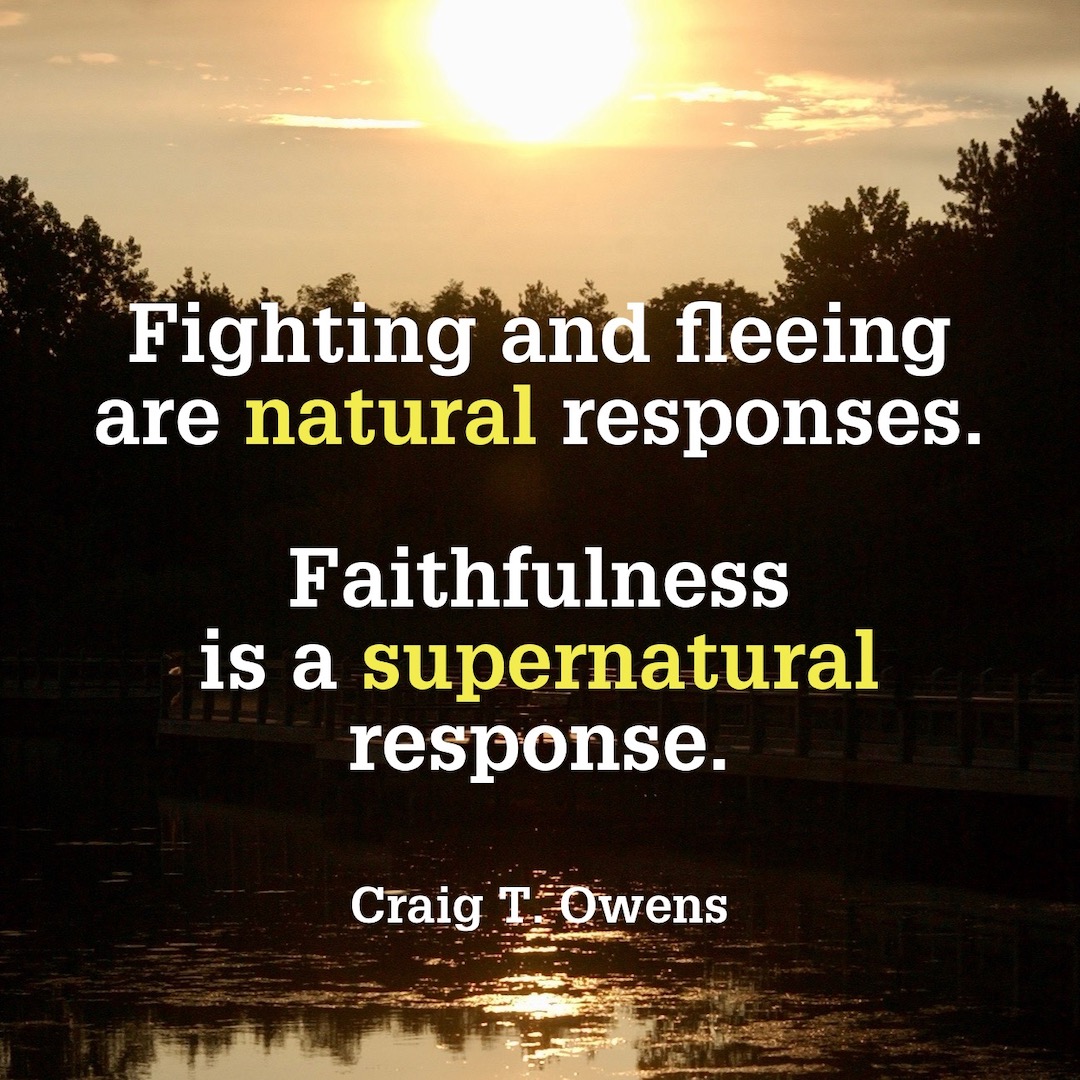
Fighting and fleeing are natural responses. 

Faithfulness, however, is a supernatural response. 

God honored the faithfulness of Paul and Barnabas by demonstrating His own supernatural power through them: “[God] continued to bear testimony to the Word of His grace, granting signs and wonders to be performed by their hands” (v. 3b). 

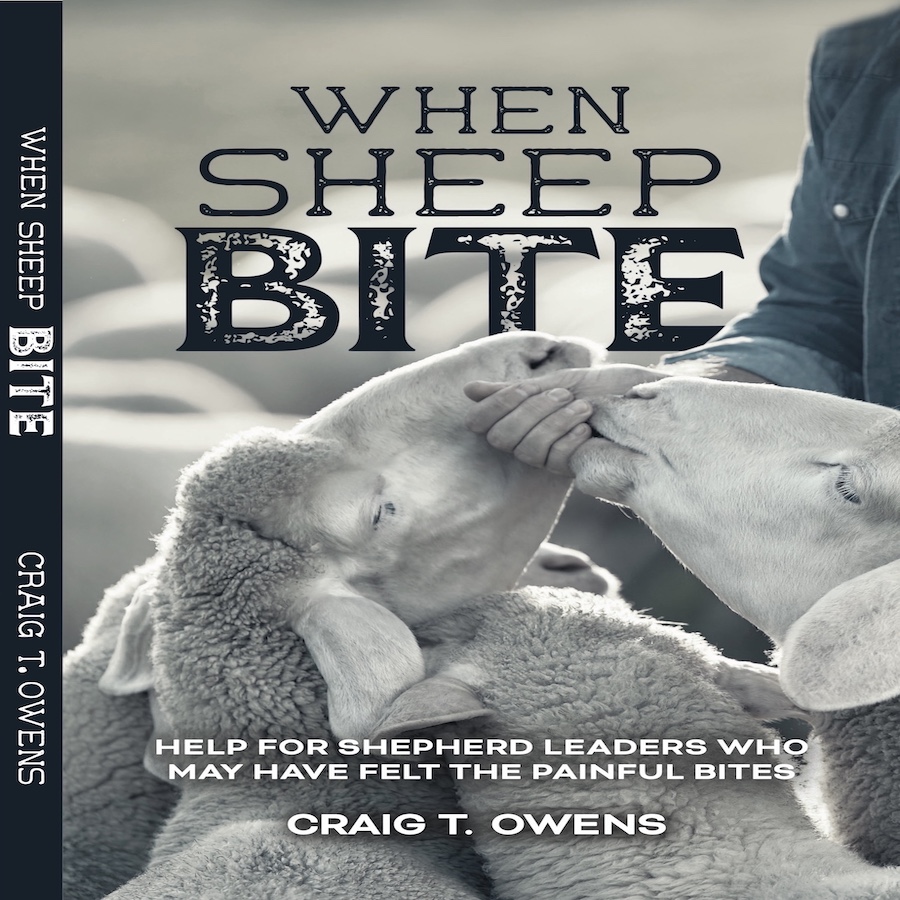
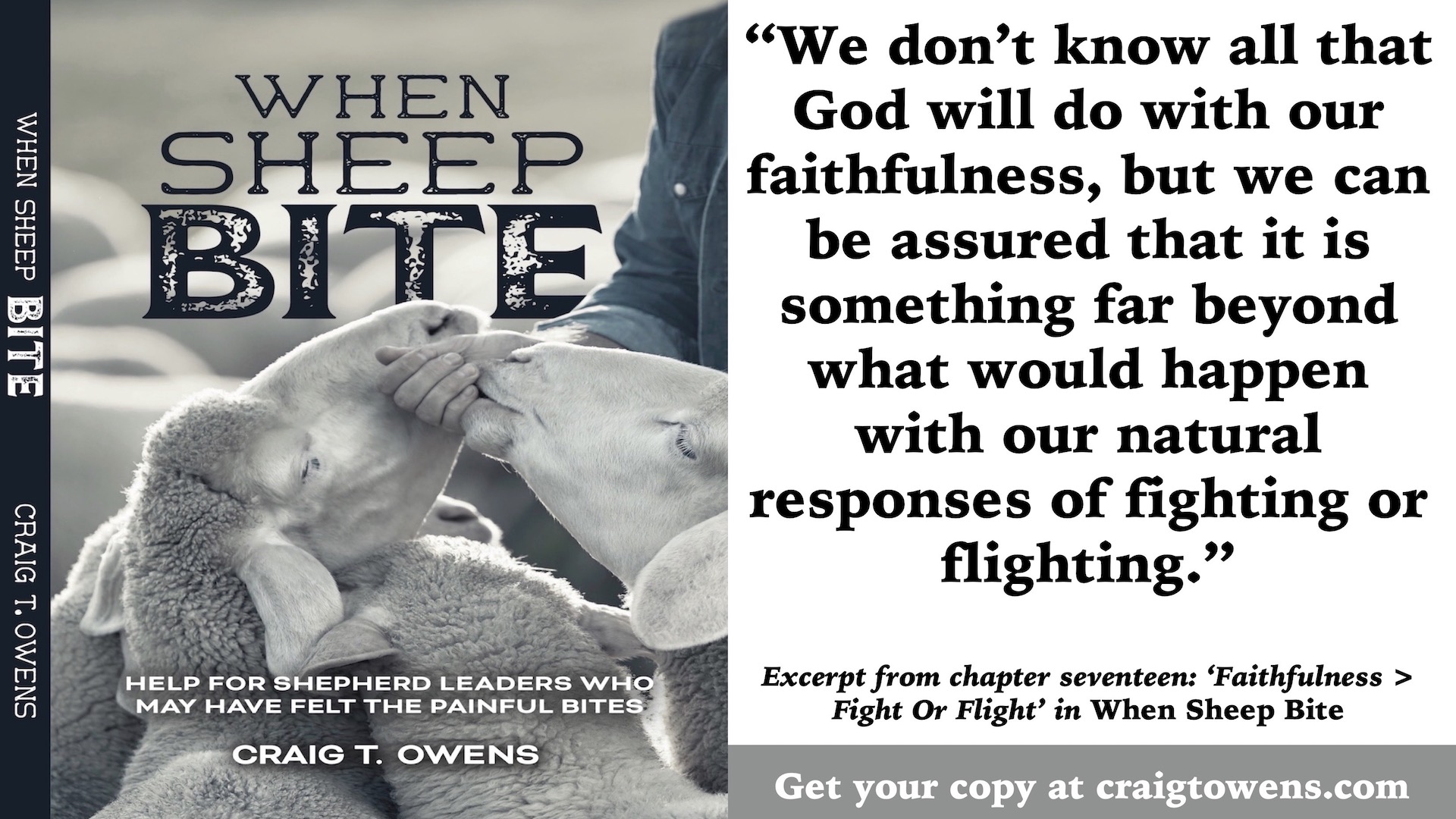
The scenario I described isn’t just something from long ago history, but it was a scene from my personal history too. In the Introduction of my book When Sheep Bite I wrote—

   I cannot pinpoint exactly what triggered their outburst or when their attacks started, but it seemed like almost overnight their teeth were bared. I was completely taken aback! I had assumed that seeing the new life and vitality in this pasture would be celebrated. When the exact opposite happened, I must admit that my knee-jerk reactions probably weren’t very Christlike. … 

     This was something I never imagined. I never saw anything like this in my home, nor had I experienced anything like this in my associate pastor’s role. In fact, even in the business world I had never seen people behave this egregiously. 

In the final chapter of my book I shared this thought, “Yes, fight-or-flight is our natural response, but with the empowerment of the Holy Spirit, we can respond in supernatural faithfulness. We don’t have to sit unmoving and unfeeling, but we can continue to serve even biting sheep until God removes us or them.” 

This whole idea of supernatural faithfulness to God’s calling versus giving in to the natural reactions of fight-or-flight is why I wrote this book. Once again, let me take you back to an excerpt from the Introduction—

     Would I ever want to relive this experience? No way! But there were lessons I learned during this walk through hell that I could have learned in no other way. It is those lessons that I hope to be able to unpack for you, my shepherding friends, in this book. … I would say to you something that C.S. Lewis wrote, “Think of me as a fellow-patient in the same hospital who, having been admitted a little earlier, could give some advice.” 

When you are under attack, I know it seems like you are alone, but you are not. Don’t give in to fight-or-flight, but ask God to supernaturally empower you to remain faithful. I believe When Sheep Bite can be a huge assistance to you as well. Please pick up a copy and reach out to me if I can be of assistance to you. 

►► Would you please prayerfully consider supporting this ministry? My Patreon supporters get behind-the-scenes access to exclusive materials. ◀︎◀︎

When The World Fears Christians

Listen to the podcast of this post by clicking on the player below, and you can also subscribe on AppleSpotify, or Audible. 

Here’s an interesting interaction between King Saul and David—

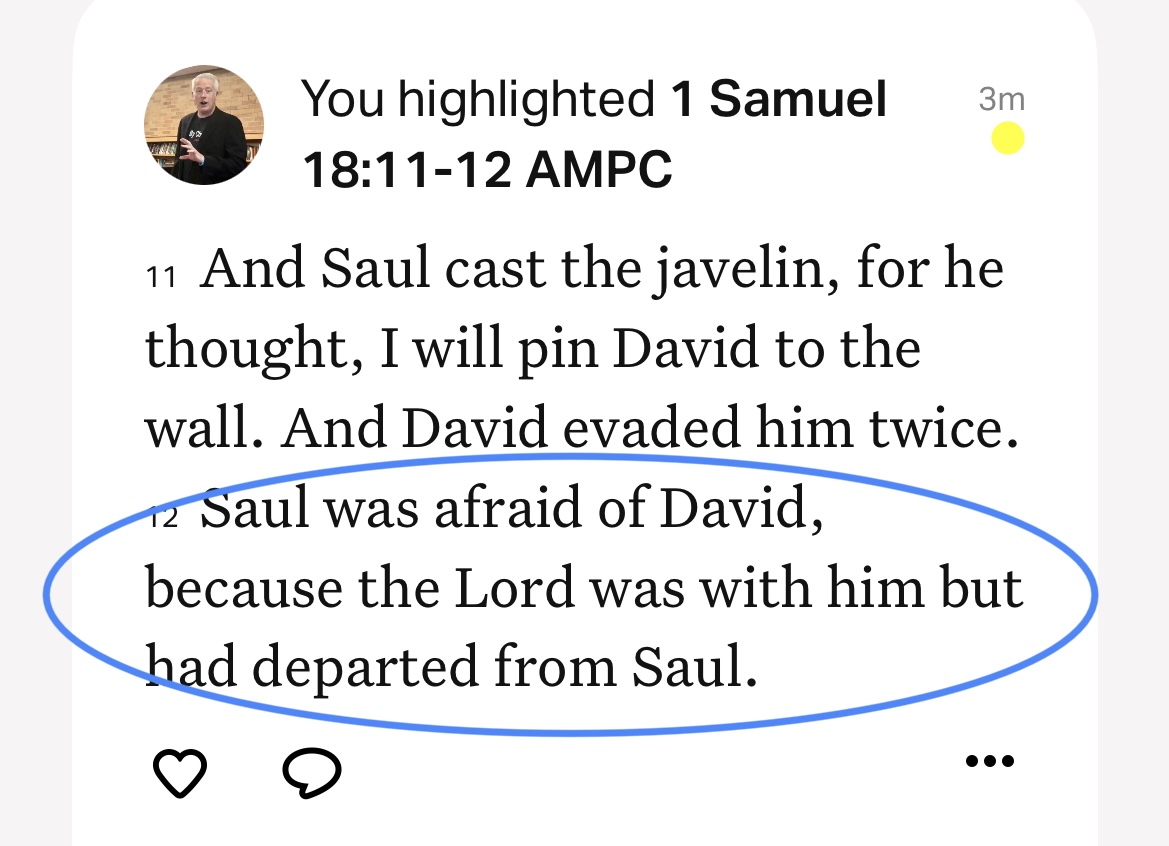
And Saul jealously eyed David from that day forward. … And Saul cast the javelin, for he thought, I will pin David to the wall. And David evaded him twice. Saul was afraid of David, because the Lord was with him but had departed from Saul. (1 Samuel 18:9, 11-12 AMPC)

This exchange in this well-known story got me wondering. I was thinking how Saul had the position of authority over David and he had a javelin in his hand, but the Bible still says that Saul “was afraid of David.” Why would that be? I think even the most atheistic of people intuitively know there is something other-worldly about those in whom the Spirit of God abides, which makes worldly people lash out at them in fear. 

But those who fear God—as David did—don’t fear mortals. Jesus said, “Don’t be afraid of those who want to kill your body; they cannot touch your soul. Fear only God, Who can destroy both soul and body in hell” (Matthew 10:28 NLT). This reverent fearlessness is what galls those who fear the unknown, so they try to silence confident God-followers. 

In these attacks, Jesus tells us not to respond naturally, but supernaturally. “But to you who are willing to listen, I say, love your enemies! Do good to those who hate you. Bless those who curse you. Pray for those who hurt you” (Luke 6:27-28 NLT). 

Peter picked up those words from Jesus and instructed Christians: “Be careful to live properly among your unbelieving neighbors. Then even if they accuse you of doing wrong, they will see your honorable behavior, and they will give honor to God when He judges the world. … For God called you to do good, even if it means suffering, just as Christ suffered for you. He is your example, and you must follow in His steps.” (1 Peter 2:12, 21 NLT). 

Although Saul feared the presence of God in David, he also had to acknowledge the success that came to David because of God’s abiding presence in him, and also, by extension, the success that came to Saul’s kingdom. On the one hand, Saul wanted David dead; on the other hand, he wanted David close by—

So Saul removed David from him and made him his commander over a thousand; and [David] went out and came in before the people. David acted wisely in all his ways and succeeded, and the Lord was with him. When Saul saw how capable and successful David was, he stood in awe of him. (1 Samuel 18:13-15 AMPC) 

When Christians are supernaturally empowered by God, they never have to respond in natural fight-or-flight from those who lash out at them. Let your faithfulness to God be your testimony that points others to Him. 

►► Would you please prayerfully consider supporting this ministry? My Patreon supporters get behind-the-scenes access to exclusive materials. ◀︎◀︎

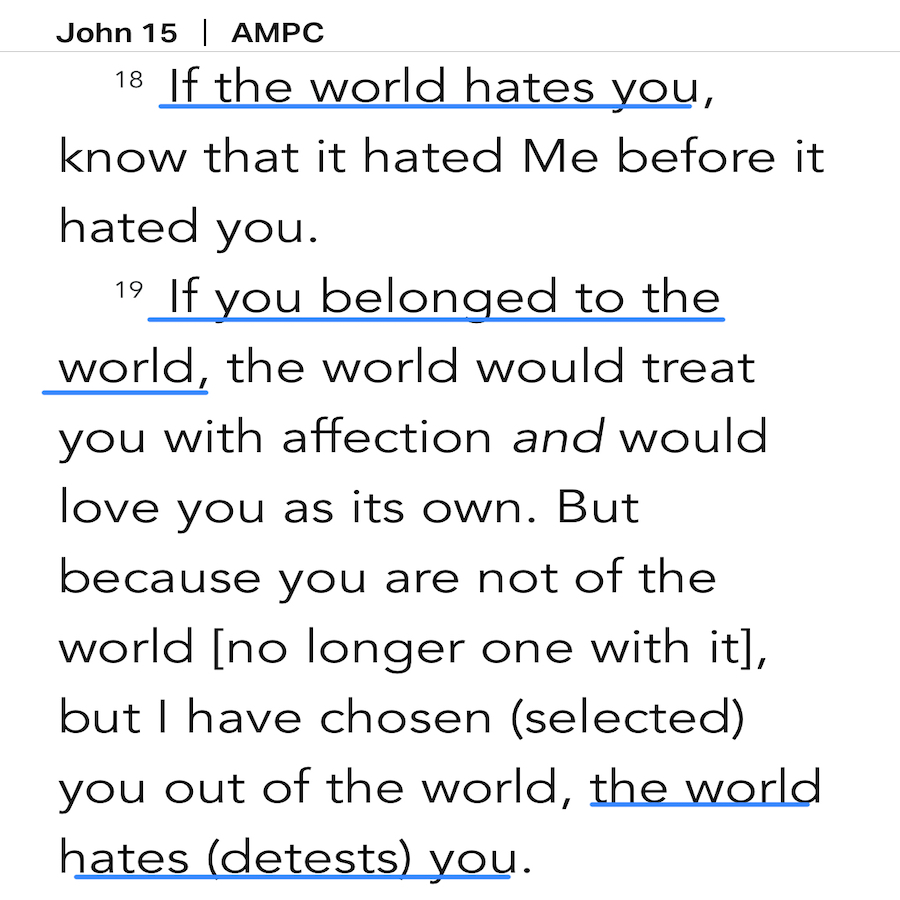
Jesus said, “If the world hates you, know that it hated Me before it hated you. If you belonged to the world, the world would treat you with affection and would love you as its own. But because you are not of the world [no longer one with it], but I have chosen (selected) you out of the world, the world hates (detests) you.” (John 15:18-19)

A Different Response To Attacks

Listen to the podcast of this post by clicking on the player below, and you can also subscribe on AppleSpotify, or Audible. 

Sir Isaac Newton may have said for every action there was an equal and opposite reaction, but that’s not true for God-fearing leaders. 

Check out this episode of The Podcast. 

The story of Paul and Barnabas that I reference in this video is found in Acts 14:1-21. 

My book When Sheep Bite is divided into three section. In the first section I talk about a shepherd leader’s heart and section two diagnosis the sheep bites leaders endure. The final section is all about the faithfulness to finish well—not giving in to the natural responses of fight or flight. 

I open that final section of the book like this—

     Psychologists and medical doctors have all described what happens to our minds and bodies when we are under attack. They are universal responses that our loving Creator has implanted in all of us to be able to respond to threats that come at us. When confronted with a biting sheep, without consciously thinking about it our minds and bodies prepare for fight or flight. 

     But let’s consider those responses in the context of a shepherd pasturing his sheep. Is it an effective strategy for the shepherd to fight his sheep? No, of course not. Paul told Timothy that a shepherd is “not quarrelsome but forbearing and peaceable” (1 Timothy 3:3 AMPC). 

     Is it allowable for the shepherd to run away from the threat, leaving the flock without a shepherd? Again, no, as Jesus told us that one who resorts to flight isn’t worthy to be called a shepherd but is considered a mere “hired hand [who] cares nothing for the sheep” (John 10:12-13). 

     So if godly shepherds cannot give in to the natural responses of fight or flight, what are we to do? Since we serve an all-power, all-loving Chief Shepherd we must look to Him for the supernatural response of faithfulness. 

     Not fight. Not flight. But faithfulness. 

Check out some of my other posts about godly leadership too. 

►► Would you please prayerfully consider supporting this ministry? My Patreon supporters get behind-the-scenes access to exclusive materials. ◀︎◀︎

The Unexpected Slap

Listen to the podcast of this post by clicking on the player below, and you can also subscribe on AppleSpotify, or Audible. 

Have you ever walked through a door that God so obviously opened just to get smacked by the people on the other side? Let’s talk about the lessons we can learn from that.

The biblical passages I reference in this video are Acts 16:6-40; Psalm 126:4-5; Hebrews 12:2-3; Galatians 6:9.

The blog post I mentioned in this video is The Value of Journaling.

Get more information on my book When Sheep Bite here.

►► Would you please prayerfully consider supporting this ministry? My Patreon supporters get behind-the-scenes access to exclusive materials. ◀︎◀︎

Shepherds Must Not Give In To Fight-Or-Flight 

Listen to the podcast of this post by clicking on the player below, and you can also subscribe on AppleSpotify, or Audible. 

Both physically and psychologically, our natural response to an attack, a surprise, or pain is to fight or flight. 

Although this is a natural response, it’s not the best response for shepherd leaders. Think about it: when a sheep is biting you or misbehaving, although you would like to smack them on the fuzzy nose or run away from them, those are not healthy responses. 

Jesus said that those who ran away in the face of attacks—either from sheep within or wolves without—aren’t worthy of the title “shepherd” (John 10:12-13). And Paul told Timothy that shepherd leaders “must not be quarrelsome but must be kind to everyone” (2 Timothy 2:24). 

As I said, fight-or-flight is natural, but Jesus is calling His under-shepherds to a supernatural response. This will require God’s help, which He frequently provides for us in the timely counsel of wise friends who have experienced the same pain you are experiencing. 

Check out this short video where I talked to a group of pastors about this topic. 

I would like to invite you to join a cohort of pastors that will be dealing with the same painful sheep bites you have experienced. We’ll meet together online every other week for 10 sessions to discuss the biblical principles that will help us all respond in the supernatural ways that strengthen our leadership, heal our flocks, and bring glory to the Chief Shepherd. 

This cohort is limited to just 10 pastors so that we can develop some solid friendships that will last well beyond the cohort, so please sign up today.

Check out more information on my book When Sheep Bite here.

The Craig And Greg Show: When Sheep Bite

Listen to the audio-only version of this podcast by clicking on the player below, or scroll down to watch the video.

As you may have heard, I have written a new book! In this episode Greg and I sit down and chat about When Sheep Bite, and discuss how the valuable lessons it provides are critical for leaders of any organization.

  • [0:21] I have a confession to make…
  • [1:43] This book is for both business leaders and church leaders.
  • [3:07] Attacks usually lead to to fight-or-flight, but When Sheep Bite offers a new response.
  • [5:21] It’s healthy to validate our feelings when we’ve been hurt, but then good leaders go deeper.
  • [8:39] Empathy is health, but making excuses is not healthy.
  • [10:37] Watch out for the sneaky bite of flattery.
  • [11:26] Leaders who have been hurt have to guard against harboring that hurt.
  • [13:23] Leaders need to learn how to confront misbehavior correctly.
  • [14:46] In order for sheep to bite, and in order for the shepherd to lead, they have to be close to each other. How do both sheep and shepherds set boundaries?
  • [17:46] We can disagree but we cannot disrespect!
  • [19:49] Bitterness can rob a leader of vitality, so we have to find effective ways to heal.
  • [22:46] Fight-or-flight is natural, but we need to strive for the supernatural response of faithfulness to our calling.
  • [23:40] In many ways WSB points to what a good coach does. Contact Maximize Leadership about how our coaching huddles can help your leadership soarget in touch with us!

Order a copy of When Sheep Bite here.

Check out this episode and subscribe on YouTube so you can watch all of the upcoming episodes. You can also listen to our podcast on Spotify and Apple.

Heart Rate Recovery

Listen to the podcast of this post by clicking on the player below, and you can also subscribe on AppleSpotify, or Audible. 

A few years ago Mark Schultz wrote a song about someone living a go-go-go, overly-busy life and he entitled the song “Running just to catch myself.” Ever been there? 

There’s a Hebrew word that shows up 70 times in the Bible (mostly in the Psalms) that, sadly, many English translations of the Bible have relegated to a footnote. That’s too bad because Selah is such a powerful word. Unless we want to live our lives “running just to catch myself,” we all need a take time to Selah. Look how some have translated this word:

  • “Stop there and consider a little” (Matthew Henry) 
  • “the sacred pause” (Charles Spurgeon) 
  • “pause and calmly think of that” (AMP) 

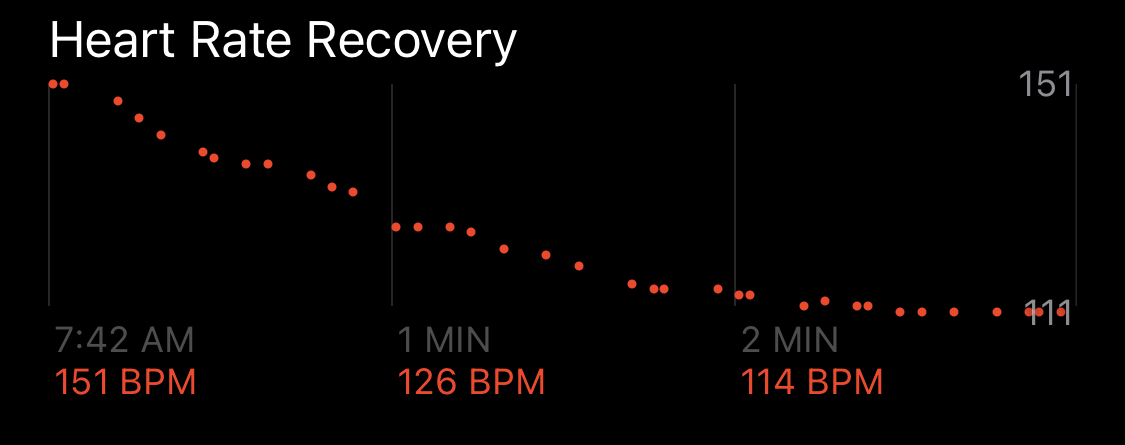
Whether it’s a planned exercise time or just something that frightens or excites us, our heart rate is designed by God to increase—this is how we prepare for fight-or-flight. Doctors say that one of the most vital statistics they now look at to gauge overall cardio health is heart rate recovery (HRR). Doctors want to see a significant increase in HRR after exercise, fright, or excitement. 

A few of the factors that boost HRR:

  • Regular, planned exercise 
  • Getting the proper amount of quality sleep 
  • Reducing stress 

Respond-and-recover is part of a health-building cycle. But if we’re “running just to catch myself” all the time, this time of recovery isn’t happening. Not only are we not recovering well, but we are not properly prepared for the next time our heart needs to start beating faster.   

This HRR is just as vital for us emotionally and spiritually as it is physically: We cannot always be stressed or always be “on.” We need a Selah—a time to stop and consider, a time to take a sacred pause to calmly think. 

This is what David teaches us in Psalm 68. Check out the “bookend verses” where he reminds us that when God arises His enemies are scattered, and that God is awesome and He gives power and strength to His people (vv. 1, 35). And look a the middle verse where David says that when God ascends in victory He gives gifts (v. 18). 

This tells me two things: (1) God is sovereignly in charge (not me or anyone else), and (2) In His love, God delights to use His sovereign power to bless His children. 

The question is not IF I’m going to be confronted by difficult things or difficult people, but HOW will I recover from these confrontations? 

May I suggest a 3-step process to increase your spiritual HRR? 

  1. Acknowledge your situation—don’t try to cover it up or justify it 
  2. Selah—pause to take a deep breath  
  3. During that breath, redirect your thoughts from the difficulty to your awesome God (see 2 Corinthians 10:5; Philippians 4:4-8)

Look at David’s example in this psalm:

Reflect Worship
God defeats enemies (vv. 1-2) Be glad, rejoice, sing (vv. 3-4)
God is a Father and Deliverer (vv. 5-7) Selah (v. 7)
God is sovereignly in control (vv. 8-18) Praise and Selah (v. 19)
God defeated Death (vv. 20-23) Join the procession of worshippers (vv. 24-27) 
God uses His strength to care for His people (vv. 28-31) Sing praises and Selah (vv. 32-35)

As you breathe deeply in this worship of recovery, think on this: “Your sigh can move the heart of Jehovah; your whisper can incline His ear to you; your prayer can stay His hand; your faith can move His arm.” —Charles Spurgeon 

Our Selah pause leads to proper perspective, which allows us to recover more quickly. That, in turn, helps us to be better prepared for the next time we’re confronted by difficulties. 

To check out the other lessons we’ve learned in our ongoing series called Selah, please check out the list I’ve compiled here.

►► Would you please prayerfully consider supporting this ministry? ◀︎◀︎

Whom To Fear

Listen to the podcast of this post by clicking on the player below, and you can also subscribe on Apple or Spotify.

When I am afraid, I put my trust in You. In God, whose word I praise, in God I trust; I will not be afraid. … In God, whose word I praise, in the Lord whose word I praise—in God I trust; I will not be afraid. What can man do to me? (Psalm 56:3-4, 10-11). 

Have you ever been afraid of someone? Have you ever experienced the fear of God?

Interestingly, it’s the same Hebrew word (yaré) for both. This word can mean either something that causes me to fight or flight, or it can mean reverential respect. David is saying, “When I begin to feel the fear of man, I instead turn to the fear of God, and I am no longer afraid.”

Or to put it another way: “When I think I have to fight or flight on my own, I instead choose to reverence God and He takes care of my fear.” 

In both verses 4 and 10, the word “praise” is the Hebrew word for “Hallelujah!” When David feels fear of man creeping in, he looks to God’s Word, finds a promise on which to stand, and reverentially begins to worship God: “Hallelujah! With this promise, I no longer need to fear man!” The Amplified Bible says, “On God I lean, rely, and confidently put my trust; I will not fear.” 

There is one other difference in the Hebrew language that is not readily apparent in the English translation. In verse 4, David uses the name Elohiym for God. This means the Mighty God who is Supreme over all. In verse 10, he uses God’s covenant name Yahweh or Jehovah. To me, this sounds like David knew that the fear of God could combat everything from general fears of human philosophies to a specific fear of a specific mortal. His conclusion is a good one: What can man—a mere mortal—or any of his worldly philosophies do to rattle me? Absolutely nothing because I am secure in God! 

We all become fearful at times. If we choose to fight or flight the fear, we do it in our own strength. This may result in temporary relief, but the fear will come back around again. However, if we decide to fear God—to say “Hallelujah!” to His promises—He is able to completely remove our fear. 

The choice is ours: fear man or fear God. 

To paraphrase the declaration of Joshua: “Choose this day whom you will fear. As for me, I choose to fear God!” 

►► Would you please prayerfully consider supporting this ministry? ◀︎◀︎

Interrupt Your Anxious Thoughts

Listen to the podcast of this post by clicking on the player below, and you can also subscribe on Apple or Spotify.

David taught us how to pray after we’ve been stabbed in the back. Aren’t you glad that you can pray this prayer just once and everything is all better?! 

Oh, wait. It doesn’t really work that way, does it? At least it hasn’t for me. After I’ve been hurt, it takes quite a while to get to a place of healing. We have cliches for this sort of thing—phrases like “Once bitten, twice shy” and “Fool me once, shame on you; fool me twice, shame on me.” 

We begin to react to the past instead of reflecting and responding in the present.  

It’s interesting that those who compiled the Psalter placed Psalm 55 where they did. There is no introduction that gives us a background or setting, but David still seems to be looking for those “Ziphites” that betrayed him to King Saul. 

Here’s an important physiological and psychological truth: Our brains cannot tell the difference between a real threat and an imagined threat. Our physical bodies react the same way in response to any threat. 

It’s interesting to note that both Selahs in Psalm 55 are in the middle of a sentence, almost as if David is interrupting his own thoughts. Which, I believe, is exactly what he’s doing. 

As this psalm opens David is still praying, but he’s praying about his internal threats: 

  • my thoughts trouble me 
  • I am distraught 
  • I notice the conversations and the stares of potential enemies  
  • my heart is in anguish 
  • I feel like terrors of death, fear and trembling, and horror are closing in on me! 

This leads to David’s fight/flight response (although really, it’s his flight response): “Oh, that I had the wings of a dove! I would fly away and be at rest—I would flee far away and stay in the desert.

David has been listening to himself, and he finally at least attempts to put a halt to these distressing thoughts with his first Selah—which means “pause, and calmly think of that.” 

Most of our natural reactions are driven by fear. But fear—by its very nature—is limiting. Fear keeps us tunnel-visioned on the perceived threat. Fear closes us off to accepting any new information. Fear limits our creative responses. Fear perpetuates more fear. 

So David tries a second time to Selah. He is attempting to interrupt his negative thoughts—to stop listening to himself and start talking to himself. To move from a self-preserving reaction to a God-glorifying response requires a Selah pause to reflect. Reflecting on things like:

  • Where will these thoughts ultimately take me? 
  • How has God responded before? 
  • What does God’s Word say? 
  • Could I imagine Jesus responding the way I’m responding? 
  • What changes can I make? 

I love David’s conclusion: “But as for me, I TRUST IN YOU.” He’s saying, “I’m not going to listen to those negative fears anymore. It’s time to put my trust in God.”  

David had to do this “evening, morning, and noon”—again and again and again! Until finally he could say, “I will cast all my cares on the Lord and He will sustain me; He will never let me fall” (Psalm 55:22). 

This is what Jesus promises us, “Come to Me, all of you who are tired and have heavy loads, and I will give you rest” (Matthew 11:28). 

If you’ve missed any of the messages in our Selah series, you can access them all by clicking here. 

A Surprising Way To Relieve Stress

Paul writes some pretty straightforward words to the Christians at Philippi about how to overcome anxiety.

Just to be clear, we’re not talking about a problem-free nor a stress-free life. That’s simply not possible. Our bodies were created to deal with stress in a healthy way. But stress that is unhealthy, or unnecessarily prolonged, or not flushed properly from the body becomes anxiety. Anxiety is the culprit responsible for a whole list of bad things!

When we face a stressor, our bodies release a hormone called cortisol. The main function of this hormone is to prepare us to fight or flight. Sometimes this looks like over-engaging in problem-solving, and sometimes it looks like a complete withdrawal from life. Sometimes cortisol leads to sleeplessness and a diminished appetite, and sometimes it makes people sleepy and craving comfort food.

But the bottom line is the fight-or-flight response is very me-focused!

The strategies Paul lists for us take the focus off me and put it on God. He especially counsels us to pray to God and to praise God. Between these two healthy responses is something unexpected. He writes, “Let your gentleness be evident to all. The Lord is near.”

What in the world does gentleness have to do with relieving stress?!

First, let’s consider the motivation: The Lord is near. I think this could mean:

  1. The Lord’s name is near, as in we are called “Christians” and so we should act in a way that glorifies God.
  2. The Lord is near to help us.
  3. The Lord’s return is closing in where we will have to give an account of how we have lived our lives.

Then there is this word gentleness. This word means:

  • moderation
  • considerate of others
  • patience toward our situation and toward others
  • or as The Message says: Make it as clear as you can to all you meet that you’re on their side, working with them and not against them.

Cortisol is naturally removed from our physical bodies through rest and exercise. Anxiety is naturally removed from our emotional lives the same way—resting in God’s presence (honk!) and gently and considerately exercising a blessing for someone else.

THE BEST WAY TO DE-STRESS IS TO BLESS! 

When anxiety builds:

  1. Honk
  2. Bless
  3. Repeat

Don’t let stress win by making you self-centered. Defeat stress and anxiety by praising God and blessings others. And then make that a daily habit!