Fickle Crowds

Listen to the podcast of this post by clicking on the player below, and you can also subscribe on AppleSpotify, or Audible. 

One day, the Lyaconians hailed Barnabas and Paul as gods and tried to offer sacrifices to them, and the next day they attempted to murder Paul. 

     Even in the light of these words [Barnabas and Paul] with difficulty prevented the people from offering sacrifice to them. But some Jews arrived there from Antioch and Iconium; and having persuaded the people and won them over, they stoned Paul and afterward dragged him out of the town, thinking that he was dead. (Acts 14:18-19) 

Crowds have always been fickle—quickly changing their allegiance from one person or idea to another one. Think about Jesus: they went from “Blessed is He Who comes in the name of the Lord” to “Crucify Him” in less than a week! 

Jesus wasn’t surprised by this. He knew what was in men’s hearts and never built His hopes or His ministry on them (John 2:23-25). 

So why do we? 

Why do we equate a large church attendance or lots of views of our online content as “successful” and anything less as “failure”? 

Jesus didn’t want or need the approval of a large crowd. Instead, He heard, “This is My beloved Son in Whom I am well pleased” (Matthew 3:17, 17:5). 

Paul didn’t want or need the approval of a large crowd. Instead, in his final letter he noted that with the exception of Luke, everyone else had abandoned him. And still some of his last words were, “I have fought the good fight, I have finished the race, I have kept the faith. Now there is in store for me the crown of righteousness, which the Lord, the righteous Judge, will award to me on that day—and not only to me, but also to all who have longed for His appearing” (2 Timothy 4:7-8). 

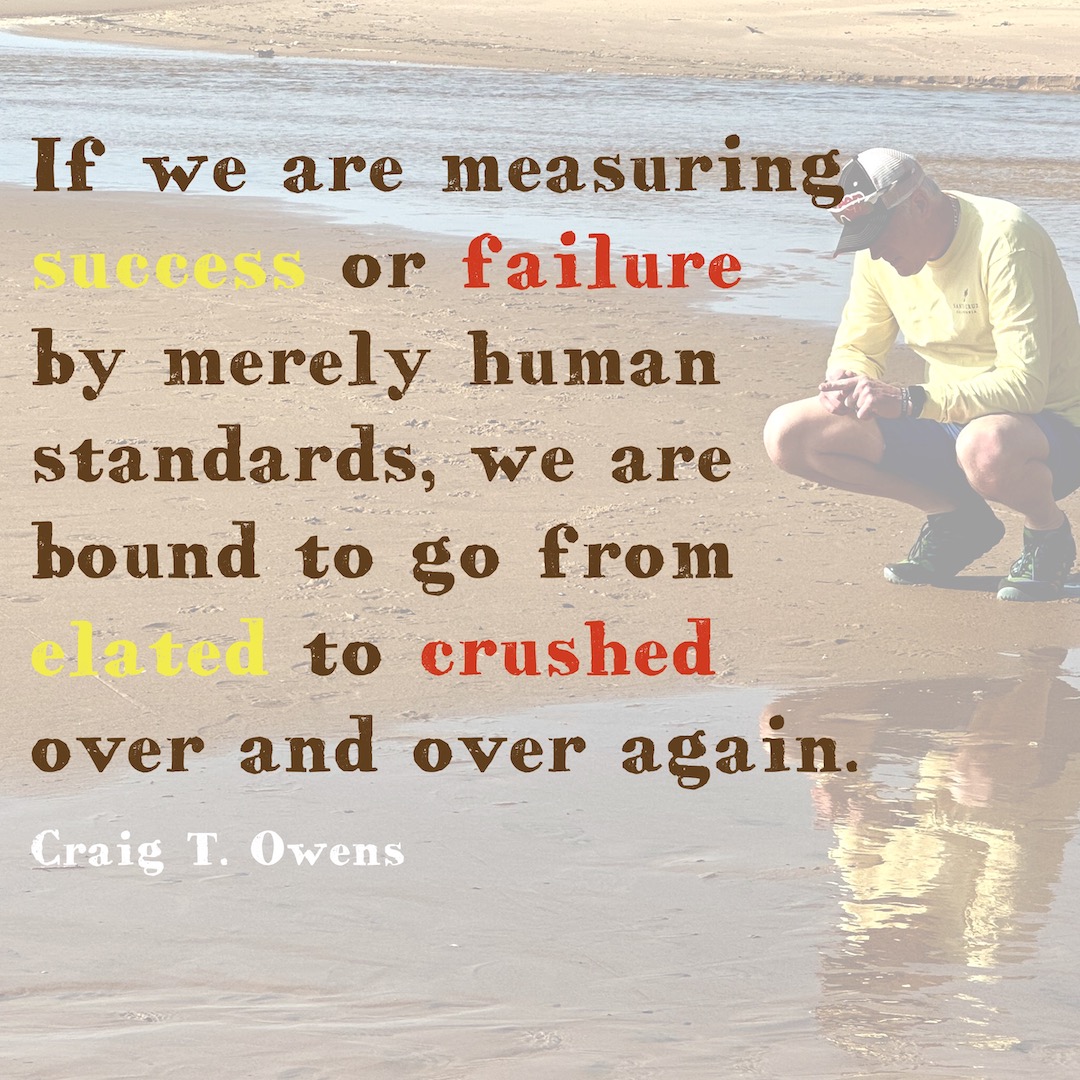
If we are measuring success or failure by merely humans standards, we are bound to go from elated to crushed over and over again. 

There is only one metric of success we should ever give weight to: 

We should only desire to hear our Master say, “Well done” because we faithfully stewarded the gifts and opportunities He gave to us. 

Let’s stop this thrilled-disappointed-thrilled-disappointed cycle by taking our eyes and hearts off of numbers, and resolving to keep our eyes and hearts solely on our Savior.

P.S. If this topic intrigues you, please consider checking out my book Shepherd Leadership: The Metrics That Really Matter.

►► Would you please prayerfully consider supporting this ministry? My Patreon supporters get behind-the-scenes access to exclusive materials. ◀︎◀︎

Links & Quotes

When we pray the closing words of the prayer Jesus gave us—“For Yours is the kingdom, and the power, and the glory forever. Amen!”—we are both acknowledging God’s awesomeness and we are asking for our lives to display this reality.

I have a lot of new video content on my YouTube channel every week. Please check it out and subscribe so you don’t miss anything.

“He who loves iniquity does not love his fellow man, for ‘he who loves iniquity does not love, but rather hates his own soul.’ And certainly he who does not love his own soul will in no way be capable of loving the soul of another.” —Aelred of Rievaulx (1109-1167) 

Steven Lee shows us the biblical principles that God forms us through failure. One passage especially stood out to me because it is a central thought to both of my books. Lee writes, “God measures success according to faithfulness: ‘One who is faithful in a very little is also faithful in much’ (Luke 16:10). Do we strive for success as defined by God? Are we seeking to be faithful with all that he has entrusted to us—time, talents, and treasure? Or have we adopted the lying weights and measures of our world? Will our labors result in hearing the words ‘Well done, good and faithful servant’ (Matthew 25:23)? Put aside striving for the world’s facade of perfection.”

“The measure of who we are is what we do with what we have.” —Vince Lombardi 

T.M. Moore teases us with this: “The most important question we can ask guides us in answering many other questions besides, questions such as, ‘Whom should I marry?’ and ‘How can I stop wasting time?’ and ‘What’s the best way to use my wealth?’’ Any question that helps us answer those and a myriad other questions that might arise during the day must be pretty important. Indeed, it must be the most important question any of us could ask.” What is that most important question? Check out his thought-provoking answer. 

“Life is not a spectator sport. If you’re going to spend your whole life in the grandstand just watching what goes on, you’re wasting your life.” —Jackie Robinson 

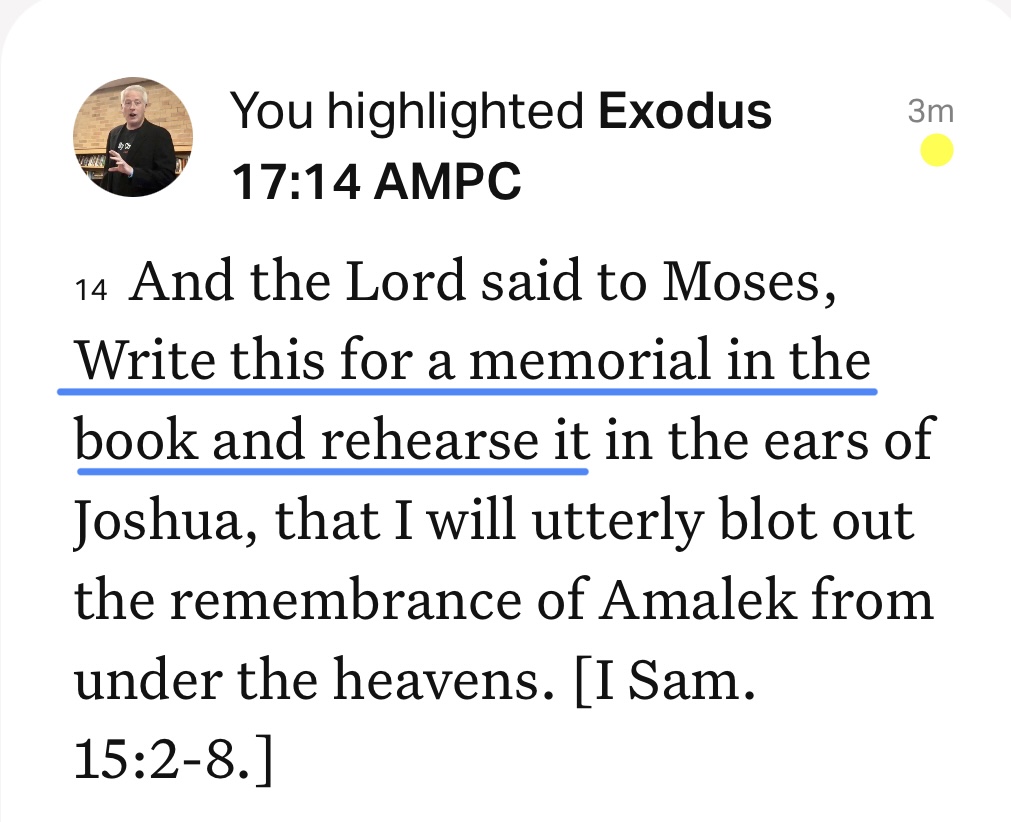
When God gives you a victory, write it down (see Exodus 17:14). When God gives you a promise, write it down. Then read it regularly so you don’t forget it. This will keep you grateful, it will keep you expectant, and it will keep you dependent on the victory-giving, promise-keeping God.

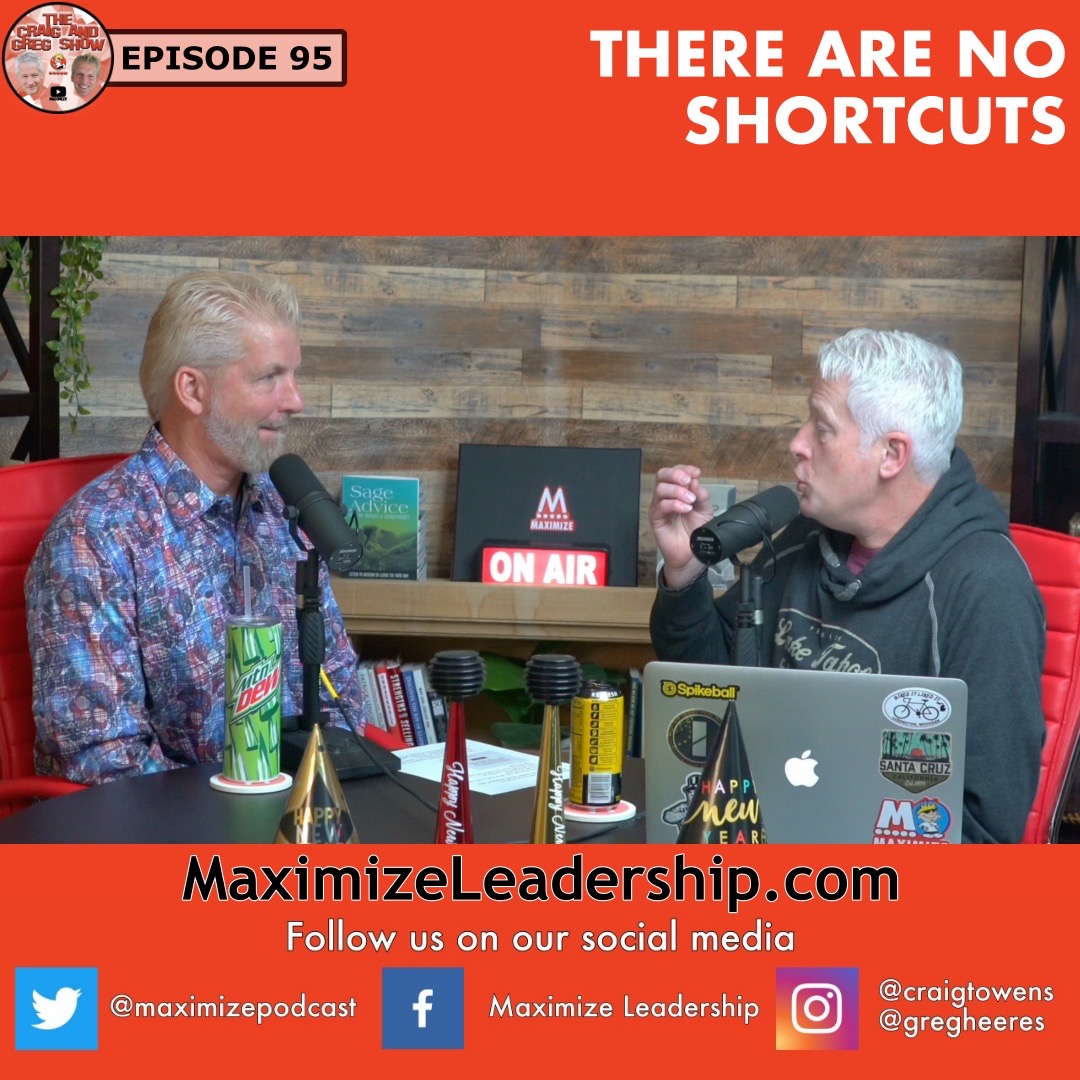
The Craig And Greg Show: There Are No Shortcuts

Listen to the audio-only version of this podcast by clicking on the player below, or scroll down to watch the video.

When you’re trying to accomplish a task it’s natural to want to search for the quickest way to get it done. But what if that’s not the best way? In this episode Greg and I discuss why rejecting shortcuts and persevering through struggles will make you a better leader, and also allow you to help your team get better as well. Join us for some powerful motivation to kick off the new year!

  • [0:23] The shortest distance between two points is ____?
  • [1:04] Why do we want things done so quickly?
  • [2:36] When difficulty makes us slow down, our natural inclination is to bail.
  • [3:40] Sometimes slowing down enriches our lives.
  • [5:22] Leaders have to prepare their team for upcoming hardships, and be willing to fight through them with the team.
  • [7:12] Greg discusses how going the extra mile separates you from the crowd.
  • [8:29] Failure informs your success.
  • [9:27] Greg and I discuss our personal experiences with “shortcut culture” in today’s society.
  • [13:11] We discuss why we love grit and stick-to-it-ivness.
  • [16:02] Greg shares a story from his time coaching football that illustrates how a leader can push the team farther.
  • [18:43] We share action points for leaders to implement this new year.
  • [22:35] A leadership coach will help you improve and be better equipped to lead your team.

Check out this episode and subscribe on YouTube so you can watch all of the upcoming episodes. You can also listen to our podcast on Spotify and Apple.

Links & Quotes

William Gurnall was right when he noted that joy is the highest testimony of a Christian’s peace. Check out the full sermon from which this clip came.

I have a lot of new video content on my YouTube channel every week. Please check it out and subscribe so you don’t miss anything.

“Your failures are your accomplishments because it makes you prepared for whatever it is that you are going to do next.” —Lee Daniels 

One of my favorite Christmas movies is Miracle on 34th Street, where a well-timed letter to Santa Claus arrives at the courthouse to tip the scales of justice for Kris Kringle. The US Postal Service reports that they still get thousands of letters addressed to Santa each year. Have you ever wondered what happens to them. The Smithsonian has the heart-warming story

“The more we learn from God’s Word about how creation praises and reveals Him, the better able we will be to explain His revelation to others. But we’re not content for people merely so experience some revelation of God from the things He has made. We want them to know Jesus. For that, we’ll have to lead them to the Scriptures. The better we know the Scriptures and are daily immersed in them, the more we will see Jesus there and be made like Him. The more we are made like Him, the more we will see Him in all His works, and the more our hope will grow and be visible to others, some of whom may ask a reason for the hope that is within us.” —T.M. Moore 

“No priest, no theologian stood at the manger of Bethlehem. And yet all Christian theology has its origin in the wonder of all wonders: that God became human. Holy theology arises from knees bent before the mystery of the divine Child in the stable. Without the holy night, there is no theology.” —Dietrich Bonhoeffer

“Early Pentecostals generally viewed the observance of the ‘church calendar’ as remnants of liturgical traditions. Apart from Easter and Christmas, there were few days that Pentecostal churches set aside for special services. One exception was New Year’s Eve, when a ‘Watchnight Service’ would be held, typically starting around 7 p.m. and lasting until after midnight.” Check out the notable history of people “praying in the New Year.”

Scott Hubbard writes, “Spiritual health yesterday does not guarantee spiritual health today. So, at the end of a new year, on the edge of another, let’s stop to take some spiritual vitals. How healthy is your soul?” He then gives us six biblically-based questions to help us assess the healthiness of our soul. 

An amulet discovered under the chin of a man buried in a tomb dating to AD 230–270 shows the spread of Christianity into Germany by the middle of the third century.

Links & Quotes

Is it okay to pray a prayer written by someone else? Sure! But let’s use those prayers merely as guides to help us form our own personalized prayers to our loving Heavenly Father. I shared a whole series on prayer that you may want to check out.

I have lots of new content every week, which you can check out on my YouTube channel.

T.M. Moore wrote, “The Holy Spirit comes to dwell in believers with an agenda. His agenda is not ours, and unless we can put our agendas aside, we will never line up with His to realize more of the presence, promise, and power of the Kingdom of God. The Spirit has not come to make us ecstatically happy. He has not come to fulfill our every wish. He comes to bring forth in us distinctly Kingdom values and virtues: love, joy, peace, patience, kindness, goodness, faithfulness, gentleness, and self-control. He comes to distribute among us spiritual gifts, God-given abilities to serve one another in caring and sharing ways. He comes to empower us as witnesses for Jesus, both in how we live and what we say. And He comes to build our churches up into Christlikeness by our unified and focused work.”

I am really enjoying these mini-biographies of key leaders in the Reformation presented by Desiring God. One that I found especially fascinating is about Menno Simons—“If you are familiar with the contemporary Mennonites, you may be surprised to learn that the group’s founder started as a Catholic priest who had never read the Bible.” Yet, near the end of his life, Menno wrote, “Although I resisted in former times Thy precious Word and Thy holy will with all my powers…nevertheless, Thy fatherly grace did not forsake me, a miserable sinner, but in love, received me…and taught me by the Holy Spirit until of my own choice I declared war upon the world, the flesh, and the devil…and willingly submitted to the heavy cross of my Lord Jesus Christ that I might inherit the promised kingdom.”

“What strikes me is that there’s a very fine line between success and failure. Just one ingredient can make the difference.” —Andrew Lloyd Webber 

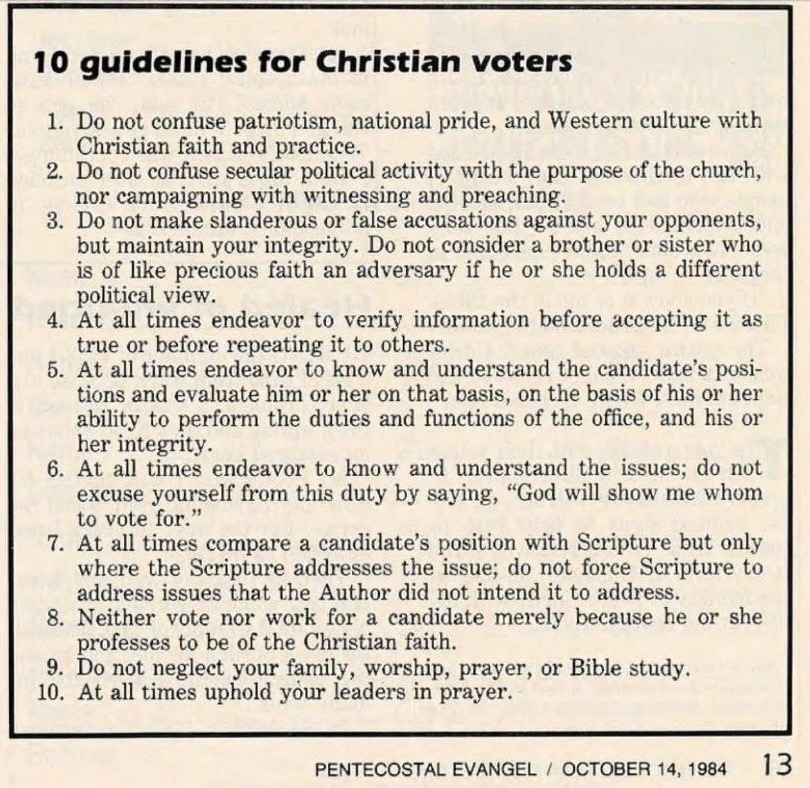
This past Sunday I spoke to my congregation about how Christians should behave biblically during an election season. Someone forwarded to me a related graphic from the Pentecostal Evangel magazine (a publication of the Assemblies of God) from 1984. I love these reminders for Christians!

Researchers unveiled the largest brain map ever completed. It was of a fruit fly, whose brain “includes nearly 140,000 neurons and captures more than 54.5 million synapses”! It took four years to complete this map. “All told, the researchers identified 8,453 types of neuron—much more than anyone had expected. Of these, 4,581 were newly discovered.” This level of complexity and order in a fruit fly is astounding to me. Can you imagine what it would take to map the much larger and more complex human brain?! Truly, David was right when he said that we are wonderfully made by our Creator!

“Freely, willingly and joyfully do good to everyone, serve everyone, suffer all kinds of things, love and praise the God who has shown such grace. Thus, it is just as impossible to separate faith and works as it is to separate heat and light from fire!” —Martin Luther

“Faith the mother of all good works justifieth us, before we can bring forth any good work: as the husband marryeth his wife before he can have any lawful children by her.” —William Tyndale

Links & Quotes

It’s easy to get along with those we like. But God calls on Christians to do the hard—but rewarding—work of getting along with everyone! Check out this full sermon about the strength in Christian unity.

I have lots of new content every week, which you can check out on my YouTube channel.

“Dad always said you could fall off the same ladder you climbed up.” —Hank Aaron

Paleontologists have noted that what Creationists would call pre-Flood mammals lived longer than similar mammals today. “This research should be of interest to Bible-believing Christians because, as chronicled in Genesis 5, humans in the pre-Flood world were experiencing much greater lifespans. Moreover, the advanced ages of the Genesis 5 patriarchs at the births of their sons strongly suggest delayed sexual maturation and possible delayed skeletal maturation, too. The Bible gives no hint that this amazing longevity was in any way supernatural.”

“If we leave our failure, we don’t learn from our failure. If we learn from our failure, we seldom have to leave because of our failure.” —John Maxwell 

Dr. Steve Nichols hosts a great podcast called 5 Minutes In Church History. In the episode this week, he talked about the church politics Jonathan Edwards had to confront when he first arrived in Stockbridge. It came to a head in a letter Edwards received: “All it did was go into, again, politics, accusing Edwards of mis-running the school, which wasn’t true, and deflecting the blame and the focus away from the Williams family. And now Edwards needs to vindicate himself. Well, all that to say, we think of these church history figures, and we see their portraits, we sometimes forget that they’re actually people, and they had to deal with challenges too.” These types of faultfinding accusations are what I address in my book When Sheep Bite.

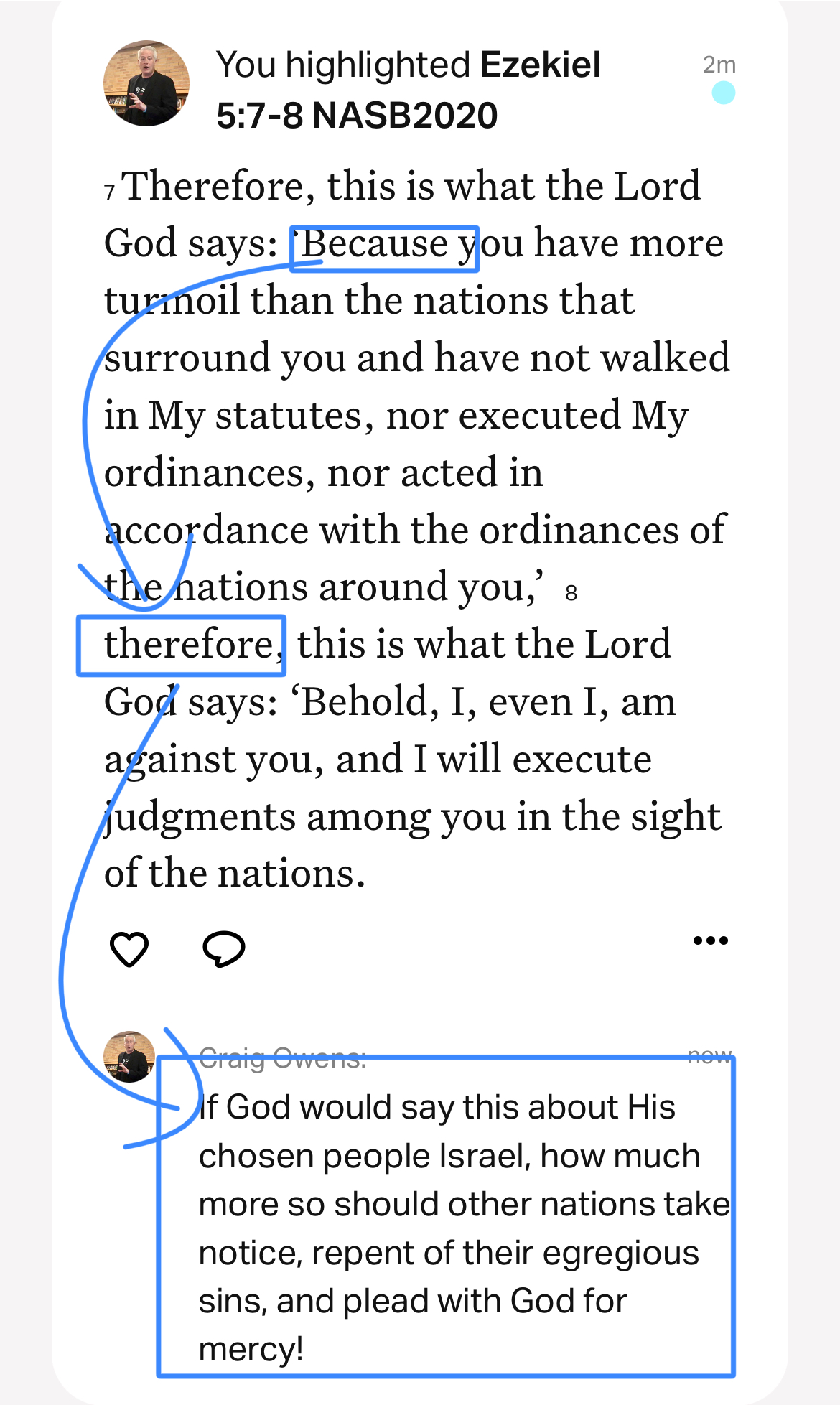
If God would say this (Ezekiel 5:7-9) about His chosen people Israel, how much more so should other nations take notice, repent of their egregious sins, and plead with God for mercy!

Set Up For Success (Or Failure)

Listen to the podcast of this post by clicking on the player below, and you can also subscribe on AppleSpotify, or Audible. 

Like it or not, your example as a leader is making an impact on all the people around you—including the next generation of leaders who will take their positions after you have passed away. 

So I have a simple question for you: Are you setting them up for success or failure? 

There is no middle ground. 

Consider three generation of kings of Judah—Hezekiah, Manasseh, and Amon. 

Hezekiah had been sick and God miraculously healed him. When Merodach-baladan, king of Babylon, heard about this, he sent envoys to see King Hezekiah. Instead of bragging on God, Hezekiah bragged about all of his riches. 

After the envoys left, the prophet Isaiah told Hezekiah the consequences of his pride

“Behold, the days are coming when everything that is in your house, and what your fathers have stored up to this day, will be carried to Babylon; nothing will be left,” says the Lord. “And some of your sons who will come from you, whom you will father, will be taken away, and they will become eunuchs in the palace of the king of Babylon.” (Isaiah 39:6-7) 

Sadly, Hezekiah responded, “At least it won’t impact me.” 

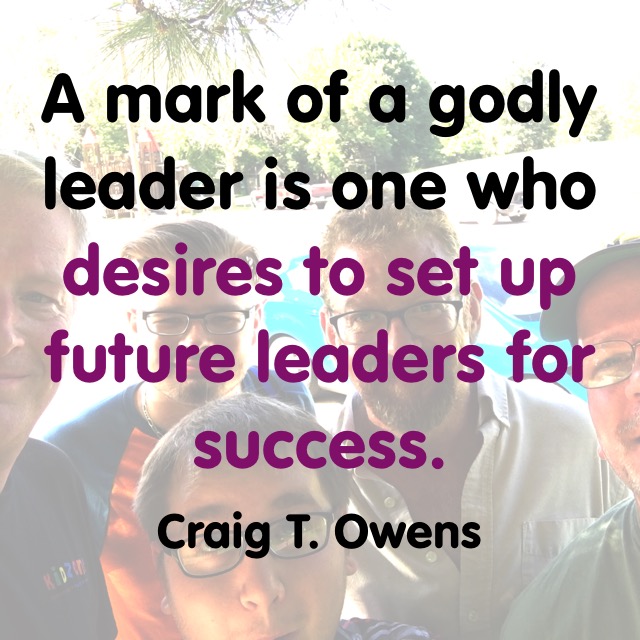
A mark of a godly leader is one who desires to set up future leaders for success. 

His son Manasseh became one of the most evil, godless kings that Judah had ever known. And as a result, he experienced the punishment that Isaiah had prophesied. 

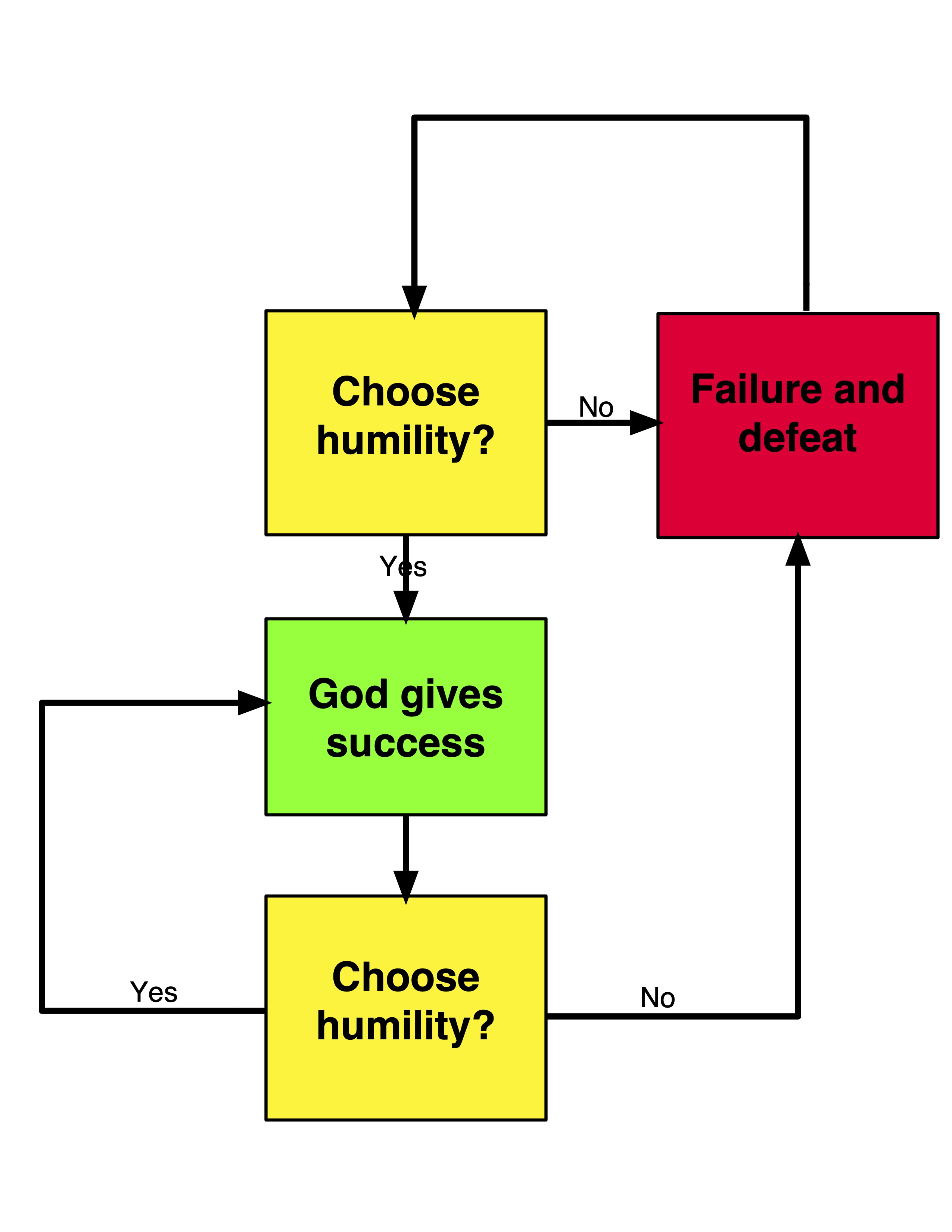
Thankfully, Manasseh eventually humbled himself, repented of his sin, and got to experience God’s restoration to a small degree—

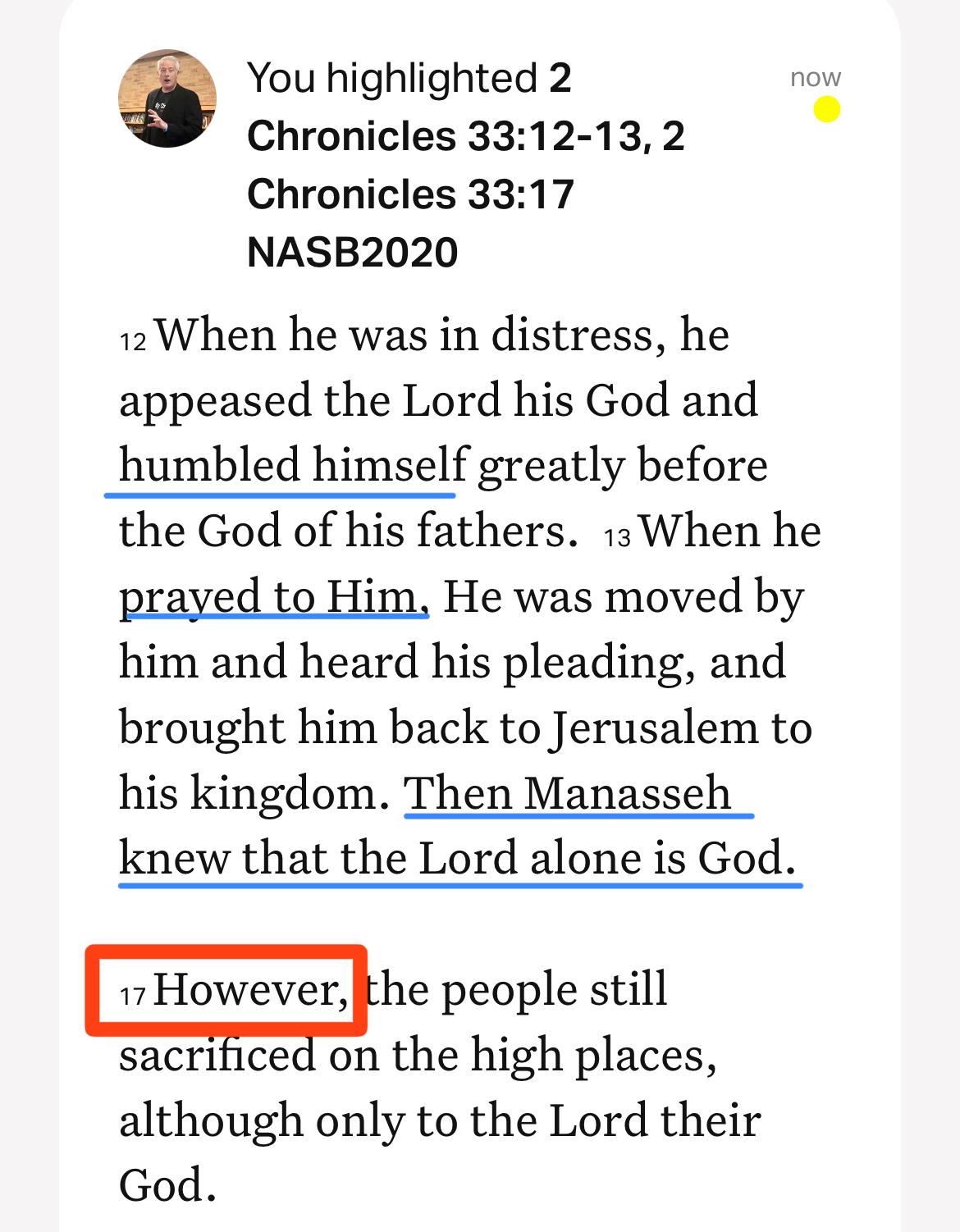
When he was in distress, he appeased the Lord his God and humbled himself greatly before the God of his fathers. When he prayed to Him, He was moved by him and heard his pleading, and brought him back to Jerusalem to his kingdom. Then Manasseh knew that the Lord alone is God. (2 Chronicles 33:12-13) 

But there is a sad “however” for Manasseh’s son Amon: However, the people still sacrificed on the high places (2 Chronicles 33:17). This mixing of the worship of God with the worship of pagan idols always pulls people away from God. It certainly did that for Amon because “he did evil in the sight of the Lord, just as his father Manasseh had done. For he walked entirely in the way that his father had walked, and served the idols that his father had served, and worshiped them” (2 Kings 21:20-21). “Furthermore, he did not humble himself before the Lord as his father Manasseh had done, but Amon multiplied his guilt” (2 Chronicles 33:23). 

Godly leaders should be just as concerned about the people that come after them as they are about the people around them now. Godly leaders strive to set up future generations for success—so they can receive God’s continued and increased blessings.

This is part 78 in my series on godly leadership. You can check out all of my posts in this series by clicking here.

►► Would you please prayerfully consider supporting this ministry? My Patreon supporters get behind-the-scenes access to exclusive materials. ◀︎◀︎
Beware Of Pride!

Now [Uzziah] went out and fought against the Philistines, and broke down the wall of Gath, the wall of Jabneh, and the wall of Ashdod; and he built cities in the area of Ashdod and among the Philistines. God helped him against the Philistines.… Under their direction was an army of 307,500, who could wage war with great power, to help the king against the enemy. Moreover, Uzziah prepared for all the army shields, spears, helmets, body armor, bows, and slingstones. In Jerusalem he made machines of war invented by skillful workmen to be on the towers and the corners, for the purpose of shooting arrows and great stones. So his fame spread far, for he was marvelously helped until he was strong. But when he became strong, his heart was so proud that he acted corruptly, and he was untrue to the Lord his God, for he entered the temple of the Lord to burn incense on the altar of incense. (2 Chronicles 26:6-7, 13-16) 

King Uzziah became intoxicated by his success, forgetting that God had made him successful. In his pride, he tried to elevate himself into a position that was not intended for him. 

This sounds just like the actions of Lucifer, who was also corrupted by his pride and tried to make himself God. 

⚠️  BEWARE OF PRIDE! ⚠️

Check out some related posts: 

Links & Quotes

Some of our best lessons are learned in difficult places, so let’s not be too quick to rush in and soften the blow for someone who has taken a tumble. Check out the full conversation I had with my podcast partner Greg. And be sure to check out all of my videos on my YouTube channel.

“A champion is one who gets up when he can’t.” —Jack Dempsey

Once again, archeological finds in Israel confirm the historicity of the biblical accounts of the kings of Judah and Israel. John Stonestreet shares some of the most recent finds. Jewish archeologist Nelson Gluek states, “It may be stated categorically that no archaeological discovery has ever controverted a biblical reference.”

“The reward for work well done is the opportunity to do more.” —Jonas Salk

Scott Hubbard writes, “Stepping into leadership means stepping into mistakes, regrets, and many small but stinging failures. And surviving in leadership, I am learning, means stepping upward on those mistakes—owning them, learning from them, and having the stability in Christ to keep leading after them.” Read more about how leaders can fail well.

J. Warner Wallace addresses the claim that all religions are true or are essentially the same.

“The Scriptures represent the Holy Spirit, not only as moving, and occasionally influencing, the saints, but as dwelling in them as His temple, His proper abode, and everlasting dwelling-place. And He is represented as being there so united to the faculties of the soul, that He becomes there a principle or spring of a new nature and life.” —Jonathan Edwards

Links & Quotes

The Holy Spirit can speak to us through other people. Be sure to check out all of my videos on my YouTube channel.

“A time will come when instead of shepherds feeding the sheep, the church will have clowns entertaining the goats.” —Charles Spurgeon

“Every word from God comes with the power to make that word happen.” —Kevin Berry

“The question is not, ‘Should we pray for the lost people of our community?’ The question is, ‘Will we?’ Will we pray for our neighbors, our community, our nation, and our world? Will we seek the peace of the world and the wellbeing of all our fellow humans before the Lord in prayer? [Jeremiah 29:7]
“If we will not, then we must face up to the fact that we are disobeying a divine mandate, abandoning our neighbors to their folly, and stoking the fires of indifference—if not outright scorn—for the unbelieving world around. But if we will pray, who knows what God might be willing to do?
“Those prayers may be prayers of anguish and anger at times; but they must also be prayers for God to work in the hard hearts of our unsaved neighbors, just as He has worked in ours, to bring new life, forgiveness, and hope to those who now live apart from God in a world full of rebellion and sin.” —T.M. Moore

Axis is a great resource to help parents communicate effectively with their pre-teen and teenage children. In the wake of the school shooting in Nashville, Axis posted this: “We have created resources to help parents and caring adults have conversations about violence and school shootings. Consider our Conversation Kit on Violence, our Parent’s Guide to School Shootings, our Parent’s Guide to Talking About Violence, and our Parent’s Guide to Anxiety, for starters.”

This is an excellent post from Fight The New Drug on how to spot online sexual predators.

“Failure is a part of success. There is no such thing as a bed of roses all your life. But failure will never stand in the way of success if you learn from it.” —Hank Aaron