Thursdays With Spurgeon—Forgiven And Forgiving

This is a weekly series with things I’m reading and pondering from Charles Spurgeon. You can read the original seed thought here, or type “Thursdays With Spurgeon” in the search box to read more entries.

Listen to the podcast of this post by clicking on the player below, and you can also subscribe on iTunes or Spotify.

Forgiven And Forgiving  

Forgiving one another, even as God for Christ’s sake has forgiven you. (Ephesians 4:32) 

     Now observe how the apostle puts it. Does he say, ‘forgiving another’? No, that is not the text. If you look at it, it is ‘forgiving one another.’ One another! Ah, then that means that if you have to forgive today, it is very likely that you will, yourself, need to be forgiven tomorrow, for it is ‘forgiving one another.’ … Let us begin our Christian career with the full assurance that we will have a great deal to forgive in other people, but that there will be a great deal more to be forgiven in ourselves! … 

     Note again: When we forgive, it is a poor and humble business compared with God’s forgiving us, because we are only forgiving one another—that is, forgiving fellow servants. But when God forgives us, the Judge of all the earth is forgiving, not His fellows, but His rebel subjects, guilty of treason against His majesty! For God to forgive is something great—for us to forgive, though some think it great—should be regarded as a very small matter. … What we owe to God is infinite, but what our fellow creature owes to us is a very small sum. …  

     If anyone here who is a Christian finds a difficulty in forgiveness, I am going to give him three words that will help him wonderfully… Here they are again: ‘For Christ’s sake.’ … 

     I do not know how to put this next word I am going to say. It is a paradox. You must forgive or you cannot be saved. But at the same time, you must not do it from compulsion, you must do it freely. … Remember, it is of no use for you to put your money into that offering box as you go out unless you remember, first, to forgive your brother. God will not accept the gifts, prayers, or praises of an unrelenting heart. … The very prayer that teaches you to ask for mercy bids you say, ‘And forgive us our debts, as we forgive our debtors’ (Matthew 6:12). Unless you have forgiven others, you read your own death warrant when you repeat the Lord’s Prayer!

From Forgiveness Made Easy 

We honor the forgiveness that God has extended to us by liberally forgiving others. And our forgiveness of others shows them just how loving and forgiving our God is too! 

Make no mistake, it’s hard work to forgive. As C.S. Lewis said, “We need to forgive our brother seventy times seven not only for 490 offenses but for one offense.” But that hard work develops our maturity as Christians. In fact, a mark of a maturing saint is one who is closing the gap between being injured and forgiving the offender. 

I add my prayer to Charles Spurgeon’s that you would grasp the truth that we can forgive one another for Christ’s sake because God has forgiven us for Christ’s sake. Let’s all grow in this Christian maturity!

►► Would you please prayerfully consider supporting this ministry? ◀︎◀︎
 

Thursdays With Spurgeon—“All” Means All

This is a weekly series with things I’m reading and pondering from Charles Spurgeon. You can read the original seed thought here, or type “Thursdays With Spurgeon” in the search box to read more entries.

Listen to the podcast of this post by clicking on the player below, and you can also subscribe on iTunes or Spotify.

“All” Means All  

Forgiving one another, even as God for Christ’s sake has forgiven you. (Ephesians 4:32) 

     We pass on to observe what it is that we are told in the text has been done for us and to us, for Christ’s sake: ‘God for Christ’s sake has forgiven you.’ … Have you put your trust in the atoning sacrifice? Then God for Christ’s sake has forgiven you. You have not begun to be a Christian, I hope, with the idea that one day, at some future period, you may obtain forgiveness. No. ‘God for Christ’s sake has forgiven you.’ … Pardon is not a prize to be run for, but a blessing received at the first step of the race. If you have believed in Jesus, your sins are all gone—all gone. All your sins have been erased from the records of the past, never to be mentioned against you forever! …  

     I have sometimes heard it said that we were so forgiven when we first believed that there is no need to ask for further forgiveness. I will reply, we were so completely forgiven when we first believed that we ought continually to ask for the perpetuity of that one far-reaching act, that the Lord may continue to exert toward us that fullness of forgiving grace that absolved us perfectly at the first, that we may continue to walk before Him with a sense of that complete forgiveness, clear and unquestioned. … 

     O you believers, think of this, for the ‘all’ is no little thing. It includes sins against a holy God, sins against His loving Son, sins against gospel as well as against law, sins against man as well as against God, sins of the body as well as sins of the mind, sins as numerous as the sands of the seashore and as great as the sea itself, and all are removed from us as far as the east is from the west!

From Forgiveness Made Easy 

Let me drive home Charles Spurgeon’s point with two passages of Scripture and a stanza from an old hymn. 

[God] does not treat us as our sins deserve or repay us according to our iniquities. For as high as the heavens are above the earth, so great is His love for those who fear Him; as far as the east is from the west, so far has He removed our transgressions from us. (Psalm 103:10-12) 

For I will forgive their wickedness and will remember their sins no more. (Hebrews 8:12) 

When satan tempts me to despair 
And tells me of the guilt within, 
Upward I look and see Him there 
Who made an end of all my sin. 
Because the sinless Savior died, 
My sinful soul is counted free; 
For God the Just is satisfied 
To look on Him and pardon me, 
To look on Him and pardon me. (Charitie Lees Bancroft) 
 

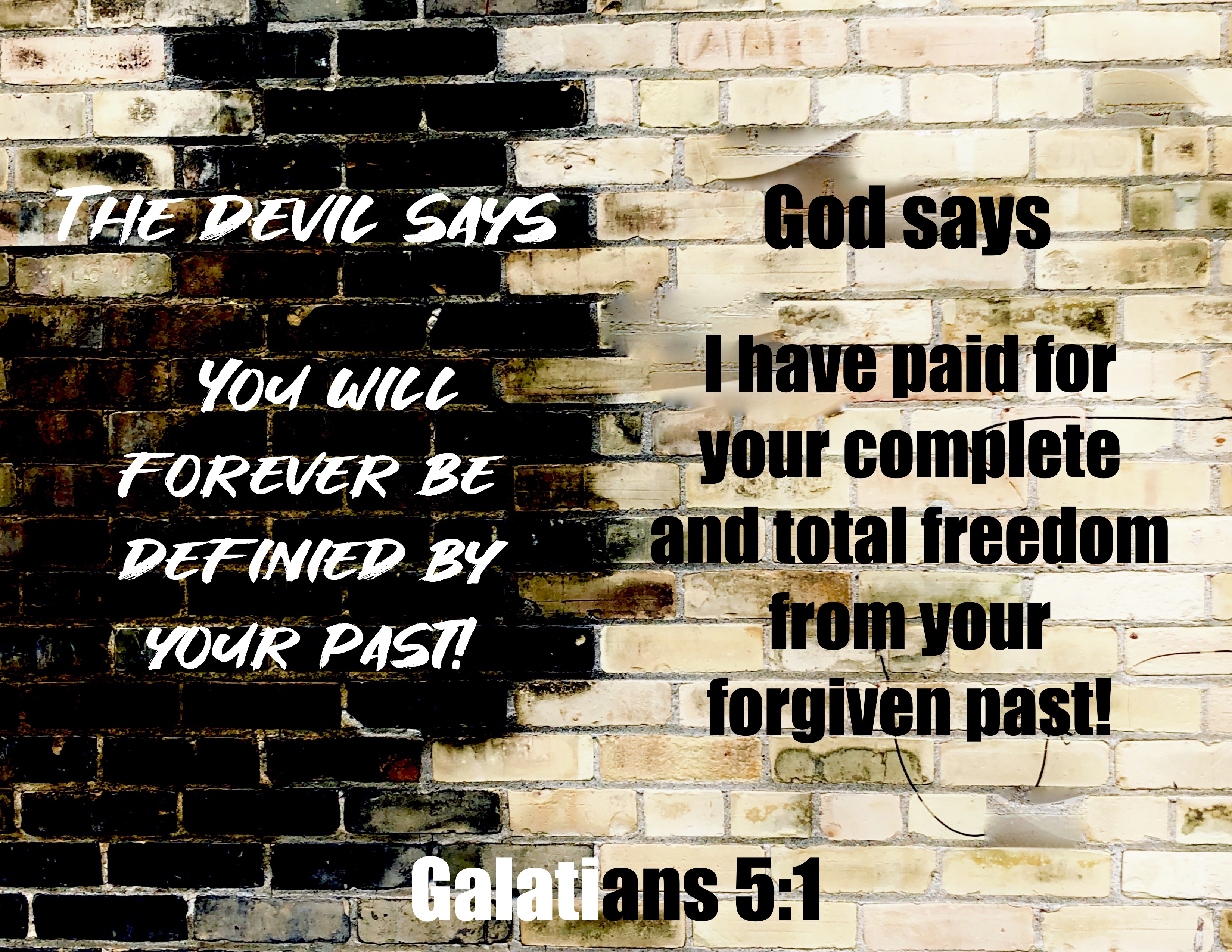
So I think this is a good conclusion—In this freedom Christ has made us free and completely liberated us; stand fast then, and do not be hampered and held ensnared and submit again to a yoke of slavery which you have once put off. (Galatians 5:1 AMP)

►► Would you please prayerfully consider supporting this ministry? ◀︎◀︎


Thursdays With Spurgeon—Love So Amazing

This is a weekly series with things I’m reading and pondering from Charles Spurgeon. You can read the original seed thought here, or type “Thursdays With Spurgeon” in the search box to read more entries.

Listen to the podcast of this post by clicking on the player below, and you can also subscribe on iTunes or Spotify.

Love So Amazing  

Forgiving one another, even as God for Christ’s sake has forgiven you. (Ephesians 4:32) 

     The first phrase to think about is ‘for Christ’s sake.’ We use these words very often, but probably we have never thought of their force. … All the good things that God has bestowed upon us have come to us ‘for Christ’s sake.’ But especially the forgiveness of our sins has come ‘for Christ sake.’ …  

     It is His very love as well as His holiness and His justice that, if I may use such a term, compels Him to severity of judgment so that sin cannot and must not be blotted out till atonement has been presented. There must, first of all, be a sacrifice for sin, that, mark you, the great Father, to show His love, supplies, for it is His own Son who is given to die! And so the Father Himself supplies the ransom through His Son, that Son is one with Himself by bonds of eternal unity, mysterious but most intense. If God demands the penalty in justice, He Himself supplies it in love. … 

     I want you to consider, for a moment, how readily God may now blot out sin since Christ has died. … God, for Christ’s sake, has accepted us in Him, has forgiven us in Him, and looks upon us with infinite love, changeless in Him. This is how all our blessings come to us, in and through Christ Jesus. And if we are indeed in Him, the Lord does not only forgive us our sins, but He bestows upon us the boundless riches of His grace in Him. In fact, He treats us as He would treat His Son. He deals with us as He would deal with Jesus! … 

     And you, big evil sinner, if you will go to God at this moment and say, ‘Lord, I cannot ask You to forgive me for my own sake, but do it out of love for Your dear Son,’ He will do it…. Christ took the shame that He might magnify His Father, and now His Father delights to magnify Him by blotting out the sin.

From Forgiveness Made Easy 

I’ve lost track of the number of times someone has told me, “I’ve messed up for so long—I’ve done such atrocious things—there is no way God could forgive me.” This is one of satan’s lies that keeps people from accepting God’s forgiveness. 

Jesus took your penalty, He paid the price for your sin! The moment you believe that, you are clothed in Christ’s righteousness. So now when the Holy God looks at you, He says, “You look like My Son. I love to bless My Son. I love to do what He asks of Me. For His sake, I have forgiven you. Not only forgiven, but I’ve forgotten everything I’ve forgiven!” 

Don’t wait another moment: If you haven’t asked God to forgive you “for Christ’s sake,” do it right this very minute! I’d love to chat with you about this, so reach out to me and let’s talk more about this amazing new relationship you now have with Almighty God because you are forgiven for Christ’s sake. 

This reminds me of a song by Chris Tomlin—

He became sin Who knew no sin
That we might become His righteousness
He humbled Himself and carried a Cross
Love so amazing!

►► Would you please prayerfully consider supporting this ministry? ◀︎◀︎
 

Thursdays With Spurgeon—Always Follow The Example Of Jesus

This is a weekly series with things I’m reading and pondering from Charles Spurgeon. You can read the original seed thought here, or type “Thursdays With Spurgeon” in the search box to read more entries.

Listen to the podcast of this post by clicking on the player below, and you can also subscribe on iTunes or Spotify.

Always Follow The Example Of Jesus  

     The heathen moralists, when they wished to teach virtue, could not point to the example of their gods, for, according to their mythologists, the gods were a compound of every imaginable and, I had almost said, unimaginable vice! Many of the classic deities surpassed the worst of men in their crimes—they were as much greater in iniquity as they were supposed to be superior in power. It is an ill day for a people when their gods are worse than themselves! The blessed purity of our holy faith is conspicuous, not only in its precepts, but in the character of the God whom it reveals. There is no excellence that we can propose, but we can see it brightly shining in the Lord our God! There is no line of conduct in which a believer should excel, but we can point to Christ Jesus our Lord and Master as the pattern of it! In the highest places of the Christian faith, you have the highest virtue, and to God our Father and the Lord Jesus be the highest praise. 

From Forgiveness Made Easy 

If you’ve ever studied ancient mythologies, the gods and goddesses of those stories did not live a life worthy of emulation! But Jesus is an entirely different story. Even people who don’t want to acknowledge the deity of Jesus still find His lifestyle worthy of following. 

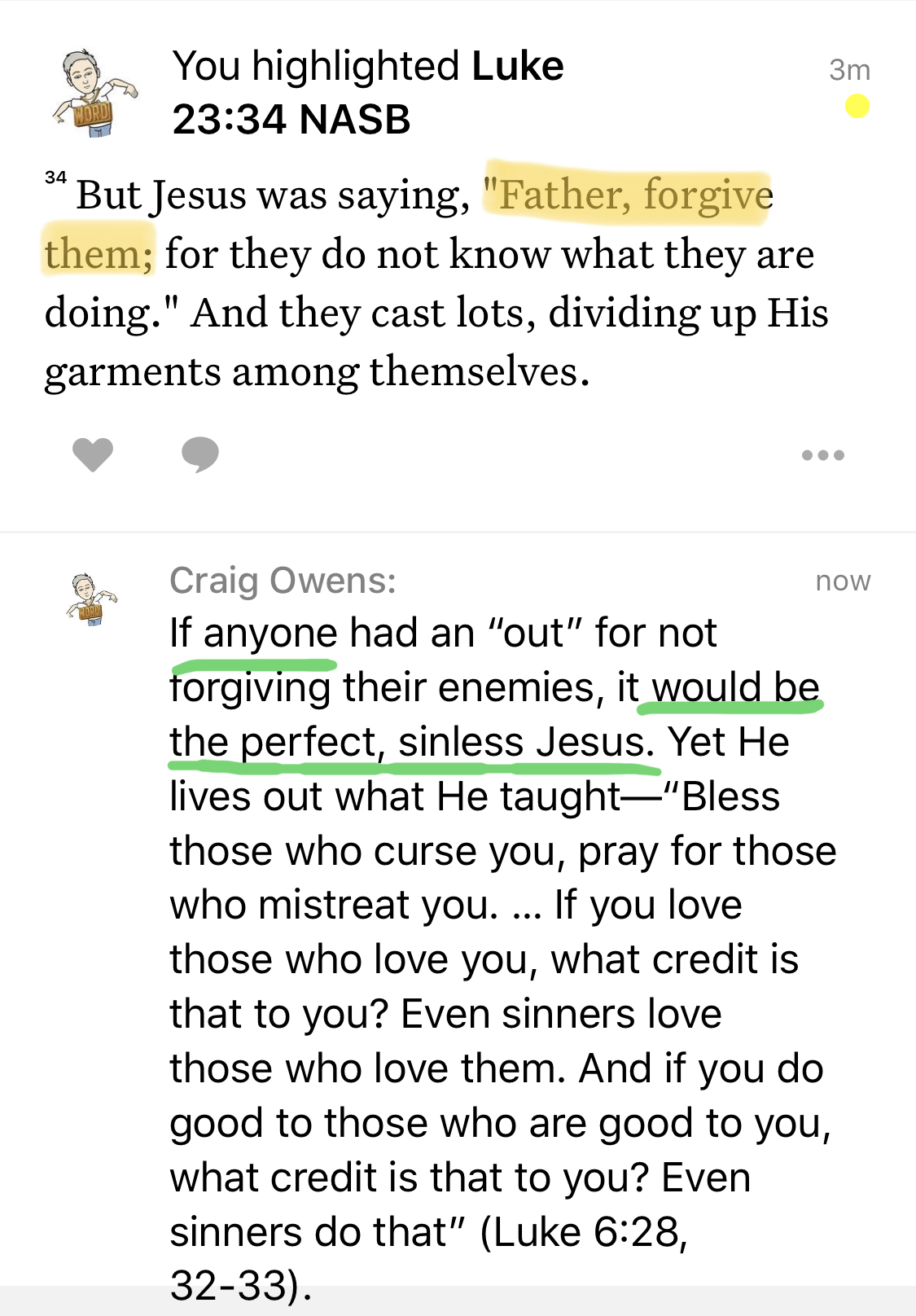
So not only did Jesus say, “Bless those who curse you, pray for those who mistreat you,” but He lived it out. “When they hurled their insults at Him, He did not retaliate; when He suffered, He made no threats. Instead, He entrusted Himself to Him who judges justly,” and said, “Father, forgive them, for they do not know what they are doing.” (See Luke 6:28; 1 Peter 2:21-23; Luke 23:34). 

Don’t say, “That person really injured me. It was unfair! I cannot forgive them.” Instead, follow the example of Jesus, the only one who ever lived an absolutely perfect life and yet He was still shamefully mistreated. Peter reminds us that by forgiving His tormenters, Jesus was entrusting Himself to the Perfect Judge—He trusted God to take care of it. 

It may seem impossible, but the same Holy Spirit that empowered Jesus to do these things is living in you and He will empower you too. Always, always, always follow the example of Jesus. 

Check out some other posts on forgivness by clicking here

►► Would you please prayerfully consider supporting this ministry? ◀︎◀︎

 

Thursdays With Spurgeon—Faith Sees Better Than Sight Does

This is a weekly series with things I’m reading and pondering from Charles Spurgeon. You can read the original seed thought here, or type “Thursdays With Spurgeon” in the search box to read more entries.

Listen to the podcast of this post by clicking on the player below, and you can also subscribe on iTunes or Spotify.

Faith Sees Better Than Sight Does  

For we walk by faith, not by sight. (2 Corinthians 5:7) 

     There is walking by faith, and there is walking by sight. The most of men, all men indeed, naturally walk by sight. They have a proverb that says, ‘Seeing is believing,’ and they are wise men, for they trust people as far as they can see them, and no further. … Self-reliance is the name of the principle, and according to the world, the best and grandest thing that a man can do is have faith in himself. … 

     I think the world must be pretty well ashamed of itself if it still considers this poor earth to be all that a soul has to live for. I feel as if I could not talk upon the matter. Solomon tried everything there was in this world—riches, power, pleasure—every sort of delicacy and delight he had, beyond the point of satisfaction. And what was his verdict upon at all? ‘Vanity of vanities, all is vanity’ (Ecclesiastes 1:2). … 

     If there is not another world to live for, I must say that this life is a most unutterably empty kind of thing! It is not worthy of a man! But oh, to believe what God tells me: that there is a God; that God became flesh to bear me up to Himself! To believe that I am God’s son, that I have an immortality within myself that will outlast the stars, that I will one day see His face and sing His praise forever with cherubim and seraphim! Why, there is something here! …

     If you walk only by sight and believe only what you see, what do you believe? You believe that while you are living here, it is a good thing to make the best you can of it. And then you will die and be buried, and that will be the end of you! What a poor, miserable, ignorant belief this is! … But when you believe in what God reveals and come to walk by faith, how your information expands! Now riddles are all solved, and the inexplicable is understood! … 

     The principle of faith does best in the dark. He who walks by faith can walk in the sunlight as well as you can, for he walks with God. He has enlightened eyes, but he can walk in the dark as you cannot, for his light is still shining upon him. He trusts in the unseen and in the invisible, and his soul rejoices when present things are passing away.

From Faith Versus Sight

One of the temptations of the devil has been to try to get us focused on the seen—the temporal. He did this successfully with Adam and Eve in the Garden of Eden. He tried to get Jesus to focus on the temporal in his wilderness temptations, but Jesus steadfastly kept His eyes on the unseen. 

The devil’s strategy hasn’t changed. He will try to get you to say, “Woe is me! Look at all of the bad things happening around me!” 

But we walk by faith, not by sight. “Faith is the assurance—the confirmation, the title deed—of the things we hope for, being the proof of things we do not see and the conviction of their reality—faith perceiving as real fact what is not revealed to the senses” (Hebrews 11:1 AMP).   

Don’t give in to the temptation to believe only what you see. There is so much more waiting for you. It’s all yours by faith in Jesus Christ!

►► Would you please prayerfully consider supporting this ministry? ◀︎◀︎
Thursdays With Spurgeon—Keep Moving Forward

This is a weekly series with things I’m reading and pondering from Charles Spurgeon. You can read the original seed thought here, or type “Thursdays With Spurgeon” in the search box to read more entries.

Listen to the podcast of this post by clicking on the player below, and you can also subscribe on iTunes or Spotify.

Keep Moving Forward  

For we walk by faith, not by sight. (2 Corinthians 5:7) 

     God does not say to us, ‘This is the way,’ and then stop. He says, ‘This is the way, walk in it.’ We are always to be making advances. We are to be going from faith in its beginnings to faith in its perfections, from faith to assurance, from assurance to full assurance. And from there, we are to go to the full assurance of hope to the full assurance of understanding, always forward, waxing stronger and stronger. …  

     The Christian’s motto is ‘Upward and onward.’ Not as though he has already obtained, either is already perfect, he presses forward to the mark for the prize of his high calling in Christ Jesus. …  

     Can you perform the common activities of the household and the daily duties that fall to your lot in the spirit of faith? This is what the apostle means. He does not speak about running or jumping or fighting, but about walking—and he means to tell you that the ordinary life of a Christian is different from the life of another man—that he has learned to introduce faith into everything he does. 

From Faith Versus Sight

I have a t-shirt that says on the front, “Keep moving forward.” But the back of the t-shirt has the real-life challenge: “Crawling is acceptable. Falling is acceptable. Puking is acceptable. Crying is acceptable. Pain is acceptable. Quitting is not!” 

How true! 

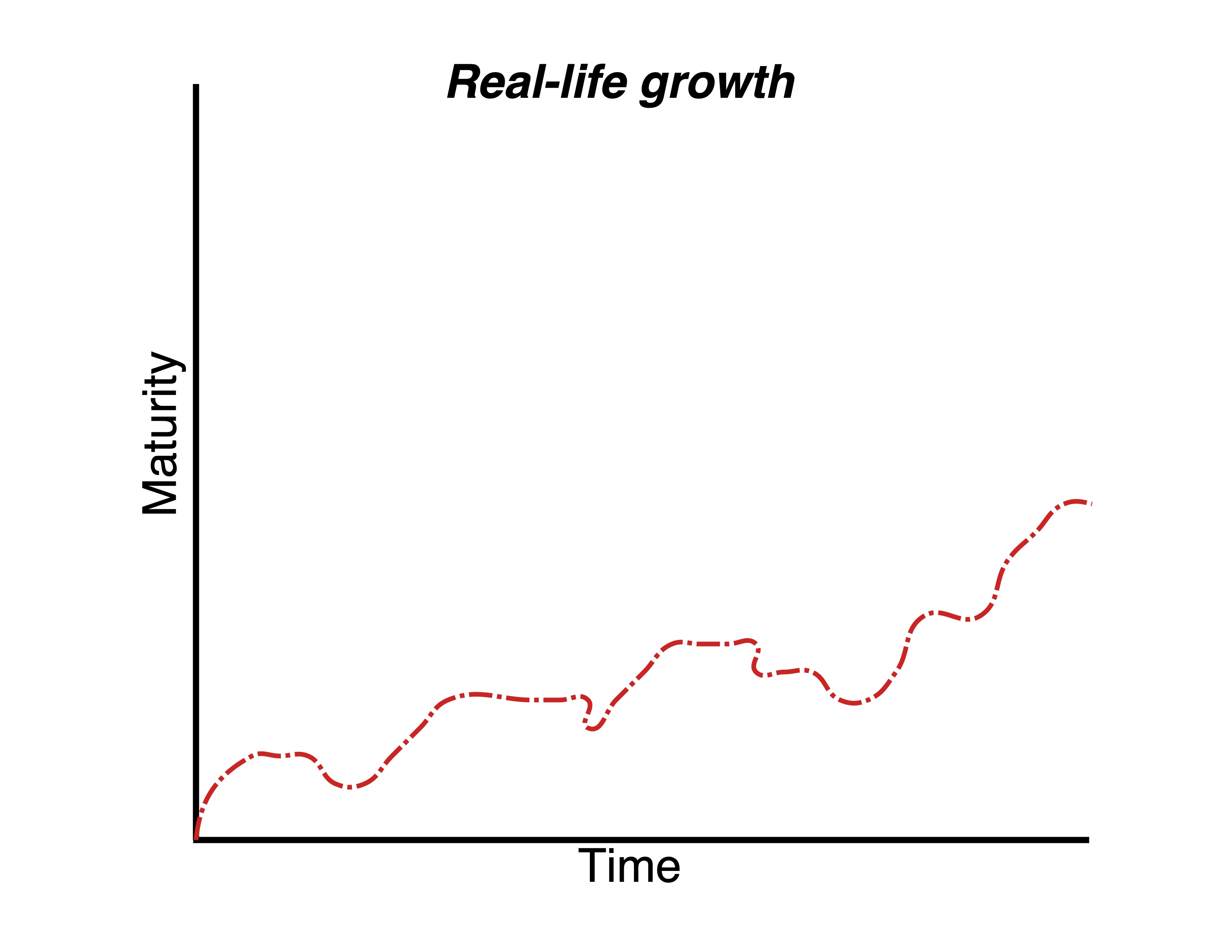
I think the problem for many Christians is that they have an unrealistic expectation of growth. Somehow we’ve come to believe that our Christian growth is a constant upward trajectory to maturity, and that if there are ever any stumbles along the way, that means we’ve blown it. (By the way, Oswald Chambers has some helpful thoughts on our stair-step growth.)

But Paul tells us, “We walk”: We keep moving forward. That doesn’t mean there aren’t times of stumbling, or a plateau, or even a pause to catch our breath. Paul tells us that an important aspect of our walk is that we forget what’s behind us and we keep moving forward—keep walking—keep going. 

Every single day, let us say along with Paul, “I don’t mean to say that I have already achieved these things or that I have already reached perfection. But I press on to possess that perfection for which Christ Jesus first possessed me. No, dear brothers and sisters, I have not achieved it, but I focus on this one thing: Forgetting the past and looking forward to what lies ahead, I press on to reach the end of the race and receive the heavenly prize for which God, through Christ Jesus, is calling us” (Philippians 3:12-14 NLT). 

My friend, keep moving forward in faith, believing that the Holy Spirit is with you—maturing you, strengthening you—on every single step on your Christian walk.

►► Would you please prayerfully consider supporting this ministry? ◀︎◀︎
 

Thursdays With Spurgeon—Walking Preachers

This is a weekly series with things I’m reading and pondering from Charles Spurgeon. You can read the original seed thought here, or type “Thursdays With Spurgeon” in the search box to read more entries.

Listen to the podcast of this post by clicking on the player below, and you can also subscribe on iTunes or Spotify.

Walking Preachers  

For we walk by faith, not by sight. (2 Corinthians 5:7) 

     Walking is a position that…signifies activity. You would suppose from the way some Christians deport themselves, that their whole life was spent in meditation. It is a blessed thing to sit ‘with Mary at the Master’s feet.’ But we walk as well as sit. We do not merely learn, but we practice what we know. We are not simply scholars, but, having been taught as scholars, we go on to show our scholarship by working in the vineyard or wherever else the Master may be pleased to place us. …  

     You would gather indeed from what others say, that the whole life of a Christian is to be spent in prayer. Prayer, it is true, is the vitality of the secret parts of Christian life, but we are not always on our knees! We are not constantly engaged in seeking blessings from heaven. We do continue in prayer, but we are also engaged and showing forth to others the blessings that we have received and in exhibiting in our daily actions the fruits that we have gathered on the mountaintop of communion with God. We walk, and this implies activity. …  

     ‘We walk.’ This is more than some can say. They can affirm, ‘We talk. We think. We experience. We feel.’ But true Christians can say with the apostle Paul, ‘We walk.’ Oh, that we may ever be able to say it too! Here, then, is the activity of the Christian life.

From Faith Versus Sight

Edgar A. Guest captured this idea well in his poem “Sermons We See.” The first stanza says,

I’d rather see a sermon than hear one any day;
I’d rather one should walk with me than merely show the way.
The eye’s a better pupil and more willing than the ear;
Fine counsel is confusing, but example’s always clear.
And the best of all preachers are the men who live their creeds.
For to see the good in action is what everybody needs.
 

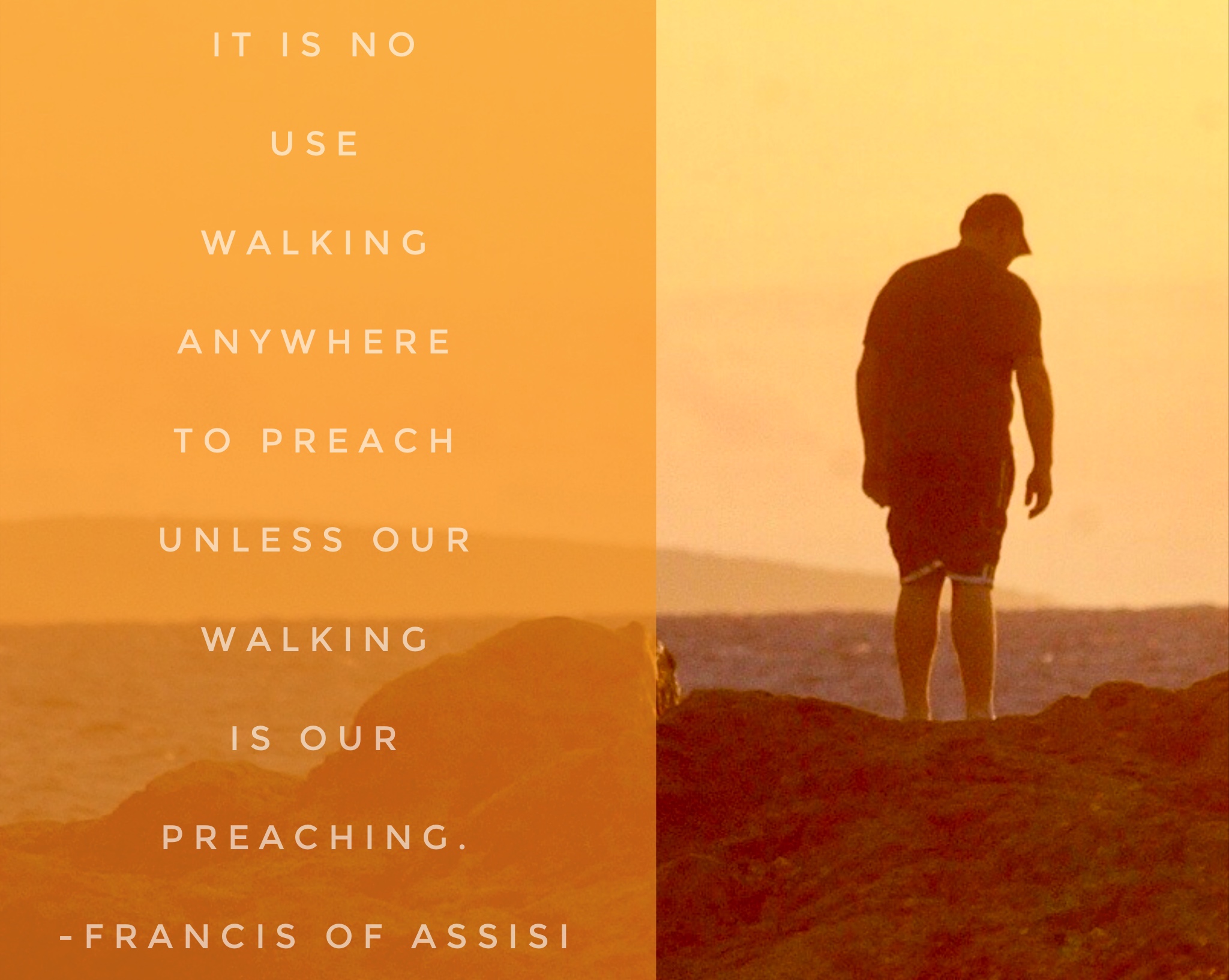
Or as Francis of Assisi noted, “It is no use walking anywhere to preach unless our walking is our preaching.” 

So a fantastic question for every Christian to ask themselves is this: Do people know that I’m walking with Jesus even if I never open my mouth to tell them?

►► Would you please prayerfully consider supporting this ministry? ◀︎◀︎

 

Thursdays With Spurgeon—Holy Familiarity

This is a weekly series with things I’m reading and pondering from Charles Spurgeon. You can read the original seed thought here, or type “Thursdays With Spurgeon” in the search box to read more entries.

Listen to the podcast of this post by clicking on the player below, and you can also subscribe on iTunes or Spotify.

Holy Familiarity  

     All these thirteen years, so far as Scripture informs us, Abram had not a single visit from his God. We do not find any record of his either doing anything memorable or having so much as a single audience with the Most High. Learn from this that if we once forsake the track of simple faith, once cease to walk according to the purity that faith approves, we strew our path with thorns, cause God to withhold the light of His countenance from us, and pierce ourselves through with many sorrows. 

     But mark, beloved, the exceeding grace of God: The way to recover Abram from his backsliding was that the Lord should appear to him…. This brings to my remembrance the words in the book of Revelation concerning the church in Laodicea: ‘You are neither cold nor hot. I could wish you were cold or hot. So then, because you are lukewarm, and neither cold nor hot, I will vomit you out of My mouth’ (Revelation 3:15-16)—a very solemn declaration. But what follows? ‘Behold, I stand at the door and knock. If anyone hears My voice and opens the door, I will come in to him and dine with him, and he with Me’ (Revelation 3:20). That means just this: For recovery out of a horrible state of languishing and lukewarmness there is no remedy but the coming of Jesus Christ to the soul in near and dear communion! …

     Distance from God’s presence always means sin. Holy familiarity with God engenders holiness. The more you think of God, the more you meditate on His works, the more you praise Him, the more you pray to Him, the more constantly you talk with Him and He with you by the Holy Spirit, the more surely are you on the road to thorough consecration to His cause!

From Consecration To God

I’ve often said that one of the most powerful prayers we can pray is simply, “God, help!” In those two words we acknowledge our helplessness and His omnipotence, our sin and His forgiveness, our shortcomings and His desire to restore us. 

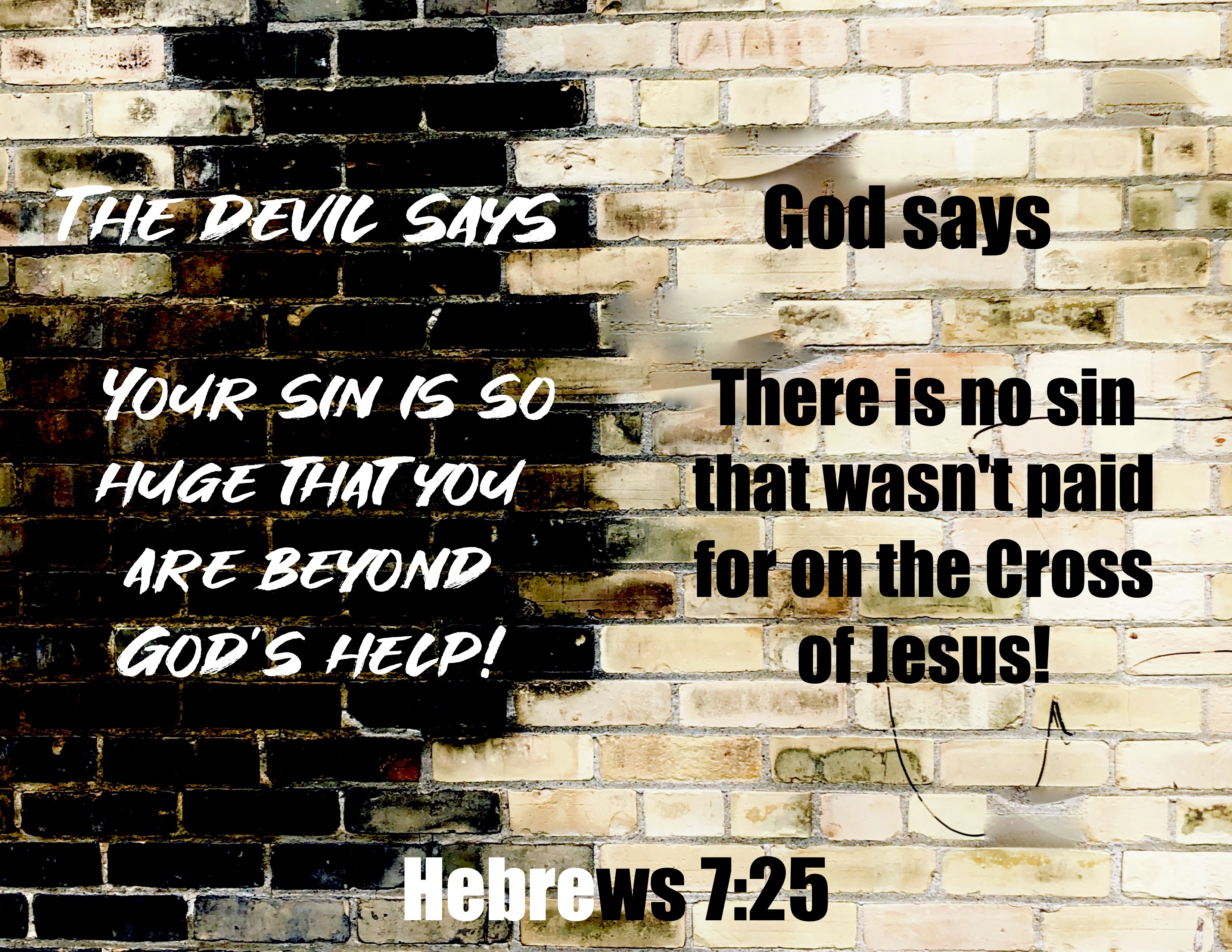
The devil lies! He loves to whisper the condemning words of, “You’ve messed up one too many times. You’re too far away for God to rescue you now. This time you exhausted God’s mercy.” 

Once again, by simply crying out, “God, help!” you are calling out satan’s lies. Jesus paid too high of a price for Him to ever let you go. Near the end of this sermon, Charles Spurgeon spoke a powerful reminder: “The blessings of grace are not given today to be taken back tomorrow, but are eternal blessings [Genesis 17:7, 13, 19].” Amen! 

My friend, cry out to God today—He loves you and He’s longing to restore you!

►► Would you please prayerfully consider supporting this ministry? ◀︎◀︎

 

Thursdays With Spurgeon—Wart Warning

This is a weekly series with things I’m reading and pondering from Charles Spurgeon. You can read the original seed thought here, or type “Thursdays With Spurgeon” in the search box to read more entries.

Listen to the podcast of this post by clicking on the player below, and you can also subscribe on iTunes or Spotify.

Wart Warning  

     At the instigation of his wife, Abraham adopted means that were not justifiable in order that he might obtain the promised heir [see Genesis 16]. He used means that may not be so vicious to him as they would be in men of modern times, but that were suggested by an unbelieving policy and were fraught with evil. He takes Hager to wife. He could not leave it to God to give him the promised seed. He could not leave it with God to fulfill His promise in His own time and justifies himself in turning aside from the narrow path of faith to accomplish, by doubtful methods, the end that God Himself had promised and undertaken to accomplish! How shorn of splendor is Abraham seen when we read, ‘And Abraham heeded the voice of Sarah’ (Genesis 16:2). That business of Hagar is to the patriarch’s deep discredit and reflects no honor at all upon either him or his faith. 

     Look at the consequences of his unbelieving! Misery soon followed. Hager despises her mistress. Sarah throws all the blame on her husband. The poor bondwoman is so harshly dealt with that she flees from the household. … One marvels that such a man as Abraham allowed one who had been brought into such a relationship with him to be heedlessly chased from his house while in a condition requiring care and kindness! 

     We admire the truthfulness of the Holy Spirit that He has been pleased to record the faults of the saints without extenuating them. Biographies of good men in Scripture are written with unflinching integrity—their evil recorded as well as their good. These faults are not written that we may say, ‘Abraham did so-and-so; therefore we may do it.’ No, brothers and sisters, the lives of these good men are warnings to us as well as examples, and we are to judge them as we should judge ourselves—by the laws of right and wrong.

From Consecration To God

In my book Shepherd Leadership: The Metrics That Really Matter, I also talk about the faults that we see in God’s leaders. In looking at David’s adulterous affair with Bathsheba, Elijah’s slide into depression, and Peter’s denial of Jesus, I see something similar: They were alone. 

David stayed in Jerusalem while his army went to fight, Elijah left his servant behind and went into the wilderness alone, and Peter was separated from his fellow disciples. Just like with Abraham, all of these other men were brought back into close fellowship with God. But all of these men now have a “wart” on their biography. 

“God designed us to be in relationship with others. His statement to Adam in some of the earliest words of the Bible—‘It is not good for you to be alone’—are words for us still today. As I mentioned earlier [in my book], you will not find the word ‘saints’ in the singular in the New Testament. Instead, you will find such phrases as ‘one another,’ ‘each other,’ and ‘all together’ prominently displayed throughout the New Testament church. Let me say it again: God designed us to be in relationship with others. If you want to go far in your shepherding, you cannot try to go alone.” —from the chapter in Shepherd Leadership called ‘Going Farther’ 

Let’s be forewarned by these examples. Stay close to God, but also stay close to godly friends that will help you in the hard times. Don’t let a wart blemish your record.

►► Would you please prayerfully consider supporting this ministry? ◀︎◀︎
 

Thursdays With Spurgeon—Faultless

This is a weekly series with things I’m reading and pondering from Charles Spurgeon. You can read the original seed thought here, or type “Thursdays With Spurgeon” in the search box to read more entries.

Listen to the podcast of this post by clicking on the player below, and you can also subscribe on iTunes or Spotify.

Faultless  

To Him who is able to keep you from stumbling and to present you before His glorious presence without fault and with great joy—to the only God our Savior be glory, majesty, power and authority, through Jesus Christ our Lord, before all ages, now and forevermore! Amen. (Jude 24-25) 

     I would rather turn to the blessings of which Jude speaks. He seems to ascribe in this doxology three blessings, at least, to the power of the Lord Jesus. The first is the ability to keep you from stumbling, and for this, I am sure, the highest praise is due when you consider for a moment the dangerous way. In some respects, the path to heaven is very safe. It is so as God made it. But in other respects, there is no road as dangerous as the road to eternal life. It is beset with difficulties. … One false step (and how easy it is to take that if divine grace is absent), and down we go! …  

     Only Christ has the power to take us into heaven. … Christ preserves His people though they have offended God and daily provoke His justice. And He does more, for He presents them to the King of kings in the high court of heaven itself! …  

     We proceed to notice the condition in which the saints are to be when presented—they are to be faultless—for our Lord never stops short of perfection in His work of love. … Our Savior will carry His people through this life, safe from falling, and He will present them, how?—faultless! … The righteousness of Jesus Christ will make the saint who wears it so fair that he will be positively faultless! Yes, perfect in the sight of God!

From Christians Kept In Time And Glorified In Eternity

Reading these stirring words from Charles Spurgeon, I cannot help but recall the equally stirring lyrics of this Edward Mote hymn:

My hope is built on nothing less
Than Jesus’ blood and righteousness
I dare not trust the sweetest frame
But wholly lean on Jesus’ name

When darkness veils His lovely face
I rest on His unchanging grace
In every high and stormy gale
My anchor holds within the veil

His oath, His covenant, His blood
Support me in the whelming flood
When all around my soul gives way
He then is all my hope and stay

When He shall come with trumpet sound
O may I then in Him be found
Dressed in His righteousness alone
Faultless to stand before the throne

On Christ, the solid rock, I stand
All other ground is sinking sand,
All other ground is sinking sand

►► Would you please prayerfully consider supporting this ministry? ◀︎◀︎