Are You Healthy Enough To Love Serving Others?

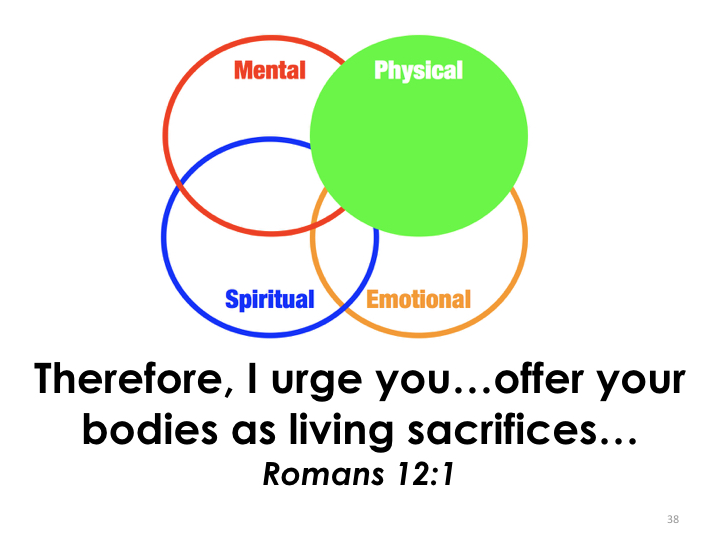
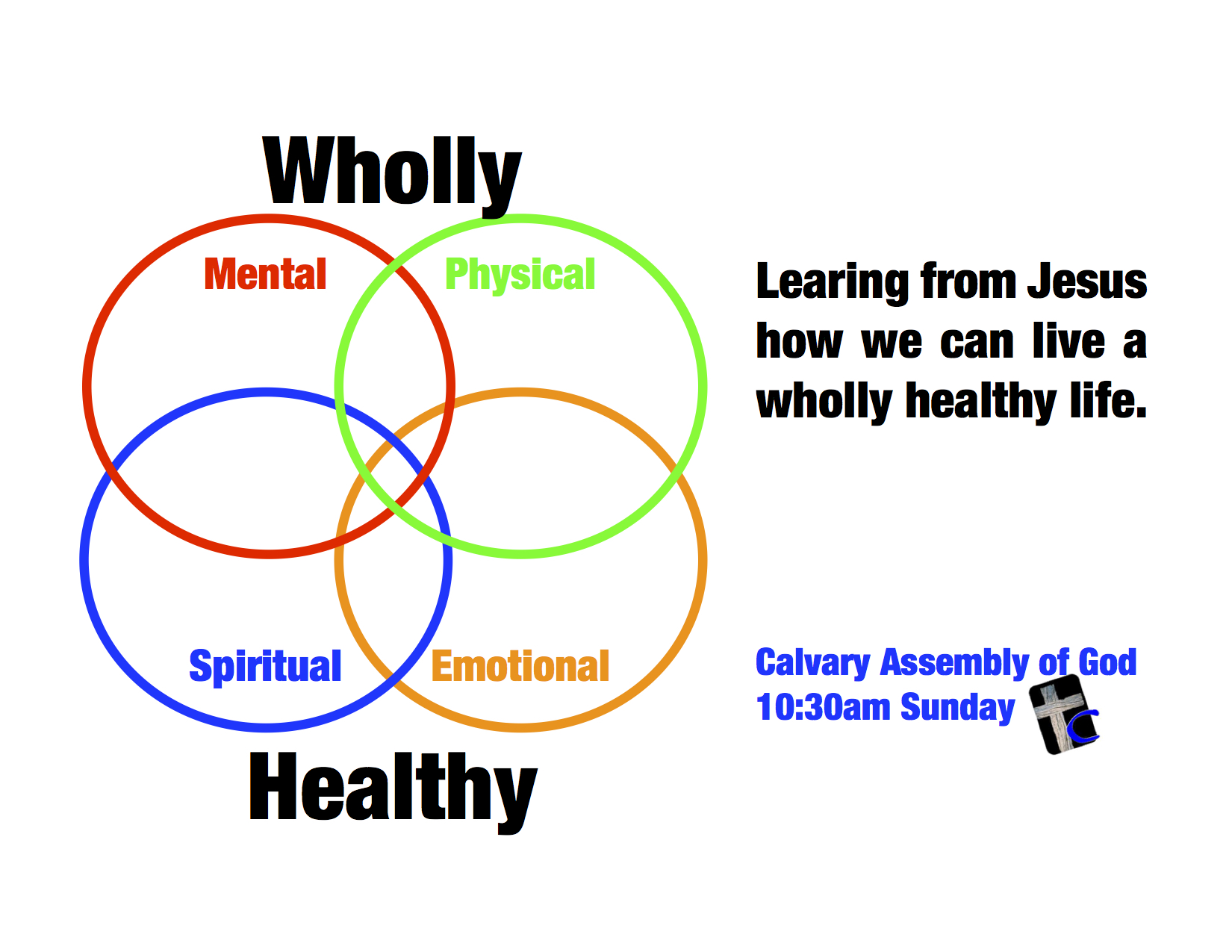
Jesus was wholly healthy. That is to say, He was healthy in every aspect of His life—mentally, physically, spiritually and emotionally (see Luke 2:52). This is important to note because Christians are called to be healthy in all of these same areas.

The phrase Dr. Luke uses about Christ’s growth is a telling one: Jesus grew in favor with men. People liked having Jesus around. The word for favor is from the same root word where we also get grace. So Jesus was a graceful man.

What does it mean when someone is graceful? It means they are pleasant to be around … you feel safe around them, knowing they will never belittle you or put you down … their focus is on your agenda, not their own … they are a “there you are!” person, not a “here I am!” person.

Bottom line: they are filled with love for others.

Jesus was healthy in His mind, His body, His spirit and His emotions, which allowed Him to be in a unique place where He fully knew how powerful He was, yet He chose to use His power not for His own benefit, but to serve others (see John 13:1-4).

Healthy love loves God and then serves God by loving and serving others. Only a wholly healthy person can truly serve with a right attitude…

  • People with unhealthy thoughts won’t serve because they don’t know they’re supposed to serve.
  • People with unhealthy bodies can’t serve because their disease won’t let them.
  • People with unhealthy spirits shouldn’t serve because they are promoting hypocrisy.
  • People with unhealthy emotions don’t serve because their attitude gets in the way.

Jesus not only told us His loving service was an example for us (John 13:15-17), but He went on to say that our loving service would be an example for others (vv. 34-35).

Healthy love loves God and then serves God by loving and serving others.

Do you have that kind of healthy love? Are you becoming wholly healthy enough to serve?

Ask yourself these questions:

  1. What do I know that I’m not yet doing?
  2. What will it take for me to turn knowing into doing?
  3. Can people tell I am growing wholly healthier year by year?

Becoming Spiritually Fit

To me this sounds weird: Jesus grew spiritually strong. Think about that: Isn’t He already God?!

When Jesus came to Earth as a man, the writer of Hebrews says He was made like us humans in every way. So just as you and I have a spiritual health to maintain, so did Jesus while He was on earth.

Dr. Luke noticed this as well when he noted that Jesus grew mentally, physically, spiritually and emotionally. Luke notes His spiritual growth by saying Jesus “grew…in favor with God.” In other words, God was more and more pleased by what He saw developing in His Son.

Yesterday I listened to Pastor Josh Schram explain the parallels between our physical health and our spiritual health. He said that we all know what we need to do to grow physically strong—eat the right food, exercise, get proper rest, and have some way of monitoring our health.

It’s exactly the same way spiritually! We need…

…a good diet—Man does not live on bread alone but on every Word that comes from the mouth of the Lord (Deuteronomy 8:3). Jesus repeated this truth when He was confronted by the devil, and lived it out every day.

…proper exercise—All the health food in the world won’t do us a bit of good if we just sit around. It’s the same with the Bible: we can read it, memorize it, and talk about it, but if we don’t exercise it we won’t get spiritually fit. Be doers of the Word, and not hearers only (James 1:22).

…the right amount of rest—We can’t be in perpetual “go” mode if we want to be healthy physically or spiritually. Jesus knew the value of rest, and frequently He would “withdraw to deserted places and pray” (Luke 5:16).

…to monitor our progress—James talks about the Word of God being a mirror for us, and Paul advises us to “examine yourselves to see whether you are in the faith” (2 Corinthians 13:5).

But here was the most important takeaway for me in Josh’s message…

Health is not just one big one-time choice. Health is small daily choices.

A good question for all of us to ask ourselves: Am I making good daily choices which will help me grow spiritually fit like Jesus.

I so enjoy sharing the teaching duties with a couple of really solid pastors-in-training in our church. They have helped me develop this series called Wholly Healthy, and have taken part in sharing messages in various aspects of this series. Please watch how Josh lays out the plan for our spiritual fitness.

Jesus—100% God And 100% Human

Listen to the podcast of this post by clicking on the player below, and you can also subscribe on Apple, Spotify, or Audible.

On paper, it seems so simple: “We believe in the Deity of the Lord Jesus Christ. As God’s Son, Jesus was both human and divine.” But trying to wrap our finite human minds around the concept of the full humanity and the full deity of Jesus is challenging!

First off, Jesus was fully human. Both Matthew and Luke record details about Christ’s physical birth, and the writer of Hebrews says that Jesus was made every bit as human as us (Hebrews 2:17).

But Jesus was also fully God. John records how God became flesh in the Person of Jesus (John 1:1-2, 14), and Paul tells us how Jesus chose not to use His deity when He came to earth as a human (Philippians 2:6-8).

I know that anytime we say, “God is like…” we’ve already sold ourselves short, but I’d like to try one analogy that’s been helpful for me.

Imagine a coin that has two distinct sides. While we are looking at one side (heads), we cannot see the other side (tails) but that doesn’t mean the other side has ceased to exist. In fact, if we were able to split that coin in half, so that there was only a heads and a tails, we haven’t cut the value of the coin in half, but we’ve made the coin of no value at all! 

In the Greek language of the New Testament, there are a couple of words for “knowing”: one is gnosis and the other oido. Together these words combine head knowledge and heart knowledge, or knowledge by study and knowledge by experience.

C.S. Lewis captures the idea this way: “It is Christ Himself, not the Bible, who is the true Word of God. The Bible, read in the right spirit and with the guidance of good teachers, will bring us to Him.”

Just as Jesus was both God and Man, we are to use both our mind and our heart to know Him.

To focus on the “heads” side—the deity of Jesus—is to pervert gnosis into gnosticism, and deny the humanity of Jesus. To focus on the “tails” side—the humanity of Jesus—is to pervert gnosis into agnosticism, and deny the deity of Jesus. True gnosis keeps both sides in mind: Deity and humanity.

To truly know THE Word of God (Jesus) in all His humanity and in all His deity, we need to study the Word of God. We also need the help of the Holy Spirit. I like the Old English wording of this verse—Ye have an unction [charisma] from the Holy One, and ye know [gnosis] all things (1 John 2:20).

So read your Bible, but not just to read your Bible. Ask the Holy Spirit to make THE Word known to you. Live in the balance of gnosis as you get to know Jesus more deeply and personally.

(When Jesus proclaimed His “I Am” statements in the New Testament, He was tying Himself to all of the “Jehovah” titles of the Old Testament. Check out I Am Jehovah.)

This post is a part of our series studying our foundational beliefs. If you would like to read more about the first foundational beliefs we have discussed, check out this post on the inspiration of Scripture, and this post on the Trinity.

►► Would you please prayerfully consider supporting this ministry? My Patreon supporters get behind-the-scenes access to exclusive materials. ◀︎◀︎

What If Jesus Had Been Physically Weak?

physical-healthWe have been exploring the whole health of Jesus, as Dr. Luke recorded it in Luke 2:52. In this verse Luke tells us that Jesus grew in wisdom (mental health), stature (physical health), in favor with God (spiritual health) and in favor with men (emotional/social health). Being unhealthy in any one of these areas will ultimately pull down the health in all of the areas.

The life of Jesus shows us that we, too, must strive to live wholly healthy lives.

Yesterday at Calvary Assembly of God, Scott asked a challenging question: “What if Jesus hadn’t been strong enough to make it to the top of Calvary’s hill?”

Think about the excruciating torture Jesus went through—

  • He was sleep deprived.
  • He was dehydrated from His intense prayer time in Gethsemane, where He sweat blood.
  • He was emotionally depleted from having all of His friends abandon and deny Him.
  • He was beaten multiple times by temple guards and Roman soldiers.
  • He was brutally whipped to the point that His back muscles and nerves were exposed.
  • He had thorns crushed into His scalp.
  • He had His beard ripped out.
  • He had to carry a 60- to 90-pound wooden crossbeam nearly 650 yards uphill.

All of this took place before He had metal spikes slammed through His wrists and ankles, and then was hoisted up rudely into the air to be suspended from His Cross.

Jesus went through all of that for you and me. In making it all the way to the point where He said, “It is finished,” He fulfilled every prophesy concerning His death.

The only way Jesus could have made it through this is if He was at optimal physical health.

If Jesus had died from exhaustion or heart attack or loss of blood before He was actually nailed to the Cross, how many of the prophesies would have been left unfinished? He needed to keep His physical body in tip-top shape throughout His entire earthly life in order to be ready for this one crucial moment.

Being physically weak makes it difficult for us to…

  • …think clearly (mental health)
  • …concentrate on the things of God (spiritual health)
  • …control our emotions and respond appropriately to other people (emotional/social health)

So we, like Jesus, must work on our physical health. God has a plan for your life. In order for you to fulfill all God has in mind, you must be wholly healthy. Are you taking care of your physical body? If you’re not, you are slowly robbing all of the other areas of your life of the strength they need.

If you’re not as physically healthy as you could be, what are you willing to do differently?

Check out this 3-minute clip where Scott asks us what physical health changes we’re willing to make for God’s glory…

How To Grow Your Wisdom

wisdom-brings-harmonyDr. Luke is a great “noticer.” Twice he notices and records something about the early life of Jesus that gives us great insight for growing in a wholly healthy way.

First of all, Luke tells us how Jesus grows (check out my thoughts on this by clicking here), and then he begins to zero-in on the four areas in which Jesus grew. The first thing Dr. Luke notes is Christ growing in wisdom (see Luke 2:40 & 52).

Knowledge is not the same thing as wisdom. In fact, lots of people have knowledge without ever having wisdom. But we have to remember that you cannot get wisdom without getting knowledge.

The Greek language as a couple of different words for knowledge:

  • ginosko = head knowledge; information; belief that something is true
  • oida = experiential knowledge; belief in the knowledge you have

Let me give you a quick example. One time my facilities team was overseeing the reinstallation of our zip line from our 30-foot-high ropes course. This zip line stretched some 500 feet from the platform on top of the ropes course all the way down a big hill. After the zip line was replaced, our facilities guys believed that they had successfully connected the zip line. But only Phil believed in their work enough to put on a harness, connect to the zip line, and jump off the platform!

In order to grow in wisdom, we have to have good information (ginosko) to work with. Then we have to test this knowledge in our personal lives (oida). Only this will help us develop wisdom that can be applied to our every-day lives.

Otherwise, Oswald Chambers notes this: “We do not think on the basis of Christianity at all. We are taught to think like pagans for six days a week and to reverse the order for one day, consequently in critical moments we think as pagans and our religion is left in the limbo of the inarticulate.”

Often times the Holy Spirit will use the Bible, or a sermon, or the advice from a friend, or even a “slip of the tongue” to alert us to thoughts that aren’t healthy. Jesus tells us that the so-called “slip of the tongue” is actually a tip off to what’s really in our hearts (see Matthew 12:34). Solomon counsels us to guard our hearts and minds (Proverbs 4:23), and then Paul builds on the guarding theme to tell us to capture our thoughts and make sure they line-up with God’s Word (2 Corinthians 10:5).

This is what develops God-pleasing wisdom. If we don’t constantly grow in this area, we will hold back growth in every other area of our life—physical health, spiritual health, and emotional health, but growing in wisdom brings harmony to all of these areas.

So ask yourself:

  • Am I getting good information?
  • Am I capturing my thoughts to make sure they are healthy?
  • Am I applying what I am learning?

God wants to grow wisdom in you! May He equip you with all you need for doing His will. May He produce in you, through the power of Jesus Christ, every good thing that is pleasing to Him (Hebrews 13:21).

How To Be Wholly Healthy

healthy-growthA man named Luke recorded a couple of amazing things about the life of Jesus. As both a doctor and an historian, Luke was an excellent “noticer.”

In first-century biographies, a person’s early life usually wasn’t mentioned. So it’s not uncommon that two of the four Gospel writers don’t pick up Jesus Christ’s life story until He was about 30 years old. Even Matthew, who did record something about the birth of Jesus, didn’t go into much detail.

Luke, however, notices two important things.

First, in covering the first 12 years of Christ’s life Luke says, “The Child grew and became strong…” (Luke 2:40).

healthy-growth-001The Greek word Luke uses for grew means a continual process of increasing. Sometimes we mistakenly think this means a continual movement on a graph upward and to the right. But I’ll give you one instance where this is not the case—when we record someone’s height, we do so in feet not in years. In other words, we say someone is 6’4” tall, but we don’t say they are 6-years and 4-months fall. We understand there is a limit to that sort of growth.

What Luke is referring to is a different kind of continual increasing. All of us go through four quadrants as we learn:

  • unconscious incompetence—we’re no good in an area but we don’t even know it
  • conscious incompetence—we know that we’re no good in an area
  • conscious competence—we’re good in an area but we still have to think about what we’re doing
  • unconscious competence—we’ve gotten so good in an area that we no longer need to think about it

healthy-growth-003When Luke said Jesus grew, he meant not upward and to the right, but a continual cycle of learning what He didn’t know and increasing His competence in that area. When Luke said Jesus grew and became strong, he was saying that Jesus learned how to apply the lessons He was continually learning.

Second, in covering Christ’s next 18 years Luke says, “Jesus grew” (Luke 2:52), but he uses an entirely different word. This Greek word means to be hammered out, as a blacksmith hammers metal into shape. Notice that Jesus is not the One doing the hammering, but He is the One submitting to His Father’s hammering. He is letting God the Father shape Him into what He needs to be.

Luke says that Jesus grew in…

  1. …wisdom—mental health
  2. …stature—physical health
  3. …favor with God—spiritual health
  4. …favor with men—emotional (or social) health

In other words, Jesus was growing in a wholly healthy way. God wants us to be wholly healthy too. He wants us to continually allow Him to point out areas where we are lacking, and then submit to His guidance on how we can improve in those areas.

I’ll be exploring these four areas—mental, physical, spiritual and emotional—over the next few weeks. But in the meantime, why don’t you pray the prayer David prayed and ask God’s Spirit to search out any areas where you are falling short of optimal health. And then submit to God’s work of helping you get wholly healthy in every area of your life.


Wholly Healthy

wholly-healthyHave you ever been tiptoeing through your house in the dark and stubbed your pinky toe? When that happens, is it only your pinky toe that hurts? No! It seems like your whole body gets into the action!

This is a simple way to understand that what affects one part of our life affects all parts of our life. We can’t simply quarantine one part that is having difficulty because that one part will eventually spread its pain everywhere else.

Humans were created as beings with several integrated parts. We have a physical body, we have a mind, we have emotions, and we have a God-breathed soul. If one of these parts becomes diseased, eventually all of the other parts will be affected, unless something is done to bring healing.

If we are dis-eased in any area, our health will be compromised in all areas.

Fortunately for us, Doctor Luke noted something about the health of Jesus during His earthly life. What Luke shows is how God intends for all of us to live—wholly healthy.

Modern medical science and psychology show us what the Bible pointed out long ago: We are integrated beings, and every part needs to be functioning optimally so that our whole being can function optimally.

Join us this Sunday as we begin a new series called Wholly Healthy. You will not only learn the importance of being aware of your health in four key areas, but you will also learn some practical thoughts for maintaining your optimal health.

If you missed any of the messages in this series, check them out here:

Praying With The Authority Of The Creator

pray-boldlyJesus had a way of praying that sounds unusual to our ears because He didn’t pray “normal” prayers. His prayers were bold statements! But Jesus also taught us to pray just like He did.

Most prayers that Christians pray sound like they come from the same formula. We may start with something like, “Heavenly Father” or “Dear God.” Then we probably spend some time praising God for His greatness before we make our requests of Him. Often our requests include something like “If this is Your will, I ask You to please heal/help/answer/etc.” And then almost always the prayer concludes, “In Jesus’ name, Amen!”

When Jesus prayed, His prayers sounded more like commands than requests. He would say things like, “Be clean” or “Rise up and walk” or “Blind eyes, be opened.” He usually didn’t ask His Father if it was His will to heal/help/answer/etc. And He never concluded a prayer by saying, “In My name, Amen!”

In Luke 6 there is a story about a man with a withered hand. Jesus healed him by speaking to the man, not to God. He said, “Stretch out your hand,” and when the man did so, his hand was completely restored. Jesus spoke with the authority of the Creator. 

I believe this was possible because Jesus had an unbroken conversation with His Father and the Holy Spirit. Certainly He had set times of prayer (see Mark 1:35, Mark 6:45-46, and Luke 6:12-13 as examples), but Jesus also told us that He only did what His Father told Him to do (John 5:19), and He only said what His Father told Him to say (John 12:49).

I know sometimes people want to say, “Yeah, but this is Jesus we’re talking about! C’mon, He’s the Son of God, so of course He could do these things.” But remember that the miracle of Christ’s Incarnation is that He chose NOT to do these things out of His Deity while He was on Earth, but restricted Himself only to His humanity. That’s why the Bible says that everything we face, Jesus also faced in the flesh (Hebrews 2:14-18).

But perhaps another example from someone who had no Deity in his nature might help. Consider Joshua—this man spent more time in God’s presence, listening to His voice, than even Moses (Exodus 33:11). So when the time came, Joshua could pray an incredibly bold prayer: He actually spoke to the sun and the moon and told them to stand still in the sky, AND THEY OBEYED HIM!

Just like Jesus spoke to the man with the withered hand in the authority of the Creator, Joshua spoke to the sun and the moon in the same authoritative voice. How could these men do that? Because they were familiar with God’s voice, and when He told them to speak out boldly, they simply obeyed.

Jesus said we could pray the same way—Very truly I tell you, whoever believes in Me will do the works I have been doing, and they will do even greater things than these, because I am going to the Father. And I will do whatever you ask in My name, so that the Father may be glorified in the Son. You may ask Me for anything in My name, and I will do it (John 14:12-14, emphasis added).

How can we learn to pray this boldly? We need to spend more and more time in dialogue with God. We need to become increasingly aware of the His abiding presence with us. Then we, too, can pray in the Creator’s authority.

Praying this way glorifies God!

Get together with a friend this week and work through these application questions:

  1. Am I spending time in planned prayer and Bible reading?
  2. How can I make myself more aware of God’s perpetual presence?
  3. What’s holding me back from praying more boldly?

How Do You Start A Conversation With God?

pray-through-the-bibleLast week I asked you to imagine how your relationship grew with your best friend. You probably found that this special friendship was formed during hours and hours of talking.

I’m going to guess that at first your conversation was a little on the superficial side. You talked about “tame” topics like sports teams, or your job, or the city you lived in. But at some point you took a huge risk—you became vulnerable by sharing something really personal. Perhaps you shared a time that you got hurt, or something that makes you anxious, or maybe a big dream you carry around in your heart. But if that friend is still your friend, that means they treated what you shared reverently. They didn’t laugh at you, belittle your hurts or dreams, nor did they share with others what you said.

The relationships became deeper and more special because you now knew each other on a more intimate level.

Prayer is a conversation with a Friend. Of course, that Friend is God, so some people wonder, “What do I talk to God about?” The simple answer is anything and everything!

Time and time again God calls us to come closer to Him (see Isaiah 55:1-3), to discuss with Him things we don’t understand (Jeremiah 33:3), or to be assured that He is intimately tuned in to what’s happening in our life (Psalm 139:17; 1 Peter 3:12).

How do we get there? A good place to start is with our Bible. Dwight Moody said:

“The two first and essential means of grace are the Word of God and Prayer. … If we read the Word and do not pray, we may become puffed up with knowledge, without the love that buildeth up. If we pray without reading the Word, we shall be ignorant of the mind and will of God, and become mystical and fanatical, and liable to be blown about by every wind of doctrine.”

Scripture was written to point us to Jesus. So we don’t read the Bible just to read it; we read it to get to know God.

We don’t want to know the Word of God; we want to know the God of the Word. 

A great place to start is in the book of the Psalms. Many of these were written as prayers, so it’s a good way to start our conversation with God. You can also search in the New Testament for all the places that biblical writers said, “I pray…” or “This is my prayer….”

I share a personal example of this in this video, especially if you want to fast forward to the 36:00 minute mark.

Don’t just read through the Bible this week—pray through the Bible. Use it as a means to have a conversation with the very Best Friend you could ever know!

I encourage you this week, as you think about this topic, to get together with an earthly friend and discuss these questions:

  1. How can I use my Bible as a “conversation starter” with God?
  2. How can I get into the regular practice of talking to God as a Friend?

Talking With Your Best Friend

john-14-16I would like for you to get a really clear picture in your mind of your best friend. This is someone you have opened your heart to, and they have opened their heart to you as well. This is the friend that encourages you when you’re down, but never when you’re on a self-destructive path. This is the companion that cries with you when something is broken, but who also challenges you to accept responsibility if you are the one who broke it.

Do you have that friend clearly in mind?

Now I’d like you to imagine if your interaction with your friend went something like this. Every day around 7 o’clock in the morning, you call your friend and say…

“Good morning! I’m so grateful you took my call. Listen, I’ve got a few things that I’d love for you to help me with today. I’ve been fighting a cold and I’d really like you to help me feel better. My Aunt Sally is in the hospital, and it would be great if you could stop in to see her. Also, that guy at work has really been on my nerves lately and so I need some insight on how to deal with that. It would so great if you could help me with all of this. If you do, I’ll be singing your praises to everyone I meet. Have a great day. Thanks!”

And then you hang up and never talk to your friend again until the next morning when the exact same scenario is repeated. How do you think your relationship would progress? Do you see your relationship getting deeper over time, or becoming more distant? I’m guessing that, like me, you don’t see a future in this relationship.

Sadly, this is how many people treat prayer! We come to God once a day with our list of concerns, ask Him for His help, then say “goodbye” and never think about Him again until the next day. Or until we find ourselves in desperate need.

But we forget: God never leaves us!

We also forget something even more vital—God wants us to talk with Him, and He wants to talk with us, as a friend to a friend.

Abraham was called a friend of God—Abraham believed God, and it was credited to him as righteousness, and he was called God’s friend (James 2:23).

Moses, too, was also God’s friend—The Lord would speak to Moses face to face, as one speaks to a friend (Exodus 33:11).

This isn’t something that was just for them, but it’s relationship that’s available for ALL of us—For since our friendship with God was restored by the death of His Son while we were still His enemies, we will certainly be saved through the life of His Son. So now we can rejoice in our wonderful new relationship with God because our Lord Jesus Christ has made us friends of God (Romans 5:10-11).

From the moment we accepted Jesus as our Lord and Savior, His Holy Spirit took up residence in our heart. Before Jesus ascended to Heaven, He promised us, “I will talk to the Father, and He’ll provide you another Friend so that you will always have someone with you. This Friend is the Spirit of Truth” (John 14:16).

Amazing! Astounding! Mind-blowing! But totally true—Prayer is conversation with a Friend!

How would your day go differently if you kept up a conversation with your Best Friend all day long? How much more wisdom do you think you would receive? How many mistakes could you avoid if He was telling you which way to go and what to say?

You don’t have to live with the “what ifs.” He IS your constant Companion, your most loyal Friend, your wisest Counselor. All you have to do is keep the lines of conversation open!

Application questions:

  1. How can I know God wants to be my Friend?
  2. Have I been introduced to God?
  3. How can I make the time to deepen my friendship with God?
  4. What does it mean to me to have God as my Friend?