“When you’re full of yourself, God can’t fill you. But when you empty yourself, God has a useful vessel. Your Bible overflows with examples of those who did.
“In his gospel, Matthew mentions his own name only twice. Both times he calls himself a tax collector. In his list of apostles, he assigns himself the eighth spot.
“John doesn’t even mention his name in his gospel. The twenty appearances of ‘John’ all refer to the Baptist. John the apostle simply calls himself ‘the other disciple’ or the ‘disciple whom Jesus loved.’
“Luke wrote two of the most important books in the Bible but never once penned his own name.
“Paul, the Bible’s most prolific author, referred to himself as ‘a fool’ (2 Corinthians 12:11).
“King David wrote no psalm celebrating his victory over Goliath. But he wrote a public poem of penitence confessing his sin with Bathsheba (see Psalm 51).
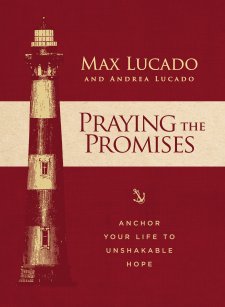
“And then there is Joseph. The quiet father of Jesus. Rather than make a name for himself, he made a home for Christ. And because he did, a great reward came his way. ‘He called His name Jesus’ (Matthew 1:25).”—Max Lucado, in You!
Check out my book review of You! by clicking here, and you can read some other quotes from this book here.
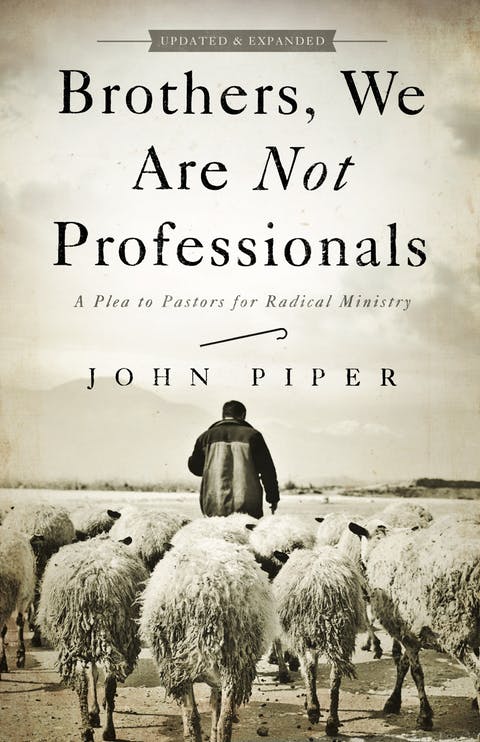
Those in pastoral ministry are ministers; they are not professional, career-minded, corporate ladder-climbers. John Piper has written a book that I believe every pastor should read: Brothers, We Are Not Professionals. Here are a few more quotes from this excellent book.
“Is not our most painful failure in the pastorate the inability to weep over the unbelievers in our neighborhoods and the carnal members of our churches? …
“I must feel the truth of hell—that it exists and is terrible and horrible beyond imaginings forever and ever. ‘These will go away into eternal punishment’ (Matthew 25:46). Even if I try to make the ‘lake of fire’ (Revelation 20:15) or the ‘fiery furnace’ (Matthew 13:42) a symbol, I am confronted with the terrifying thought that symbols are not overstatements but understatements of reality. …
“I say to you, on the authority of Scripture, remember, remember, remember the horrid condition of being separated from Christ, without hope and without God, on the brink of hell. ‘Remember that you were at that time separated from Christ, alienated from the commonwealth of Israel and strangers to the covenants of promise, having no hope and without God in the world’ (Ephesians 2:12). …
“When the heart no longer feels the truth of hell, the gospel passes from good news to simply news.”
“Warning has value in stirring us up to take the glories of holiness and heaven seriously so that we come to see them for what they are and delight in them. But it is the delight in them that causes the true grief when we fall short.”
“Pastors, you will know your people’s souls best by knowing your own. So try to be ruthlessly honest with yourself.”
“If the heart is without passion, it will produce lifeless, jargon-laden spontaneity. And if the heart is aflame, no form will quench it.”
“We ought to experience the deepest emotions about the deepest things. And we ought to speak often, and publicly, about what means most to us, in a way that shows its value.”
“Eating, exercising, and sleeping are more spiritually relevant in the ministry than we may think. … The point is that we be intentional about how our eating affects the ability of our body to be a helpful partner in seeing the glory of God.”
“When we say that what we do on Sunday morning is to ‘go hard after God,’ what we mean is that we are going hard after satisfaction in God, and going hard after God as our prize, and going hard after God as our treasure, our soul-food, our heart-delight, our spirit’s pleasure. Or to put Christ in His rightful place—it means that we are going hard after all that God is for us in Jesus Christ, crucified and risen.”
“It will transform your pastoral leadership in worship if you teach your people that the basic attitude of worship on Sunday morning is not to come with your hands full to give to God but with your hands empty to receive from God.”
“Brothers, we are leaders, and the burden of change lies most heavily on us.”
You can read my full book review of Brothers, We Are Not Professionals by clicking here, and you can check out some other quotes from this book here.
I will instruct you and teach you in the way you should go; I will guide you with My eye. (Psalm 32:8)
“God does not expect leaders to be perfect, but to be whole. To have integrity means to be whole, as in a whole number (an ‘integer’). Despite their human frailties, leaders can effectively guide those who follow.
“This Scripture reminds us that leaders must closely observe the flock for its needs and problems. God expects spiritual leaders to serve as guides. A guide takes a person or group safely to a planned destination. The Hebrew words for ‘guide’ gives us several clues as to what God expects from those He uses as leaders:
A guide is a spiritual head who unites and directs people in their walk with God.
A guide takes people on the straight path that leads to fellowship with God.
A guide gives accurate and godly counsel to those who need it.
A guide leads with gentleness and trustworthiness, making others feel safe.
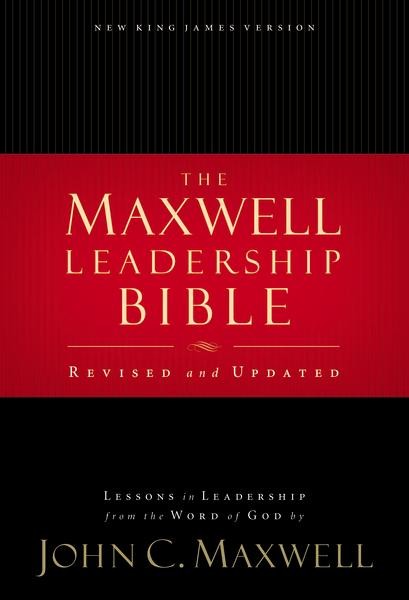
A guide bases his or her direction on the Spirit and the Word of God.” —John Maxwell, in The Maxwell Leadership Bible
This is a weekly series with things I’m reading and pondering from Oswald Chambers. You can read the original seed thought here, or type “Thursdays With Oswald” in the search box to read more entries.
Jeremiah 1
[These are notes from Oswald Chambers’ lecture on Jeremiah 1.]
The servant of God is never self-elected, there is always this impelling call of God, and it is always the most unlikely man, the most unlikely woman, God calls. …
Jeremiah’s courage was superb. It was not the courage of foolhardiness But the courage of a hyper-sensitive man being held by God; he sees the terror of the evil and wrong and knows his own sensitiveness, and yet hears God saying, “Be not afraid.” There are people who are fearless and we say they are courageous, but there is no moral virtue in their courage, it is born either of physical or moral obtuseness. Spiritual courage is the high heart that sees the difficulty and faces it. That is the courage that is valuable to God. …
How am I to know what God has ordained me for? By His eternal Word. We have to stir up our minds and find out what God’s purpose is by obeying His Word and relying on His Spirit. … Will the Word of God come to me? Of course it will! Will the Spirit of God see that I fulfill that Word? Of course He will! If we will keep in the light with God, our destination is as sure and as established as God, as certain as His throne.
When once you realize the divine purpose behind your life you will never again say, “I am so weak”; you will know you are, but you will be strong in His strength. The only strength we have is the strength of God, which comes to us from the vision of God and of His power. The time of stress in which there is no vision, no insight, no sensing of the purpose of God, is the time to stand firm in faith in God and God will do all the rest. Keep true to God and your development in God’s plan is certain. …
The reason men and women are exhausted in life is because they have not realized God’s purpose for them; when once they are awakened by the Spirit of God, regenerated by Him, and fitted on to His purpose for them, they will end where God wants them to end.
From Notes On Jeremiah
God had a purpose for Jeremiah’s life. He has a purpose for your life too!
Get into His Word. Listen to the voice of His Spirit nudging you forward, awakening compassion, prompting you to go or to speak or to serve. God is glorified when you do what He designed you to do, and the rest of us are blessed and benefitted when you do what God designed you to do!
I’m always astounded by the depth of insight that God gave to Oswald Chambers on spiritual matters; especially on concepts that seem confusing to a great many people. His God-given insights are on full display in his Notes On Isaiah.
I’ll share one disappointment right up front: There is not nearly as much information in this book as I would have hoped for. Chambers’ books, with only a couple of minor exceptions, were not initially written as books. Instead, the books are a collection of sermons or lectures that his wife recorded shorthand as he spoke, and then they were transcribed and compiled later. Apparently during this series of lectures on Isaiah, Biddy Chambers had taken on more responsibility at the Bible Training Institute (even teaching a class of her own), and she gave birth to their only child. These things kept her from taking the extensive notes we readers have become accustomed to.
Although limited, the content is still as insightful and mind-expanding as ever! David Lambert, a friend of the Chambers who helped get this book into print, marveled at how masterfully Oswald could make the words of Isaiah accessible to his students. Lambert noted, “The only mind for the author of the Bible is the Mind of God, and the only Interpreter is the Spirit of God.” Clearly, Oswald Chambers was deeply dependent on both the Mind and Spirit of God in all of his work!
In introducing this class to his students, Chambers reminded them what was at stake. He said, “God will never have us follow Him blindly,” unlike satan. He pointed out, “The supernatural power of satan never reasons, it appeals to man’s superstition, not to his conscience.” If ever a book of Scripture appealed to our conscience to open our eyes and hearts to the ways of God, it is the book of Isaiah. And Oswald Chambers is a marvelous companion for our journey through this book!
This is a weekly series with things I’m reading and pondering from Oswald Chambers. You can read the original seed thought here, or type “Thursdays With Oswald” in the search box to read more entries.
Isaiah 30
[These are the notes on Oswald Chambers’ lecture on Isaiah 30.]
The test of true religion is the knowledge of the character of God. As long as you think of God in the quietness of a religious meeting you will never know God—what kind of God have you got when you are in touch with the wrong, bad, evil things? God’s Book reveals that it is right in the midst of the very opposite of God that His blessings occur. The very things which seem to be making for destruction become the revealers of God. It is an easy business to preach peace when you are in health and have everything you want, but the Bible preaches peace when things are in a howling tumult of passion and sin and iniquity; it is in the midst of anguish and terror that we realize Who God is and the marvel of what He can do. …
God makes His people sing where in the eyes of the world it seems ironical to sing—in a besieged city where things are going to ruin, in the suburbs of hell, in the valley of the shadow of death. When you see lives in the midst of turmoil and anguish full of amazing brightness and uncrushable elasticity of faith in God, if you do not know God you will say, “However can they go through it? how is it that they remain undiscouraged and undismayed?” The explanation is the presence of God made real in His promises.”
From Notes On Isaiah
When you go through a “howling tumult” there are some things to remember:
God is with you
God is in control
God will help you sing through the storm
Others are watching you
God can be glorified in your undismayed faith in His presence through the tumult
This is a weekly series with things I’m reading and pondering from Oswald Chambers. You can read the original seed thought here, or type “Thursdays With Oswald” in the search box to read more entries.
Isaiah 24-29
[These are notes on Oswald Chambers’ lecture on Isaiah 24-29.]
The Bible reveals that the material world has been blighted by reason of man’s sin. … Man was intended by God to govern Nature (see Genesis 1:26); instead, he has infected it with his sin and it has become a partaker of the curse with him, so that “the whole creation groans and travails in pain together until now.”
Men say “We are going to build a holy city on this earth”—you cannot; the earth is infected, it is a diseased chamber, and the holy city will never be on it until God has purged it with fire and taken the epidemic out of it. … God cannot bring in the Millennium by moral renovation, but only by cremation….
The great note of the Bible revelation is not immortality but Resurrection. The doctrine of the Resurrection is that something comes from God Himself direct into the dust of death. … He has swallowed up death forever, the sovereign Lord will wipe away the tears from all faces; He will remove the disgrace of His people from all the earth. The Lord has spoken. In that day they will say, ‘Surely this is our God; we trusted in Him, and He saved us. This is the Lord, we trusted in Him; let us rejoice and be glad in His salvation’ (Isaiah 25:8-9). …
The judgments of God are for another purpose than the vindictive spirit of man would like to make out. … You never find that spirit in the prophets; if there is destruction and death it is for one purpose only—deliverance. God is on the line of salvation, not of damnation; He only damns the damnable things. …
In our own day we seem to have come to the conclusion that God has made a number of blunders and we have to put them right; we have private notions of our own which if put down in black and white would prove that we do not believe God is intelligent in allowing the history of the world to go on as it has, in allowing sin and war. … We won’t see that behind the whole thing is the wisdom of God, that neither bad men nor the devil himself can do one thing without the direct permission of God. …
The devil likes to make us believe that we are in a losing battle. Nothing of the sort! We have to overcome all the things that try to obscure God. The rugged truths of Isaiah point out not only the appalling state of the world as it is, but that we have to live a holy life in it by the power of God, not a sequestered life in particular temples or rituals, but real genuine magnificent men and women of God, no matter what the devil or the world or the flesh may do.
From Notes On Isaiah
Are you letting God be God? Are you letting God resurrect you and make you holy? Are you giving in to the lie of the devil that you are losing the battle, or are you letting God speak to your mind that you are one of the real genuine magnificent men and women of God who are shining His light and love in a diseased world?
But I do have one complaint about this book: it’s too short! Bonar has four volumes of commentary on the New Testament (the Gospels, Acts and the Larger Epistles, the Lesser Epistles, and Revelation), but sadly only one volume for all of the Old Testament.
Bonar’s style is not an exhaustive verse-by-verse—or even chapter-by-chapter—commentary on Scripture, but more of a theme-by-theme. Having read the four New Testament volumes first, I knew what to expect when I picked up this book on the Old Testament. Although at times he may remain silent on large swaths of Scripture, when he does spot something that moves his pen to action, it is brilliant insight.
It bears repeating something I noted in a previous review of Bonar’s commentaries: “The Bible is inspired by the Holy Spirit, so He is the best source of illumination when reading Scripture. But Horatius Bonar is clearly a man immersed in the overall message of the Bible, and guided by the Holy Spirit in his writings.” Bonar is an excellent tour guide to help you see items of significance as you journey through the Old Testament.
If you would like to check out my earlier reviews of Bonar’s Light & Truth series:
“We naturally tend to interpret Scripture in the light (or shadow) of our own temperament and let our peculiar mental cast decide the degree of importance we attach to various religious doctrines and practices. …
“The minister above all others should look deep into his own heart to discover the reason for his more pronounced views. It is not enough to draw himself up and declare with dignity that he preaches the Bible and nothing but the Bible. That claim is made by every man who stands in sincerity to declare the truth; but truth has many facets and the man of God is in grave danger of revealing only a limited few to his people, and those the ones he by disposition favors most. …
“The Scriptures, critical self-discipline, honesty of heart and increased trust in the inward operations of the Holy Spirit will save us from being too greatly influenced by temperament.” —A.W. Tozer, in Man—The Dwelling Place Of God
This is part 1 of a 5-part series with a simple premise: “I can know Jesus is A.L.I.V.E. because of…” and then I am presenting evidence for each of the five letters. This is a look at the letter “A” for Apologetics for the resurrection of Jesus.
For some of my evidence, I am going to use historical texts from the Bible. When I say “historical” I mean that in the scholarly definition: this Book is attested to by historians and literary critics to be an accurate record of actual historical facts. You can read more of the apologetics for the Bible’s authenticity in a post I previously published here.
I would ask you to weigh the evidence for three possibilities concerning the claims of Christians regarding the death and resurrection of Jesus.
(1) Jesus didn’t actually die.
The Romans didn’t invent crucifixion, but they perfected it to be one of the most gruesome forms of torturous death that history has ever known. This leads one to wonder how could anyone go through the torture Jesus did and survive?
A team of medical examiners, after examining the historical account of Jesus’ death concluded: “The difficulty surrounding exhalation leads to a slow form of suffocation. Carbon dioxide builds up in the blood, resulting in a high level of carbonic acid in the blood. The body responds instinctively, triggering the desire to breathe. At the same time, the heart beats faster to circulate available oxygen. The decreased oxygen (due to the difficulty in exhaling) causes damage to the tissues and the capillaries begin leaking watery fluid from the blood into the tissues. This results in a build-up of fluid around the heart (pericardial effusion) and lungs (pleural effusion). The collapsing lungs, failing heart, dehydration, and the inability to get sufficient oxygen to the tissues essentially suffocate the victim. The decreased oxygen also damages the heart itself (myocardial infarction) which leads to cardiac arrest. In severe cases of cardiac stress, the heart can even burst, a process known as cardiac rupture. Jesus most likely died of a heart attack.”
Besides that, the dead body of Jesus was also thoroughly examined by both the Romans who conducted the crucifixion (see Mark 15:43-45) and His friends who prepared His body for burial (John 19:38-40). In addition, two contemporary historians who aren’t friendly to the cause of Christianity (Tacitus and Josephus) both attested to Christ’s death by crucifixion.
(2) Jesus didn’t actually rise from the dead.
Some say the disciples were delusional from their intense grief. But Jesus was seen on more than one occasion, sometimes by one person, sometimes by twos, and several times by large groups (see 1 Corinthians 15:3-8). Some of Jesus’ closest friends weren’t convinced by second-hand testimony but had to see Jesus for themselves (John 20:19-20, 24-28). All four biblical accounts record women seeing the resurrected Jesus. This is significant because women were not allowed to serve as “legal witnesses,” so this wouldn’t have helped the “delusional” disciples at all.
Some say the disciples stole the body of Jesus. But this is problematic because of the armed guards at the tomb of Jesus (Matthew 27:62-66; 28:11-15).
(3) Jesus was crucified and resurrected.
Sir Arthur Conan Doyle’s Sherlock Holmes said, “When you have eliminated the impossible, whatever remains, however improbable, must be the truth.” So after looking at the shortcomings and difficulties of the first two options, let’s consider this third possibility: that it happened just as the historical records in the Bible indicate.
Cold-case detective J. Warner Wallace said of this third possibility, “The last explanation (although it is a miraculous, supernatural explanation) suffers from the least number of liabilities and deficiencies. If we simply enter into the investigation without a pre-existing bias against anything supernatural, the final explanation accounts for all of the evidence without any difficulty. The final explanation accounts for the evidence most simply and most exhaustively, and it is logically consistent…. The final explanation is also superior to all other accounts (given that it does not suffer from all the problems we see with the other explanations).”
Check out the video where I discuss all of these points in more detail, and join me either in person or on Facebook Live for the next four Sundays as we continue looking at the evidence supporting the resurrection of Jesus.
Light And Truth—The Old Testament (book review)
April 17, 2018 — Craig T. OwensBut I do have one complaint about this book: it’s too short! Bonar has four volumes of commentary on the New Testament (the Gospels, Acts and the Larger Epistles, the Lesser Epistles, and Revelation), but sadly only one volume for all of the Old Testament.
Bonar’s style is not an exhaustive verse-by-verse—or even chapter-by-chapter—commentary on Scripture, but more of a theme-by-theme. Having read the four New Testament volumes first, I knew what to expect when I picked up this book on the Old Testament. Although at times he may remain silent on large swaths of Scripture, when he does spot something that moves his pen to action, it is brilliant insight.
It bears repeating something I noted in a previous review of Bonar’s commentaries: “The Bible is inspired by the Holy Spirit, so He is the best source of illumination when reading Scripture. But Horatius Bonar is clearly a man immersed in the overall message of the Bible, and guided by the Holy Spirit in his writings.” Bonar is an excellent tour guide to help you see items of significance as you journey through the Old Testament.
If you would like to check out my earlier reviews of Bonar’s Light & Truth series:
Share this: