The Power Of Laughter

“Laughter increases the number and activity of some white blood cells called ‘T’ and ‘B’ cells, natural killers that fight viral infections and some types of cancer cells. It multiplies the antibody IgA, which fights upper respiratory tract infections. A hearty chuckle builds up gamma interferon, which stimulates the various components of the immune system.

“Laughing speeds up our heart rate, and some have likened this to ‘internal jogging.’ It’s an aerobic activity that works the diaphragm and increases the body’s ability to use oxygen. That’s why after a big laugh you often feel the need to sigh and take a big breath of air. It sure beats thirty minutes on the treadmill.

“As we laughed, our blood pressure temporarily is elevated; however, that is followed by a prolonged, mild decrease in blood pressure. Laughter also lowers various hormone levels—the kind associated with the fight-or-flight response—and makes us feel less stressed, more relaxed. That’s why people say things like ‘I laughed so hard I couldn’t get up’ or ‘I laughed so hard I fell over.’

“Science is figuring out that laughter is good for the body, something the Bible told us long ago—Proverbs 15:30; Proverbs 17:22.” —Lynn Eib, in Peace In The Face Of Cancer

To read other quotes from this exceptional book, click here and here.

Thursdays With Oswald—Popular Christianity?

Oswald ChambersThis is a weekly series with things I’m reading and pondering from Oswald Chambers. You can read the original seed thought here, or type “Thursdays With Oswald” in the search box to read more entries.

Popular Christianity? 

     Take the popular idea of Christianity and compare it with the patience of the saints, and you will see where we are. Popular Christianity says, “We must succeed.” … We are determined to be successful, but the Apostle Paul says we are called upon to be faithful (1 Corinthians 4:1-2). …  

     The way worldly sagacity argues is—Pay men back in their own coin, if you have been deceived, deceive in order to get your rights—“an eye for an eye and a tooth for a tooth.” You cannot do that if you are a saint. We must practice the expressed love of God and behave among the unseemly as the children of God. There is no test on earth to equal it. There is unseemly laughter at the saint—“Where is your success? what have you done? what is the good of missionary enterprise?” … 

     We do not need Jesus Christ and the Bible for the ordinary common-sense standpoint, and if in a crisis we act according to common sense we do not express the love of God. … 

     The test for the saint is not common sense, but “Is this is what Jesus Christ stood for?” 

From The Saints In A Disaster Of Worldliness

Standing true to Jesus Christ and the Bible is never popular.

So the question is—Do I want praise from men, or “Well done” from my Savior?

True Beauty vs. Pornography

God’s design for sex is truly the most beautiful thing that exists between two people. Its counterfeit is called pornography. Porn is simulated, imitated, and purchased; but no price tag can ever buy true beauty.

God demonstrates the purest love in Himself, when one part of the Godhead is the Lover and the other parts of the Godhead are the Beloved. The Lover is constantly discovering the beauty in the Beloved, and then praising that beauty. The Beloved then reciprocates back to the Lover. It’s a love dance! 

Humans are created in God’s image. We are first created to be God’s beloved. Then we are designed to be both lover and beloved in the bonds of marriage. True beauty—real, lasting beauty that pleases God—is discovered. It’s something that starts inside and radiates outside. A true lover takes the time to discover who the beloved truly is.

To see this in action, just look at some of the compliments between husband and wife in the Song of Songs—How beautiful you are, my darling! Oh, how beautiful! … How handsome you are, my lover! Oh, how charming! … Like a lily among thorns is my darling among the maidens. … My lover is mine and I am his. … All beautiful you are, my darling; there is no flaw in you.

True love that sees this kind of beauty cannot be imitated, purchased or simulated. If someone attempts to, it’s called pornography.

The dictionary gives this definition of pornography: sexually explicit materials whose purpose is to elicit sexual arousal. In other words, porn tries to imitate and simulate true beauty at a purchase price.

Jesus identified this sell-out of true love with the Greek word porneia (see Mark 7:14-23). This word means any sexual involvement outside the marriage between a husband and wife. Porneia comes from words that fill out its definition: things like prostitution, idolatry, and slavery.

Your body was not made for porneia but for God (1 Corinthians 6:13). You were made in His image: to be His Beloved, and He your Lover, and then to have a marriage relationship with another image-bearer of God, where you are both lover and beloved, and where you focus on true beauty.

Anything else is imitated, purchased, and simulated. It’s pornography. It’s idolatry.

Christians are told to fight many temptations, but there are only two that we are told not to fight, but to flee: pornography (1 Corinthians 6:18) and idolatry (1 Corinthians 10:14). So our prayer for the purity and enjoyment of God’s true beauty should be: Turn my eyes away from worthless things (Psalm 119:37).

Don’t sell out to the fake beauty in pornography. Discover true beauty exclusively in your spouse!

We’ll be looking at more relationship builders and killers, and I’d love to have you along for this journey of discovery.

12 Quotes For Mother’s Day

“All I am, or can be, I owe to my angel mother.” —Abraham Lincoln

“My mother was the most beautiful woman I ever saw. All I am I owe to my mother. I attribute all my success in life to the moral, intellectual and physical education I received from her.” —George Washington

“I remember my mother’s prayers and they have always followed me. They have clung to me all my life.” —Abraham Lincoln

“The foundations of national morality must be laid in private families. In vain are schools, academies, and universities, instituted, if loose principles and licentious habits are impressed upon children in their earliest years. The mothers are the earliest and most important instructors of youth.” —John Adams

“The fundamental truths reported in the four gospels as from the lips of Jesus Christ, and that I first heard from the lips of my mother, are settled and fixed moral precepts with me.” —Abraham Lincoln

“The devil never reckons a man to be lost so long as he has a good mother alive. O woman, great is thy power!” ―Charles Spurgeon

“I learned more about Christianity from my mother than from all the theologians in England.” ―John Wesley

“Your motherhood is in God’s sight holier and more blessed than you realize.” —Andrew Murray

“God could not be everywhere, and therefore He made mothers.” —Jewish Proverb

“An ounce of mother is worth a ton of priest.” —Spanish Proverb

“To be a mother is the greatest vocation in the world. No being has a position of such great power and influence. She holds in her hands the destiny of nations, for to her is necessarily committed the making of the nation’s citizens.” —Hannah Whitall Smith

“Youth fades, love droops, the leaves of friendship fall; a mother’s secret hope outlives them all.” —Oliver Wendell Holmes

New Name = New Nature

All throughout the Old Testament we find hints about Jesus. Then as the New Testament dawns, the brilliant light of Jesus makes sense of all the hints we had previously seen.

One of the way God hints at the arrival of Jesus and what He would do for mankind is found in the names of people. Hebrew names are interesting things. Sometimes they are quite literal. For instance…

    • A baby who was born at one of Israel’s lowest points was named Ichabod = God’s glory has departed.
    • A baby who was born with quite a lot of hair was named Esau = hairy baby.
    • Esau’s twin brother was hanging on to his heel when he was born, so they named him Jacob = the one who grabs the heel.

At other times God tells parents what to name their babies before they are born. These names tell a story in themselves of what is coming…

    • After a time of upheaval in Israel’s history, God directed the parents to give their son two names: Solomon (which means peace) and Jedidiah (which means beloved by God). This brought reassurance to the parents and to the country.
    • When God was about to bring a quick answer to a problem, He directed the parents to name their son Maher-Shalal-Hash-Baz, which means God will bring the reward sooner than you think.

But what is most interesting to me is when God changes someone’s name to reflect the new nature in their life.

Abram’s name meant exalted father, but God changed his name to Abraham, which means father of a multitude. His wife’s birth name was Sarai (princess) and it was changed to Sarah (a noble woman).

In these name changes, two things happened (see Genesis 17:1-15):

  1. God put His own name into theirs. God’s name means I AM. We sometimes pronounce it Yahweh, but that is only a guess since the Jews wrote His name without the vowels. That means His name was the unpronounceable YHWH, sort of a breath-sound. So Abram became Abrahaaam and Sarah became Saraaaaah. 
  2. God took the burden off them and put it on Himself. It was no longer Abram’s responsibility to become an exalted father, or Sarai’s responsibility to make herself a princess. God said, “Only with Me in you can you become who I want you to be!”

As you follow Abraham and Sarah’s descendants, you will see time and time again God reminding people: You can’t do it on your own. You must have Me in you in order to live the life I have for you!

Hoshea was born as an Israelite slave in Egypt, yet his parents gave him this name that means deliverer. Before God could use Hoshea to bring the Israelites into the Promised Land, He first changed his name to Joshua, which means God is the ultimate deliverer.

Joshua in the BC Hebrew language is the same as Jesus in the AD Greek language.

Jesus Christ is the ultimate example of being able to fully deliver people not just from physical slavery, but from the eternal consequences of sin. Man cannot save himself, but Jesus Christ can.

That’s why when you surrender to Christ and allow Him to be your Lord and Master, He puts His name in you: CHRISTian! A new name, and a brand new nature because of what it means to have Christ in you.

Check out this video where I explain the cool story behind more name changes—

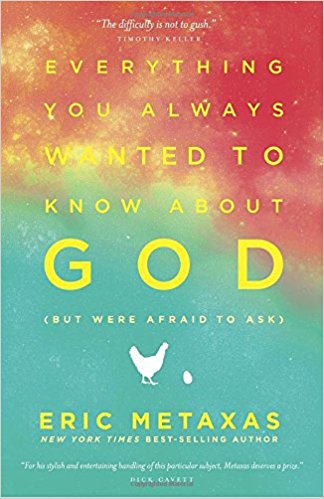
Everything You Always Wanted To Know About God (book review)

Have you ever wanted to sit down and ask some deep questions about God? What about some not-so-deep questions? Perhaps you’ve tried to have this conversation with someone, and either they weren’t too well informed or perhaps they talked “over your head.” If that describes you, I think you will enjoy Everything You Always Wanted To Know About God (but were afraid to ask) by Eric Metaxas.

This is not a deeply theological book. Eric himself states right up front, “On the subject of God, most of us want to know whether He actually exists and whether we can know He exists and how we can know that. And if He does exist, we want to know what He’s like and what that has to do with us and how we live our lives. These are the deepest human questions, and we deserve to get some answers, even if those answers might be imperfect, which the answers in this book certainly are.”

Maybe the answers are “imperfect” but then again, who really has a “perfect” answer?! What you will find in this book is a conversational feel that is very engaging without feeling like the subject matter is “dumbed down,” some good information to help guide you on your own journey of finding answers, and some pithy humor as well. Of course, I believe the best answers are found in the Bible itself, but this book is a good starting point to connect with the Scriptures.

I would recommend this book to anyone who hasn’t been able to connect with someone that could give you satisfactory answers to your God-searching questions. This book would also be an excellent resource to read together with a friend as you attempt to find answers to your God questions.

I am a Waterbrook book reviewer.

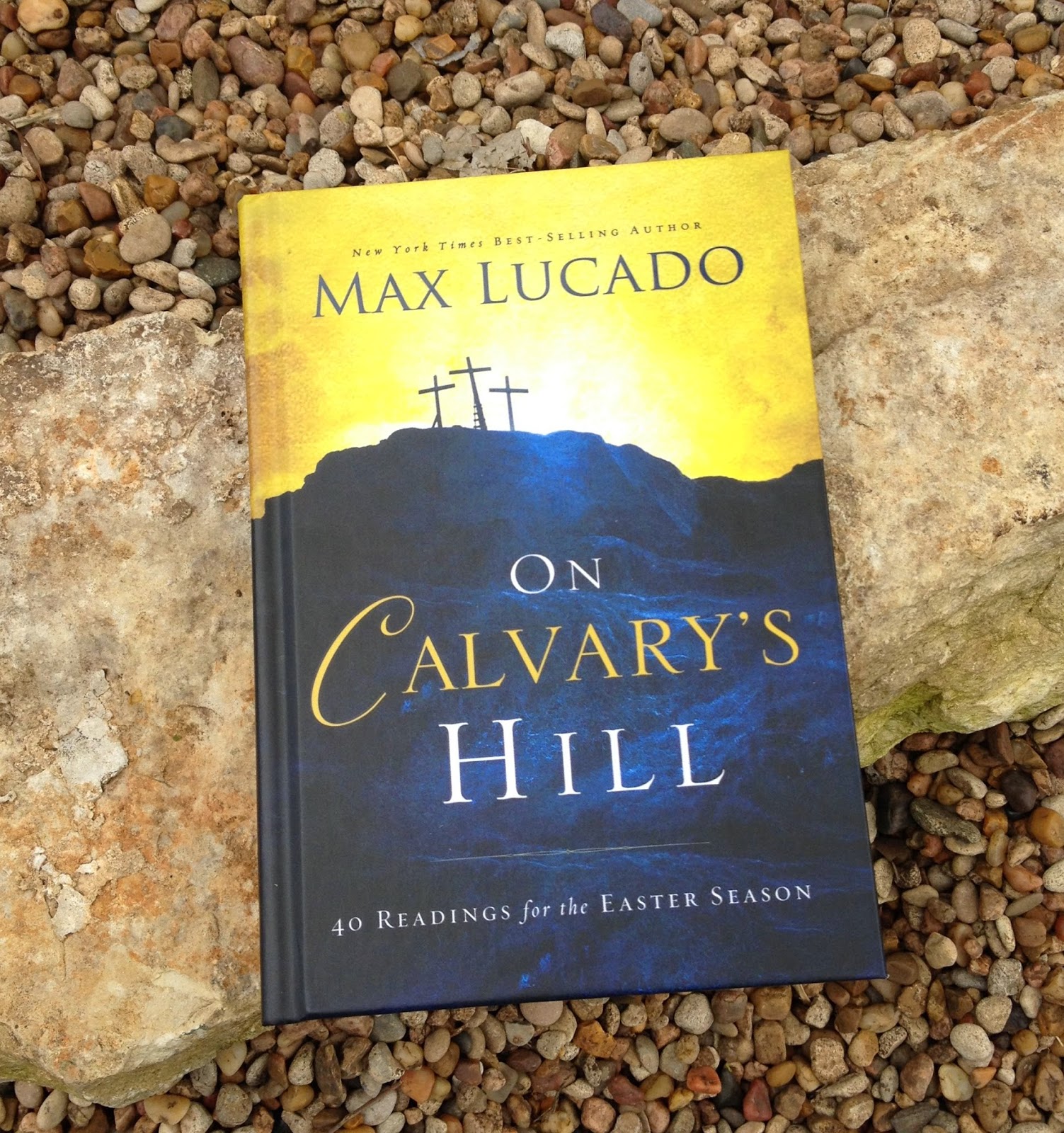
On Calvary’s Hill (book review)

Max Lucado has written several books concerning the week leading up to Christ’s crucifixion and resurrection. In On Calvary’s Hill, you will be treated to 40 of the best looks from all of these previous books into what was happening during this pivotal week.

Max Lucado has both a firm grasp of Scripture, and a keen imagination to “read between the lines” of the biblical accounts. God has truly gifted him with the skill to take his readers behind the scenes, and even into the very thoughts of the key characters in the many stories that make up the big story of Christ’s Passion.

These forty entries make excellent reading during the Lent season, to help you appreciate more fully the work Jesus did for us on Calvary. But, honestly, this book could be read at any time during the year and still have immense value to those who want to know more about what Jesus accomplished on the Cross.

Don’t miss this book!

8 More Quotes From “The Christian In Complete Armour”

“A man of humble spirit loves a low seat; he is not ambitious to tower above the thoughts of others; and while he stoops in his own opinion himself, the same bullet flies over his head which hits the proud man in the chest.”

“The reason so many Christians complain about the power of their corruptions lies in one of two roots—either they try to overcome sin without acting on the promises, or else they only pretend to believe. They use faith as an eye but not as a hand; they look for victory to drop from heaven upon their heads but do not prayerfully fight to get it.”

“Despair, more than other sins, puts a man into a kind of possession of hell itself. As faith gives substance to the word of promise, so the cruelty of despair gives existence to the torments of hell in the conscience. This drains the spirit and makes the creature become his own executioner. … Faith quenches the fiery dart of despair. … Only faith handles sin in its fullest strength by giving the soul a glimpse of the great God.”

“Christ does not ration out His blood, some to one and some to another; but He gives His whole Self to the faith of every believer. … A man’s faith in Christ is accepted for righteousness; that is, at the judgment he will escape the sentence as if he had never strayed a step from the path of the law.”

“Christian, you have no more effective argument to defeat temptation than hope. … The Christian’s choice is inferior when he must use the wicked man’s argument to cut through temptation.”

“The devil deprives some people of this scriptural relief by mere laziness. They complain about doubts and fears like sluggards crying out of their poverty as they lie in bed. But they will not get up and search the Word for the satisfaction of their need. Of all others, these sell their comfort most cheaply. Who pities the starving man who has bread before him but refuses to move his hand to take it?

To some Christians, satan presents false applications of the Word and thereby troubles their spirits. The devil is an exceptionally bright student in theology and makes no other use of his Scripture knowledge than to lure the saint into sin—or into despair for having sinned. He is like a dishonest lawyer who attains legal skill merely to force an honest man into serious problems by the tangled suit he brings against him.”

“If we spend all our thoughts on our unworthiness of heaven we shall never realize we are among the chosen ones who will enjoy it. But when we believe the pleasure God takes in demonstrating His greatness—making miserable creatures happy instead of allowing their misery to continue in eternal damnation—and the cost He paid for His mercy to reach us, we see Him as the Most High God! When we weigh and meditate on these truths they open our hearts, though fastened with a thousand bolts, to believe without question all that He has said.”

“It is absurd to think of being a Christian without knowledge of God’s Word and some skill to use this weapon. This weapon is both defensive and offensive. The rest of the apostles’ armor are defensive arms…. But the sword both defends the Christian and wounds his enemy.”

You can check out my review of this book by clicking here, and you can read the first set of quotes I shared by clicking here. And be sure to follow me on Twitter or Tumblr for more inspirational quotes posted every day.

11 Quotes From “Shade Of His Hand”

The book of Ecclesiastes in the Bible can be a challenging read for many people. In Shade Of His Hand, Oswald Chambers walks us through this biblical book of wisdom chapter-by-chapter. Shade is a great companion for your personal Bible study time in Ecclesiastes. Check out my full book review by clicking here.

Below are just a few of the many (many!) passages I highlighted in Shade. Some of the longer passages I have already shared in my weekly “Thursdays With Oswald” posts. You can read those by clicking here.

“We always get out of touch with the Bible attitude to things when we come to it with our own conclusions.”

“The intellectual order of life does not take things as it finds them, it makes us shut our eyes to actual facts and try to live only in the ideal world. … Solomon is fearless in facing facts as they are. … It is not a question of living a blind life in the brain away from actuality, not of living in dawns or on mountain tops; but of bringing what you see there straight down to the valley where things are sordid, and living out the vision there.”

“Unless you bank your faith in God, you will not only be wrongly related in practical life and have your heart broken, but you will break other things you touch.”

“Almighty God does not matter to me, He is in the clouds. To be of any use to me, He must come down to the domain in which I live; and I do not live in the clouds but on the earth. The doctrine of the Incarnation is that God did come down into our domain. The Wisdom of God, the Word of God, the exact expression of God, was manifest in the flesh.”

“To serve God in order to gain heaven, is not the teaching of Christianity. Satisfaction cannot be found in gain, but only in a personal relationship to God. … A man is not to serve God for the sake of gain, but to get to the place where the whole of his life is seen as a personal relationship to God.”

“Whenever we put theology or a plan of salvation or any line of explanation before a man’s personal relationship to God, we depart from the Bible line, because religion in the Bible is not faith in the rule of God, but faith in the God Who rules.”

“Sometimes it is cowardly to speak, and sometimes it is cowardly to keep silence. In the Bible the great test of a man’s character is his tongue (see James 1:26). The tongue only came to its right place with in the lips of the Lord Jesus Christ, because He never spoke from His right to Himself. He Who was the Wisdom of God Incarnate, said ‘the words that I speak unto you, I speak not of Myself.’ … We are either too hasty or too slow; either we won’t speak at all, or we speak too much, or we speak in the wrong mood. The thing that makes us speak is the lust to vindicate ourselves.”

“The general history of Christianity is that it has been tried and abandoned because it is found to be difficult; but wherever it has been tried and honorably gone on with, it has never failed.”

“The Christian faith is exhibited by the man who has the spiritual courage to say that that is the God he trusts in, and it takes some moral backbone to do it.” 

“We reap terrific damage to our own characters when we vow and do not perform. … Promises are a way of shirking responsibility.”

“It is appalling to find spiritual people when they come into a crisis taking an ordinary common-sense standpoint as if Jesus Christ had never lived or died.”

More quotes from Shade Of His Hand are coming soon…

William Carey’s Perseverance

“William Carey, the ‘father of modern missions,’ wanted to translate the Bible into as many Indian languages as possible. He established a large printshop in Serampore where translation work was continually being done. Carey spent hours each day translating Scripture, while his insane wife ranted and raved.

“Carey was away from Serampore on March 11, 1832. His associate, William Ward, was working late. Suddenly Ward smelled smoke. He leaped up to discover clouds belching from the printing room. He screamed for help, and workers passed water from the nearby river until 2 a.m., but everything was destroyed.

“On March 12, 1812 missionary Joshua Marshman entered a Calcutta classroom where Carey was teaching. ‘I can think of no easy way to break the news,’ he said. ‘The printshop burned to the ground last night.’ Carey was stunned. Gone were his massive polyglot dictionary, two grammar books, and whole versions of the Bible. Gone were sets of type for 14 eastern languages, 1200 reams of paper, 55,000 printed sheets, and 30 pages of his Bengal dictionary. Gone was his complete library. ‘The work of years—gone in a moment,’ he whispered.

“He took little time to mourn. ‘The loss is heavy,’ he wrote, ‘but as traveling a road the second time is usually done with greater ease and certainty than the first time, so I trust the work will lose nothing of real value. We are not discouraged; indeed the work is already begun again in every language. We are cast down but not in despair.’

“When news of the fire reached England, it catapulted Carey to instant fame. Thousands of pounds were raised for the work, and volunteers offered to come help. The enterprise was rebuilt and enlarged. By 1832, complete Bibles, New Testaments, or separate books of Scripture had issued from the printing press in 44 languages and dialects. The secret of Carey’s success is found in his resiliency. ‘There are grave difficulties on every hand,’ he once wrote, ‘and more are looming ahead. Therefore we must go forward.’” —from On The Day