Thursdays With Oswald—Isaiah 13-23

Oswald ChambersThis is a weekly series with things I’m reading and pondering from Oswald Chambers. You can read the original seed thought here, or type “Thursdays With Oswald” in the search box to read more entries.

Isaiah 13-23

[These are the notes on Oswald Chambers’ lecture on Isaiah 13-23.]

     Isaiah’s message needs to come home to us today—that God is behind the devil, not the devil behind God; all the great world forces are in front of God, and they cannot do a thing without His permission. Today we are so emphasizing the freedom of the human will that we are forgetting the sovereignty of God, consequently when we come up against the forces at work in the world we are paralyzed by fear and get into despair, which we need never have done if we had been built up in faith in God. … Stand strong in faith in God—“I don’t understand this, but I know God is behind it.” … 

     There is no cowardice about Isaiah or about his message. He never lost his faith in God or got discouraged, and when the things he foretold happened, he did not desert the people. …  

     Behind everything stands God; behind the tumult and the confusion God is bringing out everything according to His will. The great thing about faith in God is that it keeps a man undisturbed in the midst of disturbance. … All the forces outside you are futile because they are less powerful than the indwelling of God (see 1 John 4:4). … Discouragement comes when we say what God will do—that God will always keep me healthy, that He will always be bringing me into the land of Canaan where I will eat honey; well, He won’t. God is concerned about only one thing—getting me into a personal relationship with Himself. There is no possibility of discouragement if we will only remember that this is the relationship, not God’s blessings, but Himself.

From Notes On Isaiah

When the news of the day, or events in the world, or even what’s happening in your personal life starts to rattle you, consider how Isaiah handled himself. Isaiah knew enemies were closing in, and that the day of God’s judgment was fast approaching too, but he never got fretful. Why? He kept his eyes on God.

God is sovereign. He is in control. Nothing ever takes Him by surprise. Keep your eyes on Him. And remember: “All the forces outside you are futile because they are less powerful than the indwelling of God.”

The Scriptures And Our Temperament

“We naturally tend to interpret Scripture in the light (or shadow) of our own temperament and let our peculiar mental cast decide the degree of importance we attach to various religious doctrines and practices. …

“The minister above all others should look deep into his own heart to discover the reason for his more pronounced views. It is not enough to draw himself up and declare with dignity that he preaches the Bible and nothing but the Bible. That claim is made by every man who stands in sincerity to declare the truth; but truth has many facets and the man of God is in grave danger of revealing only a limited few to his people, and those the ones he by disposition favors most. …

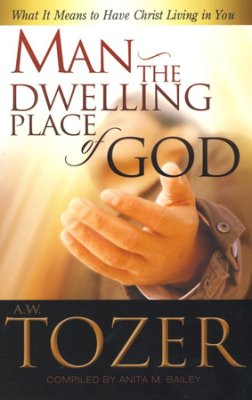
“The Scriptures, critical self-discipline, honesty of heart and increased trust in the inward operations of the Holy Spirit will save us from being too greatly influenced by temperament.” —A.W. Tozer, in Man—The Dwelling Place Of God

A.L.I.V.E.—The “V” Is For Verified Prophecy

This is part 4 in my 5-part series, “I can know Jesus is A.L.I.V.E. because of ….” I have already addressed A—Apologetics, L—Lives changed, and I—It is finished. Today I want to consider the prophecies that the life, death, and resurrection of Jesus supposedly fulfilled. 

We have all heard about “copycat” crimes. Could the life and death of Jesus fit that? Since Jesus was born from the family line of King David, and His family really wanted the promised Messiah to finally appear, perhaps He was pushed that way. Perhaps He lived in a certain way to make it look like He was fulfilling prophecy. 

Detective J. Warner Wallace wrote, “Homicide detectives are perhaps the least trusting people in the world. My own experience investigating murders has taught me to consider everyone a liar—until, at least, I have good reason to believe otherwise.” 

So was Jesus a liar? Was He following some copycat script to make it merely look like He was the Messiah? Or do we have good reasons to believe He was telling the truth? Consider three points—

  • How could David describe a crucifixion scene in 1000 BC, since the Persians didn’t invent it until around 400 BC (see Psalm 22:12-18)?
  • How could Jesus control others’ actions (i.e. Judas’ betrayal; being killed by crucifixion, not by stoning; soldiers gambling for His clothes)? 
  • Even His own followers—whom He would need to perpetrate the hoax—didn’t understand what He was doing (John 12:16). 

Prosecutors have to present enough evidence to convince a jury that they have arrested and brought to trial the right man. One of the key terms is beyond a reasonable doubt—“a part of jury instructions in all criminal trials, in which the jurors are told that they can only find the defendant guilty if they are convinced ‘beyond a reasonable doubt’ of his or her guilt.” 

Let’s consider a hypothetical case that a prosecutor might present: 

  • multiple eyewitnesses saw a man fleeing the scene, and all of them identified the suspect in a police line-up
  • the shoe prints at the crime scene were the same size and design that of the suspect was wearing when he was arrested
  • prosecutors presented text messages in which the suspect threatened to do to the victim exactly what was done to the victim
  • the wounds made by the weapon which was used on the victim correspond with the weapon the police found in the suspect’s car
  • the blood on that weapon matched the blood of the victim
  • the fingerprints on that weapon are the suspect’s fingerprints

That is the evidence. From that evidence, the jury is asked to draw inferences about the reasonableness of that suspect being the one who committed the crime. 

I have listed just six pieces of evidence. How strong do you think the prosecutor’s case is? What if the jurors were presented with 50 pieces of evidence? What about 100? 200? How about 300 pieces of evidence? 

Jesus fulfilled at least 300 prophecies—which were made before He was born!—in His life, death, and resurrection!

Math professor Peter Stoner calculated that the odds for just one man in history to fulfill only 8 prophecies is 1-in-1×10¹⁷. How amazing is that!? To give us a little perspective, Stoner says that 1×10¹⁷ silver dollars would cover the entire state of Texas in silver dollars two-feet thick. If just one of those silver dollars was marked, and a blindfolded man could select that one marked coin on his very first attempt, that would be about the same odds of Jesus fulfilling only 8 prophecies. 

As a juror, if you weighed this evidence, do you find enough proof to “convict” Jesus? 

But ultimately Jesus didn’t come just to fulfill prophecy; He came to rescue you and me from the penalty of our sin (Luke 4:16-21), and that is the best news of all! 

Join me either in person or on Facebook Live this Sunday for the final message in this 5-part series. 

Saturday In The Proverbs—Wisdom (Proverbs 1)

[Each chapter in the Book of Proverbs contains thoughts that fit into a theme; they are not just random thoughts gathered together. In this “Saturday In The Proverbs” series, I will share a theme that I see in each chapter. But the cool thing about God’s Word is that you may see an entirely different theme. That’s great! If you do, I would love for you to share it in the comments below.]

The fear of the Lord is the beginning of knowledge, but fools despise wisdom and instruction (Proverbs 1:7).

Would you like to see things others don’t see? How about if you could have insight that others don’t have? What if you could keep on getting more, and more, and more knowledge that really mattered? That’s what this entire Book of Proverbs is all about, and the opening chapter sets the tone for the rest of the book.

You have to decide: do you trust God’s knowledge, or do you trust yourself more?

God is to be revered above all else.

God is to be delighted in above all else.

God is to be listened to above all else.

That is what defines pure knowledge: God’s knowledge.

The path to wisdom, then, is to accurately apply God’s pure knowledge.

Lady Wisdom—thankfully for us—makes herself readily available IF we will listen to her. If we do, we will have the best insights into how to use this purest-of-pure knowledge which God gives. When we operate in God’s wisdom and God’s knowledge, He is pleased and He is glorified.

There is always another option we could choose. We could listen to things that others say is “knowledge,” and we could try to figure out things on our own. But if we do, we also have to be willing to accept the consequences for applying that “knowledge” (see vv. 29-31). Ummm, no thank you, I’d rather not be called a fool! 

Thursdays With Oswald—Isaiah 8-11

Oswald ChambersThis is a weekly series with things I’m reading and pondering from Oswald Chambers. You can read the original seed thought here, or type “Thursdays With Oswald” in the search box to read more entries.

Isaiah 8-11

[These are notes from Oswald Chambers’ lecture on Isaiah 8-11.]

     God did not give a progressive revelation of Himself through the Old Testament: the people progressively grasped the revelation, which is very different. …

     The remarkable thing is that when Jesus Christ comes, every one of the things the prophets have been saying fit in with one Personality, the Being whom we know as the Lord Jesus Christ. Isaiah never saw Jesus Christ, he could not have imagined Him, then what inspired him? The very Mind of God (see 2 Peter 1:20). … 

     Fear is apt to make us atheistic and in our outlook we enthrone the devil, not God. God is behind it all, not a thing happens but He knows all about it. …

     If we try to draw our breath from any other source we instantly get diseased. By prayer and communion with God we live out in God’s moral open air, consequently we can live in the cities and amongst the places of men and maintain the life which is in accordance with the Messiah’s life…. The enemy of our souls goes for all he is worth against our praying, against our solitudes with God, he tries to prevent us drawing our breath in the fear of the Lord. The great need is to bring every thought and imagination into captivity to the obedience of Christ until every bit of our nature is reconstructed. 

From Notes On Isaiah

In these four chapters of Isaiah, the kings of Judah are facing enemies closing in from all sides and fear is mounting. Isaiah keeps speaking a word from the Lord that amounts to God saying this: Stop focusing on your troubles and focus on Me instead!

It’s a good reminder for us still today. God is in control. Let me say that again: God is in control! Let His perfect love and His perfect power drive out fear from your heart. Keep your eyes on Him, not on the problems coming against you. Let your thoughts be captivated by Jesus, and you will be reconstructed from the inside out with the nature of Christ.

A.L.I.V.E.—The “L” Is For Lives Changed

A man named Paul was visiting Athens. While he was in the marketplace, he began to talk with people about Jesus Christ, specifically how Jesus had been crucified and then raised back to life.

His comments caught the attention of two groups of philosophers: the Epicureans who thought all religions were made up and were simply a crutch for the weak-minded and superstitious, and the Stoics who said that a divine power was in everything but wasn’t a Person that could be personally known. These groups said to Paul, “You are presenting some new teachings and strange ideas that we have never heard before! Would you come and address our next meeting?”

In 2004, renowned atheist Anthony Flew announced something that was a “strange idea” to the ears of his followers. Flew presented one of his first papers on atheism at the Socratic Club at Magdalen College, where the Christian literary giant C.S. Lewis served as the chairman. Over the years Flew had sharpened his rhetoric to become one of the best known and most outspoken atheists on the worldwide stage.

Yet in 2004, an 81-year-old Anthony Flew remarked, “I simply had to go where the evidence led,” as Flew announced to the world: there IS a God.

“My discovery of the Divine has been a pilgrimage of reason and not of faith,” wrote Flew in his book There Is A God, which is why last week I shared the first way we can know Jesus is alive in “A” is for apologetics. Today I submit to you the second way one can know that Jesus is A.L.I.V.E.: Lives changed.

Paul, who was asked to speak to the philosophers in Athens about his “strange ideas,” had been given the name Saul by his parents. When it came to religion, Saul took a backseat to no one! He was a purebred Israelite from the tribe of Benjamin (which gave Israel its very first king, who was also named Saul). Saul called himself a “Hebrew of Hebrews” because he kept the Law of Moses and the strict rules of the Pharisees absolutely faultlessly.

When he heard about Jesus (who claimed to be God), and about the followers of Jesus who claimed He had been resurrected from the dead, Saul persecuted these Christians so vehemently that he not only had many of them thrown into prison, but he had many of them killed as well.

That all came to a complete stop when Saul met Jesus for himself! You can read how Saul retold this story in Acts 22:1-16. After this encounter, Saul’s life was 180-degrees different! He even changed his name to Paul to signify his new outlook. Now he was just as adamant to tell people about Jesus as he was previously to harass and persecute Christians.

Paul’s conversion came at a steep price. The Jews with whom he used to associate now turned violently against him. Numerous times they attempted to kill him. In addition, Paul’s newfound faith in Jesus caused him to be persecuted by the Romans as well. The Roman Emperors wanted people to say, “Caesar is lord” but Paul and the other Christians were declaring, “Jesus is Lord.” Paul ended up being executed under Emperor Nero.

Paul had numerous opportunities to recant, but he never came close to doing so. His life was one that was under constant duress and distress and danger precisely because he refused to back down from his claim that Jesus was alive!

Paul isn’t alone. Millions of people around the globe have come to know Jesus as their personal Savior. Many, like Paul, have been harassed for their faith and some even violently persecuted and martyred, and yet they so firmly believed that Jesus is alive that they were willing to go to their early grave with “Jesus is my Lord” still on their lips!

What about you? Have you met Jesus for yourself?

Check out this video where my friend Scott tells his personal story of how an encounter with Jesus has completely changed the trajectory of his life.

Join me next Sunday as we continue with our 5-part series I can know Jesus is A.L.I.V.E. because of… where we will be looking at the letter “I.” You can join me either in person or on Facebook Live. If you missed the previous lesson, check out “A” is for apologetics by clicking here.

Saturday In The Psalms—Happy!!

…happy are the people whose God is the Lord! (Psalm 144:15).

Happy indeed are people who have learned that there is only One God, and have also acknowledged Him as the Lord of their life.

David lists some fabulous blessings for those have made God their Lord…

  • …are equipped by God for victory
  • …experience His lovingkindness
  • …are intimately known by God
  • …know that God bends heaven and earth to help those who love Him
  • …are protected from evil people
  • …have new songs to sing
  • …experience God’s miraculous deliverance and rescue
  • …see blessings on their children and their work and their home
  • …are used as peacemakers and unity-restorers

Happy, happy, HAPPY!

Happy are the people who are in such a state;
Happy are the people whose God is the Lord!

Thursdays With Oswald—Isaiah 1

Oswald ChambersThis is a weekly series with things I’m reading and pondering from Oswald Chambers. You can read the original seed thought here, or type “Thursdays With Oswald” in the search box to read more entries.

Isaiah 1

[These are notes from Oswald Chambers’ lecture on Isaiah 1.]

     There is no such thing as fate; a human being always has the power to do the incalculable thing. There are fatal issues, not fate. When God’s decrees come to pass it is because men will not turn. God’s will is supreme, but God never fights against us; it is self-will that fights against God. …  

     If God were love according to our natural view of love He ought never to cause us pain, He ought to allow us to be peaceful; but the first thing God does is to cause us pain and to rouse us wide awake. He comes into our lives all along with ideals and truths which annoy and sting us and break up our rest, until He brings us to the one point, that it is only moral and spiritual relationships which last. That is why God looks cruel judged from the human sentimental standpoint; He loves us so much that He will not prevent us being hurt. …  

     Many a life is paralyzed because this is not realized—“I know God has forgiven me, I know I am right with God, but every now and again I remember the things I did that damaged other lives.” If I put the wrong right with my fellow men, have I become right with God? No, get right with God and He will put you on the way to be right with your fellow men. 

From Notes On Isaiah

Isaiah 1 opens with God taking His people to task for merely going through the motions of worship, with their hearts being far away from Him. Chambers reminds us that this self-will that fights against God will often bring its own pain. Why? Because God loves us too much to let us go unmolested down the path to eternal destruction. Instead, God longs for us to turn our hearts unreservedly to His love and purpose for our lives.

A.L.I.V.E.—The “A” Is For Apologetics

This is part 1 of a 5-part series with a simple premise: “I can know Jesus is A.L.I.V.E. because of…” and then I am presenting evidence for each of the five letters. This is a look at the letter A” for Apologetics for the resurrection of Jesus.

For some of my evidence, I am going to use historical texts from the Bible. When I say “historical” I mean that in the scholarly definition: this Book is attested to by historians and literary critics to be an accurate record of actual historical facts. You can read more of the apologetics for the Bible’s authenticity in a post I previously published here.

I would ask you to weigh the evidence for three possibilities concerning the claims of Christians regarding the death and resurrection of Jesus.

(1) Jesus didn’t actually die.

The Romans didn’t invent crucifixion, but they perfected it to be one of the most gruesome forms of torturous death that history has ever known. This leads one to wonder how could anyone go through the torture Jesus did and survive?

A team of medical examiners, after examining the historical account of Jesus’ death concluded: “The difficulty surrounding exhalation leads to a slow form of suffocation. Carbon dioxide builds up in the blood, resulting in a high level of carbonic acid in the blood. The body responds instinctively, triggering the desire to breathe. At the same time, the heart beats faster to circulate available oxygen. The decreased oxygen (due to the difficulty in exhaling) causes damage to the tissues and the capillaries begin leaking watery fluid from the blood into the tissues. This results in a build-up of fluid around the heart (pericardial effusion) and lungs (pleural effusion). The collapsing lungs, failing heart, dehydration, and the inability to get sufficient oxygen to the tissues essentially suffocate the victim. The decreased oxygen also damages the heart itself (myocardial infarction) which leads to cardiac arrest. In severe cases of cardiac stress, the heart can even burst, a process known as cardiac rupture. Jesus most likely died of a heart attack.”

Besides that, the dead body of Jesus was also thoroughly examined by both the Romans who conducted the crucifixion (see Mark 15:43-45) and His friends who prepared His body for burial (John 19:38-40).  In addition, two contemporary historians who aren’t friendly to the cause of Christianity (Tacitus and Josephus) both attested to Christ’s death by crucifixion.

(2) Jesus didn’t actually rise from the dead.

Some say the disciples were delusional from their intense grief. But Jesus was seen on more than one occasion, sometimes by one person, sometimes by twos, and several times by large groups (see 1 Corinthians 15:3-8). Some of Jesus’ closest friends weren’t convinced by second-hand testimony but had to see Jesus for themselves (John 20:19-20, 24-28). All four biblical accounts record women seeing the resurrected Jesus. This is significant because women were not allowed to serve as “legal witnesses,” so this wouldn’t have helped the “delusional” disciples at all.

Some say the disciples stole the body of Jesus. But this is problematic because of the armed guards at the tomb of Jesus (Matthew 27:62-66; 28:11-15). 

(3) Jesus was crucified and resurrected.

Sir Arthur Conan Doyle’s Sherlock Holmes said, “When you have eliminated the impossible, whatever remains, however improbable, must be the truth.” So after looking at the shortcomings and difficulties of the first two options, let’s consider this third possibility: that it happened just as the historical records in the Bible indicate.

Cold-case detective J. Warner Wallace said of this third possibility, “The last explanation (although it is a miraculous, supernatural explanation) suffers from the least number of liabilities and deficiencies. If we simply enter into the investigation without a pre-existing bias against anything supernatural, the final explanation accounts for all of the evidence without any difficulty. The final explanation accounts for the evidence most simply and most exhaustively, and it is logically consistent…. The final explanation is also superior to all other accounts (given that it does not suffer from all the problems we see with the other explanations).”

Check out the video where I discuss all of these points in more detail, and join me either in person or on Facebook Live for the next four Sundays as we continue looking at the evidence supporting the resurrection of Jesus.

Saturday In The Psalms—Childlike Not Childish

Lord, my heart is not haughty… (Psalm 131:1).

This psalm is only three verses long, but they are three verses of immense trust in God. Truly these verses reveal extraordinary childlike dependence on God.

My heart is not haughty—I am subduing my pride.

My eyes are not lofty—I’m not looking for great things for myself.

I do not concern myself with great matters—I stay away from burdens I don’t need to carry.

I have no interest in things too profound for me—I don’t spend time on the “what ifs,” but I quietly trust God to provide for me.

I have calmed and quieted my soul—if my emotions start running too far ahead, I remind myself that God knows best what I need.

Childlike not childish!

Childlike is lovingly dependent. Childish is selfishly independent.

Childlike is trusting someone wiser. Childish is believing I know best.

John Maxwell said, “The Christian leader is mature enough to not act childish, yet remains trusting enough to stay childlike.”

Think of it this way: a “weaned child” (v. 2) is able to eat more grown-up food than an infant, but it is still dependent on a loving parent to provide that food—food that is best. It’s not necessarily food I want, but it is food I need.

David implores us to adopt this childlike dependence on God, and give up our childish independence apart from God. This attitude, David says, starts in a humbled heart.

Holy Spirit, work in my heart today. Drive out any childish selfishness for what I want, and create in me a childlike trust in my God Who gives me all that I need. Amen.