Avoiding Foolish Controversies

Listen to the podcast of this post by clicking on the player below, and you can also subscribe on AppleSpotify, or Audible. 

Jude calls Christians to contend for the faith without contention and without compromise. Instead, we are to loving serve Jesus by engaging with others mercifully, peacefully, and lovingly. This means we have to contend without quarreling. 

But that’s easier said than done because people love to pick fights, and we hate to lose an argument. 

Look at the ministry of Jesus. His adversaries couldn’t get around the perfect logic that He used based on Scripture, so they came up with all sorts of controversies in the hope of tripping Him up and silencing Him. They posed seemingly unanswerable dilemmas like: In heaven, which one of the seven brothers will be married to the woman they all married on earth? Should we pay taxes to Caesar? Should we pay the temple tax? What’s the greatest commandment of all? They tried to get Him to take the bait about religious traditions, laws concerning the Sabbath, and the punishment for a woman caught in adultery. 

Jesus never got fluster or frustrated—He never took the bait to quarrel with them, but He simply stood unwaveringly and lovingly on God’s Word. But once again, that’s easier said than done! 

King Solomon pointed out the difficulty of this in Proverbs 26:4-5. Do we answer a fool or not? Yes, but we answer wisely not foolishly. 

(Check out all of the Scriptures in this post by clicking here.)

I believe Jude would agree with Solomon, Jesus, Paul, and Peter, but then he uses three examples that could spark a controversy:  

  • the fate of fallen angels (Jude 6) 
  • Michael and the devil arguing over the body of Moses (v. 9) 
  • Enoch prophesying (v. 14) 

But notice that how Jude uses these examples by not addressing any more than what we already know from Scripture. In this way, Jude keeps this from becoming a foolish, quarrelsome controversy (v. 10). 

Notice the consistent instruction of the Bible on how to handle critics: 

  • Michael the archangel: The Lord rebuke you! (also 2 Peter 2:11) 
  • Jesus: Away from Me! (Matthew 4:10) and Get behind Me! (Mark 8:33) 
  • James: Submit to God and then resist the devil (James 4:7) 
  • Peter: speak gently, respectfully, and with a clear conscience (1 Peter 3:15-16) 
  • Paul: warn people without becoming quarrelsome (2 Timothy 2:14, 16, 23-25) 

In Luke 13:1-5, Jesus addresses two events that could have become quite controversial, but Jesus defused the controversy by simply saying, “No matter what, everyone needs to have their sins forgiven by God.” Paul continued this singleminded focus on Jesus. I love how the Amplified Bible captures his words in 1 Corinthians 2:2. And then Paul encourages his friend Timothy to operate the same way (1 Timothy 1:15-17). 

Don’t let foolish controversies sidetrack you from the faith entrusted to us, but take everything back to Jesus as He is revealed in the Scripture. 

If you’ve missed any of the other messages in our series called Earnestly Contending, you can find them all here. 

►► Would you please prayerfully consider supporting this ministry? My Patreon supporters get behind-the-scenes access to exclusive materials. ◀︎◀︎

Don’t Try To Grow Your Ministry

Listen to the podcast of this post by clicking on the player below, and you can also subscribe on AppleSpotify, or Audible. 

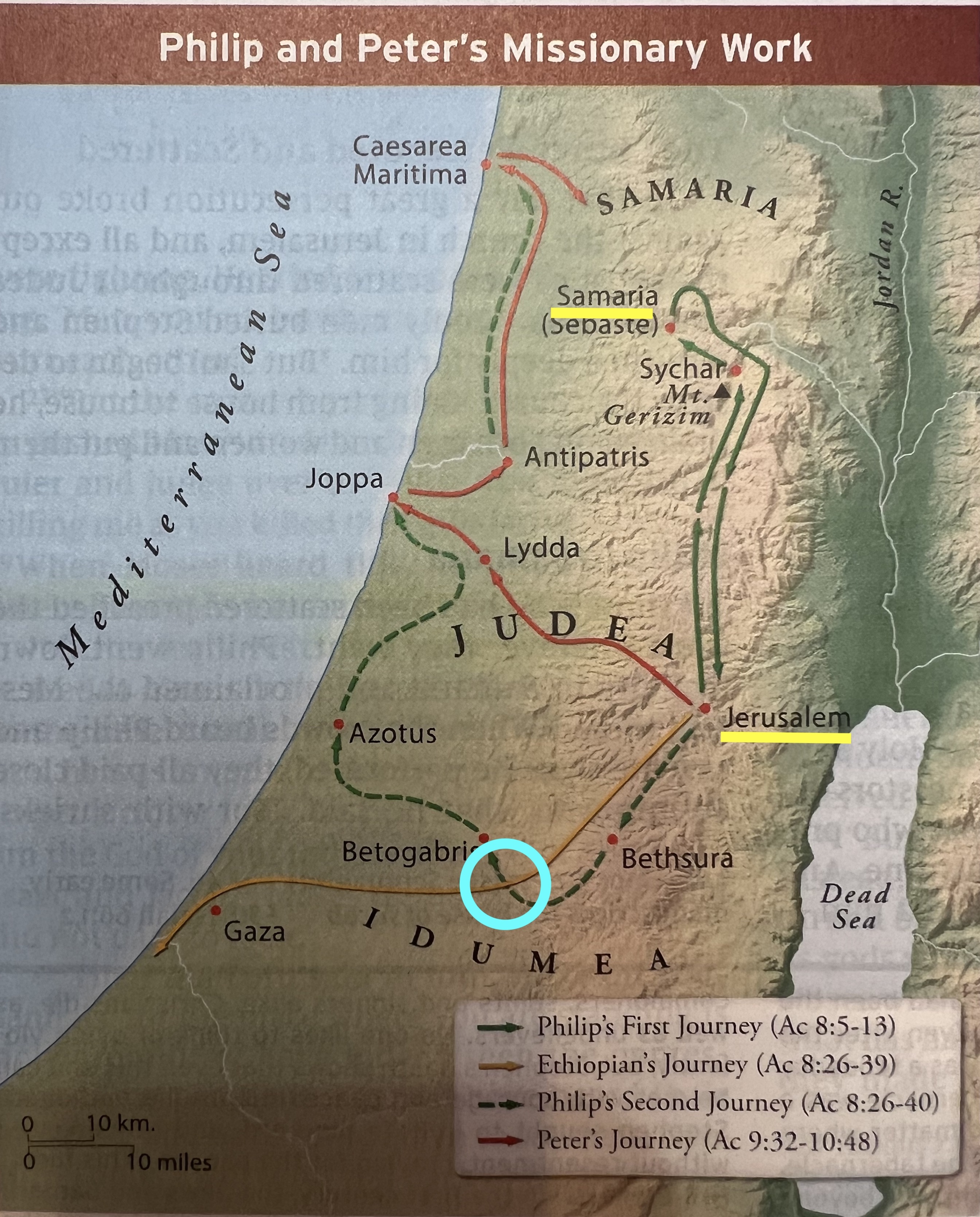
Ministry was booming in Samaria, and Philip was at the center of the activity. People were getting saved, healed, and set free from demonic possession. 

And then an angel tells Philip it is time to move on. We don’t see Philip debating or negotiating, but we just see his immediate obedience. As Philip is traveling the route the angel gave him, he sees a chariot approaching. The Holy Spirit then speaks to Philip and says, “Get close to that chariot and stay near it.” It was then that Philip hears the man in the chariot reading aloud from the Book of Isaiah, so he asks him if he understands what he is reading. This high-ranking official from Ethiopia then invites Philip into his chariot to explain the meaning to him. 

Philip had to leave Samaria in time to cross paths with the Ethiopian official who was heading home from Jerusalem—they met in the middle of a desert. An angel got Philip started. The Holy Spirit refined where Philip needed to be. And then Philip took it from there. 

If Philip had been trying to “grow” a successful ministry, he may have downplayed or even ignore the messages he received. But Philip wasn’t concerned about bigger numbers, just quicker obedience. 

Philip’s quick obedience placed him precisely where God needed him to be, precisely when he needed to be there! (See Acts 8:4-40.)

In my book Shepherd Leadership, I have a chapter entitled “Don’t Try to Grow Your Ministry.” A portion of what I wrote comes from Philip’s quick obedience—

     Don’t try to grow your ministry. First, because it’s not yours, it’s His; and second, because your measure of success is probably more slanted toward quantitative measurements than qualitative. Jesus wasn’t concerned about bigger numbers: “What do you think?” He asked, “If a man has a hundred sheep, and one of them goes astray, does he not leave the ninety-nine and go to the mountains to seek the one that is straying?” (Matthew 18:12). 

     Philip went to Samaria to tell people about Jesus. He didn’t go there because it fit his plan, but because Jesus said, “You will be My witnesses in Jerusalem, and in all Judea and Samaria, and to the ends of the earth” (Acts 1:8). Philip’s obedience brought God’s success: hundreds turned to Jesus as their Savior, demon-possessed people were delivered, the sick were healed, and the new Christians were baptized in the Holy Spirit. Yet God called Philip to leave these “ninety-nine” and go to the desert to cross paths with just one confused and wondering sheep (Acts 8). After that, Philip virtually disappears from Luke’s historical record. 

     What’s the value of one government official’s life? God says that his value is incalculable. Apparently, God knew that Philip was the perfect shepherd to lead this Ethiopian to the pasture where he would accept Jesus as his Savior. Philip was obedient, a sheep was saved, and God was pleased. But I wonder how many people today might think Philip’s ministry was unsuccessful because he left a bigger ministry in Samaria to go to a smaller ministry in the desert? Bishop William C. Abney said, “I’m still waiting for a leader to say, ‘God called me to a smaller ministry.’ We usually only say, ‘God called me’ when it’s something bigger. God’s math doesn’t work our way.” 

     The Chief Shepherd made this commitment to His sheep: “And I will give you shepherds according to My heart, who will feed you with knowledge and understanding” (Jeremiah 3:15). My prayer is that we would much rather feed a few sheep where God has directed us and given us His heart than for us to try to manufacture success that is measured by how many nickels and noses we can count. 

Philip demonstrates for us that it’s not about bigger numbers, it’s about obedience to God’s voice in the moment, and then hearing our Chief Shepherd’s voice at the end of our life saying, “Well done, good and faithful servant.” 

The subtitle of my book is “The metrics the really matter.” I invite you to pick up a copy today! 

►► Would you please prayerfully consider supporting this ministry? My Patreon supporters get behind-the-scenes access to exclusive materials. ◀︎◀︎

A Preview Of Heaven

Listen to the podcast of this post by clicking on the player below, and you can also subscribe on AppleSpotify, or Audible. 

When Mary visits Elizabeth, she discovers that Elizabeth is pregnant, just as the angel Gabriel told her. This confirms for Mary that everything Gabriel told her about her own pregnancy would be fulfilled too. 

At this, Mary bursts into a song that we now call the Magnificat: My soul glorifies the Lord and my spirit rejoices in God my Savior (Luke 1:46-47). 

Mary’s rejoicing was prompted by her deeper realization of who her Savior is. The more she knows her Lord, the more she can praise Him; the more she praises Him, the more He is glorified; the more He is glorified, the more she knows Him. 

So could we say it this way? As my spirit rejoices in God my Savior my soul glorifies Him. Yes, indeed we can! There seems to be an interconnectedness: As I focus on God to rejoice in Him, that rejoicing cannot help but glorify Him. 

So we could also say it this way: God is glorified in my rejoicing of Him. 

Or: As I express my delight in my Savior, His glory is seen more clearly. 

However we put it, when I rejoice in who God is, He is glorified. As He is glorified, my joy in rejoicing in Him is increased. As my joy in Him increases, I cannot help but rejoice in Him even more. 

This, I believe, is a picture of Heaven. Just as the angels encircle the throne and call out to one another, “Holy! Holy! Holy!” as they perpetually rejoice in a new realization of God’s glory, so will we. There are an infinite number of beauties in our Savior which will prompt us to rejoice in Him and glorify Him, so we need an infinite amount of time to fully appreciate His majestic beauty. 

Let’s not wait until we arrive in Heaven to begin this loving worship. Let’s follow the example of Mary and sing out our praise at every possible moment. As we do, a desperate world cannot help but be drawn to gaze upon the beauty which is celebrated in our rejoicing. 

►► Would you please prayerfully consider supporting this ministry? My Patreon supporters get behind-the-scenes access to exclusive materials. ◀︎◀︎

Reason To Hope And To Proclaim

Listen to the podcast of this post by clicking on the player below, and you can also subscribe on AppleSpotify, or Audible. 

On Resurrection Sunday, Christians celebrate an event that is the foundational truth for all of the Bible and for the Christian faith which springs from the Scriptures: The resurrection of Jesus. 

If Jesus wasn’t resurrected, this is a terrible, cruel lie we are perpetuating. If Jesus was resurrected, we have been given the key to eternal life. No one has ever made the bold claims that Jesus made about His own death and resurrection and then backed them up! 

On the Sunday morning after Jesus was crucified, some women arrived at His tomb to finish preparing His body for burial, but Luke records something fascinating: “They did not find the body of the Lord Jesus” (Luke 24:1-8). 

Think about this in a modern-day setting. If you were at the bedside of your loved one when they took their last breath, if you heard the doctor pronounce them dead, if you were at the funeral and saw their body in a casket, and if you saw that casket closed, sealed, and lowered into the ground, you would have every reason to find a body if that casket were re-opened. 

These women were on Golgotha when Jesus died, they saw the Roman soldiers verify His death, they witnessed Joseph and Nicodemus wrap His body in linen strips, and they saw His body placed in a sealed tomb. 

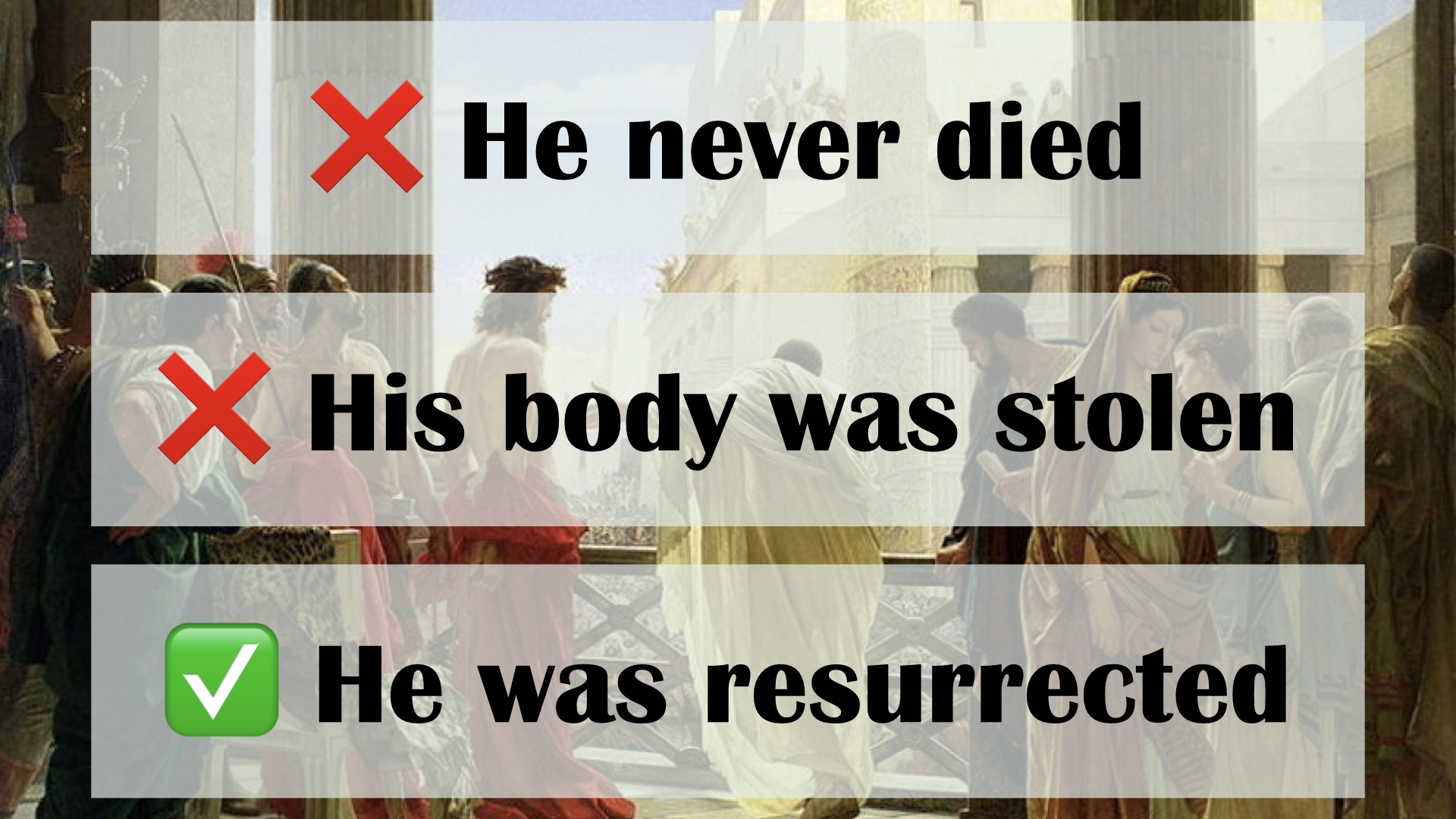
Then when there is no body where the dead body of Jesus is expected, there are only three possibilities: 

(1) He never died

Medical experts have concluded that the horrific torture that Jesus endured prior to even being crucified resulted in significant blood loss, and would have put His body in shock. Then the strain on His weakened body during crucifixion would have resulted in His body experiencing either pleural effusion or cardiac effusion, which is attested to by the flow of “blood and water” from Jesus’ dead body when His side was pierced by a Roman spear (John 19:34). 

The dead body of Jesus was thoroughly examined by both the Romans who conducted the crucifixion and His friends who prepared His body for burial (Mark 15:43-45; John 19:38-40). And two contemporary historians—Tacitus and Josephus—who were unfriendly to the cause of Christianity both attested to Christ’s death by crucifixion. 

(2) His body was stolen

The Sanhedrin was so insistent on Jesus being crucified, they wouldn’t have left the “conspiracy” option open. So they convinced Governor Pontius Pilate to allow them to both seal the tomb and place a group of soldiers outside the tomb to guard it (Matthew 27:62-66). It is highly unlikely that the disciples who fled before the temple guard and who were now locked in a room because they were quaking with fear would somehow gain the courage to undertake a mission to steal Jesus’ body. Nor is it likely that they could have escaped the notice of the highly-trained Roman soldiers guarding the tomb. 

(3) He was resurrected 

The angels at the empty tomb reminded the women that Jesus had foretold both the manner of His death and the assurance of His resurrection. Jesus described His death in detail multiple times, including such key details as His death would be in Jerusalem, the religious leaders would pronounce a death sentence but the Romans would crucify Him, and that He would be resurrected three days later (Matthew 20:18-19; Luke 18:31-33). In addition, Paul tells us that there were hundreds of eyewitnesses to the resurrected Jesus (1 Corinthians 15:3-8). 

Jesus said, “The reason my Father loves Me is that I lay down My life—only to take it up again. No one takes it from Me, but I lay it down of My own accord. I have authority to lay it down and authority to take it up again. This command I received from My Father” (John 10:17-18). 

If Jesus foretold this and fulfilled this, we can also trust His other promises. Assurances such as:

  • He is preparing an eternal home for us and He will come back to take His followers there 
  • That He alone holds the keys to Death and Hades
  • And that only those who have been cleansed from their sins will be able to enter Heaven

(see John 14:1-3; Revelation 1:18, 22:12-14)

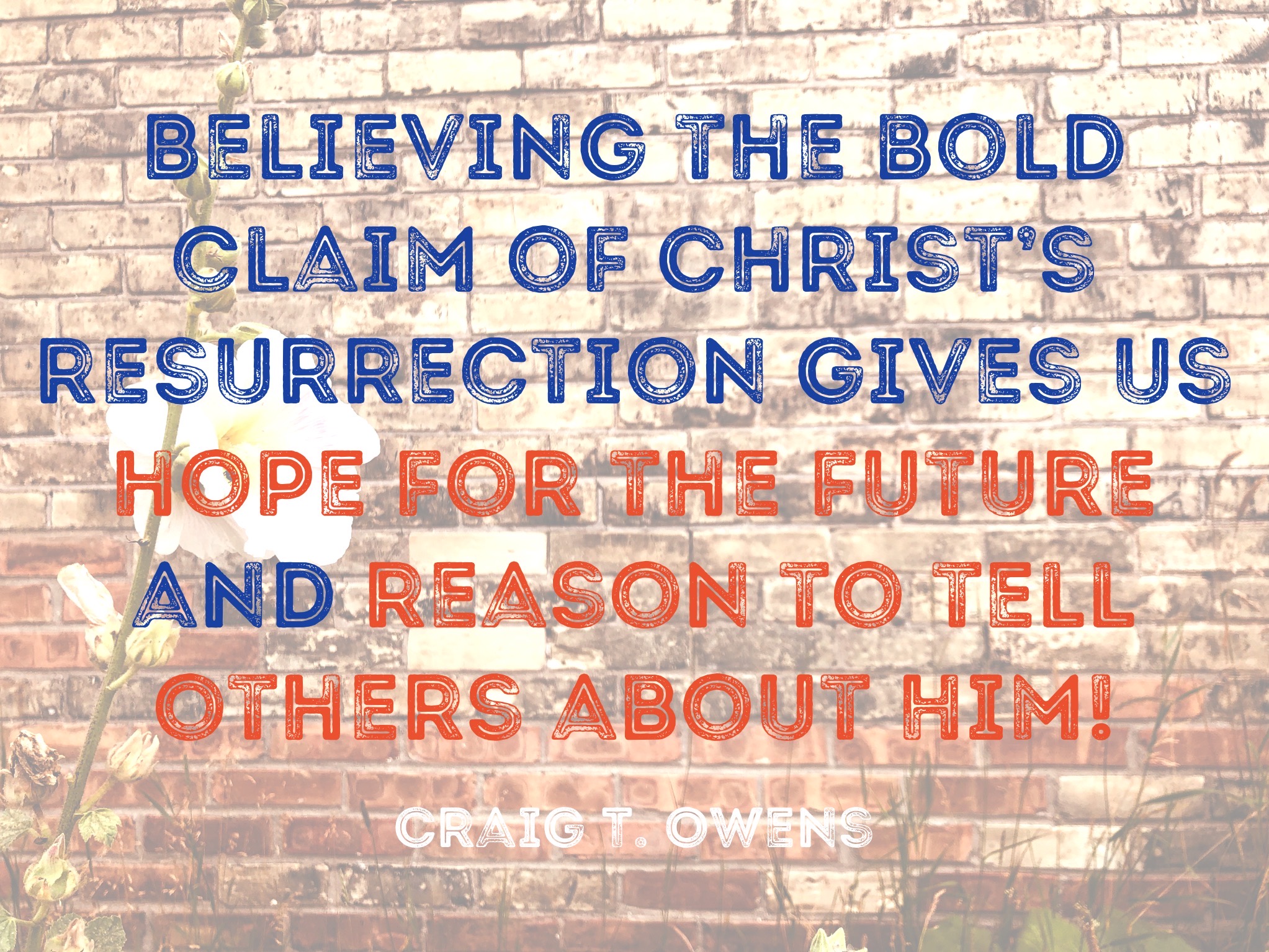
The bold claim that Jesus would be resurrected back to life is adequately backed up by the events on Resurrection Sunday! So now we can say that believing the bold claim of Christ’s resurrection gives us hope for the future and reason to tell others about Him! 

If you’ve missed any of the other bold claims that we have discussed, you can find them all by clicking here. 

►► Would you please prayerfully consider supporting this ministry? My Patreon supporters get behind-the-scenes access to exclusive materials. ◀︎◀︎

Highly Esteemed

Listen to the podcast of this post by clicking on the player below, and you can also subscribe on AppleSpotify, or Audible. 

“Highly esteemed” is how two different angels addressed Daniel (Daniel 9:23, 10:11). This was a title they obviously heard from God Himself. At both instances, Daniel was in a time of intense and sustained prayer and fasting. 

While I was speaking and praying, confessing my sin and the sin of my people Israel and making request to the Lord my God for His holy hill … Gabriel, the man I had seen in the earlier vision, came to me…. (Daniel 9:20-21) 

At that time I, Daniel, mourned for three weeks. I ate no choice food; no meat or wine touched my lips; and I used no lotions at all. (Daniel 10:2-3) 

Prayer was a regular habit for Daniel and prayer was also what Daniel turned to immediately in times of trouble (Daniel 2:18, 6:10). 

We see the same thing in the lives of two notable women in the New Testament. Elizabeth is described as an upright woman who observed all of God’s commandments blamelessly. She continuously prayed that she might get pregnant, and then Gabriel came to bring the good news of her upcoming pregnancy. Elizabeth responded by saying, “The Lord has done this for me.… He has shown me His favor” (see Luke 1:5-25). 

Mary was also a righteous woman who was steeped in Scripture (as we can see in her song of praise). When Gabriel appeared to her, he called her “highly favored” (see Luke 1:26-55). 

A righteous, prayer-filled lifestyle also brings favor and esteem with earthly kings. Daniel and his friends fasted and prayed, which led to King Nebuchadnezzar’s favor directed to them (Daniel 1:11-20, 2:48-49). After three days of prayer and fasting, Queen Esther found favor in the eyes of King Xerxes, which led to the salvation of all the Jewish people (Esther 4:15—5:3). And Nehemiah’s sustained prayer over four months won the favorable reply from King Artaxerxes (see Nehemiah 1:1—2:8). 

If you want to hear deep things from God, if you want to be called “highly esteemed” by the Most High, if you want to gain favor with earthly kings, you must be committed to the sustained work of prayer and righteous living. If you would like to dig into this deeper, check out 4 Thoughts To Help Prayer Become A Daily Habit.

►► Would you please prayerfully consider supporting this ministry? My Patreon supporters get behind-the-scenes access to exclusive materials. ◀︎◀︎

Solving The Unsolvable Dilemma

When Gabriel told Mary that she would be the mother of Jesus, he said that “the Lord God will give Him the throne of His father David.” Just before the angel showed up Luke noted that Mary was “pledged to be married to a man named Joseph, a descendant of David (Luke 1:27, 32).

At this time in history marriages were often arranged to preserve and strengthen family lines. Both Joseph and Mary could trace their family lineage through the royal line of Israel’s King David. 

Mary is betrothed to Joseph. Betrothal was considered as strong as a marriage with the only exception being that the couple didn’t yet live together nor sleep together. Betrothal usually lasted a year and would require a divorce to cancel it. 

Mary tells Joseph what Gabriel said to her and then she leaves to visit Elizabeth for the next three months! Joseph is left alone to consider his options. 

The word Luke uses for “consider” is not even close to what’s happening in Joseph’s mind. The word means to revolve around and around in your mind, like trying to solve a Rubik’s Cube. 

Consider Joseph’s options. If he divorces Mary—which was apparently his first reaction—Mary would be publicly embarrassed. Not to mention that Joseph knew that God hated divorce. 

If Joseph decided to proceed with the marriage, he would either have to confess he was the father of her child—which could result in both of them being stoned—or admit that she was pregnant by another man—which would be a permanent disgrace for Mary’s family. 

In either case, both families would be shamed! 

While Joseph was still considering all these unsavory options an angel says to him, “Joseph, son of David, do not be afraid.” By calling him by that title he is really saying, “I know how important your family heritage is to you. I know how important Mary’s family heritage is to her. But do not be afraid to take Mary home as your wife because this all fits into God’s plan. 

Would it have been easier on Joseph and Mary and their families if God could have waited until after they were married? Of course! But then it wouldn’t fit into God’s miraculous plan, because 700 years earlier God promised that Jesus would be born of an unmarried virgin. 

Fearing what’s coming in the future means we have forgotten Who already knows the future. 

God knows YOUR future too! It’s a future He already saw as good and fruitful, if you will put your trust in Him (Psalm 139:16; Jeremiah 29:11; John 15:16).

If you seem paralyzed by a no-win dilemma like Joseph was, first DON’T do what Joseph did: pray! Then DO what Joseph did after hearing the angel: obey. 

Remember Who knows you and Who knows your future, and then take each step on your journey as God directs you. 

If you’ve missed any of the other messages in our series called Do Not Be Afraid, you can access the full list by clicking here. 

Clinging To God’s Words

When it comes right down to it, faith and fear both hinge on our beliefs: Fear believes something bad; faith believes something good. Fear is an invitation for us to evaluate in who or in what we have placed our trust.  

According to the dictionary, fear is a distressing emotion we feel whether the threat is real or imagined. Five hundred years ago, Michel de Montaigne said, “My life has been filled with terrible misfortune; most of which never happened.” Even more recently, an extensive study found that 85 percent of things people feared never happened!

According to the dictionary, faith is trust in something even without proof or evidence. That sounds tremendously close to the biblical definition of faith: Now faith is the assurance—the confirmation, the title deed—of the things we hope for, being the proof of things we do not see and the conviction of their reality—faith perceiving as real fact what is not revealed to the senses. (Hebrews 11:1 AMP) 

Mary is the second person to whom an angel says “Do not be afraid” in the First Advent story. Consider her story alongside Zechariah’s story and especially notice when these words were spoken. The angel Gabriel first tells Mary, “Greetings, you who are highly favored! The Lord is with you.” 

Mary’s initial response is being “greatly troubled.” This Greek word means an internal agitation that today psychologists would call “cognitive dissonance.” In other words, what Mary believed about herself didn’t line up with what God believed about her. Her next response is wondering how she could ever measure up to God’s high standard of her. 

It’s at this point that Gabriel says those key words, “Do not be afraid, Mary, you have already found favor with God.” She didn’t have to make herself worthy of God’s favor because she already had it! Now Mary just had to believe it. 

Fear is overcome by clinging to God’s words instead of the world’s words. 

Mary did indeed choose this. Her song (in vv. 46-55) is loaded with Old Testament references, and she concludes by singing to God, “You have helped Your servant Israel, remembering to be merciful to Abraham and his descendants forever, even as You said to our fathers.” 

Here’s the truth—

  • Your Word, Lord, is eternal; it stands firm in the heavens. (Psalm 119:89) 
  • God is not human, that He should lie, not a human being, that He should change His mind. Does He speak and then not act? Does He promise and not fulfill? (Numbers 23:19) 
  • And Jesus would tell us that clinging to God’s words puts us on the surest of foundations that no storm of life could ever shake (Luke 6:46-49)! 

Clinging to God’s words lets us realize God’s grace toward us. 

If you know Jesus as your Savior, you can insert your name in the same place where Gabriel said to Mary: “Do not be afraid, ____________, you have found favor with God!” 

If you have missed any of the messages in our Advent series Do Not Be Afraid, you can access the full list by clicking here. 

Fear’s Invitation

Have you ever had a really good scare? Maybe in the dark or when you were young? Then in the light or as you got older you thought, “Why was I afraid of that?” Our relief came from the fact that we think we know more. But here’s the problem: there is a difference between a healthy fear and an unhealthy fear, so not every fear is something we should try to alleviate.

Sometimes we treat too lightly the things that are really quite powerful. Consider the arrival of Jesus in Bethlehem. There are more angels sent by God surrounding this one event than anywhere else in all the Bible. Yet all four angelic appearances have the same message: “Do not be afraid.” 

Why would people fear what we now celebrate as such a joyous event? I think it’s because God Himself—the All-Holy Creator of the Universe—is coming near to sinful man (see John 1:9; 1 Timothy 6:15-16). 

God is holy, and His holiness is unapproachable by sin. At the exact same moment, God is love, and His love desires for us to approach Him. We cannot make this happen on our own, which leads to more fear. 

Thankfully for us, God Himself has provided the way for sinful man to approach His awesome, unapproachable holiness!  

In the Greek language of the New Testament phobeō is the main word for “fear.” This word can be defined as either fleeing from a terrible thing or clinging in obedience to an awesomely reverent thing. Jesus said the same things when He told us, “I tell you, my friends, do not be afraid of those who kill the body and after that can do no more. But I will show you whom you should fear: Fear Him who, after your body has been killed, has authority to throw you into hell. Yes, I tell you, fear Him” (Luke 12:4-5). 

In the Advent story, the first appearance of “Do not be afraid” is when an angel appears to Zechariah. Why would Zechariah be so afraid at the approach of God? I think there may have been three reasons: 

  • Herod was king—making the society Zechariah lived in politicized and irreligious 
  • Zechariah was without a priestly heir to carry on his family name 
  • his wife Elizabeth may have sinned—at least that’s what people would have whispered about her barrenness 

All of this added up to Zechariah feeling like God was displeased with them and that He was only coming close to bring fiery judgment. 

The angel told Zechariah not to fear because “your prayer has been heard.” In other words, “I am inviting you to trust in what God HAS already done versus trusting in what you might or might not be able to do on your own.” Phobeō was an invitation to choose reverential obedience (holy fear) of the eternal over the terror of the temporal. 

Sadly, Zechariah initially clung to the negative phobeō. Yet after Elizabeth did conceive and John was born, this was transformed into holy, reverential fear, as heard in the Spirit-inspired song he sang. Notice in Luke 1:67-75 Zechariah’s emphasis on all that God has done: He has come, He has redeemed, He has raised, He said, He has kept His covenant, He has rescued, He has enabled.  

Have you put yourself in the category of “unworthy of God’s favor”? Has fear crippled you—like it had done with Zechariah—from continuing to pray, believe, and try? 

Fear is an invitation to evaluate in who or in what I have placed my trust.

I invite you to accept the invitation to take your eyes off the temporary and put them on the Eternal One. “…The time is coming quickly, and what I show you will come true. It may seem slow in coming, but wait for it; it will certainly take place, and it will not be delayed. (Habakkuk 2:3 GNT) 

Check out the other messages in this Do Not Be Afraid series by clicking here. 

“Do Not Be Afraid”

There are more angels sent by God concerning one event than anywhere else in the Bible—the Advent of Jesus. Clearly, this is a big deal: The coming to earth of God Himself! 

You would think this would be an occasion for great joy. But all four of the angelic appearances around the birth of Jesus have the same message: Do not be afraid. 

Why are people so afraid? It’s because fear invites us to make a decision to trust God completely. People remain crippled by fear when they try to deal with fear by themselves. But when they learn to fear God instead, there is an almost inexpressible joy and freedom that explodes in our hearts! 

Join us for this Advent series where we will explore why this “Do not fear” message is still relevant for us today. Please join us either in-person or on Facebook. 

If you have missed any of the messages in this series, check them out here:

Thursdays With Spurgeon—A Christian’s Waiting Activity

This is a weekly series with things I’m reading and pondering from Charles Spurgeon. You can read the original seed thought here, or type “Thursdays With Spurgeon” in the search box to read more entries.

A Christian’s Waiting Activity

They were looking intently up into the sky as He [Jesus] was going, when suddenly two men dressed in white stood beside them. “Men of Galilee,” they said, “why do you stand here looking into the sky? This same Jesus, who has been taken from you into heaven, will come back in the same way you have seen Him go into heaven.” (Acts 1:10-11)

     Despisers tell us nowadays, ‘Your cause is done for! Christianity is spun out! Your divine Christ is gone! We have not seen a trace of His miracle-working hands, nor of that voice that no man could rival.’ Here is our answer: We are not standing gazing up into heaven. We are not paralyzed because Jesus is away. He lives, the great Redeemer lives, and though it is our delight to lift up our eyes because we expect His coming, it is equally our delight to turn our heavenly gazing into an earthward watching and to go down into the city and there to tell that Jesus is risen, that men are to be saved by faith in Him, and that whoever believes in Him will have everlasting life! We are not defeated! Far from it—His ascension is not a retreat, but an advance! His tarrying is not for lack of power, but because of the abundance of His long-suffering. …  

     It is clear that He has not quit the fight nor deserted the field of battle. Our great Captain is still heading the conflict! He has ridden into another part of the field, but He will be back again, perhaps in the twinkling of an eye [Revelation 22:12; Matthew 25:21]. … 

     Brothers and sisters, do not let anybody spiritualize away all this from you! Jesus is coming as a matter of fact—therefore go down to your sphere of service as a matter of fact. Get to work and teach the ignorant, win the wayward, instruct the children, and everywhere proclaim the sweet name of Jesus! … Jesus is not coming in a sort of mythical, misty, hazy way. He is literally and actually coming—and He will literally and actually call upon you to give an account of your stewardship. Therefore now, today, literally not symbolically, personally and not by deputy, go out through that portion of the world that you can reach and preach the gospel to every creature according as you have opportunity, for this is what the men in white apparel meant—be ready to meet your coming Lord. … 

     If you would meet Him with joy, serve Him with earnestness! 

From The Ascension And The Second Advent Practically Considered

Jesus was about His Father’s business the whole time He was on earth. As He ascended to heaven, He promised us His authority and the empowerment of the Holy Spirit so we too could be about our Father’s business. 

In one of His parables about stewarding our Master’s gifts and resources until He returned, Jesus said, “Occupy until I return” (Luke 19:13). I love Spurgeon’s remind: “If you would meet Him with joy, serve Him with earnestness!” 

Yes, we are waiting for Jesus to return, but our waiting is an active waiting. With one eye toward the heavens and one eye toward earth, we actively tell others about our soon returning King. Occupy! Stay active! Stay alert! Meet Him with joy!