Mighty Deliverer

Listen to the podcast of this post by clicking on the player below, and you can also subscribe on AppleSpotify, or Audible. 

The world can marshal its weapons of war. They may gain a temporary victory. They may build strongholds, and cast spells, and appear to be the unquestioned ruler. But God always gets the final word, the decisive word, and the best word! 

Don’t despair in the middle of the Story! All of History is His Story. No matter how dark it seems, we are assured of God’s victorious outcome! 

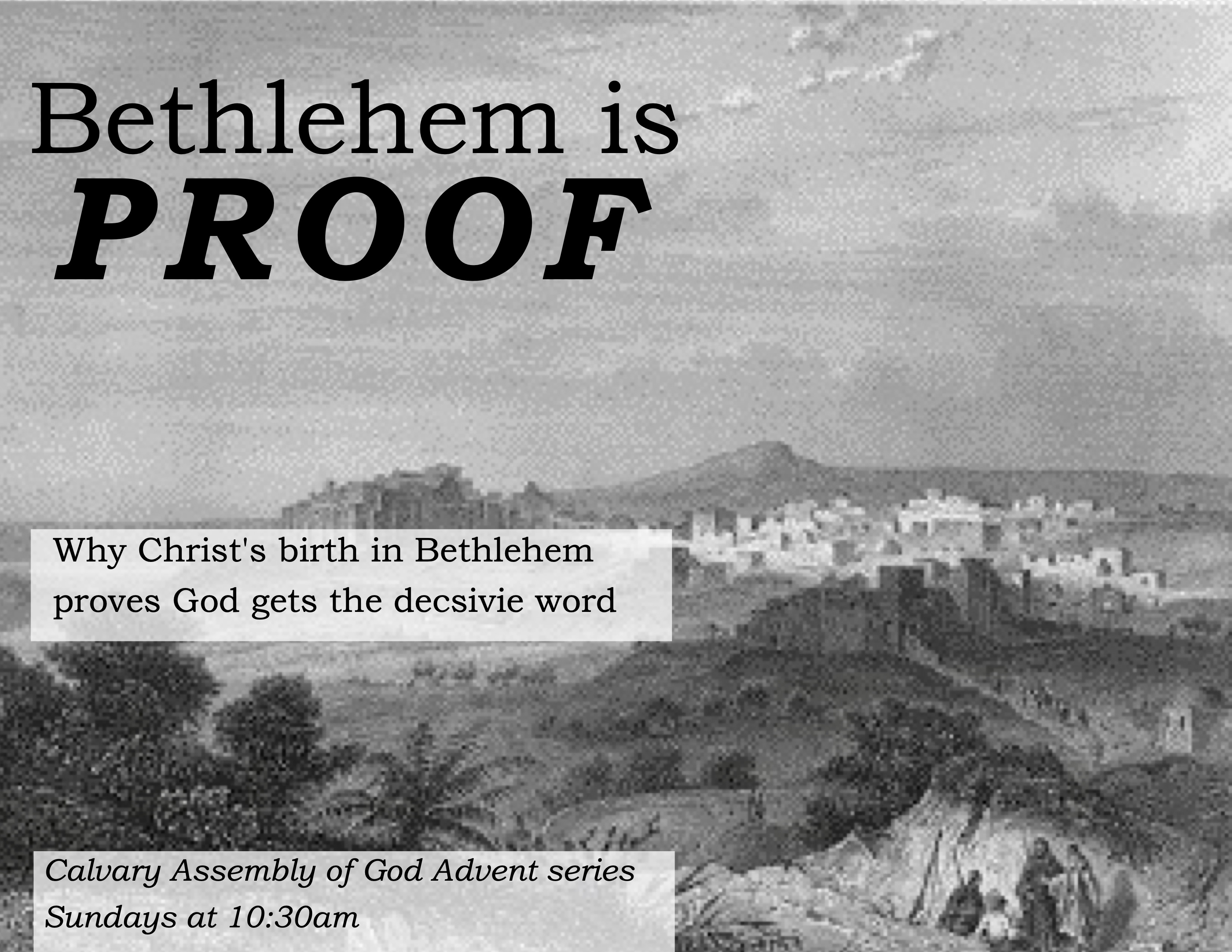
Bethlehem is our proof:

  • 700 years before it happened, Bethlehem is named as the birthplace of Jesus (Micah 5:2; Luke 2:1-7) 
  • 700 years before Jesus was born in Bethlehem, His titles were given and then fulfilled in the way that Jesus lived (see for example Isaiah 9:6 and Hebrews 13:20) 

Sometimes God has to let the darkness fall so heavy so that it seems hopeless. In fact, in human power alone it is hopeless and impossible. So God foretells His victory—

“Listen to this, you descendants of Jacob, you who are called by the name of Israel and come from the line of Judah, you who take oaths in the name of the Lord and invoke the God of Israel—but not in truth or righteousness—you who call yourselves citizens of the holy city and claim to rely on the God of Israel—the Lord Almighty is His name: I foretold the former things long ago, My mouth announced them and I made them known; then suddenly I acted, and they came to pass. … Therefore I told you these things long ago; before they happened I announced them to you so that you could not say, ‘My images brought them about; my wooden image and metal god ordained them.’” (Isaiah 48:1-5) 

We have seen how Micah prophesied our Messiah coming as the Great Shepherd and as the Prince of Peace, but He also comes as our Mighty Deliverer (Micah 5:1-6). He comes at an incredibly dark time that is described like this: “He will rescue us from the Assyrians when they pour over the borders to invade our land” (Micah 5:6 NLT). 

Darkness may appear to have a stranglehold even now in our time. One of the verses in the New Testament that pretty accurately sums up a Christ-less culture says, “The god of this world has blinded the unbelievers’ minds that they should not discern the truth, preventing them from seeing the illuminating light of the Gospel of the glory of Christ” (2 Corinthians 4:4 AMP) . 

But this is only temporary darkness. When the mob came to arrest Jesus, He said, “This is your hour—when darkness reigns” (Luke 22:53). Darkness only gets an hour, but the Light of God shines for all of eternity! 

One of my favorite Advent texts is found in Hebrews 2:14-15:

Since the children have flesh and blood, [Jesus] too shared in their humanity so that by His death He might destroy him who holds the power of death—that is, the devil—and free those who all their lives were held in slavery by their fear of death. 

Our Mighty Deliverer came to destroy satan’s power and free those held hopelessly in darkness. The word “destroy” is a powerful, all-encompassing word. Imagine a tyrannical ruler who sent one of his strongest police officers with an arrest warrant, who then grabbed onto you and subdued you with his vice-like grip. 

Only someone stronger than that officer can release you from that grip. That’s what Jesus did when He destroyed satan’s ironclad grip on your soul. Paul asks mockingly, “Where, O death, is your victory? Where, O death, is your sting? The sting of death is sin, and the power of sin is the law. But thanks be to God! He gives us the victory through our Lord Jesus Christ!” (1 Corinthians 15:55-57)

Now you may be free of the grip of that officer, but the arrest warrant still remains—you are still subject to the penalty. But that word “destroy” also means that the charges against you have been set aside so that there is no penalty outstanding against you. The apostle Paul again addressed this when he wrote, “For we know that our old self was crucified with [Jesus] so that the body ruled by sin might be done away with, that we should no longer be slaves to sin. … Who will bring any charge against those whom God has chosen? It is God who justifies” (Romans 6:6, 8:33). 

You are now set completely and irrevocably free! “But it has now been revealed through the appearing of our Savior, Christ Jesus, who has destroyed death and has brought life and immortality to light through the gospel” (2 Timothy 1:10). 

The Messiah—our Mighty Deliverer—destroys darkness and delivers those who believe in Him! 

No matter how hopeless it may seem, the Mighty Deliverer always prevails! Jesus has destroyed every enemy that has opposed God’s people! Jesus our Champion shines a light so brightly that nothing in satan’s arsenal can ever diminish it. 

The Light shines in the darkness, and the darkness can never extinguish it (John 1:5 NLT). 

So allow me to repeat: Don’t despair in the middle of the Story! All of History is His Story. No matter how dark it seems, Bethlehem is our proof that Jesus has destroyed our enemy and removed from him all grounds for charging us with sin. Bethlehem is our proof that we can live assured of God’s victorious outcome! 

What a great Christmas gift that truly is! 

If you’ve missed any of the messages in this Advent series, you can find a list of all of those messages by clicking here. 

►► Would you please prayerfully consider supporting this ministry? My Patreon supporters get behind-the-scenes access to exclusive materials. ◀︎◀︎

The Prince Of Peace

Listen to the podcast of this post by clicking on the player below, and you can also subscribe on AppleSpotify, or Audible. 

Last week we saw the dark times in which Micah lived as he prophesied the advent of the Messiah. Israel was both surrounded by enemies as well as lots of practices within their borders that were heartbreaking to God. Many times, our lives can feel the same way: enemies of God all around us and our own turmoil and doubts inside our hearts and minds.      

In this dark, hopeless time, the Messiah came as our Great Shepherd. Take a look at what this Shepherd brings us:

He will stand and shepherd His flock in the strength of the Lord, in the majesty of the name of the Lord His God. And they will live securely, for then His greatness will reach to the ends of the Earth. And He will be their peace. (Micah 5:4-5)

We see this idea of Jesus our Great Shepherd bringing peace to our hearts in the New Testament as well: 

May the God of peace, who through the blood of the eternal covenant brought back from the dead our Lord Jesus, that Great Shepherd of the sheep, equip you with everything good for doing His will, and may He work in us what is pleasing to Him, through Jesus Christ, to Whom be glory for ever and ever. Amen. (Hebrews 13:20-21) 

This peace is also implied in Psalm 23:1 when David wrote, “The Lord is my Shepherd, I shall not be in want.” That phrase “I shall not be in want” really captures the definition of peace. 

The Hebrew word for peace is shalom. An easy-to-remember definition of shalom is “nothing lost, nothing missing.” Our Great Shepherd makes sure nothing is lost or missing that would cause us anxiety or doubt, so we can have total peace—we can have shalom!

Jesus said the devil’s agenda was for everything to be lost or missing—“the thief comes only to steal and kill and destroy”—but our Great Shepherd’s agenda is for there to be nothing lost or missing—“I have come that they may have life, and have it to the full” (John 10:10). 

Isaiah, who was prophesying at the same time as Micah, sounded a similar note:

Therefore the Lord Himself will give you a sign: The virgin will conceive and give birth to a Son, and will call Him Immanuel. … And He will be called Wonderful Counselor, Mighty God, Everlasting Father, Prince of Peace. (Isaiah 7:14, 9:6) 

When this Great Shepherd was born in Bethlehem, the shepherds in the field were the first to hear the good news. Notice what the angels announced: “Glory to God in the highest heaven, and on earth peace to those on whom His favor rests” (Luke 2:14). 

Who has God’s favor? Those with faith in Him: “Without faith it is impossible to please God” (Hebrews 11:6). So those with faith in God have God’s favor. 

Faith in what? In all that Jesus purchased for us by His blood shed on the Cross: “Therefore, since we have been justified through faith, we have peace with God through our Lord Jesus Christ” (Romans 5:1). 

Check this out: The root word of shalom is a word that means, “It is finished.” These are the exact same words our Price of Peace announced from the Cross! Jesus finished the work that brings us peace from the turmoil and anxiety of sin! 

Faith comes from believing that God has made the promise of peace, that God has fulfilled the promise of peace through Jesus, and that God is bringing us to His eternal peace. So now our lives of peace in a world of turmoil can serve as a testimony to others. 

Jesus called His followers to be peacemakers (Matthew 5:9) but we cannot do this while we are experiencing anxiety or doubts. To be peacemakers we must be full of peace because of our relationship with the Prince of Peace, who has ensured that nothing is lost and nothing is missing! 

If you feel anxious, remember that Bethlehem is your proof that the Prince of Peace has come to remove doubts, anxiety, fear, and inner turmoil. Let every pang of anxiety be immediately a call to run to the Prince of Peace. He has paid an incalculable price to purchase your peace, so don’t leave this gift unopened and unused. A dark, anxious world is looking for peace. Know the author of shalom so that you can introduce others to this Prince of Peace. 

If you’ve missed any of the message in this series, please check them out by clicking here. 

►► Would you please prayerfully consider supporting this ministry? My Patreon supporters get behind-the-scenes access to exclusive materials. ◀︎◀︎

The Christmas Carols

During the Advent seasons of 2014-2019, I shared a series of messages called The Carols Of Christmas. I was concerned at how many “old familiar carols” we hear so often Christmas after Christmas until the words have almost lost their meaning. If we’re not careful, any song repeated too often can lose the richness of its original intent. And so we went on a journey to (re)discover the beautiful Advent messages in these old familiar carols.

To make it a little more convenient, I wanted to group all of the messages here for you. In the list below you will find both the title I gave to my message and the title of the Christmas carol in italics.

The Great Shepherd

Listen to the podcast of this post by clicking on the player below, and you can also subscribe on AppleSpotify, or Audible. 

God delights to show up when the situation seems hopeless from any human standpoint. When He does what no one else can do, He alone is glorified!

A very notable dark time took place in Israel about 700 BC as the nation was surrounded by enemies. Micah prophesied the arrival of the Messiah. But he also prophesied that before He came, there would be dark days. He talks about the siege of enemies surrounding them, Israel’s ruler being stuck on the cheek with a rod, not to mention the strongholds, witchcraft, and idolatry that plagued the nation within its own borders (Micah 5:1, 11-13). 

But whenever it seems darkest, God is not the least diminished! He always gets the final word, the decisive word, the best word. 

So into this inky darkness, Micah prophesies a ray of light—“But you, Bethlehem Ephrathah, though you are small among the clans of Judah, out of you will come for Me One who will be Ruler over Israel, whose origins are from of old, from ancient times” (Micah 5:2). 

I’m sure many people thought that Bethlehem was too small of a village for anyone of significance to be born there.

The Last Battle is the final book in C.S. Lewis’ Narnia series. This story also portrays a similar dark time. Shift the ape has convinced Puzzle the donkey to wear an ill-fitting lion skin to pretend to be the great king Aslan. Through tricks, sleight of hand, deception, and the plans of some evil schemers, many of the Narnians come to believe that Puzzle is Aslan. But it’s confusing because this “Aslan” is not the kind, strong king they believed in, so many begin to just look out for themselves. 

In a fitting setting, Puzzle is being hidden inside an old stable. A great battle takes place with the true Narnians ending up inside the stable, and yet once inside they discover not a dark stable, but a sunlit land spreading farther than their eyes can see. Lord Digory observes, “Its inside is bigger than its outside.”  

But I love this line from Queen Lucy, “In our world too a stable once had something inside it that was bigger than our whole world.” 

Inside that Bethlehem stable was born the Great Shepherd! Who was inside that stable and what He would accomplish became so much grander and more beautiful than any human had ever imagined! 

Jesus is our Great Shepherd—He will stand and shepherd His flock in the strength of the Lord, in the majesty of the name of the Lord His God. And they will live securely, for then His greatness will reach to the ends of the earth (Micah 5:4). 

Jesus is strong, majestic, and great (John 10:10-15). 

Jesus equips us to be victorious (Hebrews 13:20-21). 

Jesus walks with us every step of the way (Psalm 23:1-6). 

And Jesus takes us Home to be with Him forever (1 Peter 5:4). 

(Check out all of these passages by clicking here.) 

Our faith is not rooted in some mysterious thing with an uncertain history. It is a faith rooted in real historical events. The Great Shepherd being born in the town that was prophesied 700 years beforehand is one more proof that God is in control, that God loves you, and that God always gets the final word, the decisive word, the best word! 

If you’ve missed any of the messages in our Advent series Bethlehem Is Proof, you find the full list by clicking here. 

►► Would you please prayerfully consider supporting this ministry? My Patreon supporters get behind-the-scenes access to exclusive materials. ◀︎◀︎

Bethlehem Is Proof

The prophet Micah foretells that the Messiah will arrive in dark times. Enemies will surround Israel, and Israel’s ruler will receive a nasty punch to the jaw. Demonic strongholds, witchcraft, and idolatry will appear to be gaining the upper hand. 

And then Micah turns his attention to a small village just south of Jerusalem—a village so small that it is often overlooked—a village from which no one would expect Israel’s Deliverer. 

And yet, Micah writes, “But you, Bethlehem Ephrathah, though you are small among the clans of Judah, out of you will come for Me One who will be Ruler over Israel, Whose origins are from of old, from ancient times” (Micah 5:2). 

Jesus the Deliverer was born in the little town of Bethlehem, and His birth there 700 years after Micah foretold it is our proof that God always gets the last word, the decisive word, and the best word! 

Please join me this Sunday for our Advent series Bethlehem Is Proof! I would love to have you join me in person, but you can also watch the sermons on Facebook or YouTube.

If you’ve missed any of the messages in this series, check them out here:

Year-End Review (2021 Edition)

I have the privilege of pastoring Calvary Assembly of God. One of the things I am honored to do is share a message from God’s Word with our church each week. And nor just teaching, but reminding folks of whatwe have learned too. The apostles Peter and Paul both saw the value in this as well.

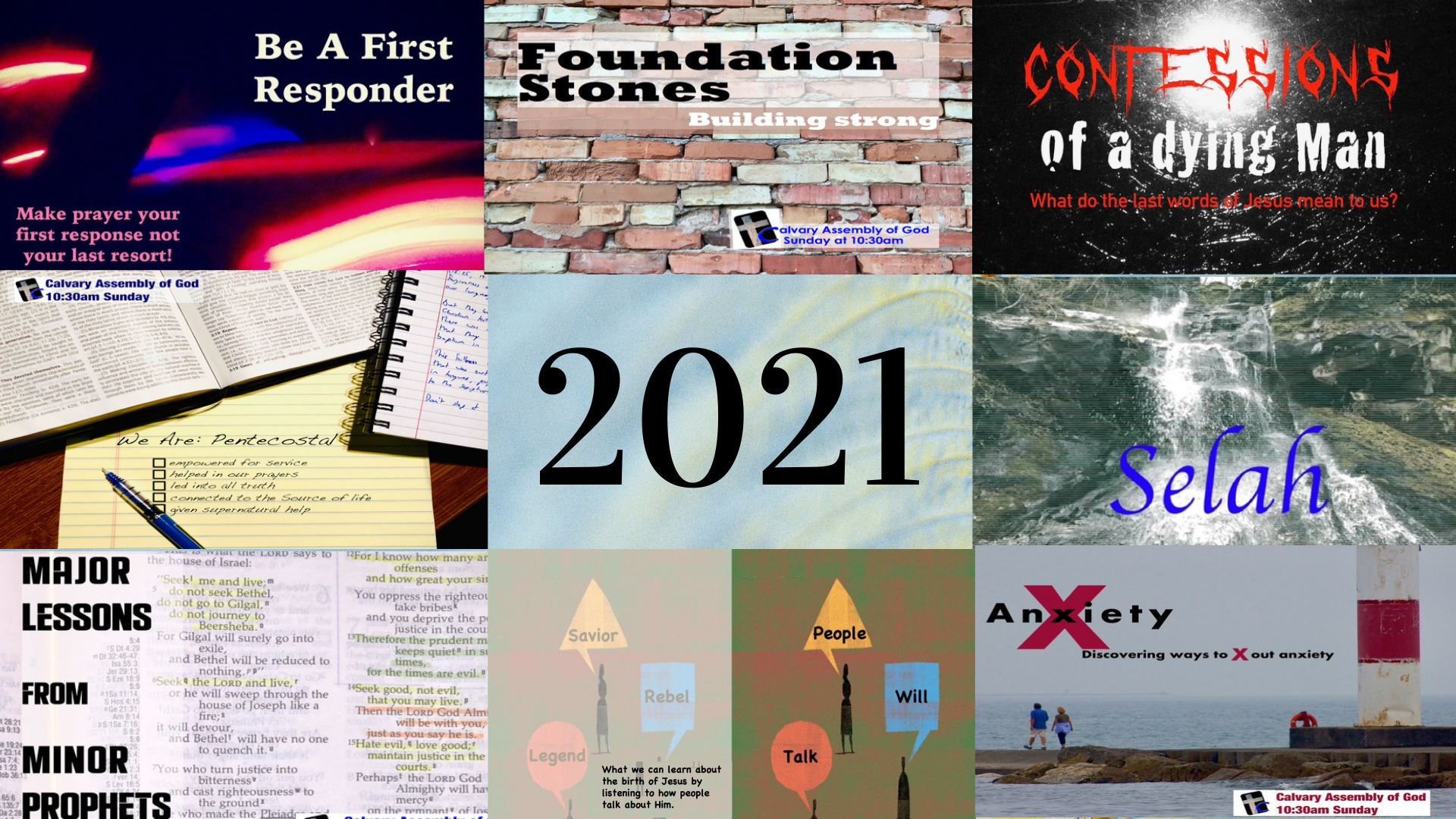
So here are all of the sermon series that I shared in 2021. Clicking on each series title will take you to a list of all of the sermons in that series. 
Foundation Stones—Any architect will tell you: You can’t build a great building on a weak foundation. This is just as true in the spiritual realm, which is why John Calvin warned, “Those who are strong only in fervor and sharpness, but are not fortified with solid doctrine, weary themselves in their vigorous efforts, make a great noise…[and] make no headway because they build without foundation.” We have had on the Calvary website since Day 1 a link to “What we believe,” but more than just having them listed there, it is important to discuss them.

Be A First Responder—There is a line in an old hymn that convicts me every time I sing it: “Oh, what peace we often forfeit; Oh, what needless pain we bear all because we do not carry everything to God in prayer.” Why are we so slow to drop to our knees in prayer when trouble strikes? It seems we fool ourselves into thinking the problem is small enough to handle on our own, or we think God isn’t concerned with something that may seem trivial, or we’ve been-here-done-this before and know the way to go. But this isn’t what our Heavenly Father desires; instead, He wants us to come to Him before we try anything else. Instead of making prayer our last resort, why don’t we strive to make it our first response!

Confessions Of A Dying Man—In our justice system, rarely will a judge allow hearsay testimony to be introduced in court. But there is one notable exception: a dying declaration. A dying declaration is the statement of a mortally injured person who is aware he or she is about to die. This statement is admissible testimony in court on the theory that a dying person has no reason not to tell the truth. Jesus was nailed to a Cross. Mortally injured, unable to escape, He had no reason to lie. In His dying moments, struggling to get enough air in His lungs to be able to speak, Jesus choked out seven statements that still have a profound impact on us today.

We Are: Pentecostal—Pentecost for over 1500 years was a celebration in Jerusalem that brought in Jews from all over the world. But on the Day of Pentecost that came just ten days after Jesus ascended back into heaven, the meaning of Pentecost was forever changed! Followers of Jesus—now empowered by an infilling of the Holy Spirit—began to take the good news of Jesus all over the world. These Spirit-filled Christians preached the Gospel and won converts to Christ even among hostile crowds, performed miracles and wonders, stood up to pagan priests and persecuting governmental leaders, and established a whole new way of living as Christ-followers. We, too, can be Pentecostal followers of Jesus Christ today. 

Selah—The word Selah appears nearly 70 times in the Bible, almost exclusively in the Psalms. Although it is primarily a musical term, it applies beautifully to our summer series. It means a pause. Throughout the Psalms, Selah appears at the end of a verse, at the end of the psalm, or sometimes even mid-sentence. But each one of them is perfectly placed by the Spirit-inspired authors to get us to take a breath and deeply contemplate what we just read or sang. 
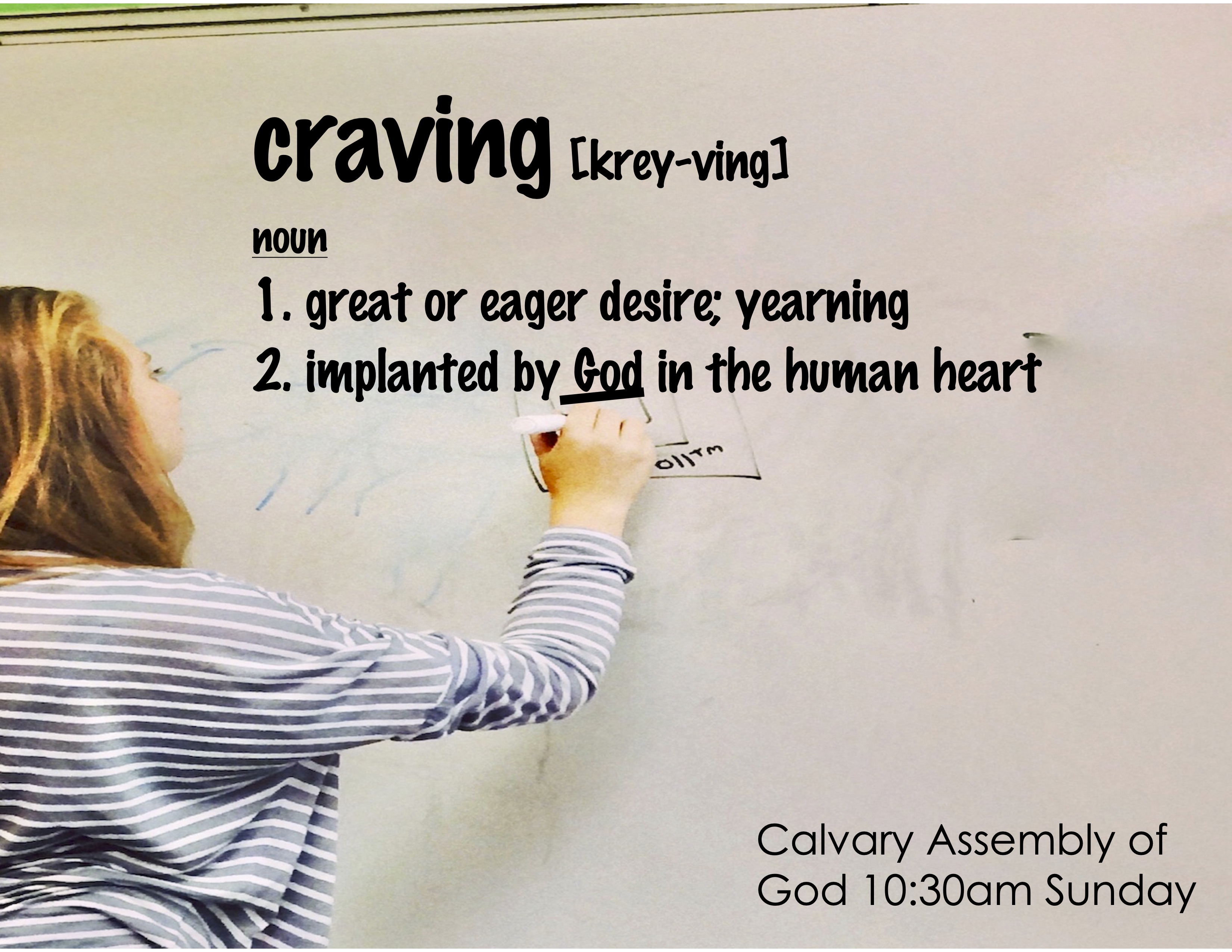
Major Lessons From Minor Prophets—Sometimes the naming of things gives us an inaccurate picture of the thing being named. For instance, many people think the “old” in Old Testament means outdated or perhaps updated by the “new” in the New Testament. When in fact, both Testaments are needed to give us the full picture of God’s love and glory. A similar thing happens with the headings “major prophets” and “minor prophets.” It makes it sound like the major prophets have something major to say to us, while we could take or leave the minor messages of the minor prophets. In reality, they were given these headings simply because of the volume of writing—the five major prophets consist of 182 chapters, whereas the 12 minor prophets only have 67 chapters. The volume of their writing may be minor, but their content carries major messages of meteoric power! 

X-ing Out Anxiety—Two brothers—one a doctor and one a pastor—addressed the prevalence of anxiety in our culture. They wrote, “A recent survey of primary care physicians in the United States revealed that at least one-third of office visits were prompted by some form of anxiety.” Anxiety can negatively impact our relationships, our ability to think creatively, our physical health, and even our relationship with God. Thankfully, one of the titles given to Jesus is The Prince of Peace. Join us for this freeing series called X-ing Out Anxiety, where we will be learning what God’s Word says about getting free from the anxiety that is robbing us of life, and replacing that anxiety with His peace.

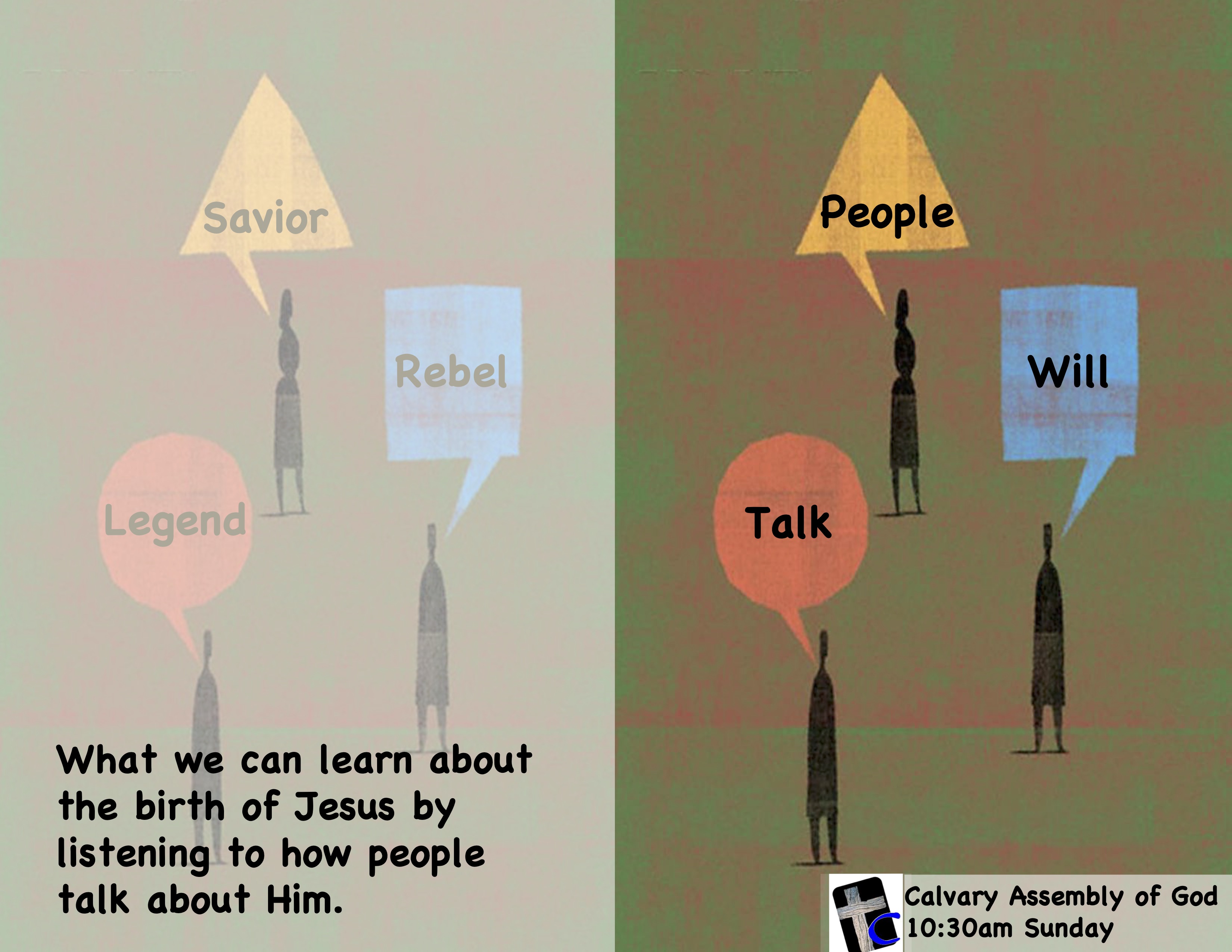
People Will Talk—Sometimes celebrities and other people in the public spotlight will hire a publicist to help promote their cause, build their brand, or present them in the best possible light. If you wanted to stretch the terms, you could say that some of the Old Testament prophets and the New Testament disciples could have been viewed as the “publicists” for Jesus. At least, that’s what critics might point to. But despite the best efforts and high salaries of publicists—both ancient and modern—they cannot control the “word on the street.” What people are actually saying about the one in the spotlight is usually the best evidence of who that person truly is. As we celebrate this Advent season, we are going to look at what the people on the street were saying about Jesus at the time of His birth. Before He ever performed a miracle or presented a parable—before any of His “publicists” could try to make Him look good—people were already talking. And what they said about Him is truly enlightening.

We will be returning to a couple of these series in 2022, and we’ll be launching some brand new ones as well. In either case, if you don’t have a home church in the northern Kent County area, I would love to have you join us! 

Graceful Christians

Listen to the podcast of this post by clicking on the player below, and you can also subscribe on AppleSpotify, or Audible. 

Our Advent series this year has been called “People Will Talk,” but we have one more person to learn from who says nothing. We have none of her words inside quotation marks, and yet Luke was inspired by the Holy Spirit to share her story with us. Her wordless message speaks volumes, if we’re willing to listen. 

Anna, like Simeon, was one of the “Quiet in the Land.” Luke describes her as “very old.” The Greek phrase can either mean that she was a widow for 84 years after seven years of marriage, or simply that she was 84 years old. In either case, we don’t see her sitting withdrawn and inactive because of her old age, but we see her taking the initiative. She is the one who comes up to Joseph, Mary, and Jesus. 

Luke also calls her a “prophetess.” Not someone bitter about her widowhood, but someone who truthfully and lovingly spoke God’s Words. Throughout the Bible, we see that a prophet or prophetess is less foretelling the future than they are forth-telling the promises of God. Of course the “-ess” at then end of “prophet” reminds us that Anna is a woman. As a woman she was excluded from certain parts of the temple, but instead of picketing or making a scene Luke says she spends her time worshipping, fasting, praying, and waiting for the fulfillment of God’s promised Messiah.

I imagine that her mere presence must have changed the atmosphere wherever she went! 

I’m not sure if Charles Dickens had Anna in mind when he wrote A Christmas Carol, but the way the Ghost of Christmas Present added his blessing to busy people is what I imagine Anna’s role being in the temple—

“But soon the steeples called good people all, to church and chapel, and away they came, flocking through the streets in their best clothes, and with their gayest faces. And at the same time there emerged from scores of bye-streets, lanes, and nameless turnings, innumerable people, carrying their dinners to the bakers’ shops. The sight of these poor revelers appeared to interest the Spirit very much, for he stood with Scrooge beside him in a baker’s doorway, and taking off the covers as their bearers passed, sprinkled incense on their dinners from his torch. And it was a very uncommon kind of torch, for once or twice when there were angry words between some dinner-carriers who had jostled each other, he shed a few drops of water on them from it, and their good humor was restored directly. For they said, it was a shame to quarrel upon Christmas Day. And so it was! God love it, so it was!” 

Both Anna in the New Testament and Hannah in the Old Testament mean graceful. Or as I like to remember that word: someone full of grace. When she approaches Joseph, Mary, and Jesus, Luke says she “gave thanks.” This comes from a unique Greek word in the New Testament. The root word is usually translated confession, which means saying the same words as others. But the prefix Luke adds means “in place of.” This means that Anna was speaking thankful words in place of the other words being spoken around her. 

Anna spoke counter-culturally. Instead of being a cultural thermometer, she was serving as a thermostat to change the culture around her. This is the same kind of lifestyle that Jesus calls us to live. And it’s a lifestyle that Paul sums up in one succinct verse: “Let your gentleness [or we could say ‘grace-fullness’] be evident to all. The Lord is near” (Philippians 4:5). 

After Ebenezer Scrooge’s encounter with the three spirits, his life was transformed—

“Scrooge was better than his word. He did it all, and infinitely more.… He became as good a friend, as good a master, and as good a man, as the good old city knew, or any other good old city, town, or borough, in the good old world. 

“Some people laughed to see the alteration in him, but he let them laugh, and little heeded them; for he was wise enough to know that nothing ever happened on this globe, for good, at which some people did not have their fill of laughter in the outset; and knowing that such as these would be blind anyway, he thought it quite as well that they should wrinkle up their eyes in grins, as have the malady in less attractive forms. His own heart laughed: and that was quite enough for him. 

“…And it was always said of him, that he knew how to keep Christmas well, if any man alive possessed the knowledge. May that be truly said of us, and all of us! And so, as Tiny Tim observed, God bless Us, Every One!” 

As Christians, may both our actions and our reactions be so grace-filled, and may our gentleness be so evident to everyone all year long, and may we live so counter-culturally that people cannot help but see that we are grace-filled by the Spirit of Jesus Christ! 

If you’ve missed any of the messages in this Advent series, you can find the full list of messages by clicking here. 

►► Would you please prayerfully consider supporting this ministry? ◀︎◀︎

The End Of Our Struggle

Listen to the podcast of this post by clicking on the player below, and you can also subscribe on AppleSpotify, or Audible. 

Christmas time finds me sampling a whole lot of delicious treats, and I’m not complaining at all! But I’m a pretty simple guy, so one of my favorite treats is just plain old peanut butter. I love it! Sometimes I stick my spoon right in the jar and eat a big spoonful. 

But then there’s the age-old problem: How do you get peanut butter off the roof of your mouth? You can use your tongue or try blowing on it. Or you can use your finger! 

But then there’s another problem: How do you get peanut butter off your finger? Blow it? Shake it? Or eat it! 

Hmm, now I seem to be back to the original problem: How do you get peanut butter off the roof of your mouth? 

Maybe you’ve tried to solve one problem, only to create another problem. And then when you solve that problem you find yourself right back where you started! Round and round it goes! 

The Israelites were facing much the same situation. They sinned, God punished them through King Nebuchadnezzar, they tried to rebel, they were taken into captivity, and then they were finally allowed to return to Jerusalem after 70 years. But they still weren’t in charge of their own fate. First it was the Babylonians calling the shots, then the Medians, then the Persians, and then the Romans. Luke begins the birth story of Jesus with the words “in the days of Caesar Augustus” (Luke 2:1). 

The Israelites were waiting for God to restore their Promised Land to them. Some people believed a miraculous champion was going to come on the scene (much like Samson of old), and some thought a new anointed king from King David’s line would appear and rally an army to himself. 

We can understand this because of one of the prophecies from Isaiah 9 that talks about a warrior and God’s zeal. 

That word “warrior” got people pumped up! As did the promise that “the zeal of the LORD Almighty will accomplish this”! For many, this was their proof that God wanted His people to rule this Promised Land for themselves 

We’ve been going through a series called People Will Talk, and these voices of a miraculous champion or a new king from David’s line were loud voices to be sure. But interestingly, the Bible doesn’t record much of what these loud voices were saying. 

Also among the people of this time there was another group that were called “the Quiet in the Land.” These were people who didn’t talk very much, but instead they clung to the promise spoken by God Himself of the Messiah. One of these quiet ones was a man named Simeon.

He was called “righteous and devout” and someone “waiting for the consolation of Israel.” Which meant he carefully attended to the prophecies of Scripture. The Amplified Bible says that Simeon “lived in prayerful expectancy [of] the Lord’s Christ. 

I left out an important part of that prophecy in Isaiah 9—something that I think the loud ones overlooked or downplayed too. In between those words about “warrior” and “God’s zeal” we read this: “For to us a Child is born, to us a Son is given. The government will be upon His shoulders. And He will be called Wonderful Counselor, Mighty God, Everlasting Father, Prince of Peace” (Isaiah 9:6). 

What does the “Prince of Peace” have to do with a warrior? Quite simply, when Jesus the Messiah came, the struggle was over. Jesus was the Warrior King who defeated the enemy of sin that kept us out of God’s presence. 

The loud Israelites believed God wanted His people to rule their Promised Land for themselves. But God wanted a people exclusively for Himself. ALL people—Jews and Gentiles alike—regardless of where or when they lived! 

Jesus is the way into God’s presence. He told us, “I am the way, the truth, and the life” (John 14:6). 

You can try to solve your own problems, but only Jesus can bring the ultimate salvation. In the Christmas carol Come, Thou Long-Expected Jesus, check out the lyrics of the second stanza:

Born Thy people to deliver, 
Born a child and yet a King, 
Born to reign in us for ever, 
Now Thy gracious kingdom bring. 
By Thine own eternal Spirit, 
Rule in all our hearts alone; 
By Thine all sufficient merit, 
Raise us to Thy glorious throne.

A relationship with Jesus means there is no more struggle of trying to solve our own problems, or figure out how things are supposed to work, or pushing down one problem only to have another one pop up. We come to the One and Only One who can raise us to His glorious throne forever and ever! 

Advent is a celebration of the end of our struggle because Jesus has made the way for us to have peace with God. 

And that means a very Merry Christmas indeed! 

If you’ve missed any of the messages in our Advent series People Will Talk, you can find links to all of them by clicking here. 

►► Would you please prayerfully consider supporting this ministry? ◀︎◀︎

All Talk But No Action

Listen to the podcast of this post by clicking on the player below, and you can also subscribe on AppleSpotify, or Audible. 

What people were saying about Jesus from His birth—before He preached a sermon, performed a miracle, or stepped on the toes of religious or political leaders—was revealing the truth. I’ve already discussed the words of the Magi and King Herod the Great, but all of these men also interact with another group (Matthew 2:1-6). Matthew calls them “all the people’s chief priests and teachers of the law.” 

This group was commonly called the Sanhedrin. It was an influential body of 70 + 1 leaders (Numbers 11:16), whose influence was felt in the temple in Jerusalem, in the synagogues in small villages, in King Herod’s throne room, and in the palace of the Roman governors. 

Notice that Matthew says “chief priests” in the plural. At the time of the birth of Jesus, Caiaphas was high priest and Annas his father-in-law was the former high priest. In the time of the early church, Annas is again called the high priest (Luke 3:2; John 18:13; Acts 4:6) 

Even under the Roman government the Sanhedrin held tremendous power…

  • they were experts in the Mosaic law and its application (Matthew 22:35) 
  • Jesus said, “the teachers of religious law and the Pharisees are the official interpreters of the law of Moses” (Matthew 23:2 NLT) 
  • Jesus also said they had storehouses of helpful knowledge (Matthew 13:52) 
  • they decided who would get to use their authority (Mark 11:27-28; 1:22) 
  • they were keepers of the traditions and became “indignant” when those traditions weren’t followed (Mark 7:5; Matthew 21:15) 
  • they were exorcists (Mark 9:14-17; Acts 19:13-14) 
  • Jesus said these leaders would be instrumental in His death (Matthew 16:21) 
  • they had their own armed guards and prisons (Mark 14:43; Acts 4:1; 5:18) 
  • yet they were afraid of the opinions of the people (Luke 22:1-2; Mark 11:31-32) 

(check out all of the above Scriptures by clicking here)

Jesus said they were “the official interpreters of the law,” yet they oftentimes interpreted the law to benefit themselves. 

When Herod asks them where the Messiah is to be born, they quote Micah 5:2 as saying, “a Ruler who will be the Shepherd of My people Israel.” But the word they use for “Ruler” means a leader with authority, or a governor (the same word is used for Joseph in Acts 7:10). Remember Herod’s violent temper and his insane suspicion? The word these religious leaders used gave them an “out.” They were almost saying to Herod, “When the Messiah does come, He will be a governor, which means there’s a good chance that He would report to you.” This “tame” interpretation was an attempt to keep them in the good graces of King Herod the Great 

But Micah himself uses the word for “Ruler” that means one with absolute dominion. Jesus will be THE Sovereign King. 

After hearing that this long awaited Messiah had finally been born in fulfillment of the prophecies, take a look at their response—

  • they said   . 
  • they did   . (even though Bethlehem was only 6 miles away!) 

How sad! 

But I think this is because they believed themselves to be “in” with Jehovah because they so carefully kept the rules. They didn’t need a Messiah to save them because—in their minds—they believed they were already saved from God’s punishment. 

Keeping religious rules doesn’t save anyone. 

Honoring age-old traditions doesn’t save anyone. 

Only coming to Jesus saves anyone! 

A key prophecy about Jesus in Isaiah 9:2 says that the Messiah will save us from darkness and shadows. What exactly are these? 

The writer of Hebrews tells us that the law and rules are merely shadows of the True Substance. God said through Isaiah that relying on the rules keeps us trapped in meaningless religious traditions. But Jesus came as the Light and as the Substance that set us free. His death and resurrection made it possible for our sins to be forgiven (see Hebrews 10:1-7; Isaiah 1:11-14, 18).

Rules don’t take us into God’s presence, but Jesus does. Not just talking about Jesus, but coming to Jesus as our Savior and Lord. 

People will talk about Jesus—even you may talk about Him. That doesn’t do anything. But when we do more than talk—when we come to Him to follow Him as our Ruler and Shepherd—then we find forgiveness and freedom. 

Let’s not just talk about Jesus, but let’s be actively obedient! 

If you’ve missed any of the messages in our Advent series People Will Talk, you can find those messages by clicking here. 

►► Would you please prayerfully consider supporting this ministry? ◀︎◀︎

Poetry Saturday—Thou Didst Leave Thy Royal Throne

Listen to the podcast of this post by clicking on the player below, and you can also subscribe on AppleSpotify, or Audible. 

Thou didst leave Thy throne and Thy kingly crown,
When Thou camest to earth for me;
But in Bethlehem’s home was there found no room
For Thy holy nativity.
O come to my heart, Lord Jesus,
There is room in my heart for Thee.

Heaven’s arches rang when the angels sang,
Proclaiming Thy royal degree;
But of lowly birth didst Thou come to earth,
And in great humility.
O come to my heart, Lord Jesus,
There is room in my heart for Thee.

The foxes found rest, and the birds their nest
In the shade of the forest tree;
But Thy couch was the sod, O Thou Son of God,
In the deserts of Galilee.
O come to my heart, Lord Jesus,
There is room in my heart for Thee

Thou camest, O Lord, with the living word
That should set Thy people free;
But with mocking scorn, and with crown of thorn,
They bore Thee to Calvary.
O come to my heart, Lord Jesus,
There is room in my heart for Thee.

When the heavens shall ring, and the angels sing,
At Thy coming to victory,
Let Thy voice call me home, saying “Yet there is room,
There is room at My side for thee.”
My heart shall rejoice, Lord Jesus,
When Thou comest and callest for me. —E.S. Elliot

►► Would you please prayerfully consider supporting this ministry? ◀︎◀︎