Though the army of the Syrians came with a small company of men, the Lord delivered a very great host into their hands, because Joash and Judah had forsaken the Lord, the God of their fathers. So the Syrians executed judgment against Joash. And when they had departed from Joash, leaving him very ill, his own servants conspired against him for the blood of the sons of Jehoiada the priest, and they slew him on his bed. So he died and they buried him in the City of David, but not in the tombs of the kings. (2 Chronicles 24:24-25 AMPC)
Joash started well when he listened to the godly counsel of Jehoiada. But he made a 180-degree turn when he listened to ungodly counselors. Joash, it seems, couldn’t commit to a godly or ungodly lifestyle on his own; instead, he lived as those around him did—always giving in to the loudest voice at that particular moment.
We are prone to follow the voices around us, too, which is why Paul urges us to make a commitment to follow God regardless of how others are living:
I appeal to you therefore, brethren, and beg of you in view of all the mercies of God, to make a decisive dedication of your bodies—presenting all your members and faculties—as a living sacrifice…. Do not be conformed to this world (this age)—fashioned after and adapted to its external, superficial customs—but be transformed (changed) by the entire renewal of your mind…. (Romans 12:1-2 AMPC).
A life fully committed to living God’s precepts is red hot in its passions—“Let your love be sincere (a real thing); hate what is evil—loathe all ungodliness, turn in horror from wickedness—but hold fast to that which is good” (Romans 12:9 AMPC).
Listen to the podcast of this post by clicking on the player below, and you can also subscribe on Apple, Spotify, or Audible.
Most of our Royal Psalms have taken us from King David to King Jesus. Psalm 72 is a bit different because King David is speaking some of his last words as a blessing and a reminder to King Solomon. Jesus, Peter, and those in a church prayer meeting all affirmed that David’s words were inspired by the Holy Spirit (Matthew 22:43; Acts 1:16, 4:25), so these words in Psalm 72 are just as inspired.
The introduction to this psalm in the NIV says “Of Solomon.” But because the Hebrew word for “of” can also be “for” and since v. 20 says these are the final words of David, I think we can say that this psalm is of David and for Solomon.
David has received God’s promise of an heir always on the throne of his kingdom. Here is the first transfer of power, and David is foreseeing the blessing that Solomon will be to the Israelite nation because of the endowment of God’s righteousness. Those blessings for his subjects include:
fair judgments (v. 2; 1 Kings 10:1-3)
prosperity (v. 3; 1 Kings 10:7, 27)
safety from enemies (v. 4; 1 Kings 10:26)
longevity (v. 5; 1 Kings 10:8)
favor (vv. 6-7; 1 Kings 10:9)
Historically, we know of the fulfillment of these things. We can especially see it in the visit of Queen Sheba in 1 Kings 10.
In this next paragraph, as we have seen with other royal psalms, there is a modulation back-and-forth between King Solomon and King of kings Jesus (vv. 8-11). Verse 8 is the ends of the earth rule of Jesus; vv. 9-10 are the local rule under Solomon; v. 11 then speaks of all kings…all nations bowing to Jesus as the King of kings.
This modulation reminds us that no earthly king can ever stand-in for the Eternal King. After the static of switching back-and-forth, from our perspective at this point in history a flashback event becomes crystal clear.
David gives instructions and a warning to Solomon (1 Kings 2:1-4)
Solomon wields his power in Israel (2 Chronicles 1:1)
Solomon falters under his power by becoming intoxicated by it (1 Kings 3:3; 11:1-4)
Solomon’s kingdom is diminished (1 Kings 11:10-13)
This is not the case for our King of kings! His kingdom has no end because His rule has no end (Isaiah 9:6-7; Luke 1:32-33).
The devil tried to limit Jesus by offering Him a shortcut, but Jesus stood firm. So the remainder of this Royal Psalm can only be fulfilled by Jesus:
vv. 12-14 foreshadow the prophecy of Jesus Isaiah 61:1-2 and its fulfillment in Luke 4:21
vv. 15-17 foretell all nations being blessed forever under the lordship of King Jesus
Don’t get caught up in looking at what’s before your eyes right now. Don’t get discouraged by the voice that’s in your ears right now. Don’t get mesmerized by the glittery things of earth. Keep your focus on the Eternal King. David’s conclusion to this Royal Psalm is that we worship our King above all else (Psalm 72:18-19).
And David’s final words should echo from our lips as well: Amen and Amen!
You may also want to check out my blog post and video The Value of Journaling where I talk about how I capture thoughts, prayers, conversations from others, Scripture verses and more when I’m facing a big decision.
Listen to the podcast of this post by clicking on the player below, and you can also subscribe on Apple, Spotify, or Audible.
Ahab, king of Israel, and Jehoshaphat, king of Judah, are strategizing a battle plan against Syria when they call for God’s prophet to share with them God’s counsel in this matter.
Then Micaiah said, “I did see all Israel scattered upon the mountains as sheep that have no shepherd, and the Lord said, ‘These have no master. Let each return to his house in peace.’ … Now, you see, the Lord put a lying spirit in the mouths of your prophets; and the Lord has spoken evil concerning you. … If you return at all in peace, the Lord has not spoken by me” (2 Chronicles 18:16, 22, 27).
You would think this would cause these kings to scrap their battle plans and keep their armies at home. But the next verse says they utterly rejected the prophet’s warning. “So Ahab king of Israel and Jehoshaphat king of Judah went up to Ramoth-gilead” (v. 28).
What in the world is Jehoshaphat doing?!
He asked for a prophet from God and then when he hears from God that this combined army will be defeated, Jehoshaphat still goes with Ahab?!
But let’s back up: Why was Jehoshaphat even here hanging out with Ahab? And before even hearing from Micaiah, why does he commit his army and cavalry to this joint-venture (v. 3)?
I think the clue is in v. 1: Jehoshaphat “was allied by marriage to Ahab.” Jehoshaphat’s son Jehoram is married to Ahab’s daughter Athaliah (2 Kings 8:18).
Jehoshaphat thought this was a strategic move. Like a chess master moving his pieces on the board, he calculated that this alliance would give him an advantage. But instead this move resulted in years of heartache and destruction.
First, Jehoshaphat feels trapped into allying with Ahab in this ill-fated battle against the Syrians. Ahab is killed in this battle, and Jehoshaphat barely escapes with his life, although his army is embarrassed in defeat.
As he is returning to Jerusalem, another prophet meets him and pronounces this heartbreaking message, “Should you help the ungodly and love those who hate the Lord? Because of this, wrath has gone out against you from the Lord” (2 Chronicles 19:2).
Later on, Jehoshaphat again partners with Ahab’s son, “After this, Jehoshaphat king of Judah joined with Ahaziah king of Israel, who did very wickedly” (20:35).
After Jehoshaphat died, his son Jehoram ascends the throne.
His reign as king is only eight years long, and is noted for him walking “in the ways of the kings of Israel” by doing evil in God’s sight (2 Kings 8:15). Jehoram was killed in battle.
Ahaziah his son then sits on the throne in Jerusalem for only a year, manipulated by his mother Athaliah. “He walked in the ways of the house of Ahab and did evil in the sight of the Lord, as did the house of Ahab, for his father was son-in-law of Ahab” (2 Kings 8:27). This alliance led to another disastrous joint military campaign with Israel. Ahaziah was killed by Jehu shortly after this.
Look what happens next: “When Athaliah the mother of King Ahaziah of Judah saw that her son was dead, she arose and destroyed all the royal descendants (2 Kings 11:1). This began a six-year reign of terror in which Athaliah assumed the throne.
Where did all of this mayhem begin? When Jehoshaphat calculated his own destiny.
We have such a limited view; whereas, God is timeless, all-knowing, all-powerful. It is the highest form or arrogance to think we can out-maneuver God’s plan, or that we can even begin to know what’s best for our lives.
The One who has all of our days written in His book is also the One who tells us that we can call to Him to learn things we don’t know and access the wisdom we don’t have (Psalm 139:16; Jeremiah 33:3; James 1:5).
Think of the misery that could have been avoided if Jehoshaphat would have heeded the counsel of his forefather Solomon: “Lean on, trust in, and be confident in the Lord with all your heart and mind and do not rely on your own insight or understanding. In all your ways know, recognize, and acknowledge Him, and He will direct and make straight and plain your paths” (Proverbs 3:5-6 AMPC).
What a miserable strategist I am when I make plans that I think are clever! Instead, I’m trying my best to follow Solomon’s counsel, and I pray you are too.
Listen to the podcast of this post by clicking on the player below, and you can also subscribe on Apple, Spotify, or Audible.
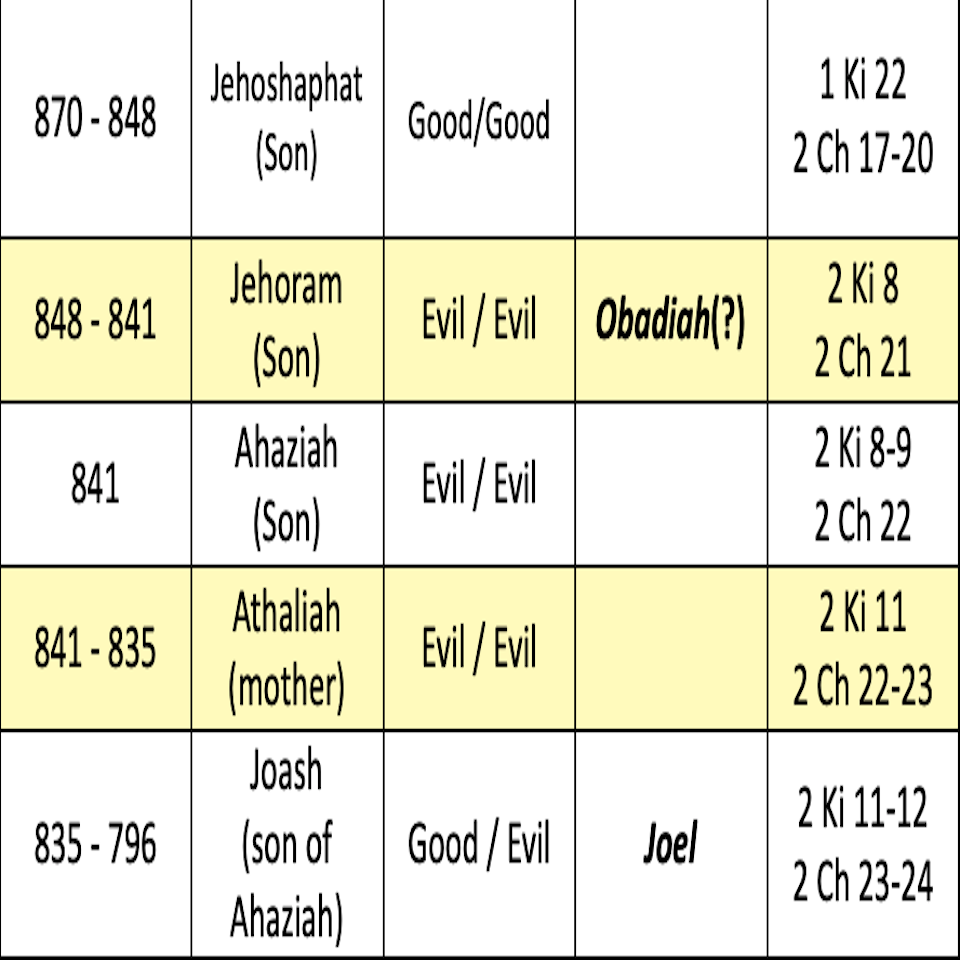
Back in 2014, I was reading through the history of the divided kingdoms of Judah and Israel. The historical accounts of these kingdoms in both the Books of Kings and Chronicles go back-and-forth from kings in the north to kings in the south. I was having trouble keeping them all straight, so I began designing a side-by-side chart to help me.
I had no idea that this chart would be viewed and downloaded by other Bible students literally thousands and thousands of times each year.
You can find all of the download information for this chart by clicking here.
Listen to the podcast of this post by clicking on the player below, and you can also subscribe on Apple, Spotify, or Audible.
Last week we saw how the Israelites in exile had their time of grief—being targeted for annihilation—turned to joy when God granted favor to Queen Esther.
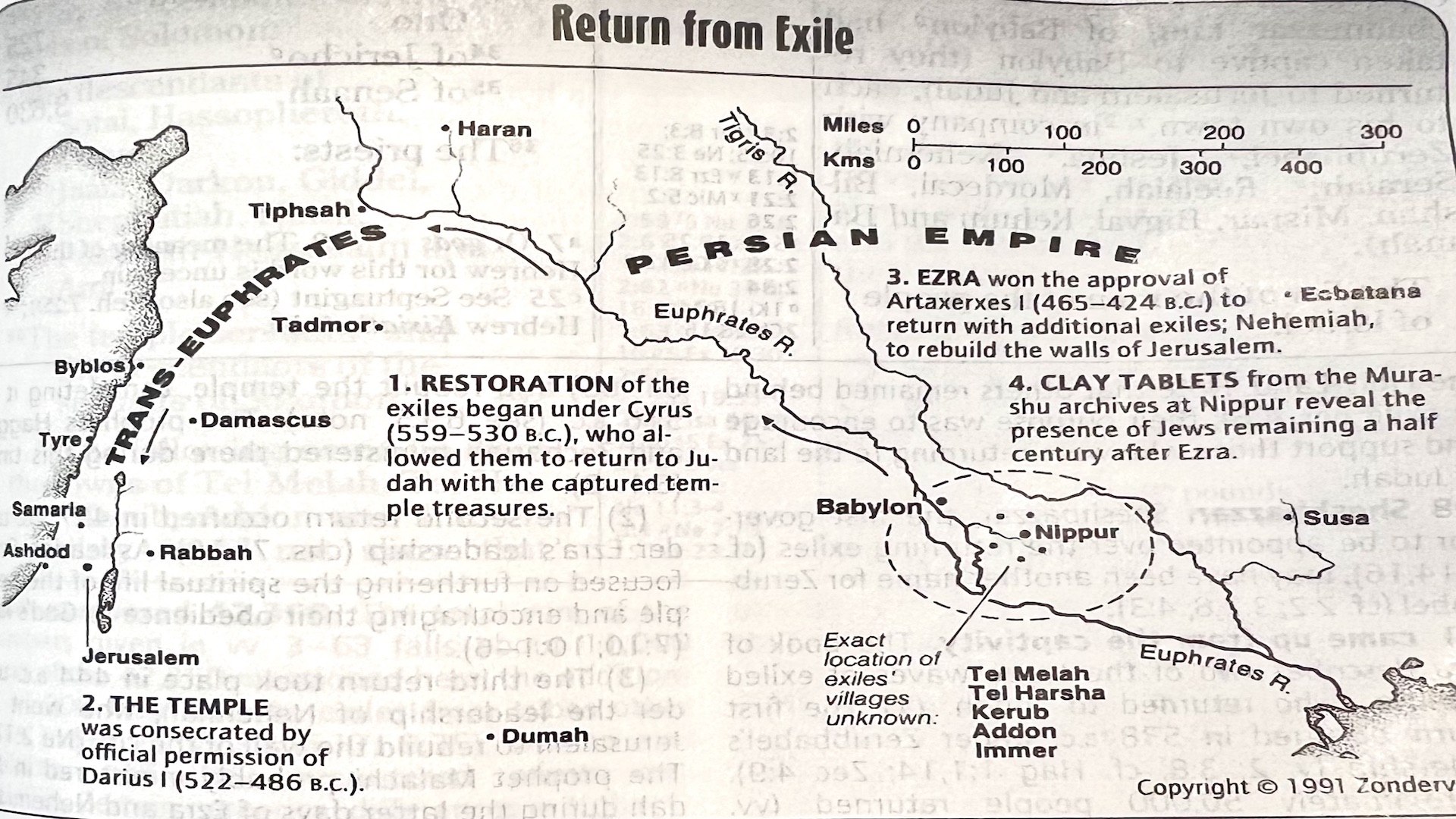
The books of 1 and 2 Chronicles, Ezra, and Nehemiah are all written during this time period as the exiles are returning in waves to Israel. This is another grief-into-joy moment! More than likely, all four of these books were written by Ezra. Notice the note of joyful celebration that is repeated in the last words of 2 Chronicles and the opening words in the Book of Ezra (2 Chronicles 36:22-23; Ezra 1:1-4). We don’t know which psalmist wrote Psalm 126, but it sounds the same joyful note.
Not all the exiles returned at once. In fact, the Book of Daniel shows us that Daniel likely stayed in his position of leadership to these governments until his death.
The exiles were returning in waves. As the worship practices at the temple were reestablished and as people returned to lands allotted to each tribe, it was important for the leaders to make sure the right people were in the right places. So 1 Chronicles opens with genealogies.
Beginning with Adam and Noah (1:1-4)
The spiritual fathers (1:34)
The family line of the Messiah (2:1-15; Matthew 1:1-6) through the family tree of David (3:1-24)
Then 1 Chronicles 4 lists more clans in the tribe of Judah. Of special note is the Calebite clan (2:9, 18).
In the Calebite clan we meet Jabez in 1 Chronicles 4:9-10. His name literally translated is sorrow. I wonder: is this a nickname or his birth name? how did he even get this name?
His mother is quoted, “I gave birth to him in pain.” Did that mean it was physically a difficult birth? Did she die after childbirth? Was he born during the painful exile? His father isn’t mentioned, so maybe his birth reminded everyone of the father who was no longer there. The Amplified Bible says his mother named him “sorrow maker.”
Whatever the case, Jabez has become aware that his name or his presence is causing grief to others. There is a bit of a play on words here: “his mother named(Hebrew: qara) … Jabez cried out (Hebrew: qara) to the God of Israel.” In essence, Jabez is saying, “Since my mother cried out in pain—or thinks I am a sorrow maker—I have no where else to go but to cry out to God!”
I believe Jabez was a teenager at this time. One medical journal says, “Adolescents are physically, cognitively, and socioemotionally more advanced than children but prone to behave in ways that are inconsistent with adult values and norms. … Adolescents also frequently report greater self-consciousness, and are more concerned with and interested in others’ perceptions of self.”
This means that as the brain matures during adolescence, teenagers begin to look at themselves through the eyes of others. They are beginning to make decisions that will earn approval from their peers and their family.
This describes Jabez. He doesn’t want to be the sorrow maker any longer.
Grief happens when my reality falls short of my expectations. Jabez has become self-aware that he is a painful reminder to everyone around him. He is living in a place of grief
Jabez is called “more honorable than his brothers” (v. 9) because he turns his pain into his prayer. His brothers may either have not been as self-aware, or maybe they were aware but simply didn’t care. Jabez realized, “People have been calling me sorrow maker my whole life. There’s nothing I can do about it on my own, so the only thing I can do is call on the only One who can turn my grief into joy” (v. 10).
Look at his noble prayer:
bless me—God, You are the only One whose favor I desire
enlarge my territory—even out of this grief, bless me so that I can be a blessing
let Your hand be with me—only Your hand can restore my fortunes, can help me reap a harvest, and can allow me to sing Your songs of joy (see Psalm 126:1-6).
Let us follow this example from Jabez’s life and begin to turn every pain into prayer.
God doesn’t want to give us temporary relief from our pain, but He desires for us to know His never-ending joy (Isaiah 25:7-9; Revelation 21:3-4).
But this isn’t quid quo pro—we aren’t grateful people just so we can get something back for ourselves. We should be grateful people because…
(1) …God is good all the time and so we should be thankful to Him continually—1 Thessalonians 5:18
(2) …Jesus was grateful—1 Peter 2:23; Hebrews 12:2
(3) …God blesses thankful people—1 Peter 3:9; Luke 6:33
(4) …your thankfulness can benefit people you haven’t even met!
Near the end of his life, David wrote a hymn of thanksgiving, which he taught to Asaph (his worship leader) who then taught it to all the citizens (1 Chronicles 16:7-35). Throughout this song, notice how many times David sang about not only giving thanks but sharing our thankfulness with those around us.
In difficult times, people search for what delivered others in the past. A good example is Psalm 106, where the psalmist warns his readers about the dangers of forgetting to be thankful for God’s blessings. This psalm begins and ends with words taken right from David’s hymn of thanksgiving as an added reminder of what our gratitude should sound like (see vv. 1, 47-48).
One hundred years after David wrote this song, King Asa needed to look back to it. His father Abijah had been evil throughout his reign as king, so had his grandfather Rehoboam. His great-grandfather Solomon started off well, but turned away from God near the end of his life. So Asa looked all the way back to the thankful heart of his great-great grandfather David (1 Kings 15:11).
Jehoshaphat needed this same song 100 years after Asa (200 years after David wrote it) in 2 Chronicles 20. Enemies had surrounded Judah and Jehoshaphat called the people to prayer. Jahaziel, a direct descendant of David’s worship leader Asaph, calls the people to trust God to fight the battle for them. As the army marches out the next morning, they put the worship team at the front who sang David’s 200-year-old song of thanksgiving and God used that to ambush their enemies!
Your lifestyle of gratitude today—your songs of thanksgiving—could be a blessing to future generations that haven’t even been born yet!
We would do well to learn the lessons of the past and make sure we are always quickly turning our grumbling into a song of thankfulness.
As you do, you are…
Emulating the lifestyle of Jesus
Banking up blessings from God
Ambushing the enemy
Bringing a testimony to non-believers
Establishing a standard for future generations
We bless God and bless others by employing two words: BE THANKFUL!
Listen to the podcast of this post by clicking on the player below, and you can also subscribe on Apple, Spotify, or Audible.
The first Church in the Book of Acts could have easily become the first two churches right from the beginning. Why? Because of a deep disagreement that pitted two camps against each other.
Unity was ultimately maintained because they all agreed to only listen to the counsel that agreed with Scripture.
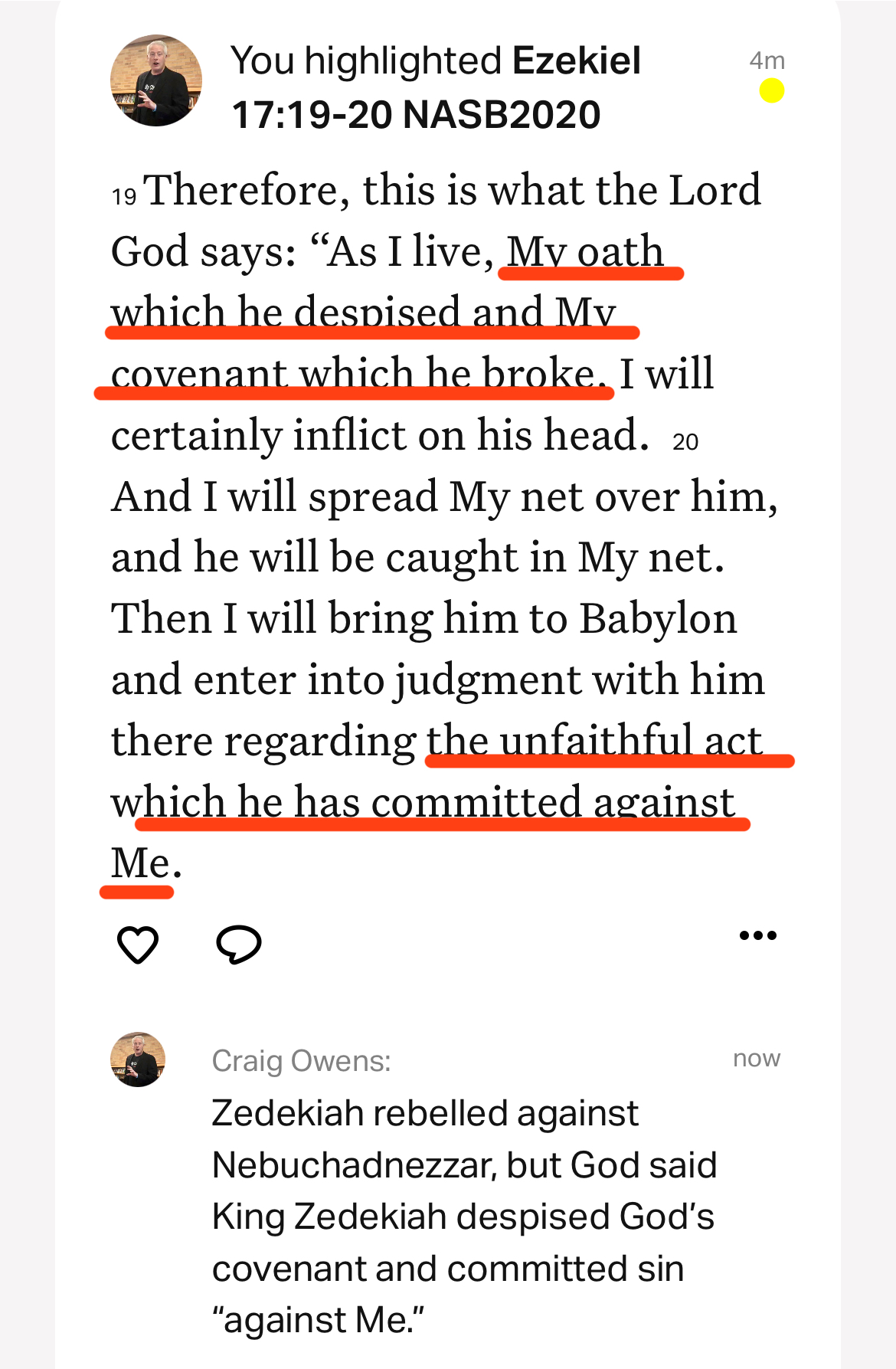
Therefore, this is what the Lord God says: “As I live, My oath which he [Zedekiah] despised and My covenant which he broke, I will certainly inflict on his head. And I will spread My net over him, and he will be caught in My net. Then I will bring him to Babylon and enter into judgment with him there regarding the unfaithful act which he has committed against Me. (Ezekiel 17:19-20)
Zedekiah rebelled against Nebuchadnezzar, but God said King Zedekiah despised God’s covenant and committed sin “against Me.”
All governing authorities on earth are God’s servants. God used Babylon as His means of punishing Judah for her sin. When King Zedekiah conspires with Pharaoh to attack Nebuchadnezzar, God says Zedekiah is really rebelling against God Himself!
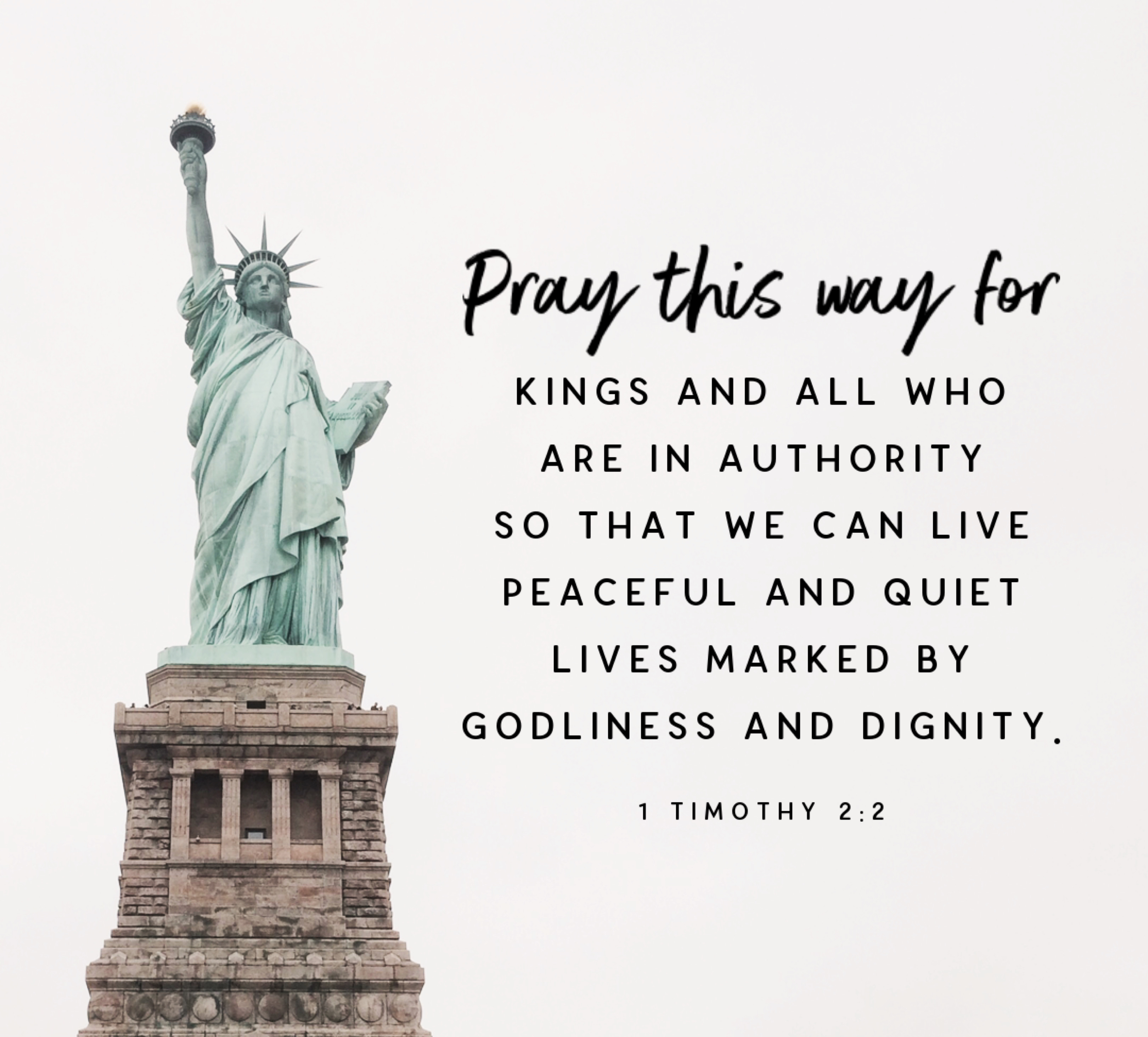
Christians are called to pray for those in governmental leadership. To dig a little deeper on this topic, check out two previous blog posts and sermon videos:



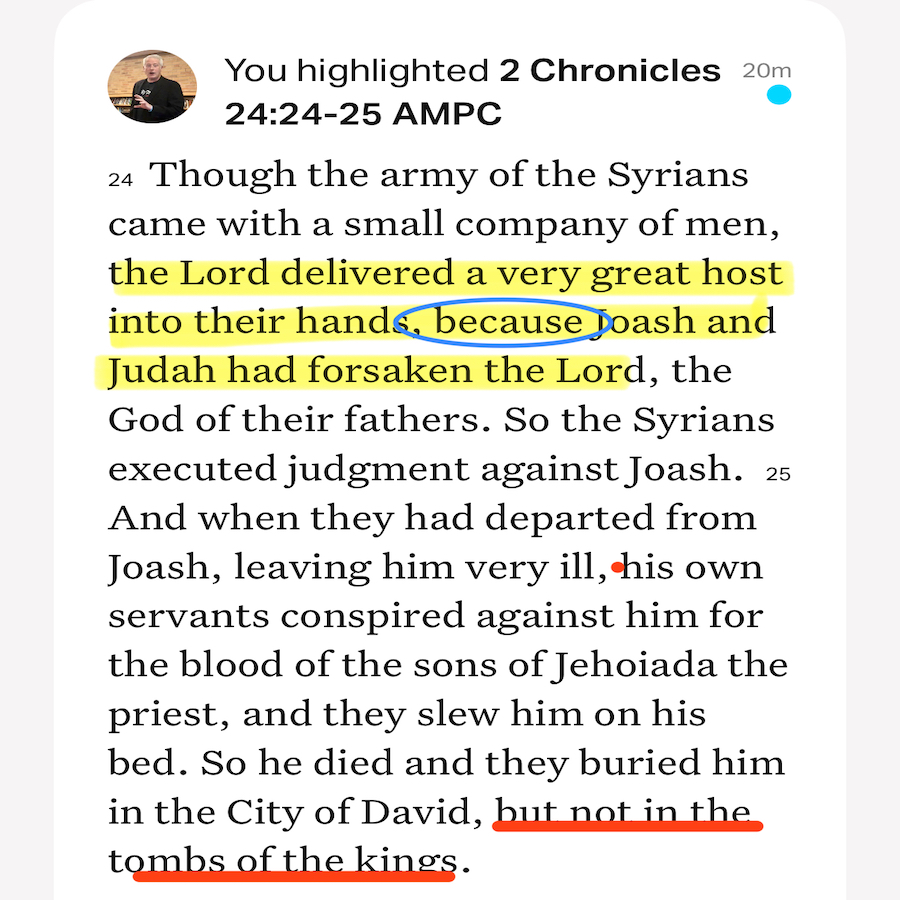 Though the army of the Syrians came with a small company of men, the Lord delivered a very great host into their hands, because Joash and Judah had forsaken the Lord, the God of their fathers. So the Syrians executed judgment against Joash. And when they had departed from Joash, leaving him very ill, his own servants conspired against him for the blood of the sons of Jehoiada the priest, and they slew him on his bed. So he died and they buried him in the City of David, but not in the tombs of the kings. (2 Chronicles 24:24-25 AMPC)









 Craig T. Owens