Exposing The Bitterness Of Gossip

Listen to the podcast of this post by clicking on the player below, and you can also subscribe on AppleSpotify, or Audible. 

A bite we have all experienced is gossip. We called flattery the sneaky bite, but I think gossips believe they are actually being sneaky—that somehow they are getting away with their gossip.  I think gossip is also sneaky because we can be pulled into a gossipy conversation almost without realizing what is happening. 

That’s because gossip usually has a veneer of truth on it. That thin coating of truth may be sugary sweet, but the words hide a bitter poison that is intended to undermine the one that is being talked about. Twice Solomon says, “The words of a gossip are like choice morsels” (Proverbs 18:8, 26:22). The Contemporary English Version translates this verse even more graphically: “There’s nothing so delicious as the taste of gossip! It melts in your mouth.” But Solomon also warns, “A perverse person stirs up conflict, and a gossip separates close friends” (Proverbs 16:28). 

Consider the story in Numbers 12:1-9. 

(Check out all of the Scriptures in this post by clicking here.)

Moses had married a Cushite woman, a marriage that was neither morally nor legally wrong. If someone simply said, “Moses married a woman from Cush” they would have been speaking the truth. The gossips (Miriam and Aaron) want to use a truthful statement for the purpose of making a case to prove their point. These siblings crossed the line when they stopped talking about the idea and start talking about Moses. This is especially true when their conversation about Moses was to make him look inferior or to make themselves look superior. 

I think a label that is very apropos for this is “character assassination.” An assassin gets close enough to strike, but also has an alibi to cover themselves. So, too, the gossip can inject their poison to denigrate someone’s character, but then use the alibi of saying, “What? Did I say something untruthful?” 

There is truth in their questions that God has used all three of them to delver messages and to sing worship songs, but in light of their statement in verse 1 they are clearly asking these questions with poisonous intent. You can especially spot gossip by this characteristic sign: They talk about a person, but they won’t talk to that person. We are not told to whom Miriam and Aaron may have been speaking to in verse 2, but it certainly wasn’t Moses. That means they were trying to get other people to rally to their side. 

When we have been the target of a gossip’s words, we should follow the example that Moses gave us.  

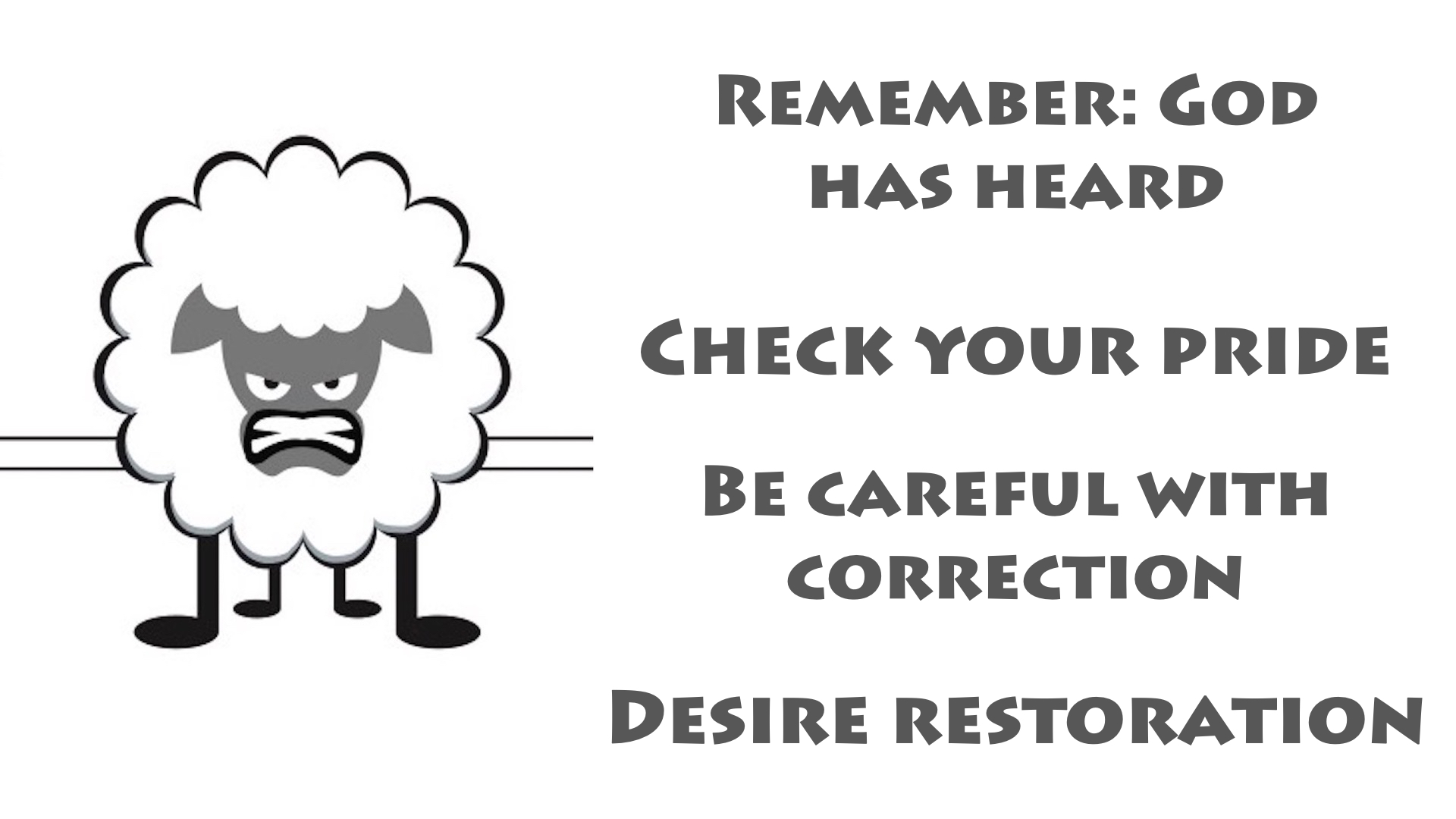
  1. Remember that God has heard the gossip (Numbers 12:2b, 4-8). 
  2. Check your pride (v. 3). If you feel you must address the gossip, you must address the topic without attacking the gossiper (see Romans 12:17-18). 
  3. Be careful of who you are correcting. It’s best to let God do the correcting (Numbers 12:8-9), but if do need to speak to the person, be cautious of adding fuel to the fire (Proverbs 9:7-9). 
  4. Desire restoration. Moses interceded for Miriam’s healing (Numbers 12:13), and Jesus has the idea of restoration and unity in the Church in mind in Matthew 18:15-16. 
  5. Stay away from the unrepentant gossiper. If the gossiper doesn’t acknowledge their sin, we have to limit our interaction with that sheep (Matthew 18:17) . After Miriam was healed of her leprosy, there is no other mention of her until she died which is probably an indication that Moses didn’t have any additional conversations with her. Paul gave Timothy similar counsel about Alexander (1 Timothy 1:19-20; 2 Timothy 4:14-15).

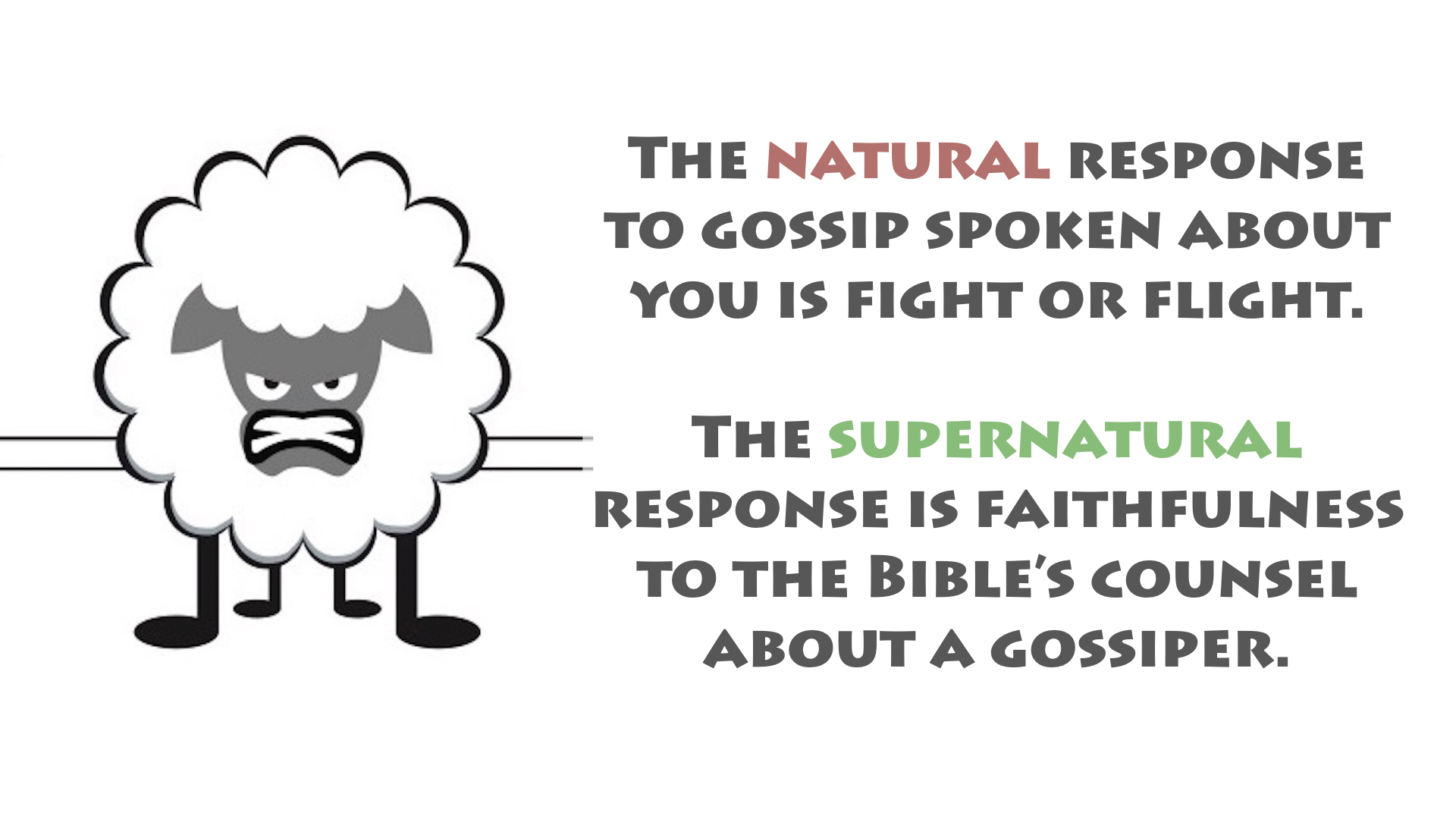
The natural response to gossip spoken about you is fight or flight. The supernatural response is faithfulness to the Bible’s counsel about a gossiper. 

And one final word to all of us: Don’t become a gossip yourself! 

Just as God hears those gossiping about you, He hears you gossiping about others! 

Don’t…

  • …talk about people who aren’t in the room. Remember the Golden Rule of treating others the way you want to be treated (Luke 6:31). 
  • …share information that isn’t yours to share (Proverbs 25:9). 
  • …listen to a gossip. If they gossip to you about others, they will gossip about you to others! 

Gossip, as Solomon warned us, separates even the closest of friends. We must identify it and deal with both the gossip and the gossiper in a God-honoring, biblically-sound way. And we must avoid becoming a gossip ourselves. 

If you’ve missed any of the other sheep bites we’ve talked about in this series, you can find them all by clicking here. And if you are a pastor, check out my book When Sheep Bite, where I address the bites of sheep from a leadership paradigm. 

►► Would you please prayerfully consider supporting this ministry? My Patreon supporters get behind-the-scenes access to exclusive materials. ◀︎◀︎
The Prayer Before The Prayer

Listen to the podcast of this post by clicking on the player below, and you can also subscribe on AppleSpotify, or Audible. 

Last week I shared this thought with you from Pastor Tim Keller: “Your prayer must be firmly connected to and grounded in your reading of the Word. This wedding of Bible and prayer anchors your life down in the real God. … Without immersion in God’s words, our prayers may not be merely limited and shallow but also untethered from reality.” 

“Untethered from reality” means that we determine the manner in which we come to God in prayer, the way prayer works, and the way God must respond to our prayer. But what we read in the Bible is the opposite of this (Isaiah 1:11-15). 

(Check out all of the Scriptures in this post by clicking here.)

I think there are two opposite and equal erroneous thoughts about how we approach prayer:

  1. I’m not worthy to come into the presence of an all-holy God 
  2. I can waltz right into God’s presence whenever and however I please 

Both are wrong and both are strategies the devil has used to keep us prayerless. Either we don’t go to God at all or our prayers are unheard because the Bible says that our arrogance has made our prayer ineffectual. 

Our Prayer Book—the Bible—helps us find the balance. George Whitefield noted, “Reading the Bible is a good preparative for prayer, as prayer is an excellent means to render reading effectual.” So here’s what we read about those two errors. 

  1. I’m not worthy. God is unapproachable in His holiness, but Jesus has made it possible for us to enter in through His righteousness (1 Timothy 6:15-16; Isaiah 6:1-5; Hebrews 4:1, 14, 16; John 16:23-24). 
  2. I can come anyway I want to. Passages like Psalm 15:1-5 and Isaiah 58:2-4 make it clear that we cannot simply approach God in a way of our choosing. 

Let’s unpack that second error a little more. We have to be clothed in righteousness in order to come into God’s presence, but we cannot be clothed in a righteousness that is apart from Jesus. When we say that we are praying in the name of Jesus, it means we are praying in the nature of Jesus and through the righteousness of Jesus. We must be wearing His righteous robe (Romans 3:22-24; Isaiah 61:10). 

So I think we need to pray before we pray. Let’s try these actions which are tethered to the reality of our Prayer Book. 

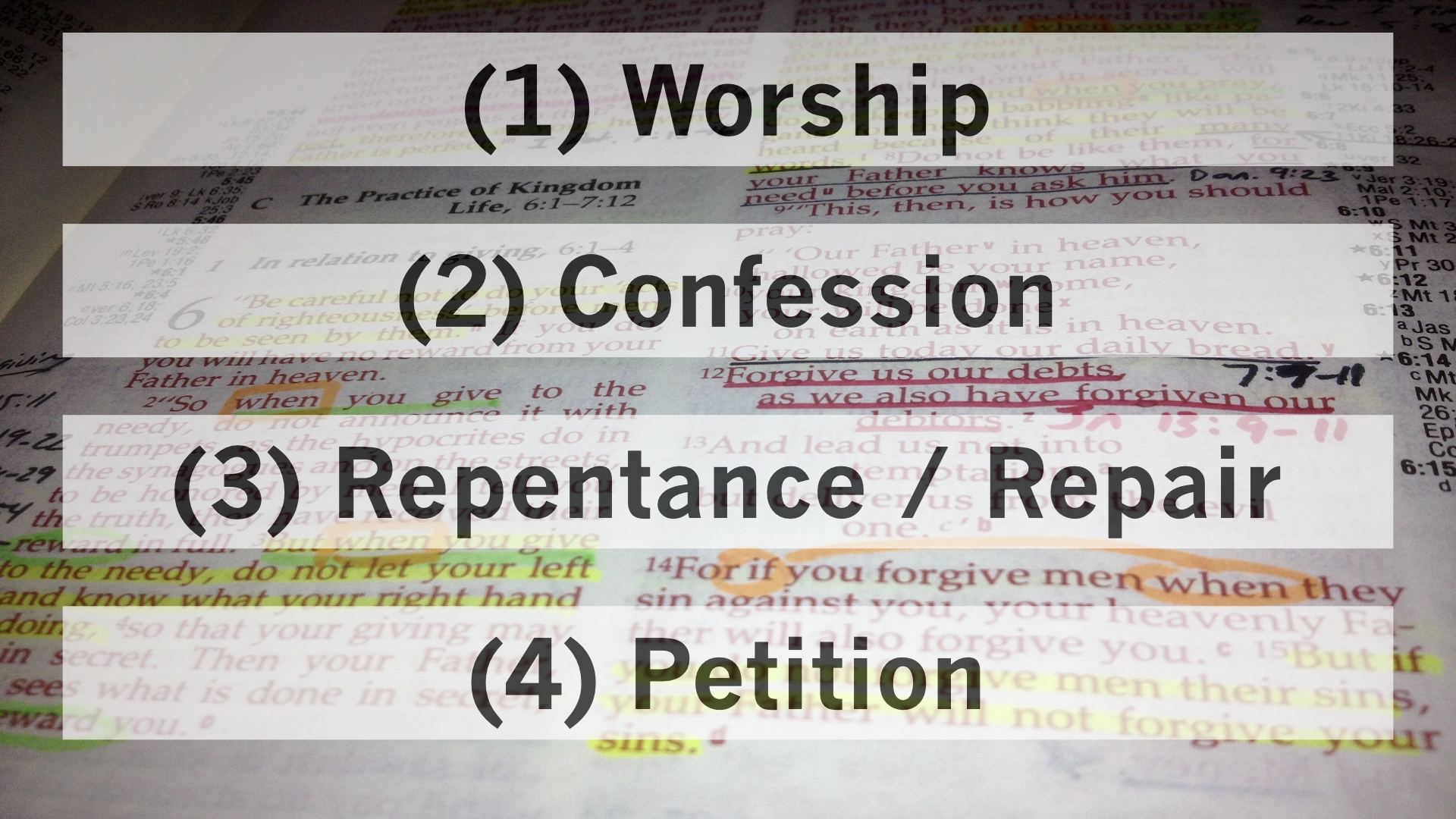
  1. Worship. This is a deep pondering of who God is; it is humbly assigning Him the highest worth. In face, the Old English spelling of this word (“worthship”) gives us insight into what worship does. It is this kind of humility that God responds to (Isaiah 6:5-7; 57:15; Luke 18:9-14).
  1. Confession. As we are worshiping, we will see our inadequacies (much like Isaiah did in Isaiah 6, or the tax collector did in Luke 18). We then need to confession these shortcomings. Dick Brogden wrote, “Confessed sin opens the portals of heaven into our darkness, and light and glory overwhelm shame. Confession is our glory for it lifts our heads and eradicates shame.” We see this so vividly lived out in the prayers of David (Psalm 139:23-24; 51:1-2; 19:12-14). 
  1. Repentance. I think we could also call this Repair. After confession where we have fallen short, we resolve now to both take a different path and repair what was damaged (Matthew 5:23-24; Mark 11:25-26; 1 Peter 3:7). 
  1. Petition. After worship, confession, and repentance / repair, our heart’s attitude is now in the place for God to heed our cries for His help (1 Peter 3:12). 

Let’s learn to pray before we pray. Don’t just rush in and rush out of God’s presence. Take time to worship, confession any sins the Holy Spirit reveals, make things right, and then present your petitions. 

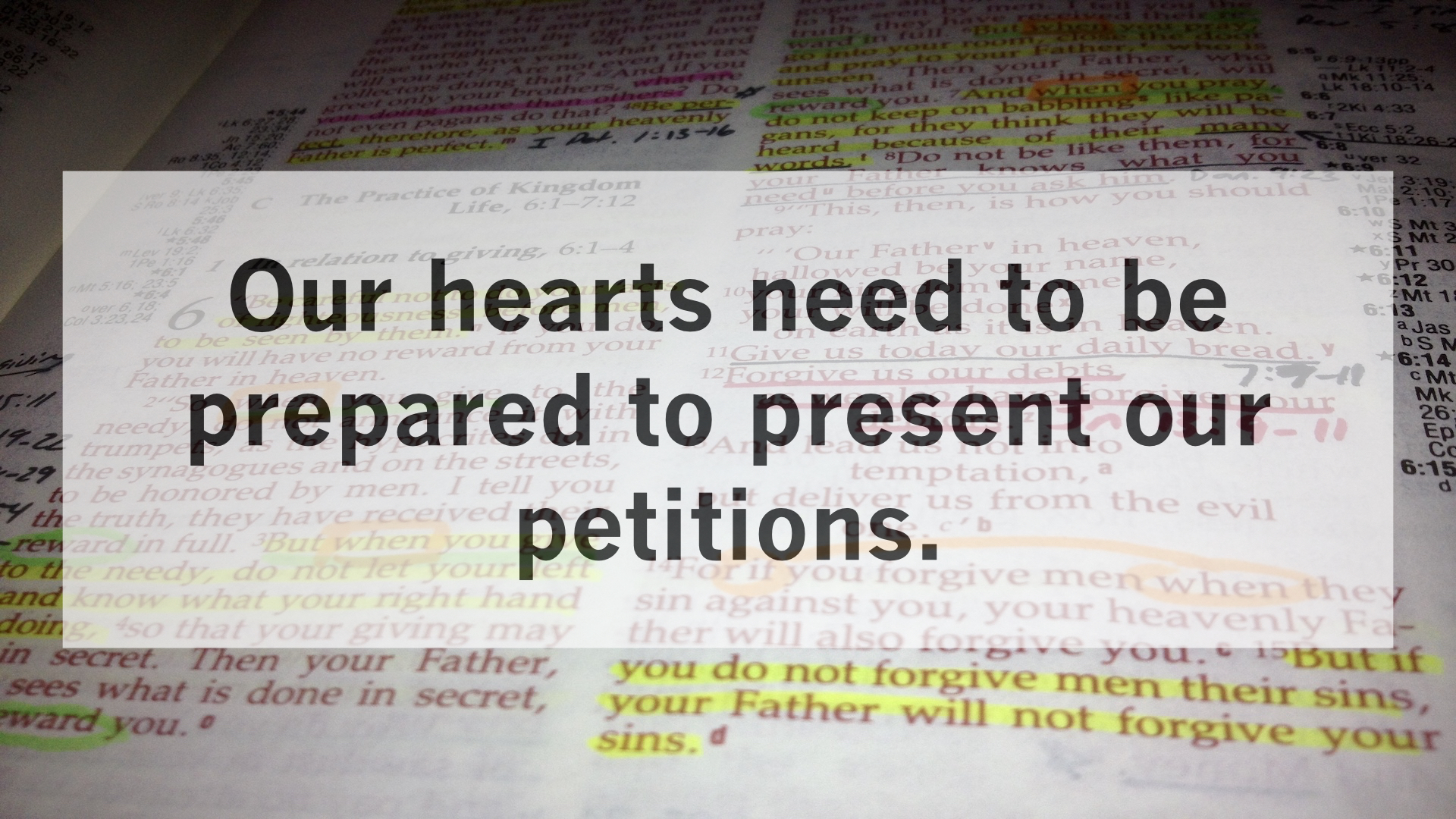
Our hearts need to be prepared to present our petitions. This is how we know that God will hear our voice. 

If you’ve missed any of the messages in our prayer series, you can find them all here. 

►► Would you please prayerfully consider supporting this ministry? My Patreon supporters get behind-the-scenes access to exclusive materials. ◀︎◀︎

What Do We Do With Really Bad Leaders?

Listen to the podcast of this post by clicking on the player below, and you can also subscribe on AppleSpotify, or Audible. 

How are Christians supposed to respond to really, really bad guys, especially those in positions of leadership?  

Check out this episode of The Podcast. 

The Scriptures that I reference in this video are Acts 12:1-17; 1 Peter 2:17; Acts 4:24; 1 Timothy 2:1-2; Acts 26.

I have shared a couple of other posts about our interactions with leaders. Check out:

Get more information on When Sheep Bite here. 

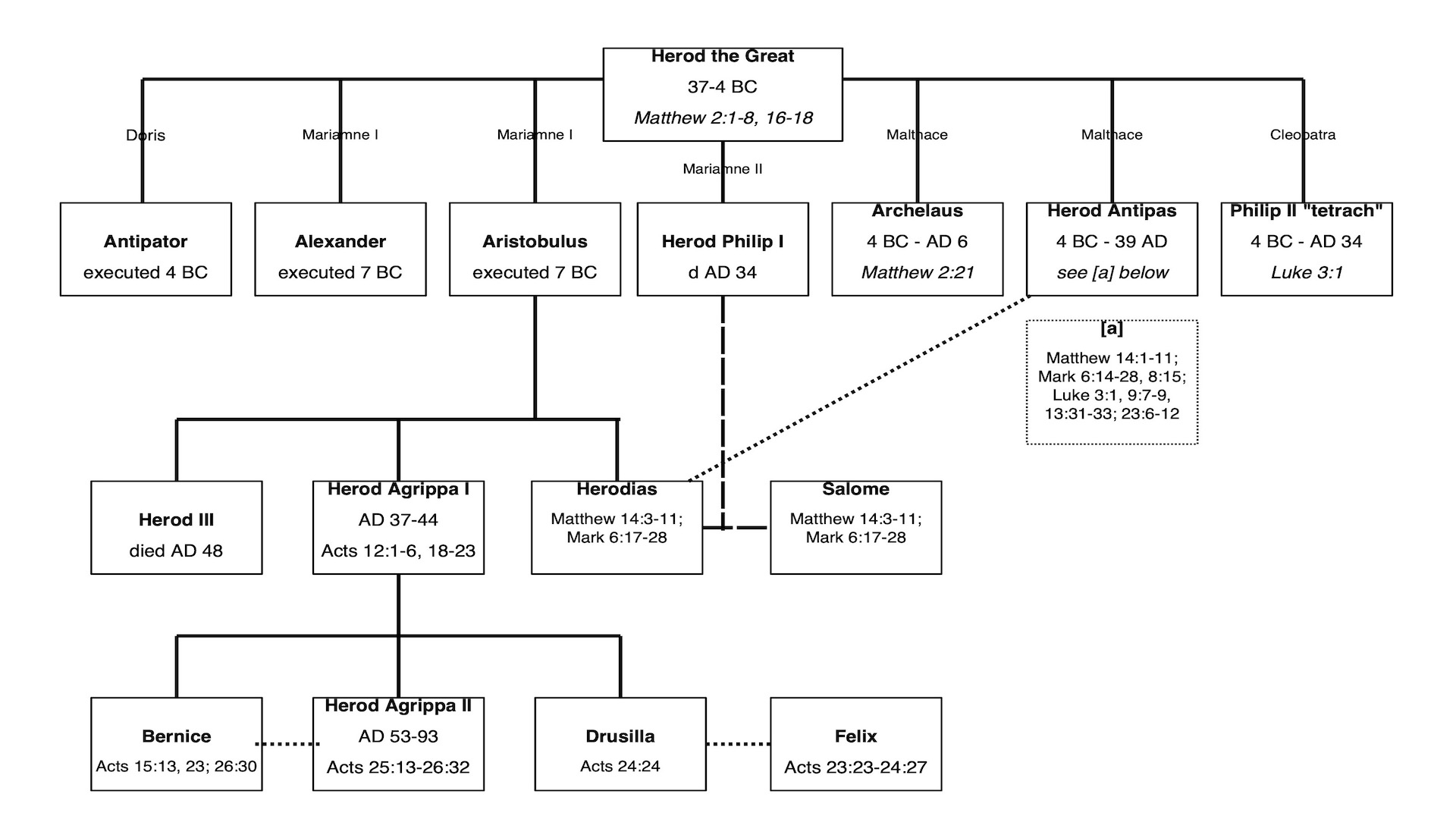
Check out the family tree of King Herod the Great:

►► Would you please prayerfully consider supporting this ministry? My Patreon supporters get behind-the-scenes access to exclusive materials. ◀︎◀︎

Getting Uncomfortable With Staying Comfortable

Listen to the podcast of this post by clicking on the player below, and you can also subscribe on AppleSpotify, or Audible. 

We as a Church are underperforming. How do I know this? Look at the way the world treats Christians; specifically, look at what’s NOT happening. 

  • By this all will know that you are My disciples, if you have love for one another” (John 13:35). Jesus said this right after He served His disciples by washing their feet. Is this happening today: Do people know you are a Christian by the way you put your love into servant-hearted action, or do they just know what you are against? 
  • “Be prepared to give an answer to everyone who asks you to give the reason for the hope that you have” (1 Peter 3:15). When was the last time someone saw your hope-filled life in such contrast to everyone else’s response that they said, “How can I have what you have?” 

(Find all of the Scriptures I’ve used in this post by clicking here.)

Peter said our adversary prowls like a lion. He is perfectly willing to bide his time, picking the strategy that works best. One of his favorite strategies is lies—sometimes half-truths or out-of-context truths. 

…Woe to the earth and the sea, because the devil has gone down to you! He is filled with fury, because he knows that his time is short. … The dragon was enraged with the woman and went off to make war against the rest of her offspring—those who obey God’s commandments and hold to the testimony of Jesus (Revelation 12:12, 17). 

Lies are his native tongue. He lied to Adam and Eve right in the beginning (Genesis 3:1, 4-5), and he still lies now (Revelation 12:10). Jesus contrasted this with the truth that He came to proclaim (John 8:42-45). 

The devil has learned that with many people, outright attacks drive them TO God. We see this in the oldest book of the Bible (Job 1:6f, 20-22), and in modern times (churches were filled after the 9-11 terrorist attacks). 

What the devil would rather do is lie to you to keep you comfortable. In The Screwtape Letters, Screwtape implores Wormwood to keep his patient indifferent and comfortable. Indeed, we all have a comfort zone and we love to stay in it. 

King Saul went from 3000 men to 600 men, from a full armory to only two swords, from defeating the Ammonites to being hemmed in by the Philistines. King Saul was enjoying life as the king, hanging out with his friends, sitting under a pomegranate tree, far away from his enemies. Life was good for Saul, life was familiar and comfortable. Saul was living in his comfort zone. But the comfort zone is a lousy place to live. 

In the comfort zone you only tell stories, but never live an adventure. In the comfort zone, you only hear about what God has done for others, but you never experience Him move in miraculous ways for yourself. 

God has given us all gifts so that we can live as overcomers and bring Him glory, but we settle for living only in our comfort zone. Our comfort zones are always way smaller than our gift zones, and the devil is perfectly happy to see us stay there.

Moses was comfortable in the desert, but God sent him in His power (Exodus 3:11, 14). 

David was comfortable in the pasture, but God equipped him to lead a whole nation (2 Samuel 7:18; Psalm 78:70-71). 

Jeremiah was comfortable being an anonymous priest, but God gave him words to prophesy to a wayward nation (Jeremiah 1:4-8). 

Saul was comfortable as a Pharisee, but God sent him to tell the world the Jesus is the Messiah (Acts 8:3; 1 Timothy 1:16). 

What lies have kept you in your comfort zone? 

  • Maybe a parent said, “You’ll never amount to anything.” 
  • Maybe a teacher said, “You’re slow.” 
  • Maybe a classmate said, “You’re weird.” 
  • Maybe the devil said, “You cannot make a difference in the world.” 

You need to silence those lies with God’s truth: 

  • God created me on purpose and for a purpose—Psalm 139:13-17 
  • He has given me all the gifts I need to soar—2 Peter 1:3-4 
  • He wants to help me, if I will trust Him—Isaiah 41:10, 13-14 

Charles Spurgeon said, “The extent of power God can infuse into a person is immeasurable; when divine strength is granted, human weakness ceases to be a hindrance.” 

So, friends, it’s time to get uncomfortable with staying comfortable. It’s time to stretch and soar out of your comfort zone and into more of your gift zone! 

How do you discover your gifts? That’s what we are going to unpack in this series over the next few weeks, I hope you will continue to follow along. And you can catch up on anything you may have missed in our series called Living in Your Gift Zone by clicking here. 

►► Would you please prayerfully consider supporting this ministry? My Patreon supporters get behind-the-scenes access to exclusive materials. ◀︎◀︎
Rebelling Against Government And God

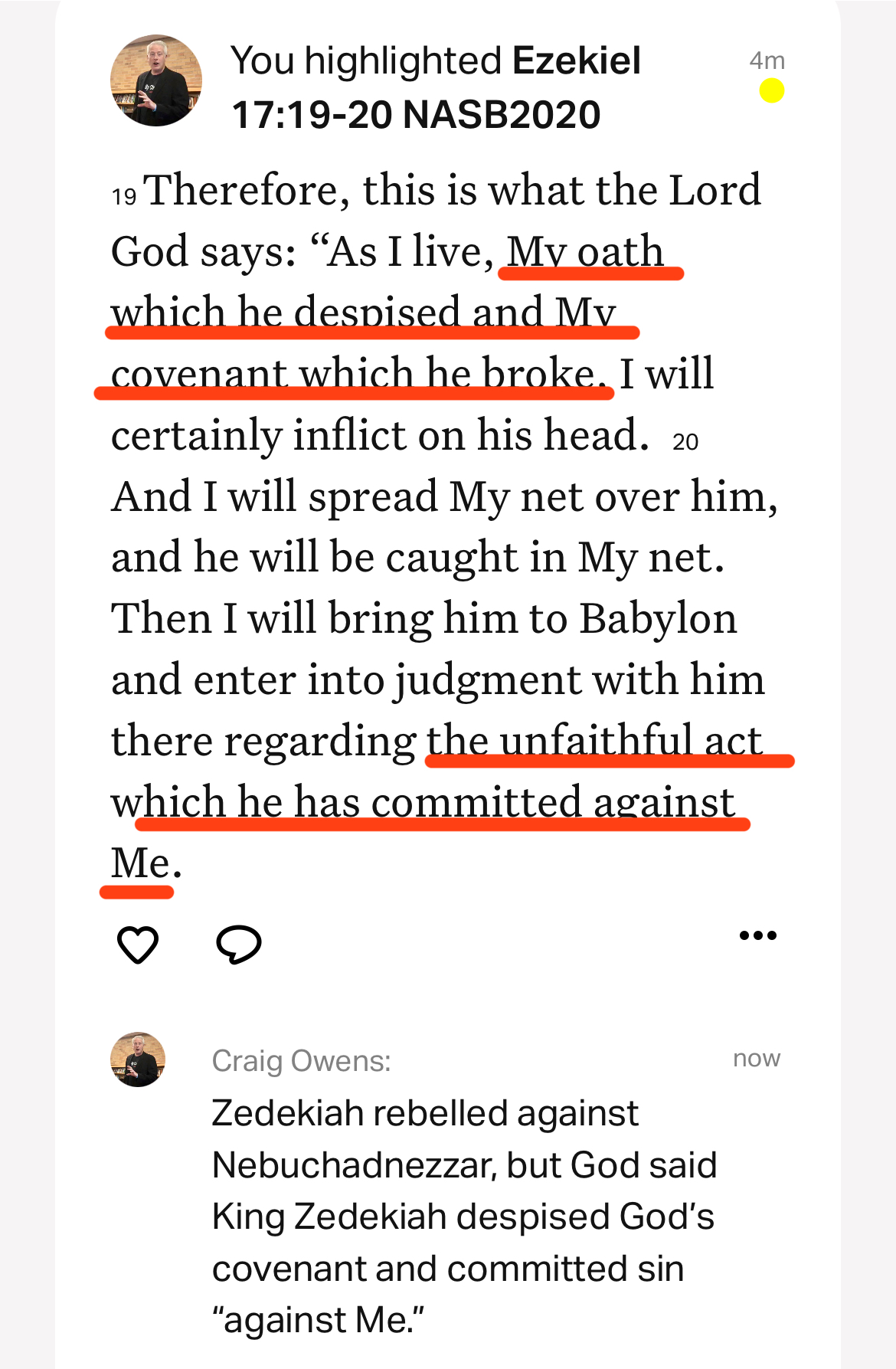
Therefore, this is what the Lord God says: “As I live, My oath which he [Zedekiah] despised and My covenant which he broke, I will certainly inflict on his head. And I will spread My net over him, and he will be caught in My net. Then I will bring him to Babylon and enter into judgment with him there regarding the unfaithful act which he has committed against Me. (Ezekiel 17:19-20) 

Zedekiah rebelled against Nebuchadnezzar, but God said King Zedekiah despised God’s covenant and committed sin “against Me.” 

All governing authorities on earth are God’s servants. God used Babylon as His means of punishing Judah for her sin. When King Zedekiah conspires with Pharaoh to attack Nebuchadnezzar, God says Zedekiah is really rebelling against God Himself!

Christians are called to pray for those in governmental leadership. To dig a little deeper on this topic, check out two previous blog posts and sermon videos:

A Prayer List For Government Officials

In the New Testament, we are told to pray for those in leadership positions: “I urge, then, first of all, that petitions, prayers, intercession and thanksgiving be made for all people—for kings and all those in authority, that we may live peaceful and quiet lives in all godliness and holiness” (1 Timothy 2:1-2). 

Here in Psalm 72, we find a good source to form our petitions for our leaders:

🙏🏻 Give Your judgment to our leaders

🙏🏻 May our leaders follow Your righteousness

🙏🏻 May our leaders rely on Your righteousness to make laws and judgments that honor You

🙏🏻 May our leaders exercise godly justice for those in need

You may also want to check out:

What The Bible Doesn’t Say

Listen to the podcast of this post by clicking on the player below, and you can also subscribe on AppleSpotify, or Audible. 

We would do well to pay attention to what the Bible doesn’t say—especially when we have to interact with ungodly leaders. 

Check out this episode of The Podcast.

Some resources from this episode:

Here are a bunch of ways to get in touch with me and follow along with other projects on which I am involved

►► Would you please prayerfully consider supporting this ministry? My Patreon supporters get behind-the-scenes access to exclusive materials. Like this exceptional Bible study tool to help with Creation apologetics. ◀︎◀︎

Praying For Our Governments

Listen to the podcast of this post by clicking on the player below, and you can also subscribe on AppleSpotify, or Audible. 

You may have heard it said that Christians are supposed to pray for those who are in governmental leadership positions over them. Is that really true? And if it is, what exactly are we supposed to pray for them?

Check out this episode of The Podcast.

Resources mentioned in this video:

►► Would you please prayerfully consider supporting this ministry? My Patreon supporters get behind-the-scenes access to exclusive materials. Become a supporter today and get access to all of my previous posts plus have instant access to all of the new materials that are being posted weekly. ◀︎◀︎

Don’t Fight Fire With Fire

Listen to the podcast of this post by clicking on the player below, and you can also subscribe on AppleSpotify, or Audible. 

The events in the Bible are rooted in history. These are actual events in which real people lived in a moment in recorded history. The songs of ascent were sung both pre-exile and post-exile. The post-exile pilgrims were returning to Jerusalem after the edict of King Cyrus (2 Chronicles 36:22-23). 

The first pilgrims to go up to Jerusalem after the exile were the rebuilders of both Jerusalem and the temple, and they faced heavy opposition (Ezra 4:1-5; Nehemiah 4:1-3, 7-8). In light of these events, I think the song of ascent in Psalm 125 is especially pertinent to this situation. 

The middle verse of Psalm 125 contains a warning to godly people. God’s followers may be tempted to grab earthly political power to try to make things right—to “fight fire with fire.” The phrase “the scepter of the wicked” symbolizes the royal authority of a foreign conqueror. In other words, we might justify using the scepter of the wicked because we think “the ends justify the means.” But notice the warning if we do: “the righteous might use their hands to do evil.” 

You can see this in a couple of other biblical translations. The Amplified Bible says, “lest the righteous (God’s people) stretch forth their hands to iniquity and apostasy,” and the New Living Translation says, “the godly might be tempted to do wrong.” 

Instead, we are called to look to God for our security. Psalm 125:1-2 sounds like an echo of Psalm 121, in which we are reminded that our God is unshakable, unrivaled, and eternal. Political parties come and go, even evil dictators and tyrannical regimes come and go, but the Sovereign God remains forever. All of History is His story! 

Chuck Colson used to frequently remind his audiences, “Salvation does not arrive on Air Force One!” 

The motto on our US currency is still accurate: In God we trust! Psalm 125:4 says the same thing: God does good to those who trust Him. 

Earlier I mentioned the opposition that Ezra and Nehemiah recorded. Let me also share with you how these God-fearing men instructed the Jewish people to respond. Ezra says that the prophets called them to remember “the name of the God of Israel, who was over them,” and three times Nehemiah records that their response was prayer to God (Ezra 5:1; Nehemiah 4:4, 9; 6:9). 

In God we trust, not in political power. On the flip side, Psalm 125:5 warns us that God treats as evildoers those who look to the worldly scepter to try to get ahead. 

So when opposition and even persecution come, we should pray to God and ask for Him to remove the scepter of the wicked. Let’s pray for God to put His favor in the hearts of even ungodly leaders. Ezra recognized this when he said—

Praise be to the Lord, the God of our ancestors, who has put it into the king’s heart to bring honor to the house of the Lord in Jerusalem in this way and who has extended His good favor to me before the king and his advisers and all the king’s powerful officials. Because the hand of the Lord my God was on me, I took courage and gathered leaders from Israel to go up with me. (Ezra 7:27-28)

The New Testament calls on Christians to pray for those in governmental leadership over us (1 Timothy 2:1-2). But perhpas you ask, “What exactly are we to pray for these leaders?” Solomon wrote, “The king’s heart is like channels of water in the hand of the Lord; He turns it wherever He wishes” (Proverbs 21:1). So perhaps a God-honoring prayer is to ask for our leaders’ hearts to be moved as King Cyrus’ heart was. 

Commenting on this verse from Proverbs 21, Dick Brogden wrote:

“God is King of kings and ultimately always wins, always gets His way. Even when it seems that earthly authorities continually rebel against the Lord and His Anointed, the reality is that even their most heinous acts are turned against them. It must be very frustrating to be the devil and to constantly see how God turns situations to gospel good and God’s unique glory. God is so wise that He turns the hearts of authorities without them knowing it. Smug on their decaying thrones, the power brokers of this world revel in their supposed autonomy and imagined resistance, never realizing how foolish they look to the angel hosts who are privy to God’s unmatched strategic dominance.”

Let’s never try to fight fire with fire, but let’s turn repeatedly to God in prayer whenever opposition arises against God-fearing people anywhere. 

If you’ve missed any of the messages in our Ascending series, you can find all of the previous messages here. 

►► Would you please prayerfully consider supporting this ministry? My Patreon supporters get behind-the-scenes access to exclusive materials. ◀︎◀︎
Kept To Keep

Listen to the podcast of this post by clicking on the player below, and you can also subscribe on AppleSpotify, or Audible. 

Last week I reminded you that the main point in Hebrew literature is usually found in the middle. In Psalm 121 that would be the first phrase of verse 5: The Lord watches over you. 

But I notice something that seems contradictory in the New Testament. Whereas the message here is, “God watches over you,” the message in some New Testament verses seems to be, “You watch over yourself” (see for example Matthew 26:41; 1 Thessalonians 5:6; 1 Timothy 4:16). Paul even said to the Christians at Corinth, “I worked harder than all of them” (1 Corinthians 15:10). 

So which is it: Is God watching over us or are we to watch over ourselves? It’s actually both, but something important has to come first. We cannot watch over ourselves unless we are assured that the Lord is watching over us to sustain us. 

Okay, I was being a bit sarcastic when I said those verses seemed contradictory, as I clearly quoted them out of their context. For instance, in that statement from Paul in 1 Corinthians, check out the full verse, “But by the grace of God I am what I am, and His grace to me was not without effect. No, I worked harder than all of them—yet not I, but the grace of God that was with me.” Paul is clearly saying that he could only work hard because he was empowered by God’s grace. Notice that it is decidedly not the other way around: Paul doesn’t say, “I worked hard to earn the grace of God.” 

Remember that these psalms of ascent remind us of our upward look and our upward journey. We need to keep our eyes on the prize, which is God Himself (Psalm 121:1-2). Using the apostle Paul’s life as an example again, he said something very similar—

Not that I have already obtained all this, or have already arrived at my goal, but I press on to take hold of that for which Christ Jesus took hold of me. Brothers and sisters, I do not consider myself yet to have taken hold of it. But one thing I do: Forgetting what is behind and straining toward what is ahead, I press on toward the goal to win the prize for which God has called me heavenward in Christ Jesus. (Philippians 3:12-14) 

The middle verse of Psalm 121 foretells what appears six times in just eight verses: the Hebrew word samar. Depending on the translation of the Bible, this word is either “watch over” or “kept.” In either case, the meaning is a concentrated focus, not turning aside to the left or the right, not distracted, eyes on the ultimate prize. And all six of these instances are God’s unwavering, loving focus on us. In this song, we are told: 

  • God never slumbers or is even momentarily distracted (vv. 3-4) as opposed to other deities that were thought to sometimes be unavailable to their worshippers (see 1 Kings 18:27). Instead, our God watches us so closely that He notices if even a single hair falls from our head (Matthew 10:30-31). 
  • God stands beside us to protect our places of vulnerability (vv. 5-6). The Amplified Bible says, “The Lord is your shade on your right hand—the side not carrying a shield.”
  • God keeps us from the entrapment of evil (v. 7). Jesus told us that He was praying this way for us so we can have confidence to pray this for ourselves (Luke 22:32; Matthew 6:13).  
  • God protects us as His most precious treasure. David uses this same word samar in Psalm 17:8, “Keep me as the apple of Your eye; hide me in the shadow of Your wings.” 
  • God is our eternal Protector. The last phrase of this psalm says He watches over us “both now and forevermore” (v. 8).  

The other places the word samar is used in the Bible is a call for us to keep God’s commands. But just as we saw with Paul that he was committed to running his race well because he was assured of the prize Jesus had secured for him, so for us, we can only keep God’s commands because we are kept secure by God. 

Because we are kept by God we can keep His commands. In Deuteronomy 4, Moses applies the word samar to God’s people. We are to..

  • keep the commands of the Lord (v. 4) 
  • watch ourselves closely so we don’t forget what God has done for us (v. 9) 
  • be careful not to forget the covenant God paid for us (v. 23)
  • keep God’s decrees and commands as way a way to pass on God’s blessing to future generations (v. 40)

If God is not the One keeping and preserving me, it will be impossible for me to keep His commands on my own. The promise of His watchful keeping and preserving should fuel our prayer to watch over ourselves with all diligence. Read His promises, pray His promises, be assured of His ever-present help so that you can use His help to look out for yourself. 

If you’ve missed any of the others messages in our look at the Psalms of Ascent, you can find them all here.

►► Would you please prayerfully consider supporting this ministry? My Patreon supporters get behind-the-scenes access to exclusive materials. ◀︎◀︎