This is a weekly series with things I’m reading and pondering from Charles Spurgeon. You can read the original seed thought here, or type “Thursdays With Spurgeon” in the search box to read more entries.
Listen to the podcast of this post by clicking on the player below, and you can also subscribe on iTunes or Spotify.
Talking Back To Your Old Family
When a man is adopted into a family and comes thereby under the regime of his new father, he has nothing whatever to do with the old family he has left behind and he is released from subjection to those whom he has left. And so, the moment I am taken out of the family of satan, the prince of this world has nothing to do with me as my father and he is no more my father. I am not a son of satan; I am not a child of wrath.
…When the law comes to a Christian with all its terrible threats and horrible denunciations, the Christian says, ‘Law! Why do you threaten me? I have nothing to do with you. I follow you as my rule, but I will not have you to be my ruler. I take you to be my pattern and mold, because I cannot find a better code of morality and of life, but I am not under you as my condemning curse.’ …
If one man adopts another child into his family, he cannot give it his own nature as his own child would have had. And if that child whom he will adopt should have been a fool, it may still remain so. He cannot make it a child worthy of him. But our heavenly Father, when He comes to carry out adoption, gives us not only the name of children, but the nature of children, too. He gives us a nature like His well-beloved Son, Jesus Christ.
From Adoption
Charles Spurgeon was called “the prince of preachers” for good reason! His word pictures are so biblically-accurate and so easy to recall, that anyone can grasp the concepts he shares from the Scripture. I have two takeaways from this portion of his sermon:
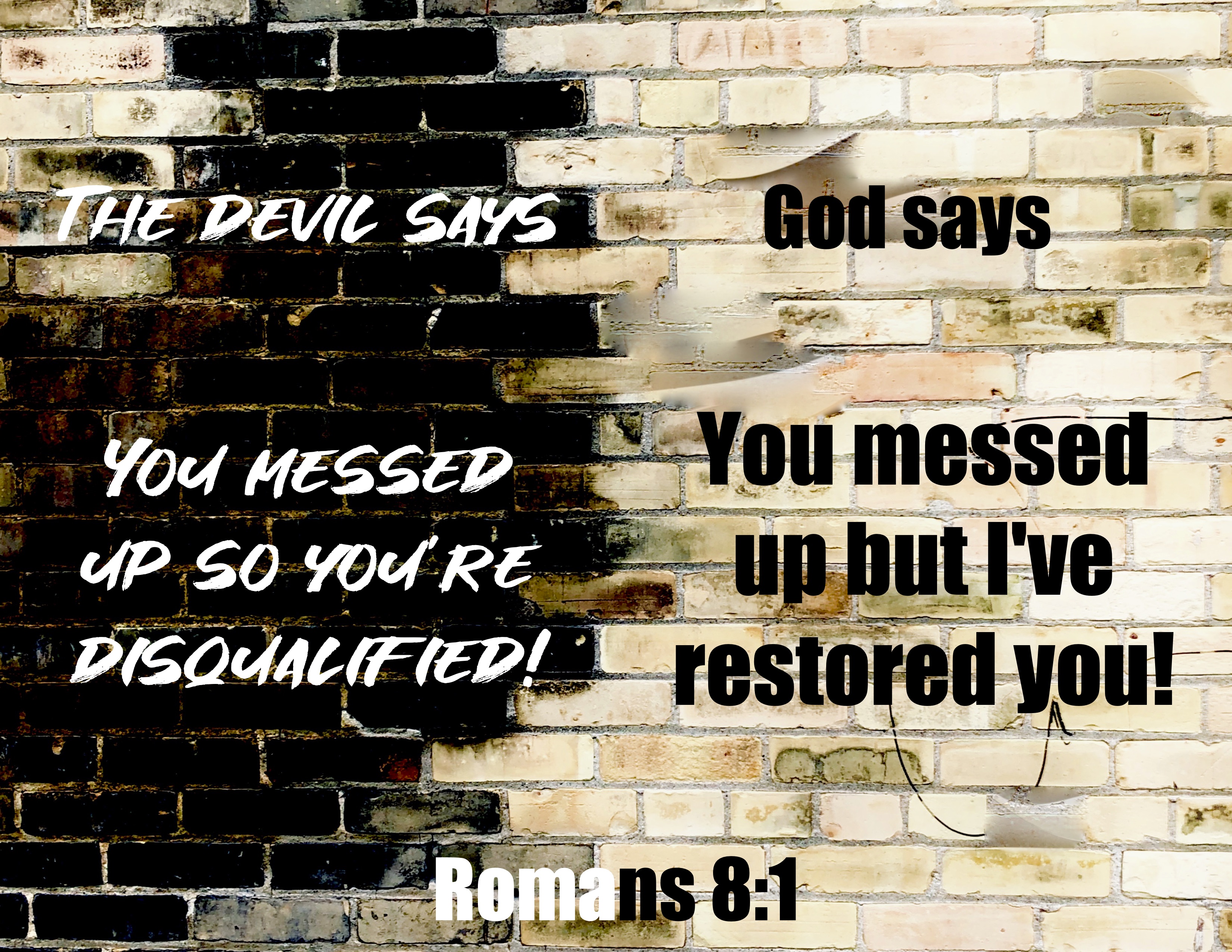
First, we need to talk back to our old family. The name “satan” means accuser: he accuses, condemns, slanders, and does his best to separate. When a Christian has been adopted into God’s family, there is no condemnation for the one who now calls God, “Abba Father” (see Romans 8:1-17).
This is where we need to call out satan’s lies. I mean literally call them out. We need to talk back to the devil and tell him the truth, just as Spurgeon said in his example of talking back to the Law. Let me say it again: literally speak the truth out loud. The devil needs to hear it and your own ears need to hear it too: “I am no longer subject to your jurisdiction. You have no say over me any longer. I am a child of God. My sins have been forgiven and forgotten; therefore, there are no grounds left for any condemnation!”
Second, we need to talk back to our old nature. After being adopted into God’s family, the Holy Spirit undertakes a process to conform us to the image of Jesus. This process is called sanctification, but I like to call it saint-ification.
This is where we call out what we used to be. And, again, I challenge to literally speak these words out loud. Don’t say, “I’m so impatient,” but tell yourself (out loud!), “I am becoming the patient saint Jesus wants me to be.” Don’t say, “I’ll never get this right,” but tell yourself, “I am learning more and more about Christ’s nature with each attempt.” Talk back to these old habits from your old family, and tell them about the new saintly habits the Holy Spirit is developing in you.
The book of Revelation tells us that the saints overcame the slanderous devil by the blood of Jesus and by the words of their testimony. Speak out those life-affirming words every time that slanderer tries to make you forget into whose family you have been adopted!
Listen to the podcast of this post by clicking on the player below, and you can also subscribe on Apple or Spotify.
…whoever does these things will never be shaken (Psalm 15:5).
David says “these things” are what allow us to come into God’s presence, but we cannot consistently nor completely do “these things” without the help that can only come from being in God’s presence. So I have to already be doing “these things” in order to get into His presence in order to get empowered to do “these things”?!
That seems like a classic, no-win, Catch-22!
So… how do I get into God’s presence in the first place?
Simple: I can’t.
Only Jesus can.
Thankfully, He made it possible for me to come in: He became the Door!
Only by Jesus can I come in. Only in Jesus can I be empowered. Only with Jesus can I consistently do “these things.”
What are “these things” that David listed that both allow me to come into God’s presence and then keep me in God’s presence? David said we must…
…speak truthfully: from the heart, no slander on my tongue, no unkind words in my mouth, no gossip on my lips.
…live courageously: honoring what is good and opposing what is evil.
…keep my oaths: making my yes mean yes, not making any excuses, helping others to do the same.
“These things” both glorify God and keep me in God’s presence. And “these things” attract others to His presence too. But I don’t try to do “these things” in my own strength—that would make me God—nor just as a religious To-Do List—that would make me a Pharisee. But I take a cue from the apostle Paul—
But whatever I am now, it is all because God poured out His special favor on me—and not without results. For I have worked harder than any of the other apostles; yet it was not I but God who was working through me by His grace (1 Corinthians 15:10).
It is grace—a free gift of God—that enables me to do “these things” not in my own strength, but in His strength!
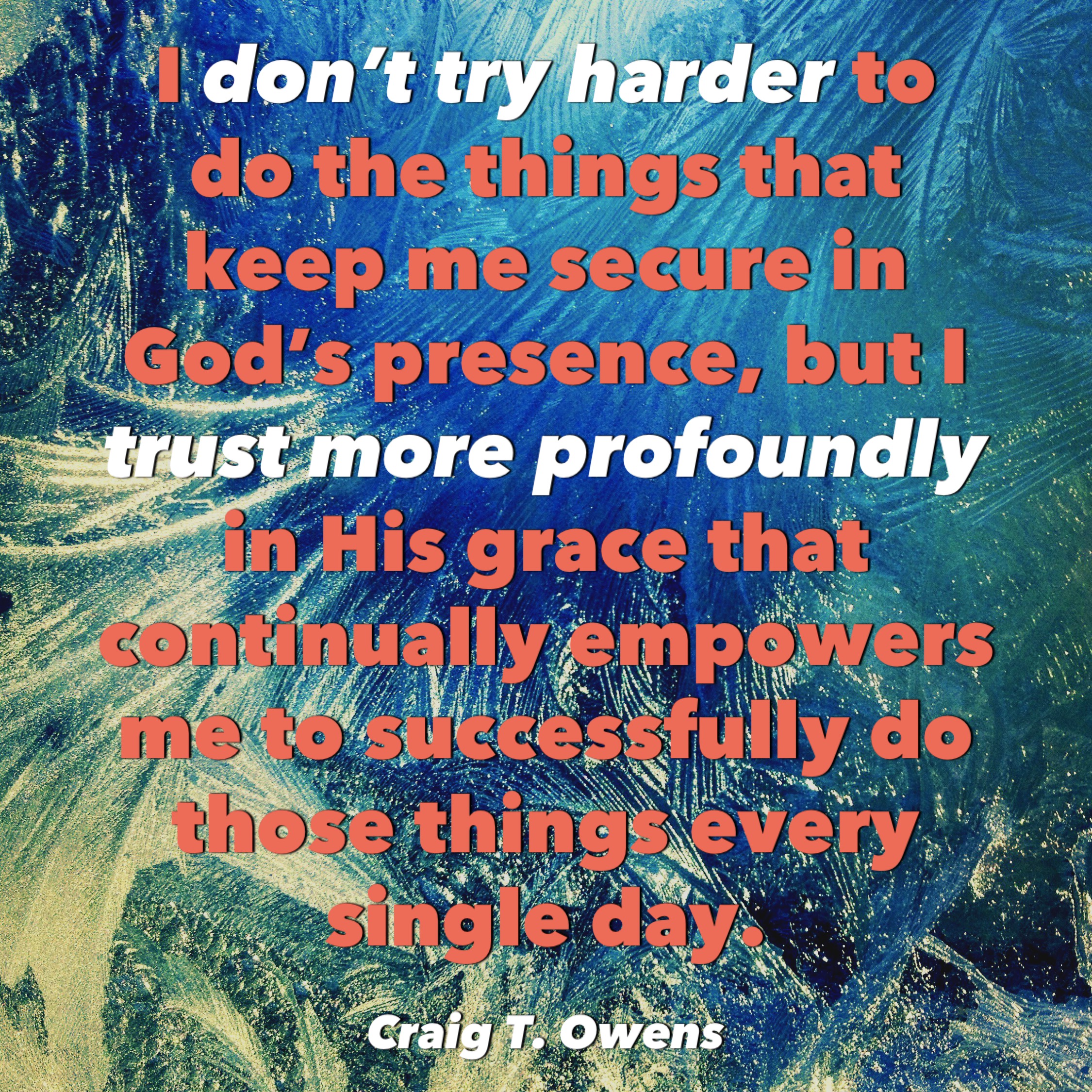
I don’t try harder to do “these things” that keep me secure in God’s presence, but I trust more profoundly in His grace that continually empowers me to successfully do “these things” every single day.
Listen to the podcast of this post by clicking on the player below, and you can also subscribe on iTunes or Spotify.
I am eternally grateful to my high school English teachers who not only taught me the fundamentals of reading literature and writing in different styles, but who immensely sharpened my skills. But can you imagine having C.S. Lewis as a writing mentor? That’s what you are getting when you read The Art Of Writing And The Gift Of Writers.
This book is compromised of essays and book reviews written by Lewis, interviews that Lewis gave, and even a transcript of an extemporaneous conversation with other authors who had congregated in Lewis’ rooms at Magdalen College.
Learning how a gifted writer like Lewis crafted his own books was insightful, as well as how he interpreted the writing process of other authors. He even talked about how he choose to handle literary critics. But most energizing of all for me was the freedom he gave me to be myself in the writing process. He made it abundantly clear that other authors shouldn’t try to emulate his literary style—nor any other author’s style either—but to use their unique talents to write their unique works of literature.
Since Lewis has been one of my favorite authors for most of my life, I found the journey into his mind to be absolutely fascinating. I would recommend this book for any author, aspiring author, or fellow fan of C.S. Lewis’ books and essays.
Listen to the podcast of this post by clicking on the player below, and you can also subscribe on Apple or Spotify.
There is a common characteristic among every human civilization: they all have had a pantheon of gods. It seems that no one god could capture all of the attributes each civilization thought were important, so they created multiple gods to help fill in the gaps.
Onto the world scene comes the account recorded for us in the Bible of a God who creates the universe. The Hebrew word for this God is elohiym which means “a divine one.” This name is used throughout the Creation story in Genesis 1.
Then in Genesis 2:4, a new name appears, one that is used over 6500 times in the Bible. It is the unpronounceable name YHWH: often pronounced Yahweh or substituted with the word Jehovah. In most Bible translations this name is designated by all capital letters: LORD. Yahweh or Jehovah means “the existing One.”
The first part of our second foundational truth states, “The one true God has revealed Himself as the eternally self-existent ‘I AM,’ the Creator of heaven and earth and the Redeemer of mankind.” This Creator is uncreated: He sustains the universe without needing to be replenished Himself. He is utterly complete in Himself; hence, His name means I AM (see Exodus 3:13-15).
The second part of this foundational truth statement says, “He has further revealed Himself as embodying the principles of relationship and association as Father, Son and Holy Spirit.”
The I AM is One (see Deuteronomy 6:4), but He reveals Himself in three Persons—Father, Son, Spirit—that we call the Trinity (although this is not a word found in the Bible).
Sometimes Christians have done a disservice to the I AM by making it appear He is divided. For instance, we might say, “The Father is the Creator, the Son is the Redeemer, and the Spirit is the Regenerator.” But remember that our One God is not a pantheon of gods; He is One. We see the fullness of the Trinity operating in every area. Here’s just a short sampling:
The creation of the universe—Genesis 1:1; Colossians 1:15-16; Psalm 104:30
The creation of man—Genesis 1:26-27
A prophecy about Jesus’ advent—Isaiah 9:6
The incarnation of Jesus—Luke 1:35
The baptism of Jesus—Matthew 3:16-17
The resurrection of Jesus—Acts 2:32; John 10:18; Romans 1:4
Our atonement—Hebrews 9:14
A Christian’s baptism in the Holy Spirit—John 14:16
A good question for us to ponder is: Why would this I AM God create humans? If He needs nothing to complete Himself or sustain Himself, why make us?
The apostle John captures the essence of the Trinity in three words: God is love.
God created us out of an overflow of His love so that we too could enjoy the intimate, eternal pleasure of being at-onement with Him forever. God then wants our love to overflow to everyone around us, so that they will also be drawn into this at-oneness with the I AM.
When Jesus was asked to state the greatest commandment, He first quoted from Deuteronomy 6: “Hear, O Israel: The LORD [Yahweh] our God, the LORD [Yahweh] is one.” Christ’s conclusion was for us to love this All-Loving God with all our heart, soul, mind, and strength. And then Jesus added an obvious overflow of that love: “And love your neighbor as yourself” (see Mark 12:29-31).
Love to God and from God should overflow from us to others to bring them into the One God who is love itself.
The more we understand this love that the I AM has for us: (1) the better able we will be to love and worship Him, (2) the more we will love others out of this overflow of love, and (3) the more glory our awesome GOD will receive. Which is exactly what the apostle Paul prayed for us in Ephesians 3:14-19.
This idea of an I AM God who reveals Himself as Father, Son, and Spirit has been described by the Latin phrase mysterium tremendum. It is indeed a mystery: not one that frightens and confuses, but one that energizes and enlivens. Pray Paul’s prayer for yourself, so that you can see more dimensions of this awesome love that God has for you!
This is a weekly series with things I’m reading and pondering from Charles Spurgeon. You can read the original seed thought here, or type “Thursdays With Spurgeon” in the search box to read more entries.
Listen to the podcast of this post by clicking on the player below, and you can also subscribe on iTunes or Spotify.
Adopted By God
Blessed be the God and Father of our Lord Jesus Christ, who has blessed us with every spiritual blessing in the heavenly places in Christ, just as He chose us in Him before the foundation of the world, that we should be holy and without blame before Him in love, having predestined us to adoption as sons by Jesus Christ to Himself, according to the good pleasure of His will. (Ephesians 1:3-5)
It is at once a doctrine of Scripture and of common sense that whatever God does in time, He predestined to do in eternity. …
Adoption is that act of God whereby men who were by nature the children of wrath, even as others, and were of the lost and ruined family of Adam, are from no reason in themselves, but entirely of the pure grace of God, translated out of the evil and dark family of satan and brought actually and virtually into the family of God. … This is an act of pure grace. …
[God] found a rebellious child, a filthy, frightful, ugly child. He took him to His bosom and said, ‘Evil though you are, you are comely in my eyes through my Son Jesus. Unworthy though you are, yet I cover you with His robe, and in your Brother’s garments I accept you.’ …
His only begotten and well-beloved Son was quite enough for Him. … And His own omnipotence was adequate enough to have created a race of beings far superior to us. He stood in no need whatever of any to be His darlings. It was, then, an act of simple, pure, gratuitous grace—and of nothing else—because He will have mercy on whom He will have mercy and because He delights to show the marvelous character of His condescension.
From Adoption
I love that thought that “whatever God does in time, He predestined to do in eternity.” When Adam and Eve sinned, God wasn’t scrambling to fix the sin problem. When He said that a remedy for sin was coming (Genesis 3:15), He was talking about a plan that was already in place.
When John the Baptist said of Jesus, “Behold the Lamb of God who takes away the sin of the world!” (John 1:29), he was only announcing what was a fact from before time began, where the apostle John described Jesus as “the Lamb slain from the foundation of the world” (Revelation 5:12, 13:8)! And the apostle Paul said God “chose us in [Jesus] before the foundation of the world”!
Friends, think of what this means: God saw a relationship with you—saw you adopted into His family—before you were born, even before the universe was created! What indescribable love! What amazing grace!
Do you realize your value in God’s eyes? He didn’t have to send Jesus, but He did. He didn’t have to lavish His love on you, but He does. He didn’t have to adopt you into His family, but what He has done in time, He predestined to do in eternity—from before He even said, “Let there be light” at the moment of creation.
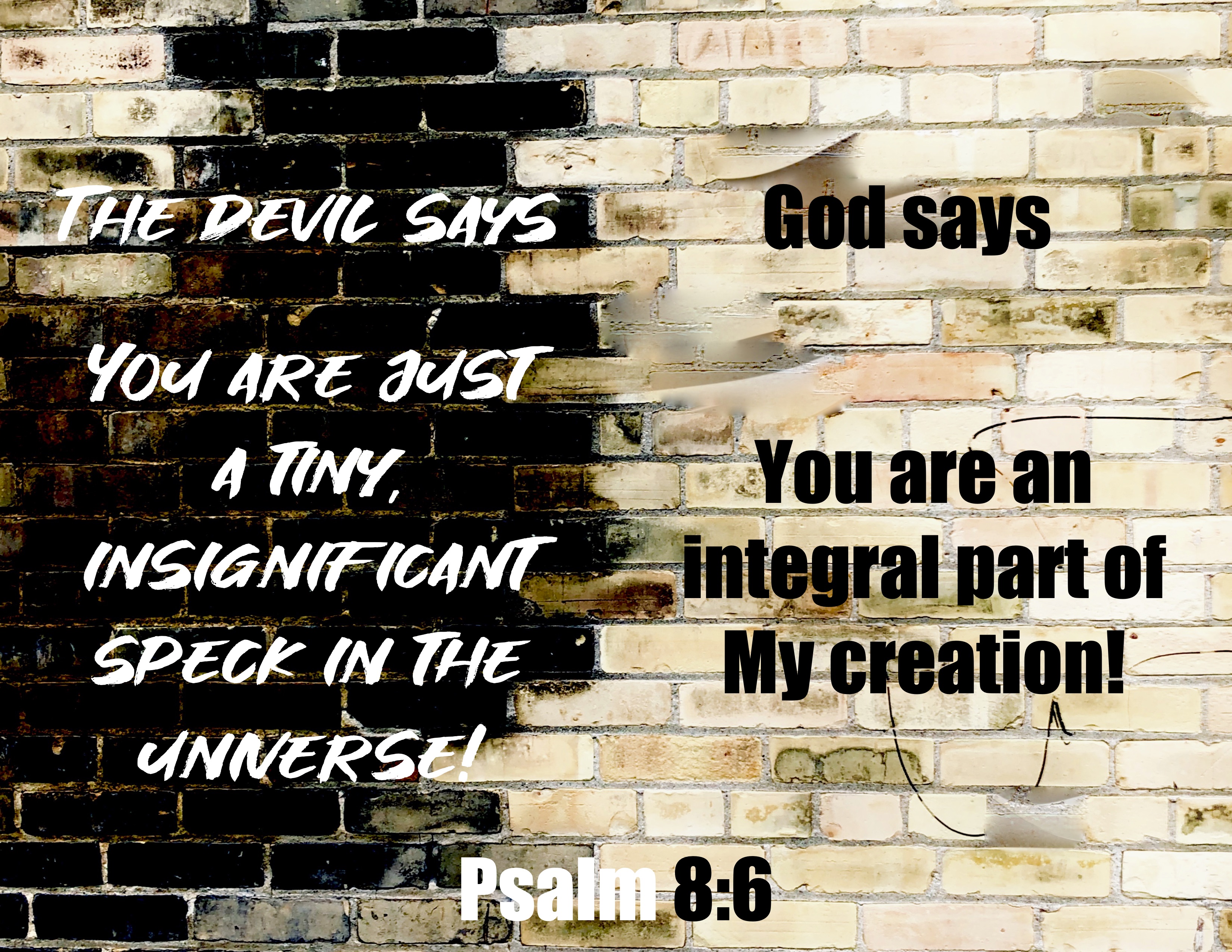
Don’t ever buy into the lies of satan that you’re nothing special, when, in fact, you mean more to God than you can possibly comprehend!
King Asa started out so well. The beginning of his reign could best be described by the word “peace”:
The land was at peace
No one was at war with him
The Lord gave him rest
“[God] has given us rest on every side”
The Lord his God was with him
When Cush attempted to attack the nation of Judah, Asa called on God: “Lord, there is no one like You to help the powerless against the mighty. … Do not let mere mortals prevail against You” (14:11). God gave Asa a great victory over Cush, and other God-fearing people from Israel began flocking to Judah “when they saw that the Lord his God was with [Asa]” (15:9).
This peace lasted for 35 years!
And then came one poor decision from which Asa never recovered.
The king of Israel began to make preparations for war against Judah. Instead of calling on God as he did when Cush was preparing to attack, Asa reverted to political maneuvering. He sent a bribe to a rival nation, enticing them to attack Israel.
The prophet Hanani told Asa, “The eyes of the Lord range throughout the earth to strengthen those whose hearts are fully committed to Him. You have done a foolish thing, and from now on you will be at war” (16:9).
From “the land was at peace” to “from now on you will be at war” came about because Asa…
…trusted his own ingenuity instead of relying on God
…calculated his odds instead of calling on his God
…forgot about God’s past provision
…refused to confess his sin and repent from it, even when the prophet called him out
Starting well is good, but finishing well is far better!
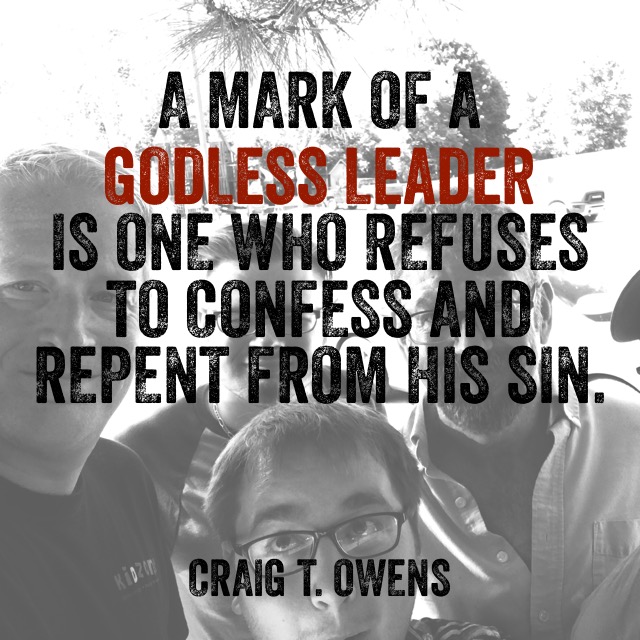
A mark of a godless leader is one who refuses to confess and repent from his sin.
Asa’s refusal to admit his sin resulted in the end of his life being spent afflicted with disease and his country being surrounded and oppressed by enemies.
This is part 54 in my series on godly leadership. You can check out all of my posts in this series by clicking here.
Listen to the podcast of this post by clicking on the player below, and you can also subscribe on iTunes or Spotify.
Dr. Craig Bartholomew wrote, “Wisdom is deeply experiential.” In other words, we can’t just have head knowledge and call it “wisdom,” but we have to have an experience in which we have learned a lesson in order for it to truly be called wisdom.
In the three wisdom books of the Bible—Job, Proverbs, and Ecclesiastes—the wisdom that is shared is hard-won by people who personally experienced what they shared with us. Even if we consider the wisdom in the poetic books of Psalms and the Song of Solomon, we are still reading first-person, firsthand experiences. True wisdom can never be dispensed by someone who hasn’t “been there, done that” and learned a valuable lesson from that experience.
In Job, we meet three of his friends who claim to have wisdom but don’t meet the criteria of personal experience. This pseudo-wisdom always comes in the form of, “I’ve heard that…,” or “It’s obvious from my observations…,” or “Everyone knows that….”
That means that satan’s tactics fall into this pseudo-wisdom category too: he has no personal, first-hand experience of human situations that result in hard-won wisdom! The best he can offer is secondhand observations.
This is why Solomon wrote, “The fear of God is the beginning of wisdom.” This holy respect and willingness to heed the words of Wisdom Himself is the starting point and the conclusion of wisdom. This is also why the writer of Hebrews wrote that Jesus knows every situation that we are going through. He knows how to help us because He has personal, first-hand, experiential wisdom.
satan’s temptations are only suppositions. He can never say, “I know from personal experience.” Look at his temptations of Adam and Eve, Job, Jesus, and the apostle Paul:
Jesus was tempted in every human way possible. He learned wisdom by this personal experience. Jesus alone is qualified to be the only source of Wisdom that you and I need to successfully handle trials and temptations.
Because He Himself in His humanity has suffered in being tempted, tested and tried, Jesus is able immediately to run to the cry of—to assist and relieve—those who are being tempted and tested and tried…. (Hebrews 2:18 AMP)
Listen to the podcast of this post by clicking on the player below, and you can also subscribe on iTunes or Spotify.
Have you heard the cliché, “Experience is the best teacher”? I don’t think that’s really true. I’ve known a lot of people who have had some huge experiences but haven’t learned a single lesson from them. Honestly this is the better statement: Evaluated and recalled experience is the best teacher.
Many of my “life lessons” have cost me money. For instance, I was told numerous times by my parents, grandparents, and my driving instructor not to speed, but I didn’t learn that lesson the easy way. It cost me financially. I recovered from that, and I’ve only had one speeding ticket in the 40 years that followed!
Most of us can recover from a financial loss. But other life lessons cost us more dearly: our broken physical health, lost intimacy in a relationship, a damaged reputation, or missed opportunities. Then we walk around with the weight of guilt, baggage, second-guessing, and regret. Jesus didn’t die on a Cross for us to live weighed down like this!
God wants to help us! So why do we wait to call on Him until after we’ve tried to do it ourselves? Or until after we’re so deep in trouble or weighed down with baggage? Perhaps we think, “This is such a tiny thing. I can handle it myself.”
Solomon said it was the tiny things that brought ruin
God told Cain that it was the sin that was crouching at his door that wanted to take him down
The devil prowls around and looks for the most opportune time to pounce on us
Portia Nelson summed it up well in her short story that I think all of us can relate to…
Chapter 1
I walk down the street.
There is a deep hole in the sidewalk.
I fall in.
I am lost… I am helpless. It isn’t my fault.
It takes forever to find a way out.
Chapter 2
I walk down the same street.
There is a deep hole in the sidewalk.
I pretend I don’t see it.
I fall in, again.
I can’t believe I am in the same place. But it isn’t my fault.
Chapter 3
I walk down the same street.
There is a deep hole in the sidewalk.
I see it is there.
I still fall in… it’s a habit… but my eyes are open, I know where I am.
It’s my fault. I get out immediately.
Chapter 4
I walk down the same street.
There is a deep hole in the sidewalk.
I walk around it.
Chapter 5
I walk down another street.
—Portia Nelson
Prayer helps us avoid the holes in our sidewalk, the crouching sin at our door, the prowling devil, and the lurking temptations. But more than that, prayer puts us on the right path to avoid all of these things in the first place (see Proverbs 3:5-6; Isaiah 30:21; 2 Samuel 22:34, 37)!
God doesn’t have to get ready to help us; He’s already ready to help us. He’s just waiting for us to ask for His help.
No matter how little or big the challenges, with God I can overcome!
No matter how obvious or hidden the hole is, with God I can go down the right street!
No matter how many times I fall in the hole, God can get me out!
No matter how much the devil wants to bring me down, with God I can live righteously!
No matter how many times sin pounces on me and I give in to it, God can forgive me!
Don’t wait a moment longer to call on your heavenly Father in prayer. Let Him hear your voice early and often—He loves to hear from you and respond to you!



 Craig loved Betsy first.







 Craig T. Owens