Listen to the podcast of this post by clicking on the player below, and you can also subscribe on Apple, Spotify, or Audible.
I had a great time on the Ailbe Podcast with Rusty Rabon.
Rusty referred to a chapter in my book called ‘Going Farther,’ where I talk about the importance of a shepherd leader having strong, godly friends close by.
In Shepherd Leadership: The Metrics That Really Matter I wrote, “You will not only extend your leadership by having other servant-hearted shepherds around you, but you will also have a guard against the aloneness that led to such ugly warts on the biography of otherwise powerful leaders such as David, Elijah, and Peter.”
I’ll be sharing more clips from this interview soon, so please stay tuned. If you would like to check out the other clips I have already shared from this podcast, please check them out here. Shepherd Leadership: The Metrics That Really Matter is available in print or ebook, and in audiobook through either Audible or Apple.
Listen to the podcast of this post by clicking on the player below, and you can also subscribe on Apple, Spotify, or Audible.
God said to Ezekiel, “Son of man, stand up on your feet” (Ezekiel 2:1).
Ezekiel had fallen face down at the sight of God—how awesome God’s presence must have been! Now God tells Ezekiel to stand up so that He may speak with him. It seems as if God is asking Ezekiel to do the impossible.
But we must remember this principle:
All of God’s commands are also His empowerment.
Ezekiel responded: “As He spoke, the Spirit came into me and raised me to my feet” (v. 2).
As God spoke His commandment to Ezekiel, His empowerment to help him obey infused Ezekiel. God’s power allowed Ezekiel to obey. His word of command was also His word of enablement.
There is no word of God that can ever be too hard for us to obey. God would never command us to do what is impossible for us to do, but with His command also comes His empowerment to obey that command.
And as Ezekiel obeyed, he was then able to hear even more of God’s word to him.
This principle is still true for us today. When God speaks a word to our heart, never say to Him, “What? That’s too hard! I could never do that!” Instead, we need to say, “God, that seems like a hard word, but because Your word is also the empowerment I need, I will obey You.” And as you obey, God is then able to speak even more words to your heart.
Listen to the podcast of this post by clicking on the player below, and you can also subscribe on Apple, Spotify, or Audible.
After the outpouring of the Holy Spirit on that Day of Pentecost immediately following Christ’s ascension, Christians were speaking in languages that they had not learned. As they did so, they were “declaring the wonders of God” in all the languages of the world. Some people mocked, saying they were merely babbling drunks, but everyone in Jerusalem was “amazed and perplexed” at this remarkable event, which prompted Peter to preach a powerful sermon (Acts 2:8-21).
Peter began his sermon by quoting words “spoken by the prophet Joel” (Joel 2:28-32). It’s unlikely that Peter had a copy of Joel with him, so this quotation was delivered from memory and Peter’s sermon was given spontaneously as the Holy Spirit empowered him. In looking at the passages in both Joel and Acts, I see three notable differences.
Joel begins by saying, “And afterward I will pour out My Spirit,” but Peter begins with the words, “In the last days…I will pour out My Spirit.” I’ll address this point further in just a moment.
Peter inserts “and they will prophesy” at the end of verse 18, a phrase that Joel didn’t say at the end of Joel 2:29. I think this is the Holy Spirit emphasizing that what the crowd heard was indeed prophecy, not mindless babbling.
Joel concludes with “before the coming of the great and dreadful day of the Lord,” but Peter says, “before the coming of the great and glorious day of the Lord.” The word Joel uses for “dreadful,” meaning an awesome day worthy of reverence, was a day of sorrow for those about to be judged guilty, and a day of supreme rejoicing for those about to be judged innocent in God’s sight. The word Peter uses for “glorious” is the only time this Greek word is used in the New Testament. The word is epiphanes: where we get our English word “epiphany”—a light has dawned and the truth is finally realized!
Let’s go back to the difference between “afterward” in Joel and “in the last days” in Acts. In a sense, the “afterward” for Peter was what everyone was experiencing right then—after the death, burial, and resurrection of Jesus, and after the outpouring of the Holy Spirit that Jesus had promised (John 16:7; Acts 1:4-5).
Let’s also consider the “afterward” in Joel’s day. What came before was a disaster of locusts consuming the land, which prompted Joel to call for the solemn response of prayer and fasting. This heartfelt response from godly people trigged God’s outpouring of His Spirit—the afterward—that led to a blessing “before the coming of the great and dreadful day of the Lord” (Joel 2:1-3, 10-13).
Both Joel and Peter conclude that it is God’s desire that “everyone…be saved”! The outpouring of the Holy Spirit was to help people have an epiphany of both their sin and the salvation that Jesus purchased on His Cross.
The word “disaster” comes from the Latin word disastros. The root word astros pertains to the heavenly lights (star, sun, moon), and the prefix “dis-” is a pejorative (something that has a belittling effect). So disaster really means no guiding lights, or hopeless darkness.
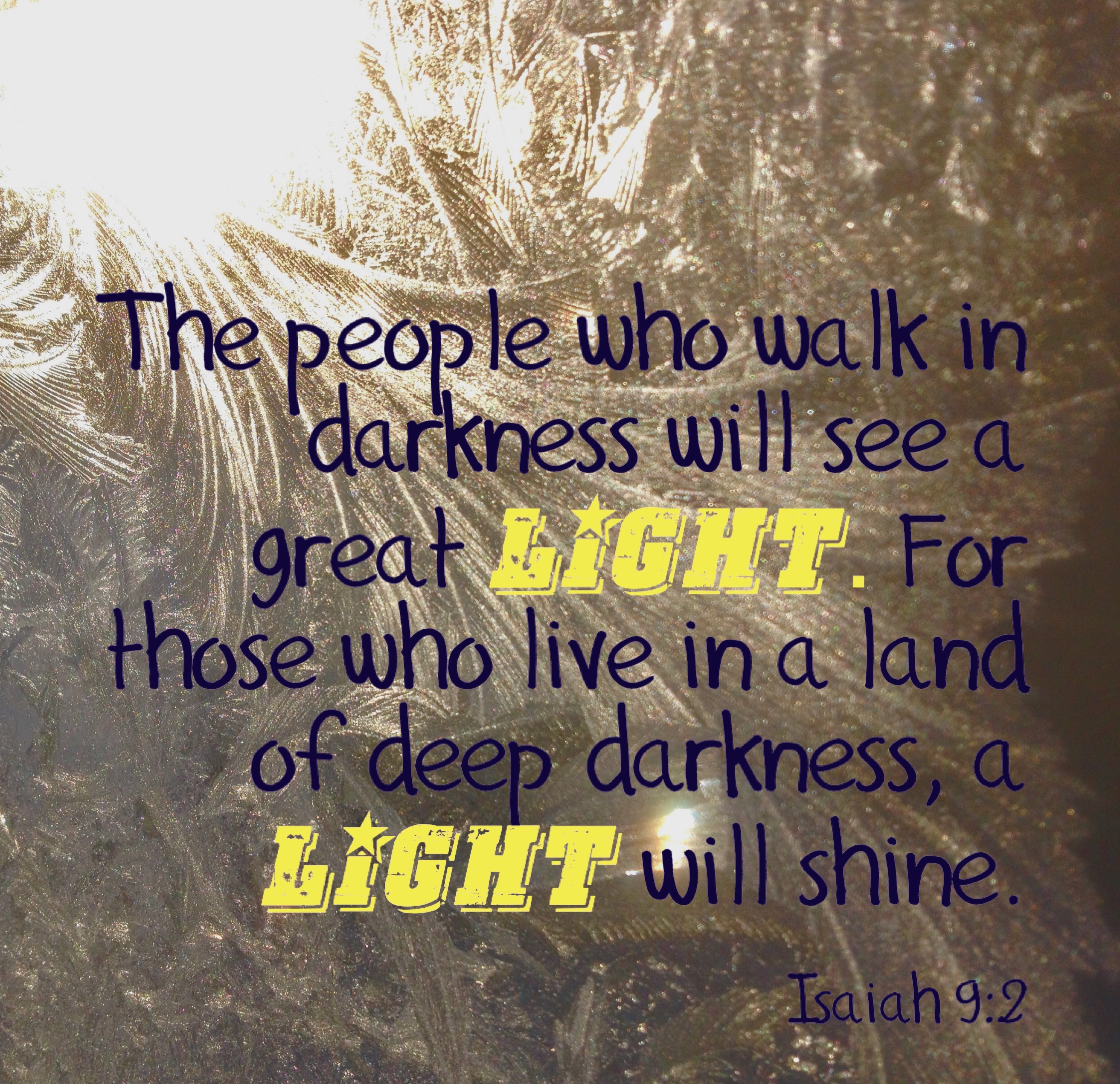
Jesus was prophesied to step into this hopeless darkness and bring light and hope—“The people walking in darkness have seen a great light; on those living in the land of deep darkness a light has dawned” (Isaiah 9:2). Zechariah prophesied that Jesus was the fulfillment of this: “Because of the tender mercy of our God, by which the rising sun will come to us from heaven to shine on those living in darkness and in the shadow of death, to guide our feet into the path of peace” (Luke 1:78-79).
Jesus is THE Epiphany, THE Ultimate Light, but He also tells us, “You are the light of the world (John 8:12; Matthew 5:14).
In a world of hopeless darkness, Christians are to be Christ’s Light-bearers.
We cannot do this on our own.
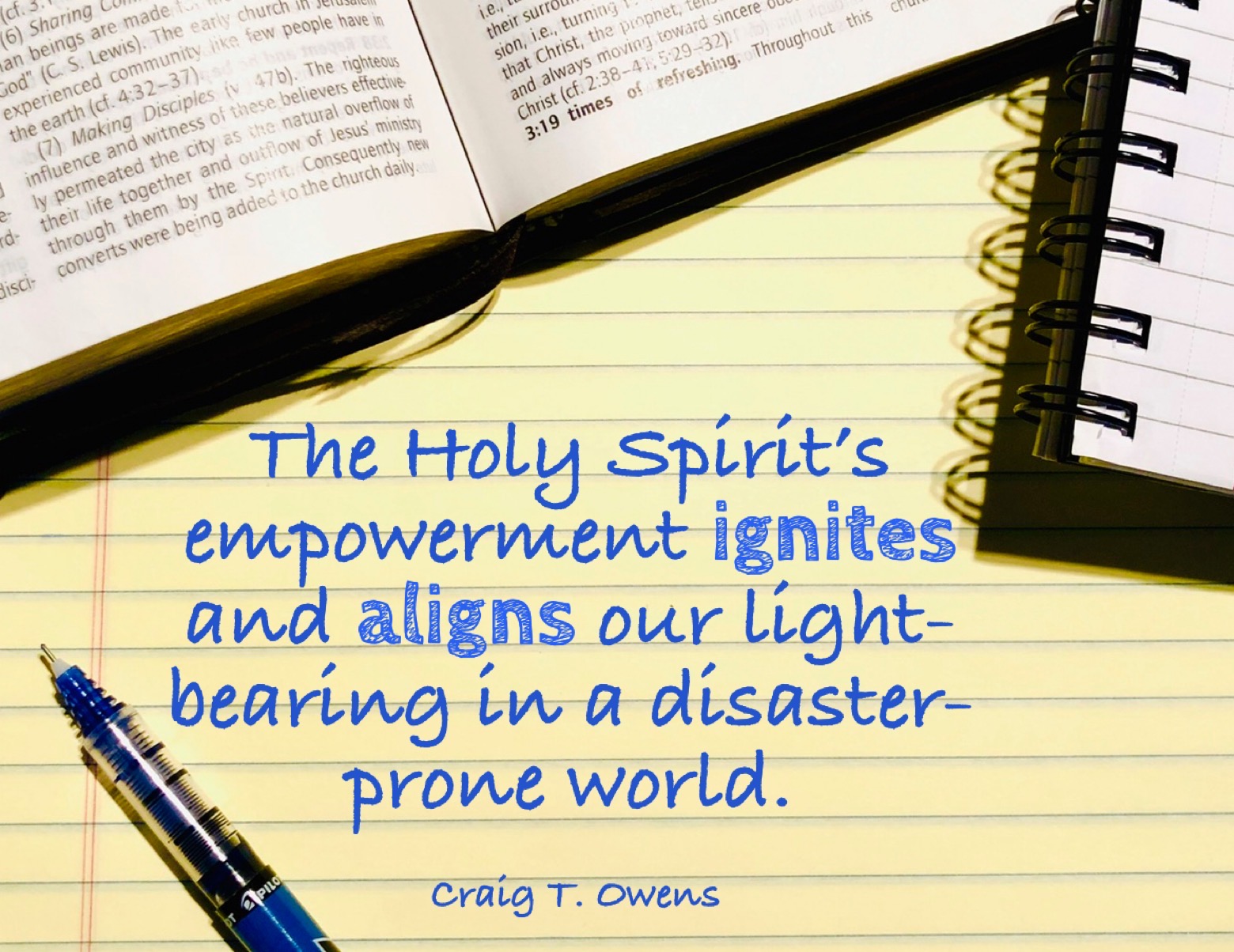
The Holy Spirit’s empowerment ignites and then aligns our light-bearing to a disaster-prone world.
When Joel saw disaster coming, he called for a fast. This fast led to the outpouring of God’s empowerment on godly people, so they could take the Light to those lost in deep darkness. I think the same response is needed from Christians today.
When it appears this world is plunging deeper into darkness—when we hear of disasters (remember that disastros means people are without Light)—we need to pray and fast so that the Holy Spirit can be reignited in us, so that we can then be realigned to best shine the light of Jesus brightly.
Our lives can and should be the epiphany of Christ’s love for the world to see! Let’s all pray: “Holy Spirit, make us Your epiphany to a dark world!”
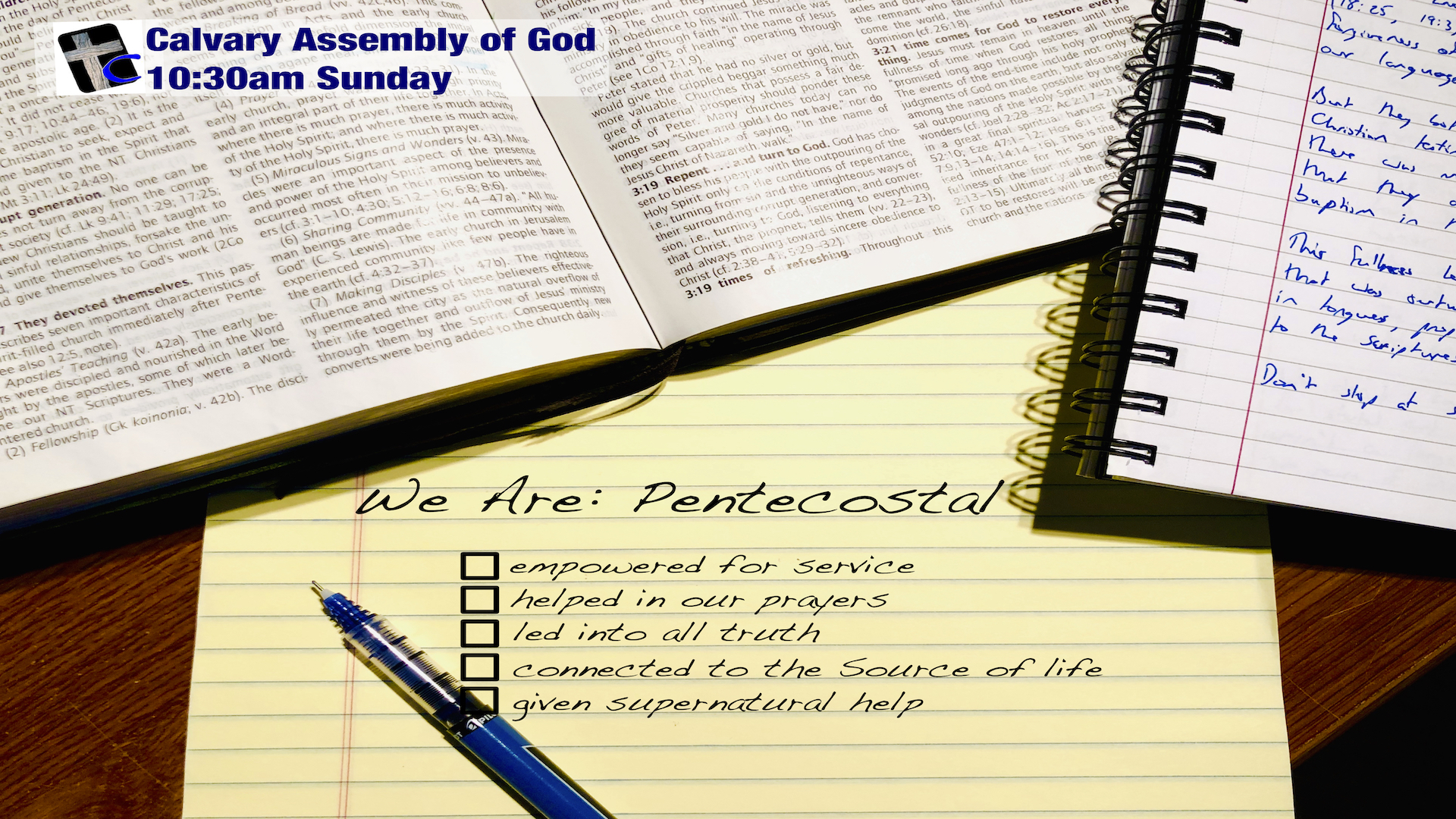
If you’d like to check out the other messages in our series We Are: Pentecostal, please click here.
“Ministers should be persons of the same quiet, lamb-like spirit that Christ was of, the same spirit of submission to God’s will, and patience under afflictions, and meekness towards men; of the same calmness and composure of spirit under reproaches and sufferings from the malignity of evil men; of the same spirit of forgiveness of injuries; of the same spirit of charity, of fervent love and extensive benevolence; the same disposition to pity the miserable, to weep with those who weep, to help men under their calamities of both soul and body, to hear and grant the requests of the needy, and relieve the afflicted; the same spirit of condescension to the poor and mean, tenderness and gentleness towards the weak, and great and effectual love to enemies.” —Jonathan Edwards
“God has promised to supply all our needs. What we don’t have now, we don’t need now.” —Elizabeth Elliot
In my book Shepherd Leadership: The Metrics That Really Matter, I talk about how important it is for us to get a good night’s sleep to keep our leadership skills sharp. Sleep is also vitally important to help in the battle against overcoming temptations.
A groundbreaking paper was released this year that appears to debunk evolutionary theories once again. Check out this commentary from John Stonestreet’s podcast.
“There’s no such thing as a spiritual vacuum in the cosmos. Whatever of our time, attention, interest, or strength is not devoted to the Lord, and His Kingdom and glory, will become susceptible to being taken over by contrary interests. These often take the form of false teachers who appeal to our selfish interests and encourage us to make of the faith of Jesus Christ a kind of spiritual smorgasbord for whatever we think we need. We leave off the solid food of sound doctrine and dabble in the sweets and crunchies of mere self-interest—if we spend any time in the Word of God at all. Our mind enters a period of arrested development which will become permanent atrophy unless serious measures are engaged.” —T.M. Moore
“Always make your gratitude greater than your success.” —Dan Sullivan & Catherine Nomura
This is a weekly series with things I’m reading and pondering from Charles Spurgeon. You can read the original seed thought here, or type “Thursdays With Spurgeon” in the search box to read more entries.
Listen to the podcast of this post by clicking on the player below, and you can also subscribe on Apple, Spotify, or Audible.
Fully Equipped For Success
The words of the Lord are flawless, like silver purified in a crucible, like goldrefined seven times. (Psalm 12:6)
Oh, that we used more the naked Sword of the Spirit! I am afraid we keep this two-edged Sword in a scabbard, and somewhat pride ourselves that the sheath is so elaborately adorned. What is the use of the sheath? The Sword must be made bare, and we must fight with it, without attempting to garnish it. Tell forth the words of God. Omit neither the terrors of Sinai, nor the love notes of Calvary. …
My Master’s Word is a great opener of prison doors. … That is a most wonderful Word, which, like a battle-ax, smashes in the helmet of presumption, and at the same time, like the finger of love, touches the tender wound of the bleeding, and heals it in an instant! The words of the Lord—for breaking down or lifting up—are equally effective. …
The Bible may be compared to the locksmith’s bunch of keys. You handle them one by one, and say of one, ‘That is a strange key; surely it will fit no lock that ever was made!’ But one of these days the smith is sent for to open a very peculiar lock. None of his keys open it. At last he selects that singular specimen. Look! It enters, shoots back the bolt, and gives access to the treasure! …
Rest assured that you never will be in a labyrinth so complicated that this Book, blessed of the Spirit, will not help you through. …
Beloved, the words of God endure another test; they are our preservatives in times of temptation. You can write a book that may help a man when he is tempted in a certain direction. Will the same volume strengthen him when he is attracted in the opposite direction? … The devil himself cannot invent a temptation that is not met in these pages. And all the devils in hell together, if they were to hold parliament, and to call in the aid of all evil men, could not invent a device which is not met by this matchless Library of truth. It reaches the believer in every condition and position, and preserves him from all evil.
From The Bible Tried And Proved
There is no substitute for God’s Word, and there is no obstacle that the Holy Scripture cannot overcome—
ALL Scripture is God-breathed and is useful for teaching, rebuking, correcting and training in righteousness, so that the servant of God may be thoroughly equipped for EVERY good work. (2 Timothy 3:16-17)
The Bible is our sword and battle-ax for fighting battles, it is our key to the most complicated problems, it is our map to guide us to safety, and it is our life preserver to help us overcome temptation.
I say a loud, “Amen!” to these concluding words of Charles Spurgeon: “I grieve that even to some who bear the Christian name, Holy Scripture is the least read book in their library. … Brothers and sisters, open the Book! Do it freely. Do it heartily. Do it constantly.”
Pentecost for over 1500 years was a celebration in Jerusalem that brought in Jews from all over the world. But on the Day of Pentecost which came just ten days after Jesus ascended back into heaven, the meaning of Pentecost was forever changed!
Followers of Jesus—now empowered by an infilling of the Holy Spirit—began to take the good news of Jesus all over the world. These Spirit-filled Christians preached the Gospel and won converts to Christ even among hostile crowds, performed miracles and wonders, stood up to pagan priests and persecuting governmental leaders, and established a whole new way of living as Christ-followers.
We, too, can be Pentecostal followers of Jesus Christ today. We can experience an anointing and an empowering in our lives that turns ordinary Christianity into extraordinary Christianity!
Please join me this Sunday at Calvary Assembly of God as we rejoin this series. You can check out what I taught in this series in 2019 by clicking here, the messages from 2020 are here, and the messages from 2021 are here.
Listen to the podcast of this post by clicking on the player below, and you can also subscribe on Apple, Spotify, or Audible.
“Ezekiel will be a sign to you…” —God (Ezekiel 24:24).
How many times have I told God, “I am Your servant. Use me as You know best”?
But do I really want that?
Ezekiel is told by God in the ninth year of their captivity in Babylon, on the tenth day of the tenth month, that the siege of Jerusalem had begun that very day. Ezekiel is then instructed to share this news with his fellow exiles. God tells Ezekiel that after he shares this news, he will be unable to speak until a messenger arrives in Babylon to confirm the report.
That same day, God also tells Ezekiel that his wife will die, but that he is not to mourn over this loss. God had grieved for years over Judah’s slide away from Him, but He could no longer grieve because it was now time for Judah’s punishment. Perhaps just like Judah’s slow downward slide, Ezekiel’s wife had been in declining health too, but now Ezekiel was called to obey God in this second illustrated sermon.
About seven months later, Jerusalem’s walls were broken through, King Zedekiah was captured, and about three weeks later Nebuzaradan torched the city. On that day, Ezekiel lost his power to speak, just as God said he would, and Ezekiel remained mute for nearly two years (2 Kings 25:1-10; Ezekiel 24:1-2, 15-27; 33:21-22).
This is what it means to be used by God. He used Ezekiel as His illustrated sermons to vividly show the exiles the consequences of their sinful choices.
But we don’t read a single word of complaint or bargaining from Ezekiel—just complete obedience.
A mark of a godly leader is one who signs a blank check for God to fill in the amount.
The leader that serves God in this obedient way is one who is highly esteemed by both God and men. God said, “As for you, son of man, your people are talking together about you by the walls and at the doors of the houses, saying to each other, ‘Come and hear the message that has come from the Lord.’ … When all this comes true—and it surely will—then they will know that a prophet has been among them” (Ezekiel 33:30, 33).
I want to believe that I am willing to serve God this way but am I truly willing? Perhaps my prayer should be, “Father I want to be able to be used by You. I want to say that I am ready for You to use me as You see best. But You alone truly know my heart. Holy Spirit, if I am not as committed as Ezekiel was, please do Your work in me so that I can truly say, ‘I am ready to be used.’”
This is part 63 in my series on godly leadership. You can check out all of my posts in this series by clicking here.
[6:30] Efficiency and effectiveness don’t have to compete with each other
[7:11] Quality is never an accident
[7:50] Greg shares a helpful list of three items, but to stay on track you can only pick 2-of-the-3
[8:45] What distracts us from pursuing quality?
[10:00] Both quality and quantity have their places, but the leader needs to determine which one takes the priority
[10:47] Greg shares a comical conclusion he made after overhearing a break room conversation
[12:27] Why do leaders find security in “more”?
[13:55] There is one key place where quantity should probably come first
[14:48] Numbers are easy to use to measure quantity, but quality is much harder to measure
[16:38] An important lesson for leaders
[18:14] A leader’s words need to be more qualitative than quantitative
[19:15] Our coaching huddle clients get both quantity and quality
Check out this episode and subscribe on YouTube so you can watch all of the upcoming episodes. You can also listen to our podcast on Spotify and Apple.
Listen to the podcast of this post by clicking on the player below, and you can also subscribe on Apple, Spotify, or Audible.
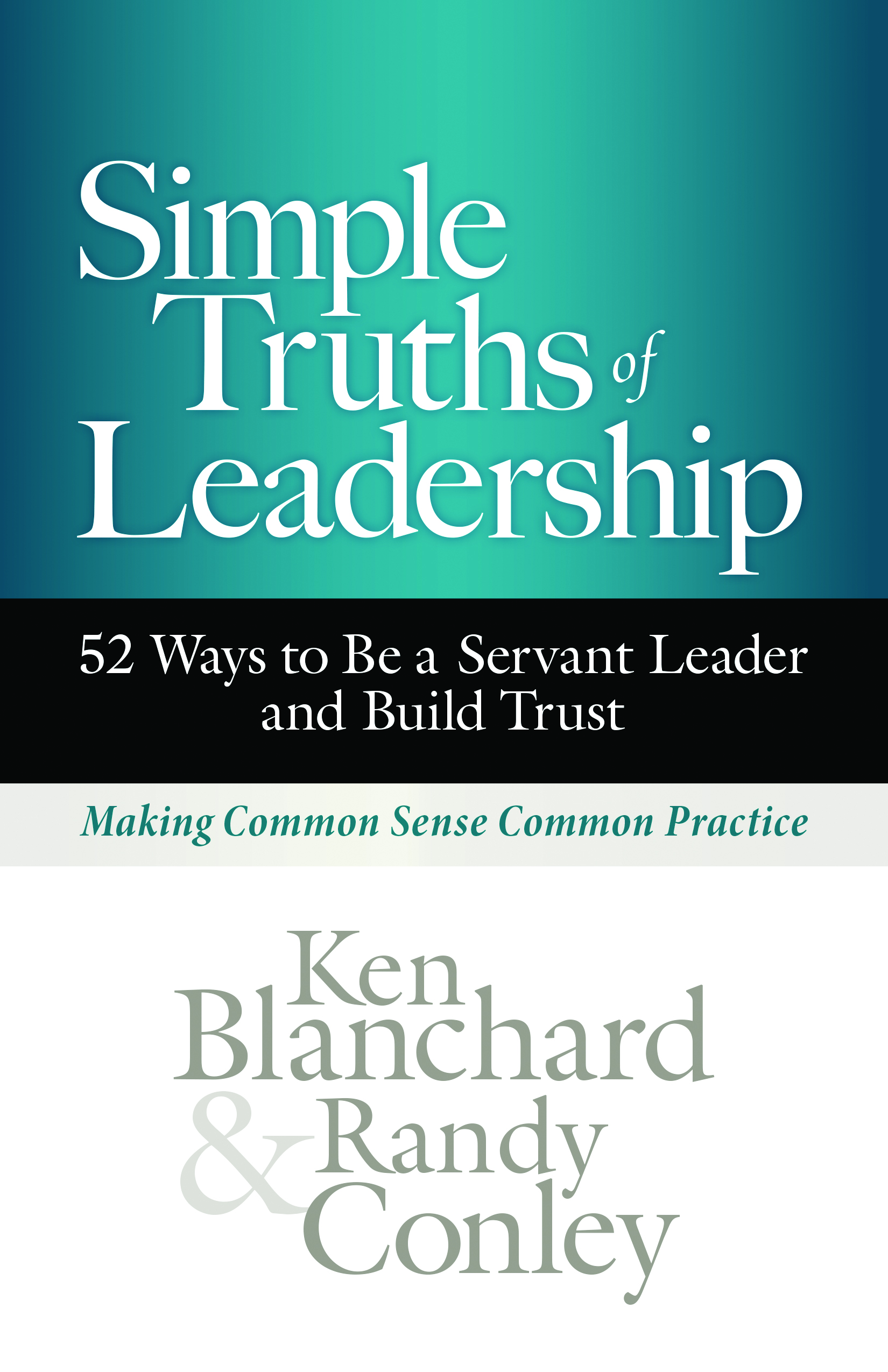
Kenneth Blanchard cranks out the leadership books! What I love about his writing style is how he makes his leadership principles so accessible in just a few words. Most of his books contain an overarching concept that’s easy to grasp and immediately applicable. But Simple Truths Of Leadership, which he co-wrote with Randy Conely, is a slight departure from this predictable style.
Simple Truths—as its title implies—still presents easy-to-grasp principles, but this book has a different feel to it. I think the best way I can describe this book is as an index to Blanchard’s earlier leadership books.
The overall emphasis of this book is servant leadership, with all of these simple truths being presented to us in 52 snippets. Each snippet gives the reader more than enough information to get to work, but then there is a reference given to a book previously written or co-written by Kenneth Blanchard to allow for a deeper study of that principle. This is why the overall feel of this book is as an index to the other books.
Whether you’ve read Kenneth Blanchard’s leadership books before, or if this is your first time picking up something he’s written, Simple Truths is a great book to add to your leadership library.



 I had a great time on the Ailbe Podcast with Rusty Rabon.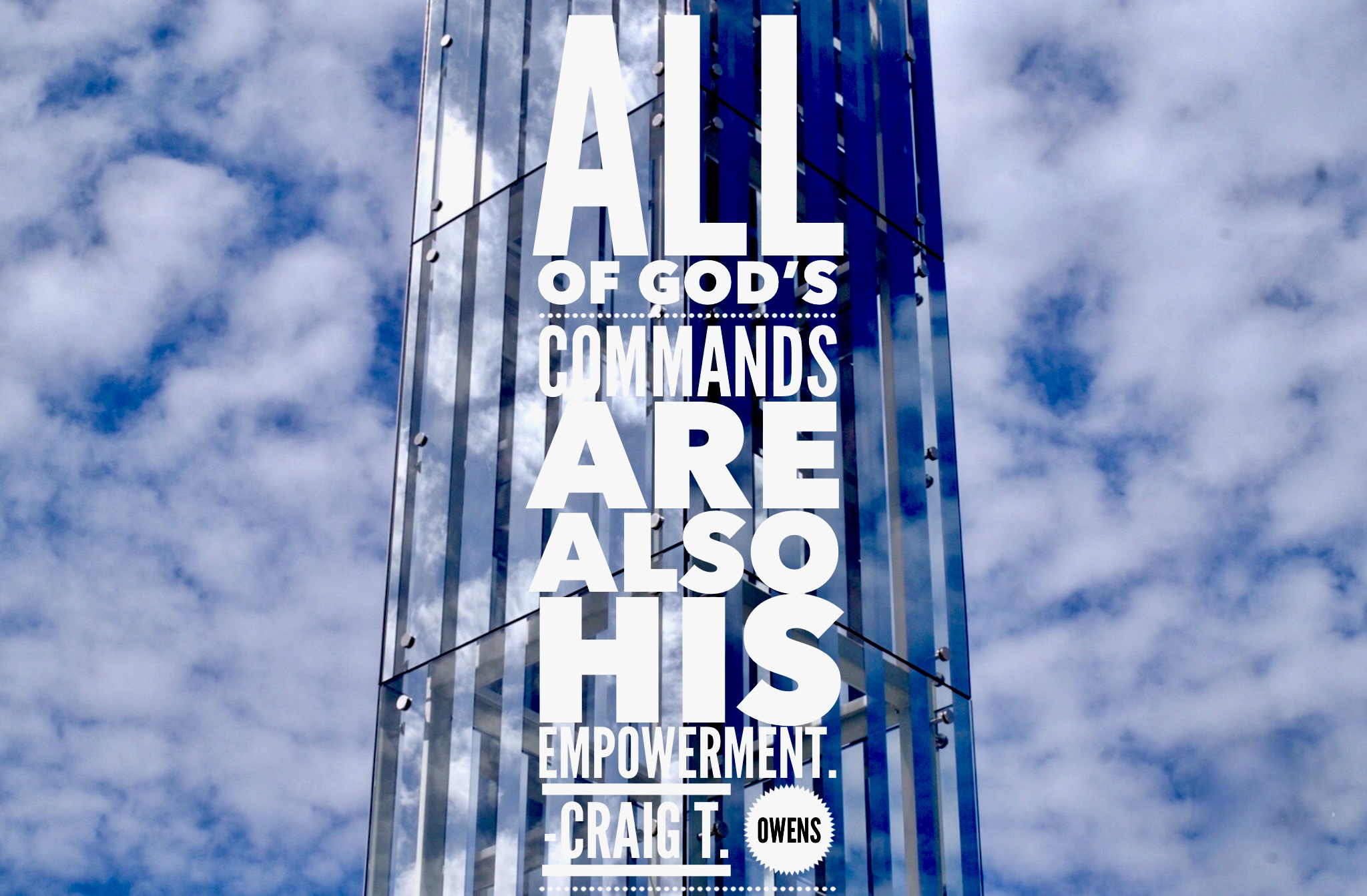







 Craig T. Owens