Listen to the podcast of this post by clicking on the player below, and you can also subscribe on Apple, Spotify, or Audible.
I would like to take you behind the scenes to the origin of my second book. In this video, you will hear how I first came up with the idea for When Sheep Bite, and how the Holy Spirit redirected my original book design.
Check out this episode of The Podcast.
I wrote this in the Introduction to Section One of When Sheep Bite—
I know that when you are in distress you are looking for immediate relief. You may be tempted to jump right to Section 2 of this book where I outline specific thoughts and strategies for handling the ways your sheep are biting and kicking, but I invite you to hold off. … It may appear from your perspective that the fault lies entirely with the attacking sheep—and that you feel that you haven’t done anything to provoke them. But these attacks can open our eyes to things we haven’t noticed before and teach us invaluable lessons, if we are willing to quiet ourselves before the Holy Spirit’s counsel. …
If we don’t have the heart of a shepherd leader, we will not only treat every bite and kick as if it is completely their fault, but we will never be looking for ways to bring healthy correction and restoration to that wayward sheep. Let me remind you that all of us were those wayward sheep—biting God’s hand, running away from Him—when Jesus put His very life on the line to bring us into the sheepfold (Romans 5:6-8). This kind of shepherding doesn’t come just because we outwardly try to do the right thing, but because we have a right heart attitude (Philippians 2:5).
I truly believe that When Sheep Bite will be a healing resource for shepherd leaders who are still feeling the pain of their latest sheep bite. If you are a pastor—or if you love your pastor—please pick up a copy today!
Listen to the podcast of this post by clicking on the player below, and you can also subscribe on Apple, Spotify, or Audible.
Jesus sent us and the Holy Spirit empowers us to take the Good News to all nations—all the streets (Luke 24:47-49; Acts 1:8). As we move away from Jerusalem and into Judea, we should expect to see more differences with our audience. And then as we move into Samaria, there will probably be more differences than similarities. Regardless of how little we may have in common with those on other streets, the Holy Spirit still empowers us to witness there.
When we don’t live on someone else’s street, we tend to make some pretty big assumptions about them. For example, until I married a school teacher, I thought, “How nice it must be to be done with work by 3:00 every afternoon and have three months off in the summer!”
Mistakenly, we think we can so easily fix the problems people on other streets have—we think we can show them how simple it is to correct anything out of balance on their street. These are natural thought patterns when so little of our circles overlap.
If you live on Main Street, two streets which are quite different from you are Easy Street and Skid Row. When it comes to finances, there tends to be extremes in our thoughts about the Samaritans that live on those streets—
Those on Easy Street only cares about themselves
Those on Skid Row should work harder
Those on Easy Street have too much—it’s not fair!
Those on Skip Row don’t have enough—it’s not fair!
But here’s the thing: It’s really not about the money but it’s about our attitude about the money.
In Luke 21:1-6, Jesus saw both rich people from Easy Street placing their tithe in the temple treasury, and a poor widow from Skid Row doing the same. Jesus said this widow put in more than anyone else. He was talking in terms of quality, not quantity.
While they were still in the temple, the disciples pointed out how beautifully embellished the temple was. These decorations came from the money those on Easy Street had contributed. Jesus told them not to focus on the temporal temple but on the eternal Kingdom of God.
As I said, Jesus doesn’t have a problem with money, but He does warn us about our ungodly attitude toward money (Luke 8:1-3; Matthew 27:57; Acts 4:32-5:4; Exodus 20:17; Luke 12:13-22).
Even though Easy Street and Skid Row seem to be at opposite ends of the spectrum, I think we are effective witnesses for Jesus on these streets in exactly the same way.
(1) Guard your attitude about money. Remember that Gad often provides for us by giving us a skill, and then making a job available that can use our skill. So let’s be thankful for our God-given jobs. Then we guard our attitude about money by tithing regularly, and making sure that when we bless others financially, we do it without expecting any fanfare (Colossians 3:23; Malachi 3:10; Matthew 6:2-3).
(2) Let God be unique as unique with these folks on Easy Street and Skid Row as He is with you on Main Street. Don’t try to be someone else, and don’t expect others to be you—simply obey what God has spoken to your heart, just as you allow others to obey what God has spoken to their hearts.
(3) Don’t tell, but show how you use the resources God has given to you. It’s not our place to “preach” to others about how they should or shouldn’t be handling their finances, but simply live out the biblical principles outlined above, and let your life show your godly attitude.
(4) Always turn the focus to the eternal. Just as Jesus did with His disciples in the temple, He always reminded people that this world with its perks or tragedies is only temporary. What ultimately matters is where we will spend eternity (Luke 13:1-5).
Money is always a touchy subject with people, so let’s make sure we have our own attitude aligned with Scripture before we try to bring the subject up with others.
If you’ve missed any of the other messages in our Takin’ Him To The Street series, you can find them all here.
God’s laws, precepts, and commands are given to us because He loves us and wants to keep us safe. His laws keep us in a place where we can experience His abundant blessings!
I have lots of new content every week, which you can check out on my YouTube channel.
“Establishing the Kingdom of God means ending evil, which happens not through violent force or coercive threats but through loving-kindness and patient forgiveness. It’s a world compelled by love instead of fear. … This [the outpouring of the Holy Spirit on the Day of Pentecost] is the beginning of a new world. The old world creates enemies and divides people, falsely claiming that some are loveable and others are throwaways, but not so in the Kingdom of God! In God’s empire, all people mutually love one another without partiality.” —Why Is Pentecost Important? reading plan on YouVersion
In the weekly Culture Translator newsletter from Axis Ministry, they had this insightful reminder about the worldview of pornography: “Pornography is not just sexual entertainment; it is a form of propaganda about what human beings are. In the same way that Scripture has a vision for humanity (that all people are God’s beloved children, worthy of honor and respect, with inherent dignity as his image-bearers), pornography also has a vision for humanity: that people (especially women) are objects to be gawked at, violated, and discarded at will. Porn offers a worldview, and like any other worldview, it shapes the way we think about what people are for—and how they should be treated. ‘Pornography teaches us lies that we ingrain into aspects of our relationships and our lives,’ argues Sam Black, Covenant Eyes’ Director of Recovery Education. These lies include the notion that we can’t live without sex, that sex equals love (or acceptance), and/or that what gives humans value is exclusively their sexual attractiveness. ‘Pornography warps our views of our relationships,’ Black continues, ‘and we haven’t even realized it.’”
“I always turn to the sports page first. They record people’s accomplishments. The front page has nothing but man’s failure.” —Chief Justice Earl Warren
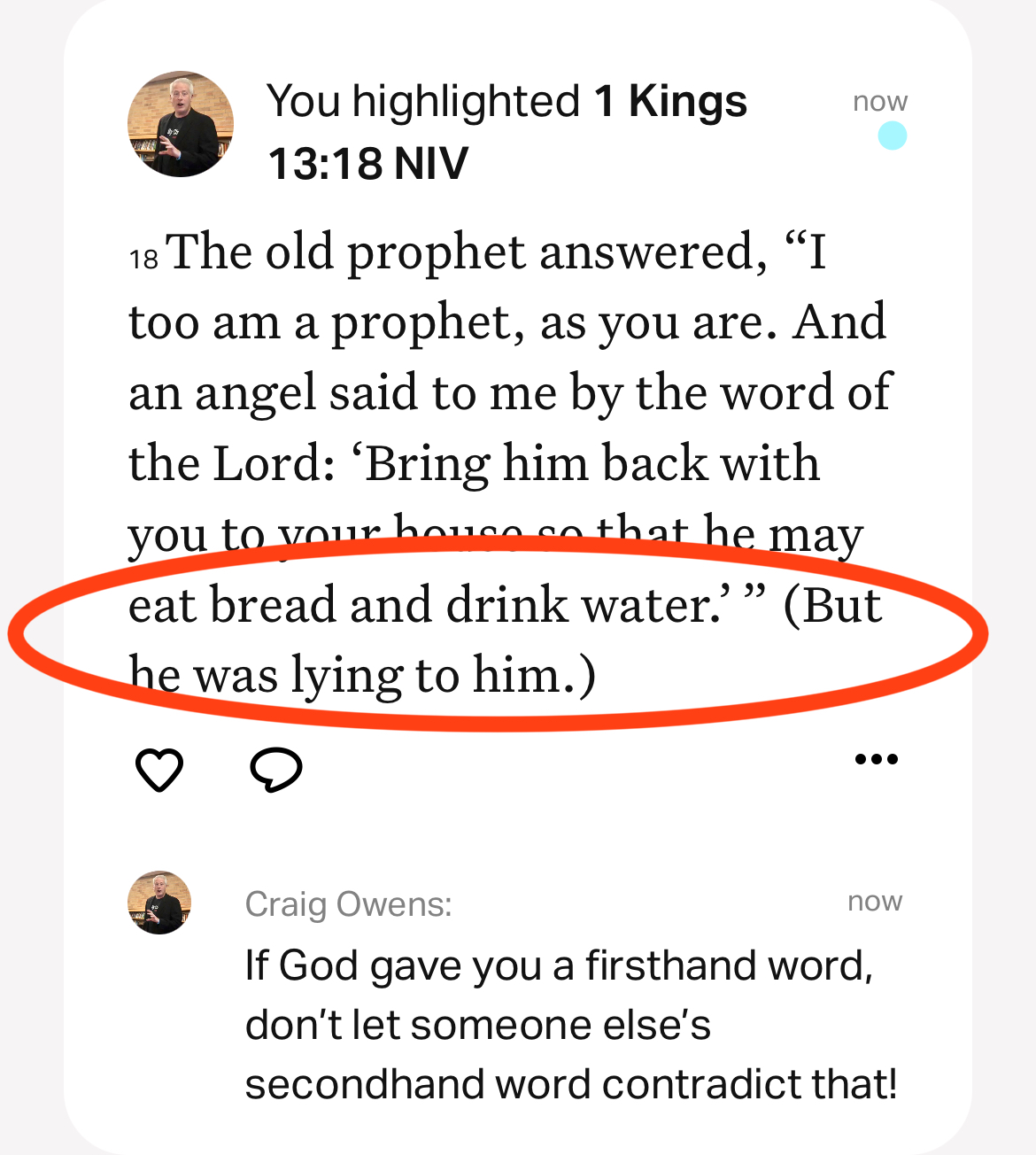
There is a very unusual story told in 1 Kings about a couple of unnamed prophets. One prophet heard from God, delivered the powerful warning God directed him to give, but then disobeyed God because of something another prophet told him that he had heard from God. I shared this commentary on YouVersion, “If God gave you a firsthand word, don’t let someone else’s secondhand word contradict that!”
“All religions are either a preview or a perversion of Christianity.” —C.S. Lewis
“If our relationships with other human beings are going to be meaningful, they will cost us something. Relationships are demanding.” —Herbert Wagemaker
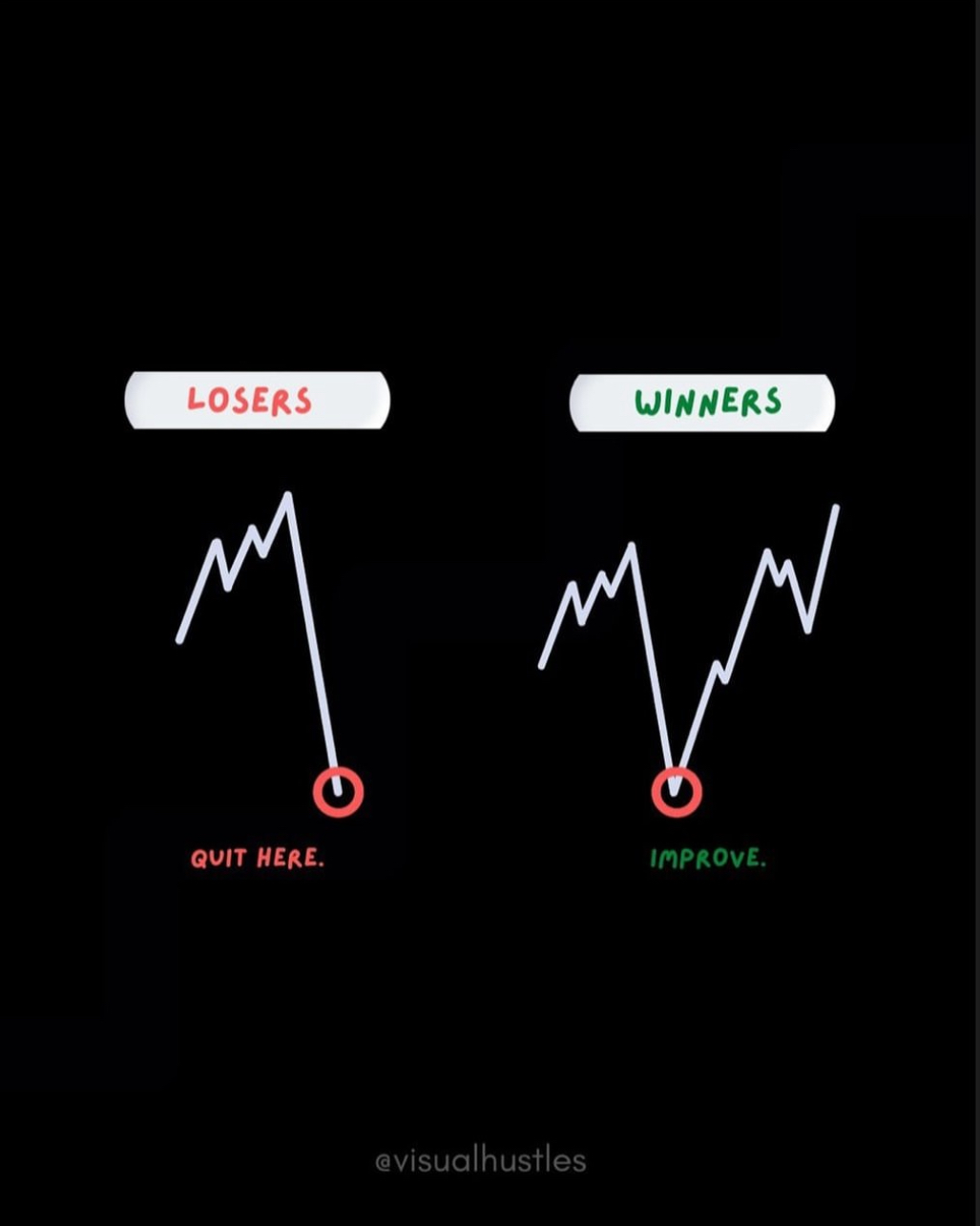
I saw this side-by-side graphic and so many thoughts about perseverance, grit, and stick-to-it-iveness came to mind. It is so true: we all have moments of stumbling. Losers tend to quit when they fall down, but winners learn something from their stumble, improve, and continue to grow. And then I came across this related quote from John D. Rockefeller, “I do not think that there is any other quality so essential to success of any kind as the quality of perseverance.”
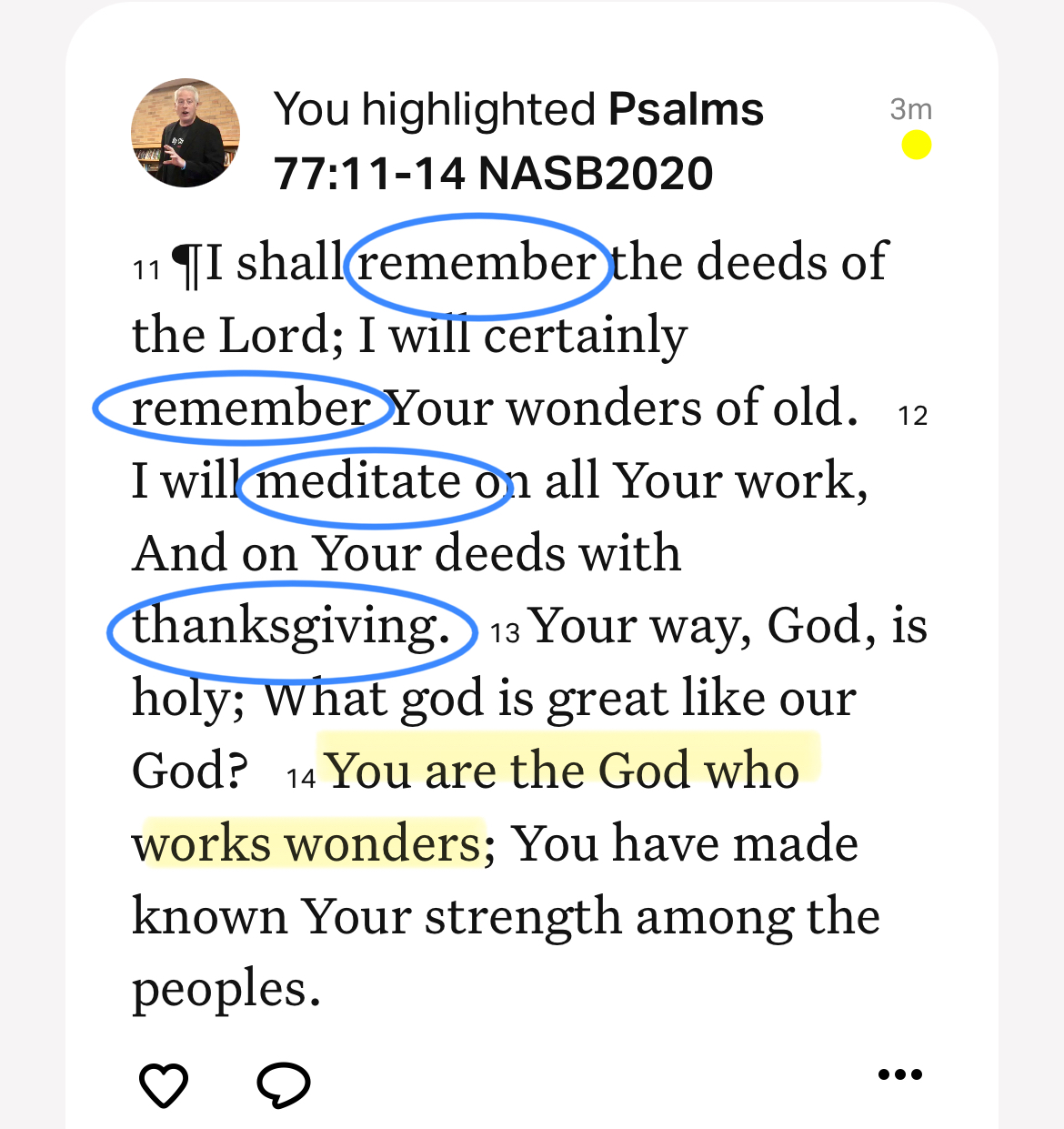
Remembering all God has done is the antidote to any fear or anxiety that we may feel. Recalling who God is and what He has done cannot help but lead us into worship of our awesome King! Then, as the words of an old chorus remind us—
🎶 In the presence of Jehovah
God Almighty, Prince of Peace
Troubles vanish, hearts are mended
In the presence of the King 🎶
I have shared a couple of other insights from Psalm 77 here:
Listen to the podcast of this post by clicking on the player below, and you can also subscribe on Apple, Spotify, or Audible.
My leadership podcast partner Greg Heeres and I were discussing a leader’s epitaph. Greg asked me an unusual question: What did I want to be said on my own epitaph?
Take a listen to this snippet from The Craig and Greg Show—
Listen to the podcast of this post by clicking on the player below, and you can also subscribe on Apple, Spotify, or Audible.
When we are going through something difficult or painful, we want to get counsel from someone who has some understanding of what we’re facing. In a word, we want someone empathetic.
Webster’s Dictionary defines empathy as the action of understanding, being aware of, and being sensitive to the feelings, thoughts, and experience of another. If you were telling me about your painful situation, to let you know that I “get you”—that I empathize with you—I might say something like, “I’ve been there, done that, and have the scars to prove it.”
But as I tell you my story, I need to really guard against one-upmanship. Webster’s defines that as the art or practice of outdoing or keeping one jump ahead of a friend or competitor. Saying something like, “Oh, feel your pain, but let me tell you how I had it so much worse” is one-upping and unhelpful!
In my book When Sheep Bite, I wrote this in the Introduction—
When you share a tale of real pain with a trusted friend, you don’t want them to try to one-up your story. Instead, you would want them to comfort you in your pain, to give you some helpful insight, or to even just cry along with you. On the other hand, you probably aren’t going to share your story of pain with someone who has no understanding of your situation. We want someone who “gets us,” someone who can relate, someone who can truly empathize with what we are feeling. …
I want to give you what I wanted when this happened to me: empathy, insight, a helpful perspective, and a manual of help that God has provided in the Bible. I don’t want to try to one-up your story of pain, because I’m confident that no one could truly know how deeply you’ve been hurt. But I do want to give you some assurance that I know what I’m talking about.
As I was discussing some of the ideas in my book with a group of pastors, I reminded them of the value of an iron-sharpening-iron friend (as Solomon describes in Proverbs 27:17) who is empathetic without crossing the line into one-upmanship.
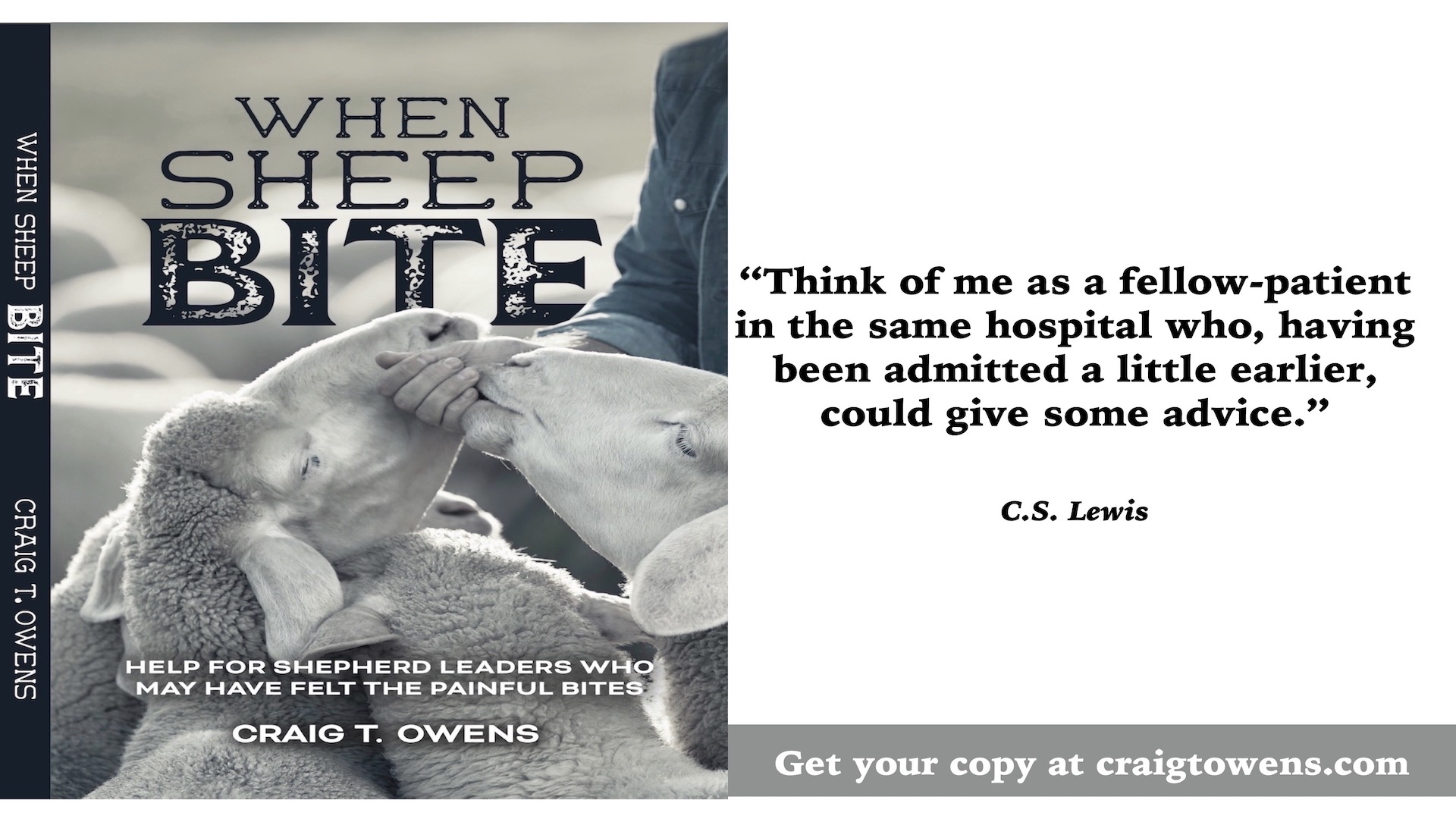
I truly believe that When Sheep Bite will be a healing resource for shepherd leaders who have been there, done that, and have the sheep bite marks to prove it. If you are a pastor—or if you love your pastor—please pick up a copy today!
“God, do not remain quiet; do not be silent and, God, do not be still. For behold, Your enemies make an uproar, and those who hate You have exalted themselves. They make shrewd plans against Your people, and conspire together against Your treasured ones. They have said, “Come, and let’s wipe them out as a nation, so that the name of Israel will no longer be remembered.” … Fill their faces with dishonor, so that they will seek Your name, Lord. May they be ashamed and dismayed forever, and may they be humiliated and perish, so that they will know that You alone, whose name is the Lord, are the Most High over all the earth.” (Psalm 83:1-4, 16-18 NASB2020)
Even God’s punishment on the enemies of His people has a redemptive purpose: “So that they will seek Your name … So that they will know that You alone, whose name is the Lord, are the Most High over all the earth.”
Yes, we should pray as this psalmist’s Holy Spirit-inspired words direct us. Pray for protection for God’s people, pray for punishment for God’s enemies, but also pray that all of this brings about the “so thats” that will lead these enemies of God to accept His forgiveness that Jesus paid for on the Cross.
Listen to the podcast of this post by clicking on the player below, and you can also subscribe on Apple, Spotify, or Audible.
Jesus sent us to all nations—to all the streets in all the world (Luke 24:47-49; Acts 1:8). We are to begin in Jerusalem and move outward. As we have seen, Jerusalem is like out Main Street, where there are more similarities than differences between us and the people to whom we are taking the Good News of Jesus. Judea is our Lombard Street & Rodeo Drive, where we are starting to see more differences.
Then we move to Samaria where there are now way more differences than similarities. But still, let’s never forget that Jesus sent us and the Holy Spirit empowers us to be effective in our witness on every street—even those with whom we have very little in common.
Jesus was baptizing in the Judean countryside (John 3:22) and now He is heading back to Galilee. “The shortest route from Judea in the south to Galilee in the north went through Samaria. The journey took three days if one wanted to travel the direct route. The Jews often avoided Samaria by going around it along the Jordan River. The hatred between the Jews and Samaritans went back to the days of the exile” (Dr. Henry Halley).
There were wide differences between Jesus and this woman of Sychar:
Cultural differences—The Jews considered the Samaritans to be no longer “pure” Jews, but half-breeds and traitors (vv. 5-9).
Personal differences—She was female, Jesus was male; she was a divorcée, Jesus was single (vv. 9, 16-18).
Religious differences—The Samaritans only recognized the Pentateuch; the Jews recognized the entire Old Testament Scripture. And the Samaritans saw Mt. Gerizim as the center of worship and the place the Messiah would reign; the Jews believed Jerusalem to be the center of worship (vv. 19-20).
Our first task is to find common ground with whoever we can. Jesus used the word “whoever” three times in John 3:16, 18, 36, saying that whoever believed in Him would have eternal life. We need to have this same mindset. It’s not His desire that any should perish—not even the Samaritans!—but that all should come to know Him as Savior.
In his book Winning With People, John Maxwell presents The 101% Principle: Find the 1% we can agree upon and give that 100% of your effort.
Jesus found the 1% and gave 100% to it. For He and this Samaritan woman their common connection was water and worship (John 4:9-15, 21-26). Jesus used both of those things to open a conversation about eternal matters.
Who are the Samaritans in my life? They are people…
…I have very little in common with
…I go out of my way to avoid talking to
…I think are never going to “get it”
…who make me angry, defensive, or combative
But they are also people…
…for whom Jesus died
…who are dearly loved by our Heavenly Father
…who need to hear the Gospel
…to whom I have been sent
Our prayer should be this:
Holy Spirit, help me to notice the people to whom I have been blind or whom I have been avoiding. Help me to find the 1% on which we can agree, and then empower me to give 100% of my effort to that 1%. I want my heart to beat with the heart of my Savior: Whoever believes on Him will not perish but will have eternal life.
Shepherd leaders do know the voice of their sheep, and the sheep know the voice of their shepherd. Leaders, this is the value of regularly being around all the people on your team. Check out this full conversation Greg and I had on our leadership podcast. This idea is central to my book Shepherd Leadership.
I have lots of new content every week, which you can check out on my YouTube channel.
“Alice Reynolds Flower (1890-1991), the wife of [Assembly of God] pioneer J. Roswell Flower, is a shining example of motherhood. Affectionately known as ‘Mother Flower,’ she preached, taught Sunday School, led prayer meetings, wrote articles, penned poetry, authored books, and lived a godly example in front of her six children and everyone she came in contact with. As Mother’s Day approaches, it is good to consider an article that Mother Flower wrote for the Pentecostal Evangel in May 1952.” Check out Alice Flowers’ article here.
Kenneth Blanchard discusses when it is and isn’t a good time for a leader to be a micromanager. He concludes this insightful post by saying, “The best leaders know how to continually adjust their leadership style to fit each situation, helping to develop individuals who will ultimately achieve each goal and perform well on each task with little direction or support.”
“The pre-Flood world had some truly massive dinosaurs, and the largest of them were in the group Sauropodomorpha. Within this group were titanosaurs, which include the gigantic Argentinosaurus that is estimated to have weighed over 100 tons.” Read more about titanosaurs here.
What is it about morality that points humans higher and higher to find the Source? J. Warner Wallace, in this video based on his book God’s Crime Scene, makes the case that objective, transcendent morality is good proof for God. This reminds me of C.S. Lewis’ similar argument: “My argument against God was that the universe seemed so cruel and unjust. But how had I got this idea of just and unjust? A man does not call a line crooked unless he has some idea of a straight line. What was I comparing this universe with when I called it unjust? If the whole show was bad and senseless from A to Z, so to speak, why did I, who was supposed to be part of the show, find myself in such a violent reaction against it?”
Pastors, listen to this call to revival from the pen of Jonathan Edwards. Let us seek in prayer for a revival in our day! “The Scripture gives us great reason to think, that when once there comes to appear much of a spirit of prayer in the church of God for this mercy, then it will soon be accomplished…Spiritual waters and rivers are explained by the apostle John, to be the Holy Spirit…It is now a time of scarcity of these spiritual waters; there are, as it were, none. If God’s people, in this time of great drought, were but made sensitive of this calamity, and their own emptiness and necessity, and brought earnestly to thirst and cry for needed supplies, God would, doubtless, soon fulfill this blessed promise.”



 I know that when you are in distress you are looking for immediate relief. You may be tempted to jump right to Section 2 of this book where I outline specific thoughts and strategies for handling the ways your sheep are biting and kicking, but I invite you to hold off. … It may appear from your perspective that the fault lies entirely with the attacking sheep—and that you feel that you haven’t done anything to provoke them. But these attacks can open our eyes to things we haven’t noticed before and teach us invaluable lessons, if we are willing to quiet ourselves before the Holy Spirit’s counsel. …





 Craig T. Owens