Poetry Saturday—Thy Ship

Hadst thou a ship, in whose vast hold lay stored
The priceless riches of all climes and lands,
Say, wouldst thou let it float upon the seas
Unpiloted, of fickle winds the sport,
And all the wild waves and hidden rocks the prey?

Thine is that ship; and in its depth concealed
Lies all the wealth of this vast universe—
Yea, lies some part of God’s omnipotence,
The legacy divine of every soul.
Thy will, O man, thy will is that great ship,
And yet behold it drifting here and there—
One moment lying motionless in port,
Then on the high seas by sudden impulse flung,
Then drying on the sands, and yet again
Sent forth on idle quests to no-man’s land
To carry nothing and to nothing bring;
Till, worn and fretted by the aimless strife
And buffeted by vacillating winds,
It founders on the rock, or springs a leak,
With all its unused treasures in the hold.

Go save thy ship, thou sluggard; take the wheel
And steer to knowledge, glory, and success.
Great mariners have made the pathway plain
For thee to follow; hold thou to the course
Of Concentration Channel, and all things
Shall come in answer to thy swerveless wish
As comes the needle to the magnet’s call,
Or sunlight to the prisoned blade of grass
That yearns all winter for the kiss of spring. —Ella Wheeler Wilcox

Thursdays With Spurgeon—Following The Prompting

This is a weekly series with things I’m reading and pondering from Charles Spurgeon. You can read the original seed thought here, or type “Thursdays With Spurgeon” in the search box to read more entries.

Following The Prompting

     I once while preaching at New Park Street Chapel. I had passed happily through all the early parts of divine service on the Sabbath evening and was giving out the hymn before the sermon. I opened the Bible to find the text, which I had carefully studied as the topic of discourse, when, on the opposite page, another passage of Scripture sprang upon me like a lion from a thicket with vastly more power then I had felt when considering the text that I had chosen. The people were singing and I was sighing. I was in a strait between two, and my mind hung as in the balances. I was naturally desirous to run in the track that I had carefully planned, but the other text would take no refusal and seemed to tug at my skirts, crying, “No, no, you must preach from me! God would have you follow me.” I deliberated within myself as to my duty, for I would neither be fanatical nor unbelieving, and at last I thought within myself, Well, I should like to preach the sermon that I have prepared, and it is a great risk to run to strike out a new line of thought, but as this text constrains me, it may be of the Lord, and therefore I will venture upon it, come what may.

     I had brought myself into great difficulty by obeying what I thought to be a divine impulse, and I felt comparatively easy about it, believing that God would help me and knowing that I could at least close the service should there be nothing more to be said. I had no need to deliberate, for in one moment we were in total darkness. The gas had gone out…. Having no manuscript, I could speak just as well in the dark as in the light…. When the lamps were lit again, I saw before me an audience as rapt and subdued as ever a man beheld in his life. … Thus, providence befriended me. I cast myself upon God, and His arrangements quenched the light at the proper time for me. Some may ridicule, but I adore; others may even censure, but I rejoice.

From The Autobiography of Charles Spurgeon

God can speak to pastors as clearly in his or her sermon preparation time as He can in the very moments before the sermon begins. The key is our obedience to follow the prompting of the Holy Spirit. 

Spurgeon would never advocate that preachers “wing it” every time they step into the pulpit. His own life showed a man of diligent study of the Scripture. But neither would Spurgeon say that preachers have to stick to their prepared remarks no matter what. What I think he would say is: Trust God when you’re studying for a sermon, and trust God when you’re delivering a sermon. Allow the Spirit to change your course at any moment. 

Is this a bit nerve-wracking? Spurgeon would say, “Yes, only when deliberating whether to strike out on the new course.” But notice how once he obeyed that prompting, he felt completely at ease.

Spurgeon also reminds us, “I do not see why a man cannot speak extemporaneously upon a subject that he fully understands. Any tradesman, well versed in his line of business, could explain it without needing to retire for meditation, and surely I ought to be equally familiar with the first principles of our holy faith. I ought not to feel at a loss when called upon to speak upon topics that constitute the daily bread of my soul.”

The Church Needs To Foster Community

“Amid the confusion of Christians mistreating people with gender dysphoria to prop up their sense of self-righteousness, and progressives mistreating them to advance their agenda of autonomy, those with real identity struggles are forgotten. Christ alone understands who we are through and through. And because of that each one of us in our fractured states needs to come to Him. …

“The need of the hour is for biblically faithful compassion. The church needs to open its doors and Christians need to open their hearts so that those struggling to find resolution to their dysphoria—and those who are struggling to find clarity amidst other confusions—can find community and, ultimately, their true identity in Christ. In Christ, they can be understood. …

“God’s original intent is for harmony between one’s soul and one’s body. This is why Christians, of all people, should be compassionately concerned with helping people find mind-body congruence. For the Christian, the mind and the body are both important and were meant to work harmoniously. … This biblical perspective defends our integrity as whole human beings in contradistinction to the secular effort to reduce us to our chemistry and jettison any idea that we have an immaterial mind or soul. …

“That is why the invitation of Christ has come in this order: recognition, repentance, redemption, regeneration. When we recognize our need for the Savior (because of our sins in general, not because of our dysphoria), repentance happens and then we are redeemed. But that redemption works itself out in our lives over time. It is the Holy Spirit who lives and works in us to conform us to Jesus’ likeness. It is not an overnight process, which means the church must do a better job of helping that process along. The church needs to foster community.” —Abdu Murray

Uphill Or Downhill?

…And because of this I rejoice. Yes, and I will continue to rejoice (Philippians 1:18).

Paul is in prison, yet he tells his friends that he is choosing to rejoice. Wow! 

Not only that, but this same imprisoned man also reminds his friends to…

  • … let their joy in Jesus overflow 
  • … conduct themselves in a manner worthy of the gospel of Christ
  • … continue to have a servant’s attitude like Jesus
  • … don’t give in to complaining or arguing 
  • … look out for the interests of other people 
  • … rejoice in the Lord
  • … don’t rest on their laurels
  • … forget the past and press on toward the future 

John Maxwell has noted that most people have uphill dreams but downhill habits. That is definitely not a winning combination! 

Paul is making his friends aware of the possible downhill habits that may hold them back from their uphill dreams, and using himself as an example. This first step—awareness—is vital if we are going to break free of the things that are pulling us away from our God-given dreams. 

Solomon wrote, “The path of life leads UPWARD for the prudent to keep them from GOING DOWN to the realm of the dead” (Proverbs 15:24). 

Being prudent is saying, “I’m always on the lookout for what’s best.” 

None of us can go UP by ignoring our downhill habits, or even trying to coast through life. The only way to achieve our uphill dreams is to ask the Holy Spirit to reveal our downhill habits so that we can make a plan to turn those around. 

Check out these characteristics that Paul shares—

Downhill Habit              Uphill Habit
Complaining                    Rejoicing (4:4)
Selfishness                      Gentleness (4:5)
Worrying                         Praying (4:6a)
Grumbling                       Giving thanks (4:6b)
Fixing it myself                Giving it to God (4:6c)
Idle thoughts                   Thinking about my thinking (4:8)
Making my own way         Getting a mentor / partner (4:9)
Being discontent              Being content (4:11-12)
Trying to be self-made     Striving to be Christ-reliant (4:13)

A good prayer for all of us who have uphill dreams that we want to achieve—Holy Spirit, reveal to me my downhill habits. I acknowledge that I need Your help to see and break these habits. Then help me to replace them with Christ-honoring uphill habits that will allow me to achieve the purpose God has for my life.

Ultimate Wisdom

Last week I posted a quote on some of my social media channels that simply stated: “Our opinions don’t matter if they don’t square with God’s Word on the matter.” This seemed to me to be a fairly uncontroversial statement, but one anonymous reader really took me to task for using the hashtag #objectivetruth. Apparently, he thinks there is no such thing. 

But don’t we all rely on objective, external standards all the time? For instance, a gallon of gasoline is a gallon regardless of where you buy it, or whether you feel like it’s a gallon or not. And when you go to pay for your gasoline, the price isn’t based on how the gas station attendant is feeling at that moment, but on the objective amount posted. 

Psalm 49 is somewhat unusual in that it is a “wisdom psalm.” This psalm feels a lot more like something we would read in Proverbs or Ecclesiastes than it does a prayer or song in the Psalms. 

For instance, the first four verses of this Psalm sound a lot like the opening verses of the Book of Proverbs. And verses 5-13 of the Psalm echo what Solomon wrote in Ecclesiastes 2. 

This psalmist—like Solomon—wants us to understand how important it is to get wisdom. So we are urged to listen intently to those who have hard-won insight, to those who have “been there, done that” so that we don’t have to repeat their folly. 

What is that wisdom? It can be broken down into two profound statements:

(1) Everyone dies. 

That can be a really depressing truth IF your focus is building your own kingdom. If all there is to life is what you can earn and build before you die, only to realize that your “kingdom” ends at your last breath, that can be very depressing. 

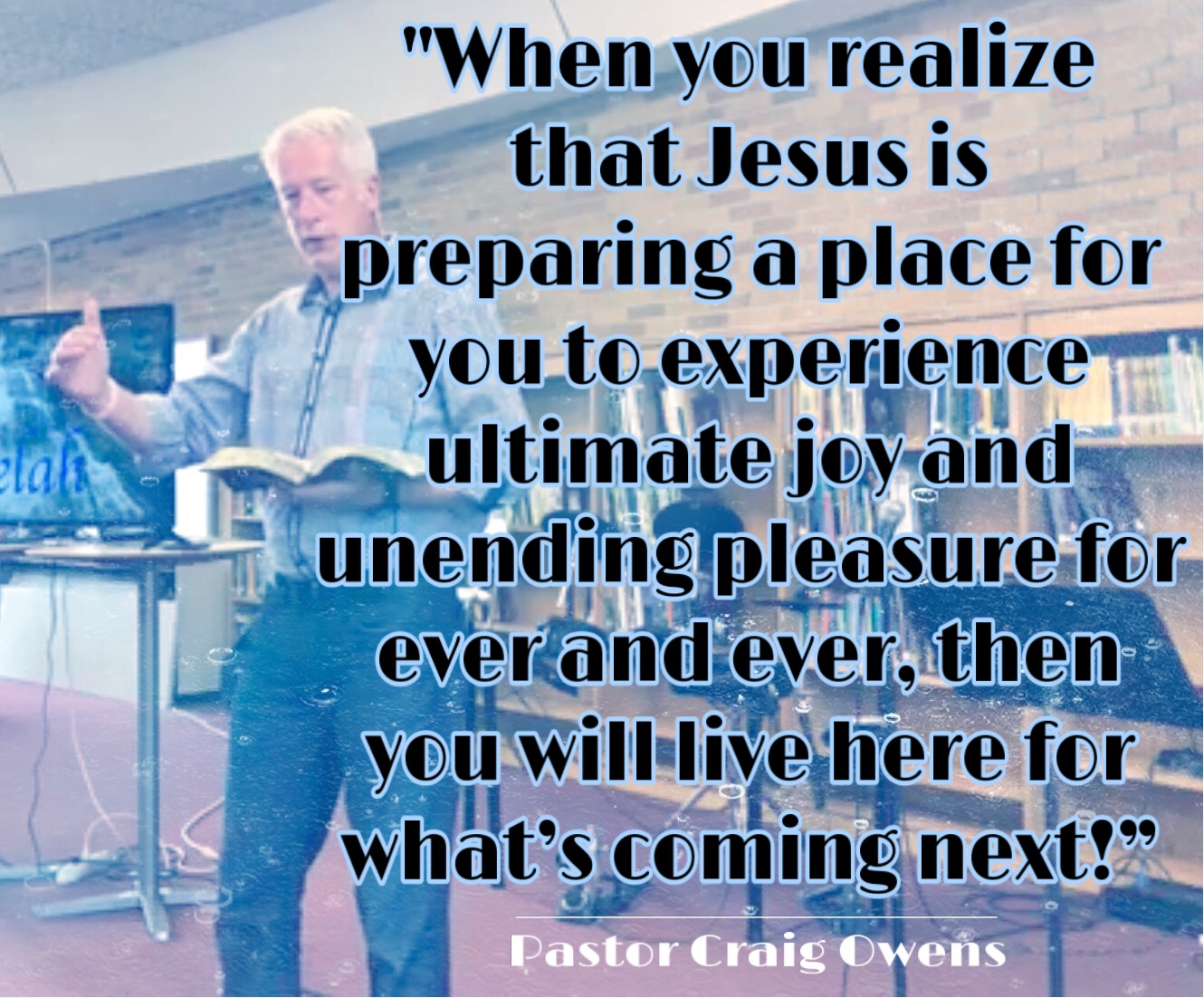
However, this realization that everyone dies can be a very liberating truth IF your focus is on the eternal kingdom that is awaiting you in Heaven. When you realize that Jesus is preparing a place for you to experience ultimate joy and unending pleasure forever and ever, then you will live here for what’s coming next! 

(2) Our eternal destination after we die is determined before we die.

If someone told me that he had discovered the secret to immortality, and then he died and came back to this life to tell me that his theory was correct, it would be wise listen to him. 

That’s exactly what Jesus did for us!

He told us that He would die on a Cross and that He would be raised back to life. AND HE DID IT! His hard-won insight, His “been there, done that” wise words to us are this—“Believe in Me. I died to pay the penalty for the sins that will keep you out of Paradise. So place your faith in what I did, and ask my Father to forgive your sins. Then I promise you that you will spend forever and ever with Me in Paradise!” 

THIS objective truth determines everything else about our lives. 

So I’ll repeat it again—

“Our opinions don’t matter if they don’t square with God’s Word on the matter.” —Craig T. Owens

Join me next Sunday as we continue our series looking at the Selahs in the Psalms. 

Poetry Saturday—Not Understood

Not understood. We move along asunder; 
Our paths grow wider as the seasons creep
Along the years; we marvel and we wonder
Why life is life? and then we fall asleep, 
Not understood. 

Not understood, we gather false impressions 
And hug them closer as the years go by; 
Till virtues often seem to us transgressions; 
And thus men rise and fall, and live and die 
Not understood. 

Not understood! Poor souls with stunted vision 
Oft measure giants with their narrow gauge; 
The poisoned shafts of falsehood and derision 
Are oft impelled ‘gainst those who mould the age, 
Not understood. 

Not understood! The secret springs of action 
Which lie beneath the surface and the show, 
Are disregarded; with self-satisfaction 
We judge our neighbours, and they often go 
Not understood. 

Not understood! How trifles often change us! 
The thoughtless sentence and the fancied slight 
Destroy long years of friendship, and estrange us, 
And on our souls there falls a freezing blight; 
Not understood. 

Not understood. How many breasts are aching
For lack of sympathy! Ah! day by day, 
How many cheerless, lonely hearts are breaking! 
How many noble spirits pass away
Not understood. 

Oh, God! that men would see a little clearer, 
Or judge less harshly where they cannot see; 
O God! that men would draw a littler nearer
To one another, they’d be nearer Thee, 
And understood. —Thomas Bracken

Thursdays With Spurgeon—The Most Unlikely Recruits

This is a weekly series with things I’m reading and pondering from Charles Spurgeon. You can read the original seed thought here, or type “Thursdays With Spurgeon” in the search box to read more entries.

The Most Unlikely Recruits

     Men and women have come in simply out of curiosity—a curiosity often created by some unfounded story or malicious slander of prejudiced minds. Yet Jesus Christ has called them and they have become both His disciples and our warmhearted friends. Some of the most unlikely recruits has been, in after days, our most valuable soldiers. They began with aversion and ended with enthusiasm. They came to scoff but remained to pray. Such cases are not at all uncommon.

     They were not unusual in the days of Whitefield and Wesley. They tell us in their journals of persons who came with stones in their pockets to throw at the Methodists, but whose enmity was slain by a stone from the sling of the Son of David. Others came to create disturbances, but a disturbance was created in their hearts that could never be quelled till they came to Jesus Christ and found peace in Him. The history of the church of God is studded with the remarkable conversions of persons who did not wish to be converted, who were not looking for grace but were even opposed to it, and yet, by the interposing arm of eternal mercy, were struck down and transformed into earnest and devoted followers of the Lamb. 

From The Autobiography of Charles Spurgeon

It is true that “the history of the church of God is studded with the remarkable conversions.” Think of the murderous persecutor Saul of Tarsus who encountered Jesus on a road near Damascus. This unlikely recruit to Christianity spread the Gospel of Jesus Christ far and wide. 

Think of an atheistic college professor named C.S. Lewis who eventually surrendered to the truth in the Bible, calling himself the most dejected and reluctant convert in all of England. Lewis went on to write some of the most influential Christian apologetic books of the 20th century. 

And most personally, think of yourself. Paul reminds us, “Brothers and sisters, think of what you were when you were called. Not many of you were wise by human standards; not many were influential; not many were of noble birth” (1 Corinthians 1:26). Yet God is using you right now to build His Church.

Keep on loving Jesus. Keep on sharing Jesus with your unsaved friends—no matter how antagonistic they may seem to your message. You never know what God may do with those “reluctant recruits.” 

12 Quotes From “The Autobiography Of Charles Spurgeon”

Charles Spurgeon lived exactly as he preached. What a delight that is! Check out my full book review of his Autobiography by clicking here. Also, be sure to check out my weekly Thursdays With Spurgeon series, where I share longer passages from this Prince of Preachers. 

“My sole hope for heaven lies in the full atonement made upon Calvary’s Cross for the ungodly. On that I firmly rely. I have not the shadow of a hope anywhere else.” 

“While my brief term on earth shall last, I should be the servant of Him who became the Servant of servants for me.” 

“For I am persuaded there are more delights in Christ, yea, more joy in one glimpse of His face than is to be found in all the praises of this harlot-world, and in all the delights that it can yield to us in its sunniest and brightest days.” 

“I have found, in my own spiritual life, that the more rules I lay down for myself, the more sins I commit. The habit of regular morning and evening prayer is one that is indispensable to a believer’s life, but the prescribing of the length of prayer, and the constrained remembrance of so many persons and subjects, may gender unto bondage and strangle prayer rather than assist it.” 

“There is nothing that more tends to strengthen the faith of the young believer than to hear the veteran Christian, covered with scars from the battle, testifying that the service of his Master is a happy service, and that, if he could have served any other master, he would not have done so, for His service is pleasant and His reward everlasting joy.” 

“I went to my chamber and told my little griefs into the ears of Jesus. They were great griefs to me then, though they are nothing now. When on my knees I just whispered them into the ear of Him who had loved me with an everlasting love, oh, it was so sweet! If I had told them to others, they would have told them again, but He, my blessed Confidant, knows all my secrets, and He never tells again.” 

“That God predestined, and yet that man is responsible, are two facts that few can see clearly. They are believed to be inconsistent and contradictory to each other. If, then, I find taught in one part of the Bible that everything is foreordained, that is true; and if I find, in another Scripture, that man is responsible for all his actions, that is true. And it is only my folly that leads me to imagine that these two truths can ever contradict each other.” 

“It was said of an old Greek philosopher that he wrote over his door, ‘None but the learned may enter here.’ But Christ writes over His door, ‘He who is simple, let him turn in hither.’” 

“I used to think, sometimes, that if they had degrees who deserved them, diplomas would often be transferred and given to those who hold the plow handle or work at the carpenter’s bench; for there is often more divinity in the little finger of a plowman than there is in the whole body of some of our modern divines. ‘Don’t they understand divinity?’ someone asks. Yes, in the letter of it, but as to the spirit and life of it, D.D. often means Doubly Destitute.” 😀

“When I came to New Park Street Chapel, it was but a mere handful of people to whom I first preached; yet I can never forget how earnestly they prayed. Sometimes they seemed to plead as though they could really see the Angel of the covenant present with them, and as if they must have a blessing from Him. More than once, we were all so awestruck with the solemnity of the meeting that we sat silent for some moments while the Lord’s power appeared to overshadow us. All I could do on such occasions was to pronounce the benediction and say, ‘Dear friends, we have had the Spirit of God here very manifestly tonight; let us go home and take care not to lose His gracious influences.’ Then down came the blessing; the house was filled with hearers, and many souls were saved. I always give all the glory to God, but I do not forget that He gave me the privilege of ministering from the first to a praying people.” 

“It is the extremity of unwisdom for a young man, fresh from college or from another charge, to suffer himself to be earwigged by a clique, and to be bribed by kindness and flattery to become a partisan, and so to ruin himself with one half of his people.” 

“It is of no use to rise before an assembly and hope to be inspired upon subjects of which one knows nothing. If anyone is so unwise, the result will be that, as he knows nothing, he will probably say it, and the people will not be edified. But I do not see why a man cannot speak extemporaneously upon a subject that he fully understands. Any tradesman, well versed in his line of business, could explain it without needing to retire for meditation, and surely I ought to be equally familiar with the first principles of our holy faith. I ought not to feel at a loss when called upon to speak upon topics that constitute the daily bread of my soul.” 

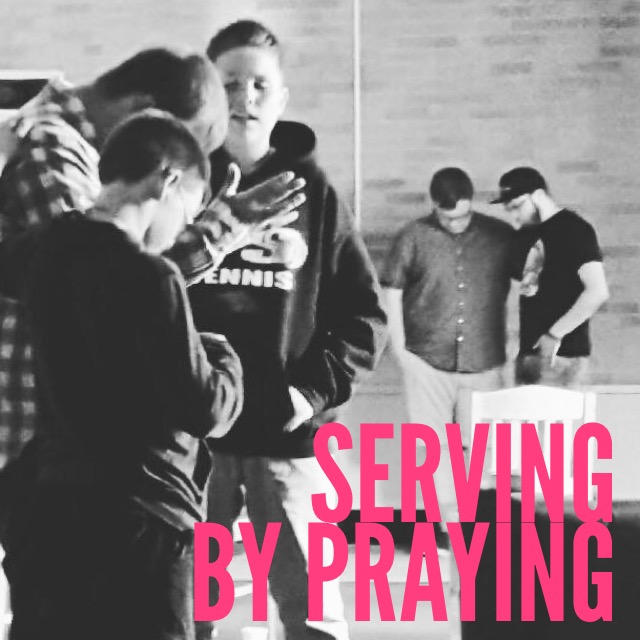
Serving By Praying

Paul and Timothy, bondservants of Jesus Christ, to all the saints in Christ Jesus who are in Philippi, with the bishops and deacons (Philippians 1:1). 

In just his opening line, Paul lists three types of servant-leaders: bondservants, bishops, deacons. 

The servant-leaders are all called to put the needs of the saints ahead of their own needs. They all serve so the saints can shine! And as the saints shine, they attract others to Jesus Christ. 

Jesus is our example of the Ultimate Servant (Philippians 2:5-8), and we are called to follow His example (John 13:12-17). 

One thing that clearly kept Paul, Timothy, and the other servant-leaders in Philippi in this servant’s posture was prayer. Even the physical posture of kneeling in prayer is a posture of a servant who is actively serving. 

  • Paul prayed for the Philippians frequently—In all my prayers for all of you, I always pray with joy (1:4). 
  • He prayed for them to grow in love and knowledge—I pray that your love will overflow more and more, and that you will keep on growing in knowledge and understanding (1:9). 
  • Paul was grateful for the prayers of the saints—I know that as you pray for me and the Spirit of Jesus Christ helps me, this will lead to my deliverance (1:19). 
  • And he closed his letter with a call for them to continue to pray about everything—Don’t worry about anything; instead, pray about everything. Tell God what you need, and thank Him for all he has done (4:6). 

Here are four powerful lessons for all Christians to live out…

(1) Leaders need to pray for the saints, and leaders need the saints to pray for them. 

(2) Leaders need to be prayerful to keep their posture right as servants. 

(3) Saints need to be prayerful for their leaders so that their leaders can continue to serve them in God-honoring ways. 

(4) We all serve best when we are diligent to keep our prayer life vibrant and healthy. 

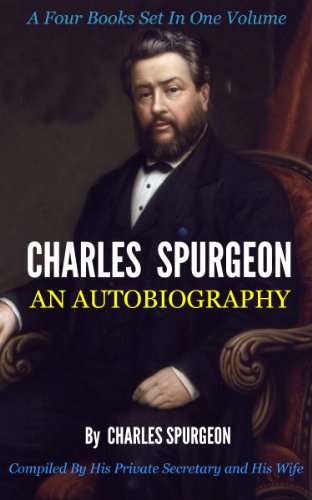
The Autobiography Of Charles Spurgeon (book review)

For a man who preached up to 10 times per week for nearly 40 years, you would think that people knew all about Charles Spurgeon’s personal life. Although he frequently used some small personal examples in his sermons, he still kept much of his personal life personal. In reading Spurgeon’s Autobiography, I expected to get an inside look, but that was not what I found. 

Like his sermons, Spurgeon’s Autobiography was fascinating. Like his sermons, his recollections of his past are thoroughly steeped in Scripture. I love this! This shows us that this Prince of Preachers didn’t just put on a performance when he stepped into his pulpit, nor did he simply teach Christian principles for others to apply only to their lives; instead, we see a man who truly patterned his life after the Bible. 

I also love the honesty in Spurgeon’s stories. He tells of his struggles before and after his conversion. He talks openly of his disagreements with some “church” people that didn’t behave very Christ-like. He discusses his battles with depression, and with those who were outright critics of his ministry. In other words, Spurgeon reveals himself without putting himself on some sort of pedestal. 

Charles Spurgeon’s sermons are always a delight to read, but I think you will find in his Autobiography a living sermon that we can all emulate.