


My book Shepherd Leadership: The Metrics That Really Matter releases September 28, 2021. This is just one of the topic I address…
My book Shepherd Leadership: The Metrics That Really Matter releases September 28, 2021. This is just one of the topic I address…
This is a weekly series with things I’m reading and pondering from Charles Spurgeon. You can read the original seed thought here, or type “Thursdays With Spurgeon” in the search box to read more entries.
Listen to the podcast of this post by clicking on the player below, and you can also subscribe on iTunes or Spotify.

Useful To The Master
In a large house there are articles not only of gold and silver, but also of wood and clay; some are for special purposes and some for common use. Those who cleanse themselves from the latter will be instruments for special purposes, made holy, useful to the Master and prepared to do any good work. (2 Timothy 2:20-21)
On the vessels of honor, you can see the hallmark. What is the hallmark that denotes the purity of the Lord’s golden vessels? Well, He has only one stamp for everything. When He laid the foundation, what was the seal He put upon it? ‘The Lord knows those who are His, and, everyone who confesses the name of the Lord must turn away from wickedness’ (2 Timothy 2:19). That was God’s seal! That was the impress of the great King upon the foundation stone. Do we find it here? Yes, we do. ‘Those who cleanse themselves from the latter will be instruments for special purposes, made holy, useful to the Master and prepared to do any good work’ (2 Timothy 2:21). Do you see, then, that the man who is the golden or silver vessel departs from all iniquity, and that is the token of his genuine character. …
Brethren, I count it an honor to be useful to the meanest child of God, but I confess that the honor lies mainly in the fact that I am thereby serving the Master Himself. Oh, to be used by God! This is to answer the end of our being. If you can feel that God has used you, then you may rejoice indeed!
There are some Christians whom the Lord cannot much use because, first of all, they are not cleansed from selfishness. They have an eye to their own honor or aggrandizement. The Lord will not be in complicity with selfish aims! Some men are self-confident—there is too much of the ‘I’ about them, and our Master will not use them. He will have our weakness but not our strength!
From The Great House And The Vessels In It
The Church of Jesus Christ is made up of many members. The Bible uses pictures of a body, a building, and a bride to describe how all of the parts work together to bring strength and vitality to the whole. But Jesus is always the central object: He is the Head of the body, the Chief Cornerstone of the building, the beloved Bridegroom to the bride.
Everyone in the Church is placed there by God Himself to fulfill a vital role. It is incumbent upon every single Christian to yield themselves to the sanctifying, maturing work of the Holy Spirit so that we can all be “made holy, useful to the Master and prepared to do any good work.”
Don’t let either the extremes of selfishness of self-abasement limit the good work you were created to do in making the body of Christ, the building of Christ, and the bride of Christ something radiantly God-glorifying!
►► Would you please prayerfully consider supporting this ministry? ◀︎◀︎

 Sometimes the naming of things gives us an inaccurate picture of the thing being named. For instance, many people think the “old” in Old Testament means outdated or perhaps updated by the “new” in the New Testament. When in fact, both Testaments are needed to give us the full picture of God’s love and glory.
A similar thing happens with the headings “major prophets” and “minor prophets.” It makes it sound like the major prophets have something major to say to us, while we could take or leave the minor messages of the minor prophets.
In reality, they were given these headings simply because of the volume of writing—the five major prophets consist of 182 chapters, whereas the 12 minor prophets only have 67 chapters. The volume of their writing may be minor, but their content carries major messages of meteoric power!
Join me this Sunday as we rejoin this highly informative series.
If you have missed any of the messages in this current session, check them out here:
Listen to the podcast of this post by clicking on the player below, and you can also subscribe on Apple, Spotify, or Audible.
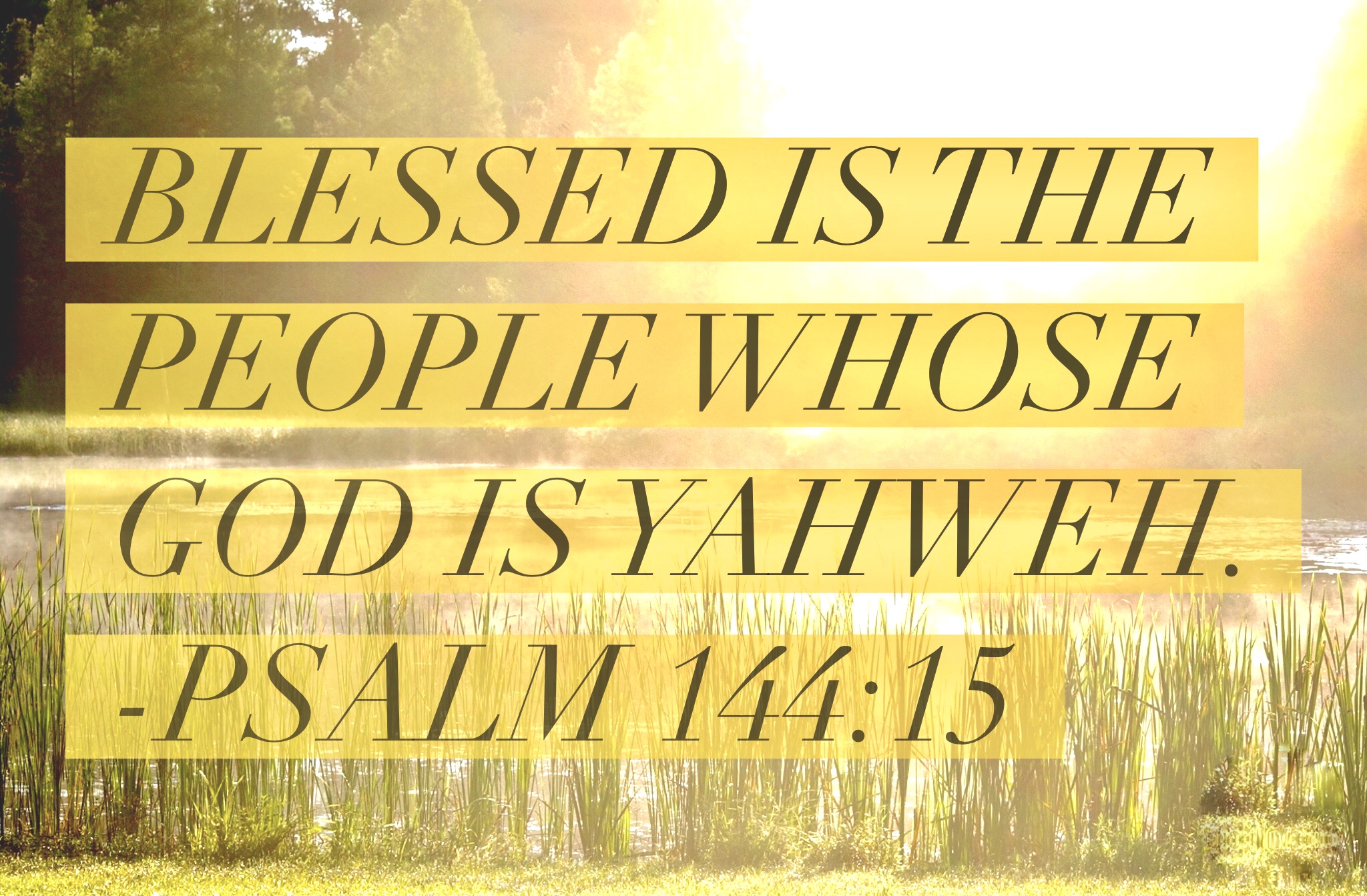 Blessed are the people of whom this is true… (Psalm 144:15).
This is how David closes the 144th Psalm, but a good question for us to ask is, “Of whom what is true?” David explains that blessed people are those who are experiencing safety from their enemies, healthy, prosperous children, abundant harvests, and freedom.
Well, you might ask, how are these blessings to be obtained? David opened this psalm by thanking God this way: “Praise be to the Lord my rock, Who trains my hands for war, my fingers for battle.” In other words: Thank You, God, for giving me victory!
This raises yet another question for me: Did David win all of these blessings of victory, or did God? The answer is quite simply, “Yes!”
David recognized that God trains, but he had to be trainable. So too for us today, we have to be trainable to learn to discern God’s voice. Sometimes God says, “Attack,” and sometimes He says, “Stand still and watch My deliverance,” but in all cases, God is the ultimate Source of our victory and the blessings that flow from that victory.
The blessings of God our Trainer flow to the people who have made themselves trainable. “Blessed are the people of whom this is true; blessed are the people whose God is the Lord.” This blessing caused David to sing out in worship, as it still should for us today, “I will sing a new song to You, O God; on the ten-stringed lyre I will make music to You, to the One who gives victory to kings, who delivers His servant David from the deadly sword.”
If you want to experience more of God’s blessings, you need to regularly ask the Holy Spirit, “Am I trainable today?” As this psalm makes abundantly clear: Those who are trainable are also bless-able!
►► Would you please prayerfully consider supporting this ministry? ◀︎◀︎
On this episode of “The Craig And Greg Show” we talk about:
 “burning the midnight oil” is not healthy for a leader [0:45]
Check out this episode and subscribe on YouTube so you can watch all of the upcoming episodes. You can also listen to our podcast on Spotify and Apple.
Listen to the podcast of this post by clicking on the player below, and you can also subscribe on Apple, Spotify, or Audible.
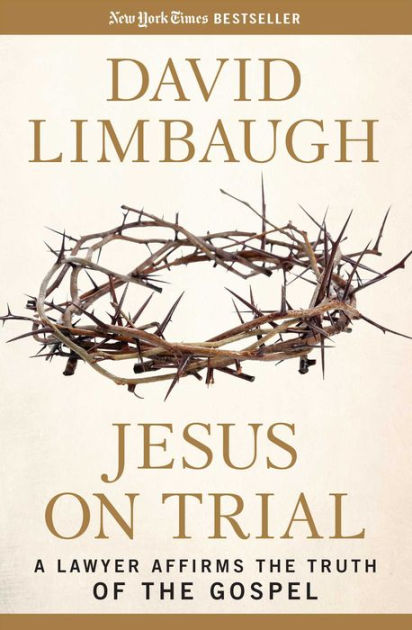 I love studying Christian apologetics and learning how to explain to skeptics and seekers the eternal value in the Bible as it points me to a deeper relationship with Jesus Christ. David Limbaugh has given apologetics a new slant in his book Jesus On Trial.
Mr. Limbaugh uses his personal story from a childhood church attendee, to a skeptic of Christianity, to a reluctant seeker of the truth, and finally to a vibrant, growing relationship with Jesus. But he also lets us see how he examined the evidence for the truth claims of the Bible through the eyes of a trained lawyer.
Throughout this book you will discover legalese terms like rules of evidence, items of probative value, rules of logic, and expert testimony. Each chapter feels like another witness Mr. Limbaugh has called to testify, or another piece of evidence that needs to be weighed and evaluated, and we the readers are empaneled as the jury deciding the case. As witness after witness takes the stand, as more evidence piles up, and as Mr. Limbaugh delivers his closing argument, the preponderance of evidence seems to make an airtight case of the truth claims in the Bible.
Whether you are looking for answers or hunting for evidence to use in discussions with your friends, Jesus On Trial is a reference book to which I believe you will repeatedly return.
►► Would you please prayerfully consider supporting this ministry? ◀︎◀︎
Listen to the podcast of this post by clicking on the player below, and you can also subscribe on Apple, Spotify, or Audible.
 In the Foreword to my book Shepherd Leadership: The Metrics That Really Matter, Dick Brogden observes, “God plucked David from the sheepfold. God chose a sheep to be a shepherd. And though we all are stupid sheep, when God plucks us out of obscurity to serve others, we can have the humble confidence for as long as we are asked to lead that God has chosen us. That confidence both faithfully drives us to our knees and fearlessly propels us against our giants. It is good to be a sheep; it is good to be an under-shepherd. Just remember you are stupid, chosen by the Wise One, and as long as you serve as a shepherd, you and your flock will be safe.”
How true it is that all of us are sheep. The role of the shepherd is to care for the sheep and create a healthy environment for them. The role of healthy sheep is to reproduce more sheep. In this, both shepherds and sheep are ministers—we all minister to those God has placed around us.
God calls all Christians to be ministers. The Church is the sheepfold that equips us, but then we must go out to minister in a way that will bring lost sheep to a personal relationship with Jesus.
Our foundational truth statement about church ministry says: A divinely called and scripturally ordained ministry has been provided by our Lord for the fourfold purpose of leading the Church in evangelism, worship, sanctification, and compassion.
(1) Evangelism. When we looked at the foundational belief about the Church, we noted that it’s not either-or—evangelism or discipleship—but it’s both-and. Christians are being the Church when they are intentionally living in a way that makes Jesus known (Matthew 10:1, 7-8; 28:18-20).
(2) Worship. We shouldn’t have the mindset of, “Let’s go to church to meet with God.” Instead, we need to live in a way where we are always abiding in God’s omnipresence. This worship-centric lifestyle empowers our evangelism, changes our hearts, and fuels our compassion (John 4:23-24; Romans 12:1; Acts 2:46-47).
(3) Sanctification. Remember that we are all in-process of becoming saints (I like to remember this by calling it saint-ification). We need each other to do this, which is why God gives gifts to bring out Christ-like maturity in us (Ephesians 4:1-7, 11-16).
(4) Compassion. Compassion is feeling turned into action. This opens the door for evangelism, creates more opportunities for worship, and matures Christians (Mark 6:34-37; Luke 10:33; Acts 2:45).
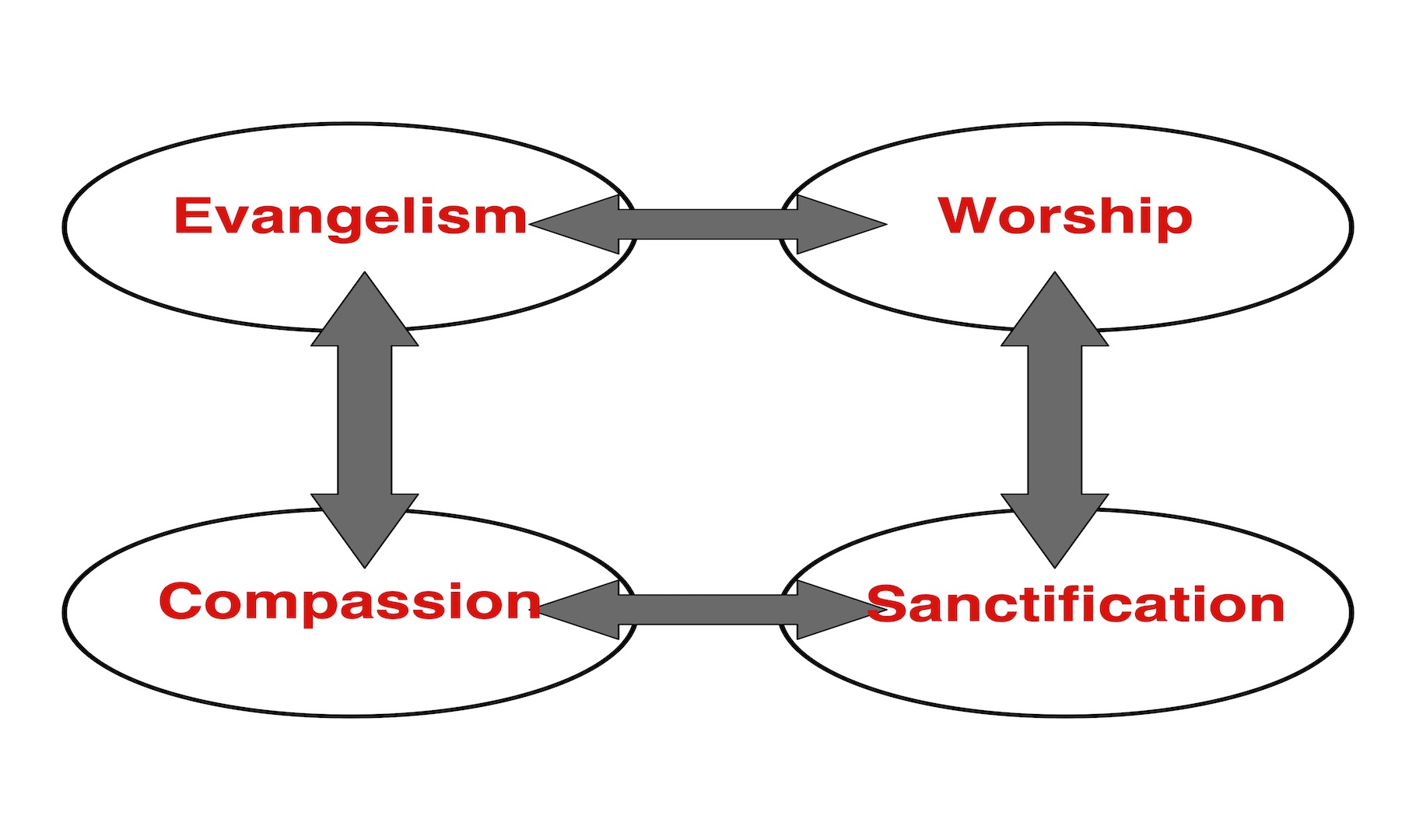 Notice that each of these ministries are interdependent with all the other ministries.
In a blog post nearly 10 years ago, I questioned: “How do we know if our church is successful?” The apostle Paul uses two words to help answer these questions: Quality and Faithfulness (1 Corinthians 3:13, 4:2).
So here are two important questions we need to ask ourselves: (1) Am I doing quality work? (2) Am I faithfully doing my work?
To help answer those questions, I like this thought from Leonard Sweet’s book I Am A Follower: “The most important metrics we must rely on, the crucial ‘deliverables’ we can present, must focus on the newly formed lives of the disciples we are making, the followers who are following Christ into a place of serving Him by serving others. The most important measure of our faithfulness to Christ must be the extent of transformation into the living image of Christ Himself. … The quantifiable fruit of our church is not found in the number of people we can gather on a weekly basis. What counts is what is happening in the lives of those who have gathered.”
These are questions we should all ask the Holy Spirit to reveal to us:
Our individual answers to those questions will determine the success of our individual churches, which will ultimately determine the effectiveness of the global Church of Jesus Christ. I hope you will take some time to consider these questions for yourself.
If you’ve missed any of the other messages in our series exploring our foundational beliefs, you can access the full list by clicking here.
►► Would you please prayerfully consider supporting this ministry? ◀︎◀︎
Listen to the podcast of this post by clicking on the player below, and you can also subscribe on Apple, Spotify, or Audible.
 Lord, Thou art mine, and I am Thine,
This is a weekly series with things I’m reading and pondering from Charles Spurgeon. You can read the original seed thought here, or type “Thursdays With Spurgeon” in the search box to read more entries.
Listen to the podcast of this post by clicking on the player below, and you can also subscribe on iTunes or Spotify.
Present Communion With Jesus
The desire of a renewed soul is to find Christ and to be with Him. … Past communion with Christ is very well: ‘Therefore I will remember Thee from the land of Jordan…’ (Psalm 42:6). But these are only stale meats, and a loving soul wants fresh food every day from the table of Christ. …
A true loving soul, then, wants present communion with Christ. So the question is, ‘Tell me where You feed. Where do You get Your comfort from, O Jesus? I will go there. … Where do You feed Your flock? In Your house? I will go there, if I may find You there. In private prayer? Then I will not be slack in that. In the Word? Then I will read it night and day. Tell me where You feed; wherever You stand as the Shepherd, there will I be, for I want You. I cannot be satisfied to be apart from You. My soul hungers and thirsts to be with You.’
From The Church’s Love To Her Loving Lord
There are so many pictures in the Bible about our continual reliance on God’s presence—from the manna that was only good for each day, to Jesus teaching us to pray for “our daily bread,” to the vivid example of Christians being as dependent on Jesus as a branch is dependent on the vine (see Exodus 16:4-5, 14-17; Matthew 6:11; John 15:1-8).
All of these mean that we need to constantly abide with our Savior.
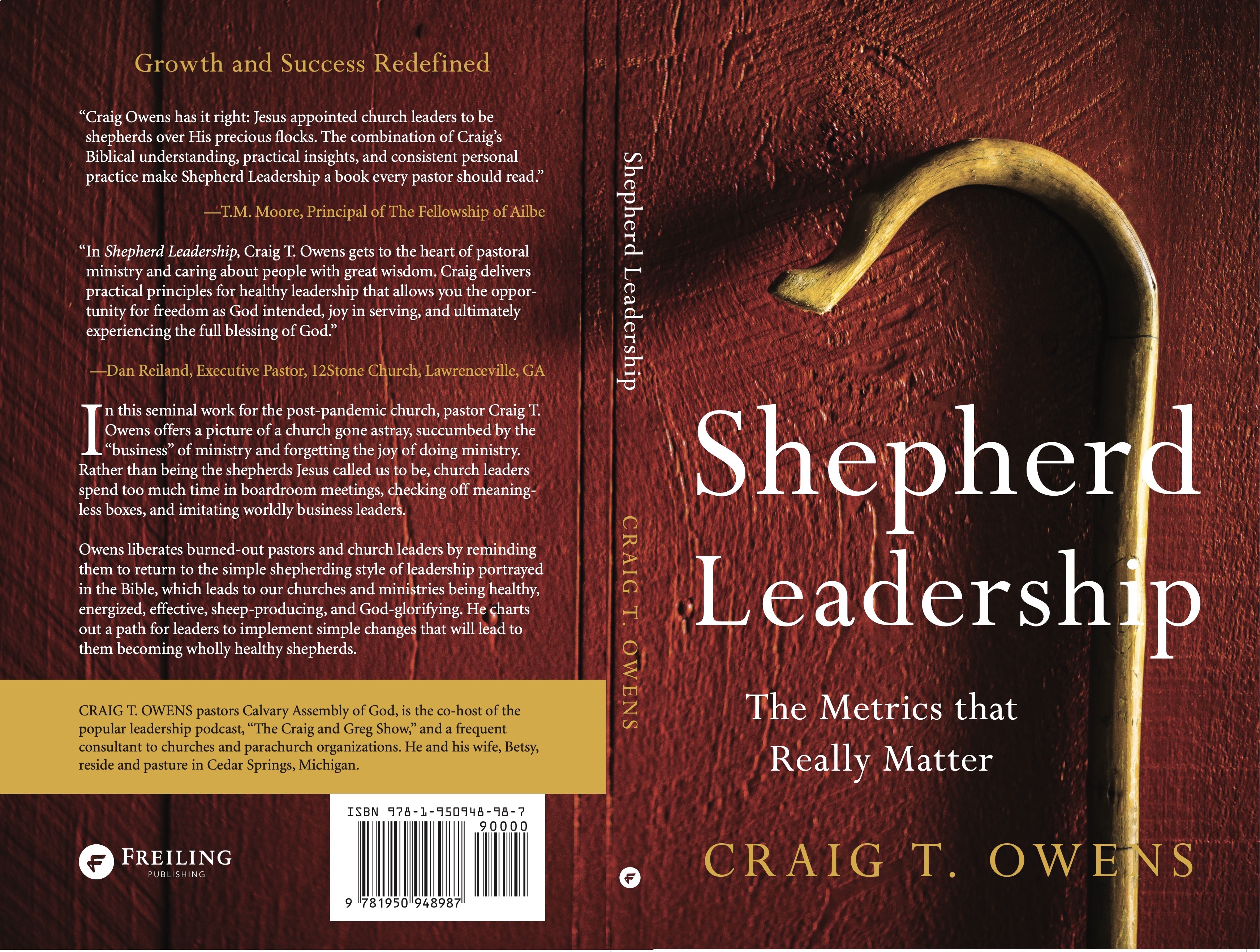
In my book Shepherd Leadership: The Metrics That Really Matter, I spend two chapters talking to leaders about the need to rest—or sabbath. In fact, I call it sabbathing to give it the emphasis on the ongoing nature of this activity. I wrote—
“Without building in sabbath breaks, we run down emotionally, spiritually, mentally, and physically, which means loving God becomes a chore, not a delight (Mark 12:30). This then means loving your neighbor becomes nearly impossible (Mark 12:31). Ultimately, this means that we aren’t able to be the compassionate, wise, strong shepherds that the sheep under our care need us to be. …
“The goal of sabbathing is to infuse more vitality into the shepherd leader for the purpose of pasturing the sheep under that leader’s care. You cannot give hope to others unless you are hope-filled; you cannot give health to others unless you are healthy; you cannot consistently speak wisdom to others unless you are growing in wisdom. All of this healthy growth for the shepherd leader takes place while sabbathing….”
To reiterate what Pastor Spurgeon said: “A true loving soul, then, wants present communion with Christ.” I hope you will always seek that for yourself.
►► Would you please prayerfully consider supporting this ministry? ◀︎◀︎
Listen to the podcast of this post by clicking on the player below, and you can also subscribe on Apple, Spotify, or Audible.
 In my book Shepherd Leadership: The Metrics That Really Matter, I take two chapters to talk about a leader’s confidence and a leader’s humility. Effective shepherd leaders are learning to balance their confidence and their humility.
In chapter 4, I tell a true story about an alter-ego superhero I created as a way to remind myself of the importance of adding humility to my confidence. I hope you’ll watch the video featuring the artwork of Adam Comrie and the excellent production work of my son-in-love Ian Murphy. And I also hope that you will pick up a copy of Shepherd Leadership for yourself or for a ministry leader in whom you would like to invest.
Now, here is Plungerman!
►► Would you please prayerfully consider supporting this ministry? ◀︎◀︎


 Craig T. Owens