Listen to the podcast of this post by clicking on the player below, and you can also subscribe on Apple, Spotify, or Audible.
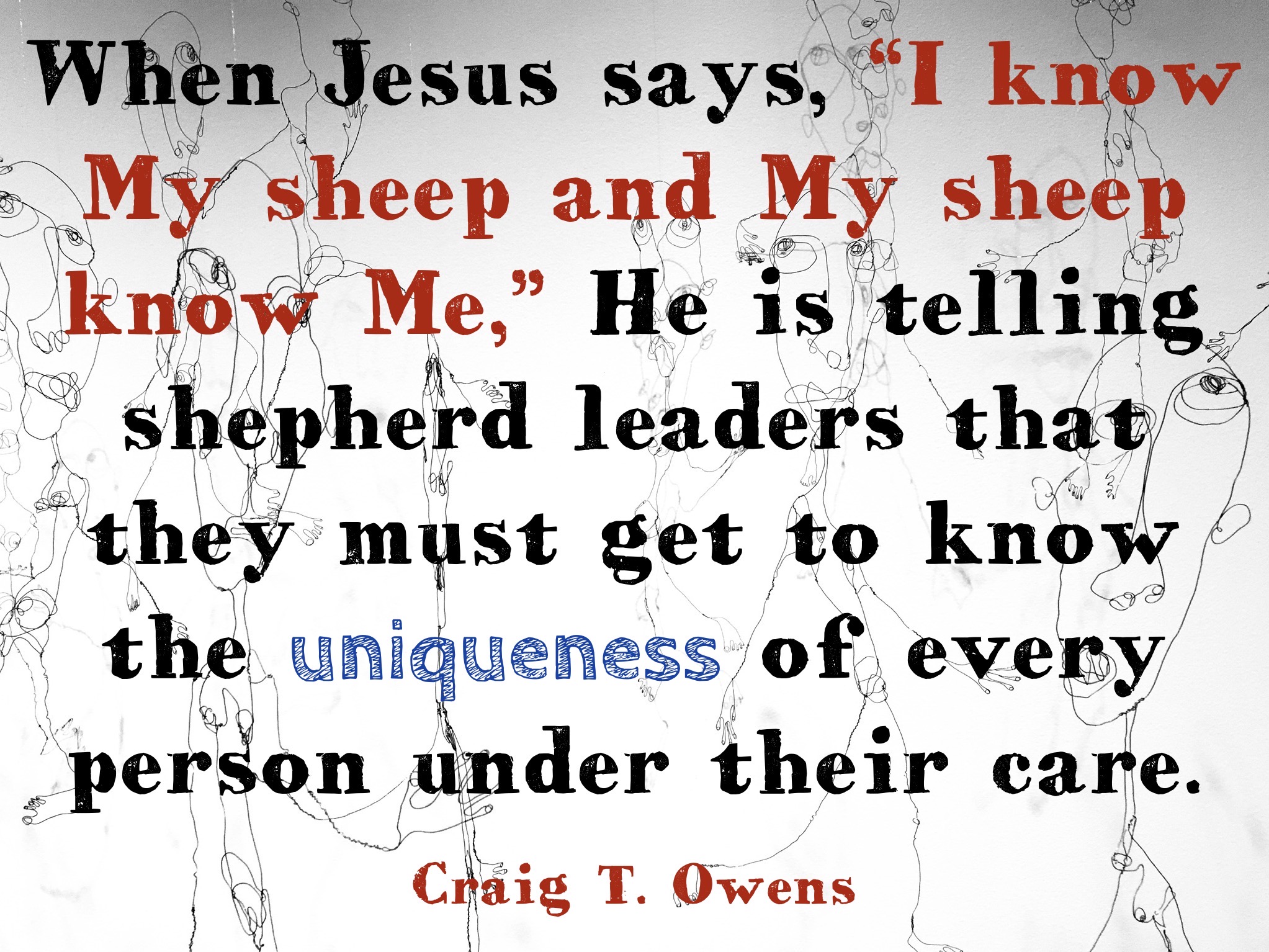
An interesting comment that Jesus made that should catch the attention of every leader is this: “I know My sheep and My sheep know Me” (John 10:14). Jesus is telling us that He knows the uniqueness of every person.
Combine this with David’s encouraging words about Jesus as our Good Shepherd in the opening words of Psalm 23, “The Lord is my shepherd; I have all that I need” (Psalm 23:1 NLT).
This tells me that quality shepherd leaders…
…are around their teammates enough to know them personally.
…can quickly ascertain when their teammates are feeling stress or anxiety.
…know how to give their teammates what they need to destress in a healthy way.
My friend Greg and I discussed how leaders can use playtime as an effective tool to keep their teammates at their healthiest. Check out this short clip—
If you would like to watch this full episode from The Craig And Greg Show, please click here.
I also talk about how wise leaders take care of those under their care in my book Shepherd Leadership: The Metrics That Really Matter. It’s available in print or ebook, and in audiobook through either Audible or Apple.
Listen to the podcast of this post by clicking on the player below, and you can also subscribe on Apple, Spotify, or Audible.
Have you ever noticed how many of our Christmas carols celebrate the dark night giving way to the bright light? For instance, the hymn O Holy Night contains the line, “long lay the world in sin and error pining until He appeared.”
English historian and theologian Thomas Fuller was the first to put into print what has now become a cliché that so many people use: “It is always darkest just before the Day dawneth.” Indeed, Micah paints a very dark scene just before the Messiah makes His First Advent (Micah 5:1).
The Light of Jesus that burst onto planet Earth in a Bethlehem stable revealed Him as our Great Shepherd, our Prince of Peace, and our Mighty Deliverer. And there is also one more title that Micah foretells: our Triumphant King!
What does our Triumphant King do? He confronts and defeats the darkest foes. Check out the words in Micah 5:9-15: destroy (5x), demolish (2x), tear down, uproot, take vengeance.
Christ’s birth in Bethlehem is our proof that God’s plan prevails. God always gets the final word, the decisive word, and the best word!
Most of the Old Testament prophets foresaw both the first and second advents of Jesus simultaneously. The mountains of prophecy look like they are on top of each other, so it’s very common for the prophets to see events of both advents happening simultaneously. So Micah sees both the coming of Jesus in Bethlehem and His coming at the end of time as King.
There is a spiritual battle that has been raging since before Time began (Ephesians 6:12). It started when Lucifer became satan by his rebellion against God, and then he began his agenda of the destruction of God’s people (Ezekiel 28:12-17; Revelation 12:7-9, 13, 17).
Into this dark battle, Jesus enters the scene. The reason the Son of God was made manifest (visible) was to undo—destroy, loosen, and dissolve—the works the devil has done (1 John 3:8 AMP).
I already talked about how the death of Jesus on the Cross meant the death of Death, and Jesus became our Mighty Deliverer! The resurrection of Jesus means satan’s time is nearing an end. It may be dark now, but the darkness has to give way to the Light of the King of kings (check out these verses in Revelation).
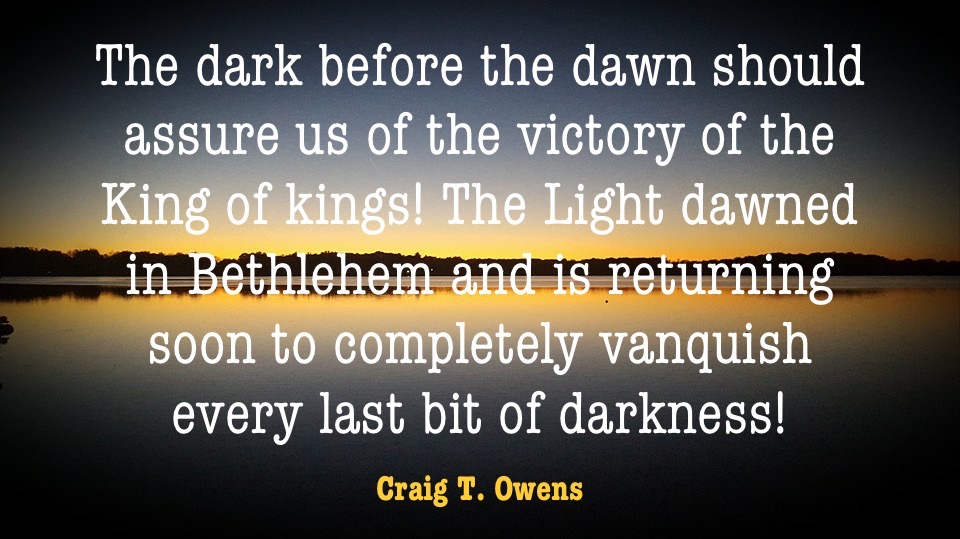
“It is always darkest just before the Day dawneth” should assure us of the victory of the King of kings! Jesus assured us that darkness is only afforded an hour, and then the Light will completely overwhelm it. The Light dawned in Bethlehem and is returning soon to completely vanquish every last bit of darkness!
Listen to the podcast of this post by clicking on the player below, and you can also subscribe on Apple, Spotify, or Audible.
Merry Christmas!
When the Magi came to Jesus at His first advent they brought gifts. Isaiah also prophesies all peoples bringing gifts at the second advent of Jesus. Have you ever wondered what gift is appropriate for the King of kings? Fortunately, the Bible tells us the gift He is happy to receive from you!
Merry Christmas and Happy New Year from The Craig and Greg Show! We had an amazing 2022 sharing great leadership content with you, and we cannot wait to share even more in 2023!
If you would like to catch up on some of our previous episodes, please click here.
Listen to the audio-only version of this podcast by clicking on the player below, or scroll down to watch the video.
On this episode of “The Craig And Greg Show” we talk about how the first episode of The Craig and Greg Show debuted over two years ago on September 15th, 2020, and was appropriately titled “Leaders are Learners.” However, the discussions that became this show go back years before then.
On our 50th episode, Greg and I take you into the bagel shop where many long conversations about leadership became the show you see today.
Thank you for your support over the last fifty episodes. The entire Craig and Greg Show team wishes you a very merry Christmas, and we’re so excited to share more leadership insight with you in 2023 and beyond!
Check out this episode and subscribe on YouTube so you can watch all of the upcoming episodes. You can also listen to our podcast on Spotify and Apple.
Don’t despair in the middle of the Story! All of History is His Story. No matter how dark it seems, we are assured of God’s victorious outcome!
Bethlehem is our proof:
700 years before it happened, Bethlehem is named as the birthplace of Jesus (Micah 5:2; Luke 2:1-7)
700 years before Jesus was born in Bethlehem, His titles were given and then fulfilled in the way that Jesus lived (see for example Isaiah 9:6 and Hebrews 13:20)
Sometimes God has to let the darkness fall so heavy so that it seems hopeless. In fact, in human power alone it is hopeless and impossible. So God foretells His victory—
“Listen to this, you descendants of Jacob, you who are called by the name of Israel and come from the line of Judah, you who take oaths in the name of the Lord and invoke the God of Israel—but not in truth or righteousness—you who call yourselves citizens of the holy city and claim to rely on the God of Israel—the Lord Almighty is His name: I foretold the former things long ago, My mouth announced them and I made them known; then suddenly I acted, and they came to pass. … Therefore I told you these things long ago; before they happened I announced them to you so that you could not say, ‘My images brought them about; my wooden image and metal god ordained them.’” (Isaiah 48:1-5)
We have seen how Micah prophesied our Messiah coming as the Great Shepherd and as the Prince of Peace, but He also comes as our Mighty Deliverer (Micah 5:1-6). He comes at an incredibly dark time that is described like this: “He will rescue us from the Assyrians when they pour over the borders to invade our land” (Micah 5:6 NLT).
Darkness may appear to have a stranglehold even now in our time. One of the verses in the New Testament that pretty accurately sums up a Christ-less culture says, “The god of this world has blinded the unbelievers’ minds that they should not discern the truth, preventing them from seeing the illuminating light of the Gospel of the glory of Christ” (2 Corinthians 4:4 AMP) .
But this is only temporary darkness. When the mob came to arrest Jesus, He said, “This is your hour—when darkness reigns” (Luke 22:53). Darkness only gets an hour, but the Light of God shines for all of eternity!
One of my favorite Advent texts is found in Hebrews 2:14-15:
Since the children have flesh and blood, [Jesus] too shared in their humanity so that by His death He might destroy him who holds the power of death—that is, the devil—and free those who all their lives were held in slavery by their fear of death.
Our Mighty Deliverer came to destroy satan’s power and free those held hopelessly in darkness. The word “destroy” is a powerful, all-encompassing word. Imagine a tyrannical ruler who sent one of his strongest police officers with an arrest warrant, who then grabbed onto you and subdued you with his vice-like grip.
Only someone stronger than that officer can release you from that grip. That’s what Jesus did when He destroyed satan’s ironclad grip on your soul. Paul asks mockingly, “Where, O death, is your victory? Where, O death, is your sting? The sting of death is sin, and the power of sin is the law. But thanks be to God! He gives us the victory through our Lord Jesus Christ!” (1 Corinthians 15:55-57)
Now you may be free of the grip of that officer, but the arrest warrant still remains—you are still subject to the penalty. But that word “destroy” also means that the charges against you have been set aside so that there is no penalty outstanding against you. The apostle Paul again addressed this when he wrote, “For we know that our old self was crucified with [Jesus] so that the body ruled by sin might be done away with, that we should no longer be slaves to sin. … Who will bring any charge against those whom God has chosen? It is God who justifies” (Romans 6:6, 8:33).
You are now set completely and irrevocably free! “But it has now been revealed through the appearing of our Savior, Christ Jesus, who has destroyed death and has brought life and immortality to light through the gospel” (2 Timothy 1:10).
The Messiah—our Mighty Deliverer—destroys darkness and delivers those who believe in Him!
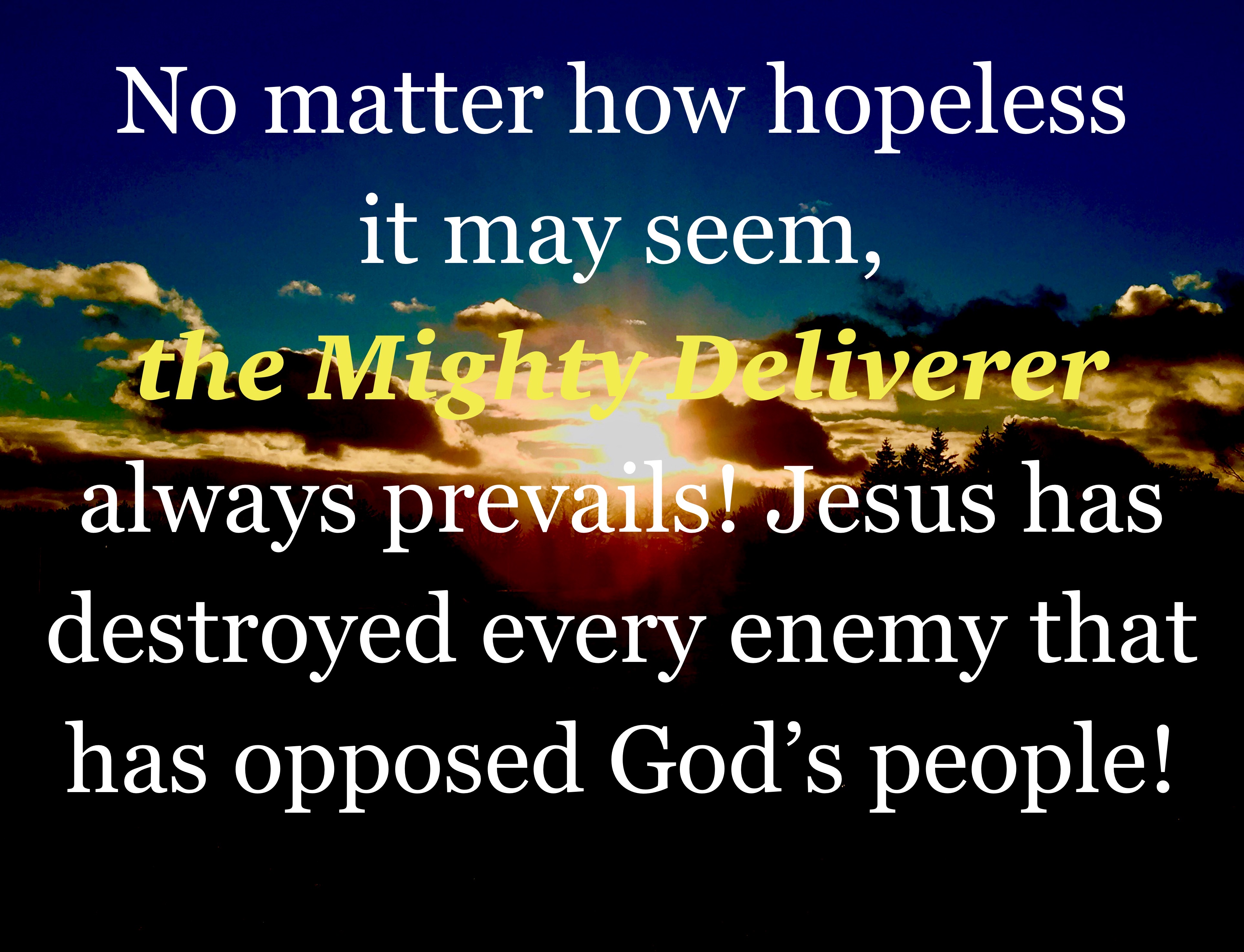
No matter how hopeless it may seem, the Mighty Deliverer always prevails! Jesus has destroyed every enemy that has opposed God’s people! Jesus our Champion shines a light so brightly that nothing in satan’s arsenal can ever diminish it.
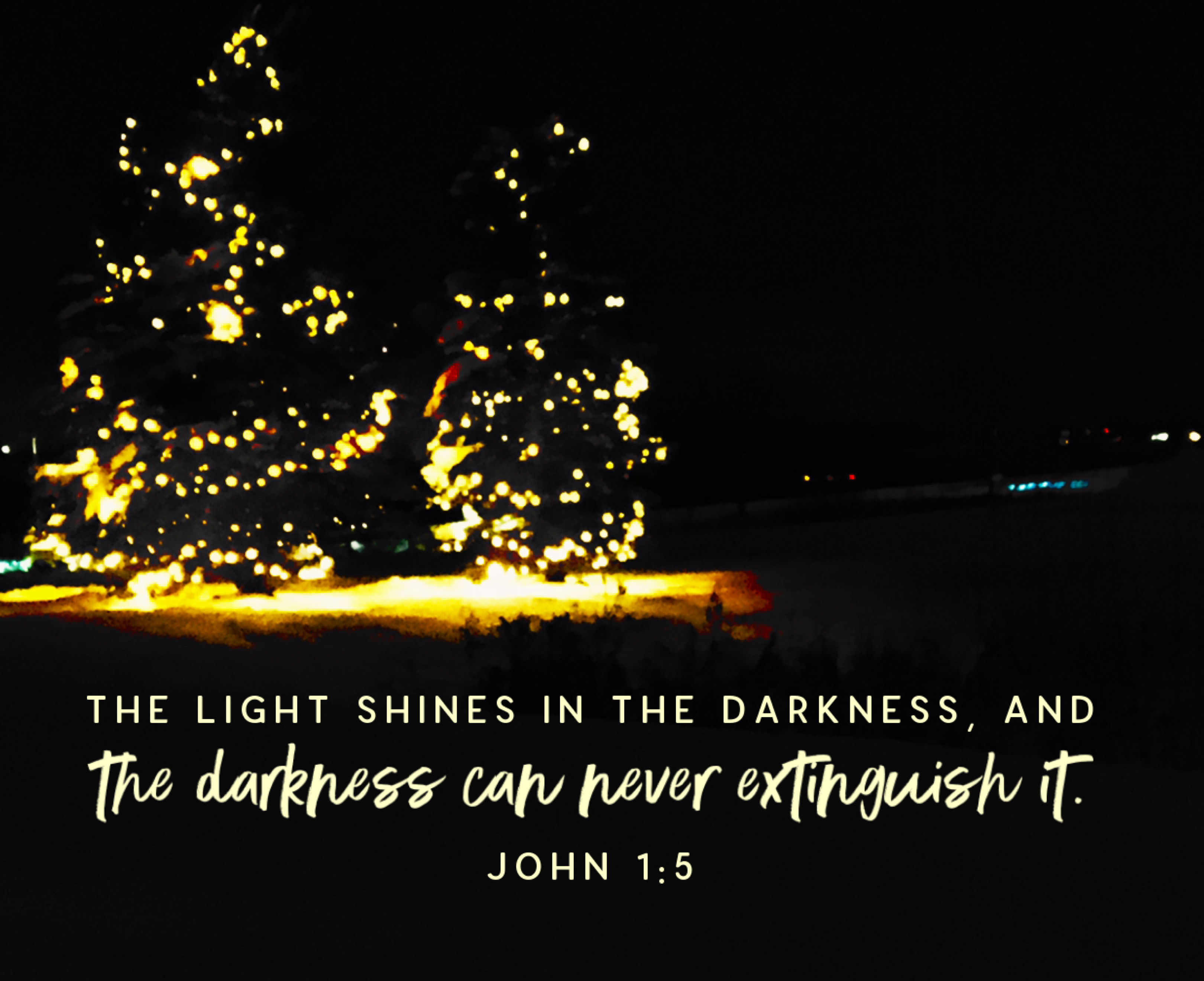
The Light shines in the darkness, and the darkness can never extinguish it (John 1:5 NLT).
So allow me to repeat: Don’t despair in the middle of the Story! All of History is His Story. No matter how dark it seems, Bethlehem is our proof that Jesus has destroyed our enemy and removed from him all grounds for charging us with sin. Bethlehem is our proof that we can live assured of God’s victorious outcome!
Every Monday I share a 1-minute thought to get your week started. It’s my weekly Monday Motivation series of videos. Check out this week’s video and subscribe on YouTube.
“The Lord Jesus Christ is always ready to take the most imperfect prayer and perfect it for us. If our prayers had to go up to heaven as they are, they would never succeed; but they find a Friend on the way, and therefore they prosper.” —Charles Spurgeon
I love this thought from T.M. Moore: “We sometimes use the word reflect to express what we want to see happen in our lives as Christians. We say we want to reflect Jesus to the world, like a mirror reflects an image. As agents of Jesus Christ and His Kingdom, believers are not so much like mirrors as they are like prisms. Mirrors reflect light. The light strikes them and bounces off, without bringing anything of the mirror with it. Prisms refract light.” Please take a couple of minutes to read Moore’s post Prisms of the Light.
Listen to the podcast of this post by clicking on the player below, and you can also subscribe on Apple, Spotify, or Audible.
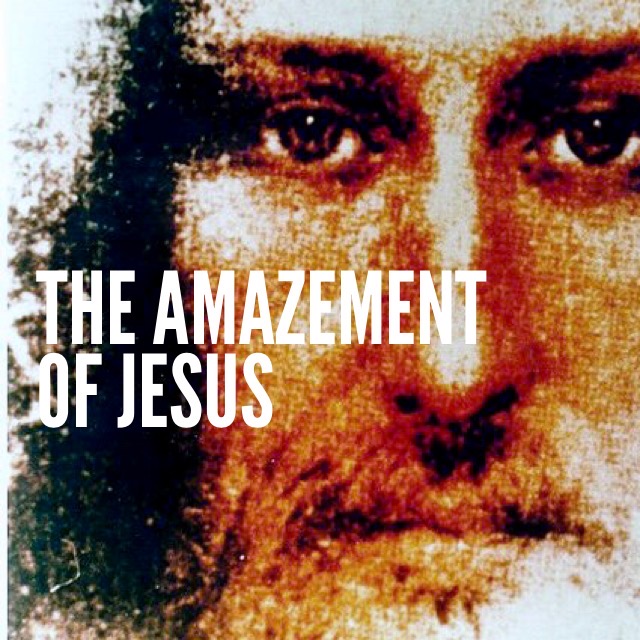
The word amazement shows up numerous times throughout the Gospels. As you might expect, it’s almost always associated with something Jesus said or did. He would heal someone, calm a storm, silence His detractors, or teach persuasively, and the people stood amazed!
But there are two instances where Jesus Himself is amazed.
The first time is when a Roman centurion sends a message to Jesus by way of a servant. This centurion asks Jesus to speak a word of healing over another one of his servants. He says that just a word from Jesus will be sufficient, and he doesn’t need Jesus to personally come to his house.
When Jesus heard this, He was amazed. “Turning to those who were following Him, He said, ‘I tell you the truth, I haven’t seen faith like this in all Israel!’” (Matthew 8:10; Luke 7:9).
Because of this centurion’s faith, his servant was immediately healed!
The second time Jesus was amazed was when He was visiting His hometown. There He discovered people with whom He had grown up that refused to believe that He was who He claimed to be. As a result, Jesus “was amazed at their unbelief” (Mark 6:6).
So either Jesus is amazed at our faith in Him, or He is amazed at our unbelief in Him. When I have faith in Jesus—when I believe He is who He says He is, and that He is willing to do what He says He will do—He is amazed at my faith and can do miracles on my behalf. But when I doubt, when I allow my unbelief to seize my heart, I exclude myself from the miracles He wants to do.
Jesus will be amazed at you. Will He be amazed at your faith in Him? Or will He be amazed at your unbelief in His power that is waiting to be released on your behalf? I pray that Jesus will always be amazed at our faith in Him.



 An interesting comment that Jesus made that should catch the attention of every leader is this: “I know My sheep and My sheep know Me” (John 10:14). Jesus is telling us that He knows the uniqueness of every person.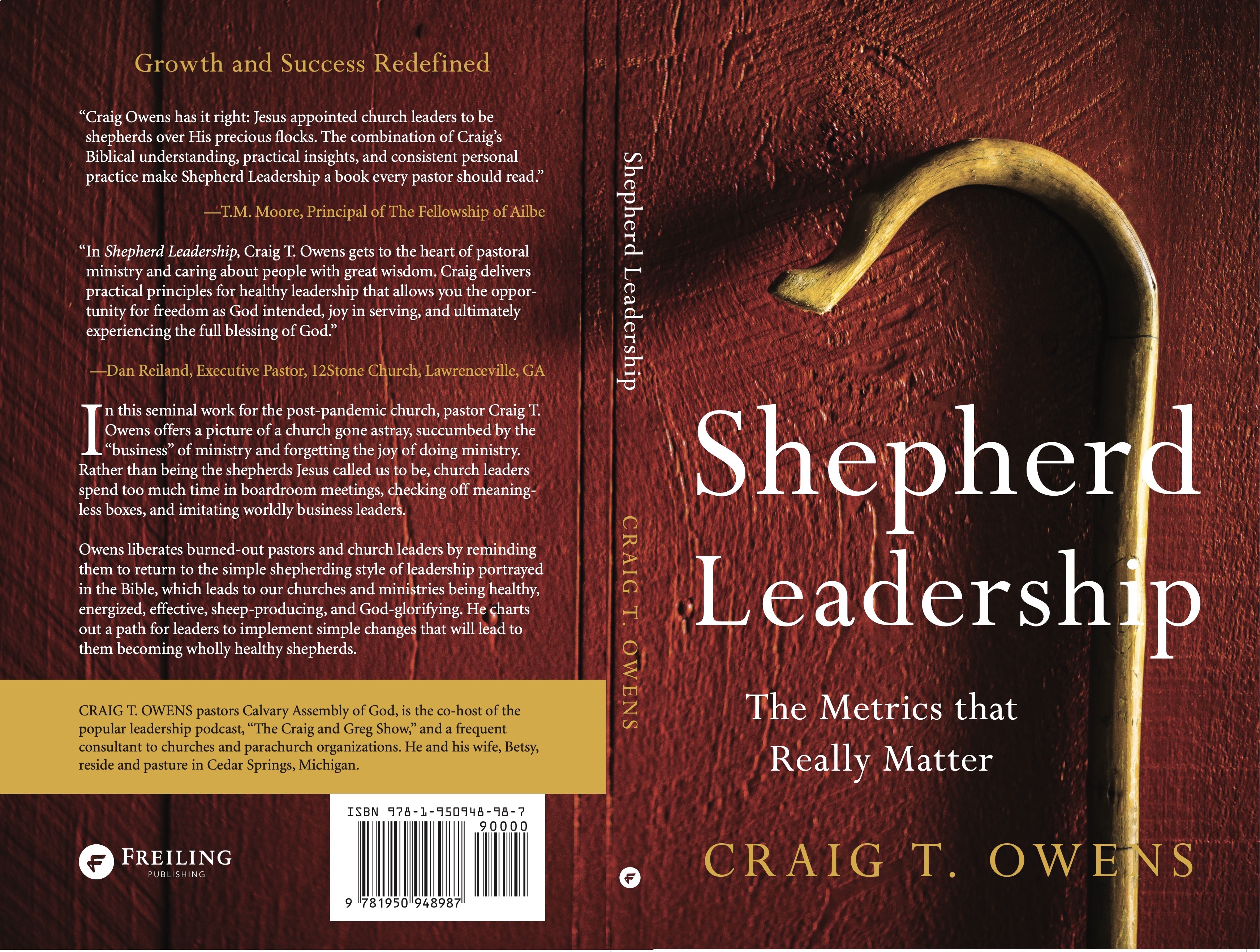





 Craig T. Owens