Attitude Check

Attitude checkWhen we realize that nothing can thwart God’s plan, and that you and I are a part of that plan, I think there could be a couple of attitudes that might pop up: (1) Confidence―not in my abilities, but in God’s; or (2) Humility―not thinking less of myself, but thinking of myself less.

Confidence without humility leads to self-destructive pride, and humility without confidence leads to self-destructive fear. We need confidence with humility, just like Jesus demonstrated in going to the old rugged Cross.

We can see the confidence in Jesus when He claims to be the “I AM” (John 8:54-59). But we can also see the humility of Jesus when He said He would lay His life down (John 10:11, 15:13).

These two attitudes converge powerfully in John 13:1-17 when we read that Jesus knew that God had put all authority under His command (vv. 1, 3), and then He used His confident authority to serve His friends by washing their feet.

Confidence without humility won’t serve because it thinks others must serve them. Humility without confidence won’t serve because it thinks others will take advantage of them. But Jesus was confidently humble (or humbly confident) so He could serve. It’s the only time Jesus said “I have set you an example” (v. 15). Our attitude is to mirror His, and we are to confidently and humbly serve.

A humbly-confident / confidently-humble servant is known by his or her:

  • Heart―E.G.O. (edging God out) or E.G.O. (exalting God only) [*]
  • Head―having his/her thoughts aligned with the Word of God
  • Hands―serving God and others (Matthew 20:25-28)

If you were to honestly reflect on this, where do you rate yourself?

  • Are you confident that God loves you and has a plan for your life, a plan that cannot be thwarted?
  • Are you humble enough to serve others? To give up your own agenda so that God is glorified?
  • Can you honestly say you have the right E.G.O.?
  • Are your thoughts becoming more and more aligned and shaped by God’s Word?

We’ll be continuing our series on The Old Rugged Cross next Sunday, and I would love to have you join us.

[*] My thanks to Kenneth Blanchard for his insightful description of E.G.O. in his book Lead Like Jesus

William Shakespeare On Prayer

William ShakespeareSome great lines from William Shakespeare on prayer―

“We do pray for mercy, and that same prayer doth teach us all to render the deeds of mercy.” —William Shakespeare

“Now I am passed all comforts here, but prayers.” —William Shakespeare

“My words fly up, my thoughts remain below; Words without thoughts never to heaven go.” —William Shakespeare

“Sweet are the uses of adversity; which, like the toad, ugly and venomous, wears a precious jewel in his head; and this our life, exempt from public haunt, finds tongues in trees, books in the running brooks, sermons in stones, and good in everything.” —William Shakespeare

“I commend my soul into the hands of God my Creator, believing through the merits of Jesus Christ, my Savior, to be made a partaker of life everlasting.” —William Shakespeare’s opening line in his last will and testament

4 Notes On Haggai

(c) Laura Kranz at The Overview Bible Project (see my note below)

(c) Laura Kranz at The Overview Bible Project (see my note below)

The prophet Haggai wrote one of the shortest books in the Old Testament, and his recorded ministry only spans five months(!) in 520 B.C. But in this short book I find four really cool things—

(1) God uses His people at specific times for specific purposes. All of Haggai’s messages from God have a very precise date stamp on them, so we know exactly when  they were delivered. Also, most of his messages say something like, “The word of God came through Haggai to Zerubbabel [or to Joshua, or to the people, or to the priests].” If God used Haggai like this, isn’t it likely that He is using you or I at specific times and for specific purposes?

(2) God invites us to “give careful thought” to His messages. Five times God says, “Give careful thought to your ways” (1:5, 7; 2:15, 18). This phrase literally means to take a strong hold on each thought and examine it intensely. This thought process is always connected to another phrase: “This is what the Lord Almighty says….” In other words, we are to thoughtfully examine our lifestyle with God’s Word being the standard of measurement (cf. 2 Corinthians 10:5).

(3) Obeying God’s Word brings God’s “stirring.” When God says move and we move, His Spirit will energize our spirit, and empower our lives for action. God never calls us to do something without giving us the empowerment to do it.

(4) I need to act courageously. God calls us to “be strong” (three times in 2:4) “and work, for I am with you.” Courageous action after God has stirred us up drives out fear. On the flip side, inactivity because of fear almost always leads to more fear and more inactivity.

Don’t ever let the category “minor prophet” trick you into thinking God doesn’t have a major message to share with you. Just one word from God is more powerful than we can ever imagine!

(The portrait of Haggai in this post was created by Laura Kranz at The Overview Bible Project. She and her husband Jeffrey do some amazing things that will add insight to your Bible study time. Click here to read my review of their book The Illustrated Guide To The Authors Of The Bible. And while you’re on their website, subscribe to some of the cool guides that regularly get emailed out.)

But Now

But nowRemembering our past is so important. Forgetting where we’ve come from can make us insensitive to the feelings of others, it can make us falsely proud of what we assume we’ve accomplished for ourselves, and it can make us fearful that God cannot handle what’s coming next.

So God want us to remember two things: what we were, and what we are. In Ephesians the verb tense Paul uses literally says, “Keep on calling this to mind; keep on keeping it fresh in your thoughts” (Ephesians 2:11 & 12).

Keep on remembering what you WERE:

  • separate from Christ
  • excluded from citizenship
  • foreigners to the covenants of the promise
  • without hope
  • without God in the world (v. 12)

And then come two amazing words―BUT NOW (v. 13) keep on remember what you ARE:

  • brought near through the blood of Christ (v. 13)
  • able to access to the Father (v. 18)
  • no longer foreigners and aliens, but fellow citizens with God’s people (v. 19)
  • members of God’s household (v. 19)
  • a dwelling in which God lives by His Spirit (v. 22)

Constantly calling this to mind should produce three attitudes―

  1. Thankful to God for His grace gifts to me.
  2. Graceful to others who are separated from God now like I used to be.
  3. Hopeful of the help Christ can bring through me to others.

We are continuing our study of the Book of Ephesians this coming Sunday. Please join us!

13 More Quotes From “Notes On Ezekiel”

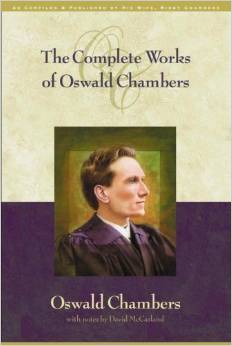
The Complete Works Of Oswald ChambersHere are some more quotes from Oswald Chambers’ book Notes On Ezekiel. My book review is here, and my first set of quotes from this book is here.

“We are too shallow to be afraid of God. … It requires a miracle of grace before we believe this, consequently we are foolishly fearless, but when the grace of God lifts us into the life of God we fear nothing and no one saving God alone. … Confusion arises when we do not see God as Almighty.”

“God will put us in circumstances where we have to take steps of which we do not see the meaning, only on looking back do we discern that it was God’s will for us.”

“We are always on the wrong line when we come to God with a pre-occupied mind because a pre-occupied mind springs from a disloyal heart: ‘I don’t want to do God’s will, what I want is for God to give me permission to do what I want to do.’” 

“What God burns is not weakness, not imperfection, but perverted goodness.”

“Every part of our human nature which is not brought into subjection to the Holy Spirit after experiencing deliverance from sin will prove a corrupting influence.”

“We all have the sneaking idea that we are the favorites of God—‘It’s alright for me to do this, God will understand.’ If I as a child of God commit sin, I will be as sternly dealt with as if I were not His child.”

“Don’t tie God up in your own conceptions, or say too surely you know what God will do. … The sovereign purposes of God work out slowly and inexorably, but ever be careful to note where God’s sovereignty is at work among men in matters of history and Time, and where it is at work in matters of eternal destiny. Beware of allowing your memory of how God has worked to take the place of present vital moral relationship to Him.”

“When I have been using ‘the sword of the Spirit’ in a spirit of indignation against another, it is a terrible experience to find the sword suddenly wrested out of my hand and laid about me personally by God. Let your personal experience of the work of God’s Spirit instruct you at the foot of Calvary; let the light of God riddle you through, then you will never use the Word of God to another, never turn the light of God on him, without fear and trembling.”

“Liberty is the ability to obey the law of God, with the power to live according to its demands; license is the unrestrained impulse to traffic against the law of God. … The seal of immorality is that I do what I like; the seal of freedom is that I do what God likes.”

“If the Holy Spirit is obeyed the stubbornness is blown out, the dynamite of the Holy Ghost blows it out.”

“Pride in its most estimable as well as its most debased form is self-deification; it is not a yielding to temptation from without, but a distinct alteration of relationships within.”

“I may suffer because of the sins of my progenitors—I am never punished for them.”

“In dealing with Bible experiences we must ever make allowance for the miraculous, which never contradicts reason, but very often does contradict common sense. The miraculous transcends reason and lifts it into another world than the logical one, consequently spiritual experience is something I have lived through, not thought through.”

C.S. Lewis On Prayer

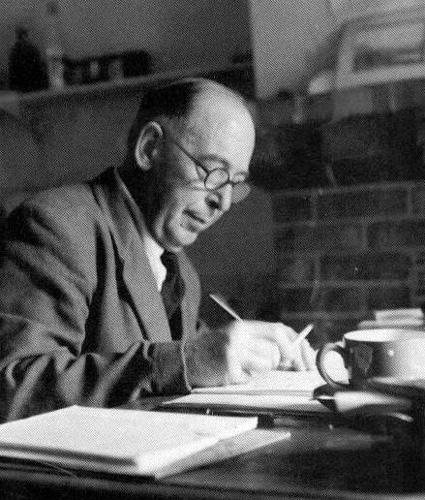
C.S. LewisSome great quotes from C.S. Lewis on prayer…

“We must lay before God what is in us, not what we want to be in us.” —C.S. Lewis

“It is quite useless knocking at the door of Heaven for earthly comfort. It’s not the sort of comfort they supply there.” —C.S. Lewis

“Of course you will all remain in my prayers. I think it very wrong to pray for people while they are in distress and then not to continue praying, now with thanksgiving, when they are relieved. Many people think their prayers are never answered because it is the answered ones that they forget.” —C.S. Lewis

“Well, let’s now at any rate come clean. Prayer is irksome. An excuse to omit it is never unwelcome. When it is over, this casts a feeling of relief and holiday over the rest of the day. We are reluctant to begin. We are delighted to finish. While we are at prayer, but not while we are reading a novel or solving a crossword puzzle, any trifle is enough to distract us…. Now the disquieting thing is not simply that we skimp and begrudge the duty of prayer. The really disquieting thing is it should be numbered among duties at all. For we believe that we were created ‘to glorify God and enjoy Him forever.’ And if the few, the very few, minutes we now spend on intercourse with God are a burden to us rather than a delight, what then?… The painful effort which prayer involves is not proof that we are doing something we were not created to do. If we were perfected, prayer would not be a duty, it would be a delight. Someday, please God, it will be.” —C.S. Lewis

“I think it wise, if possible, to move one’s main prayers from the last-thing-at-night position to some earlier time: give them a better chance to infiltrate one’s other thoughts.” —C.S. Lewis

14 Quotes About Thinking From “The Moral Foundations Of Life”

The Moral Foundations Of LifeAs I noted in my review of The Moral Foundations Of Life (you can read that review by clicking here), Oswald Chambers wanted Christians to think more deeply about their relationship with Jesus Christ, and then live differently because of their new way of thinking. Here are some of his quotes related to a Christians’ thought life.

“When we become spiritual we have to exercise the power of thinking to a greater degree than ever before. We starve our mind as Christians by not thinking.” 

“The Atonement of our Lord never contradicts human reason, it contradicts the logic of human intellect that has never partaken of regeneration.”

“Is Jesus Christ’s teaching God-breathed to me? There is an intention that seeks God’s blessings without obeying Jesus Christ’s teaching. We are apt to say with sanctimonious piety, ‘Yes, Jesus Christ’s teaching is of God’; but how do we measure up to it? Do we intend to think about it and act on it?” 

“The old idea that we cannot help evil thoughts has become so ingrained in our minds that most of us accept it as fact. But if it is true, then Paul is talking nonsense when he tells us to choose our thinking, to think only on those things that are true, and honorable, and just, and pure.” [Philippians 4:8-9; 2 Corinthians 10:5]

“We are so extraordinarily fussy that we won’t give ourselves one minute before God to think, and unless we do we shall never form the habit of abiding. We must get alone in secret and think, screw our minds down and not allow them to wool-gather.” 

“If a man lets his garden alone it very soon ceases to be a garden; and if a saint lets his mind alone it will soon become a rubbish keep for satan to make use of.”

“If we have been storing our minds with the Word of God, we are never taken unawares in new circumstances because the Holy Spirit brings back these things to our remembrance and we know what we should do; but the Holy Spirit cannot bring back to our minds what we have never troubled to put there.” 

“Think of the sweat and labor that a scientific student will expend in order to attain his end; where do we find men and women concentrating with the same intensity on spiritual realities?”

“As soon as you get down to pray you remember a letter you ought to write, or something else that needs to be done, a thousand and one little impertinences come in and claim your attention. When we suspend our own activities and get down at the foot of the Cross and meditate there, God brings His thoughts to us by the Holy Spirit and interprets them to us. … God has not the remotest opportunity of coming to some of us, our minds are packed full with our own thoughts and conceptions.” 

“The devil does not need to bother about us as long as we remain ignorant of the way God has made us and refused to discipline ourselves; inattention and our own slovenliness will soon run away with every power we have. … All we need is grit and gumption and reliance on the Holy Spirit. We must bring the same determined energy to the revelations in the God’s Book as we bring to earthly professions. Most of us leave the sweat of brain outside when we come to deal with the Bible.”

“God will not bring every thought and imagination into captivity; we have to do it, and that is the test of spiritual concentration. The inattentive, slovenly way we drift into the presence of God is an indication that we are not bothering to think about Him. … God gives us the Holy Spirit not only for holy living but for holy thinking, and we are held responsible if we do not think concentratedly along the right lines.” 

“Glean your thinking; don’t allow your mind to be a harborage for every kind of vagabond sentiment; resolutely get into the way of disciplining your impulses and stray thinking.”

“We have to transform into real thinking possession for ourselves all that the Spirit of God puts into our spirits.” 

“An undisciplined imagination will destroy reliable judgment more quickly even then sin.”

The Moral Foundations Of Life (book review)

The Moral Foundations Of LifeI have written extensively on how much Oswald Chambers’ writings have impacted my life and thinking. In his book The Moral Foundations Of Life, Chambers himself discusses how much a Christian’s thought life impacts the way that he lives. This book is a collection of lectures (or as Chambers called them “talks”) on the thought life of Christians.

Two quotes from David Lambert, a friend of Chambers and a man who helped get his books published, sets the stage for this outstanding book—

“One of Chambers’ primary goals as a teacher was to challenge Christians to think. An equally important objective was to encourage believers to act. In Chambers’ mind, the brain and the body were not enemies but allies in the effort to live a life that glorified God. …

“I see sometimes in London the preparations being made for the sure foundations of one of the great modern buildings to be erected there. Far below the surface-level men and machines toil patiently on work which soon will be hidden, but which alone will make the towering building secure. These Talks on Moral Foundations take us to that depth below the surface of our everyday life where the foundations are laid for enduring sainthood. They deal profoundly with such matters as Habit, Thinking, the Will, Behavior. The subject of Christian ethical obligation is of paramount importance in the thought life of today. The very basis of our religion, our moral and spiritual standing, is being challenged. Here will be found a valiant answer to the secular, skeptical and lawless questionings of our time.”

I could not have said it better myself! This is another outstanding book which all Christians should endeavor to read.

Links & Quotes

link quote

Some good reading from today…

“I have learned…that the Lord can fill the soul with Himself, when He takes away what seemed indispensable to our happiness on earth.” —Andrew Bonar

In a day of endless distraction and diversion, there is no greater remedy for our clouded heads and hectic lives than the sober mind of Christ.” Read more in this post: Finding A Level Head In A Hectic World.

“Prayer really is simple. Resist the urge to complicate it. Don’t take pride in well-crafted prayers. Don’t apologize for incoherent prayers. No games. No cover-ups. Just be honest—honest to God. Climb into His lap. Tell Him everything that’s on your heart. Or tell Him nothing at all. Just lift your heart to heaven and declare, ‘Father … Daddy.’ Stress. Fear. Guilt. Grief. Demands on all sides. And all we can summon is a plaintive, ‘Oh, Father.’ If so, that’s enough. Your heavenly Father will wrap you in His arms!” —Max Lucado

Some super-cool pictures of the work that won the 2014 Nobel Prize for chemistry.

[INFOGRAPHIC] The size, spread and cost of Ebola.

I have been saying this was coming: Pastors in Houston have their sermons subpoenaed to make sure they are “correct.”

“The time for speaking seldom arrives, the time for being never departs.” —George MacDonald

“The Word of God ignores size and quantity and lays all its stress upon quality. Christ, more than any other man, was followed by the crowds, yet after giving them such help as they were able to receive, He quietly turned from them and deposited His enduring truths in the breasts of His chosen 12.” —A.W. Tozer

Smashing Idols

Puny idolsWhen looking at God’s commandments, we must look at them through a lens of love. If God—the Lawgiver—is love, then all of His laws must be saturated in His love.

So what happens when we look at the Second Commandment through this lens? The wording is simple: “You shall not make for yourself an idol…” (Exodus 20:4-6). If the First Commandment says, “I love you so much that I want to be the One and Only God you have a relationship with” then the Second Commandment says, “Because of this loving relationship, don’t try to make Me smaller to fit your worldview, but let Me by fully Me!

This idolatry starts in our minds, long before we ever create anything with our hands. Idolatry is a mental state that says, “I can define the Creator. I can figure out all of His dimensions. I can predict what He’s going to do. God operates just as I expect Him to.”

But God says, “My thoughts are nothing like your thoughts. And My ways are far beyond anything you could imagine” (Isaiah 55:8).

The Apostle Paul warned us of exchanging God’s uncontainable glory and majesty for something that we can neatly contain in our box: …they exchanged the glory of the immortal God for images … they exchanged the truth of God for a lie, and worshiped and served created things rather than the Creator… (Romans 1:21-25).

William Barclay offers this commentary about the flimsiness of idols: “In Greek the word idol has in it the sense of unreality. Plato used it for the illusions of this world as opposed to the unchangeable realities of eternity.” Our puny thoughts about God can create the idols that keep us from the reality of God. 

So how do we avoid this idolatry? Quite simply: we smash every mental idol!

…We refute arguments and theories and reasonings and every proud and lofty thing that sets itself up against the true knowledge of God; and we lead every thought and purpose away captive into the obedience of Christ… (2 Corinthians 10:5).

So… what idols do you need to smash?

If you have missed any of the messages in our series The Love In The Law, you can find them all by clicking here.