Listen to the podcast of this post by clicking on the player below, and you can also subscribe on Apple, Spotify, or Audible.
In the day when I cried out, You answered me, and made me bold with strength in my soul. (Psalm 138:3 NKJV)
Prayer requires stick-to-it-iveness, which means it takes strength to pray.
Therefore, being physically or emotionally drained makes it challenging to be alert and attentive in prayer. When we’re tired, our thoughts often drift; it’s hard to stay focused.
Sometimes one of the most helpful things you can do for your spiritual growth is to get a good night’s sleep (or take a nap).
Jesus did this (Matthew 14:22-23). He was very aware of His physical and emotional levels. When He was tired, He took a nap; when He was drained from ministry, He got alone with His Heavenly Father for refreshing (Mark 1:35, Luke 5:16).
Jesus told His disciples to pray so they wouldn’t give in to temptation (Luke 22:40, 45-46). Prayer does strengthen us against the enemy’s attack, but physical and emotional stamina helps us too.
Notice the full cycle—we need physical and emotional strength to pray persistently and consistently, and prayer enhances our physical and emotional reserves to help us pray. So do all three:
When all three components of your being—spirit, body, soul—are alert and healthy, you will find your prayer life fully engaged. If one area becomes depleted, listen to the always-practical counsel of the Holy Spirit. Pray, rest, talk to a friend or a counselor so you can return to the optimal position of strength.
Yes, it takes strength to pray, but in prayer your strength is renewed.
When we ready the Bible and it confronts us, the first place we need to look is in the mirror. The Bible is speaking first to me about changes I need to make. It’s only after I have applied God’s Word to my own life that I can talk about it authentically to others.
“Righteousness is nothing more or less than the character of Jesus Himself, manifesting in and through us into all our relationships, roles, and responsibilities.” —T.M. Moore
“At one time in Earth’s recent past people and all animals, including crocodiles, lions, T. rex, sharks, spiders, alligators, etc., were vegetarian. It is not known exactly when the transition to carnivorous and predatory behavior occurred, but we do know it happened after Adam and Eve sinned and did not involve evolution.” A recent analysis of a pterosaur’s stomach contents shows this vegetarian diet.
Cold-case detective J. Warner Wallace explains why the different accounts of the ministry of Jesus (as recorded in the four Gospels) actually bolster the case for their accuracy and historicity.
“It is when the thoughts of heaven are long out of the Christian’s sight, that he forgets his hope of that glorious place, that he begins to set up some idol…. Keeping the joy of heaven always before you will help you to run your race with patience. It will help you endure your short scuffles with temptation and affliction.” —William Gurnall, The Christian In Complete Armor
T.M. Moore wrote these sober words to the church: “The Lord sees His Church as the joy and beauty of the earth (Psalm 48:1-2), reflecting His splendor and goodness to the watching world. But when churches spend the bulk of their budgets and energies on themselves, it’s hard to see how they can be of much good in their local communities.”
You may also want to check out my blog post and video The Value of Journaling where I talk about how I capture thoughts, prayers, conversations from others, Scripture verses and more when I’m facing a big decision.
The verb Luke uses here is suggestive of a time when the devil may think he has an advantage over his intended victim. The KJV says the devil departed for “a season.” Just like farmers know the proper season to plant, to weed, to harvest, and to rest, so does our adversary.
Check out how some other translations of the Bible render Luke 4:13—
another more opportune and favorable time (AMPC)
until the next opportunity came (NLT)
lying in wait for another opportunity (the Message paraphrase)
Jesus warned Peter that the devil wanted to sift him as wheat (Luke 22:31-32). Although Peter knew the “opportune time” was coming, he was unprepared when it did come and he failed in his initial time of temptation. Jesus restored Peter and told him that he was going to be the one to help prepare others to be victorious when the devil attacked them.
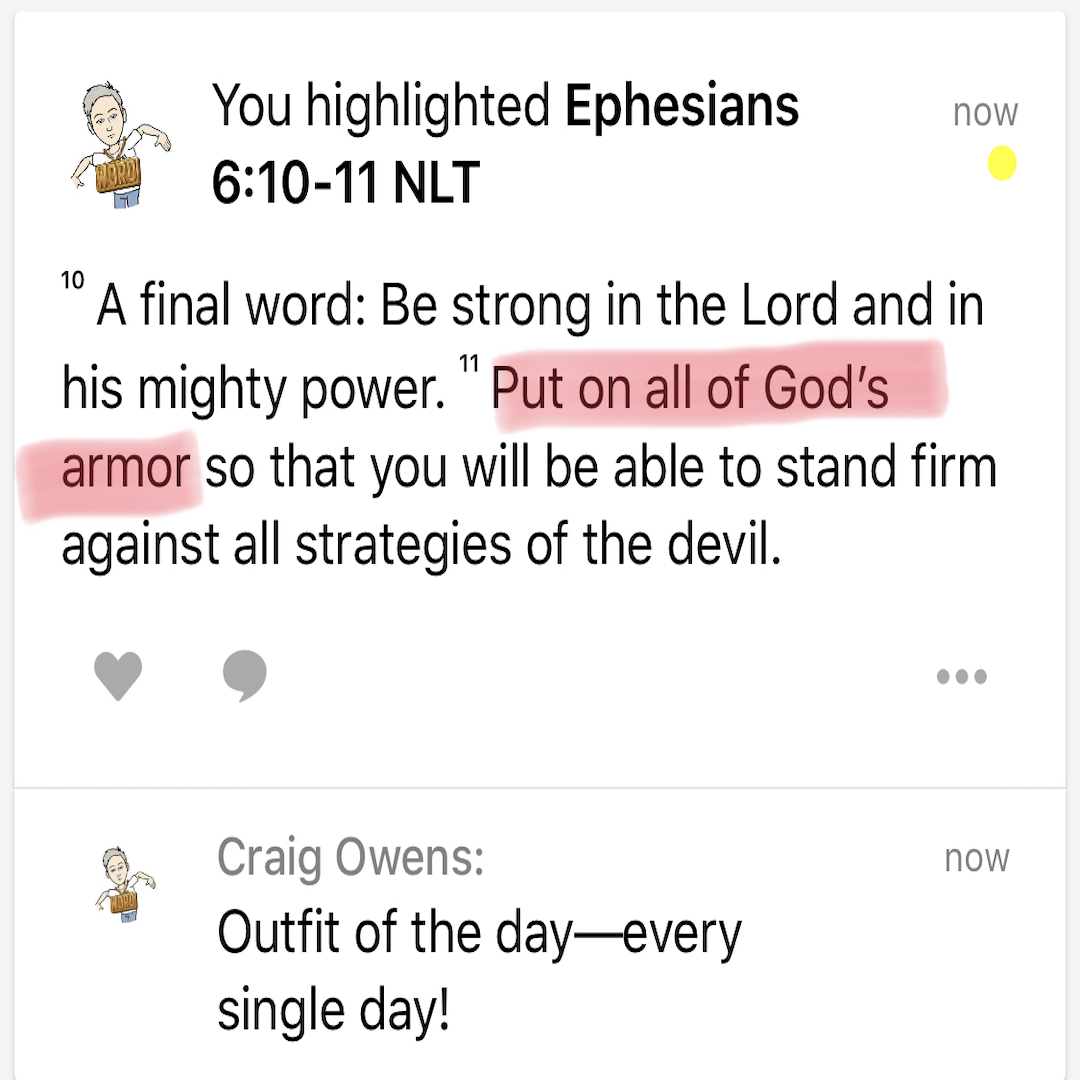
Peter may have had this in mind when he warned us to be alert for our prowling enemy (1 Peter 5:8). The apostle Paul also tells us to be aware of the devil’s schemes, and to never be without our spiritual armor (2 Corinthians 2:11; Ephesians 6:11).
There is never a time when I am invulnerable to a spiritual attack.
The moment I think I am self-secure is an opportune season for the devil to unleash his attack on me. “If you think you are standing firm, be careful that you don’t fall” (1 Corinthians 10:12).
Peter tells us to “resist [the devil], standing firm in the faith” (1 Peter 5:9). In the preceding three verses, Peter tells us just how to do this:
humble yourself before God—no feelings of self-sufficiency
Don’t be caught off-guard by giving the devil “an opportune time,” but stay utterly dependent on God. As James says, we have to first submit ourselves to God and then we will be prepared to resist the devil and watch him flee from us (James 4:7).
“You have to expect things of yourself before you can do them.” —Michael Jordan
“The sun, with all those planets revolving around it and dependent on it, can still ripen a bunch of grapes as if it had nothing else in the universe to do.” —Galileo Galilei
“Physical care is vital to vigilance. HALT is the acronym often used by therapists to remind people of when they can be most vulnerable it stands for: hungry, angry, lonely, tired. Simply going to bed on a regular schedule to get a good night’s rest can help one’s brain be more focused on positive habits and more alert to fight temptations. Not only eating but also eating well can improve mood and feelings of well-being. Regular exercise keeps the mind more focused, the body feeling great, and improve sleep.” —Sam Black, in The Porn Circuit
“Leadership can be a lonely business filled with great amounts of soul-draining human interactions but little soul-filling intimacy. Without some safe-harbor relationships where we can lay down all of the armor and weapons needed to face the world and relax in confidence and unguarded communion, we become vulnerable to two debilitating frames of mind and spirit—the victim and the martyr. Allowed to blossom into resentment or a self-justification for seeking EGO-soothing instant gratification, these twin demons have been the downfall of many a leader in every walk of life.” —Kenneth Blanchard and Phil Hodges, in Lead Like Jesus
Let’s change our leadership mentoring perspective. It’s not whether you dropped the ball or not, it’s what you learned from the time you dropped the ball. This is how we help others move forward. Check out the full Craig and Greg Show episode where we talk more about “untraditional” performance reviews.
I have lots of new content every week, which you can check out on my YouTube channel.
If it hadn’t been for J.R.R. Tolkien’s influence, C.S. Lewis may have remained an atheist. And if it hadn’t been for C.S. Lewis’ encouragement, the world may never have been able to enjoy Tolkien’s Lord of the Rings series. This truly was a friendship that blessed the world! A book that explores this relationship further is A Hobbit, A Wardrobe, and A Great War.
“We don’t all have to be geniuses to innovate in the way we use culture. For example, what if we were to repudiate, once and for all, all gossip and all carping and complaining, and instead were to work hard day by day to redirect our tongues toward building others up (Ephesians 4:29)? We would have to innovate some new ways of engaging people in conversation, by getting to know people and taking a real interest in them, becoming better listeners, asking good questions, making sure all our words were seasoned with grace, and always speaking truth in love. Would that not be a radical and innovative improvement on much of what passes for conversation today? If every believer just worked a bit harder to innovate new forms of conversation, I’m persuaded the world would certainly notice the difference!” —T.M. Moore
J. Warner Wallace is a cold-case detective and a premier Christian apologist. Some Christians believe that we only need to use Scripture to form our trust in Scripture. In this video, Wallace explains from Scripture how even Jesus used evidence outside of Scripture to make His case that He was who Scripture said He was.
It is interesting how many modern-day scientists will accept without fact that an asteroid impacted Earth “millions of years ago” to trigger massive changes that resulted in the extinction of dinosaurs, but will flatly disregard the Flood recorded in the Bible. As a result of their false assumptions, they reach conclusions (like believing they have refuted Bergmann’s Rule) that are quickly refuted. Check out this insightful post.
If you are doing all the calculating with your money, then Jesus says you’re not rich toward God. Check out this full sermon here.
“When God brings new opportunities the path forward is often unknown; it’s a risky journey to start. After all, if you can see the path to the finish line, you do not need to trust the Lord. Why would God give a golden opportunity to those unwilling to trust Him for the unknown?” —Roger Parrott, Opportunity Leadership
(For security reasons, I cannot share a link to the following but I can verify its veracity). “Sam” is a Christian in an Arabic country who has been instrumental in starting and leading a church in his country for several years. He was arrested two months ago and held in prison for 55 days. He was interrogated the first 8 days, then left in solitary confinement for 47 days: the bright lights always on, Some Christians were able to meet with him after his release, listen to his story, share Scripture together, pray with and encourage him. Here is one of their main takeaways from their conversation with Sam.
“So, Sam, how did you make it 55 days in prison?”
Sam said, “The Holy Spirit was with me and was with my mouth. He gave me the words to say. But the devil also sat right next to me twisting Scripture.” Sam continued, “Tell those that will go to prison it is very important not only to know the Scripture but to be able to interpret it correctly as the accuser (I found out by experience) is so adept at twisting God’s Word to both tempt and discourage us.”
Jesus asks us to proclaim the message about Him, not argue about Him. The best witness is one who truthfully shares his or her personal life-changing experience with Jesus. There is never a reason to quarrel about this! Check out this whole message here. I have lots of new content every week, which you can check out on my YouTube channel.
“In 1977, 40 years after arriving in Guatemala, the Franklins retired from full-time ministry, returning to the United States. They made numerous short-term trips back to Guatemala to rejoice with the people who had become their family. From the five small groups of believers they found in 1937, God had blessed them with 600 established churches, 700 licensed ministers, and 55,000 Assemblies of God believers.” What an amazing testimony of faithful, Christ-honoring ministry!
“Enduring peace cannot be bought at the cost of other people’s freedom.” —Franklin D. Roosevelt
“When we are out of the way of duty, we are in the way of temptation.” —Matthew Henry
“Work of the enemy! Such deeds he loves: friend at war with friend, loyalty divided, and confusion of hearts.” —Gandalf, in J.R.R. Tolkien’s Return of the King
I absolutely love the leadership insights I discover during my daily Bible reading. I have turned many of these insights into an ongoing series called Godly Leadership.
“Before one can correctly understand the work of the Holy Spirit, he must first of all know the Spirit Himself. A frequent source of error and fanaticism about the work of the Holy Spirit is the attempt to study and understand His work without first of all coming to know Him as a Person. … If we think of the Holy Spirit as so many do as merely a power or influence, our constant thought will be, ‘How can I get more of the Holy Spirit,’ but if we think of Him in the Biblical way as a Divine Person, our thought will rather be, ‘How can the Holy Spirit have more of me?’” —R.A. Torrey, The Person and Work of the Holy Spirit
Romans 8:28 tells us that God uses ALL things to accomplish His purpose for our lives. Too many times I tried to rush through things without getting anything out of it. I have lots of new content every week, which you can check out on my YouTube channel.
He is 98 years old and he’s still busy serving other people! I pray we can all be as selfless and vibrant in ministering to others until the day God calls us home.
“When with an eye of faith we behold Christ crucified we ought to weep, not for Him, but for ourselves. We must not be affected with the death of Christ as with the death of a common person whose calamity we pity, or of a common friend whom we are likely to part with. The death of Christ was a thing peculiar; it was His victory and triumph over His enemies; it was our deliverance, and the purchase of eternal life for us. And therefore let us weep, not for Him, but for our own sins, and the sins of our children, that were the cause of His death; and weep for fear (such were the tears here prescribed) of the miseries we shall bring upon ourselves, if we slight His love, and reject His grace, as the Jewish nation did, which brought upon them the ruin here foretold.” —Matthew Henry, on Jesus’ word, “Do not weep for Me” in Luke 23:28
J. Warner Wallace shares three responses Christians can give to those who make the claim that Jesus didn’t think He was God. In this video, Detective Wallace talks about a section of his website that gives further evidence. You can find that section here.
The Institute for Creation Research is a group of scientists explaining how science points to a Creator. What does Creation have to do with Easter? “Any view of Christianity that incorporates long ages of death and suffering before Adam makes a sham of the Cross. This Easter season, as we remember our salvation made possible by the death of our Lord Jesus Christ on the Cross and His triumphant resurrection from the grave, let us understand it within the ‘big picture’ of a ‘very good’ creation that was ruined by our rebellion but restored by the willing sacrifice of our great Creator-Savior.”
“One measure of the greatness of a man is not only that he practices what he preaches, but also that he doesn’t consider himself above the ordinary means of grace that all Christians need.” —John Piper
“Beware of idleness—satan sows most of his seed in fallow ground.” —Thomas Watson
Listen to the podcast of this post by clicking on the player below, and you can also subscribe on Apple, Spotify, or Audible.
The prayer that Jesus taught His follower is a prayer for citizens of the Kingdom of Heaven. These are not just some magical words to pray whenever we don’t know what to pray.
We come to a part of the prayer that has confused some people. Jesus instructed us to pray, “And lead us not into temptation, but deliver us from the evil one” (Matthew 6:13).
So some people have asked, “Does God tempt us?”
No, He doesn’t! The temptations flare up when the ungodly desires within us are given an opportunity to seize what we think will make us happy (see James 1:13-15).
All three of the synoptic Gospels tell us that Jesus was led by the Holy Spirit to the place where the devil would tempt Him (Matthew 4:1; Mark 1:12-13; Luke 4:1-2).
Jesus went through all of this so that He would be assured that He was fully equipped for the intense scrutiny He was going to undergo for the next 3+ years. At the end of that time neither the Sanhedrin, Pontius Pilate, nor Herod Antipas could find any semblance of sin in His life.
The word Jesus uses for temptation in Matthew 6:13 comes from the root word peirazo, which means to assay. We don’t use that word too often today, but it means a testing, an experiment, or a trial, to prove something’s fidelity, integrity, or virtue.
Just like an assayer would test a rock for the quality and quantity of a precious metal found in it, so we are tested to determine our fitness for what God has in store for us. Remember that the beginning of this prayer is a desire for God’s name to be hallowed and His Kingdom to be made visible through our lives.
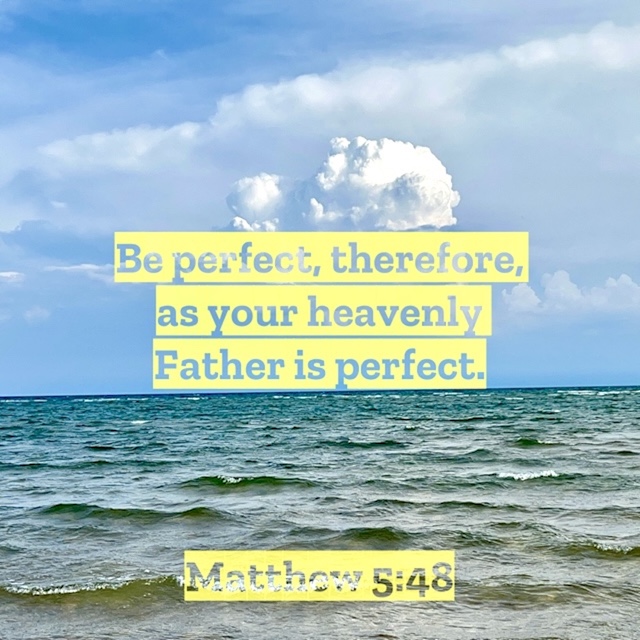
Hebrews 5:9 says that Jesus was perfected (the Greek word is telios), which is exactly what Jesus wants for us—Be prefect [telios] even as your Heavenly Father is perfect [telios] (Matthew 5:48).
In order to know this perfecting process, we have to be tested and assayed (James 1:12, 2-4).
Like all of the other phrases in this prayer, this one is both an acknowledgment (I will face temptations) and a petition (I need Your help to overcome the temptation). This is not necessarily a prayer to keep us from temptation, but to keep us through the temptation. We want to be empowered to pass the test.
A loving teacher prepares us for the test, gives us the test, and then gives us the results so that we know we are prepared for the next level. So remember that this prayer is addressed to our loving Heavenly Father. He prepares us for the test so that we can pass the test. We never walk an unknown path—we never are given a test unless He has fully prepared us for it.
So let me give you four thoughts to consider:
Don’t rush ahead because that’s pride. Jesus went when the Holy Spirit led Him.
Don’t lag behind because that’s fear. Think of the Israelites who fearful of the “giants” in the land and wouldn’t move forward.
Don’t be discouraged by a temporary failure. The phrase immediately before this says, “Forgive us our debts.” If you fall short, ask for forgiveness and move forward again.
Do give in to the righteousness Jesus has made available for you. This is what will help you stand firm in your time of testing (1 Peter 1:6-7).
Just like Jesus, our Father wants to perfect you and lead you up to higher levels.
If you’ve missed any of the previous messages in this series looking at the model prayer Jesus taught us, you can find them all here.



 In the day when I cried out, You answered me, and made me bold with strength in my soul. (Psalm 138:3 NKJV)
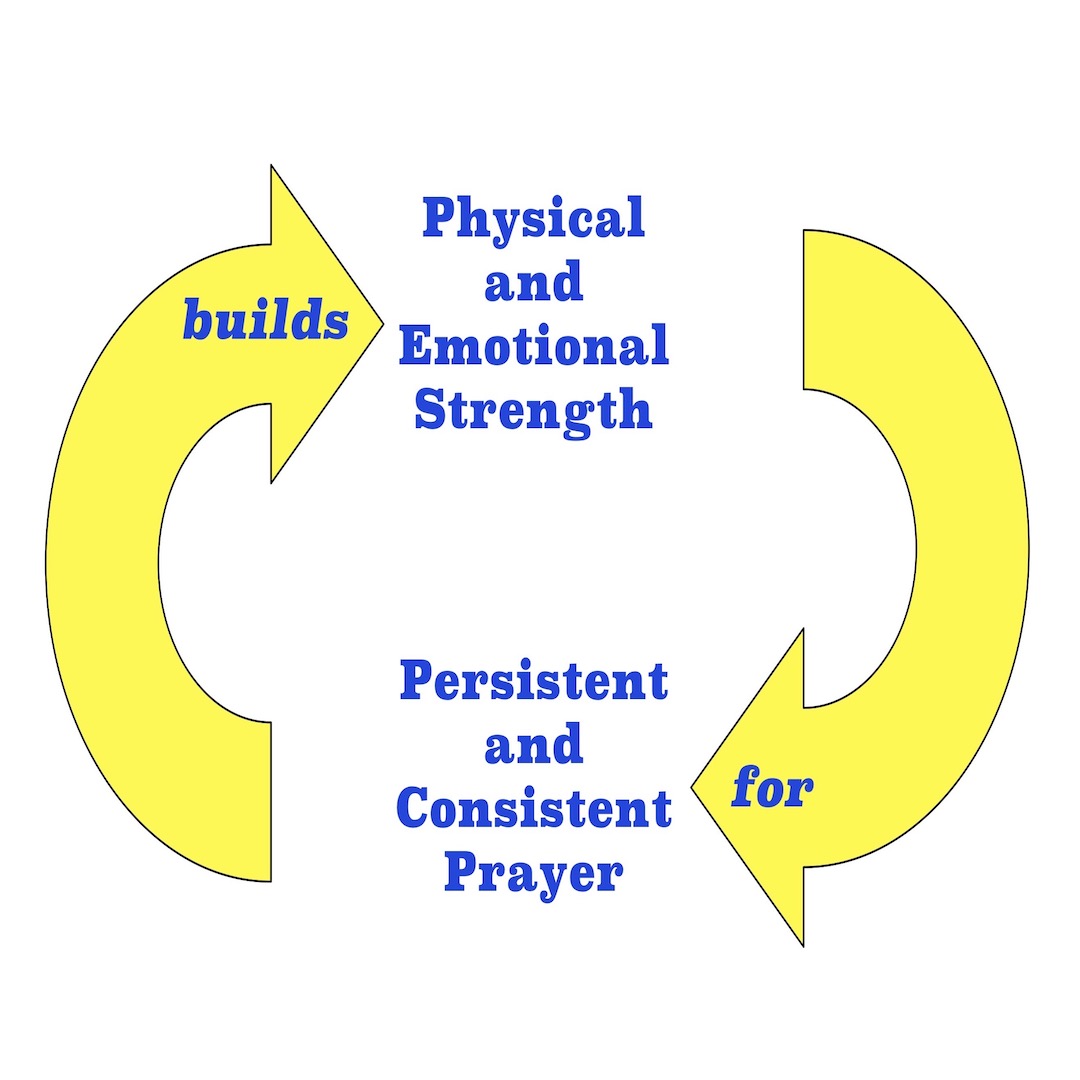 Notice the full cycle—we need physical and emotional strength to pray persistently and consistently, and prayer enhances our physical and emotional reserves to help us pray. So do all three:



 Craig T. Owens