Listen to the podcast of this post by clicking on the player below, and you can also subscribe on Apple, Spotify, or Audible.
I love reading, and I love sharing my love of good books with others! Here is a list of the books I read and reviewed in 2022. Click on a title to be taken to that review.
Every Monday I share a 1-minute thought to get your week started. It’s my weekly Monday Motivation series of videos. Check out this week’s video and subscribe on YouTube.
“The Lord Jesus Christ is always ready to take the most imperfect prayer and perfect it for us. If our prayers had to go up to heaven as they are, they would never succeed; but they find a Friend on the way, and therefore they prosper.” —Charles Spurgeon
I love this thought from T.M. Moore: “We sometimes use the word reflect to express what we want to see happen in our lives as Christians. We say we want to reflect Jesus to the world, like a mirror reflects an image. As agents of Jesus Christ and His Kingdom, believers are not so much like mirrors as they are like prisms. Mirrors reflect light. The light strikes them and bounces off, without bringing anything of the mirror with it. Prisms refract light.” Please take a couple of minutes to read Moore’s post Prisms of the Light.
Don’t wait until you feel like doing the next good thing, just do the next good thing and the good feelings will follow. Not only that, but you will motivate others too!
“Excellence is to do a common thing in an uncommon way.” —Booker T. Washington
“Forgiveness does not excuse the offending behavior. Forgiveness excuses the offender. The fact that God forgives us of sin, does not make sinning okay. The fact that we forgive someone of their sin towards us, does not make the sin okay.” —Kanayo Situ
“The happiness of a man in this life does not consist in the absence but in the mastery of his passions.” —Alfred Lord Tennyson
“In life you can take things one of two ways: you can take them for granted or you can take them with gratitude.” —G.K. Chesterton
T.M. Moore has an excellent post on how we can prepare for temptation before it even comes. Please check out this whole post which concludes with this thought, “Make up your mind, each day, that you’re going to resist temptation with prayer, preparation, and resting in the Word of God. Let the Spirit Who brings conviction and repentance be at work within you before you come upon the nets and snares of temptation, and you’ll be in a much better position to overcome the evil that threatens to engulf you, with the good choices and conduct that please the Lord and honor Him.”
Don’t rush through your Bible reading time. Slow down to savor the good stuff. And if there’s something you don’t understand, ask the “Chef”—the Holy Spirit loves to make God’s Word clear to you.
On a recent Breakpoint broadcast, John Stonestreet reported, “Even while many nations pump the brakes on radical transgender ideology and healthcare practices, Americans at both the state and federal level continue to push culture-wide affirmation, social transition of minors, hormone therapies, and harmful surgeries. Advocates frequently claim that so-called and misnamed ‘gender-affirming’ treatments—including surgery—‘save lives,’ that gender dysphoria is a permanent condition even among minors, and that regret by those who undergo such treatments are minimal or non-existent. Increasingly, research suggests otherwise.”
“Hazael’s historicity has never truly been in doubt; there are far too many inscriptions from the ancient world testifying to his existence.” Check out this archeological biography of King Hazael who appears several times in the Bible.
John Piper explains that there are three levels of how to live with material things. He then dives deeper into what the purpose of prosperity really is.
T.M. Moore has a stern word for pastors: “If we are faithful in telling the whole truth of the Gospel, not everyone will be thrilled with our preaching. We need to make sure Jesus is. When it comes to sin, let’s not mince words, and let’s not act like it’s not the big deal it is. No progress in faith can be made where sin is not consistently and thoroughly confessed, repented of, and forsaken.”
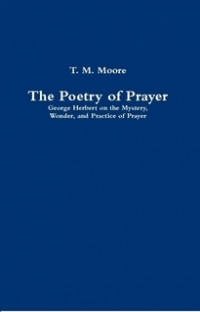
In The Poetry Of Prayer, T.M. Moore not only introduces us to the imaginative poetry of George Herbert, but he also shows us what Herbert was trying to portray: There’s an undiscovered world in our prayer time! You can check out my full book review by clicking here.
“The imagination is a wonderful if much-neglected resource. It is that place in the soul where mind, heart, and conscience, most fruitfully overlap to enhance, enrich, and enlarge each other.
“When our imaginations are functioning as God intends, they can open the windows of refreshment into our souls, so that we think bigger and more clearly and excitedly; we feel with more urgency and delight; and we establish new priorities and values.
“Poetry stretches the imagination by inviting it on to familiar ground and then changing the nature of that ground, right under our feet. Images, metaphors, rhyme, rhythm, and in an agreeable form can lead us, through our imaginations, into seeing familiar things in new and exciting ways.”
“Prayer fixes the focus of our minds on unchanging spiritual realities. Prayer engages our imaginations—what Paul calls ‘the eyes of your understanding’—with visions of unseen glories and wonders. …
“At the same time, as we gaze in prayer upon the beauty of Christ, and commune with Him in His glory, we find that our hearts are enlarged in love for the Lord. The sheer beauty, majesty, and immensity of God can suck the breath out of us and fill us with the Spirit of the Lord at the same time. Lesser things lose their thrall as we drink in the vision of Christ and pour out heartfelt words of worship, adoration, and praise. These, in turn, exercise our heart in love for the Lord, just as our physical muscles are exercised during a workout.”
“We feed our souls in prayer when, having entered His presence, we fill our minds with the vision of His glory, our hearts with the joy and pleasure of His presence, and our wills with iron resolve to serve this glorious God at every moment.”
“Even now, as the Apostle Paul indicates [2 Corinthians 4:6], we who feast at the banquet table of prayer can glimpse the glory of God in the face of Jesus Christ and know daily revival and renewal in His grace.”
“Prayer brings us from earth to heaven, and then brings heaven to earth in our transformed souls and renewed commitments for the day ahead.”
My Patreon supporters have been given all the rest of the quotes I pulled from this book. If you would like to have access to all of the content I regularly share with my Patreon team, please click here.
Wow, talk about a win-win for me: The Poetry Of Prayer combines one of my go-to theologians (T.M. Moore) with one of my favorite poets (George Herbert)! In another win, this book opens up a new richness for a Christian’s prayer life.
George Herbert’s poems hold a unique place in the world of literature[*]. Of the 167 poems in the collection of his poems called The Temple, 116 of them are written with meters that are not repeated. In several instances, Herbert created meters that no poet had used before. In his poem “Poetry (1),” Herbert leans into his poetic prowess to try to capture adequate descriptions of prayer.
T.M. Moore thinks deeply and writes clearly about how Christians should be saturated in the Bible and prayer. In The Poetry Of Prayer he dissects Herbert’s poem phrase by phrase and invites us to see the awesome potential in prayer that far too often goes untapped.
In each chapter, Moore helps us examine each of Herbert’s poetic phrases, explore the scriptural references that apply, and consider some “next steps” for applying these principles to our personal prayer time. As you progress through the book, Herbert’s poem takes on deeper and richer meaning so that you should become enthralled with cultivating your own rich prayer time.
I cannot recommend this book to you strongly enough—a true gem in developing a greater appreciation for the intimacy and power in prayer.
“This is one of the rewards of reading the Old Testament regularly. You keep on discovering more and more what a tissue of quotations from it the New Testament is; how constantly Our Lord repeated, reinforced, continued, refined, and sublimated the Judaic ethics, how very seldom He introduced a novelty.” —C.S. Lewis, Reflections On The Psalms
The folks at Fight The New Drug provide excellent research on the dangers of pornography as well as many helpful resources for folks to break free from a porn addiction. Pornography often attracts people when they are emotionally drained, but viewing porn actually increases feelings of loneliness and isolation.
If we ever start to think the Church is one or two ministers and a whole bunch of parishioners, it really won’t be a Church. According to Ephesians 4, all Christians should be ministers.
You can check out the full message that this clip is from by clicking here.
Here is a word of encouragement for anyone in a time of spiritual warfare—
Wow, this post from T.M. Moore on how we respond to God’s “call” is a much-needed reminder. In the post, he wrote,
“Probably most Christians treat the calling of God as a kind of punctuated equilibrium. He breaks into their lives to ‘call’ them to some activity or task, but only from time to time, and only for that activity or task. He ‘calls’ us to believe the Gospel, and we do. He ‘calls’ us to this or that church, and we go. He ‘calls’ us to some ministry or other Christian activity, and so we participate. He ‘calls’ us to make a special gift, go on a mission trip, send a note of encouragement to a friend, and so forth. Our lives run on their own schedules, so whenever God ‘calls’ us to do something, we’ll try to get it done.
“But most of the time, other things have prior claims on our lives. We have jobs, families, friends, responsibilities, things we like to do or must do. We can’t respond to every calling from God because, well, there just isn’t enough time. We say, when friends press us to consider this or that Christian opportunity, ‘If God calls me to it, I will.’ But aren’t we just using the language of piety to relieve the discomfort of pressure to do something we’d rather not do?
“We are called of God. Of this there is no doubt. But for most Christians, the way they understand God’s calling is not the same as the way God issues it. And they have not yet learned to value His calling as He intends, as the defining and guiding value of our lives.”
“…and let us all hasten to approach to perfect manhood, to the measure of the completed growth of the fullness of Jesus Christ, in Whom let us love one another, praise one another, correct one another, encourage one another, pray for one another, that with Him in one another we may reign and triumph.” —Columbanus, Letter to Certain Bishops, Irish, early 7th century
Have you ever wondered how the laws of the Old Testament era should be applied to New Testament Christians? Theologian T.M. Moore has an excellent series of articles on this, but I think his post The Church is not Ancient Israel is especially informative.
Here is one way the Holy Spirit can speak to us—
“It is not the body of truth that enlightens; it is the Spirit of truth who enlightens. If you are willing to obey the Lord Jesus, He will illuminate your spirit. He will inwardly enlighten you. The truth you have known intellectually will now be known spiritually. Power will begin to flow up and out, and you will find yourself changed—marvelously changed.” —A.W. Tozer
“The greatest tragedy of life is not unanswered prayer, but unoffered prayer.” —F.B. Meyer
This is pretty cool: some fossilized human footprints in the salt flats of Utah. “Both creationist and uniformitarian scientists agree that these tracks were made during the Ice Age, although they disagree about when the Ice Age occurred. Creationists think these footprints are just a few thousand years old. However, evolutionists think the tracks are more than 10,000 years old, because they believe the wet conditions needed to form and preserve the footprints have been absent from the Great Salt Lake area for at least that long. … wet Ice Age deserts are extremely difficult for evolutionary scientists to convincingly explain. However, the Bible’s real history makes much better sense of both these wet deserts and preserved Ice Age footprints.”
Don’t cut corners to get more. Instead, be faithful, do your best work, and the “more” will follow at the right time—
T.M. Moore wrote to pastors, “Effective ministry and fruitful Christian living are not automatic. They don’t just happen. Each requires that we receive the gifts of God, develop them according to His Word, and put them to proper use day by day. We must work out our salvation and work at our calling with focus and vigor.” Check out the rest of his post.
Speaking of pastors: In order for us pastors to be at our peak, we need to take care of ourselves. Here is a short video where I talk about the principle of sabbathing (a topic I explore in-depth in my book Shepherd Leadership: The Metrics That Really Matter).
This study from PennMedicine tells us that our brains can continue to learn new things until the day we die. So apparently you can teach an old dog new tricks!
My friend Greg and I have always tried to combine work and play. We’ve found that fun can really help leadership lessons stick. Check out this clip from a recent Craig And Greg Show leadership podcast.
This is a weekly series with things I’m reading and pondering from Charles Spurgeon. You can read the original seed thought here, or type “Thursdays With Spurgeon” in the search box to read more entries.
Listen to the podcast of this post by clicking on the player below, and you can also subscribe on Apple, Spotify, or Audible.
God Means What He Says
…For the mouth of the Lord has spoken (Isaiah 1:20).
You talk about God as being ‘love,’ and if you mean by this that He is not severe in the punishment of sin, I ask you what you make of the destruction of Jerusalem? Remember that the Jews were His chosen nation and that the city of Jerusalem was the place where His temple had been glorified with His presence. Brethren, if you roam from Edom to Zion and from Zion to Sidon and from Sidon to Moab, you will find, amid ruined cities, the tokens that God’s words of judgment are sure. Depend on it, then, when Jesus says, ‘These will go away into everlasting punishment’ (Matthew 25:46), it will be so. When He says, ‘If you do not believe that I am He, you will die in your sins’ (John 8:24), it will be so. …
It is of no avail to sit down and draw inferences from the nature of God and to argue, ‘God is love, and therefore He will not execute the sentence upon the impenitent.’ He knows what He will do better than you can infer. He has not left us to inferences, for He has spoken pointedly and plainly. He says, ‘He that believes not shall be damned’ (Mark 16:16), and it will be so, ‘for the mouth of the Lord has spoken.’ Infer what you like from His nature. But if you draw an inference contrary to what He has spoken, you have inferred a lie and you will find it so. …
I know why you do not believe in the terrible threats. It is because you want to be easy in your sins. … Yet if you do not believe its loving warnings nor regard its just sentences, they are true all the same. If you dare its thunders, if you trample on its promises, and even if you burn it in your rage, the Holy Book still stands unaltered and unalterable. ‘The mouth of the Lord has spoken.’ Therefore, I pray you, treat the sacred Scriptures with respect and remember that ‘these are written that you may believe that Jesus is the Christ, the Son of God, and that believing you might have life through His name’ (John 20:31).
From The Infallibility Of Scripture
Spurgeon delivered this sermon on March 11, 1888. Nearly 2000 years earlier, Asaph delivered a similar message from God—
“Call upon Me in the day of trouble; I will deliver you, and you shall glorify Me.” But to the wicked God says: “What right have you to declare My statutes, or take My covenant in your mouth, seeing you hate instruction and cast My words behind you?When you saw a thief, you consentedwith him, and have been a partaker with adulterers. You give your mouth to evil, and your tongue frames deceit. You sit and speak against your brother; you slander your own mother’s son.These things you have done, and I kept silent; you thought that I was altogether like you; but I will rebuke you, and set them in order before your eyes. Now consider this, you who forget God, lest I tear you in pieces, and there be none to deliver:Whoever offers praise glorifies Me; and to him who orders his conduct aright I will show the salvation of God.” (Psalm 50:15-23)
Commenting on this passage from Psalm 50, T.M. Moore wrote, “Surely, this is the most fundamental error of thinking humans ever make: To think of God, spiritual things, worship, human life, the world, and everything else from our vantage point rather than His. … Asaph could see what was happening. And even though the nation was safe, strong, and surfeited with wealth, he knew that, spiritually, things were going awry. The people had persuaded themselves that God was just like them, that He thought like they did, and so was agreeable to their doing things their own way, indulging all their base desires, and pursuing their schemes for success—all the while continuing an outward show of faith.”
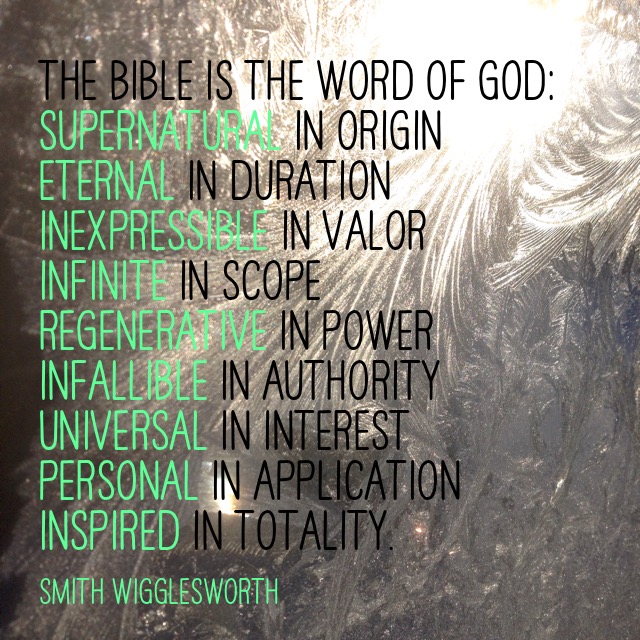
Let us take the Bible as what it truly is: Words the mouth of God has spoken. Let us not play games with them, changing the message to words we like. But if the Word of the Lord makes us uncomfortable, let us repent and return to Him. It is those who accept God’s Word as His Word, and obey it, that will see the salvation of God.



 I love reading, and I love sharing my love of good books with others! Here is a list of the books I read and reviewed in 2022. Click on a title to be taken to that review.





 Craig T. Owens