Links & Quotes

Jesus didn’t teach us to pray for a lengthy supply, but for a daily supply. This keeps us dependent on our heavenly Father day after day after day.

I have lots of new content every week, which you can check out on my YouTube channel.

As if you needed more encouragement to control stress in your life, researchers have now found that stress can disrupt your brain’s ability to form memories, which can trigger more anxiety. Here is a surprising way for you to relieve stress in your life.

“The world cares very little what you or I know, but it does care a great deal about what you or I do.” —Booker T. Washington 

T.M. Moore is in the midst of sharing an eye-opening series of posts on what eternal life truly is. Here is a short snippet: “In Ephesians 1:15-23 Paul provides insight to how we may engage heavenly realities throughout our earthly and temporal sojourn. As he prayed for the Ephesians, so, we can believe, he would have prayed for us as well. But what did he pray? First, that God would give us His Spirit for ‘wisdom and revelation in the knowledge of Him’ (v. 17). The Spirit, we know, works with the revelation of God in Scripture to make us more like our Lord Jesus Christ (2 Corinthians 3:12-18). He uses the entire Bible to help us increase in our experience of eternal life. This is true for knowing more of our great salvation as well as for glimpsing more of our eternal life.”

“Comparison sabotages two relationships at the same time: your relationship with God, and your relationship with other people. You can’t fully love others when you’re jealous of them or trying to outperform them. And you can’t love God when you think maybe God has given you a bad deal.” —Practicing Gratitude reading plan on YouVersion 

Recent studies have shown a connection between rising boredom rates and increasing digital media usage. The Axis Culture Translator reported, “Most of us (including our teens) reach for a digital device when we feel boredom creeping in. We might logically assume that the near-constant stimulation we receive from our devices would reduce our experience of boredom—but the truth might be the opposite. Analysis and discussion based on ten years’ worth of data suggests that while boredom might drive us towards digital media, it isn’t actually satisfied by it. Many users find themselves in a loop where the perceived solution to restlessness and boredom actually amplifies those uncomfortable feelings. In other words, the ‘thirst’ of boredom leads us to the ‘water’ of digital media, but the water is salty.”

Who Looks Good?

Listen to the podcast of this post by clicking on the player below, and you can also subscribe on AppleSpotify, or Audible. 

The Gospel of John introduces John the baptizer to us like this, “He himself was not the Light; he came only as a witness to the Light” (John 1:8). 

  • John had a similar birth announcement as Jesus had (Luke 1:11-14, 28-33) 
  • John’s birth prompted a Holy Spirit-inspired song from his father that resonates with Mary’s Magnificat (Luke 1:46-55, 68-70) 
  • The early years of John are described in much the same terms as how Luke describes the early years of Jesus (Luke 1:80, 2:52) 
  • John quoted Scripture and taught with very similar authority as Jesus did (Matthew 3:1-12; Luke 3:1-19) 

Yet for all their similarities, John knew that he was only a herald of Jesus (John 1:19-27). 

John was not the Light—he was only a witness to the Light.

I am not the Light—I am only a witness to the Light. 

You may think that this statement is pretty obvious, and I did too. But as I read these words from John 1:8 again, it caused me to reevaluate just how much I really believe this. 

Do I remember this when no one compliments my sermon? Do I remember this when what I thought was an insightful comment on a verse of Scripture gets hardly any “likes” on my social media channels? Do I remember this when I am complemented and my posts are appreciated? 

Who exactly am I trying to make look good: me or Jesus?

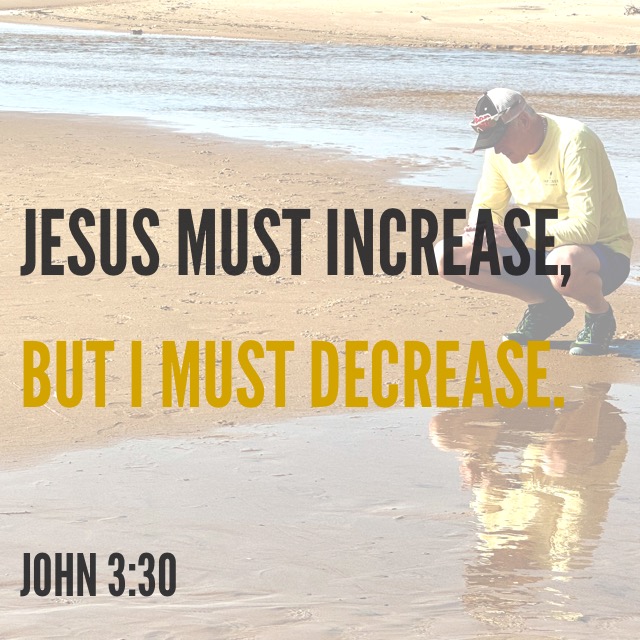
I want John’s desire to become my desire and my prayer: “Jesus must increase, but I must decrease” (John 3:30). 

(Please check out all of the Scriptures I referenced in this post by clicking here.)

►► Would you please prayerfully consider supporting this ministry? My Patreon supporters get behind-the-scenes access to exclusive materials. ◀︎◀︎

Links & Quotes

Unforgiveness keeps our eyes on our offenders and off our God. Free yourself by forgiving those who have hurt you. You can check out this full sermon hereI have lots of new content every week, which you can check out on my YouTube channel.

“At the moment of truth, there are either reasons or results.” —Chuck Yeager

As I have shared before, I am so impressed with the He Gets Us social media campaign! Some people are still trying to figure out exactly what this campaign is. Sean McDowell and his podcast partner Scott Ray had a great conversation with Ed Stetzer about this. Check out the video!

Some people have been critical of the He Gets Us commercials that aired during the Super Bowl, but I thought they were outstanding! This is a social media outreach designed and funded by some of the most biblically-grounded, evangelistically-minded people I know. It is a social media campaign. It is not designed as a sermon (which is why there are no Bible verses shown in the commercial). The idea is to get past the barriers and misconceptions skeptics have come to believe about Jesus, and then be enticed to go to the hegetsus.com website. It is at this site that the Gospel message is introduced and visitors are given Bible verses and other materials to go deeper.

John Stonestreet wrote, “Before it was the corporate creation of greeting card companies, it was a day to remember third-century Christian martyr Valentinus of Rome.” This post is a good reminder of what Christians really should be remembering on Valentine’s Day, as well as the higher definition of love.

“The important thing is to learn a lesson every time you lose.” —John McEnroe

Links & Quotes

Your relentless pursuit of personal improvement becomes a better resume than anything you could ever put on paper! Check out the full conversation Greg and I had about personal development on The Craig And Greg Show leadership podcast. And be sure to check out all of my videos on my YouTube channel.

T.M. Moore has a regular series of posts for pastors. This week he shared this, “In his training manual for pastors, Gregory the Great wrote, ‘There are some who investigate spiritual precepts with cunning care, but what they penetrate with their understanding they trample on in their lives: all at once they are teaching the things which not by practice but by study they have learnt; and what in words they preach by their manners they impugn. Whence it comes to pass that when the shepherd walks through steep places, the flock follows to the precipice’ (The Book of Pastoral Rule).” If you are a pastor, I encourage you to check out the Pastor To Pastor posts on The Fellowship Of Ailbe.

On May 22, A.D. 337, Emperor Constantine died. John Stonestreet wrote, “Many Christians think that Constantine was perhaps the worst thing to happen to the Church. They believe he made Christianity the imperial religion, thus leading the Church to compromise with pagan culture, marrying it to state power, and derailing the spread of the Gospel. The Church, they argue, was better off as a persecuted minority.” Please check out this post co-written by Dr. Glenn Sunshine that gives some better historical perspective than perhaps what you have heard previously.

The other day, a friend of mine was scammed through her Facebook page. Scams are everywhere, so you need to stay aware of the ways to protect yourself. This is a helpful overview from Capital One of various types of scams.

“A problem is a chance for you to do your best.” —Duke Ellington

Jellyfish fossils point to a global Flood, like the one reported in the Bible. Because jellyfish are 95 percent water, they have to be buried quickly in order to be saved as a fossil. 

J. Warner Wallace describes how Jesus arrived at the perfect moment in history. Once again giving more evidence to the historicity of the biblical accounts.

One of the most powerful missions sermons I have heard was preached by Dick Brogden:

An important warning from Axis—What it is: The Surgeon General has issued a warning on the dangers of social media for teenagers. Why the alarm bell is reaching a fever pitch: People have been wary of social media’s impact on developing brains for two decades—so why are highly-visible tone setters, like the Surgeon General and the American Psychological Association, issuing big, sweeping statements now? Part of it could be because we are getting more quality data on how social media shapes a young person’s brain. One newer study that’s been getting some buzz suggests that individuals who received their first smartphone at a later age have better mental health as young adults. Several big bills that aim to protect minors online will be voted on this year as tech giants face increased scrutiny over their safeguards (or lack thereof), for younger users. Kids growing up even a decade from now may encounter a completely different digital landscape when it’s their turn to learn about online literacy.

Links & Quotes

I am really looking forward to a new series of sermons that I am launching this Sunday. This will be a once-per-month series for the remainder of the year and it’s simply called A Christian’s Mental Health. If you don’t have a home church in the west Michigan area, I would love for you to join me in person, but the sermons will also be posted on my YouTube channel.

T.M. Moore has an outstanding post called The Essence of the Lie. In one part, Moore writes, “Thus the lie claims to be the truth, but, at the same time, it insists that truth is personal, relative, pragmatic, and utilitarian. Truth, from this perspective, is not absolute, but dynamic, changeable rather than fixed. It is conditioned by circumstances of time and place. At the end of the day, people are the final arbiters of truth, and truth is whatever they find to be useful for their purposes. Ultimate truth is that which people impose on others by one or another kind of force, whether intellectual, political, or physical.” Check this one out!

Harvard University has been studying a group of individuals since 1938 to try to determine the main factors that contribute to a long and healthy life. The director and assistant director of this study just published an article that sums up what they have learned over all these years—“[If] we had to take all 85 years of the Harvard Study and boil it down to a single principle for living, one life investment that is supported by similar findings across a variety of other studies, it would be this: Good relationships keep us healthier and happier. Period. If you want to make one decision to ensure your own health and happiness, it should be to cultivate warm relationships of all kinds.”

“The battle for control and leadership of the world has always been waged most effectively at the idea level. An idea, whether right or wrong, that captures the minds of a nation’s youth will soon work its way into every area of society, especially in our multimedia age. Ideas determine consequences.” — The American Covenant 

“The storms of life are no longer our point of reference when [Jesus] is our focal point.” —Dutch Sheets

John Stonestreet was intrigued by a street reporter asking, “What are men good for?” There were a lot of soft, ambiguous answers given, but John quipped, “Men are good for fathering, protecting, loving, providing, leading, fighting for what’s right with their lives if need be, and obeying, in a masculine way, the creation mandate of the God who made us male and female and declared both ‘very good.’ Was that so hard?” Amen!

Dan Reiland identifies four common mistakes that will cause your church to struggle.

When leaders quit growing, they in essence have “quiet quit” on their team. If the leader’s not growing, what is the incentive for anyone else in the organization to improve themselves or work hard? Leaders quiet quit long before their teammates do! Check out the full conversation Greg Heeres and I had on avoiding quiet quitting by clicking here.

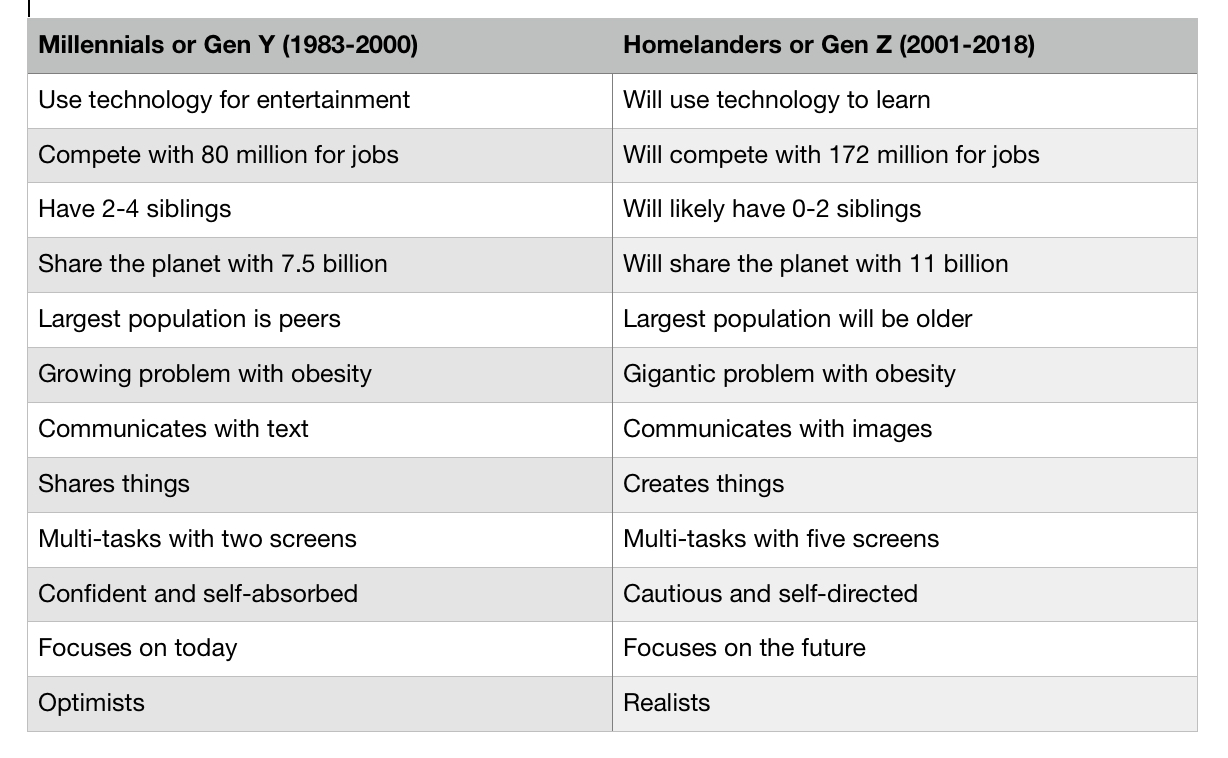
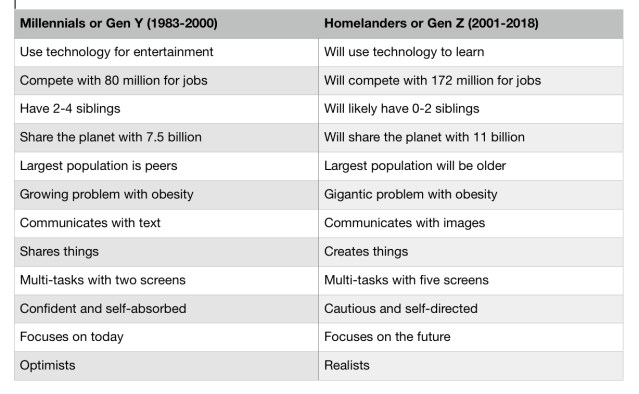
7 Quotes + 1 Infographic From “Marching Off The Map”

Once again, Tim Elmore has given us invaluable insight into the emerging youth culture. If you have kids or work with kids, you must read Marching Off The Map. You can check out my full book review by clicking here. Below is the first set of quotes I want to share with you, but there will be plenty more coming in the future, so stay tuned!

“Thanks to technology, information streams into their lives 24/7 and often has no filter on it, even for young children. When we determined not to censor content in the media, we had no idea (understandably) how it would affect our kids. We’re removing the opportunity for them to experience innocence and wonder. However, because they’re still maturing emotionally, socially, cognitively and biologically in their first 25 years, we have now begun to witness a strange paradox in our young: the extinction of childlikeness and the extension of childishness. …

“Since they are exposed to so much adult information, so early in their lives, they can prematurely lose (1) their sense of innocence, (2) their sense of wonder and (3) their sense of trust …

“Biologically, the graduate is an adult. Emotionally, the graduate may be unprepared for the adult world.” 

“If you think our kids are pitifully impulsive on social media—just look at the adult population. … If you think teens are addicted to Facebook, just study the hours their mothers spend on it. If you think young athletes on the Little League baseball field act childish, just look at their dads. The behavior of adults and children has become more and more similar. Society has baptized ‘youthfulness.’ We want to look young, feel young, dress young, talk young and act young. We argue with our children’s teachers. We push our kid’s coaches to get them special treatment. We are not good at delaying gratification, and we frequently don’t keep commitments we make … very much like children. The result? Adulthood has lost much of its aura and authority.”

“As you stand in front of your classroom or your own children—you are, in a sense, Galileo. You are Magellan. You are Christopher Columbus. You are Lewis and Clark. You are Neil Armstrong. Ready or not, they need you to play this role.

“Our world is both expanding and shrinking. Our past maps and methods are antiquated. Like it or not, we’re moving into unfamiliar territory and many think it’s too difficult to explore. We have fallen in love with our old maps. … 

“For educators, our role must change as we teach a generation of students who don’t need adults to get information.

“For parents, our role must change as we raise kids in a time of terrorism, economic recession, racial unrest, underemployment and ubiquitous technology.

“For coaches, our role must change as we train young athletes who have eight-second attention spans, and may arrive at practice with little resilience or grit.

“For youth workers, our role must change as we mentor students who have few life skills or values because adults either over-functioned or were absent.

“For employers, our role must change as we onboard young employees who may have never had a real job before, and may ask when ‘spring break’ will be.”

“Adults must enable the students to leverage what is new, yet at the same time, hold on to what is ancient, yet valuable. We must be both timeless and timely. So, our job as we serve the next generation is two-fold:

  • To adopt or adapt. We must seize what is new and help kids leverage it well.
  • To explain and equip. We must relate to them the timeless ideals every generation needs.”

“I believe we must cultivate one significant skill set in ourselves: we must be able to either adapt to the new world that’s emerging, or we must explain why a timeless virtue or value is still relevant in our 21st century world.”

“A third of young Americans say they don’t belong to any religion. I’ve found, however, they’ve traded in one God for many gods. They want to ‘feel’ spiritual, so they’ve created a buffet—seeking something to satisfy their soul. I often hear students say, ‘I don’t believe in religion, but I want to be a spiritual person.’ Today—pluralism is expanding across the landscape. It’s easier to say ‘no’ to one and enjoy a mixture of many.”

“A third of young Americans say they don’t belong to any religion. I’ve found, however, they’ve traded in one God for many gods. They want to ‘feel’ spiritual, so they’ve created a buffet—seeking something to satisfy their soul. I often hear students say, ‘I don’t believe in religion, but I want to be a spiritual person.’ Today—pluralism is expanding across the landscape. It’s easier to say ‘no’ to one and enjoy a mixture of many.”

“The Latin root word for ‘educate’ is ‘ducere’ which means to ‘push out.’ … We should not put students in a passive mode as we teach. We must be inspirers of learning. We must help pull ambition out of them, not push information into them.”
I’ll be posting some more quotes from Marching Off The Map next week.

9 Quotes From “Know Who You Are”

Tim Tebow is not only an upbeat athlete, he is an enthusiastic encourager to others too. His latest book is called Know Who You Are—Live Like It Matters. Although mainly written to help homeschool families with some journaling ideas, this book is jam-packed with uplifting thoughts. You can check out my full book review by clicking here.

“The world does not define you: Not the clothes you wear. Not the kind of music you listen to. Not the mistakes you’ve made. Not the trophies you’ve won. You are not defined by what others think of you, good or bad, or how many people follow or like you on Instagram or Snapchat or Facebook. You are not defined by the talents you have or don’t have. There is only one thing, one Person, who defines your identity. His name is Jesus Christ.”

“If you do the right thing just to do the right thing, you’re going to wear yourself out at some point. We should always do the right thing because we want to honor Jesus, because we want to be like Him in everything we think, say, and do. … This is why we seek to have integrity. This is why we build good character. This is why we do the right thing. Because Jesus did it first and our mission is to be like Him.”

“What happens when we hide God’s Words in our hearts? We grow our faith. When we grow our faith, we root our identity deeper and deeper in Whose we are. We become empowered with what we need so we can face the highs and lows of life.”

“When our identity is grounded in God, we live differently. Our priorities change. Our relationships reflect this truth—or at least they should. We aren’t desperate for attention because God fulfills all our needs. Instead of using people to make us look good, we learn how to be faithful friends. We treat others with love, respect, and kindness. We watch what we say. We apologize when we make mistakes.”

“If you hear a rumor about someone else, stop it from going any further. Don’t repeat it. You can also turn the conversation into something positive. Say something nice about that person. Show some grace. That’s a sure way to honor God and fan the flames of love.”

“If we mean it when we say ‘I’m sorry,’ do you know what that does for us? It keeps our hearts tender. Not weak, just open to God shaping us into the young men and women He has created us to be.”

“We live in such a me-focused world. We take pictures of ourselves all the time. We tell the world on Facebook and Instagram what we’re doing, what we like, where we are going. We want all eyes on us. But that’s not what we’re called to do as Christians. We’re called to be others-minded. We are called to love others. We’re called to serve others. We are called to be like Jesus to a world who doesn’t know Him.”

“The stand you take may not be the biggest deal to the entire world, but it can be a big deal for one person. For instance, you don’t have to feed all of Africa, but feeding one person can have more of an impact than you may realize.”

“We are never going to be perfect in this life. But we can stretch and we can change. If you want to live bigger, you need to grow. No matter how many times you get knocked down or mess up, you need to hold on to God’s promises. You need to believe that He has a better plan. You need to cling to His truth. And day by day, moment by moment, you will become more and more like Jesus.”

Get Off Facebook, Dad!

This is reprinted from the Axis Culture Translator

the-culture-translatorMiddle-aged Americans (35- to 49-year-olds) are now spending more time on social media (seven hours a week) than their children, with the fastest growing demographic on Facebook being Baby Boomers. I recently asked my daughter’s best friend what she was doing that evening and she responded, “nothing, just going home to watch my parents stare at their phones all night.” Ouch.

There’s nothing inherently good or bad about social media, it just is. Yet, how we use it matters. Is documenting your life online keeping you from actually living it? Maybe the greatest gift we can give our children is presence. Here are five practical ways to model healthy social media habits in your home so you can be fully present and engaged with your family.

1. Practice Faithful Presence: Root your life in the real. Anchoring yourself in the here and now reduces the impulsive need to broadcast your life, which can lead to envy, depression, and FOMO. Instead, embrace JOMO!

2. Resist the Urge to Share: Instead of posting that picture of you and your husband at the beach, keep that moment just between the two of you. Cherish it, and it will become an intimate memory binding you to one another, instead of cheapening the moment by sharing it with the world.

3. Unplug: Our devices tell us there is something more important going on “out there” than what’s going on right here, but that’s not true. Establish tech-free times during the day or tech-free places (dinner table) to encourage deliberate, face-to-face interaction with your family. Or, try giving up social media for Lent this year.

4. Slow Down: Your life’s pace matters. Our friends Matt and Julie Canlis encourage parents to live at “Godspeed”, which means living life intentionally, mindfully, and slowly. Practice it by reading a novel aloud together as a family at night, or play a board game instead of watching a movie. Start small, take 15-minutes every morning just to be with your kids before heading off to work and school. Build a liturgy to your day that encourages you to slow down and subvert the digital culture.

5. Pay Attention: The best way to capture moments isn’t to post them to SnapChat, it’s to simply pay attention. Cultivating an awareness of the world around us is a big part of being fully human. Henry David Thoreau said “Only that day dawns to which we are awake.” Ask yourself from time to time, “Am I paying attention to my life right now?” Otherwise, whole days, even our very life could pass by unnoticed.

Our kids need healthy boundaries around screen time and social media, what better way to provide those boundaries than by modeling them with our own actions and habits.

Parents, please sign up for the weekly email from Axis. You can do so by clicking here.

The 10 Commandments Of Using Social Media

#strugglesI found a ton of great content in Craig Groeschel’s latest book #struggles. This book focuses on the proper balance between technology and personal relationships. Near the end of the book, Craig shared his 10 Commandments for Christians to use social media in a God-honoring way…

  1. Put God first in all you say and post.
  2. Love others as you want to be loved.
  3. Use social media to facilitate, not to replace, real relationships.
  4. Use social media instead of being controlled by it as an idol.
  5. Turn your virtual other cheek to posts that offend you.
  6. Do not post out of emotion.
  7. Always reflect Jesus, loving God whether online or off.
  8. Do not use social media to fuel temptations.
  9. Form your own opinions; do not follow the crowd.
  10. Do not base your identity on what people think.

You can read my book review of #struggles by clicking here.

I also shared some quotes from #struggles here and here. I also shared a special set of quotes from this book directed at online gossip, which you can read here.

Craig Groeschel On Online Gossip

#strugglesI love technology! I love how social media and my iPhone can keep me in touch with family and friends. But one of the dark sides to this easy access to technology is the ease with which people can gossip—or even slander!—people publicly online. In his book #struggles, Craig Groeschel has some good counsel for avoiding gossip.

“God is crystal clear on how He feels about gossip. Solomon said, ‘There are six things the Lord hates, seven that are detestable to Him…a false witness who pours out lies and a person who stirs up conflict in the community’ (Proverbs 6:16, 19). What a perfect way to describe a gossip: ‘A false witness who pours out lies,’ and someone who ‘stirs up conflict in the community.’ God hates that.”

“The people being gossiped about hate it, and God hates it. So before you post, comment, or link, consider three sets of questions to keep yourself gossip-free online.

  1. Is what I’m about to say helpful or hurtful? Will this build others up or tear them down? What’s my intention behind what I’m about to type? [Ephesians 4:29]
  2. Am I making private matters public? Am I about to share something that would be better handled privately? [Proverbs 11:12-13]
  3. Am I permitting—maybe even encouraging—others to gossip? It’s not only wrong to dish it out; it’s also wrong to eat it up. Notice that this verse [Proverbs 17:4] doesn’t say that only gossipers are wrongdoers. No, it says wrongdoers are also those who ‘listen to gossip.’ It’s not just wrong to spread gossip; it’s wrong to consume it. Why? Because what you permit, you promote.”

You can read my review of #struggles by clicking here. I have also posted other quotes from this book here and here.