6 Quotes On Purity From “The Blessing Of Humility”

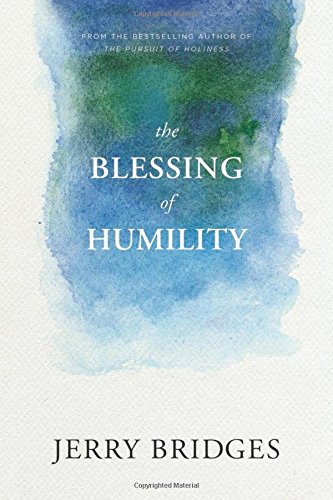
The Blessing Of HumilityAs I stated in my review of Jerry Bridges’ book The Blessing Of Humility, reading through these thoughts slowly—Beatitude by Beatitude—would bring about the most life-changing impact. In that spirit, I will be sharing some noteworthy quotes one Beatitude at a time. Here are some quotes on blessed are the pure in heart (Matthew 5:8)…

“The word pure is used of clothing that has been washed, of grain from which all chaff has been removed, and of gold that has been refined until all impurities have been removed. A pure heart, then, is one from which all sinful desires have been removed. Positively it means to love God with all my heart, soul, and mind (Matthew 22:37). It means to live all of my life to the glory of God (1 Corinthians 10:31).”

“Once we acknowledge God’s ownership of us, our responsibility becomes clear: Whatever we do must serve God’s purposes. And central among God’s purposes, as demonstrated throughout the Scriptures, is God’s glory.”

“To present our bodies (and our hearts also) is to recognize Christ as the ‘Owner’ of our lives [Romans 12:1]. It is the subjective, experiential response to the objective truth that we are His own possession.”

“Our minds can only be transformed as they are regularly exposed to the Word of God. This means we need to regularly read and study our Bibles and apply what we find there to our daily lives.”

“To be—or better, to seek to be—pure in heart produces humility in action as we become more God-focused in our daily lives.”

“To acknowledge how far short we fall from purity of heart will send us back to the first Beatitudes: to be poor in spirit and to mourn because our hearts are so often divided. That is humbling. But that honest humility should drive us back to the gospel, where we see ourselves united to the One Who had the only perfectly pure heart in all of history. This will motivate us and empower us to see what we can never fully attain: to be pure in heart.”

 I have previously shared quotes on:

Quotes on the next Beatitude will be posted soon. Stay tuned…

Light & Truth—The Lesser Epistles (book review)

Light & Truth The Lesser EpistlesHoratius Bonar has been my “tour guide” as I have been reading through the New Testament in my personal devotional time. I have previously posted reviews on Bonar’s series on The Gospels, and on Acts and The Larger Epistles. This third installment—The Lesser Epistles—is as brilliant as the first two were!

The Lesser Epistles covers Galatians through Jude. Don’t be fooled by the word “lesser” in the title, as this only refers to the length of the biblical books, not the richness of the content, nor the weighty insights from Horatius Bonar!

For the most part, Bonar does not present a verse-by-verse commentary on the Scriptures, but more of an overall theme on select passages. Occasionally he passes over a rather large section of an epistle, and occasionally he slows down to go nearly word-by-word through a key passage. But in everything he writes, the gifting of the Holy Spirit’s insight is clearly evident.

As I have said about his previous books, they are not meant to be read in place of your Bible, but as a companion book side-by-side with your personal reading time. Truly a magnificent set of books!

6 Quotes On Meekness From “The Blessing Of Humility”

The Blessing Of HumilityAs I stated in my review of Jerry Bridges’ book The Blessing Of Humility, reading through these thoughts slowly—Beatitude by Beatitude—would bring about the most life-changing impact. In that spirit, I will be sharing some noteworthy quotes one Beatitude at a time. Here are some quotes on blessed are the meek (Matthew 5:5)…

“Meekness is not being timid, spineless, unassertive, and easily dominated. It is not a natural niceness. In fact, it has nothing to do with one’s personality or temperament.”

“There is then a twofold expression of meekness: first toward God and then toward other people. Meekness toward God involves: (1) responsiveness to His Word; (2) submission to His Providence.”

“As I reflect on our evangelical community to the extent I am aware of it, it seems we are more knowers of the Word than doers of the word. … Instead we too often use the Scriptures not as a means of judging ourselves but as a means of judging others, especially those whose sins are more flagrant than ours. The meek person, in contrast, searches the Scriptures (or listens to it taught) not to judge others but to allow the Holy Spirit to judge him or her. In fact, the meek person earnestly desires the Spirit to use His Word to effect a deep change in his or her inner being.”

“Thomas Watson wrote that meekness toward other people consists of three things: the bearing of injuries, the forgiving of injuries, and the returning of good for evil.”

“Because we have been forgiven so much, we have an obligation to forgive those who sin against us. Yet our motive for forgiving should not be our obligation but the realization of how much we have been forgiven.”

“Meekness towards man means bearing patiently with the hurtful actions of others and dealing gently with their failures, not only in the assurance that all of these are under God’s providential control, but in the knowledge that, left to ourselves, we have no claim to be any stronger than the weakest of our friends or any better than the worst of our enemies.” —John Blanchard

I have previously shared quotes on:

Quotes on the next Beatitude will be posted soon. Stay tuned…

Thursdays With Oswald—Is It Human Or Divine?

Oswald ChambersThis is a weekly series with things I’m reading and pondering from Oswald Chambers. You can read the original seed thought here, or type “Thursdays With Oswald” in the search box to read more entries.

Is It Human Or Divine? 

     It is easy to say that human love and Divine love are one and the same thing; actually they are very far from being the same. It is also easy to say that human virtues and God’s nature are one and the same thing; but this, too, is actually far from the truth. We must square our thinking with facts. Sin has come in and made a hiatus between human and Divine love, between human virtues and God’s nature, and what we see now in human nature is only the remnant and refraction of the Divine. Human virtues according to the Bible are not promises of what human nature is going to be, but remnants of what human nature once was. … 

     As Christians we must learn to trace things to their right source. God makes very distinct the difference between the qualities that are Divine and those that are human. John 15:13 has reference to human love, which lays down its life for its friends. Romans 5:8 has reference to the Divine love, which lays down its life for its enemies, a thing human nature can never do.

From The Psychology Of Redemption

We must be very careful about looking at our life, and then trying to match it up with something we see in Scripture. It should always be the other way around—look at Scripture first, and then see if my life squares with what I see in God’s Word.

Even harder: see if my life squares with what I see in the life of Jesus as presented to me in God’s Word.

In Psalm 139 David began His prayer by saying, “God, You have searched me thoroughly, and You know me completely.” Then he ended his prayer by inviting God to search him yet again. This should be the ongoing posture and attitude of a Christian: asking the Holy Spirit to constantly show us where our lives fall short of the Christian lifestyle presented in the Bible.

Thursdays With Oswald—Thinking Like Christians

Oswald ChambersThis is a weekly series with things I’m reading and pondering from Oswald Chambers. You can read the original seed thought here, or type “Thursdays With Oswald” in the search box to read more entries.

Thinking Like Christians 

     The New Testament insists on an instructed mind as well as a vital experience. … 

     There is always a quarrel between our common sense and the revelations made in God’s Book. We must lose our soul in order to find it. We have to be born from above and receive the Holy Spirit into our spirit, and then begin to construct another soul, or way of reasoning, and to do this we must accept not only the facts that come to us through our common sense, but the facts that come by revelation. We say seeing is believing, but it is not. We must believe a thing is possible before we should believe it even though we saw it (John 20:29). … 

     Our beliefs will mock us unless something comes into us from God, because nothing has any power to alter us save the incoming of the life of God. The Holy Spirit is the One Who makes experimentally real in us what Jesus Christ did for us. … The great need for men and women is to receive the Holy Spirit. Our creeds teach us to believe in the Holy Spirit; the New Testament says we must receive Him (Luke 11:13). Are you powerless in your life? Then, for Christ’s sake, get at Reality! Ask God for the Holy Spirit. … 

     We starve our minds as Christians by not thinking, and we cannot think as Christians until we are born from above. So many of us have a good spiritual experience, but we have never thought things out on Christian lines. It is just as true that a man may live a Christian life without thinking as that a man may think a Christian life without living it. We have to learn to combine the two, and to do this we must build up our minds on these great truths. 

From The Psychology Of Redemption

How are you doing at thinking AND living a Christian life? To do both, you must receive the Holy Spirit, and begin to rely on Him for both Christian thinking and living.

6 Quotes About Understanding Sexual Sin

Focus On The FamilyEarlier this week I shared some quotes from a Focus On The Family (FOTF) reading plan I completed on YouVersion regarding the problems with pornography. Here are some additional quotes from a related FOTF reading plan called Understanding Sexual Sin.

“Sexual sin distorts the image of the Trinity mirrored in our marital relationships.”

“If our sex lives are meant to function as reflections of the image of God, it stands to reason that they should be shaped by the qualities of the Trinity. Three primary principles apply here.

1) We may never use another person as an object, sexual or otherwise. The members of the Trinity never relate to each other as objects or things to be used. Instead, they relate to one another in love, each seeking to serve and enhance the goodness and glory of the others.

2) We must keep sexual relations within the bounds of a loving and committed marriage. … This sexual embrace within the bond of marriage mirrors the nature of the relationship between the members of the Trinity as nothing else in creation can. Ideally, the marital bond is designed to be loving, permanent, exclusive, and self-giving.

3) We must respect and honor the God-designed differences between male and female. Male and female are not simply cultural constructs. They are God-created characteristics of humanity. Together, they personify the Trinitarian nature of God in a fundamental way…. The differences between male and female provide the fullest picture of the image of God in creation.”

“Biblically speaking, sexual immorality (Greek porneia) is any sexual activity that takes place outside of marriage. This includes adultery, premarital sex, and extramarital sex. Scripture teaches that both are off-limits for Christians (see 1 Corinthians 6:9; Acts 15:29; Hebrews 13:4).”

“It’s a mistake to confuse normal sexual attraction with lust. Sexual attraction is natural. … True lust involves a choice and an act of the will. To a certain extent it’s a conscious decision to pursue the desirable object instead of simply allowing it to pass by. It’s a willingness to give in to the natural impulse.”

“Pornography represents a departure from God’s design for sex in that it depersonalizes real people, strips them of their dignity, and turns them into sexual objects.”

“It is never wise to give more weight to feelings than to rational conclusions and clear biblical teachings. Feelings don’t make you who you are. Beliefs, values, and conscious commitments do.”

8 Quotes From “The Mathematical Proof For Christianity”

The Mathematical Proof For ChristianityDan Delzell uses not only math, but many other sciences as well to give some great conversation-starters. Check out my full review of his book by clicking here.

“I live in Nebraska where I serve as a pastor. Imagine someone covering this entire state in silver dollars 6 feet deep. Then mark one coin and bury it anywhere across the state. Next, blindfold a man and have him choose one coin. The odds that he would choose the marked coin are the same odds as getting 8 prophecies all fulfilled in one man. God fulfilled about 300 prophecies in the Person of Jesus Christ. … There is no way one man could have fulfilled all 8 of these prophecies unless God was making it happen. Who else controls history? Who else could give us such irrefutable proof for Christianity? The odds are one in one hundred quadrillion. Here is what that number looks like: 1 in 100,000,000,000,000,000. (This mathematical proof was calculated by Professor Peter Stoner.)”

“What if jurors were presented with 300 pieces of evidence that all pointed to the same person, just like the 300 biblical prophecies all point to Christ. And so you see, you really can come face to face with reality, logic, reason, facts, evidence, and mathematical certainty before you decide whether to accept or reject the Bible.”

“The excessive skepticism shown toward the Bible by important historical schools of the eighteenth and nineteenth centuries, certain phases of which still appear periodically, has been progressively discredited. Discovery after discovery has established the accuracy of innumerable details, and has brought increased recognition to the value of the Bible as a source of history.” —William Albright, biblical and archeological scholar who mastered more than 26 ancient and modern languages 

“The order is for Christianity is: (1) Evidence; (2) Faith; and then (3) Assurance. Christianity stands upon evidence. It is personally received through faith that Jesus died for your sins on the Cross. It brings comforting assurance to those who have stepped out in faith to trust Christ. You will never have the assurance of salvation until you take a step of faith based on the evidence.”

“Jesus didn’t come here to merely provide man with one more option.”

“It may be stated categorically that no archeological discovery has ever controverted a single biblical reference. Scores of archeological findings have been made which confirm in clear outline or in exact detail historical statements in the Bible.” —Nelson Glueck, Jewish archeologist

“Archeological work has unquestionably strengthened confidence in the reliability of the scriptural record.” —Millar Burrows, University of Yale archeologist

“In addressing the manuscript evidence for the New Testament, John Warwick Montgomery correctly states that ‘to be skeptical of the resultant text of the New Testament books is to allow all of classical antiquity to slip into obscurity, for no documents of the ancient period are as well attested bibliographically as the New Testament.’”

The Mathematical Proof For Christianity (book review)

The Mathematical Proof For ChristianityThe Mathematical Proof For Christianity by Dan Delzell is really just one part of the big picture he presents. Dan uses mathematics, archeology, textual examination, logic, and sound semantics to present a compelling case for the authenticity of Scripture, and the Deity of Jesus Christ. But Dan is quick to add, “Mathematical proof for Christianity is powerful. But without faith in Christ, all the proof in the world won’t save your soul and bring you to heaven one day.”

If you are already a Christian, this book will do much to help you “be prepared to give an answer” (1 Peter 3:15) to seekers and skeptics. But I think the greatest value of this book would be as a conversation-starter with those who are seekers and skeptics. Giving them a copy of this book to read along with you will be a great way to have a meaningful conversation about your faith in Jesus. The subtitle of this book is “along with other reasons to believe,” and Dan does give many, many reasons.

No book written by a man will convince anyone to place their faith in Jesus (only the Bible can truly do that), but The Mathematical Proof is well-grounded in Scripture to help you use it as an effective tool in sharing your faith.

Check it out!

11 Ways To Be A Good Minister

© Lori Oxford Photography

Here are 11 ways to “be a good minister of Christ Jesus” (1 Timothy 4:6)—

  1. Know the Scripture well enough to point out false doctrines (vv. 1-6a)
  2. Be a good teacher (v. 6b)
  3. Train myself to be godly (v. 7)
  4. Take care of my physical health (v. 8)
  5. Put my hope solidly in God (vv. 9, 10)
  6. Set an example worth following (vv. 11, 12)
  7. Use the Scriptures in everything I preach (v. 13)
  8. Turn my God-given gifts into strengths (v. 14)
  9. Have a good work ethic (v. 15a)
  10. Be consistently growing (v. 15b)
  11. Carefully and prayerfully evaluate my doctrine (v. 16)

The Danger Of Unbelief

Horatius Bonar“Unbelief in Scripture is spoken of as the sin of sins. As faith is the root of all good, so is unbelief of all evil. God hates it; Christ condemns it; our own hearts cannot but say it is evil. ‘The evil heart of unbelief’ is the most evil of all. … Unbelief is injustice—

  1. To God—It assumes that He is not to be trusted or credited; that He is not the being that He has said He is. It does gross injustice to His whole character; His love, His grace, His veracity, His unchangeableness. It misinterprets and misrepresents Him in all respects, and so dishonors Him, and separates us from Him.
  2. To Christ—It rejects the testimony which God has given of Him; it refuses to accept the character which the Father has given of Him, and treats Him as one like ourselves. Every act of unbelief, every doubt, every suspicion is an injustice to Him—to one who has not deserved such treatment at our hands. It keeps us apart from Him, and Him from us; it will not allow us to be satisfied with what Scripture has revealed concerning Him.
  3. To the Holy Spirit—All unbelief is a rejection of the Spirit’s testimony to the Son; a grieving of the Spirit. It is a doing injustice to His love and power; to His willingness to bless. It is making Him a liar. It is casting discredit on that Book which He has written for us concerning the love of God.
  4. To the Cross—All unbelief, more or less, directly assails the cross. It says—(1) That Cross is insufficient, it cannot save unless assisted by goodness in us; (2) That Cross may save ordinary sinners, it cannot save me; (3) That Cross is not the place of substitution, but merely of example of a divine self-surrender. Thus it insists that we shall not take our peace from the cross alone.
  5. To the blood—The special thing which marks the Cross is the blood; and unbelief specially sets aside the blood in its value and efficacy. It refuses to take peace from the blood alone. …
  6. To the gospel—It makes void the good news, and turns them into evil tidings, or at least into no tidings at all. It makes the faith which receives the gospel a work to be done, a condition to be performed; and upon the right doing of that work, and the right performance of that condition….

“Unbelief checks prayerfulness—Prayer implies expectancy: ‘Ask, and ye shall receive.’ Where unbelief comes in, this expectancy is stopped; and prayer becomes irksome, and in the end brief and infrequent.” —Horatius Bonar