Links & Quotes

link quote

Some good reading from this weekend…

[INFOGRAPHIC] Another great Bible study resource from The Overview Bible Project on the book of Hebrews.

Eric Metaxas reminds us that our existence itself is a miracle.

“God has not called us to save America; He has called us to save Americans from the coming judgment of God by introducing them to faith in Jesus Christ.” —Robert Jeffress

uknowkids has a good post for parents and teachers: 7 Signs Your Teen Is Suffering From Peer Pressure.

“It is the Spirit of Christ in us that will draw satan’s fire. The people of the world will not much care what we believe and they will stare vacantly at our religious forms, but there is one thing they will never forgive us—the presence of God’s Spirit in our hearts. They may not know the cause of that strange feeling of antagonism which rises within them, but it will be nonetheless real and dangerous. satan will never cease to make war on the Man-child, and the soul in which dwells the Spirit of Christ will continue to be the target for his attacks.” —A.W. Tozer

“The real trouble about the duty of forgiveness is that you do it with all your might on Monday and then find on Wednesday that it hasn’t stayed put and all has to be done over again.” —C.S. Lewis

14 Quotes About Thinking From “The Moral Foundations Of Life”

The Moral Foundations Of LifeAs I noted in my review of The Moral Foundations Of Life (you can read that review by clicking here), Oswald Chambers wanted Christians to think more deeply about their relationship with Jesus Christ, and then live differently because of their new way of thinking. Here are some of his quotes related to a Christians’ thought life.

“When we become spiritual we have to exercise the power of thinking to a greater degree than ever before. We starve our mind as Christians by not thinking.” 

“The Atonement of our Lord never contradicts human reason, it contradicts the logic of human intellect that has never partaken of regeneration.”

“Is Jesus Christ’s teaching God-breathed to me? There is an intention that seeks God’s blessings without obeying Jesus Christ’s teaching. We are apt to say with sanctimonious piety, ‘Yes, Jesus Christ’s teaching is of God’; but how do we measure up to it? Do we intend to think about it and act on it?” 

“The old idea that we cannot help evil thoughts has become so ingrained in our minds that most of us accept it as fact. But if it is true, then Paul is talking nonsense when he tells us to choose our thinking, to think only on those things that are true, and honorable, and just, and pure.” [Philippians 4:8-9; 2 Corinthians 10:5]

“We are so extraordinarily fussy that we won’t give ourselves one minute before God to think, and unless we do we shall never form the habit of abiding. We must get alone in secret and think, screw our minds down and not allow them to wool-gather.” 

“If a man lets his garden alone it very soon ceases to be a garden; and if a saint lets his mind alone it will soon become a rubbish keep for satan to make use of.”

“If we have been storing our minds with the Word of God, we are never taken unawares in new circumstances because the Holy Spirit brings back these things to our remembrance and we know what we should do; but the Holy Spirit cannot bring back to our minds what we have never troubled to put there.” 

“Think of the sweat and labor that a scientific student will expend in order to attain his end; where do we find men and women concentrating with the same intensity on spiritual realities?”

“As soon as you get down to pray you remember a letter you ought to write, or something else that needs to be done, a thousand and one little impertinences come in and claim your attention. When we suspend our own activities and get down at the foot of the Cross and meditate there, God brings His thoughts to us by the Holy Spirit and interprets them to us. … God has not the remotest opportunity of coming to some of us, our minds are packed full with our own thoughts and conceptions.” 

“The devil does not need to bother about us as long as we remain ignorant of the way God has made us and refused to discipline ourselves; inattention and our own slovenliness will soon run away with every power we have. … All we need is grit and gumption and reliance on the Holy Spirit. We must bring the same determined energy to the revelations in the God’s Book as we bring to earthly professions. Most of us leave the sweat of brain outside when we come to deal with the Bible.”

“God will not bring every thought and imagination into captivity; we have to do it, and that is the test of spiritual concentration. The inattentive, slovenly way we drift into the presence of God is an indication that we are not bothering to think about Him. … God gives us the Holy Spirit not only for holy living but for holy thinking, and we are held responsible if we do not think concentratedly along the right lines.” 

“Glean your thinking; don’t allow your mind to be a harborage for every kind of vagabond sentiment; resolutely get into the way of disciplining your impulses and stray thinking.”

“We have to transform into real thinking possession for ourselves all that the Spirit of God puts into our spirits.” 

“An undisciplined imagination will destroy reliable judgment more quickly even then sin.”

12 Additional Quotes From “Transforming Grace”

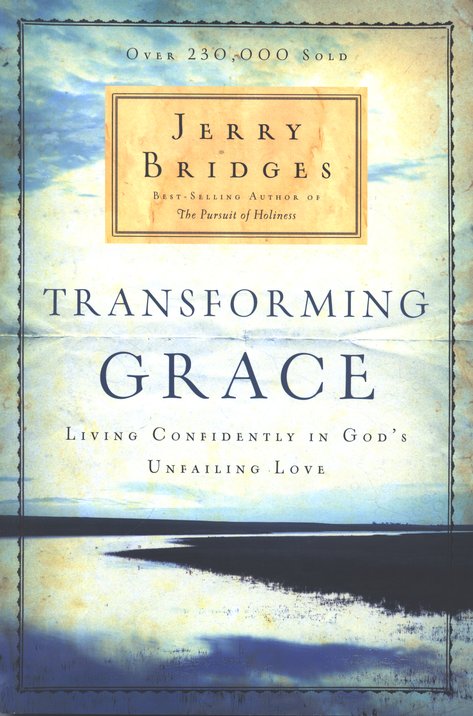
Transforming GraceI already shared a few quotes from Transforming Grace by Jerry Bridges (you can read them by clicking here). Bridges also extensively quoted other authors in this amazing book, so I wanted to share a few of those quotes as well.

“Grace ceases to be grace if God is compelled to bestow it in the presence of human merit…. Grace ceases to be grace if God is compelled to withdraw it in the presence of human demerit…. Grace is treating a person without the slightest reference to desert whatsoever, but solely according to the infinite goodness and supper and purpose of God.” —Dr. C. Samuel Storms

“The most shining deeds and valuable qualities that can be found among men, though highly useful and truly excellent, when set in their proper places, and referred to suitable ends, are, as to the grand article of justification treated as nonentities…. For divine grace disdains to be assisted in the performance of that work which peculiarly belongs to itself, by the poor, imperfect performances of men. Attempts to complete what grace begins, betray our pride and offend the Lord; but cannot promote our spiritual interest. Let the reader, therefore, carefully remember, that grace is either absolutely free, or it is not at all: and, that he who professes to look for salvation by grace, either believes in his heart to be saved entirely by it, or he acts inconsistently in affairs of the greatest importance.” —Abraham Booth

“Perhaps the most difficult task for us to perform is to rely on God’s grace and God’s grace alone for our celebration. It is difficult for our pride to rest on grace. Grace is for other people—for beggars. We don’t want to live by a heavenly welfare system. We want to earn our own way and atone for our own sins. We like to think that we will go to heaven because we deserve to be there.” —R.C. Sproul 

“A lawdriver insists with threats and penalties; a preacher of grace lures and incites with divine goodness and compassion shown to us; for he wants no unwilling works and reluctant services, he wants joyful and delightful services of God.” —Martin Luther, commenting on Romans 12:1

“The great mistake made by most of the Lord’s people is in hoping to discover in themselves that which is to be found in Christ alone.” —Arthur W. Pink

“In the person of Christ God beholds a holiness which abides His closest scrutiny, yea, which rejoices and satisfies His heart; and whatever Christ is before God, He is for His people.” —Arthur W. Pink

“Only what God has commanded in His Word should be regarded as binding; in all else there may be liberty of actions.” —John Owen

“Let us never surrender our judgments or our consciences to be at the disposal and opinions of others, and to be subjected to the sentences and determinations of men. … It is my exhortation therefore to all Christians to maintain their Christian freedom by constant watchfulness. You must not be tempted or threatened out of it; you must not be bribed or frightened from it; you must not let either force or fraud rob you of it. … We must not give up ourselves to the opinion of other men, though they be never so learned, never so holy, merely because it is their opinion. The apostle directs us to try all things and to hold fast that which is good (1 Thessalonians 5:21). It often happens that a high esteem of others in respect of their learning and piety makes men take up all upon trust from such, and to submit their judgments to their opinions, and their consciences to their precepts. This should not be so.” —Samuel Bolton (1645)

“So God supplies perfectly measured grace to meet the needs of the godly. For daily needs there is daily grace; for sudden needs, sudden grace; for overwhelming needs, overwhelming grace. God’s grace is given wonderfully, but not wastefully; freely, but not foolishly; bountifully, but not blindly.” —John Blanchard

“For men have no taste for God’s power till they are convinced of their need of it and they immediately forget its value unless they are continually reminded by awareness of their own weakness.” —John Calvin

“Yet the duties God requires of us are not in proportion to the strength we possess in ourselves. Rather, they are proportional to the resources available to us in Christ. We do not have the ability in ourselves to accomplish the least of God’s tasks. This is a law of grace. When we recognize it is impossible for us to perform a duty in our own strength, we will discover the secret of its accomplishment. But alas, this is a secret we often fail to discover.” —John Owen

“Christian humility does not consist in denying what there is of good in us; but in an abiding sense of ill-desert, and in the consciousness that what we have of good is due to the grace of God.” —Charles Hodge

You can read my full review of Transforming Grace by clicking here.

13 Quotes From Jerry Bridges In “Transforming Grace”

Transforming GraceI think Transforming Grace by Jerry Bridges is one of the best books about God’s grace I have ever read! You can read my full book review by clicking here. There are way too many quotes for me to share from this book, so here are a few that really zero-in on grace (I’ll be posting more quotes soon).

“I think most of us actually declared temporary bankruptcy. Having trusted in Christ alone for our salvation, we have subtly and unconsciously reverted to a works relationship with God in our Christian lives. We recognize that even our best efforts cannot get us into heaven, but we do think they earn God’s blessings in our daily lives.” 

“It was because of His grace that God the Father sent His only Son to die in our place. To say it another way, Christ’s death was the result of God’s grace; grace is not the result of Christ’s death.”

“The gospel is addressed to those who have no money or good works. It invites us to come and ‘buy’ salvation without money and without cost [Isaiah 55:1]. But note the invitation to come is addressed to those who have no money—not to those who don’t have enough. Grace is not a matter of God’s making up the difference, but of God’s providing all the ‘cost’ of salvation through His Son, Jesus Christ.” 

“We can never rightly understand God’s grace until we understand our place as those who need His grace.”

“We were dead in our transgressions, but God intervened. We were in bondage to sin, but God intervened. We were objects of wrath, but God intervened. God Who is rich in mercy intervened. Because of His great love for us, God intervened and made us alive with Christ, even when we were dead in our transgressions and sins. All this is summed up in one succinct statement: ‘it is by grace you have been saved.’ Our condition was hopeless, but God intervened in grace.” 

“God’s grace, then, does not supplement our good works. Instead, His grace overcomes our bad works, which are our sins. God did this by placing our sins on Christ and by letting fall on Him the wrath we so richly deserved. … That’s the way His grace operates. It looks not to our sins or even to our good deeds but only to the merit of Christ.”

“The apostle John wrote that Jesus was ‘full of grace and truth,’ and ‘from the fullness of His grace we have all received one blessing after another’ (John 1:14, 16). The idea portrayed in verse 16 is analogous to the ocean waves crashing upon the beach. One wave has hardly disappeared before another arrives. They just keep coming from an inexhaustible supply. So it is with the grace of God through Christ. He is full of grace and truth, and it is from His inexhaustible fullness that we received one blessing after another.” 

“God often does bless people who seem to us to be quite unworthy. But that is what grace is all about, because we are all unworthy.”

“We all want grace, but we cannot enjoy grace when there is an attitude of comparing.” 

“Under a sense of legalism, obedience is done with a view to meriting salvation or God’s blessing on our lives. Under grace, obedience is a loving response to salvation already provided in Christ, and the assurance that, having provided salvation, God will also through Christ provide all else that we need.”

“All Christians look to Christ alone for their justification, but not nearly as many also look to Him for their perfect holiness before God. … Holiness should be an objective for your daily life. But to live by grace, you must never, never look to the work of the Holy Spirit in you as the basis for your relationship with God. You must always look outside of yourself to Christ. You will never be holy enough through your own efforts to come before God. You are holy only through Christ.” 

“When our Father looks at us, He does not see our miserable performance. Instead, He sees the perfect performance of Jesus.”

“We died to the observance of the law as a requirement for attaining righteousness before God. We died to the curse and condemnation that resulted from our inability to perfectly keep the law. … Being under law implies the wrath of God, whereas grace implies forgiveness and favor. Law implies a broken relationship with God, whereas grace implies a restored relationship with Him. So when Paul said we died to the law, he meant we died to that entire state of condemnation, curse, and alienation from God.” 

Links & Quotes

link quote

Some good reading from today…

“The mind may be compared to a garden, which it is as necessary to cultivate as any plot of earth, if order and beauty are to be manifested through it. … Ideas, as well as flowers, in order to attain their full beauty, must be kept free from encumbering influences, whatever tends to weaken or degrade or detract from planned perfection.” —Joyce Mayhew

“I thank my Master that He does not say to the sinner, ‘Come half way and meet Me,’ but He comes ‘where he is.’” —Charles Spurgeon

“On the basis of grace as taught in the Word of God, when God forgives a man, He trusts him as though he had never sinned. God did not have mental reservations about any of us when we became His children by faith. When God forgives a man, He doesn’t think, ‘I will have to watch this fellow because he has a bad record.’ No, He starts with him again as though he had just been created and as if there had been no past at all! That is the basis of our Christian assurance—and God wants us to be happy in it.” —A.W. Tozer

Always keep in contact with those books and those people that enlarge your horizon and make it possible for you to stretch yourself mentally.” —Oswald Chambers

Links & Quotes

link quote

Some good reading & watching from today…

“Remember that desires after God will not change you so as to save you. You must find Christ. Remember that to say, ‘I will arise’ is not enough, nor even to arise; you must never rest till your Father has given you the kiss, till He has put on you the best robe. I am afraid lest you should rest satisfied and say, ‘I am in a bad state; the minister tells me that many are brought to such a state before they are saved. I will stop here.’ My dear friend, it is a good state to pass through, but it is a bad state to rest in. I pray you never be content with a sense of sin, never be satisfied with merely knowing that you are not what you ought to be. It never cures the fever for a man to know he has it; his knowledge is in some degree a good sign, for it proves that the fever has not yet driven him to delirium; but it never gives a man perfect health to know that he is sick. It is a good thing for him to know it, for he will not otherwise send for the physician; but unless it leads to that, he will die whether he feels himself to be sick or not.” —Charles Spurgeon

“We live at a fever pitch, and whether we are erecting buildings, laying highways, promoting athletic events, celebrating special days or welcoming returning heroes we always do it with an exaggerated flourish. Our building will be taller, our highway broader, our athletic contest more colorful, our celebration more elaborate and more expensive than would be true anywhere else on earth. We walk faster, drive faster, earn more, spend more and run higher blood pressure than any other people in the world. In only one field of human interest are we slow and apathetic: that is the field of personal religion. There for some strange reason our enthusiasm lags. Church people habitually approach the matter of their personal relation to God in a dull, half-hearted way which is altogether out of keeping with their general temperament and wholly inconsistent with the importance of the subject.” —A.W. Tozer

[VIDEO] John Maxwell says, if you don’t have a hero, be a hero for yourself.

“When the threat of death becomes a door to paradise the final barrier to temporal risk is broken. When a Christian says from the heart, ‘To live is Christ and to die is gain,’ he is free to love no matter what. Some forms of radical Islam may entice martyr-murderers with similar dreams, but Christian hope is the power to love, not kill. Christian hope produces life-givers, not life-takers. The crucified Christ calls His people to live and die for their enemies, as He did. The only risks permitted by Christ are the perils of love. ‘Love your enemies, do good to those who hate you, bless those who curse you, pray for those who abuse you’ (Luke 6:27-28).” —John Piper

Links & Quotes

link quote

Some good reading from today…

“Every deadly calamity is a merciful call from God for the living to repent.” —John Piper

“Our Father refreshes us on the journey with some pleasant inns, but will not encourage us to mistake them for home.” —C.S. Lewis

“I ask you, dear Christian friends, to come nearer to it [the blood Jesus shed on the Cross] this morning than ever you have been. Think over the great truth of substitution. Portray to yourself the sufferings of the Savior. Dwell in His sight, sit at the foot of Calvary, abide in the presence of His Cross, and never turn away from that great spectacle of mercy and of misery. Come to it; be not afraid. You sinners, who have never trusted Jesus, look here and live! May you come to Him now.” —Charles Spurgeon

“Our most pressing obligation today is to do all in our power to obtain a revival that will result in a reformed, revitalized, purified church. It is of far greater importance that we have better Christians than that we have more of them.” —A.W. Tozer

Great-heart & Christiana From “Pilgrim’s Progress”

Pilgrim's ProgressI love Pilgrim’s Progress! You can read my full book review by clicking here. I’m sharing some of my favorite passages from this classic.

This is part of a dialogue between Great-heart and Christiana—

Great-heart: “He [Christ] has more righteousness than you have need of, or than He needeth Himself.”

Christiana: “Pray make that appear.”

Great-heart: “With all my heart: but first I must premise, that He of whom we are now about to speak, is one that has not His fellow. He has two natures in one person, plain to be distinguished, impossible to be divided. Unto each of these natures a righteousness belongeth, and each righteousness is essential to that nature; so that one may as easily cause the nature to be extinct, as to separate its justice or righteousness from it. Of these righteousnesses therefore we are not made partakers, so as that they, or any of them, should be put upon us, that we might be made just, and live thereby. Besides these, there is a righteousness, which this person has, as these two natures are joined in one. And this is not the righteousness of the Godhead, as distinguished from the manhood; nor the righteousness of the manhood, as distinguished from the Godhead; but a righteousness which standeth in the union of both natures, and may properly be called the righteousness that is essential to His being prepared of God to the capacity of the mediatory office, which He was to be intrusted with. If He parts with His first righteousness, He parts with His Godhead; if He parts with His second righteousness, He parts with the purity of His manhood; if He parts with this third, He parts with that perfection which capacitates Him for the office of mediation. He has therefore another righteousness, which standeth in performance, or obedience to a revealed will; and that is it that He puts upon sinners, and that by which their sins are covered. Wherefore He saith, As by one man’s disobedience many were made sinners, so by the obedience of One shall many be made righteous.”

Christiana: “But are the other righteousnesses of no use to us?”

Great-heart: “Yes; for though they are essential to His natures and office, and so cannot be communicated unto another; yet it is by virtue of them that the righteousness that justifies is for that purpose efficacious. The righteousness of His Godhead gives virtue to His obedience; the righteousness of His manhood giveth capability to His obedience to justify; and the righteousness that standeth in the union of these two natures to His office, giveth authority to that righteousness to do the work for which it is ordained.

“So then here is a righteousness that Christ, as God, has no need of; for He is God without it. Here is a righteousness that Christ, as man, has no need of to make Him so; for He is perfect man without it. Again, here is a righteousness that Christ, as God-man, has no need of; for He is perfectly so without it. Here then is a righteousness that Christ, as God, as man, as God-man, has no need of with reference to Himself, and therefore He can spare it; a justifying righteousness, that He for Himself wanteth not, and therefore He giveth it away. Hence ’tis called the gift of righteousness. This righteousness, since Christ Jesus the Lord has made Himself under the law, must be given away; for the law doth not only bind him that is under it, to do justly, but to use charity. Wherefore he must, he ought by the law, if he hath two coats, to give one to him that has none. Now our Lord indeed hath two coats, one for Himself, and one to spare; wherefore He freely bestows one upon those that have none.”

Read a dialogue between Faithful, Christian, and Talkative by clicking here.

And a dialogue between Christian and Hopeful by clicking here.

Christian & Hopeful From “Pilgrim’s Progress”

Pilgrim's ProgressI love Pilgrim’s Progress! You can read my full book review by clicking here. I’m sharing some of my favorite passages from this classic.

This is part of a dialogue between Christian and Hopeful—

Christian: “Then I say, sometimes (as I think) they may; but they being naturally ignorant, understand not that such convictions tend to their good; and therefore they do desperately seek to stifle them, and presumptuously continue to flatter themselves in the way of their own hearts. … True or right fear is discovered by three things: (1) By its rise: it is caused by saving convictions for sin. (2) It driveth the soul to lay fast hold of Christ for salvation. (3) It begetteth and continueth in the soul a great reverence of God, His word, and ways; keeping it tender, and making it afraid to turn from them, to the right hand or to the left, to any thing that may dishonour God, break its peace, grieve the Spirit, or cause the enemy to speak reproachfully. … Now the ignorant know not that such convictions that tend to put them in fear, are for their good, and therefore they seek to stifle them.”

Hopeful: “How do they seek to stifle them?”

Christian: “(1) They think that those fears are wrought by the devil (though indeed they are wrought of God), and, thinking so, they resist them, as things that directly tend to their overthrow. (2) They also think that these fears tend to the spoiling of their faith; when, alas for them, poor men that they are, they have none at all! and therefore they harden their hearts against them. (3) They presume they ought not to fear, and therefore in despite of them, wax presumptuously confident. (4) They see that those fears tend to take away from them their pitiful old self-holiness, and therefore they resist them with all their might.”

Read a dialogue between Faithful, Christian, and Talkative by clicking here.

9 Quotes From “Bible Reading”

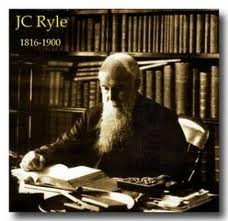
J.C. RyleJ.C. Ryle’s book Bible Reading has a question repeated all throughout the book: What are you doing with the Bible? do you read it? how do you read it? This is a book that will challenge and encourage both the Bible-reading novice, and the Bible-reading veteran. You can read my full book review by clicking here. Below are some quotes that I highlighted in this powerful little book.

“This is the Book to which the civilized world is indebted for many of its best and most praiseworthy institutions. Few probably are aware how many good things that men have adopted for the public benefit, of which the origin may be clearly traced to the Bible. It has left lasting marks wherever it has been received. From the Bible are drawn many of the best laws by which society is kept in order. From the Bible has been obtained the standard of morality about truth, honesty, and the relations of man and wife, which prevails among Christian nations, and which—however feebly respected in many case—makes so great a difference between Christians and heathen.” 

“The Bible applied to the heart by the Holy Spirit is the grand instrument by which souls are first converted to God. That mighty change is generally begun by some text or doctrine of the Word, brought home to a man’s conscience. In this way the Bible has worked moral miracles by the thousands. It has made drunkards become sober—immoral people become pure—thieves become honest and violent-tempered people become meek. It has wholly altered the course of men’s lives.”

“The Bible can show a believer how to walk in this world so as to please God. It can teach him how to glorify Christ in all the relationships of life, and can make him a good leader, employee, subordinate, husband, father, or son. It can enable him to bear misfortunes and loss without murmuring, and say, ‘It is well.’ It can enable him to look down into the grave, and say, ‘I will fear no evil’ (Psalm 23:4). It can enable him to think about judgment and eternity, and not feel afraid. It can enable him to bear persecution without flinching and to give up liberty and life rather than deny Christ’s truth.” 

“The Lord God knows the weakness and infirmities of our poor fallen understandings. He knows that, even after conversion, our perceptions of right and wrong are extremely vague. He knows how artfully satan can overlay error with an appearance of truth, and can dress up wrong with plausible arguments, till it looks like right. Knowing all this, He has mercifully provided us with an unerring standard of truth and error, right and wrong, and has taken care to make that standard a written Book—the Scripture.”

“A man must make the Bible alone his rule. He must receive nothing and believe nothing which is not according to the Word. He must try all religious teaching by one simple test—Does it square with the Bible? What does the Scripture say?” 

“A false minister may say, ‘You have no right to use your private judgment: leave the Bible to us who are ordained.’ A true minister will say, ‘Search the Scriptures, and if I do not teach you what is scriptural, do not believe me.’ A false minister may cry, ‘Listen to the Church,’ and ‘Listen to me.’ A true minister will say, ‘Listen to the Word of God.’”

“Love of the Word appears preeminently in our Lord and Savior Jesus Christ. He read it publicly. He quoted it continually. He expounded it frequently. He advised the Jews to search it. He used it as His weapon to resist the devil. He repeatedly said, ‘The Scripture must be fulfilled.’ Almost the last thing He did was to ‘open their minds so they could understand the Scriptures’ (Luke 24:45). I am afraid that man cannot be a true servant of Christ, who has not something of his Master’s mind and feeling towards the Bible.” 

“Read the Bible with Christ continually in view. The primary object of all Scripture is to testify about Jesus: Old Testament ceremonies are shadows of Christ; Old Testament judges and deliverers are types of Christ; Old Testament history shows the world’s need of Christ; Old Testament prophecies are full of Christ’s sufferings; Old Testament prophecies are full of Christ’s glory yet to come. … All these shine forth everywhere in the Bible. Remember this clue, if you would read the Bible right.”

“Let us resolve to read the Bible more and more every year we live. Let us try to get it rooted in our memories, and engraved into our hearts. … Let us resolve to be more watchful over our Bible reading every year that we live. Let us be jealously careful about the time we give to it, and the manner that time is spent. Let us be aware of omitting our daily reading without sufficient cause. Let us not be gaping, and yawning and dozing over our book, while we read. … Let us be very careful that we never exalt any minister, or sermon, or book, or tract, or friend above the Word. Cursed be that book, or tract, or human counsel, which creeps in between us and the Bible, and hides the Bible from our eyes! … Let us resolve to talk more to believers about the Bible when we meet them. Sorry to say, the conversation of Christians, when they do meet, is often sadly unprofitable! How many frivolous, and trifling, and uncharitable things are said! Let us bring out the Bible more, and it will help to drive the devil away, and keep our hearts in tune.”